
Luigi Moretti
Il Girasole
- ArchitectLuigi Moretti
- PhotographerLennart Dose
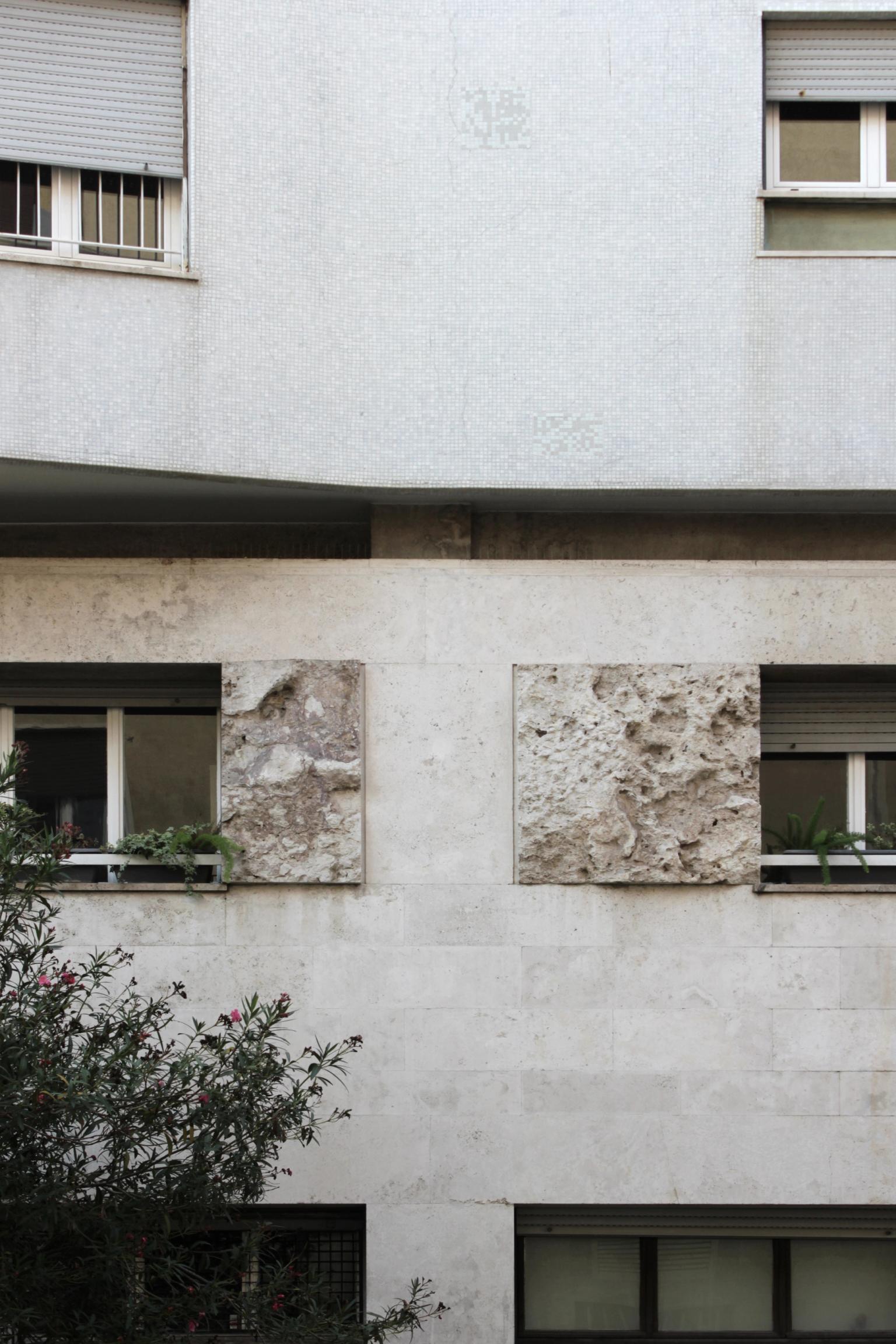
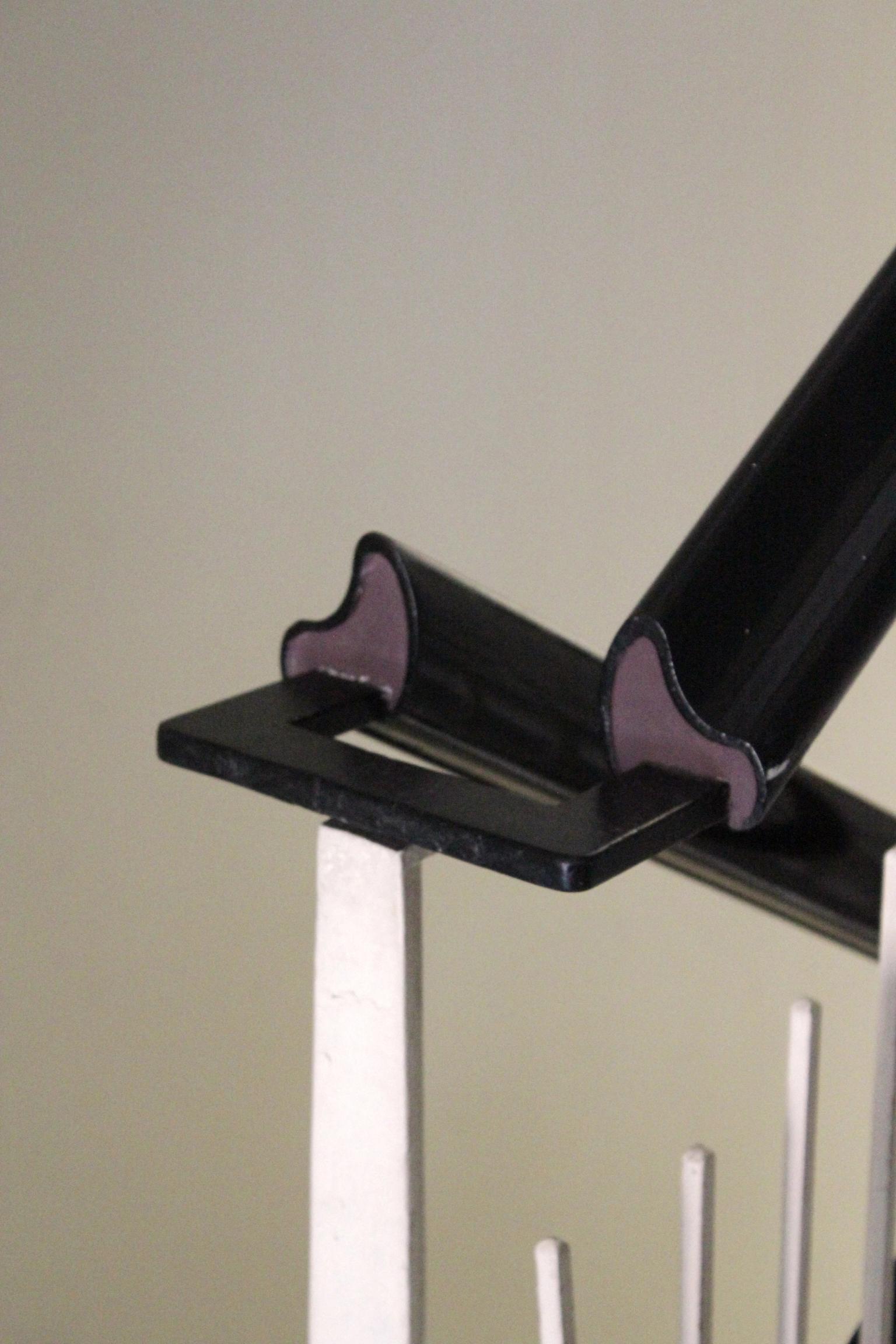
Praksis Arkitekter Il Girasole destabilizes strict functionalism by incorporating ambiguity and complexity into its façade composition. The sculptural fragment of a leg is introducing an imaginative and almost ironic ornamentation.

A Roman Experiment in Modern Living
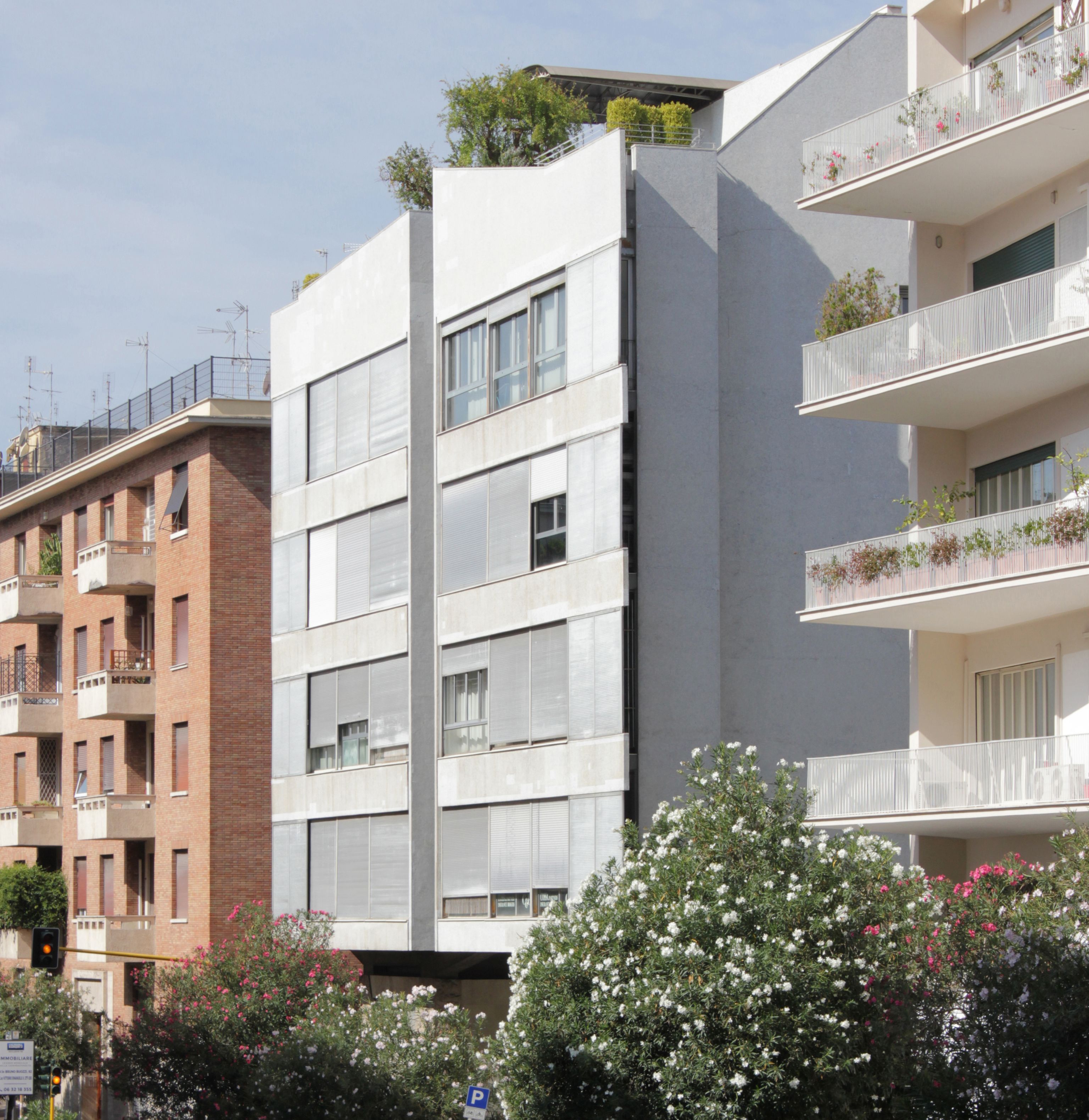
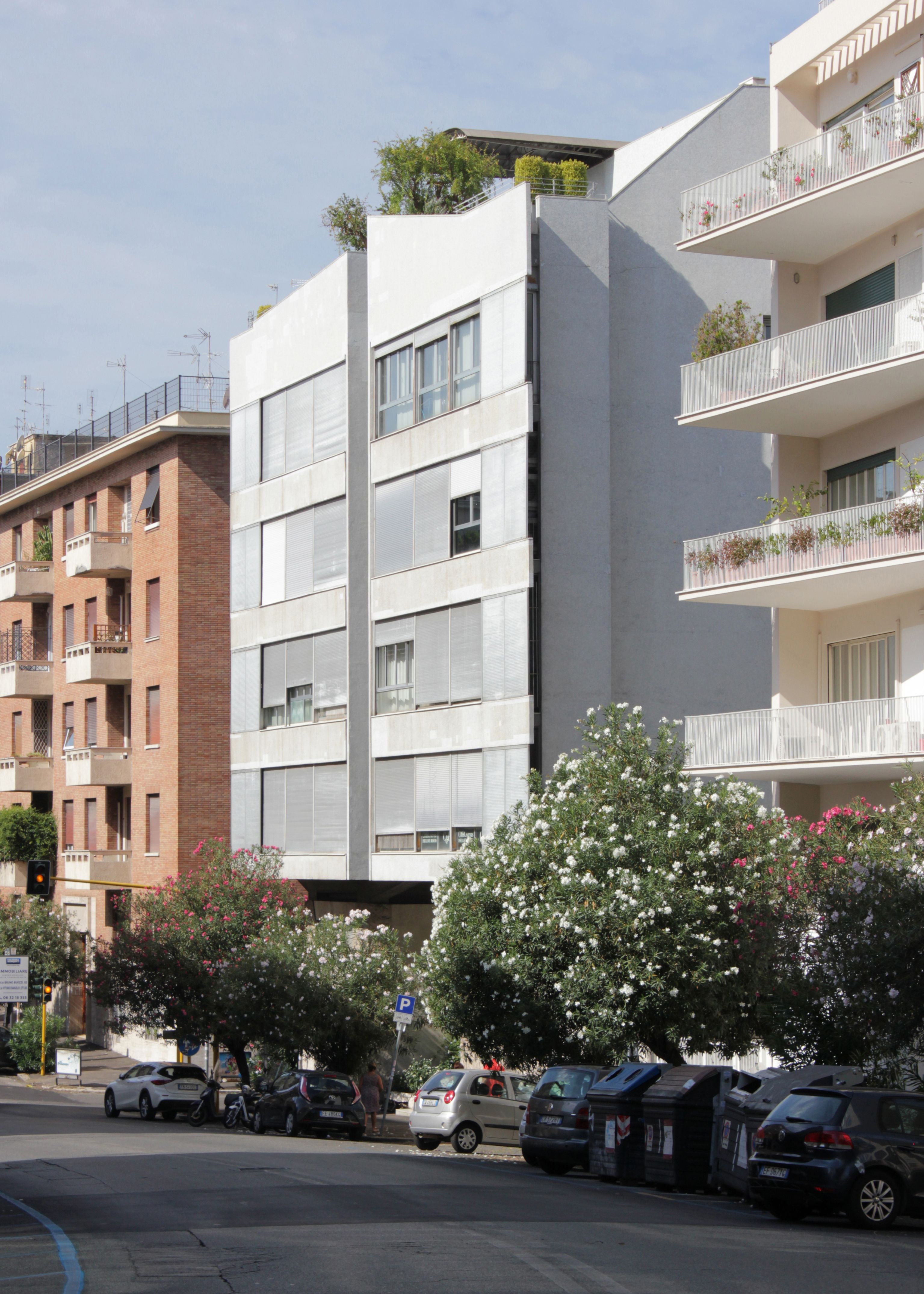
Luigi Moretti’s Casa Il Girasole (1947-1950) sits in Rome’s Parioli district as a residential building that quietly disrupts expectations of what an apartment block can be. At first glance, it belongs to the familiar Roman typology of the “palazzina” – elegant, urban, mid-scale housing designed for upper-middle-class living. But Moretti treats this format less as a rule to follow and more as a system to stretch, twist, and question. The building is not designed as a neutral container for apartments; instead, it becomes an active architectural argument about structure, perception, and how domestic life is framed by form. Even the name, Il Girasole (“The Sunflower”), hints at this intention: a building that does not sit passively in its environment but adjusts itself in response to light, orientation, and atmosphere.

A Facade That Splits the Building Open
The most immediate gesture of the building is its fractured front elevation. A vertical incision runs through the façade like a deliberate cut, dividing the composition into two halves while simultaneously exposing its internal logic. Rather than presenting a unified, stable face to the street, Moretti allows the building to appear as if it is being pulled apart. This “split” is not purely visual; it aligns with the internal circulation and reveals the structure behind the surface. Light enters through this gap, softening the transition between exterior and interior and turning the entrance sequence into something theatrical rather than purely functional.
The façade also extends slightly beyond the building’s structural edges, creating a thin screen-like layer that seems almost detached from the volume behind it, reinforcing the sense that the surface is something manipulated rather than fixed.

Plan as a Controlled Disruption
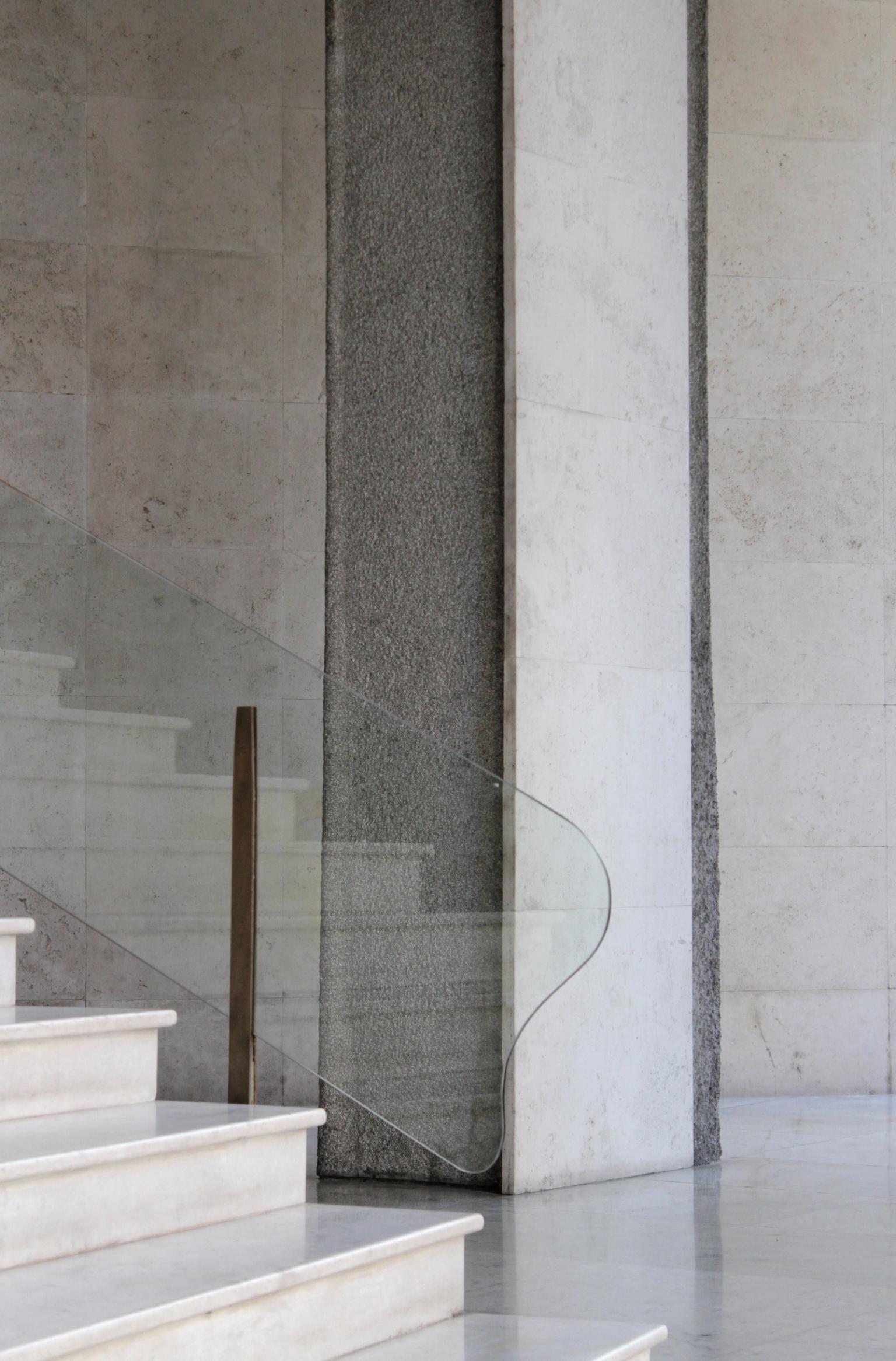
Behind the expressive façade lies a carefully organised but subtly unstable plan. The building is structured around a U-shaped logic that opens toward a central void, forming a courtyard that becomes the core of circulation. Apartments are arranged with apparent symmetry around this space, yet Moretti introduces small shifts and misalignments that prevent the plan from feeling fully resolved. The entrance axis is slightly off-centre, staircases are not perfectly aligned, and spatial transitions bend rather than follow strict geometric order. On the ground floor especially, curved forms interrupt what would otherwise be a rational layout, creating a moment of unexpected softness in an otherwise controlled system. These decisions produce a sense that the building is always almost symmetrical, but never fully obedient to symmetry.

Between Modern Logic and Historical Memory
Il Girasole operates in a constant tension between modernist clarity and historical reference. Moretti, deeply familiar with Renaissance and Baroque architecture, does not reject architectural history but folds it into a contemporary language. Classical ideas of composition, proportion, and façade hierarchy appear, but they are deliberately distorted or reinterpreted. The result is a building that feels both familiar and unsettled: it borrows the grammar of tradition while refusing its certainty. This ambiguity is precisely what later made the building important in architectural discourse. Critics and theorists such as Robert Venturi recognised it as an early example of architecture that does not fit neatly into modernist doctrine, but instead opens the door to more layered and contradictory readings of form.

Material as Fragmented Composition
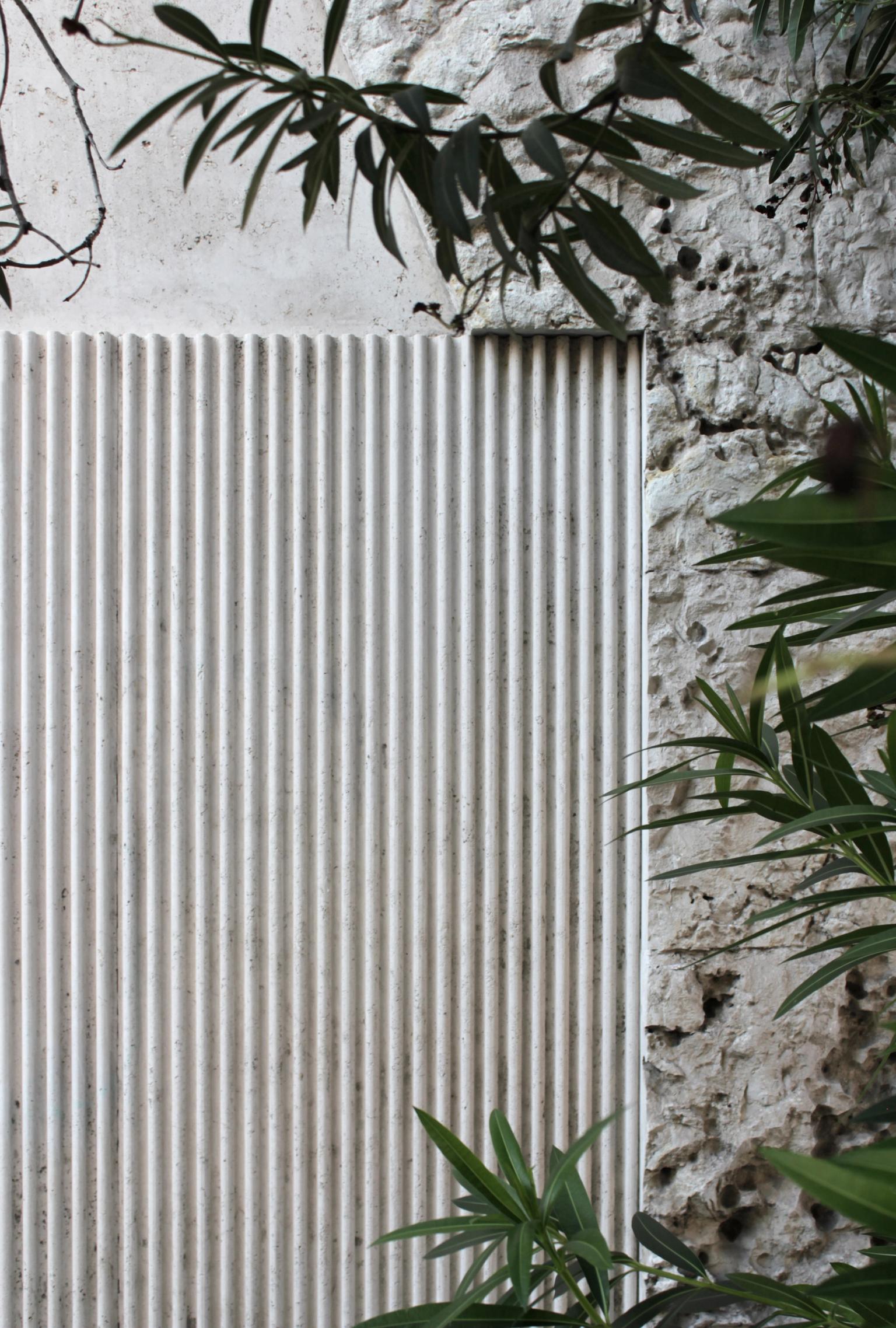
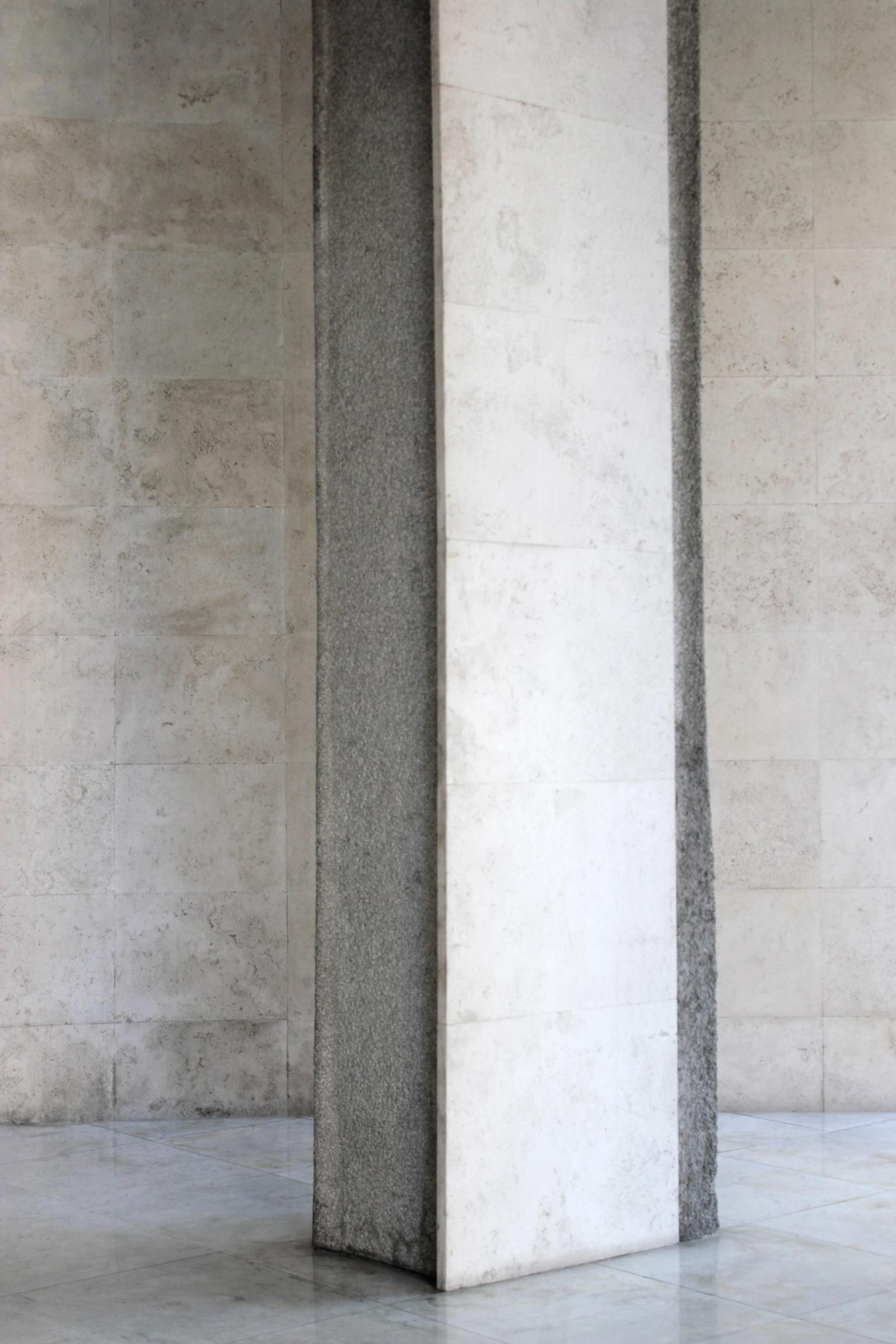
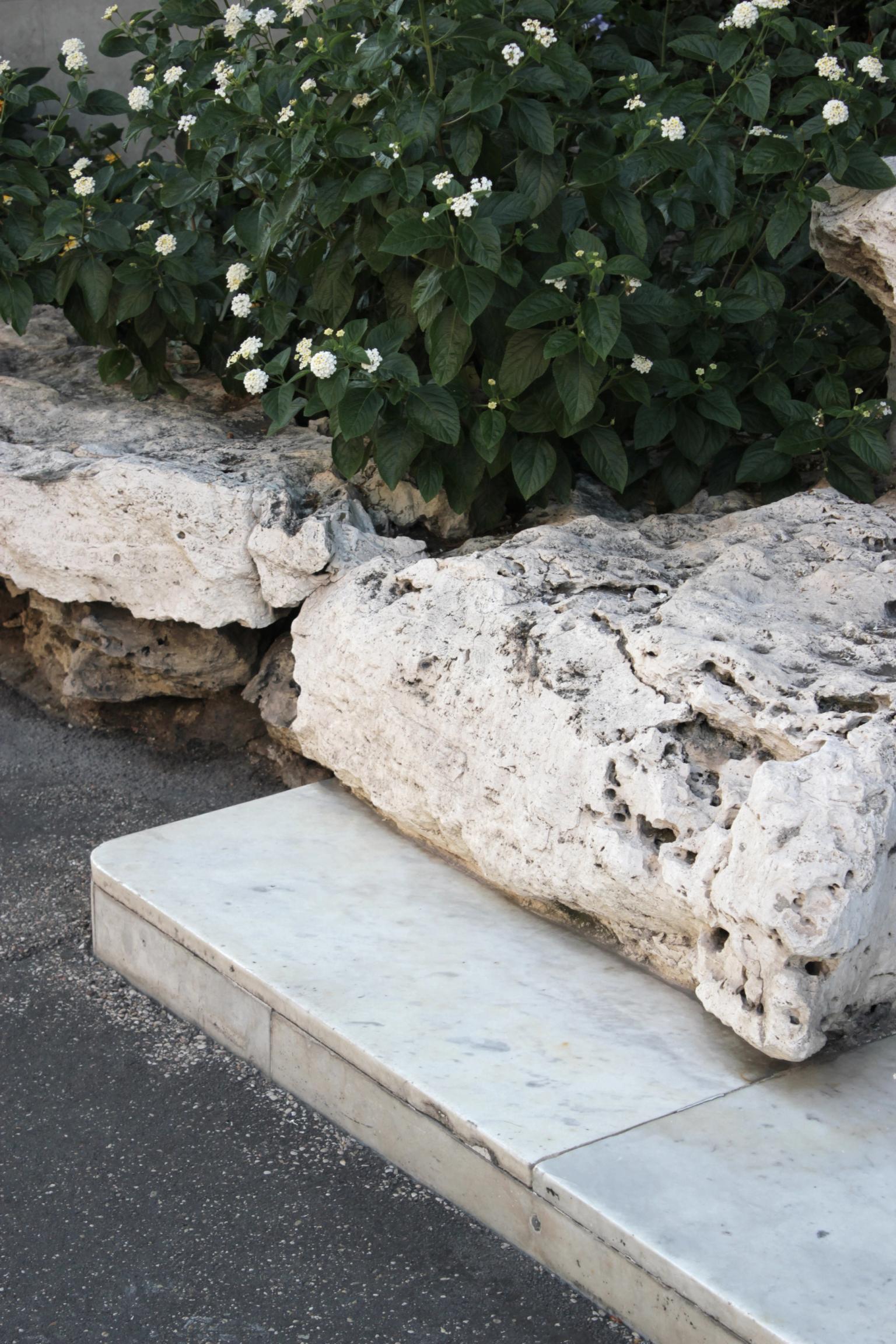
Material choice in Il Girasole reinforces this sense of controlled complexity. Rather than using a single coherent palette, Moretti combines travertine, marble, ceramic, glass, and metal in ways that avoid hierarchy or uniformity. The base of the building is heavy and grounded in rough stone, while upper levels are lighter, covered in small glass or ceramic elements that catch and diffuse light. Inside, the variety continues in unexpected ways: polished surfaces sit next to rough textures, and decorative elements appear in positions where they seem almost structurally implausible. Instead of creating visual order through consistency, Moretti builds tension through contrast. Materials do not resolve into a single narrative; they remain slightly independent, contributing to a broader sense of architectural instability that still feels carefully composed.

Luigi Moretti
Luigi Moretti was one of the most intellectually complex figures in 20th-century Italian architecture. Trained in Rome and active from the 1930s onwards, he worked across scales ranging from interiors to urban megastructures, including later international projects such as the Watergate complex in Washington D.C. and the Montreal Stock Exchange Tower. But Il Girasole remains one of his most influential early works because it condenses many of his core ideas into a single building: architecture as analysis, ambiguity, and layered perception. Moretti was less interested in producing clear solutions than in constructing systems that remain open to interpretation.
In this sense, Il Girasole is not just a residential building, but an early statement of a way of thinking where architecture is never fully resolved, only carefully balanced between order and disruption.