
Wael Al Awar
Barzakh
- ArchitectWael Al Awar
- Photographer© Mohamed Somji
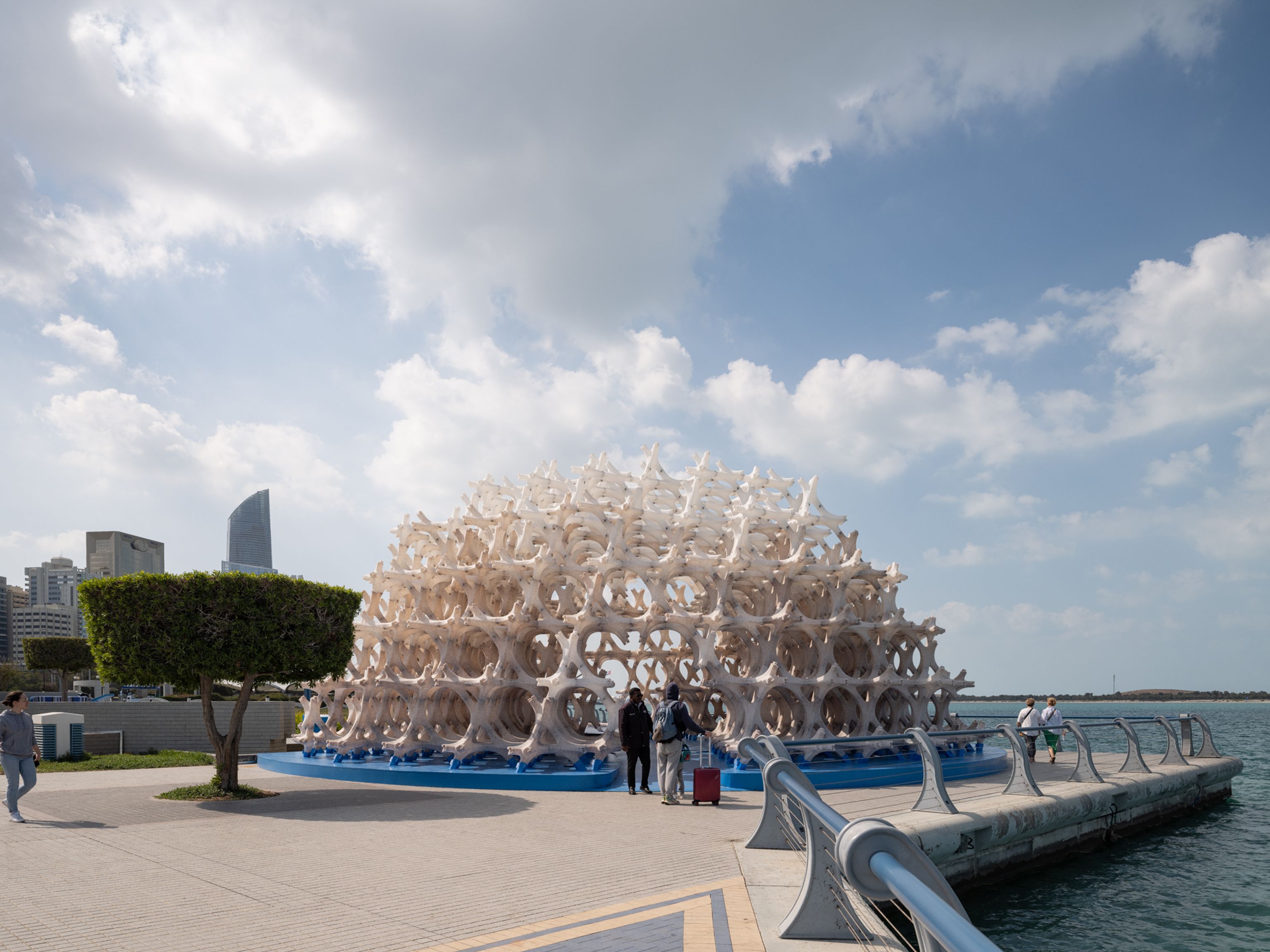
Rasmus Alstrup Wael Al Awar is a Lebanese‑born architect and co‑founder of the firm Waiwai, with offices in Dubai and Tokyo. Barzakh by Wael Al Awar is a domed pavilion shown at the 2024 Public Art Abu Dhabi Biennial, composed of modular units made from recycled plastics, palm‑fibre, and reject brine from desalination.

Barzakh: Transforming Waste into Architecture
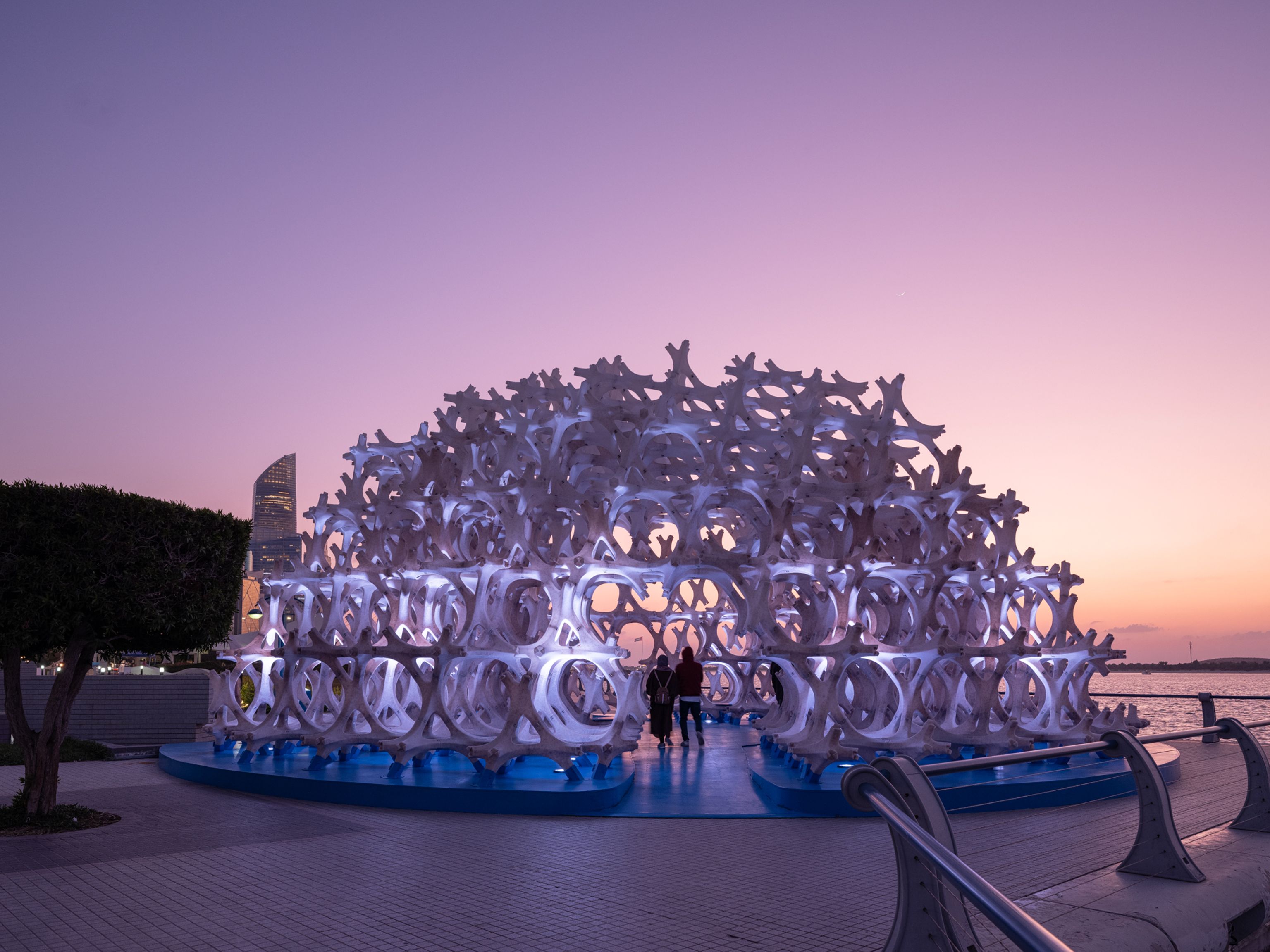
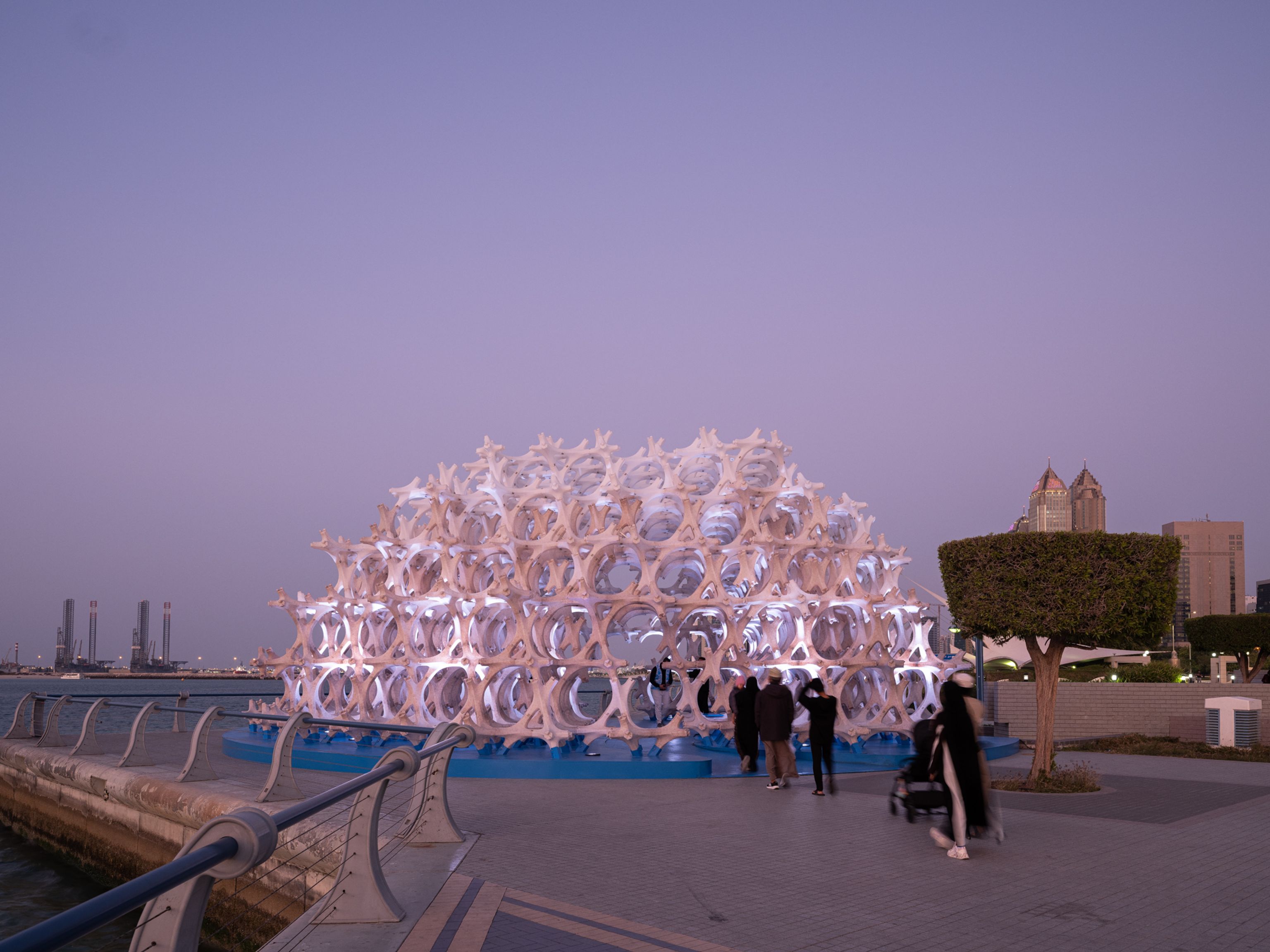
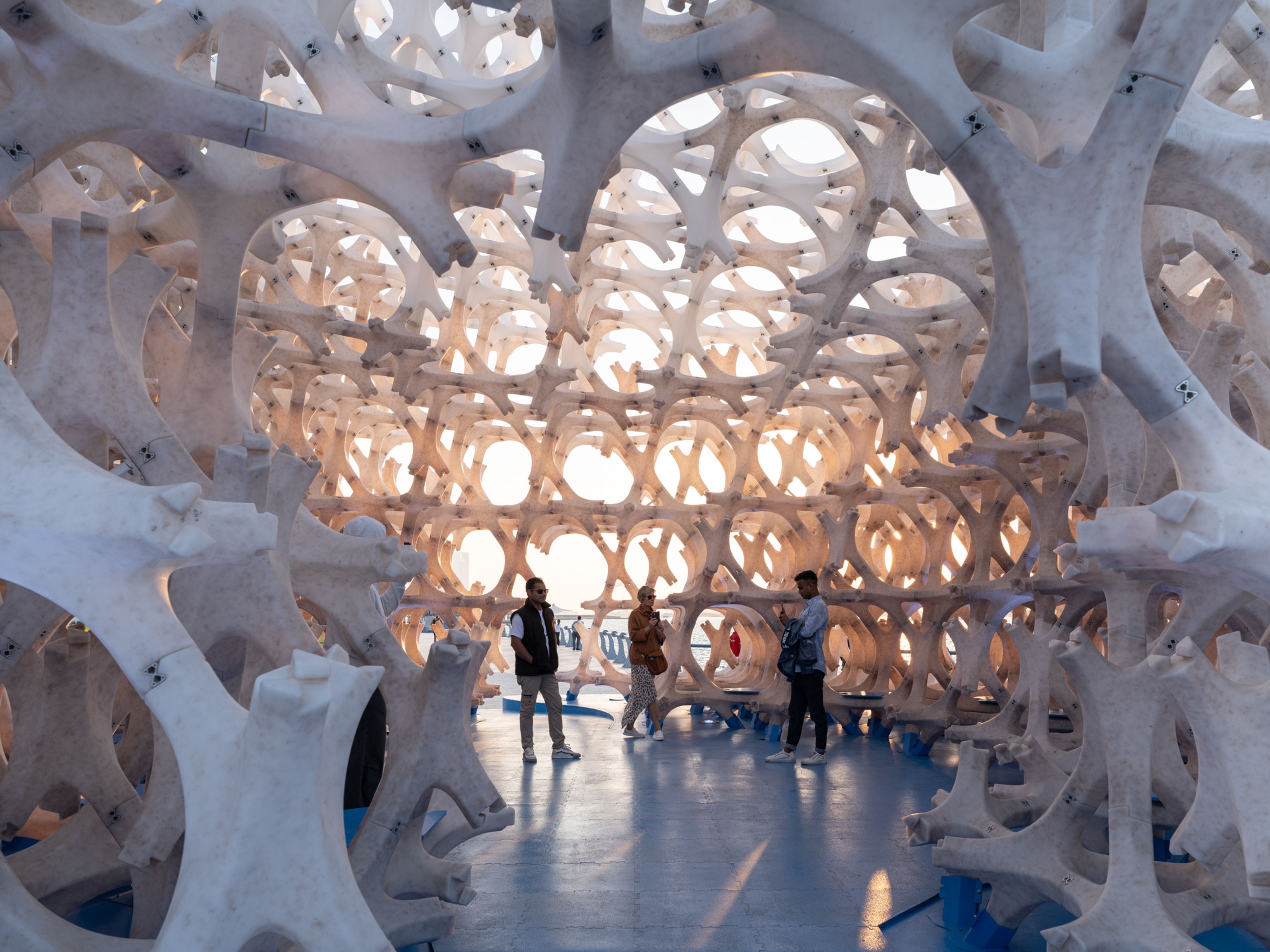
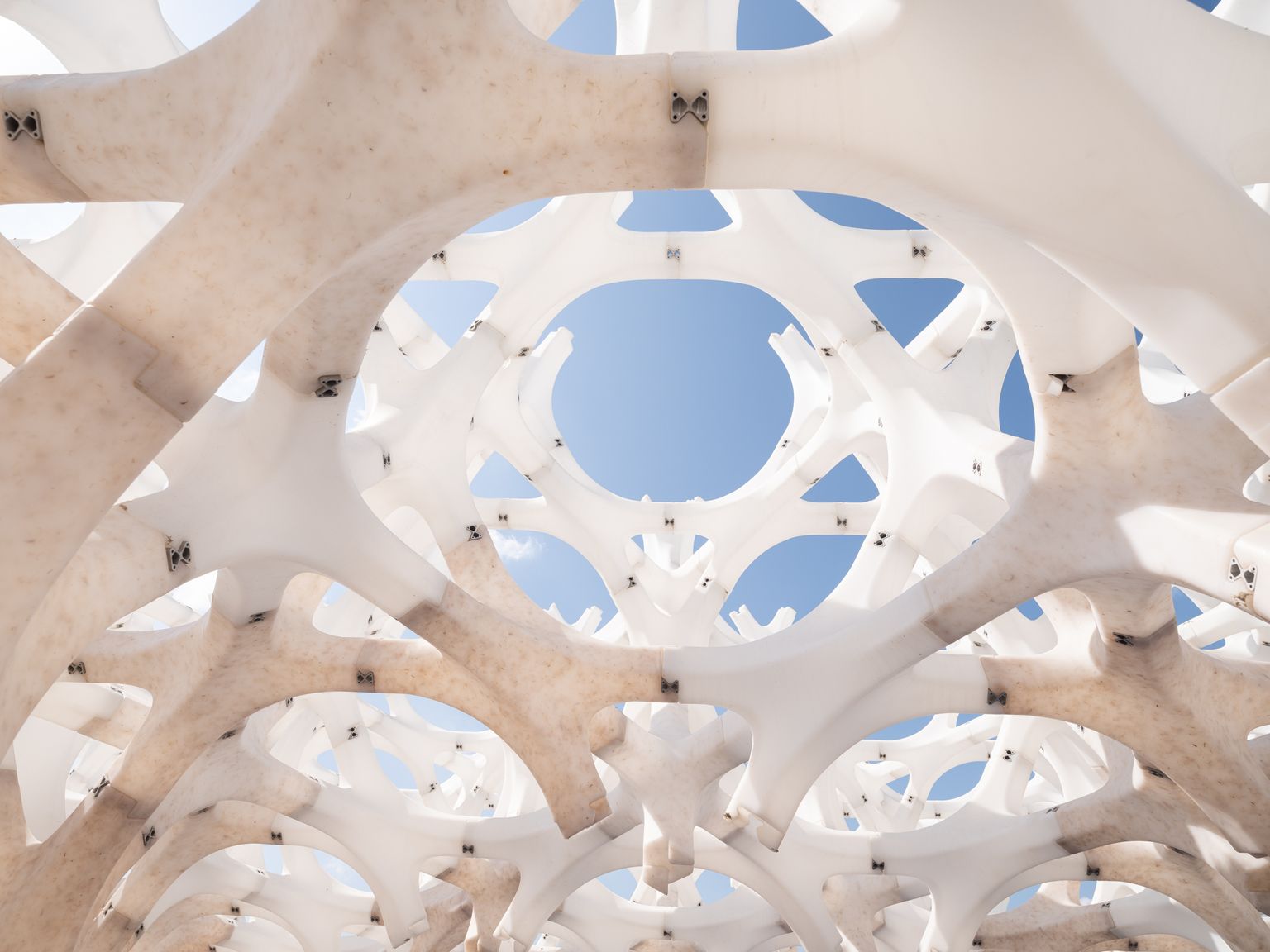
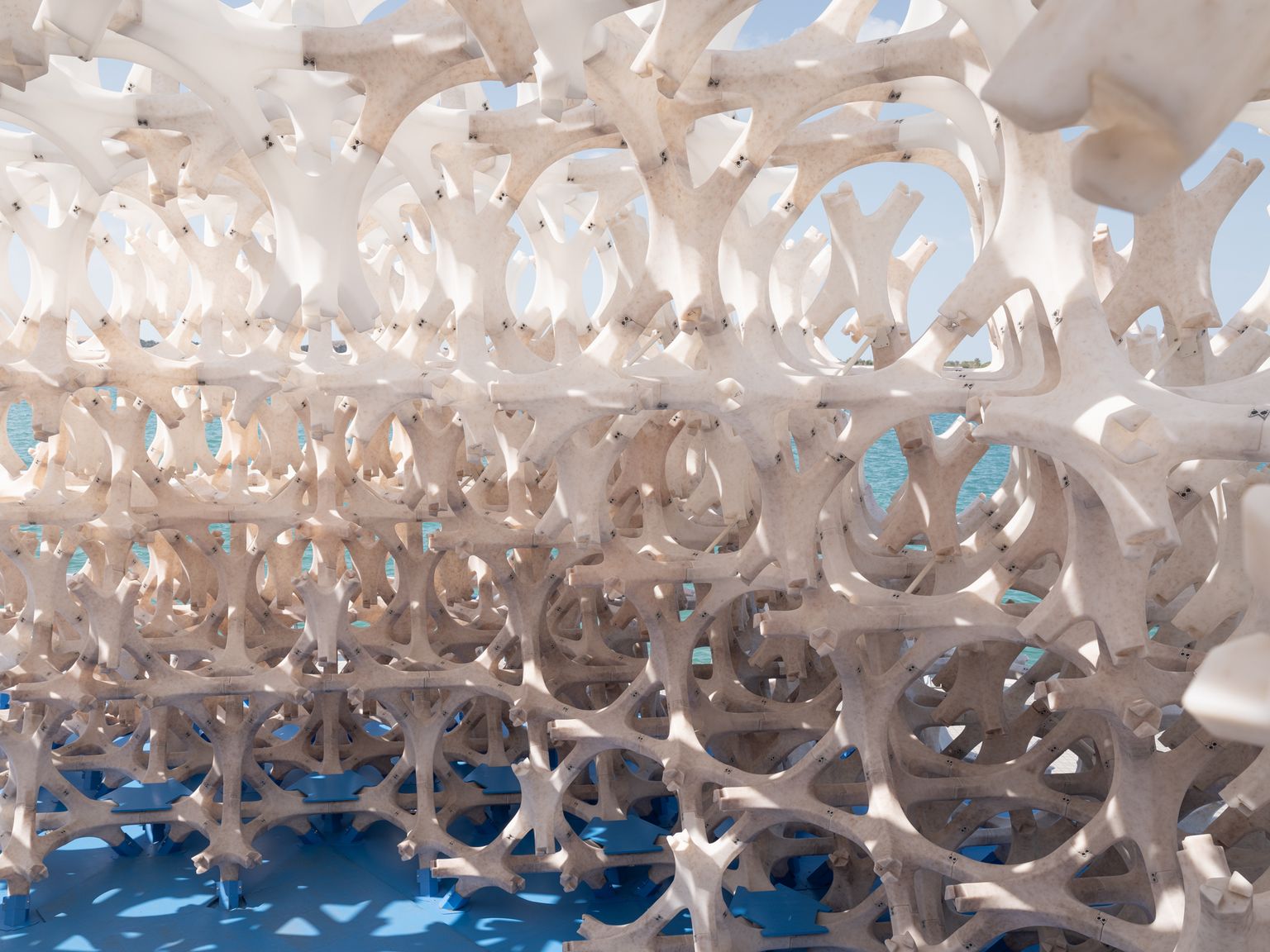
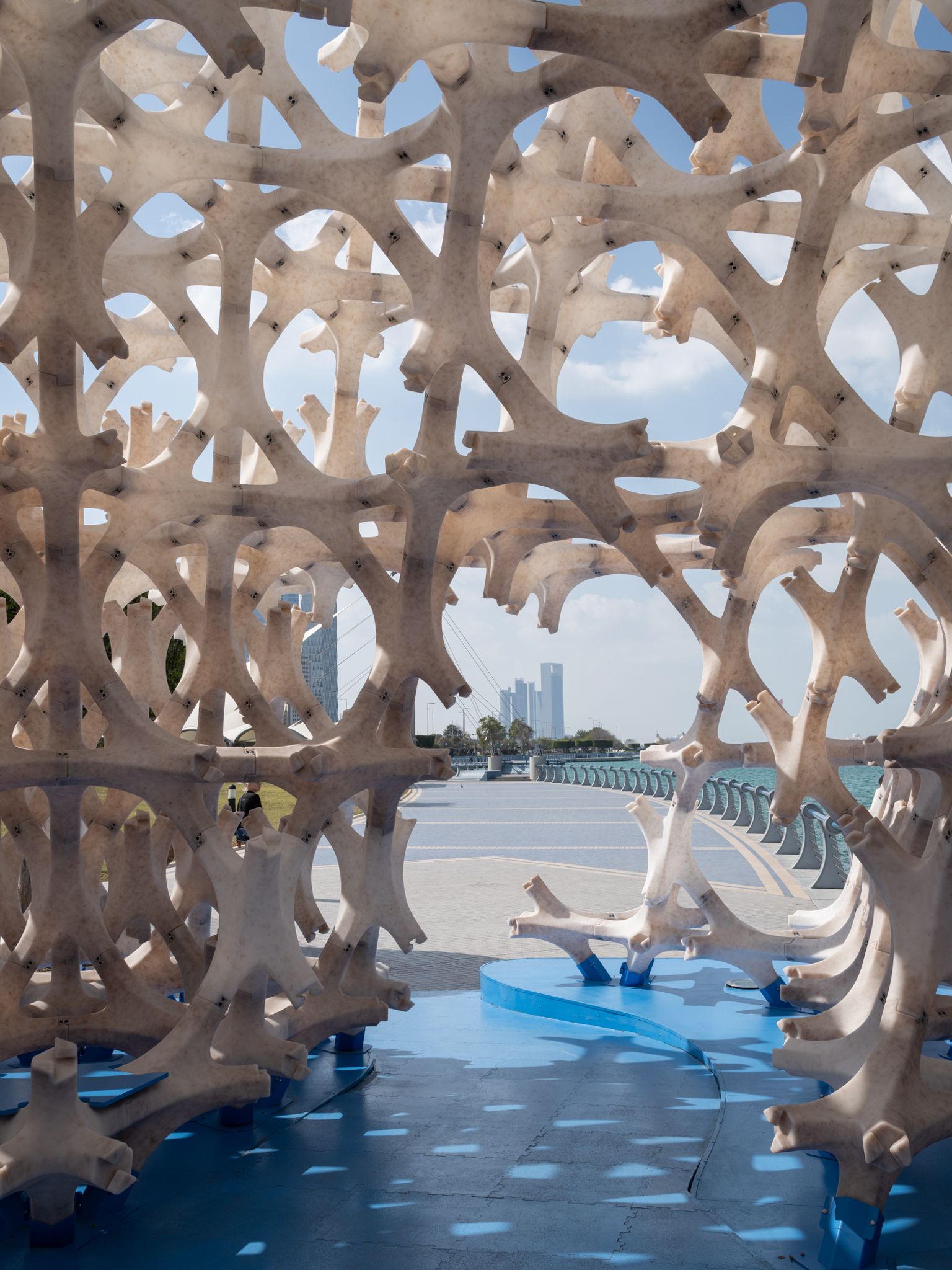
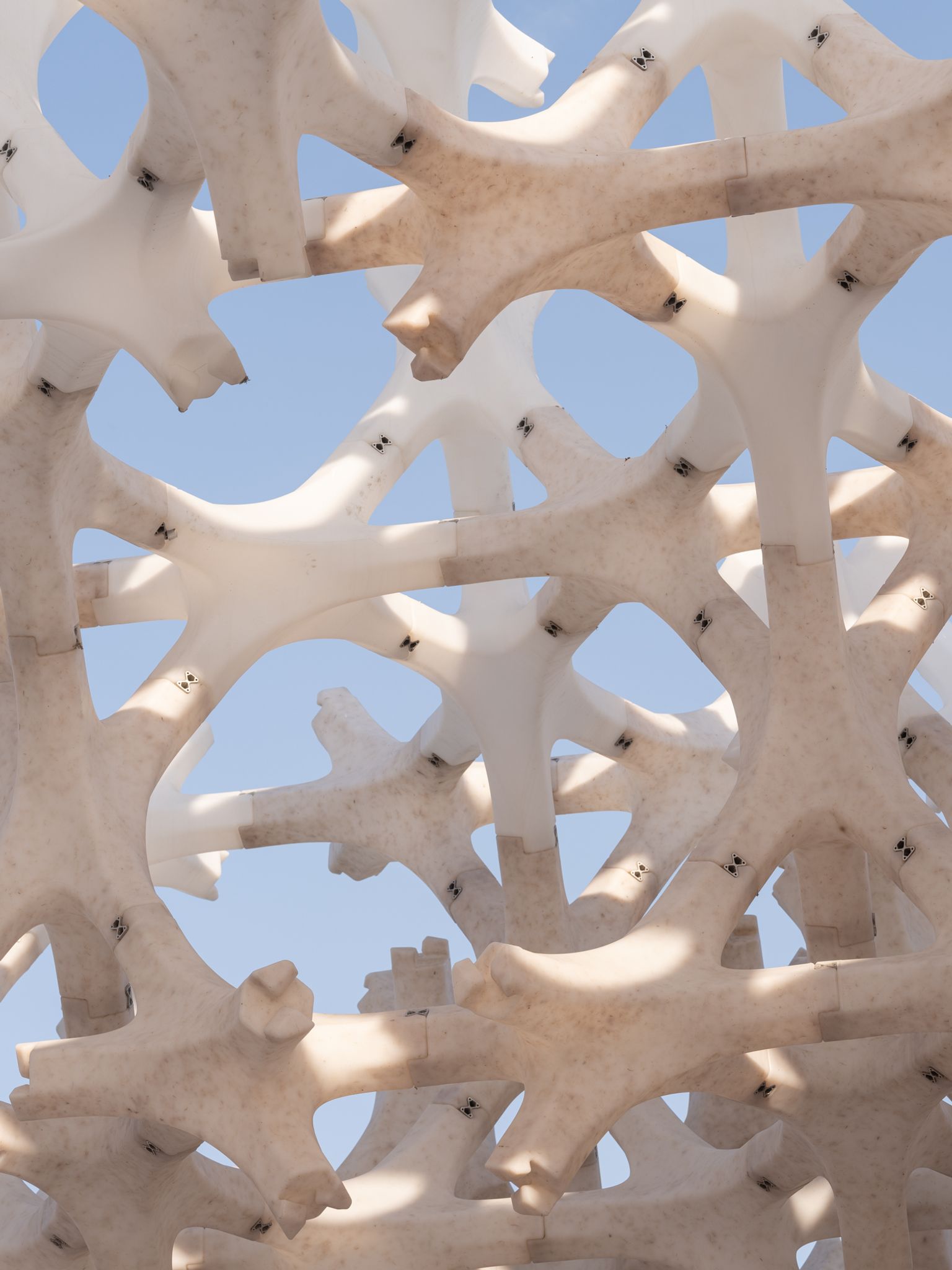
At the inaugural Public Art Abu Dhabi Biennial, Wael Al Awar presents Barzakh, a domed pavilion composed of intricately interlocked modules that form a self-supporting, climbable structure along the corniche. The project is an exploration of industrial waste as a resource, transforming reject brine from the UAE’s desalination process into a natural binder for coral modules, reinforced with palm fibers and recycled HDPE plastic. The pavilion demonstrates how discarded materials can be reimagined into a functional architectural form, merging innovation, sustainability, and structural ingenuity. By giving new life to what is typically considered waste, Barzakh becomes a poetic reflection on materiality and human impact on the environment.

Vernacular Reinterpreted
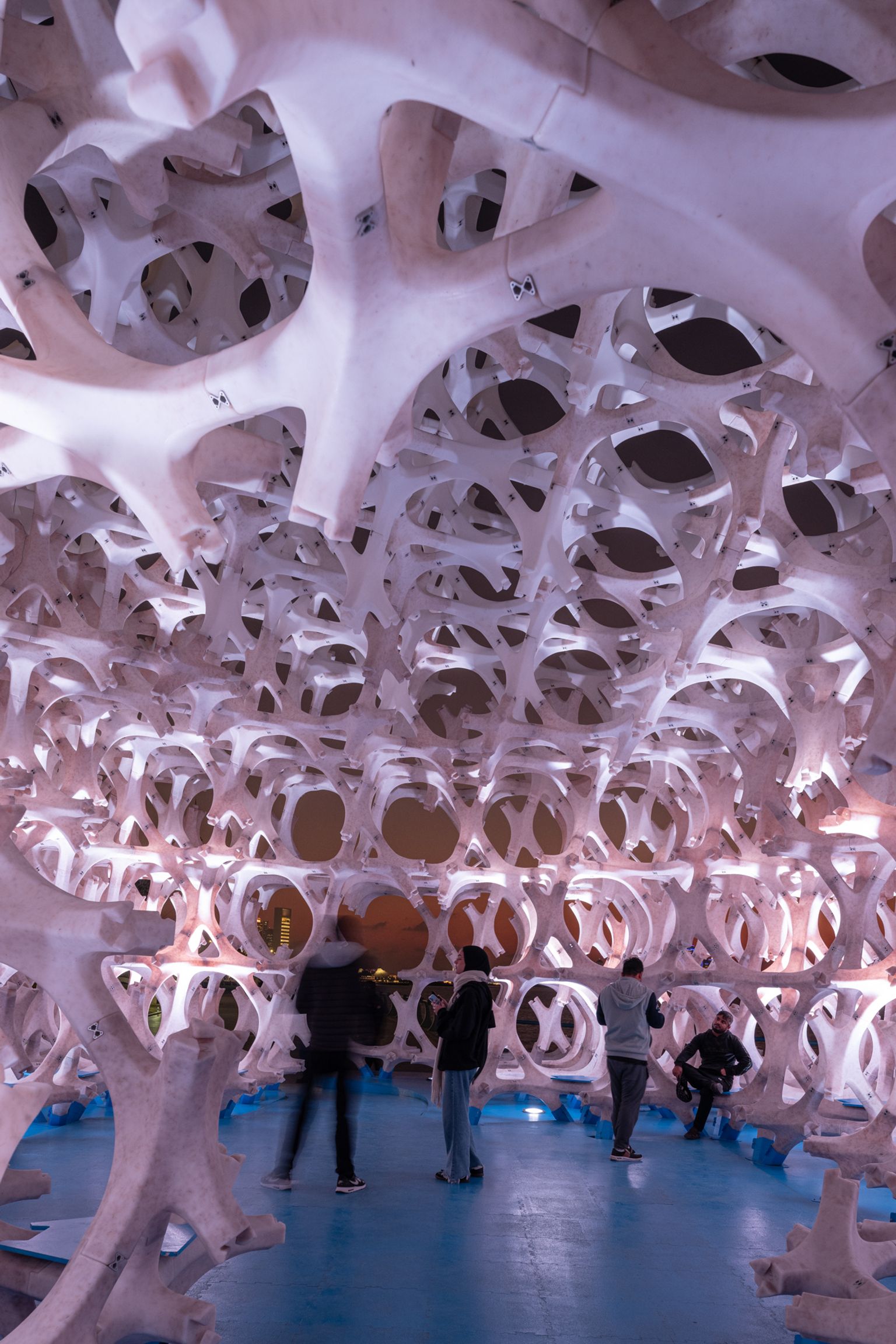
While firmly experimental, Barzakh draws inspiration from the UAE’s traditional architecture. Coral, historically valued for its natural breathability and climate adaptability, forms the core of the pavilion, allowing passive ventilation and shaded interiors that remain comfortable under the desert sun. Palm fibers enhance structural stability while preserving the lightness and openness characteristic of vernacular design. Through this lens, the pavilion reinterprets local architectural principles for a contemporary context, demonstrating how historical strategies for environmental comfort can inform innovative, sustainable construction today.



Wai Wai: Practice and Philosophy
Barzakh is part of the broader research-driven approach of Wai Wai, the Dubai- and Tokyo-based studio led by Wael Al Awar and Kazuma Yamao. The studio engages across architecture, landscape, urban design, interiors, and graphics, consistently addressing social, environmental, and technological challenges. Notable projects include Wetland at the UAE Pavilion in Venice, Jameel Arts Centre in Dubai, and Otaru Harbor Café in Japan.
Wai Wai combines meticulous observation of context with experimental material strategies, emphasizing climate-sensitive design, adaptive solutions, and integration with natural phenomena. Their work reflects a balance between immersion in local culture and the clarity of an outsider’s perspective, producing projects that are both culturally resonant and environmentally proactive.


Public Engagement and Environmental Awareness
Barzakh functions as an interactive and liminal space, inviting visitors to engage physically and conceptually. A sensor-driven light installation responds to wind, translating natural forces into shifting visual effects that make environmental phenomena perceptible. The pavilion’s name, Barzakh, refers to a threshold or estuary, symbolizing the intersection of human activity and natural systems. Its flexible, disassemblable construction embodies principles of circular design and resource reuse, encouraging reflection on ecological responsibility. By combining experiential, environmental, and social dimensions, the pavilion fosters dialogue about sustainability, material innovation, and the role of architecture in shaping our relationship with the natural world.