
Michael Wolf
Bastard Chairs
- PhotographerMichael Wolf
- ArchiveMichael Wolf Estate
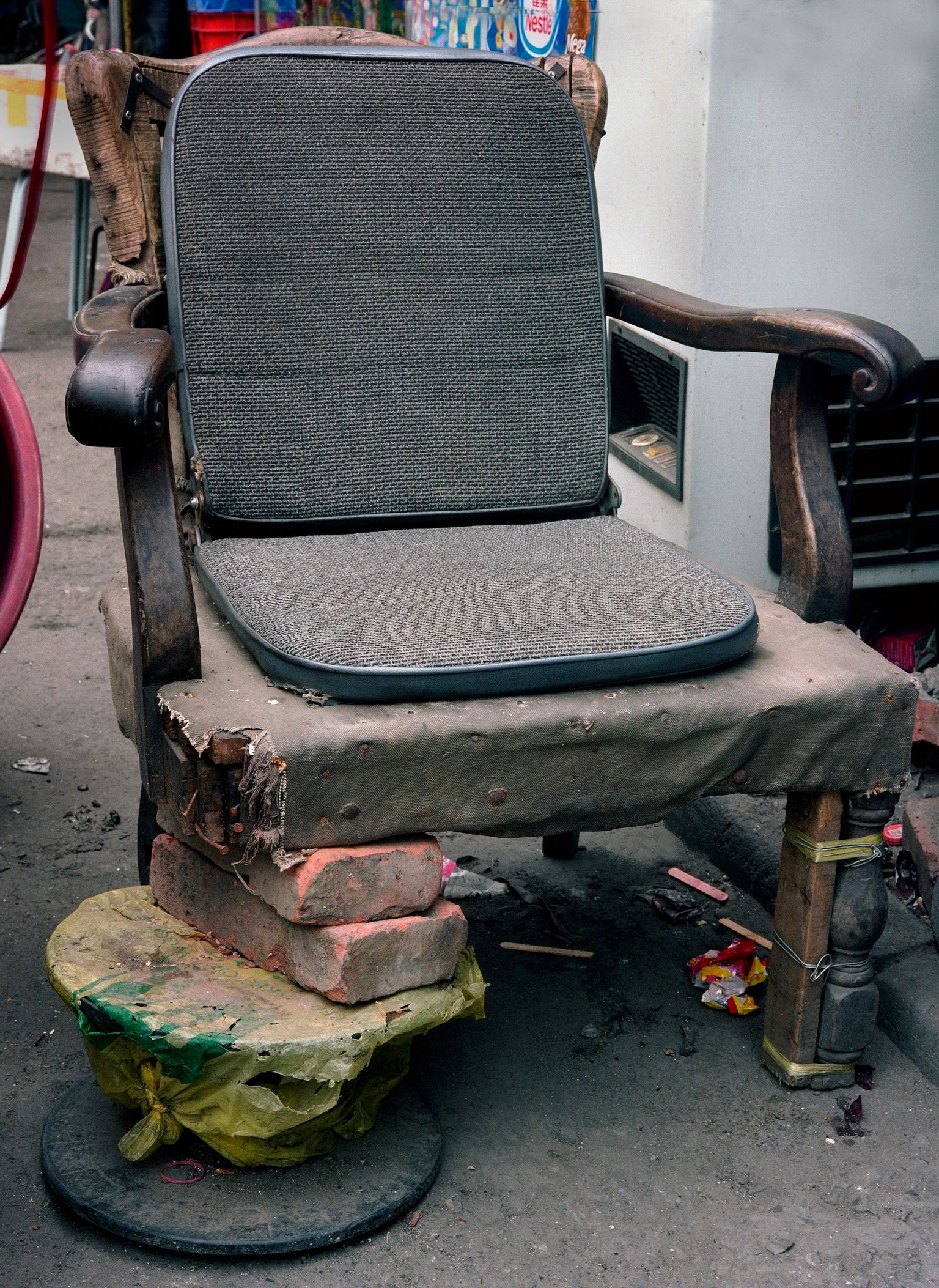
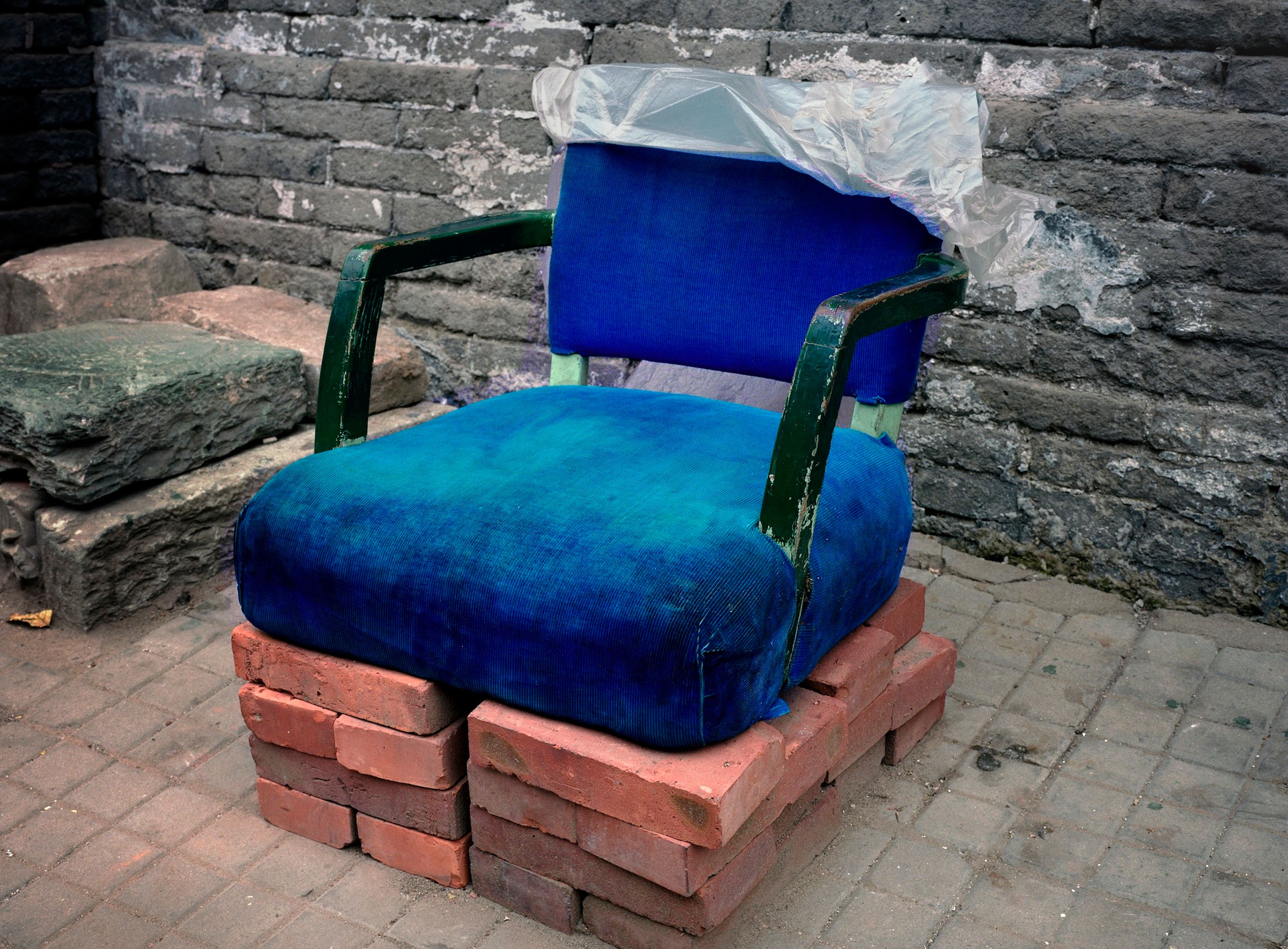
Carsten in der Elst This photo series of “backstreet smoking chairs,” spanning several decades, represents a poetic research into imperfection, improvisation and the absence of design for me. In a time where everything can be bought new within seconds, I often find the repaired more intriguing than the sleek. Some of these chairs are absolute works of art.

Objects Found On The Street
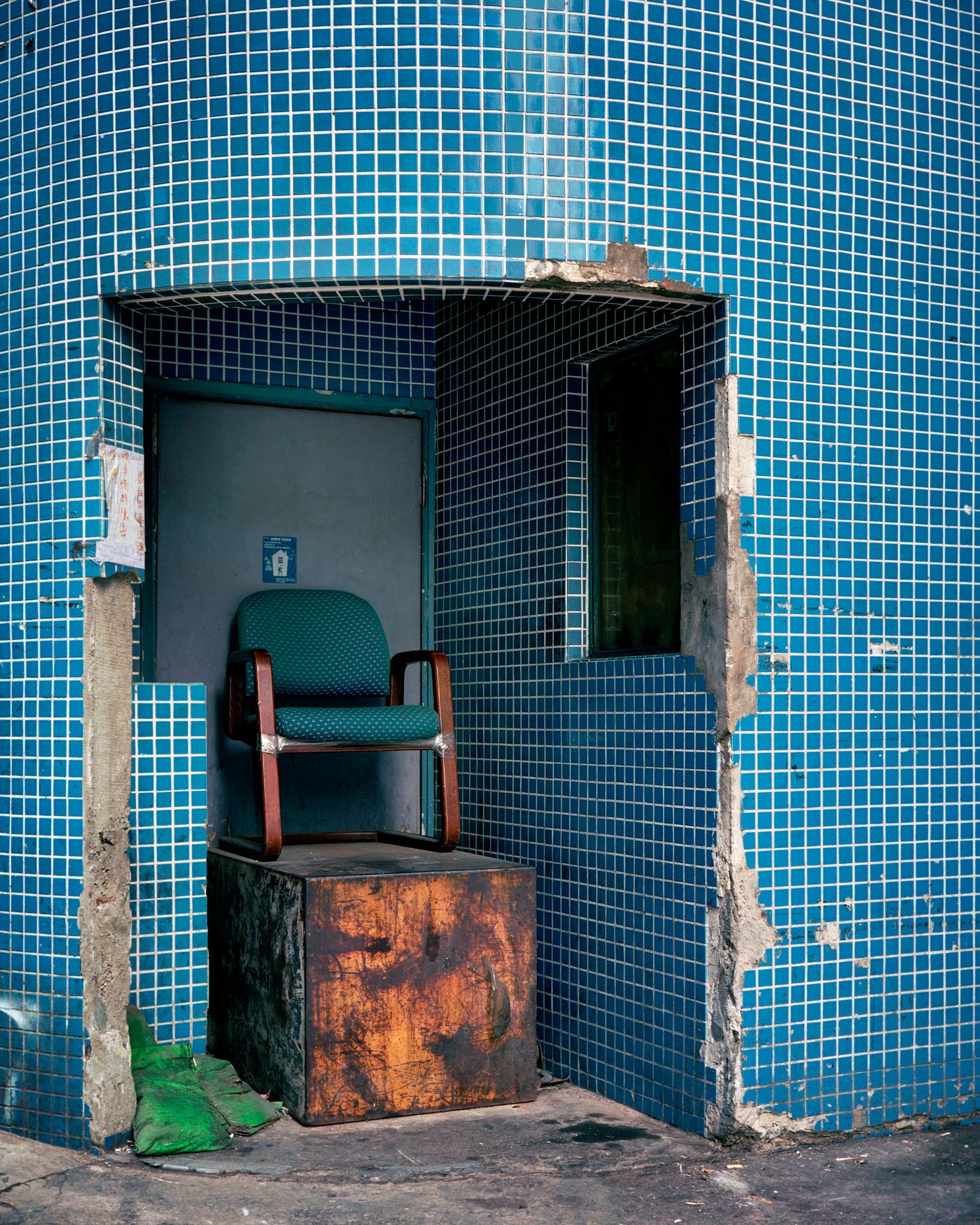
Bastard Chair is a photographic series by German photographer Michael Wolf, developed from the late 1990s and continuing through the 2010s, based on his long-term work in Hong Kong and mainland China. The project focuses on improvised chairs found in public and semi-public urban spaces, streets, back alleys, shop fronts, construction edges and informal resting points across the city.
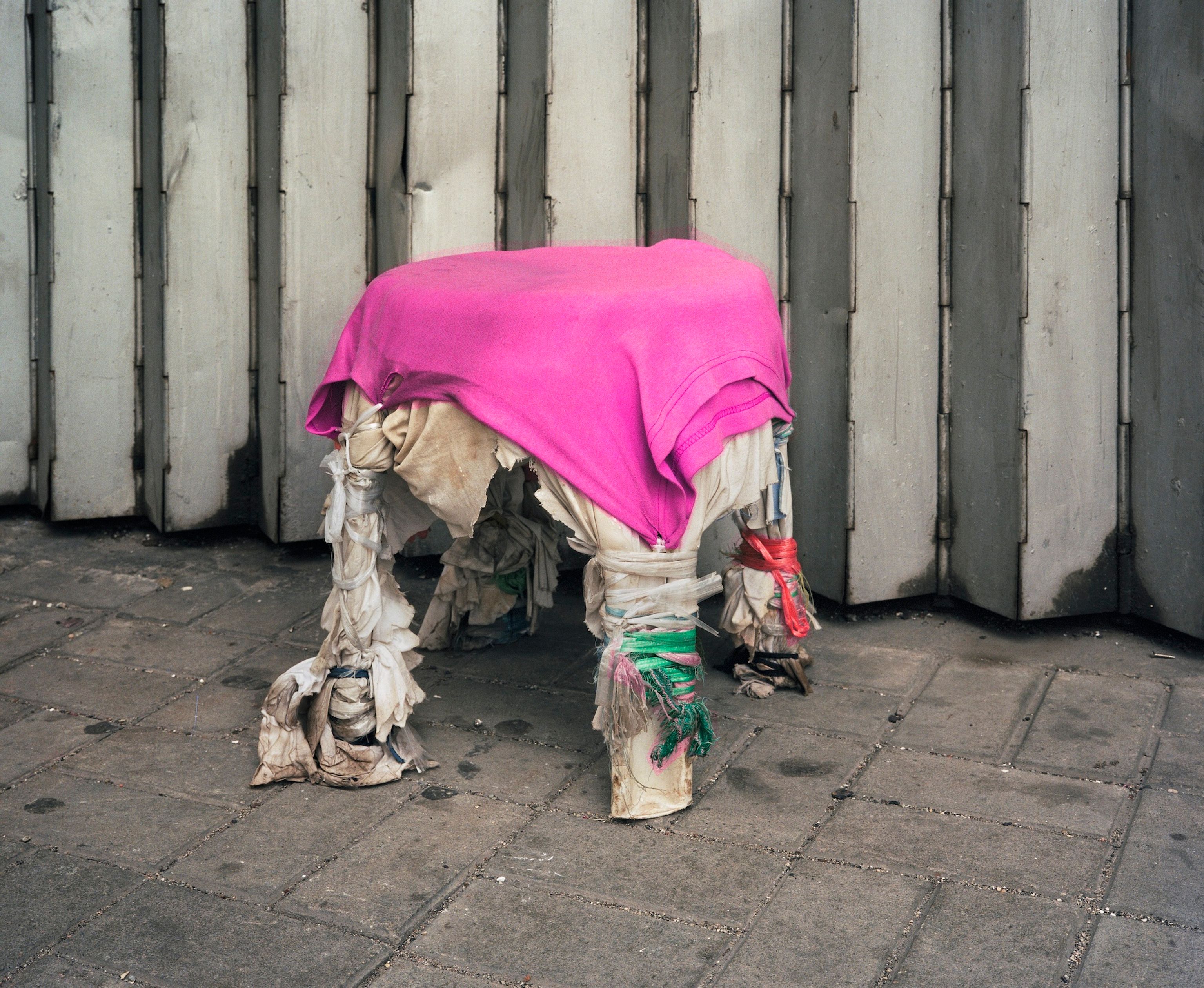

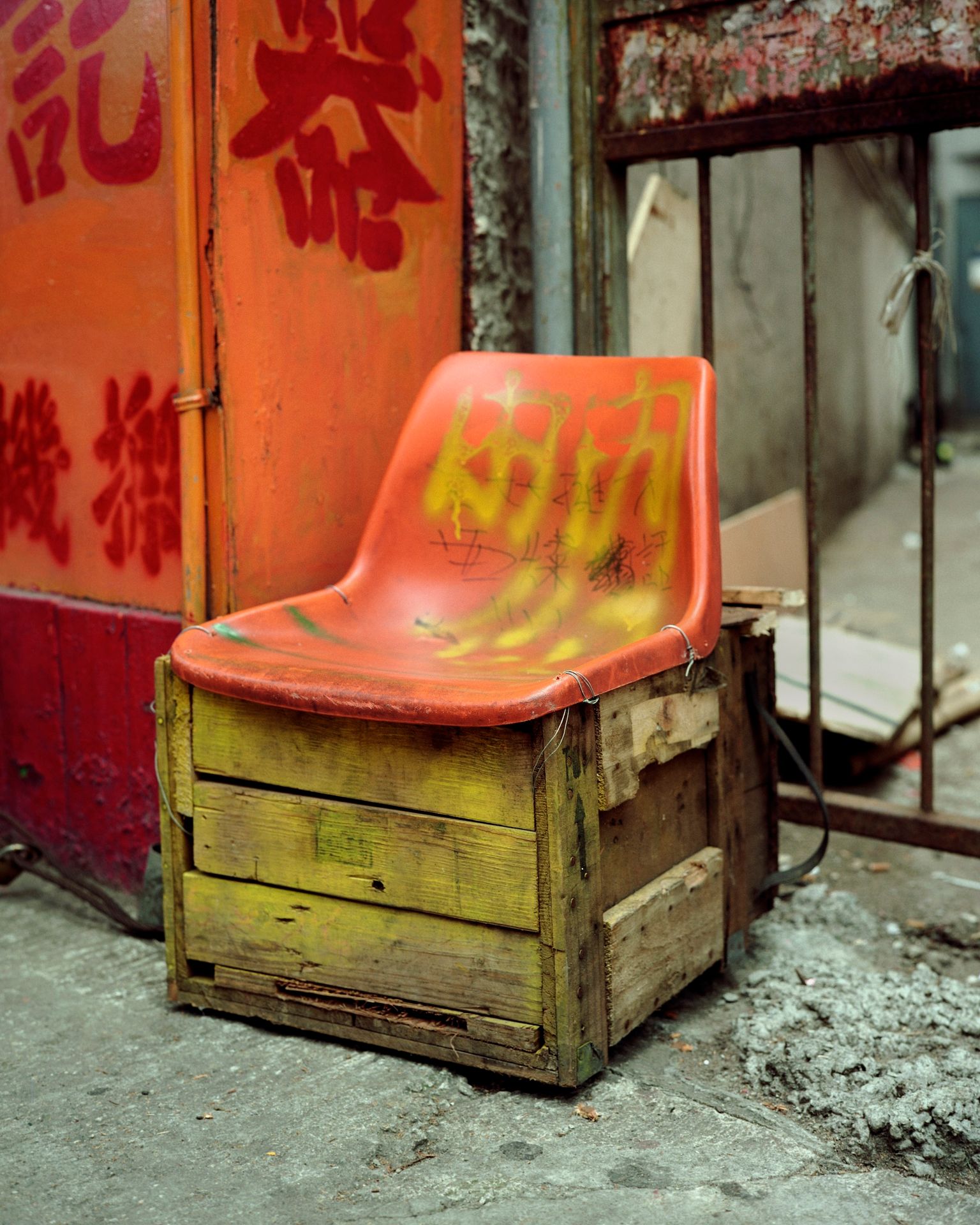
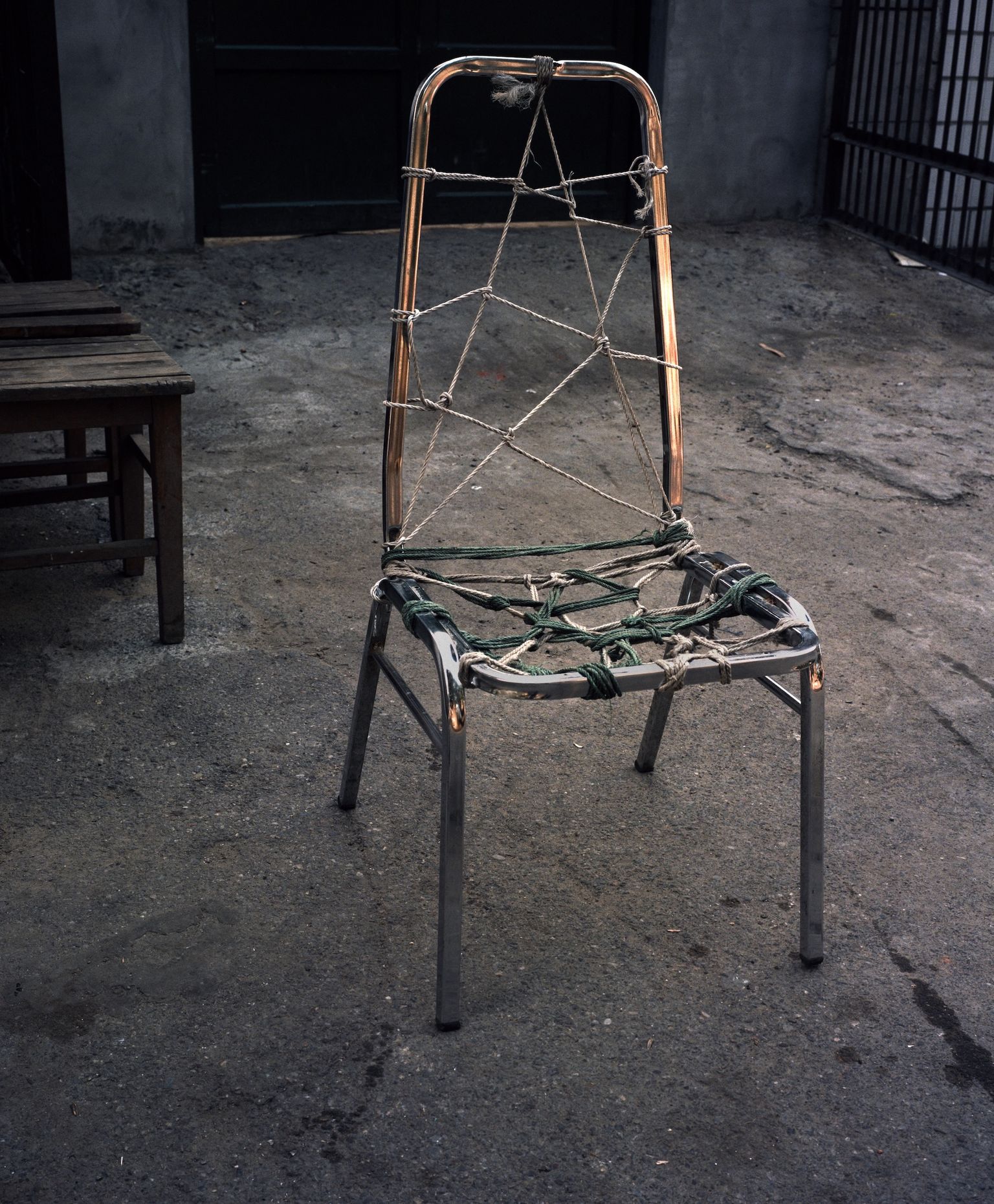
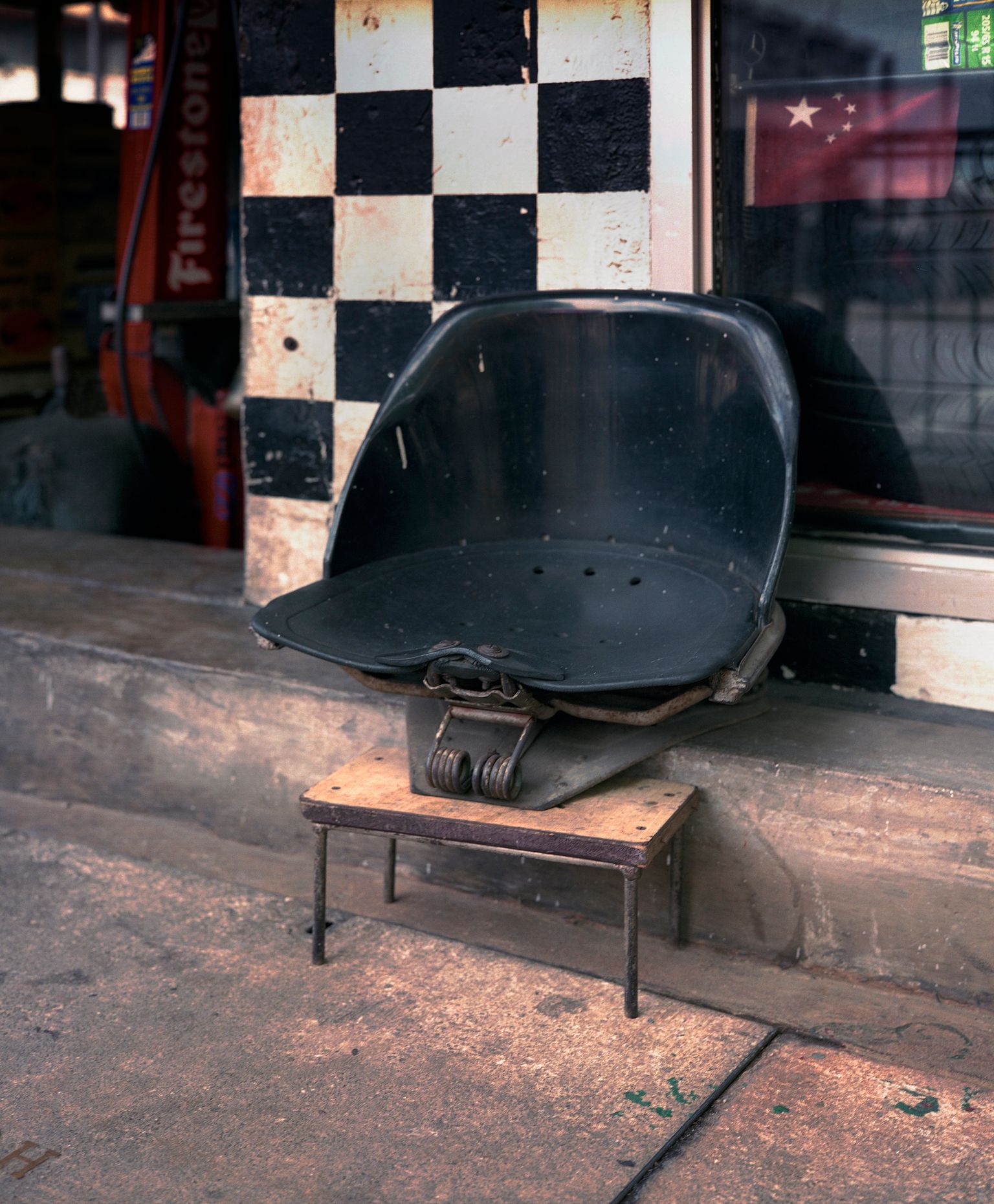
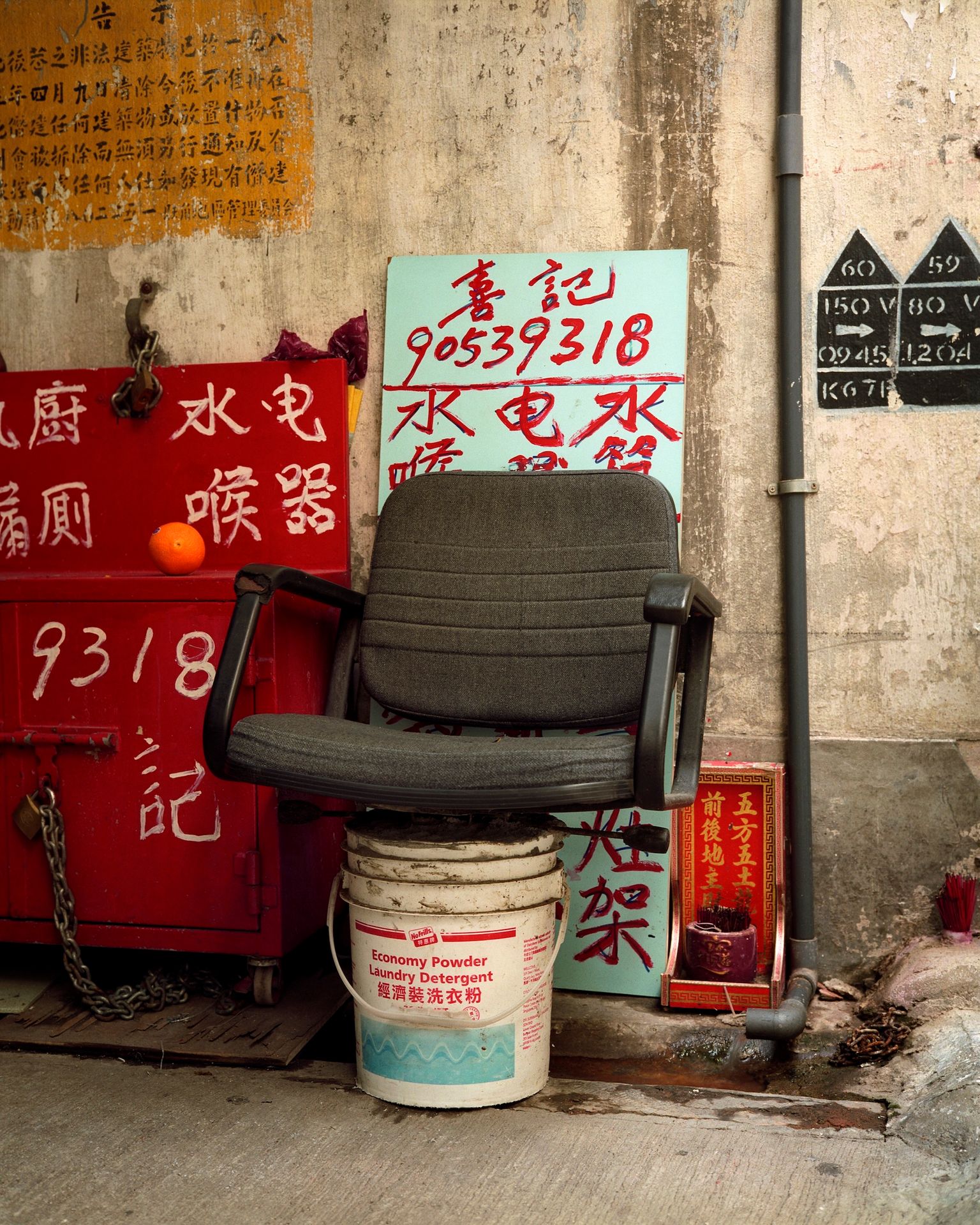
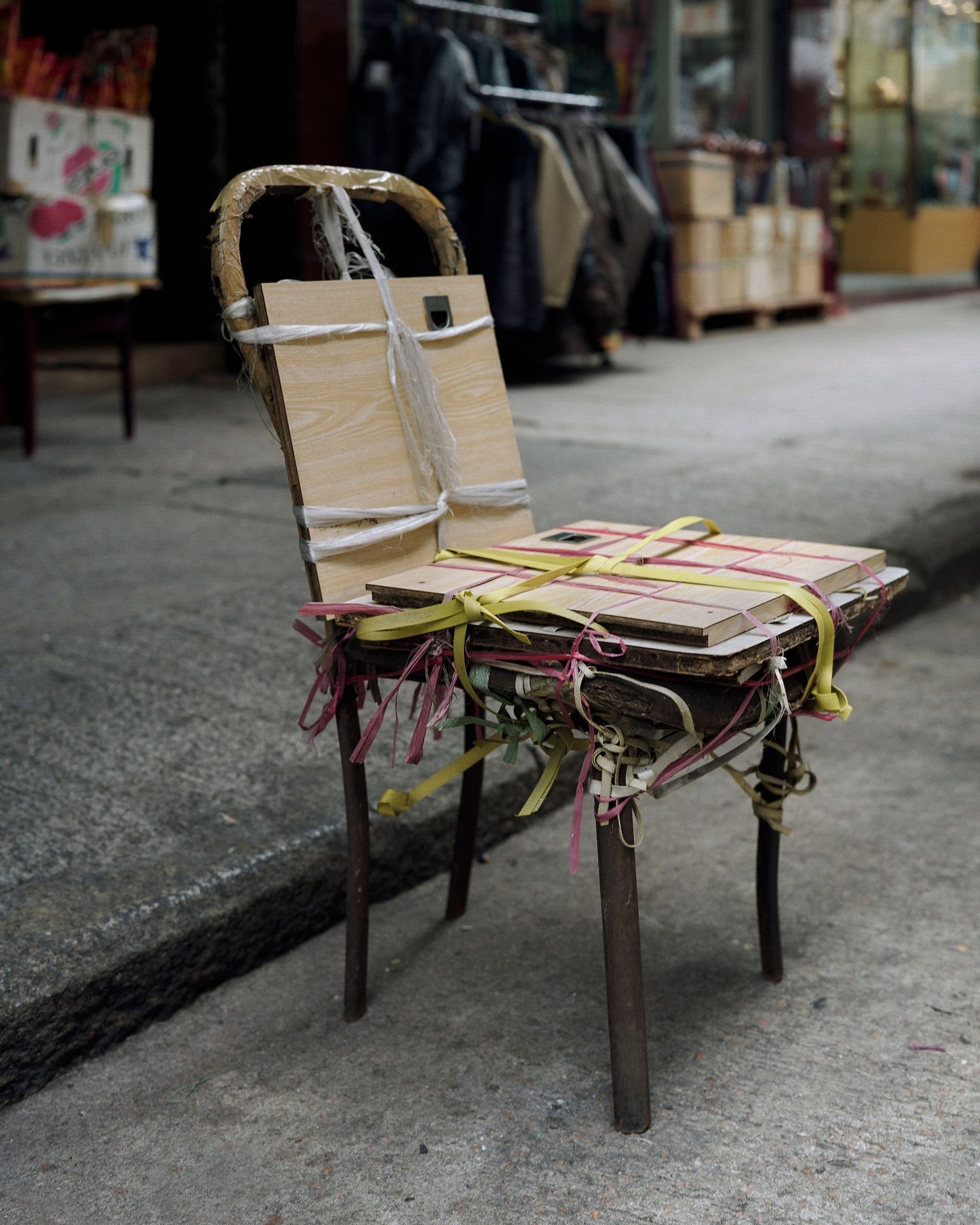
These are not designed objects, but practical constructions made by residents using whatever materials were available at hand: plastic shells fixed onto wooden frames, metal parts reworked and bolted together, surfaces reinforced with rope, tape, bricks or found debris. Wolf photographed them directly in situ, often as isolated objects against the texture of the street, without staging or rearrangement.

Michael Wolf And His Way Of Working
Wolf’s practice was deeply rooted in megacities, especially Hong Kong, where density and improvisation shape everyday space. Trained as a photojournalist in Germany, he gradually moved away from editorial assignments and towards long-term independent projects, where he could work more slowly and with greater attention to what usually goes unnoticed. Rather than focusing on events or iconic scenes, his work builds a visual reading of the city through repetition, adaptation and informal systems that sit alongside official design. In Bastard Chair, this approach becomes almost elemental: the city is not represented through people or architecture, but through the objects left behind by use, repair and necessity.


Improvisation As A Working System
The chairs in the series are built through accumulation rather than design. A broken frame is extended instead of replaced; missing parts are compensated for with whatever materials are close at hand. This creates objects where structure is always slightly unstable, yet still functional. Nothing is concealed or refined. Instead, joints, repairs and mismatched materials remain visible as part of the object’s identity. Wolf referred to them as “bastard chairs” in an affectionate sense, pointing to their hybrid and unresolved nature. The term captures both fragility and persistence, they exist because they are continuously adjusted rather than formally completed.

Street Objects With A History Of Use
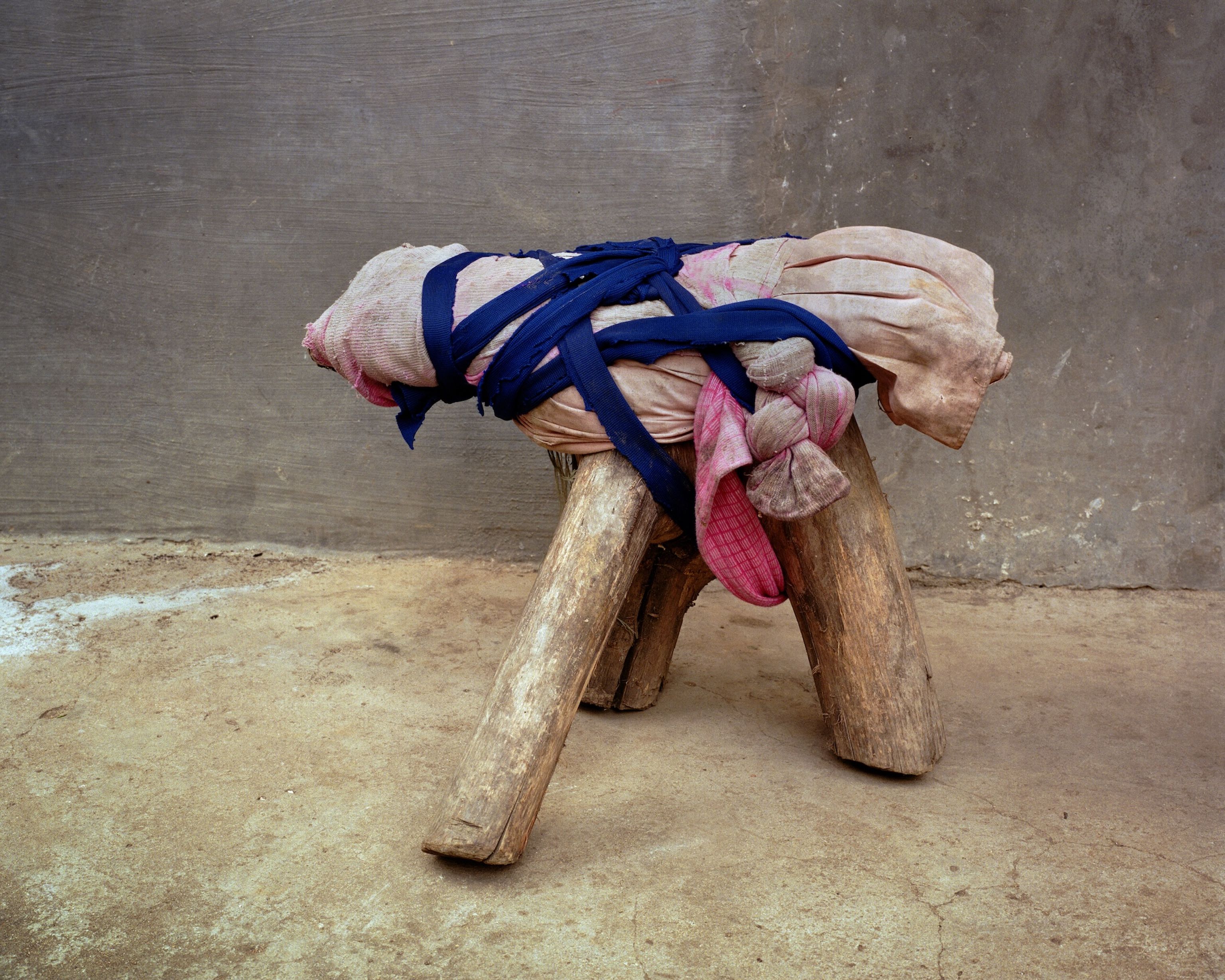
What gives the series its coherence is not the design of the chairs, but their accumulated history of use. Many appear repeatedly repaired, carrying visible layers of intervention. Tape wraps around stressed joints, additional supports are added where something has failed before, and surfaces are reshaped over time rather than by intention. Wolf’s photographs do not isolate ideal versions of these objects; instead, they present them as they are found, already in process. Each chair becomes a quiet record of maintenance, where stability is always temporary and repair is part of everyday life.


A Close Reading Of Everyday Urban Logic
Seen together, Bastard Chair reflects a broader condition in Wolf’s work: an attention to how cities are sustained through small, continuous acts of adjustment. Rather than treating the urban environment as a finished design, he reads it as something constantly negotiated at ground level. The chairs become a way of understanding this logic in physical form, simple, functional objects shaped by scarcity, creativity and repetition. Nothing in the series is presented as exceptional, yet the images form a clear portrait of a system where use comes before form, and where design is continually rewritten by necessity.