
Skidmore, Owings & Merrill
Beinecke Rare Book and Manuscript Library
- ArchitectGordon Bunshaft of Skidmore and Owings & Merrill
- Photographer© Ezra Stoller | Esto
Omar Gandhi Stone made luminous, mass made light – the kind of contradiction that only architecture can hold.

The Beinecke Library as a Home for Rare Knowledge
The Beinecke Rare Book and Manuscript Library at Yale University is one of the world’s most significant buildings dedicated entirely to rare books and manuscripts. Completed in 1963, the library was designed to protect and provide access to Yale’s extraordinary collection of historical texts, including ancient manuscripts, literary archives, and one of the few surviving copies of the Gutenberg Bible. More than a storage facility, the building creates a carefully designed environment where research, preservation, and public experience come together.
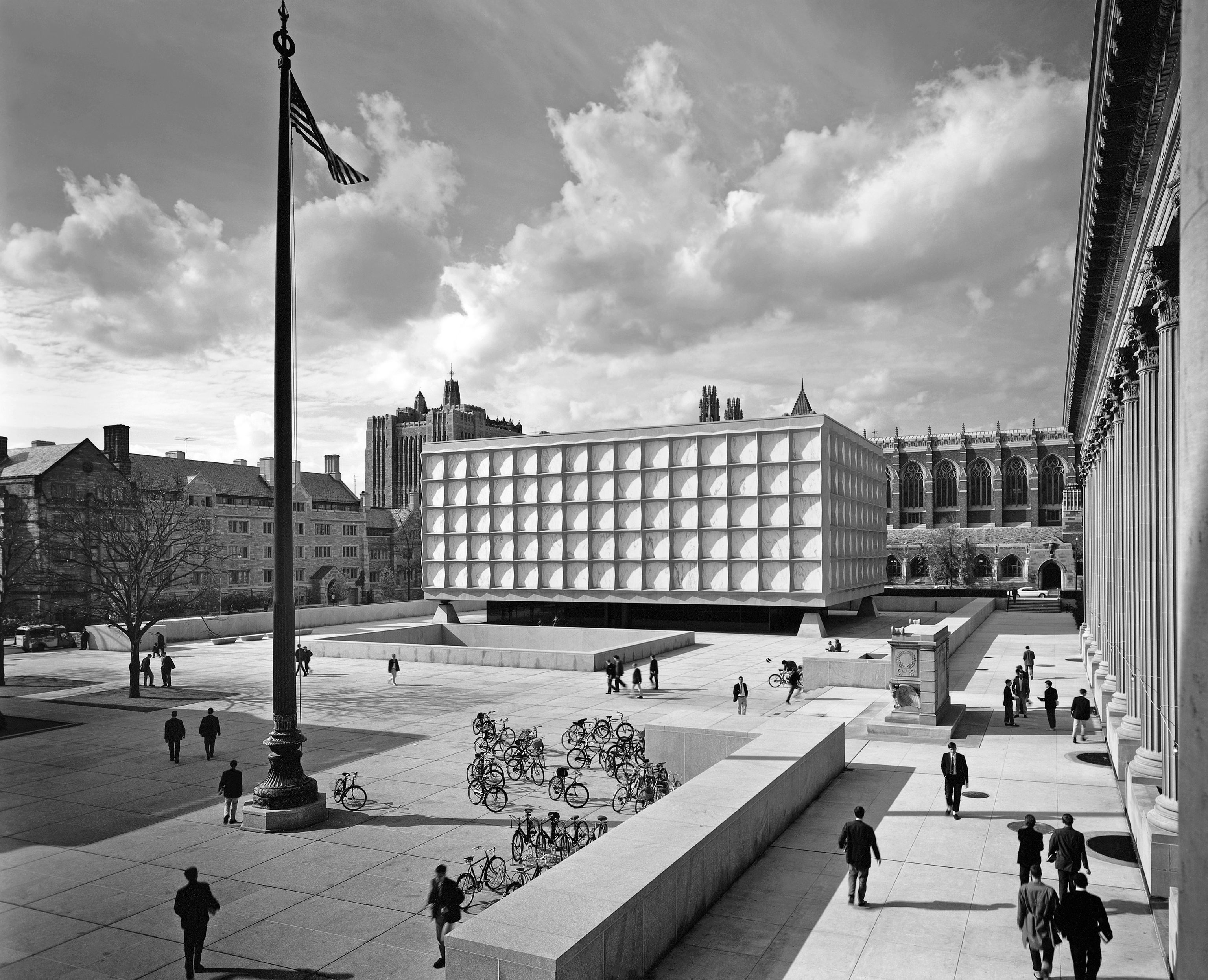
Located on Yale University’s Hewitt Quadrangle in New Haven, Connecticut, the library stands in contrast to the surrounding Gothic and Neo-Classical buildings of the campus. Its modern geometric form introduces a different architectural language, using light, stone, and structure to create a quiet and contemplative atmosphere. The building’s unusual appearance reflects its purpose: to protect valuable materials while expressing their cultural importance.

A New Building for Yale’s Growing Collection
The history of the Beinecke Library began with Yale’s long tradition of collecting rare books and manuscripts. Since the university’s foundation in 1701, generations of donors and scholars contributed important texts, gradually creating a collection that became too large for existing library spaces. By the mid-twentieth century, the university needed a building specifically designed for the preservation and study of these materials.
The project was made possible through a major donation from the Beinecke family, who had previously supported Yale through gifts of books and archives. Their contribution allowed the university to create a dedicated rare book library that could bring together important collections, including American literature, Western Americana, and historical manuscripts. The new library represented a shift in how rare collections were understood. Rather than hiding valuable materials away, the building was conceived as a place where scholars and visitors could engage with them through research, exhibitions, and public display.

Gordon Bunshaft and SOM’s Modern Approach
The library was designed by Gordon Bunshaft of Skidmore, Owings & Merrill (SOM), one of the most influential architectural firms of the twentieth century. Founded in 1936, SOM became known for its combination of architectural design and engineering expertise, shaping many important examples of modern architecture in the United States and internationally.
Bunshaft, who joined SOM in 1937, was recognized for his precise geometric designs and his ability to express structure through architecture. His work often explored the relationship between materials, technology, and human experience. In designing the Beinecke, he focused on the specific requirements of a rare book library: controlling light, protecting delicate materials, and creating an environment suitable for study. Instead of creating a traditional library, Bunshaft developed a building where the architecture itself communicates the value of the collection. The result is a carefully balanced composition of enclosure and openness, where the protected interior becomes the central focus.

A Stone Facade Made of Light
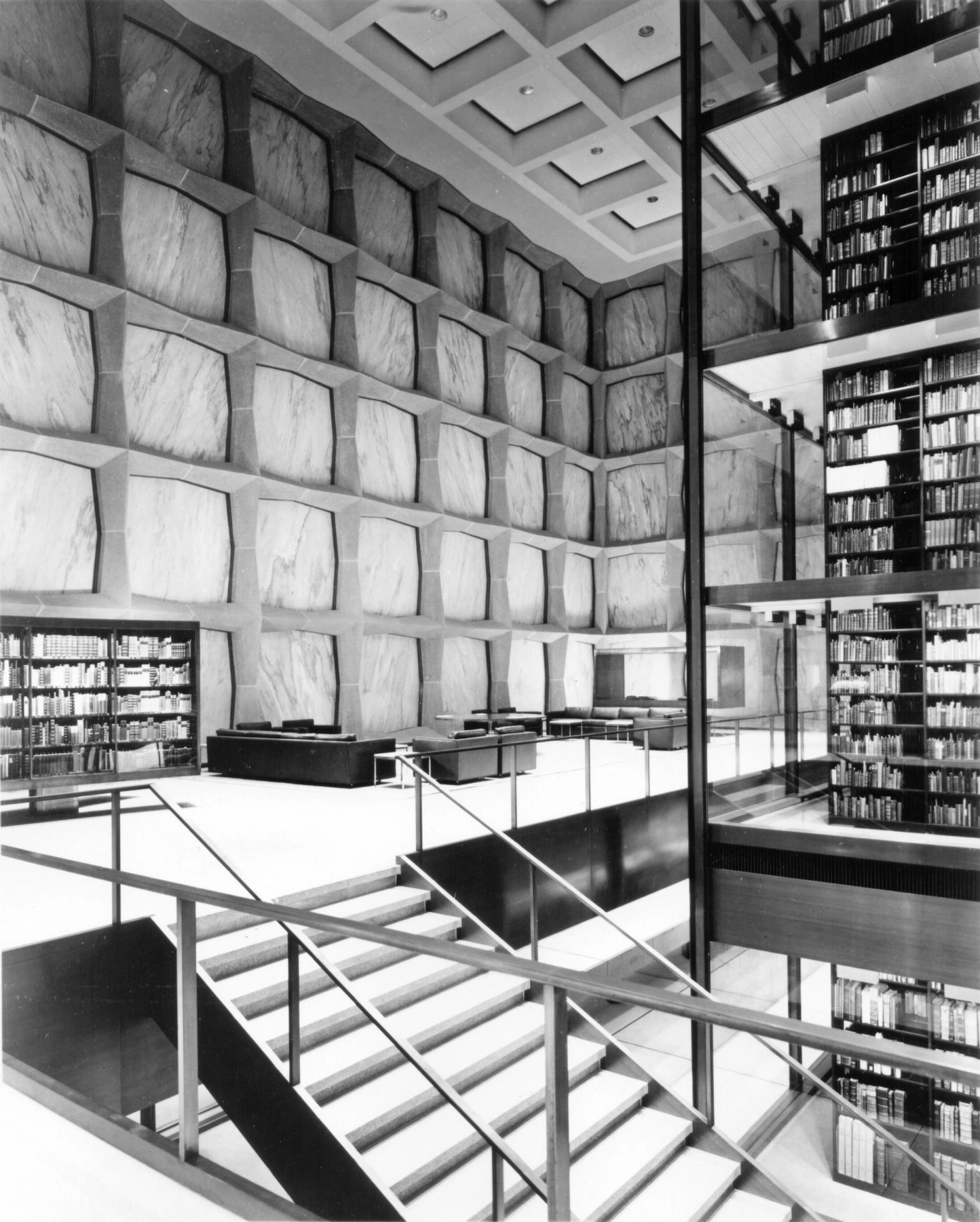
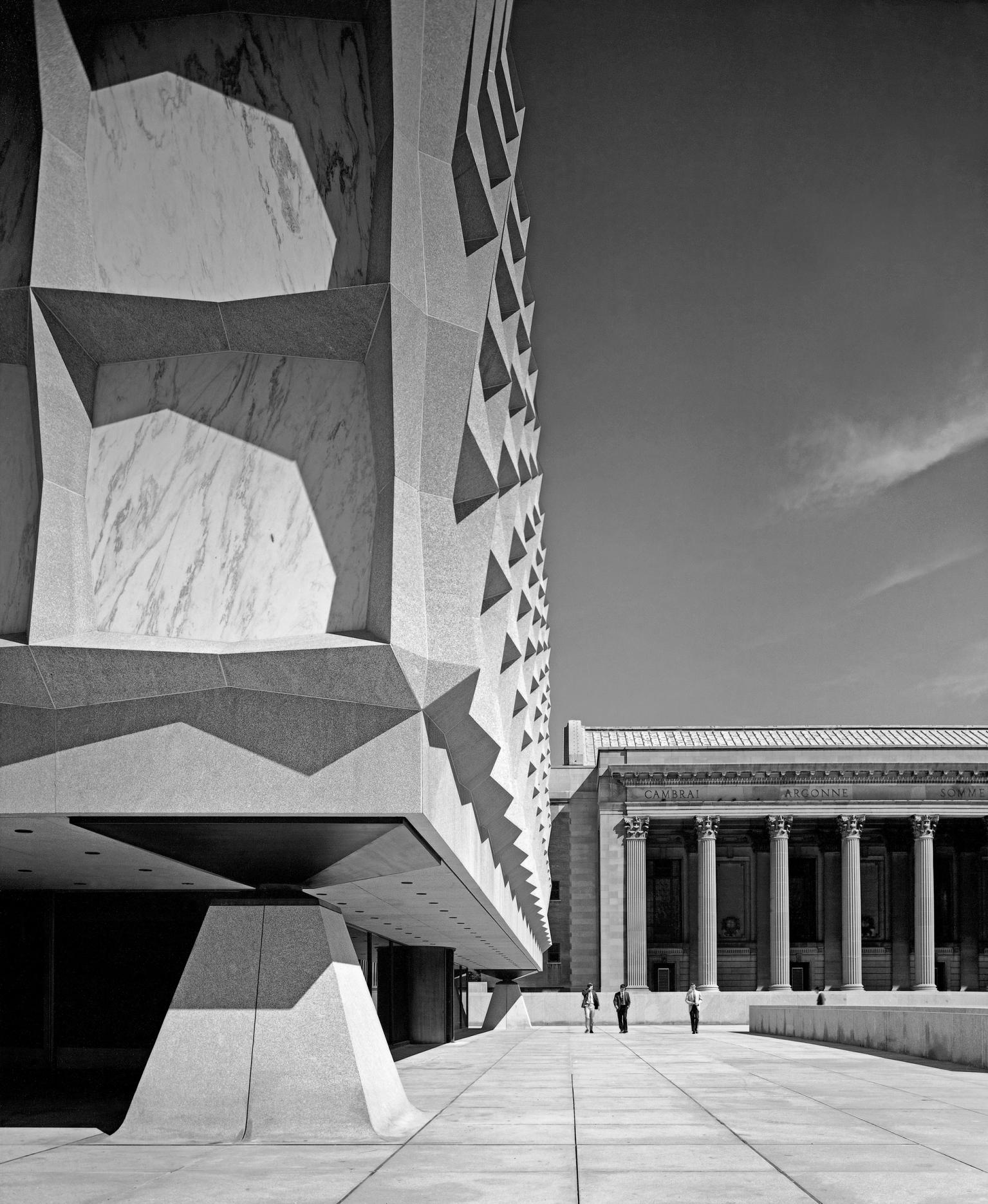
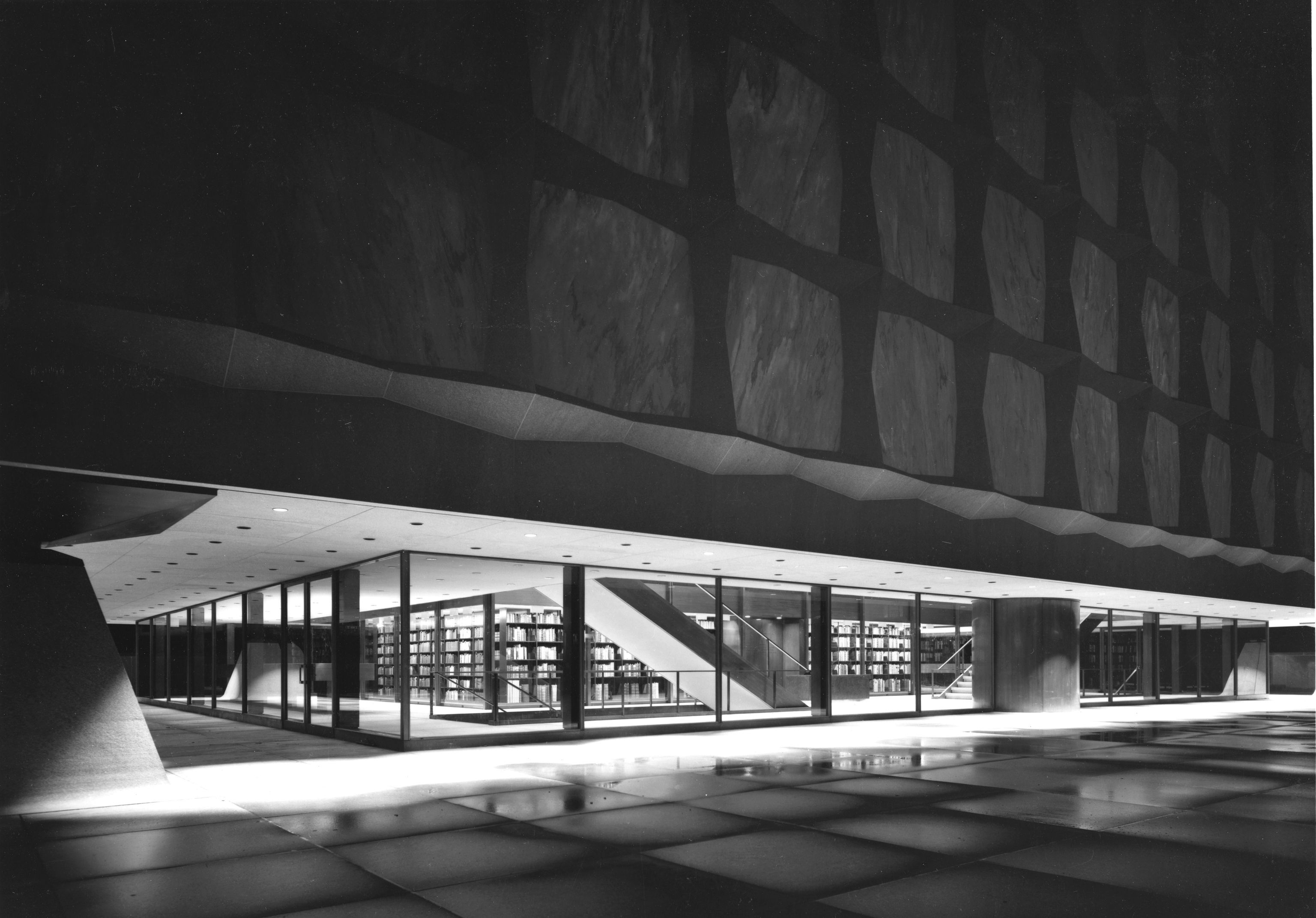
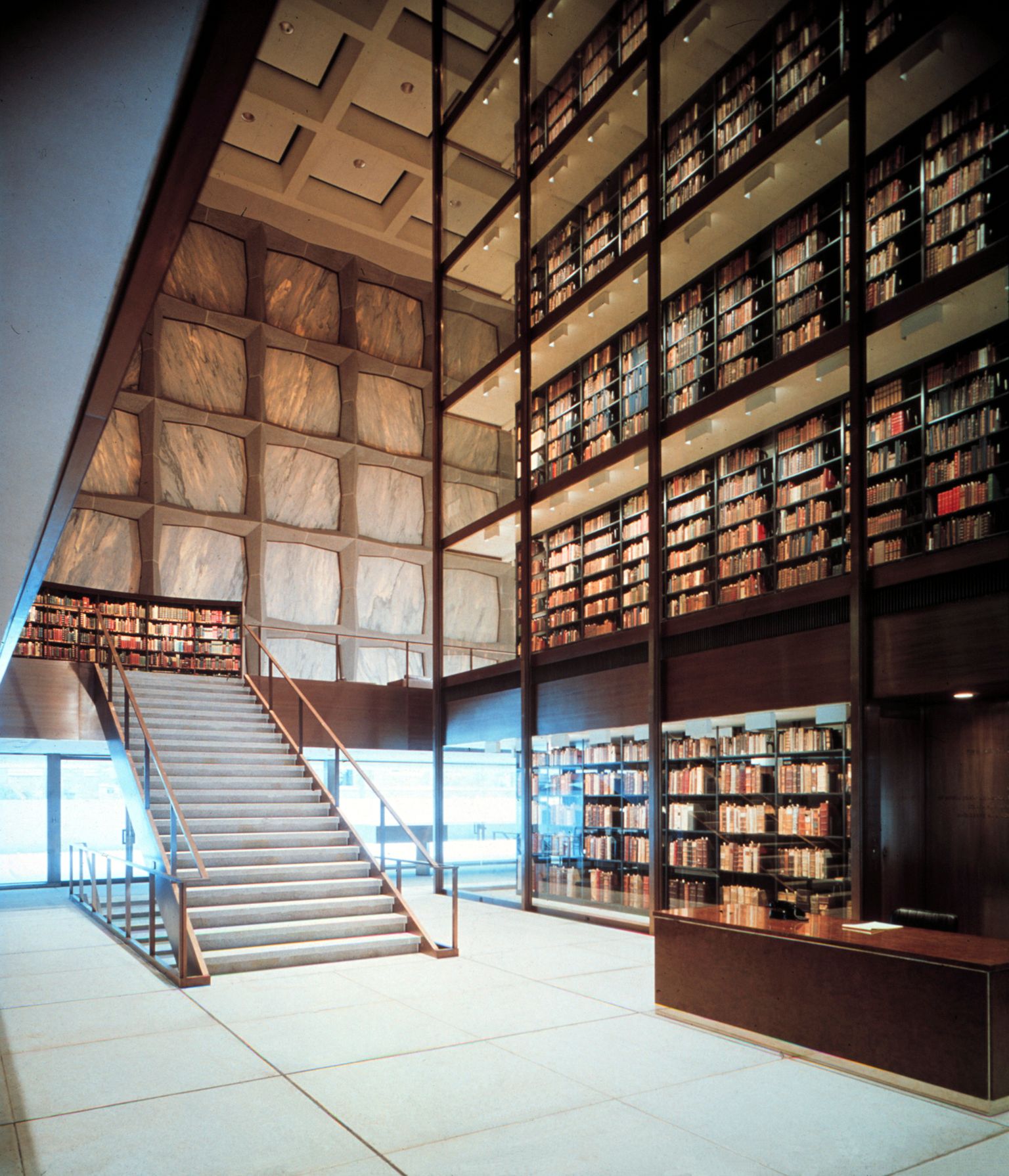
The defining feature of the Beinecke Library is its translucent marble façade. The exterior consists of thin panels of white marble from Danby, Vermont, placed within a structural grid of granite and steel. From the outside, the building appears solid and almost inaccessible, but the marble allows filtered daylight to enter the interior, creating a soft golden glow. This approach solved one of the building’s greatest challenges: allowing natural light into the library while protecting fragile books from direct sunlight. The marble acts as both a protective layer and an architectural element, changing throughout the day as the quality of light shifts.
The structure reflects SOM’s interest in combining engineering and design. The façade is supported by a steel framework connected to four massive corner piers, allowing the ground level to remain open and transparent. Through its precise proportions and carefully selected materials, the building achieves a balance between strength, delicacy, and permanence.

Inside the Glass Book Tower
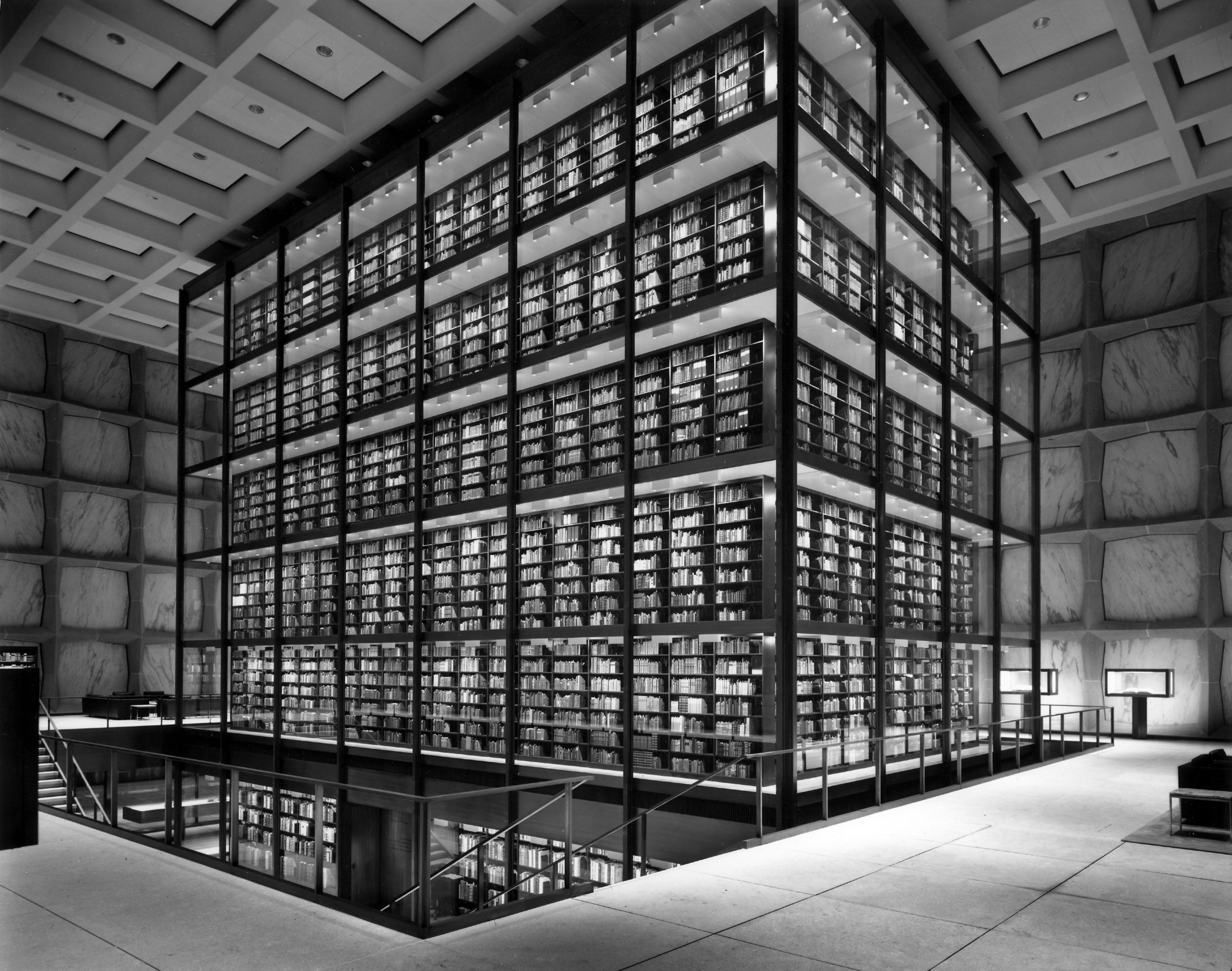
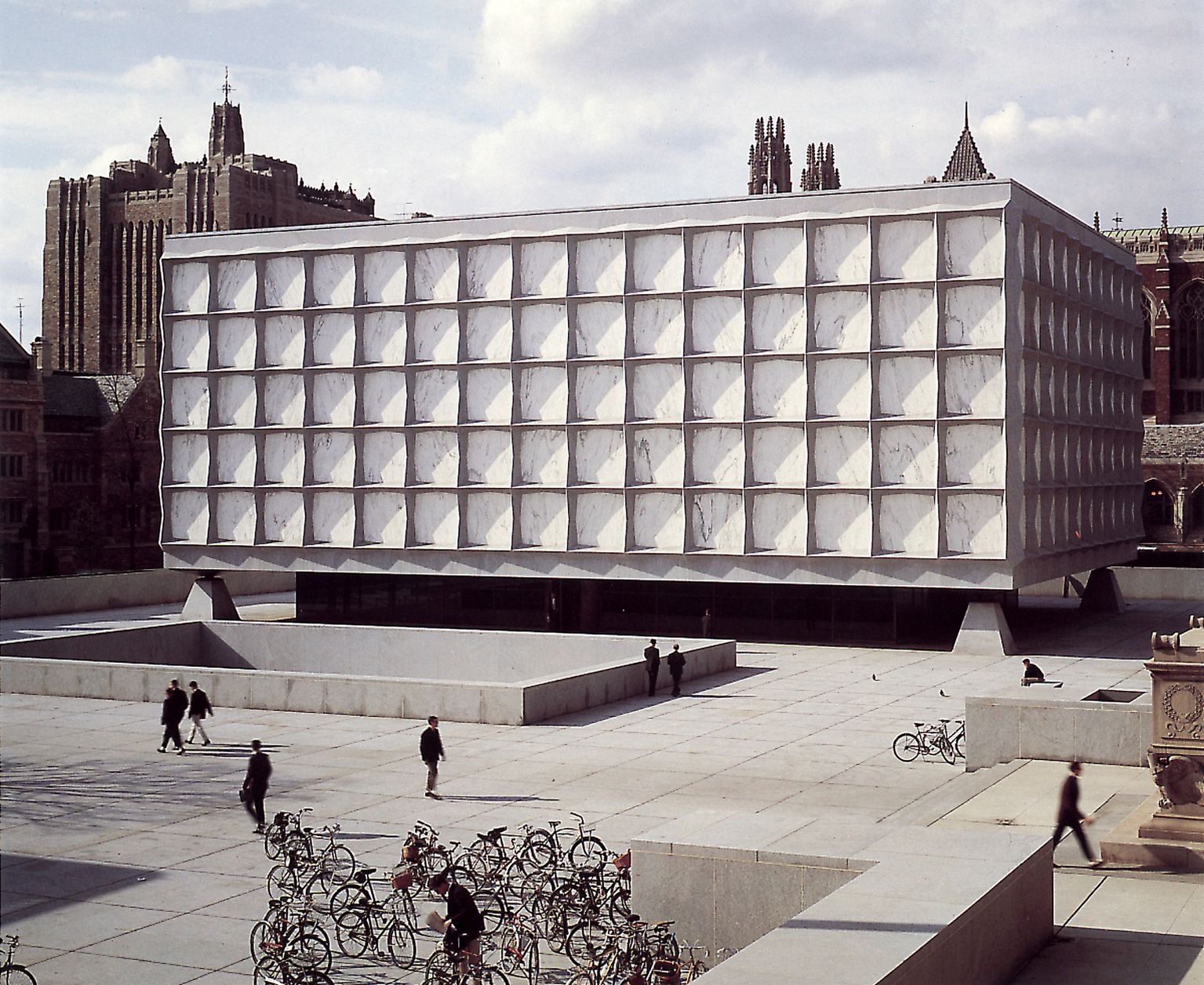
Inside the Beinecke Library, the relationship between architecture and collection becomes immediately visible. The central glass tower rises through the exhibition hall and contains approximately 180,000 volumes, placing the books at the heart of the building. Although the collection is protected behind glass, its presence shapes the entire experience of the interior. A mezzanine level surrounds the tower and provides space for exhibitions, allowing visitors to view rare materials while experiencing the building from different levels. Below ground, additional floors contain research facilities, offices, classrooms, and storage areas designed to support the library’s daily work.
The sunken courtyard by artist Isamu Noguchi adds another dimension to the building. His three abstract marble sculptures, representing time, the sun, and chance, create a reflective space beneath the library, connecting architecture with broader ideas about knowledge and human experience.
Legacy of a Modern Landmark
When the Beinecke Library opened, its modern appearance challenged expectations of what a university building should be. Positioned among Yale’s historic architecture, the stone cube was initially controversial, with some critics questioning its relationship to the surrounding campus. Over time, however, the building became widely recognized as one of the most important works of twentieth-century library architecture.
Its influence comes from the way it combines technical precision with a strong architectural identity. The Beinecke demonstrated that buildings for preservation could also be expressive cultural spaces, where materials and structure contribute to the experience of knowledge.
Following renovations completed between 2015 and 2016, the library continues to serve researchers, students, and visitors while maintaining Bunshaft’s original vision. Today, it remains a powerful example of how architecture can transform the act of protecting history into an experience of discovery.