
Darren Sylvester
Broken Model
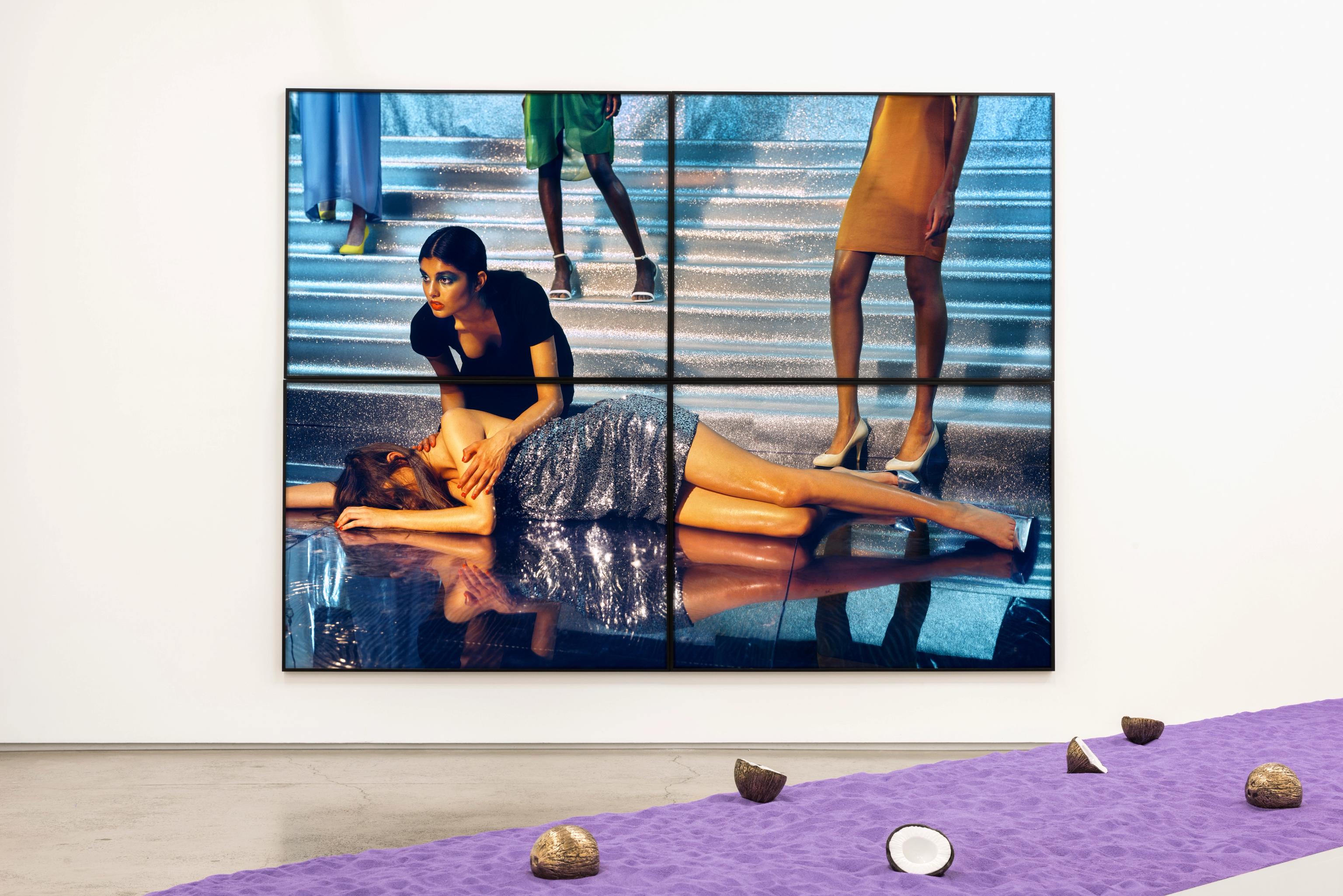
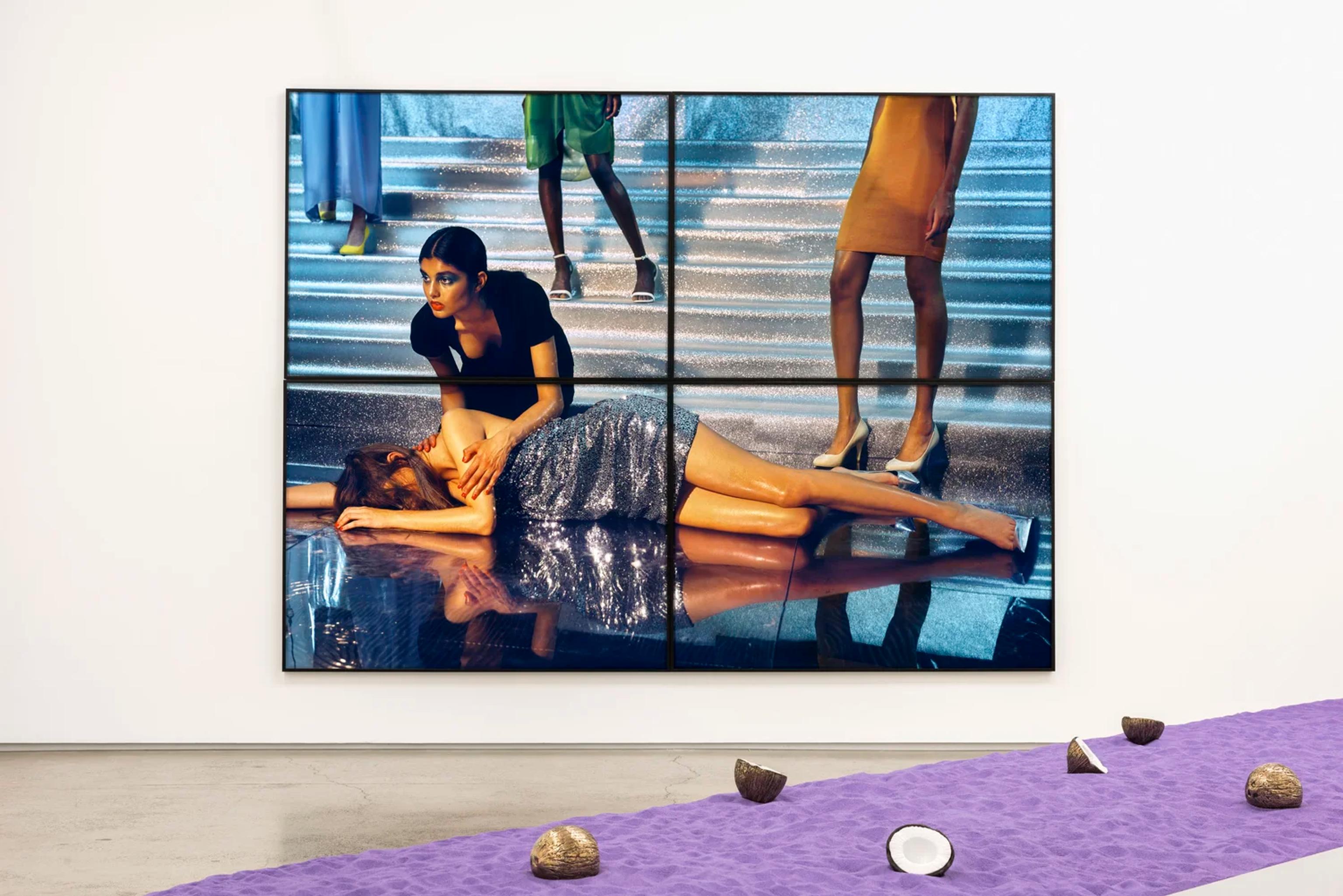
- PhotographerDarren Sylvester, Broken Model 2016, lightjet prints, 240 x 320 cm. Courtesy the artist and Neon Parc
Anson Smart Darren’s work moves between photography, video, sculpture and music, what drew me to Darren’s work is seeing his large scale photographic work from this series hanging in some of the spaces/homes I have photographed. One particular image from Broken Model depicts a model fallen on the catwalk inspired by an actual staged event at a Jean Paul Gaultier show, Darren staged his own Broken Model scene a polished high fashion moment that challenges the viewer to address a theme in his work, our relationship with media where authentic moments are just scripted manufactured moments to draw us in.

A World Built from Images
Presented at Sullivan+Strumpf in Sydney in 2016, Broken Model is one of Darren Sylvester’s most immersive explorations of contemporary image culture. Combining large-scale photography, sculpture, and installation, the exhibition transforms the gallery into a theatrical environment where fashion, advertising, cinema, and consumer fantasy collide. Rather than documenting reality, Sylvester constructs it, drawing on familiar cultural references and reworking them into scenes that feel simultaneously believable and artificial. The result is a carefully staged world that reflects the visual landscape of contemporary life, where aspiration is constantly manufactured through images.

Darren Sylvester
Melbourne-based artist Darren Sylvester has spent more than two decades examining the relationship between popular culture and personal experience. Working across photography, video, sculpture, installation, and music, he is known for creating highly orchestrated images that borrow from advertising, fashion editorials, celebrity culture, and entertainment.
Since emerging in the late 1990s, Sylvester has developed a distinctive visual language characterised by saturated colour, cinematic staging, and meticulous production. His work often explores themes of desire, ambition, insecurity, romance, and consumerism, revealing how deeply these emotions are intertwined with the products, brands, and media that surround us. Rather than offering straightforward criticism, Sylvester treats consumer culture as a condition of contemporary life, something both seductive and unavoidable.

The Broken Model
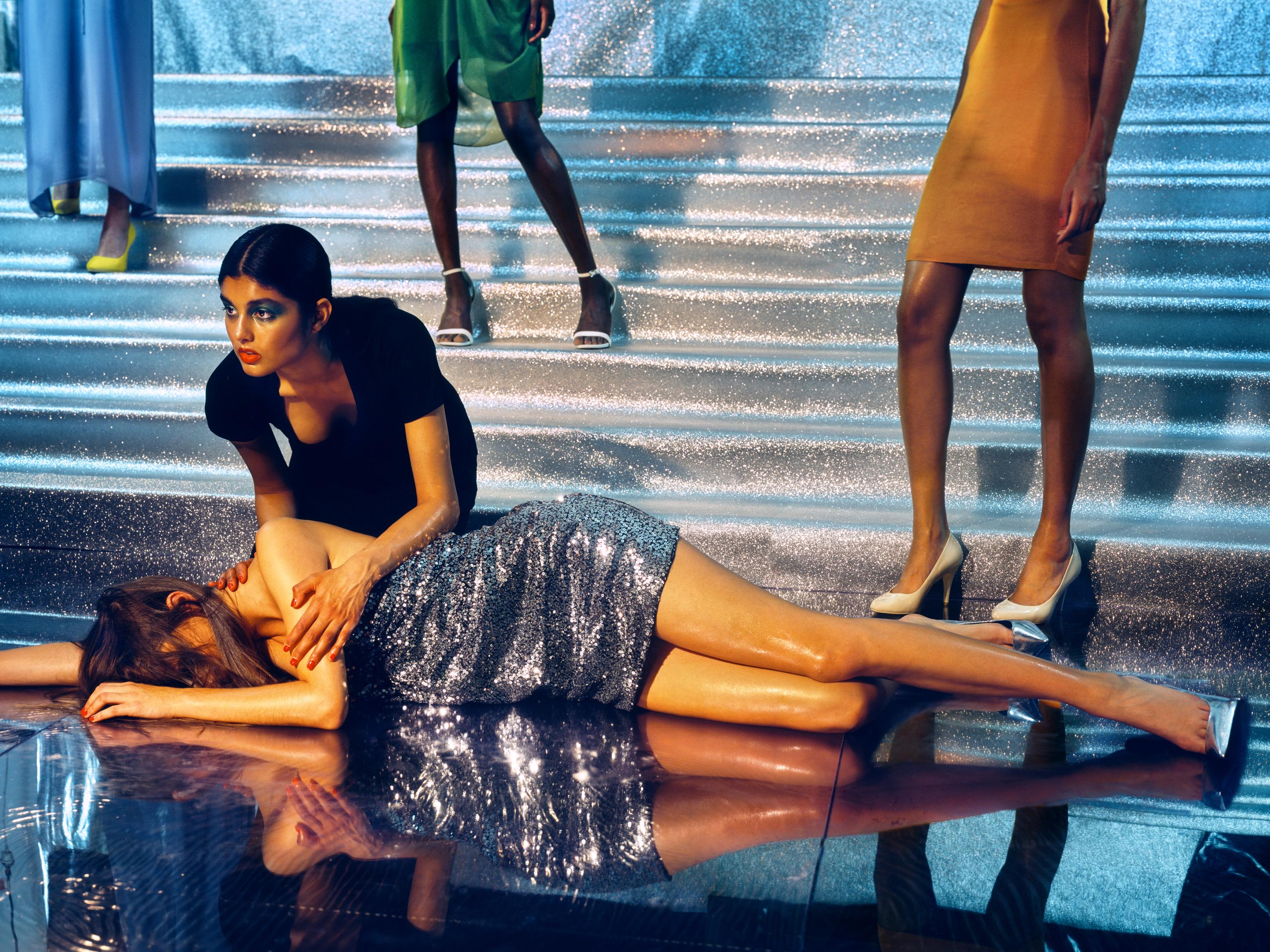
At the centre of the exhibition is the photograph Broken Model, a monumental image depicting a fashion model collapsed on a glittering runway while another model kneels beside her. The work recreates a staged incident involving Canadian model Coco Rocha during Jean Paul Gaultier’s farewell fashion show in Paris. By enlarging this fleeting performance to billboard scale, Sylvester transforms a moment of fashion theatre into something resembling a contemporary history painting. The image is dramatic and emotionally charged, yet its artificial origins remain visible. This tension between sincerity and performance runs throughout the exhibition, raising questions about authenticity in a culture increasingly shaped by spectacle.

To Live
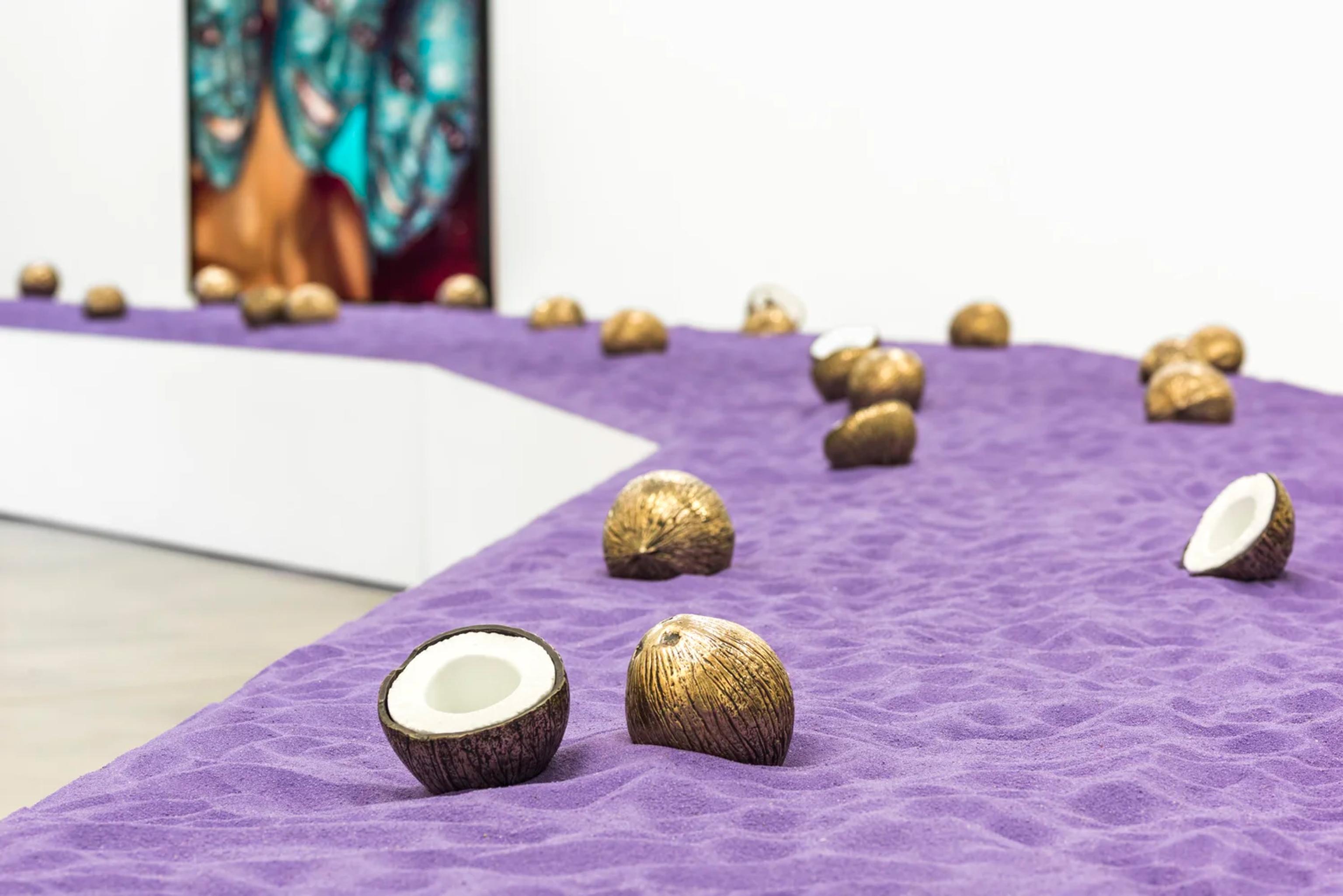
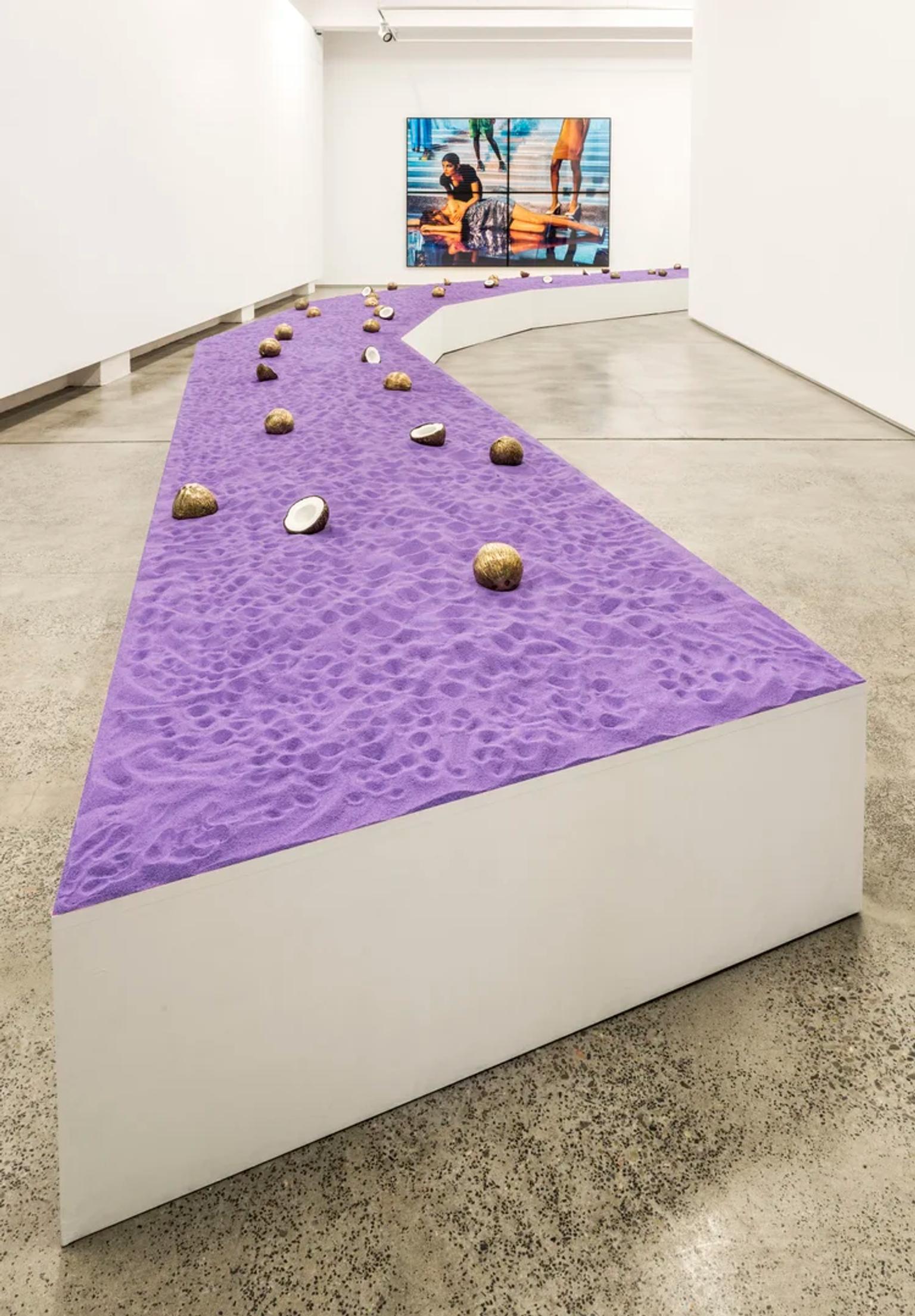
The photographic works are accompanied by To Live, a large sculptural installation that extends the exhibition into physical space. A thirteen-metre catwalk covered in vividly coloured purple sand cuts through the gallery, guiding visitors through the environment without ever arriving at a clear destination. The sugary hue of the sand recalls bubble gum, cosmetics, and commercial display, while bronze and porcelain coconuts are arranged along the runway like luxury products in a boutique window. The installation originated from Sylvester’s fascination with two seemingly unrelated images: Tom Hanks attempting to open a coconut in Cast Away (2000) and the staged collapse of Coco Rocha on the runway. By bringing these references together, he creates an environment that is both humorous and unsettling, where tropical fantasy and fashion spectacle become impossible to separate.
Staging and Fabrication
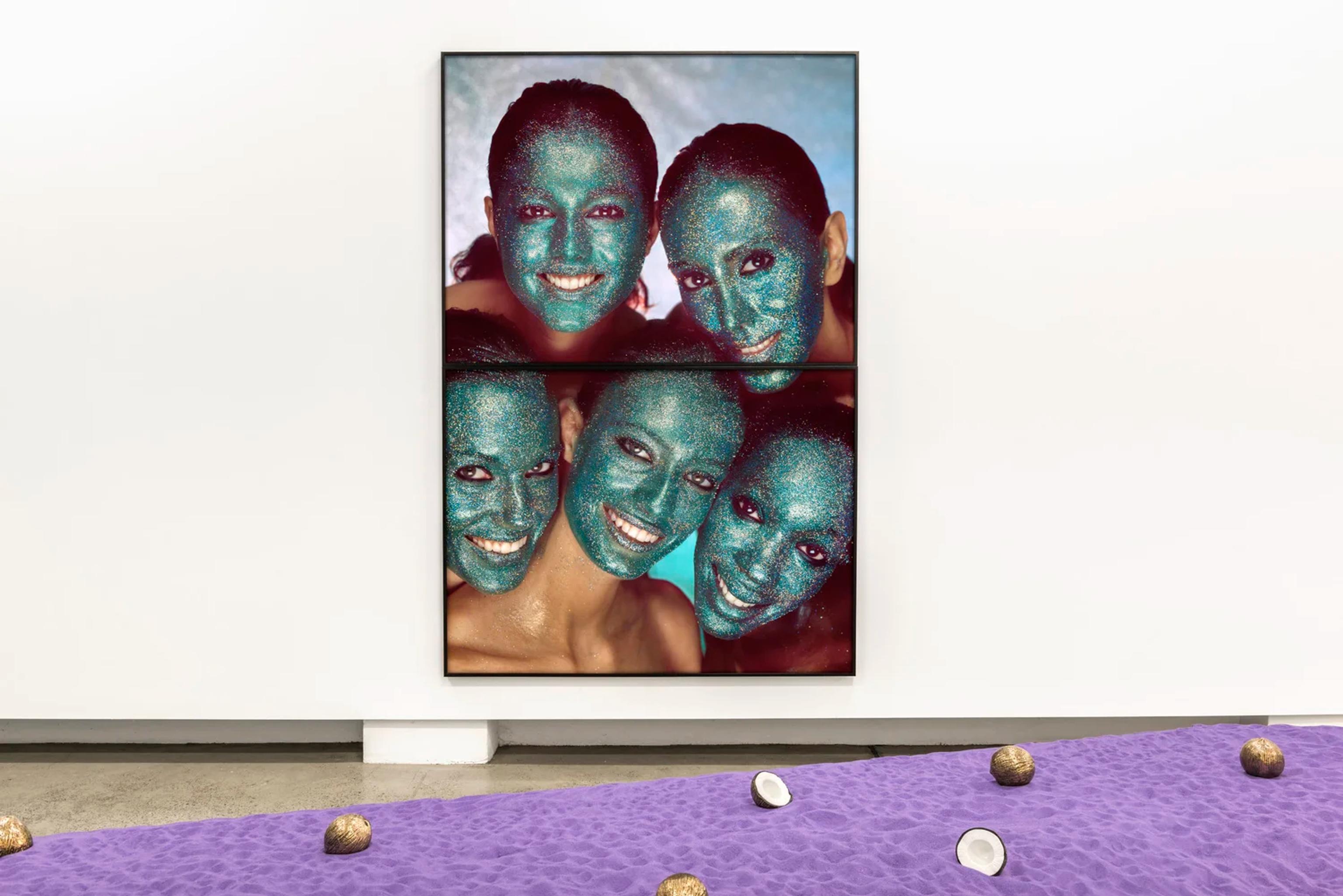
Although Sylvester’s work appears effortless, every element is carefully orchestrated. For Broken Model, he returned to shooting on large-format 4×5 transparency film after a period of working digitally. The photographs were meticulously scripted, staged, and produced, then enlarged to more than three metres in height. This scale amplifies every detail, from facial expressions to the artificial glitter applied to the models’ faces. In works such as Green Editorial, the models stare directly at the viewer with bright green cosmetic pigment covering their skin, referencing beauty campaigns and magazine editorials while exposing the constructed nature of those images. Throughout the exhibition, Sylvester deliberately blurs distinctions between fact and fiction, encouraging viewers to question what they are seeing.

Beyond Consumer Culture
While Broken Model draws heavily from fashion and advertising, its concerns extend beyond visual style. The exhibition reflects Sylvester’s broader interest in the promises embedded within contemporary culture, the idea that products, appearances, and lifestyles can offer fulfilment, transformation, or happiness. His works embrace the language of aspiration while simultaneously revealing its fragility. Glittering surfaces, theatrical gestures, and luxury aesthetics become vehicles for exploring more universal subjects, including longing, self-image, disappointment, and the search for meaning. In Broken Model, glamour and vulnerability exist side by side, creating a body of work that is as emotionally resonant as it is visually seductive.