
Carlo Scarpa
Castelvecchio Museum Restoration
- ArchitectCarlo Scarpa
- PhotographerFederico Puggioni
Atelier Axo Scarpa’s restoration of Castelvecchio reveals history through precise contemporary interventions. By clearly separating new elements from the medieval structure, the project makes transformation legible and turns restoration into an architectural act.

Threshold Architecture – Restoration as Spatial Poetry
The restoration of Castelvecchio Museum, carried out by architect Carlo Scarpa between 1958 and 1974, is widely regarded as one of the most poetic examples of restoration architecture in the world. Rather than treating history as something to be preserved in static form, Scarpa approached the medieval fortress as a living palimpsest where old and new could coexist in continuous dialogue. The project transformed the postwar restoration of the castle, which had been damaged during the retreat of the German army, into an architectural journey that unfolds slowly through carefully composed spatial moments.
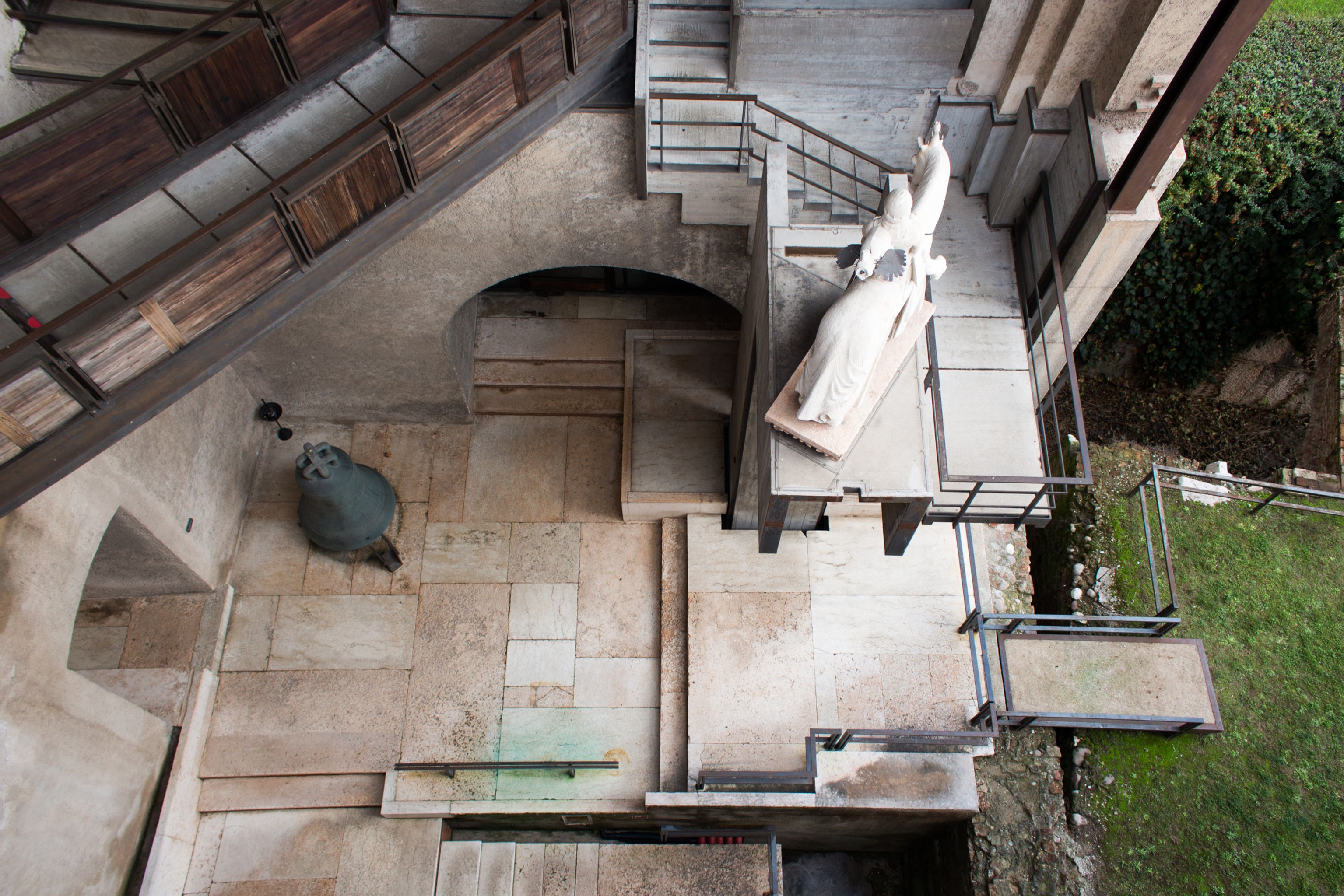
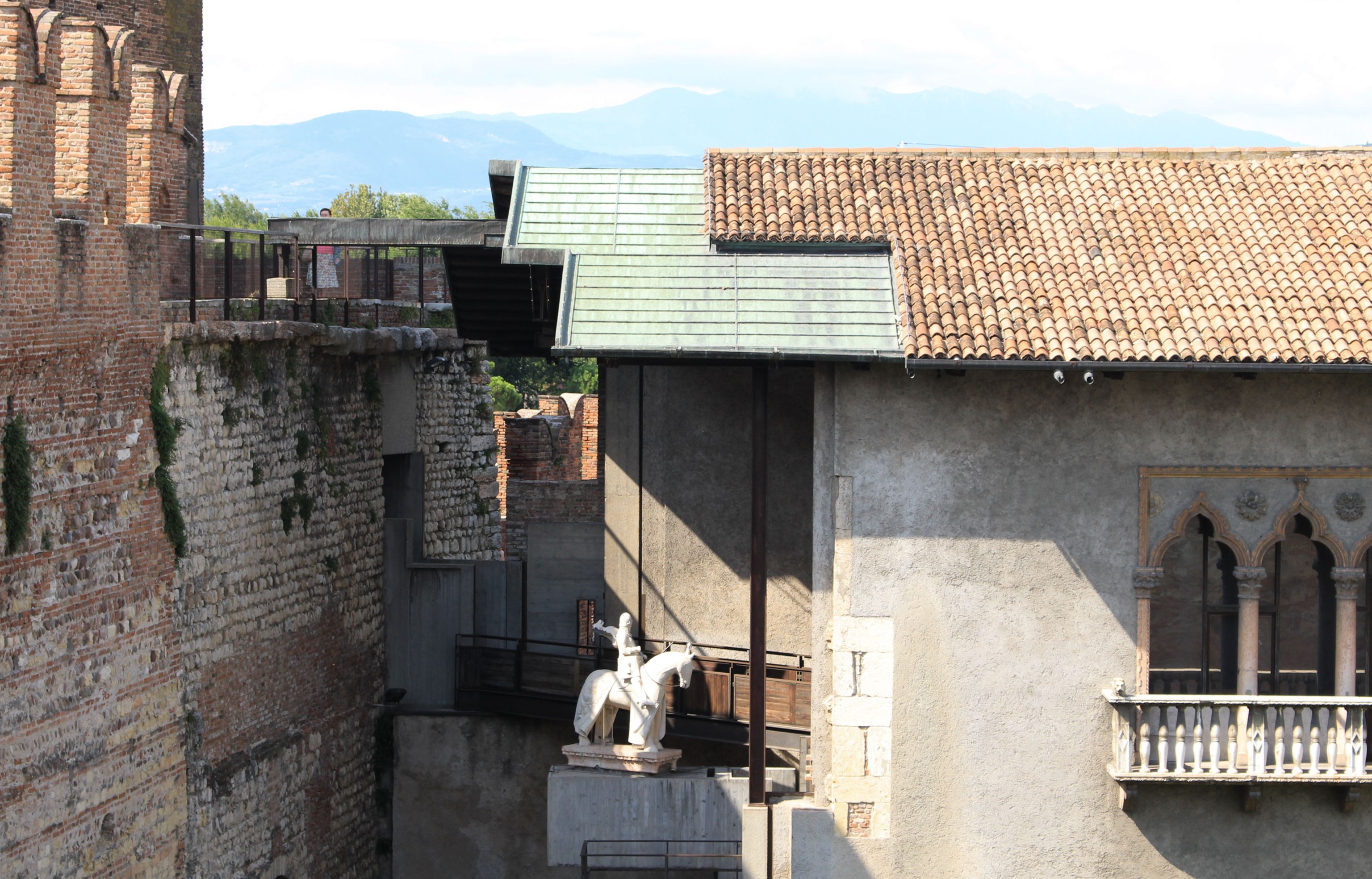
Visitors enter the museum across a reconstructed bridge and move instinctively into the courtyard of the fortress. The path is not complex, but intentionally intuitive. Sculptures such as the statue of Can Grande della Scala become visual anchors, guiding the gaze while encouraging quiet observation. Scarpa subtly manipulates perception through landscape, lowering vegetation height as one moves toward the entrance, creating a gentle sensation of ascending movement without physically changing level.

The Architecture of Movement and Silence
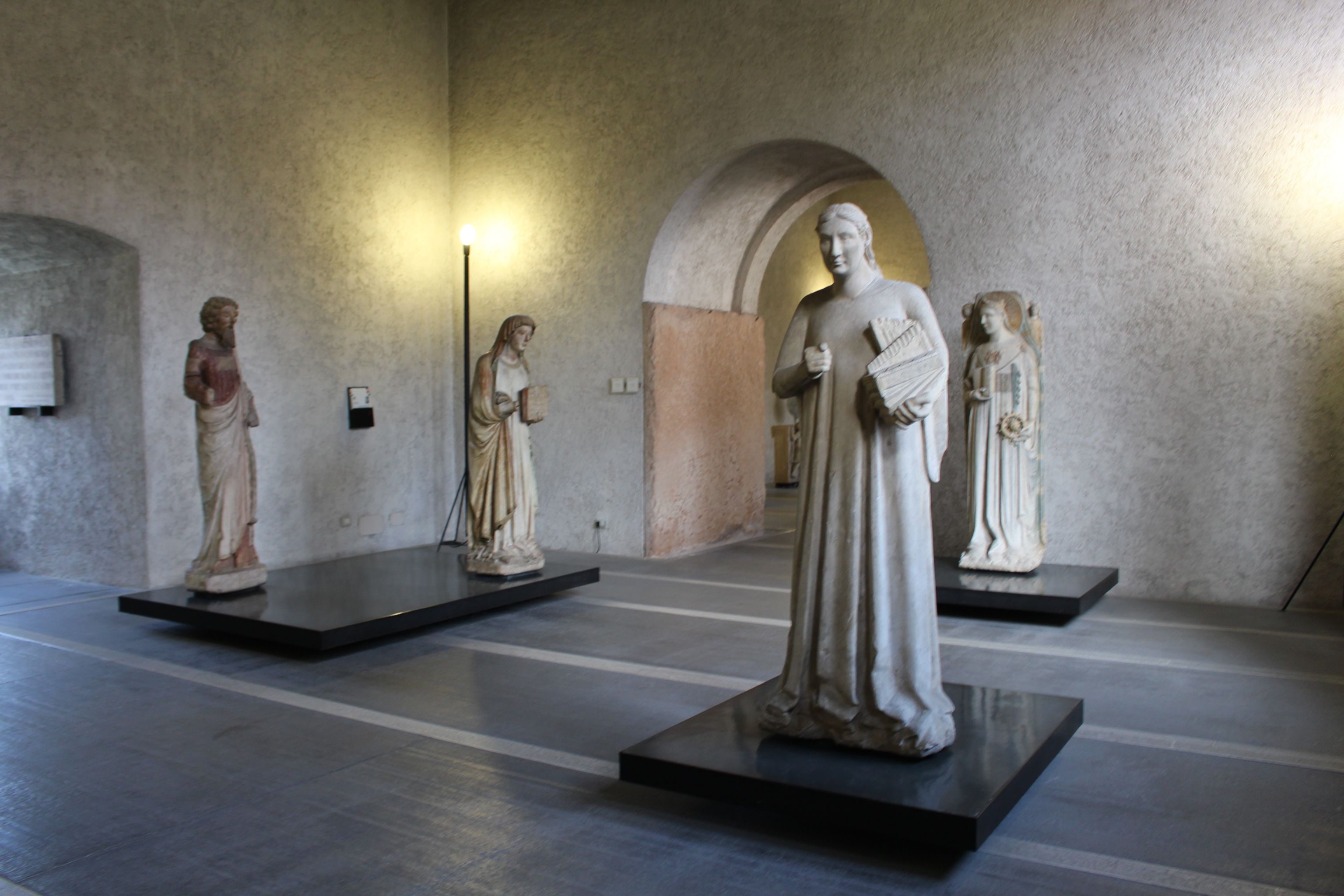
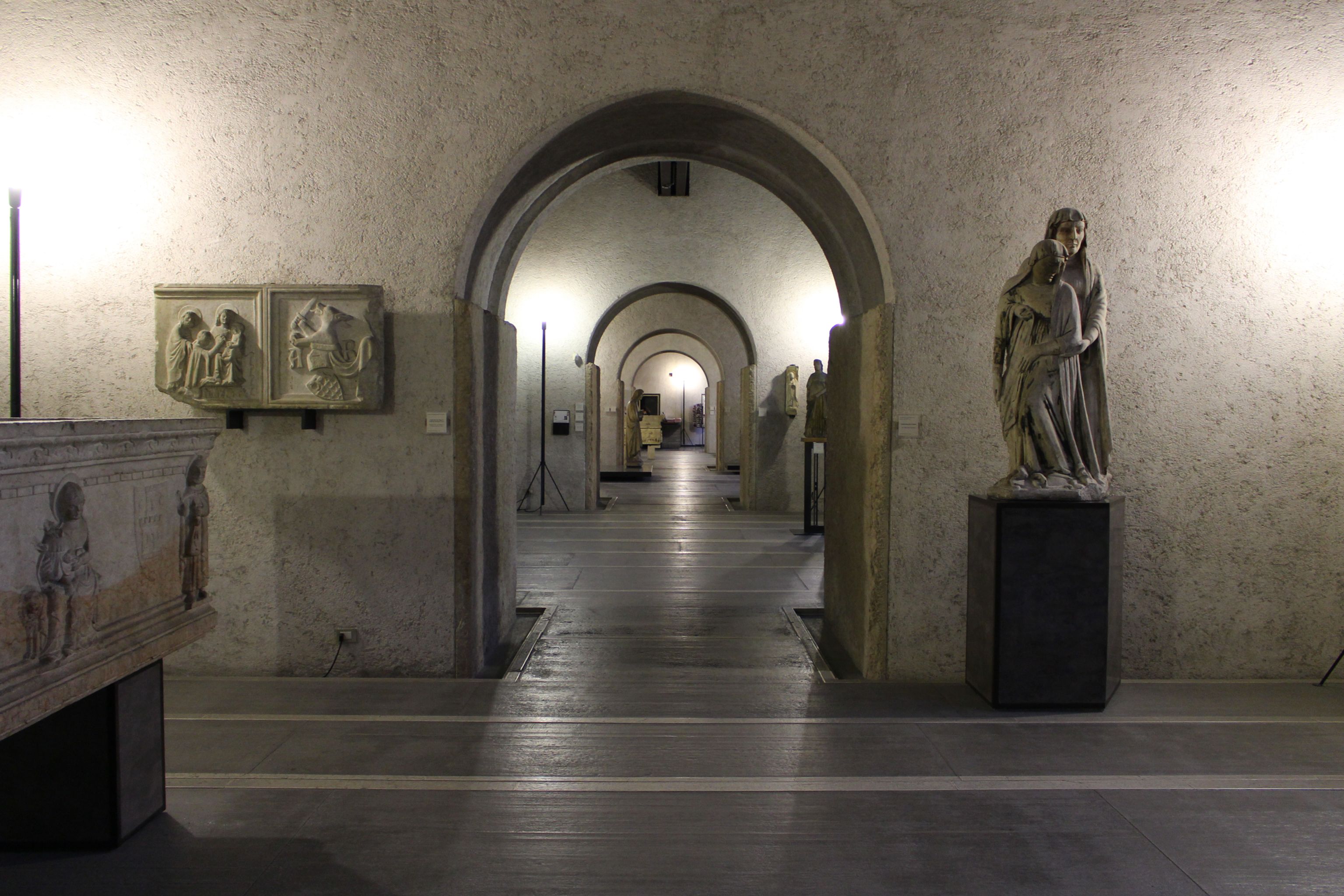
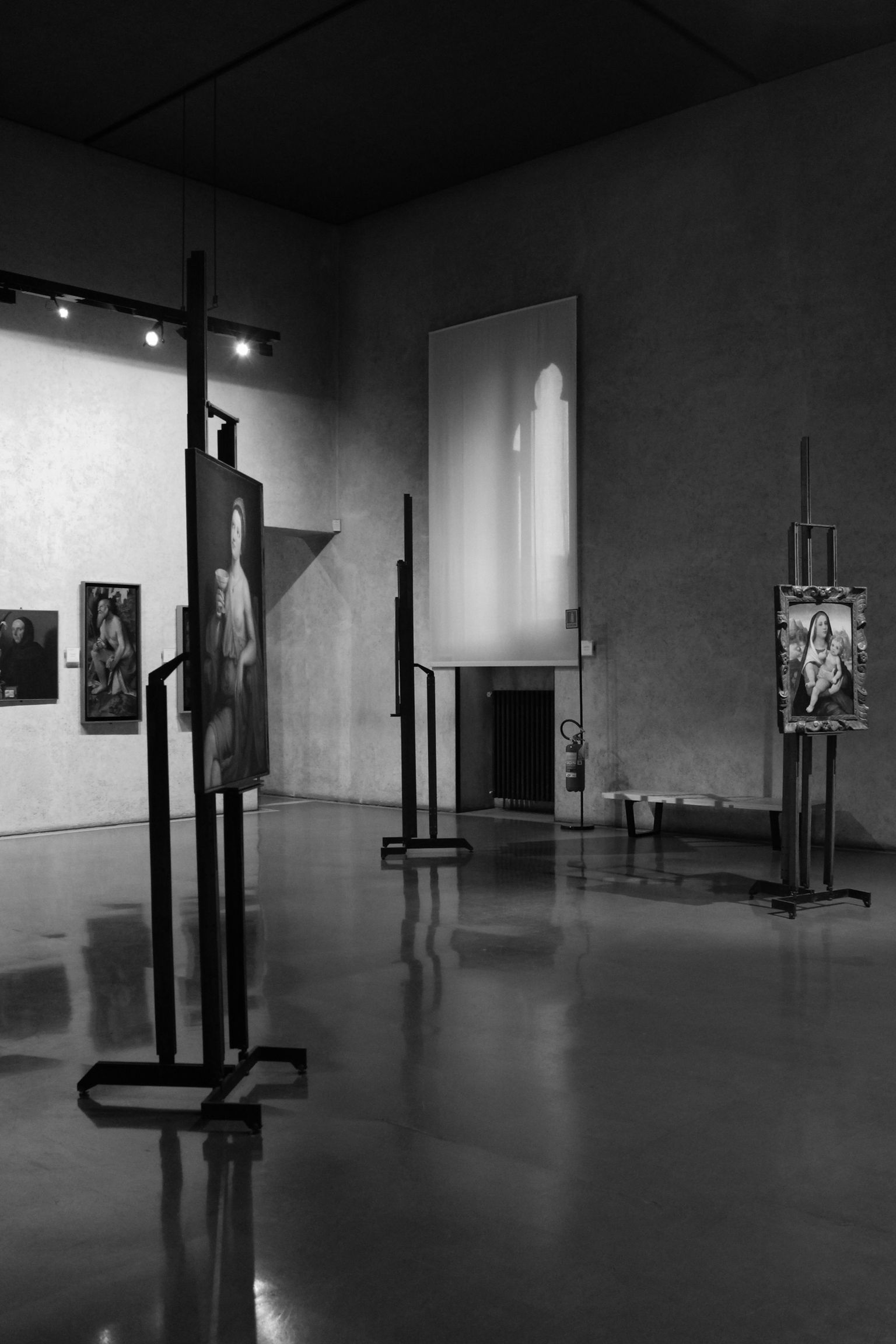
Inside the museum, the spatial organisation follows the logic of a carefully choreographed walk rather than traditional museum zoning. The exhibition rooms appear familiar in function, yet every architectural detail has been reinterpreted by Scarpa. Windows, lighting fixtures, and display stands were designed specifically for each artwork, reflecting his belief that architecture should serve art without disappearing completely.
One of Scarpa’s most distinctive ideas was the deliberate separation between floor and wall. The floor was never allowed to touch the wall directly, creating a subtle gap that symbolically preserved the possibility of movement – as if the building itself could breathe or shift through imagination. Arches act as spatial filters between rooms, while exposed beams divide the roof into sections, quietly suggesting the direction of the visitor’s journey. The result is an exhibition route where movement feels natural, almost ritualistic, leading visitors upward and through a sequence of spaces shaped by light and shadow.

Material Memory – Between Time and Contemporary Expression
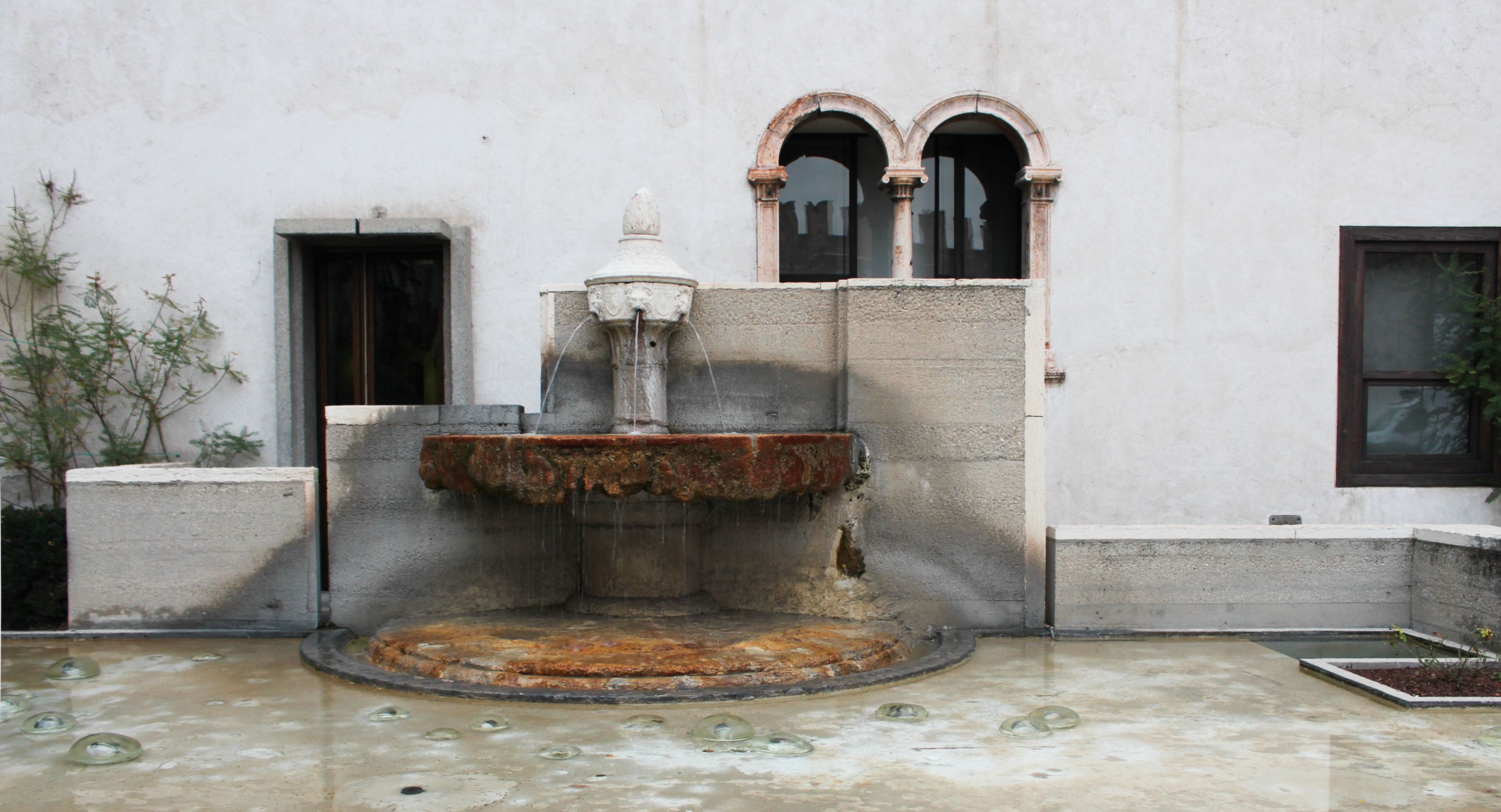
The restoration balances preservation with new architectural language. Brick walls were intentionally left visible, maintaining the patina of time and allowing the historical layers of the fortress to remain legible. Scarpa’s intervention did not erase the past but instead added a contemporary layer that dialogues with Roman and medieval material culture embedded in the site.
Iron became a key expressive material in the project. A thin black iron panel marks the entrance to the new exhibition spaces, acting simultaneously as a threshold, directional sign, and narrative device. Horizontal incisions in the metal surface indicate different spatial routes, inscribed with the words “Mosaic Room” and “Sala Boggian” using typefaces inspired by Scarpa’s unpublished design experiments. The panel functions almost like architectural handwriting, a subtle communication system that guides visitors without overt signage.
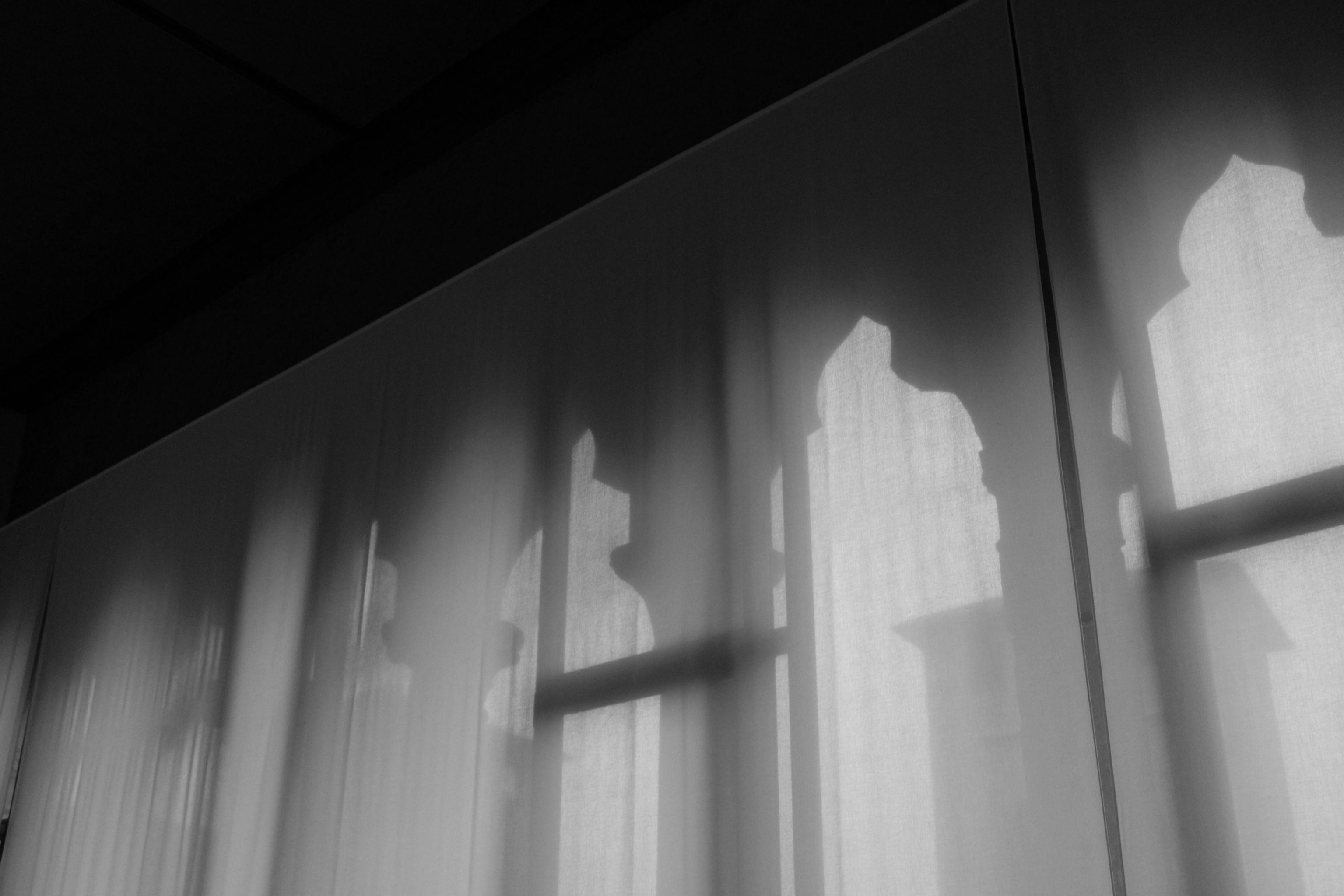
Light plays an equally important role. Black iron surfaces reflect warm interior illumination, creating changing visual effects throughout the day. As dusk approaches, the reflective qualities of the metal soften, allowing courtyard colours and museum lighting to merge into the exhibition space. The threshold thus becomes a hinge between environments, separating and connecting at the same time.

The Floating Mosaic and the Emotional Landscape of Restoration
The new Mosaic Room represents the culmination of Scarpa’s restoration philosophy. At the centre of the high, brick-walled hall lies a Roman pavement fragment from a second-century domus discovered near the castle site. The mosaic is positioned diagonally so it can be fully perceived from inside the room and partially from outside the building, reinforcing the idea that architecture should communicate across spatial boundaries.
The fragment appears almost suspended within the volume of the hall. The surrounding brickwork was preserved without alteration, allowing ancient and modern materialities to enter dialogue. Scarpa’s design strategy was not to reconstruct history, but to create an environment where archaeological object and architectural space coexist in poetic tension.

Architecture as Ritual and Storytelling
The restoration of Castelvecchio represents Scarpa’s broader architectural philosophy, influenced by modernist ideas as well as traditional Japanese spatial sensibilities and the work of architects such as Frank Lloyd Wright. His meticulous drawing practice allowed him to continuously search for new spatial configurations through pencil sketches, treating architecture as an evolving intellectual process rather than a fixed outcome.
Later interventions, including the work of Filippo Bricolo and Bricolo Falsarella Associati, Italian architecture studio, continued Scarpa’s unfinished restoration of the eastern wing by introducing the Mosaic Hall and refined threshold spaces. The museum today stands as a synthesis of history, art, and architecture – a work where restoration itself becomes a creative act, transforming preservation into a narrative experience of time, light, and memory.