
André Arbus
Children’s Room
- DesignerQuasar Khanh and Emmanuelle Khanh
- GalleryGalerie Meubles et Lumières
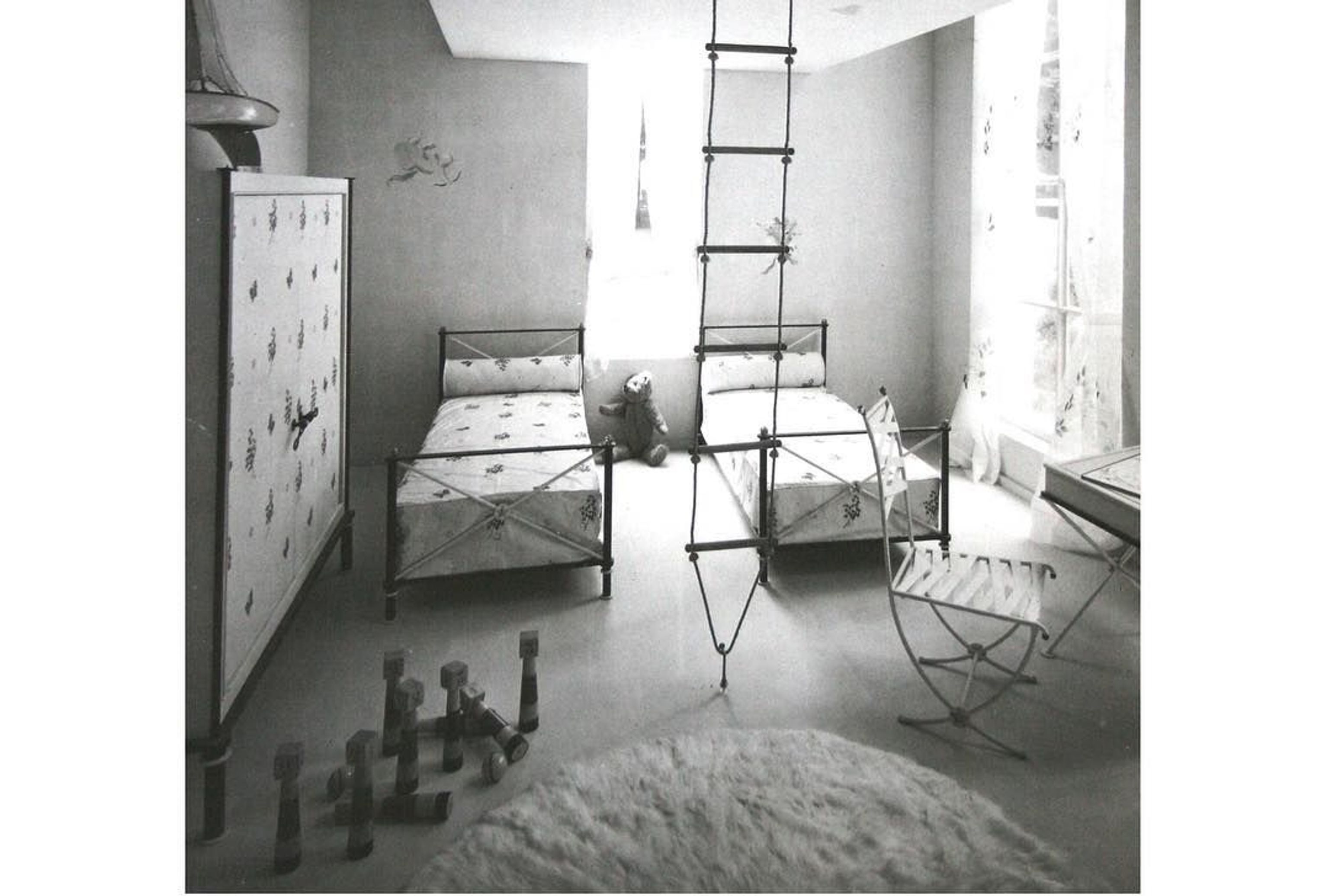
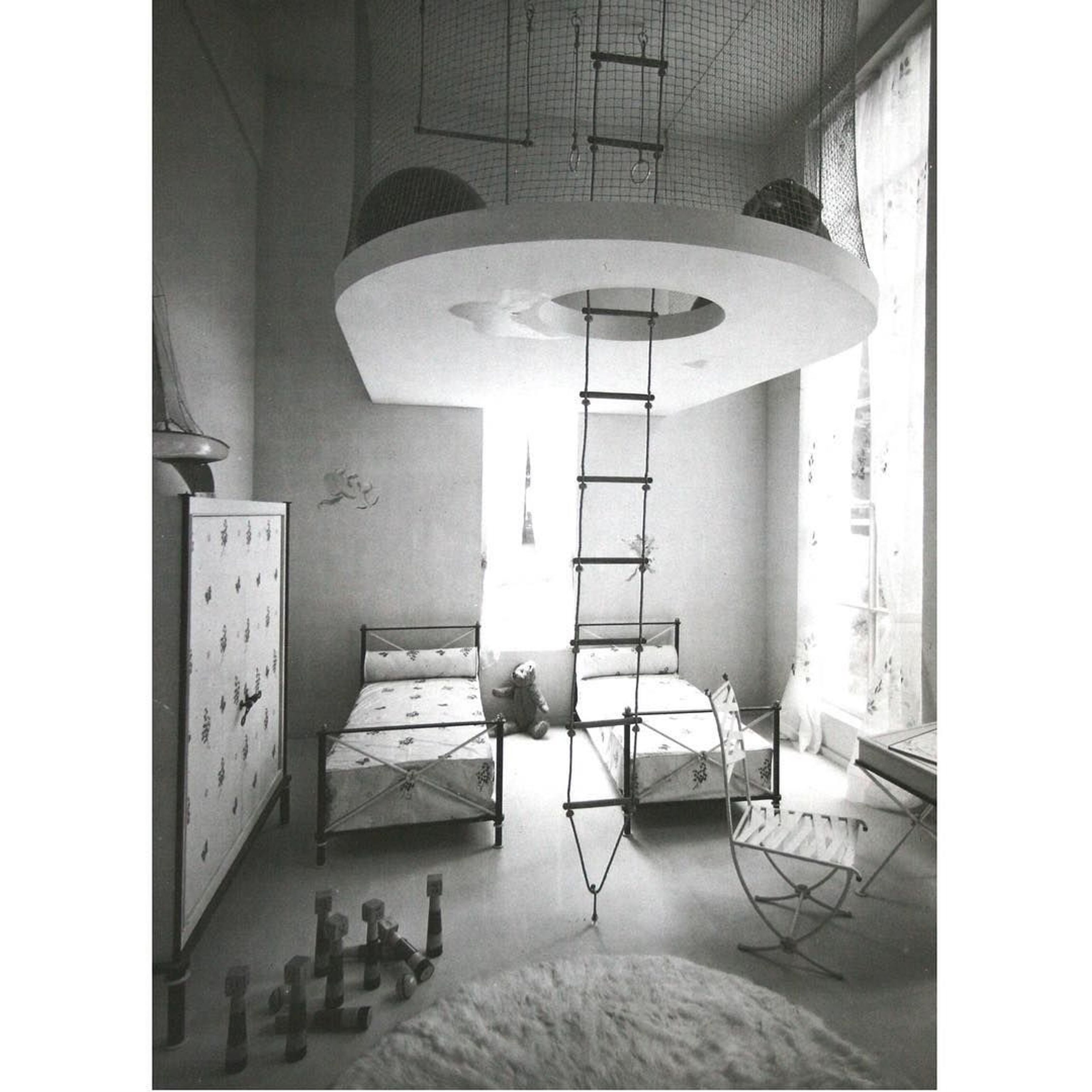
Eleni Petaloti This project resonates with me because of its poetic softness and sense of optimism. Arbus approached children’s interiors with sophistication rather than simplification. The room balances decorative elegance with playfulness, demonstrating how design can nurture imagination without losing refinement. There’s something incredibly tender about the proportions, colors, and handcrafted quality of the space.
A Refined Domestic World
Children’s Room by André Arbus (Paris, 1937) sits within his broader practice of designing interiors as complete, architectural environments rather than collections of separate furniture pieces. Arbus, born in Toulouse in 1903 and active mainly from the 1930s until his death in 1969, came from a family of cabinetmakers and was trained within the French tradition of fine craftsmanship. By the time he established his reputation in Paris in the 1930s, he was already known for combining classical French proportions with the restraint of late Art Deco. In Children’s Room, this approach is applied to a domestic space often treated as informal or temporary, but here handled with the same level of structure and precision as any formal interior. The room is designed as one coherent system, where beds, storage, desks, and spatial layout are integrated rather than added as separate objects.
Craft, Materials, and Controlled Softness
What defines the project is Arbus’ careful balance between luxury craftsmanship and a softened domestic atmosphere. Working in the 1930s French decorative tradition, he uses fine woods, lacquered surfaces, bronze details, and tailored textiles to create a space that feels calm and ordered without becoming rigid or overly decorative. Even though the room is intended for children, it avoids overly playful or chaotic visual language. Instead, it relies on symmetry, muted tones, and precise detailing to create a sense of quiet structure. This reflects Arbus’ wider design philosophy developed throughout the 1930s and 1940s: interiors should remain timeless and architectural, even when scaled down for everyday domestic use. Every element is designed to belong to the same visual and material logic, so the furniture doesn’t just occupy the room, it actively defines its atmosphere.
Total Interior Thinking in Mid-Century France
Children’s Room also reflects Arbus’ position within a wider French movement of interior designers working in the mid-20th century, especially between the 1930s and postwar years, where decorators operated almost like architects of lifestyle environments. Rather than producing isolated furniture objects, Arbus designed complete interior worlds for private clients, exhibitions, and institutional spaces, where layout, materials, and atmosphere were conceived together. This approach placed him between tradition and modernity: rooted in 18th-century French design heritage, refined through the discipline of Art Deco, and moving toward a more restrained form of modern luxury that would define postwar French interiors. Today, the project stands as a clear example of how design can move beyond function and become a fully constructed environment, where material consistency and spatial control define the entire experience.