
The work of
Dirk van der Kooij
- DesignerDirk van der Kooij
BJARKE INGELS Dirk van Kooij works with plastics, both recycled and new, transforming a material associated with pollution and a culture of single use and disposability into something rich and precious.

Bjarke Ingels on the work of Dirk van der Kooij
Dirk van Kooij works with plastics, both recycled and new, transforming a material associated with pollution and a culture of single use and disposability into something rich and precious.
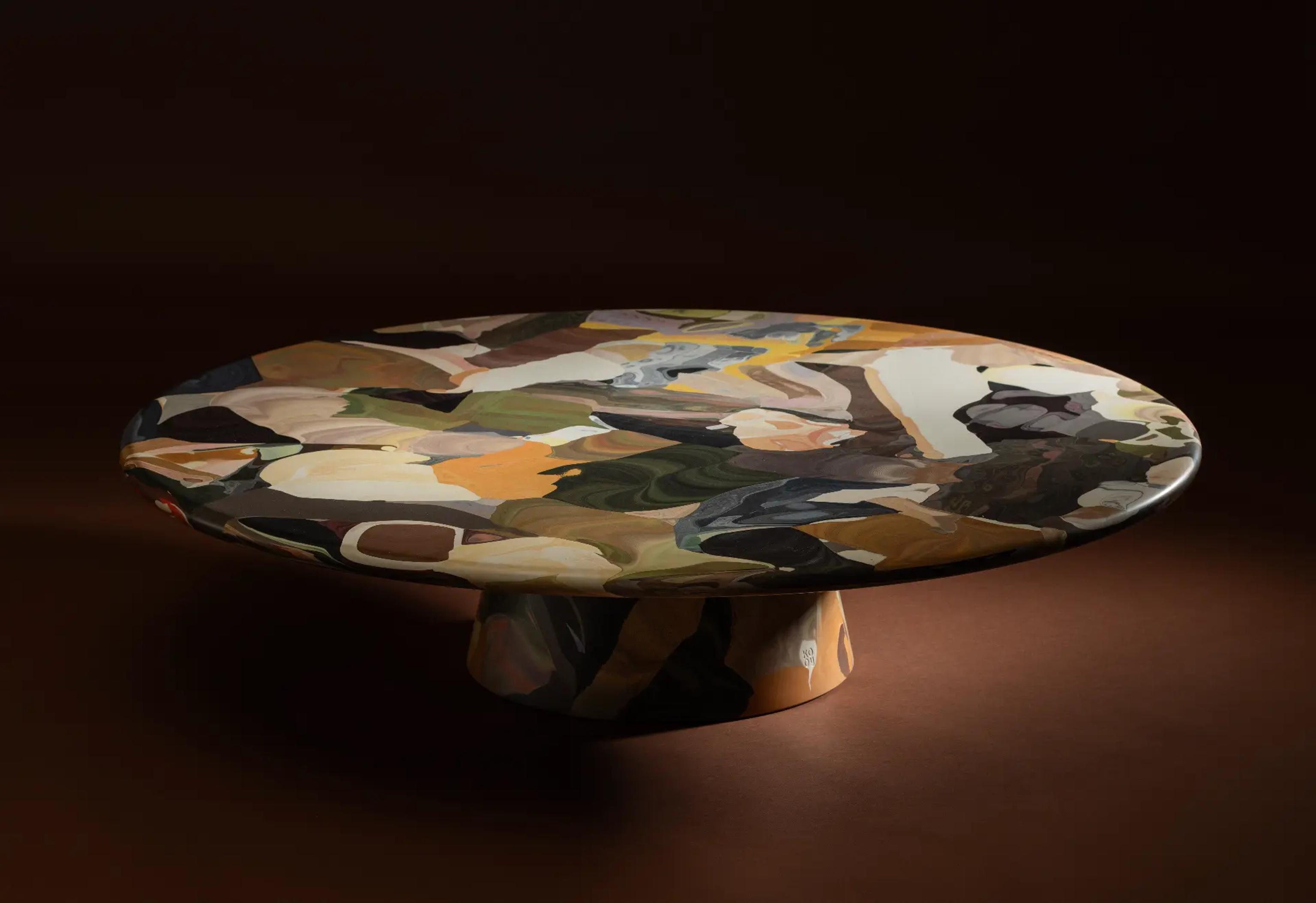
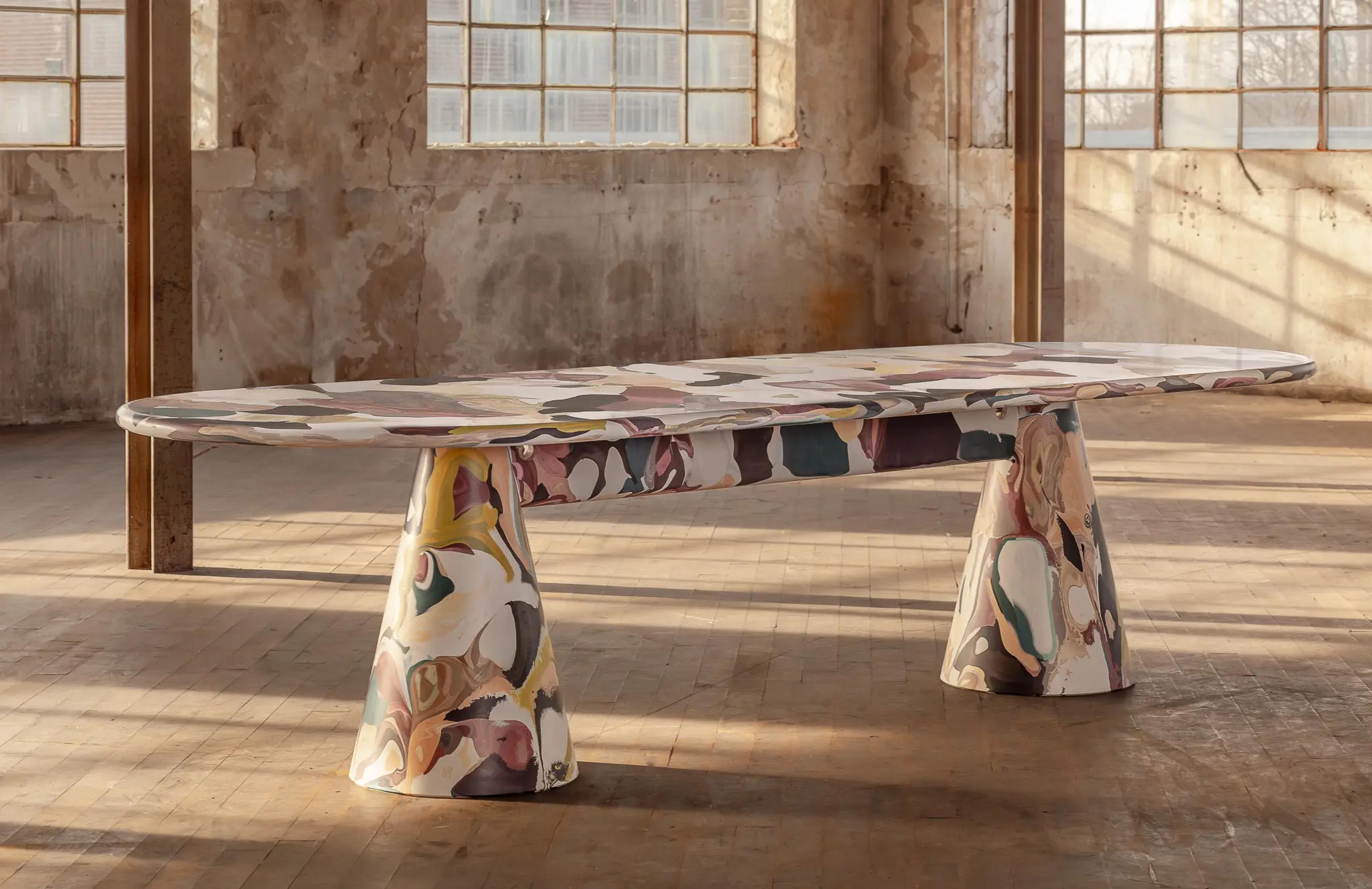
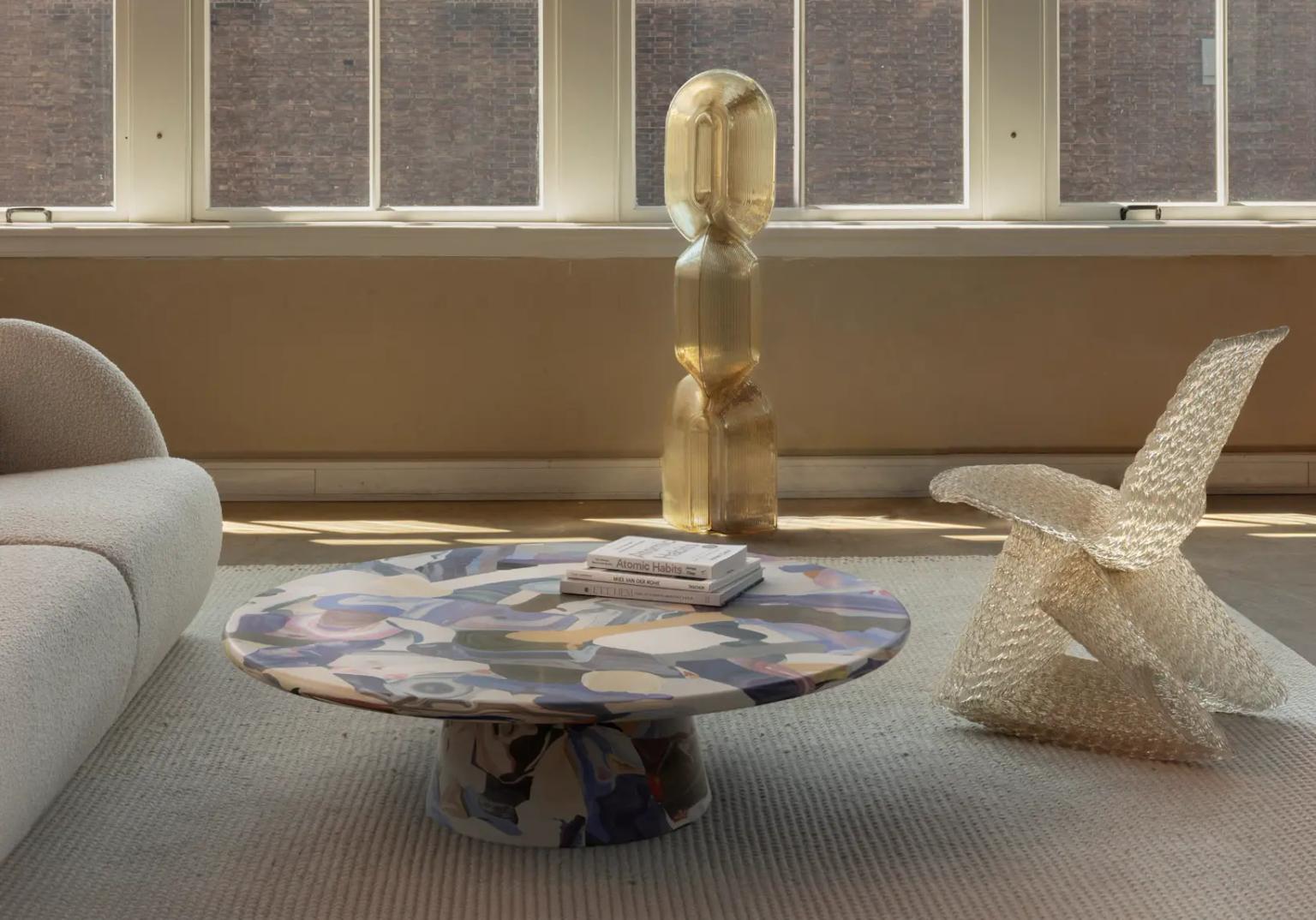
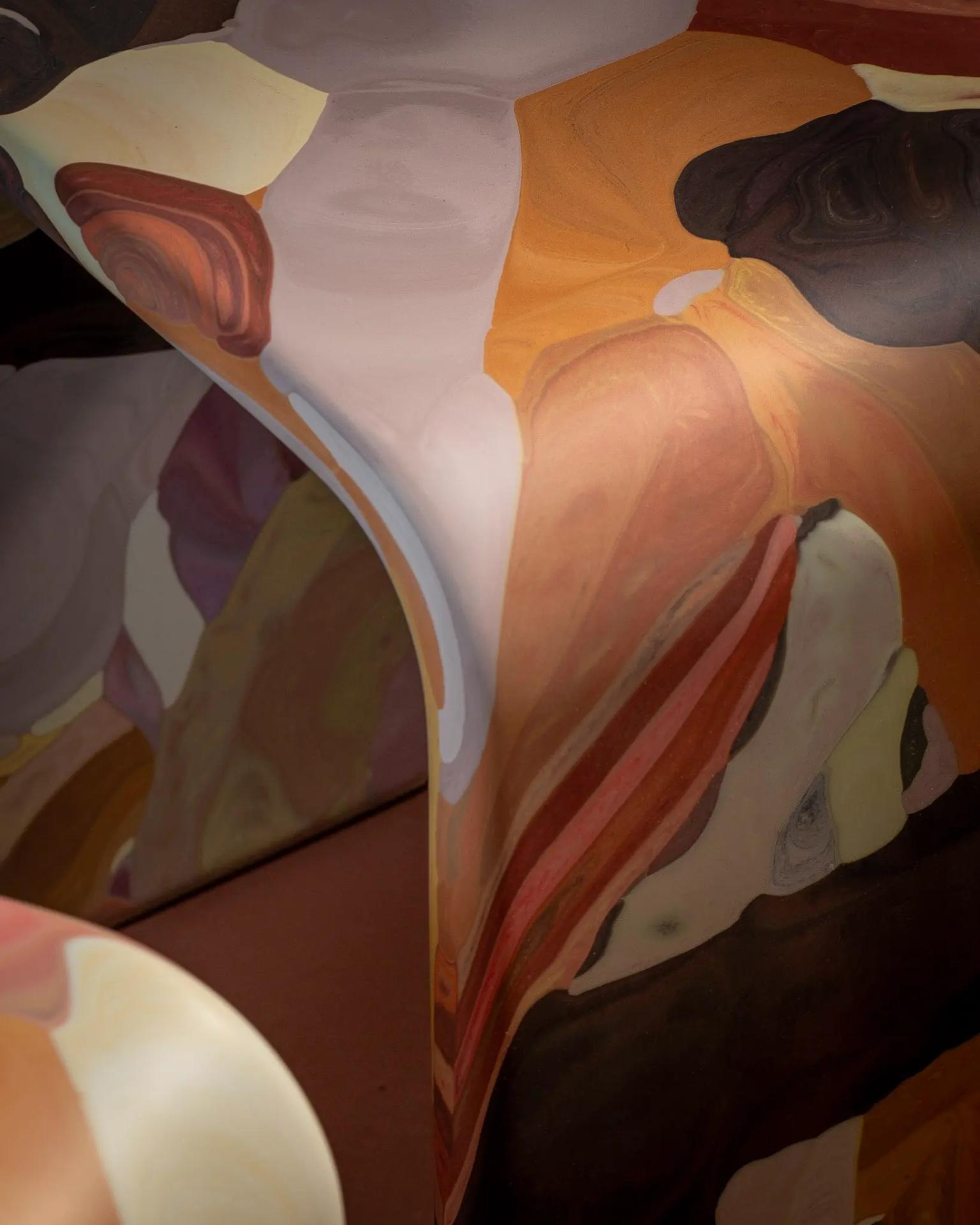
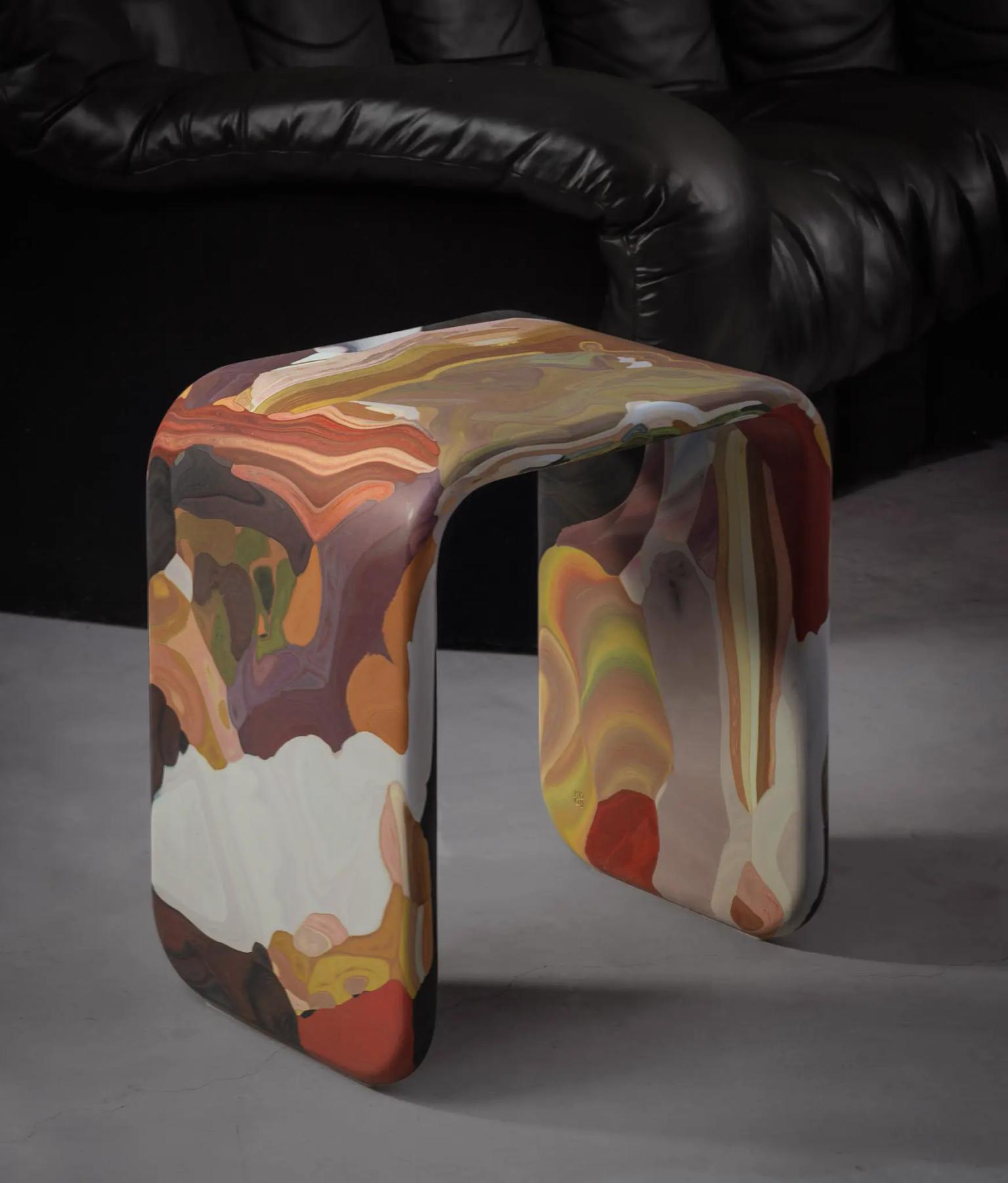
In the Melting Pot series, fragments of plastic are melted together into surfaces that inhabit a territory somewhere between exotic stone and colorful psychedelia. Their depth, pattern and pigmentation give them an almost geological character.
In his 3D-printed lamps, clear plastic and the tectonics of the printing process lend simple Euclidean solids a prismatic quality. The linear deposits refract light, creating objects that feel almost scientific in their elemental simplicity, recalling early twentieth-century hospital lamps. An ostensibly ephemeral material acquires a sense of permanence and a timeless presence.
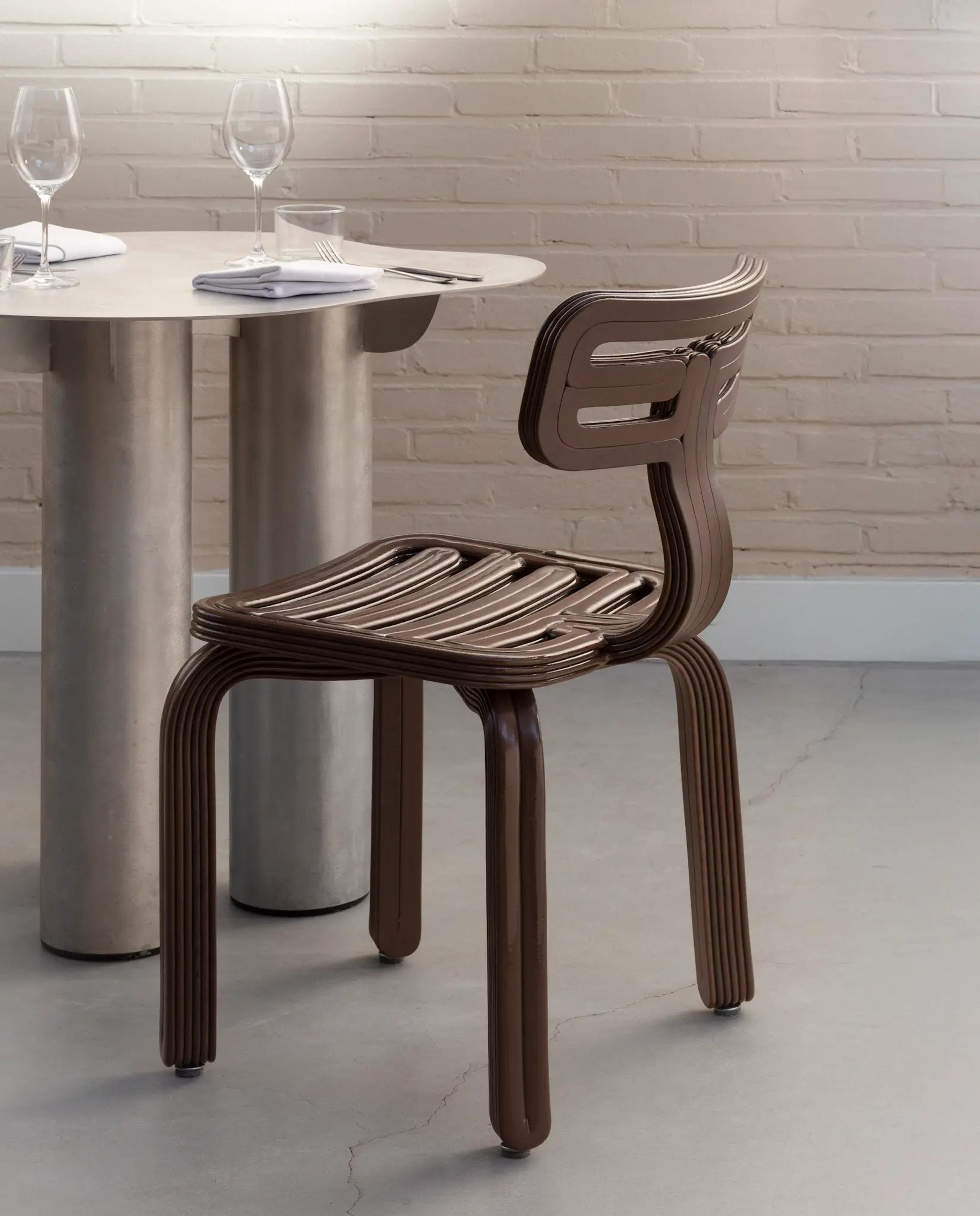
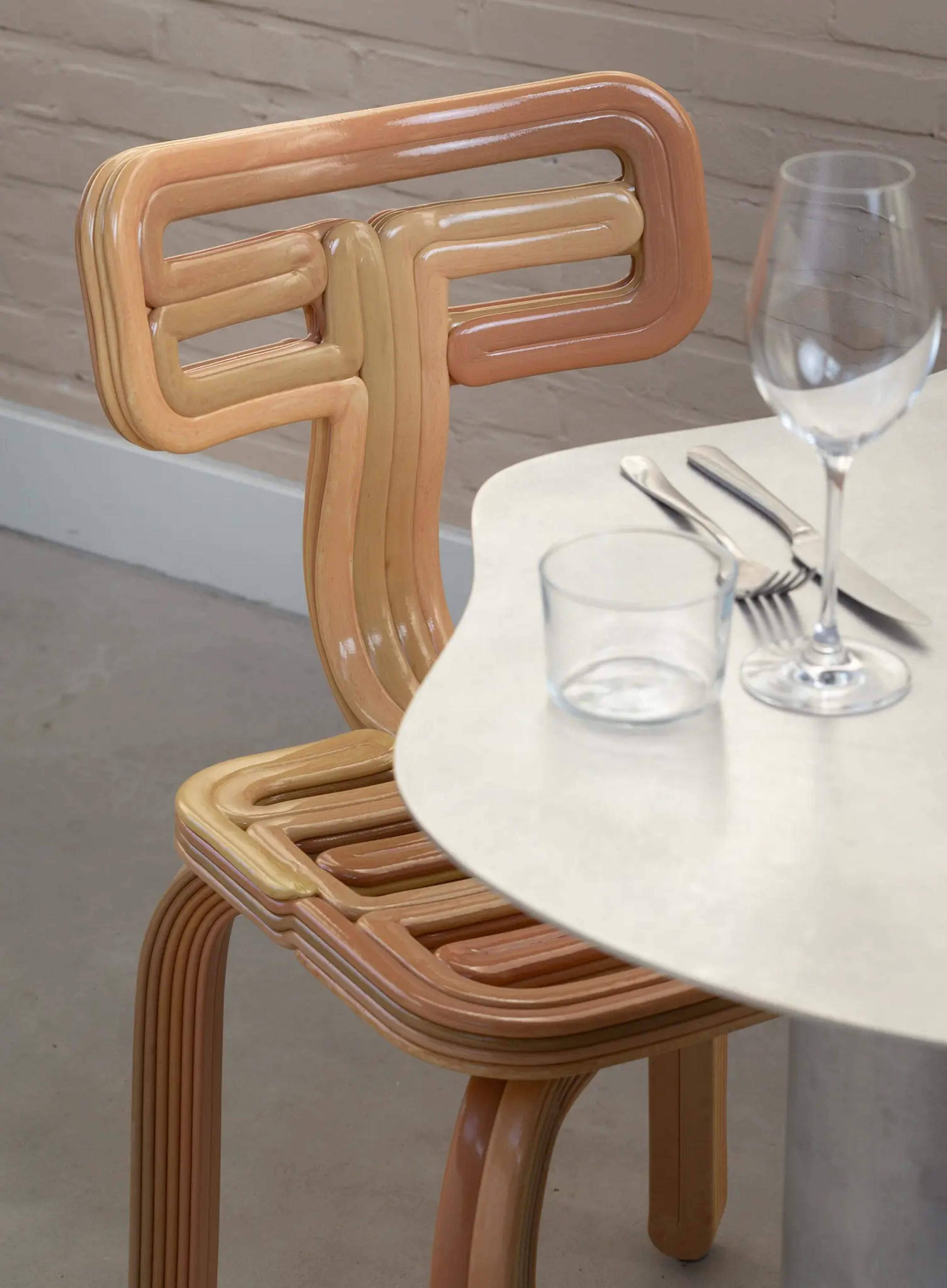
With the Chubby series, the simplicity of the printed paths gives the chairs a diagrammatic clarity, while their generous contours evoke the material world of baked goods or sugar candy. The geometry is precise; the physical presence is almost edible.
Across these works, Dirk van Kooij creates something meaningful out of the mundane. Through form, texture and the ingenuity of fabrication, he turns trash into treasure.

From Waste to Wonder
Dirk van der Kooij’s fascination with recycled plastic began during his studies at Design Academy Eindhoven, where he questioned why a material so abundant in modern life was so often treated as disposable. Could plastic, with its industrial associations and reputation for cheapness, become something durable, tactile and worth keeping? Rather than approaching recycling as a purely environmental problem, he saw an opportunity to develop an entirely new design language. His answer was to build the machinery himself, adapting industrial robotic technology to extrude molten recycled plastic into furniture.

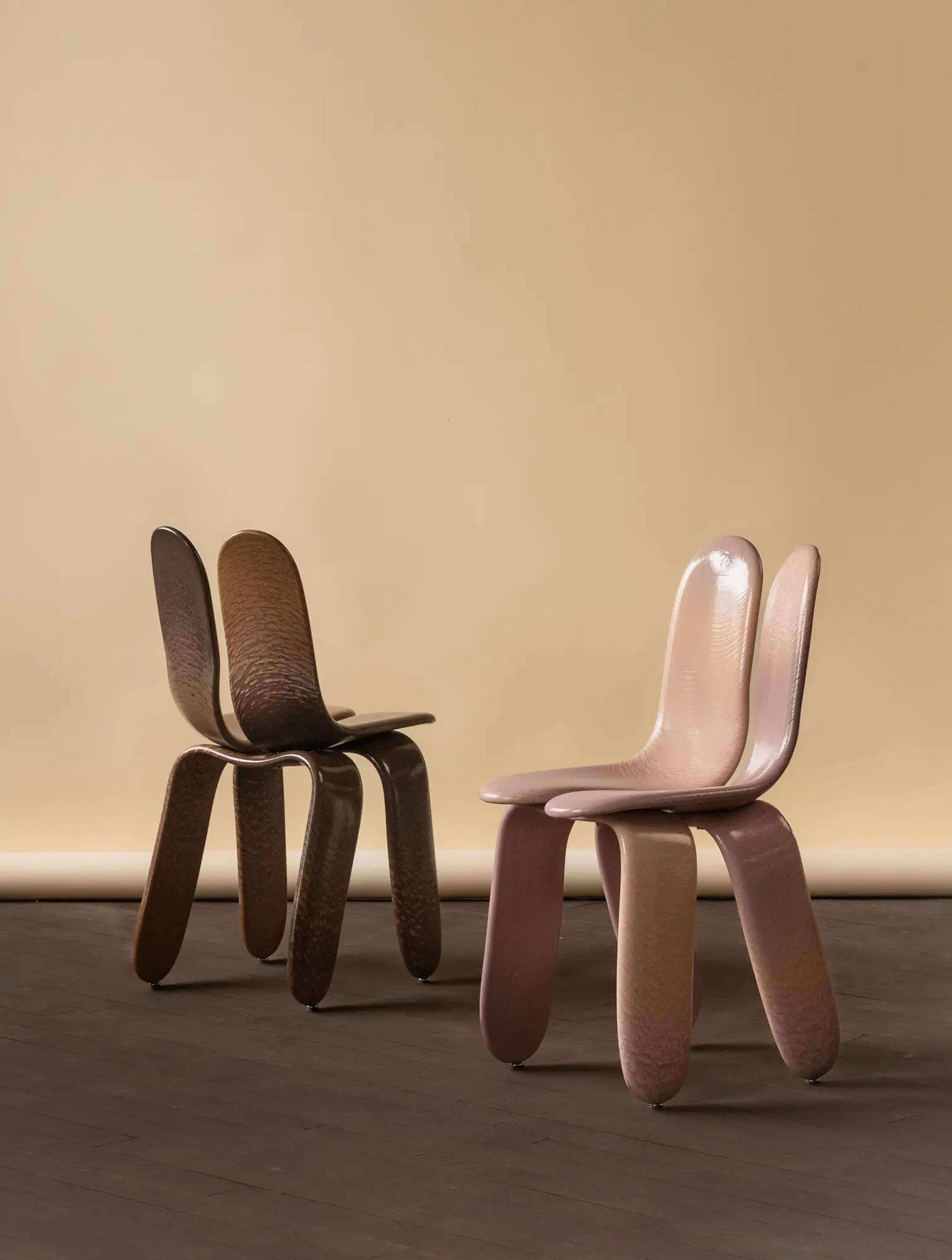
The resulting Endless Chair, first developed in 2011, became a defining expression of this approach. Made using plastic recovered from discarded refrigerators, the chair is constructed from continuous, overlapping lines of extruded material. Its broad, undulating surfaces reveal the path of the robot, leaving behind a distinctive pattern of ridges and scallops. What might conventionally be regarded as a technical imperfection becomes the source of its character. The chair is neither entirely machine made nor conventionally handcrafted, but occupies a territory between the two, where digital precision meets the unpredictable behaviour of recycled material.

The Aesthetics of Imperfection
Van der Kooij’s furniture is immediately recognisable for its substantial forms, luminous colours and pronounced textures. Yet the visual language is inseparable from the technology that produces it. Early in his experiments, the designer discovered that conventional manufacturing methods and expensive moulds imposed limitations on the possibilities of recycled plastic. By developing his own robotic extrusion system, he could work directly with the material, allowing its behaviour to inform the shape of the finished object.
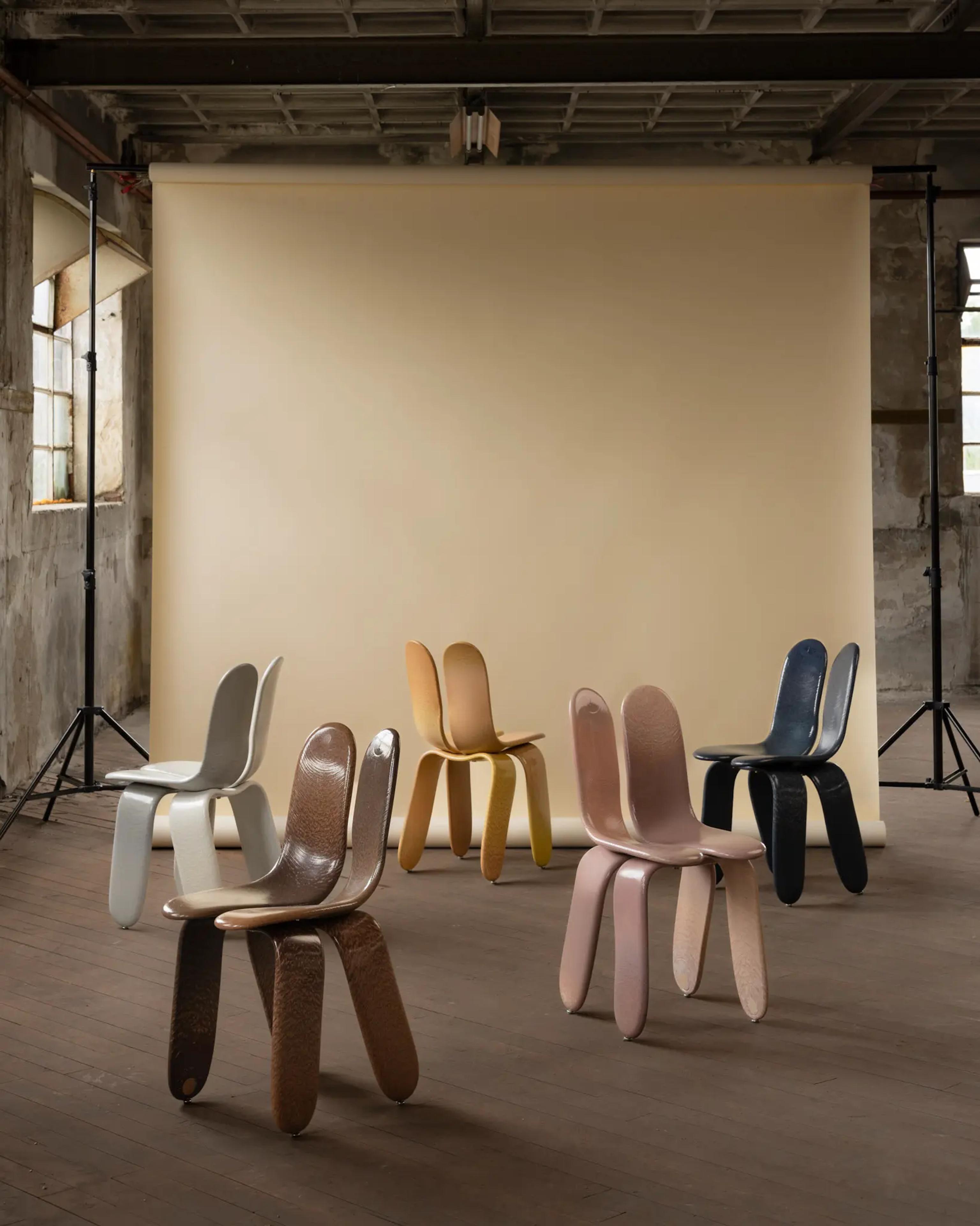
This process has produced a collection of chairs, tables, lamps and sculptural objects that celebrate the traces of their own manufacture. Colours merge across successive layers, surfaces ripple like frozen liquid, and translucent plastics catch the light in unexpected ways. Variations in the source material mean that individual pieces possess subtle differences in colour and texture. Repetition is possible, but absolute uniformity is neither the objective nor the appeal.
The studio's approach also extends beyond recycled plastic alone. Over the years, Van der Kooij has experimented with discarded CDs, leather, wood offcuts and other unconventional resources, exploring how materials commonly regarded as waste might acquire new structural and aesthetic value. Each investigation begins with the material itself, its limitations and its potential, rather than with a predetermined form.


Designing a Different Future
There is an important distinction between simply using recycled material and developing a design practice around its possibilities. For Van der Kooij, the latter requires a fundamental reconsideration of how objects are conceived and manufactured. By building machines that respond to the particularities of recycled resources, he has created a production process in which material recovery, technological experimentation and design development are closely connected.
His work suggests that sustainability need not be expressed through visual restraint or an obvious aesthetic of environmental responsibility. Recycled plastic can be vivid, expressive and luxurious without concealing its origins. Indeed, its previous life becomes part of the object's identity, giving it a material history that newly manufactured plastics cannot possess.
The challenge, of course, is to ensure that these objects justify the resources and energy required to produce them. Van der Kooij's emphasis on durability, longevity and continued experimentation addresses this question by proposing furniture designed to remain in use rather than follow the short cycles of disposable consumption. The ambition is not simply to make waste look beautiful, but to give it a lasting purpose.
In this sense, his practice occupies an important position in the evolving relationship between design and technology. The robot is not merely a tool for reproducing a designer's vision. It is an instrument of discovery, revealing forms that might never emerge through conventional processes. By embracing the imperfections of recycled plastic and the idiosyncrasies of his own machines, Van der Kooij has transformed a problem material into a distinctive design vocabulary, one in which the future of an object begins with reconsidering the value of what already exists.