
Michael Heizer
Double Negative
- ArchitectMichael Heizer
- PhotographerDouble Negative, 1969, Mormon Mesa, Overton, Nevada © Michael Heizer. Courtesy of the artist and Gagosian. Photo: Michael Heizer and John Weber
- CollectionMuseum of Contemporary Art, Los Angeles
Isaac Michan and Alexandra Bové The work is both powerful and subtle. The relationship between the natural and the man-made generates a beautiful tension.
Cutting Into the Desert
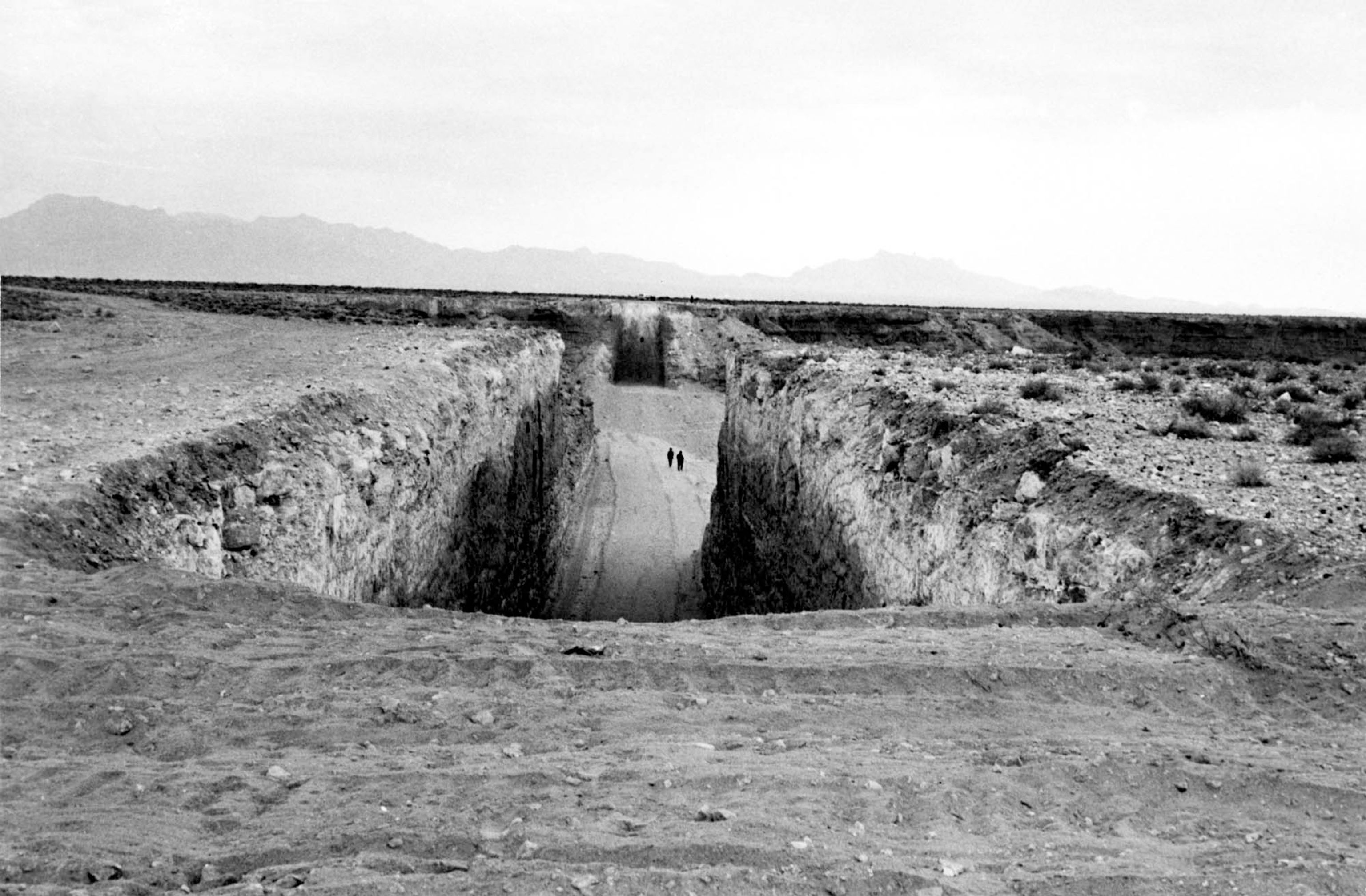
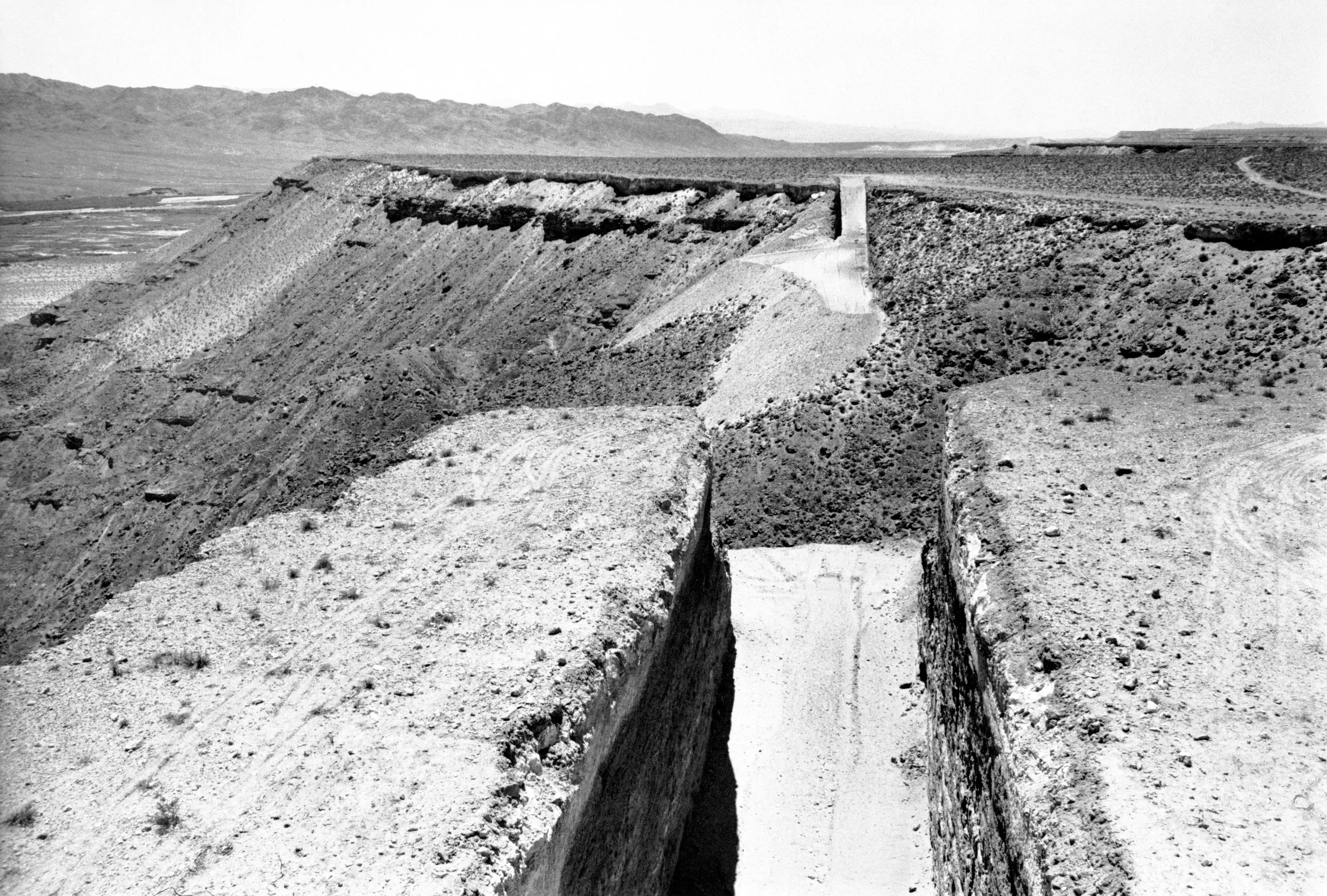
Created in 1969 on Mormon Mesa in Nevada, Double Negative is one of the most important works of Land Art. American artist Michael Heizer produced the piece by excavating two enormous trenches directly into the desert landscape, removing more than 240,000 tons of rhyolite and sandstone in the process. Each cut measures around 30 feet wide and 50 feet deep, extending across opposite sides of a natural canyon. Together, the interventions create a continuous line stretching roughly 1,500 feet across the mesa. Rather than placing an object into the landscape, Heizer transformed the landscape itself into the artwork. The title refers to the “negative space” formed both naturally by the canyon and artificially through excavation, making absence itself central to the piece.
Michael Heizer’s Vision
Born in 1944, Michael Heizer became one of the defining figures of the Land Art movement that emerged in the late 1960s. While many artists of the period worked within galleries and museums, Heizer turned toward the open landscapes of the American West, using scale, excavation, and industrial machinery as artistic tools. His early work explored geometry and spatial relationships, but projects like Double Negative pushed those ideas into real environments on a monumental level. Alongside artists such as Robert Smithson and Nancy Holt, Heizer helped shift sculpture away from the pedestal and into direct engagement with land, architecture, and geography.

Beyond the Museum
Part of what made Double Negative so radical was its refusal to function like a traditional artwork. It could not be collected, easily exhibited, or fully understood through photographs alone. Reaching the site requires traveling deep into the Nevada desert, and the physical journey remains part of the experience itself. Heizer believed the work had to be encountered directly, through movement, scale, silence, and distance, rather than mediated through documentation. This idea challenged the conventions of the art world at the time, positioning the landscape not simply as a backdrop but as an active part of the work. The desert becomes both material and setting, shaping how the sculpture is perceived.
Space, Scale, and Absence
At the center of Double Negative is the idea that removal can be as powerful as construction. Instead of building upward, Heizer worked through subtraction, carving voids into solid rock. The work gains its force through emptiness, using cuts, gaps, and displaced material to create form. The two trenches mirror one another across the canyon, suggesting an invisible continuation through open space. This tension between what is present and what is missing gives the project its conceptual weight. The geometry feels almost architectural, yet the work remains inseparable from the raw conditions of the desert. In this way, Double Negative exists somewhere between sculpture, intervention, and environmental structure.

Nature as Collaborator
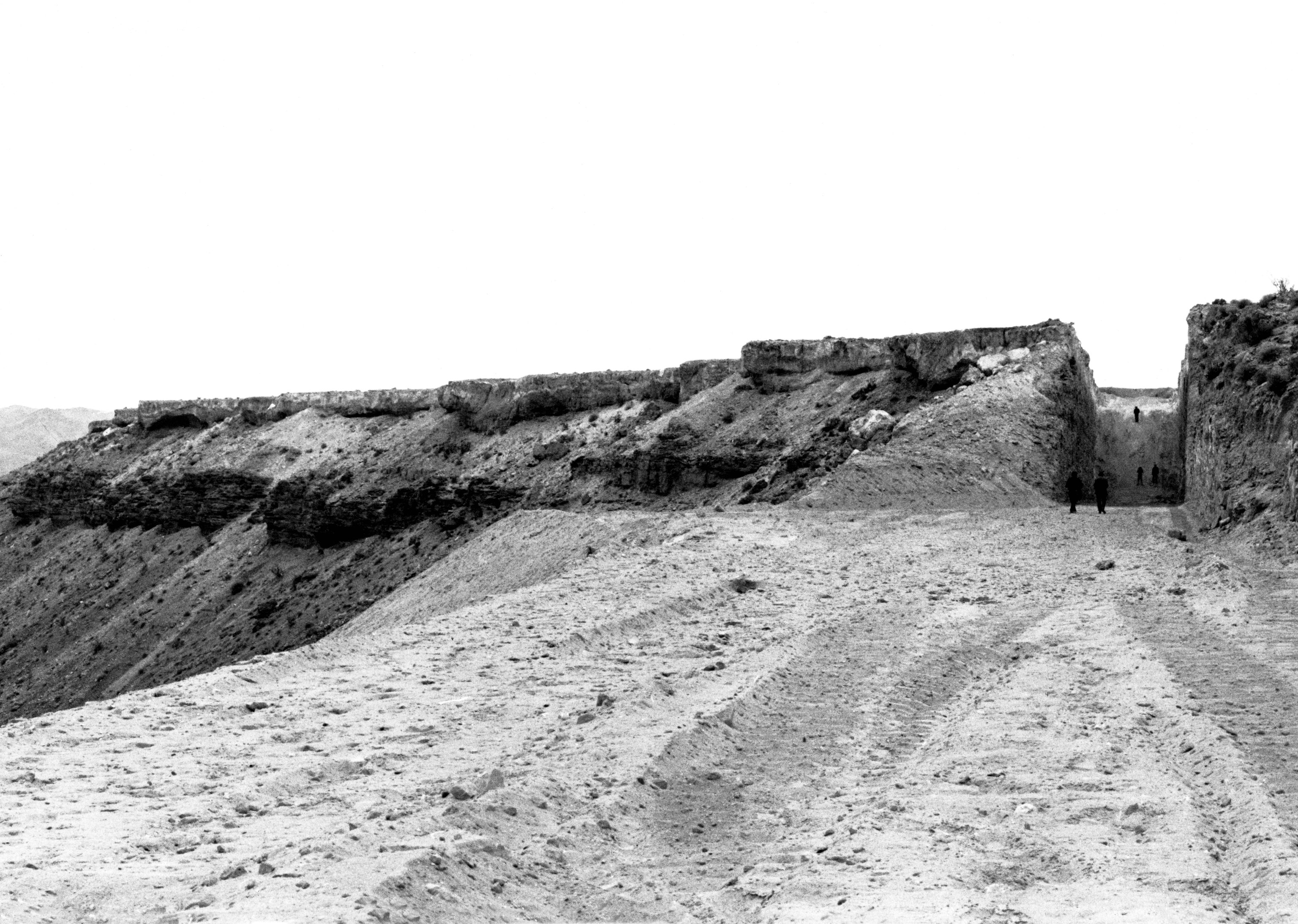
Unlike many large-scale artworks, Double Negative was never intended to remain perfectly unchanged. In 1969, collector and gallerist Virginia Dwan purchased the 60-acre site supporting the project before later donating it to Museum of Contemporary Art, Los Angeles in 1984. One of the key conditions attached to the transfer reflected Heizer’s desire for the work to evolve naturally over time, though a preservation plan is now being developed to ensure the longevity of the work.
Lasting Impact
More than five decades later, Double Negative remains a landmark within contemporary art and environmental sculpture. Its influence can be seen across architecture, installation art, and site-specific practices that explore relationships between humans, space, and land. The work also continues to raise broader questions around ownership, preservation, and the transformation of natural environments through human intervention. Located far from urban centers and resistant to easy consumption, Double Negative demands time and physical presence from its audience. That resistance is part of what continues to make the work feel powerful today.