
Sam Chermayeff Office
Free Kitchen
- ArchitectSam Chermayeff Office
- PhotographerLuca Girardini
Pablo Bofill I have always admired Sam’s ability to question conventions through simple gestures. Free Kitchen transformed one of the most codified spaces of domestic life into a proposition about how we might live together.

A Kitchen as a System
Free Kitchen is an ongoing series of modular kitchen furniture developed by Sam Chermayeff Office, a Berlin- and New York-based architectural practice founded by architect Sam Chermayeff that works across buildings, furniture and spatial systems with a focus on how people live together in everyday environments. The project was first introduced in 2015 and developed together with June 14 Meyer-Grohbrügge & Chermayeff, a Berlin-based collaboration between Sam Chermayeff and architect Johanna Meyer-Grohbrügge that operated as a small experimental practice focused on flexible domestic space and alternative ways of organising housing.
Conceived in Berlin, Free Kitchen begins with a simple but fundamental shift: the kitchen is no longer treated as a fixed architectural installation, but as a set of movable parts.

A Practice Between Scales and a Set of Independent Elements
Sam Chermayeff Office operates in the space between architecture and object design. The practice is known for moving fluidly between apartments, buildings, furniture and exhibition work, often treating these categories as part of the same continuous system. Rather than designing complete, closed environments, the office often develops frameworks that allow use to define form over time. This approach is visible in Free Kitchen, where the kitchen is not delivered as a finished interior, but as a system that can be assembled, expanded and adjusted. It reflects the studio’s broader interest in flexibility, shared living and the informal ways people actually occupy space.
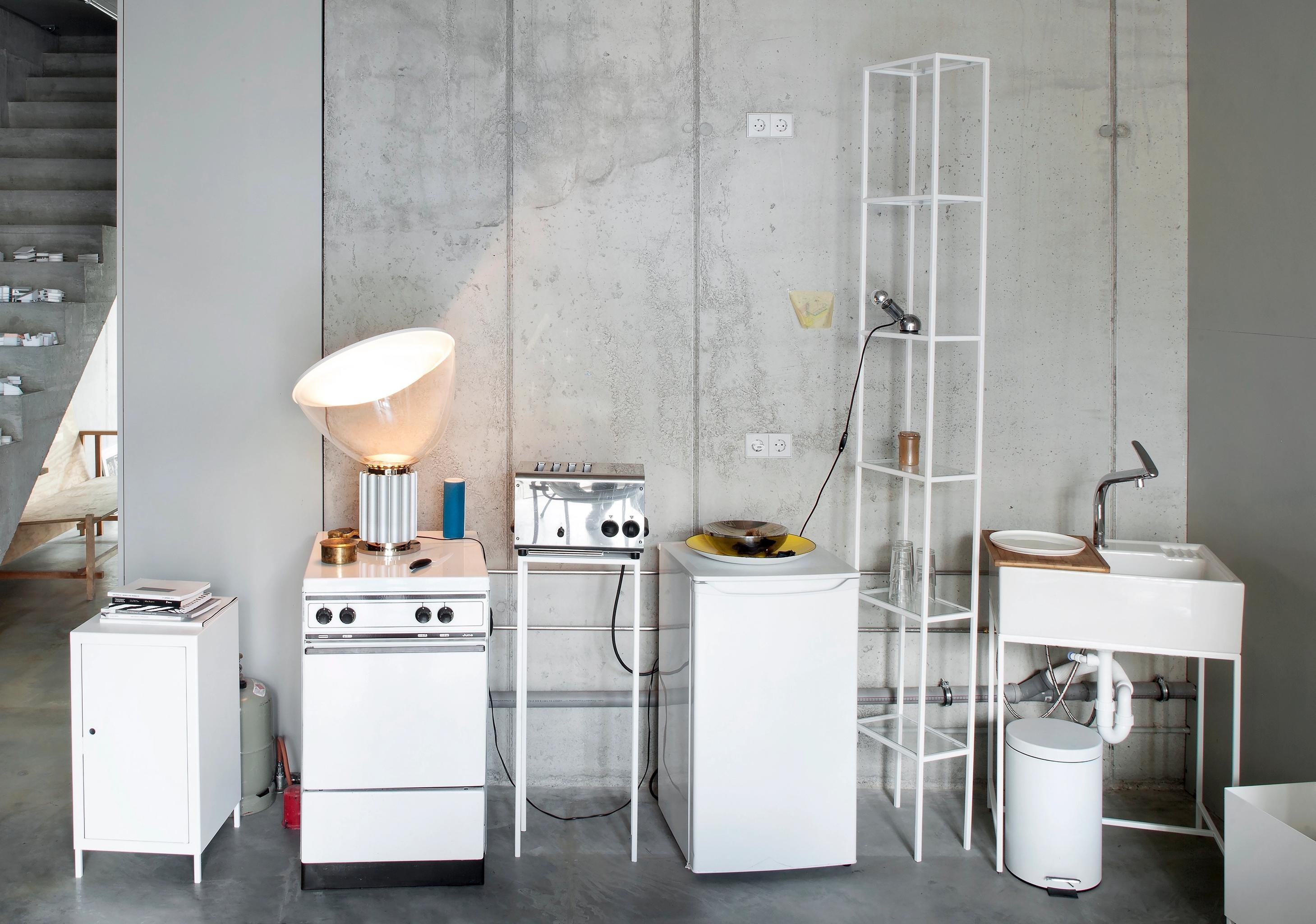
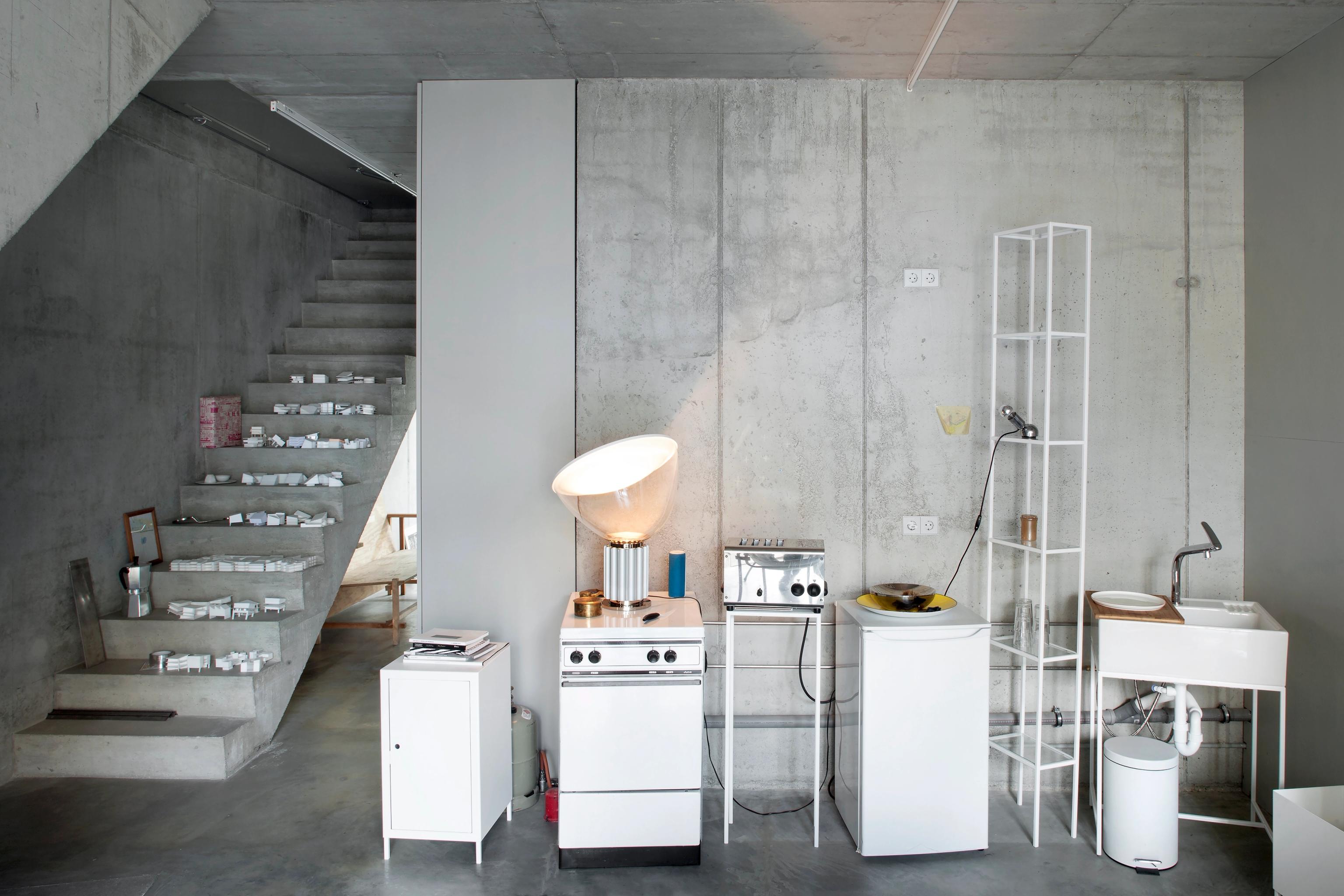
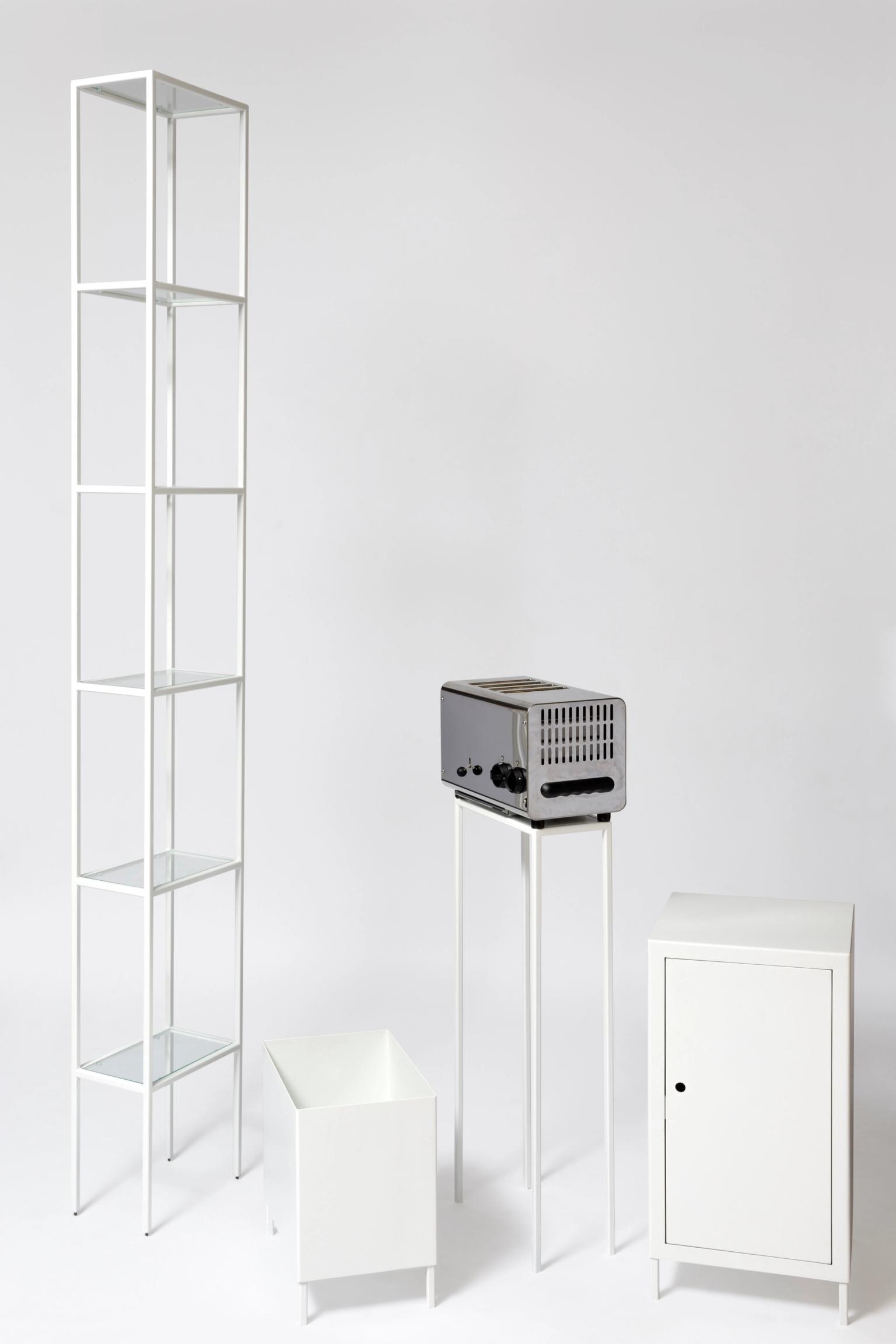
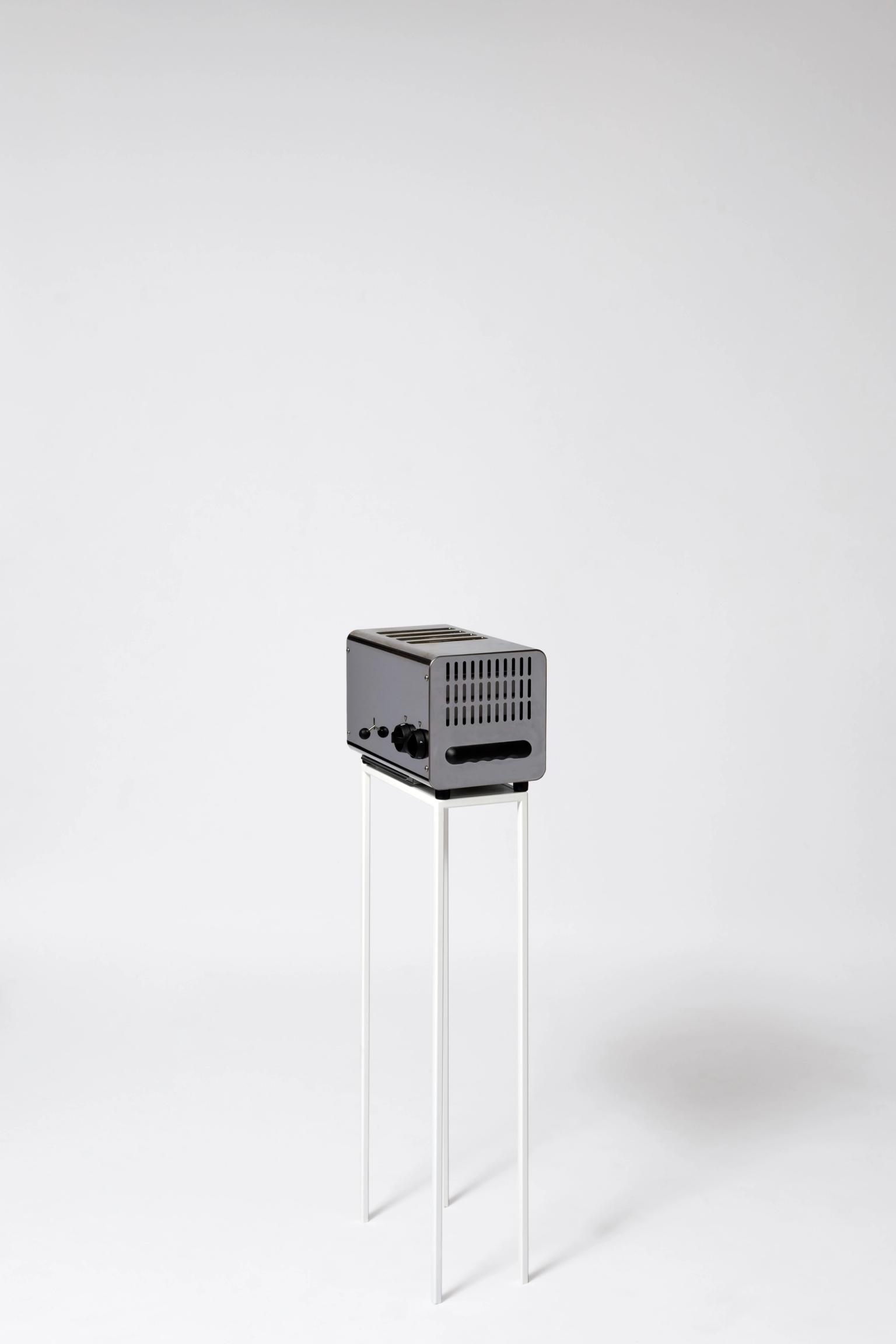
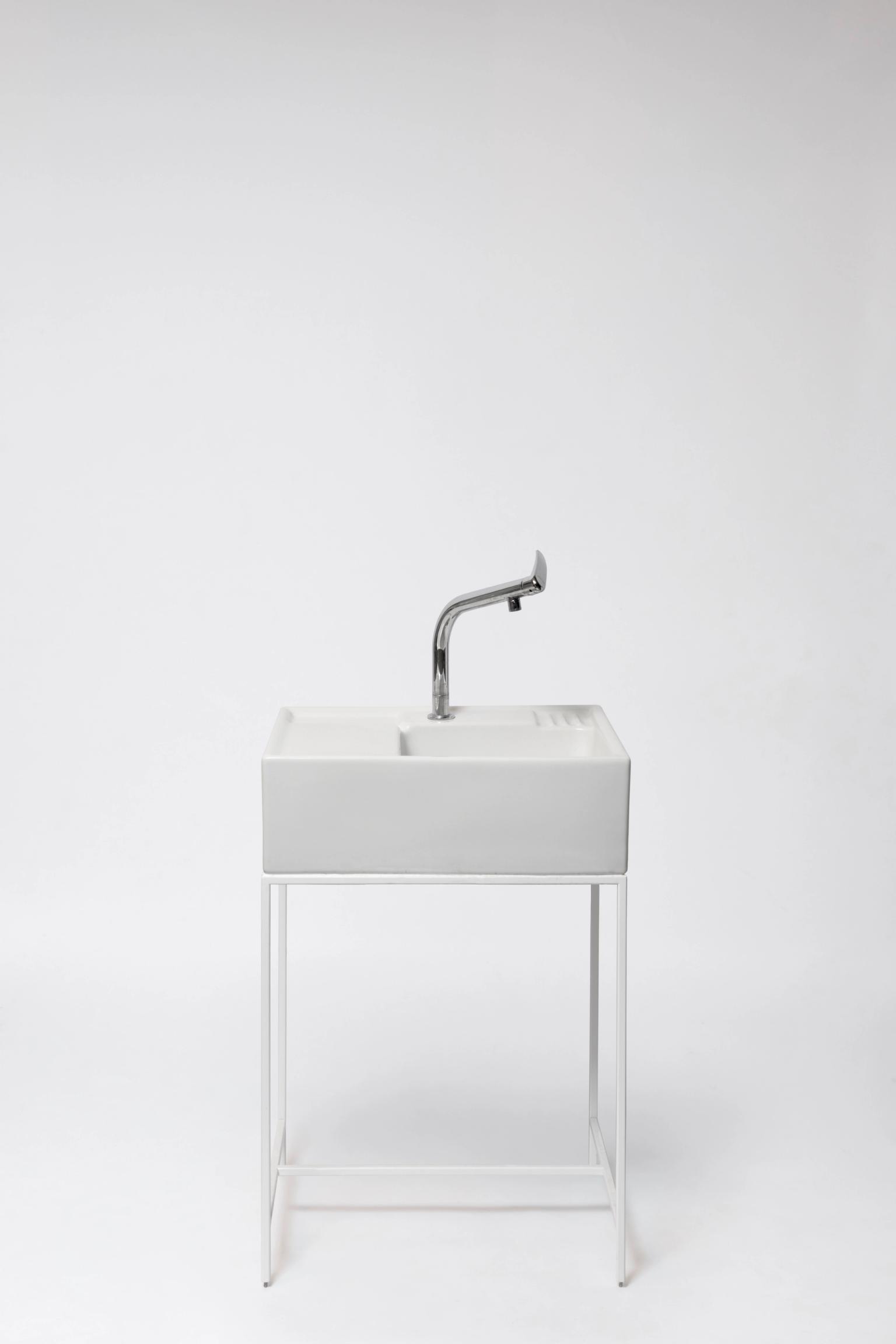
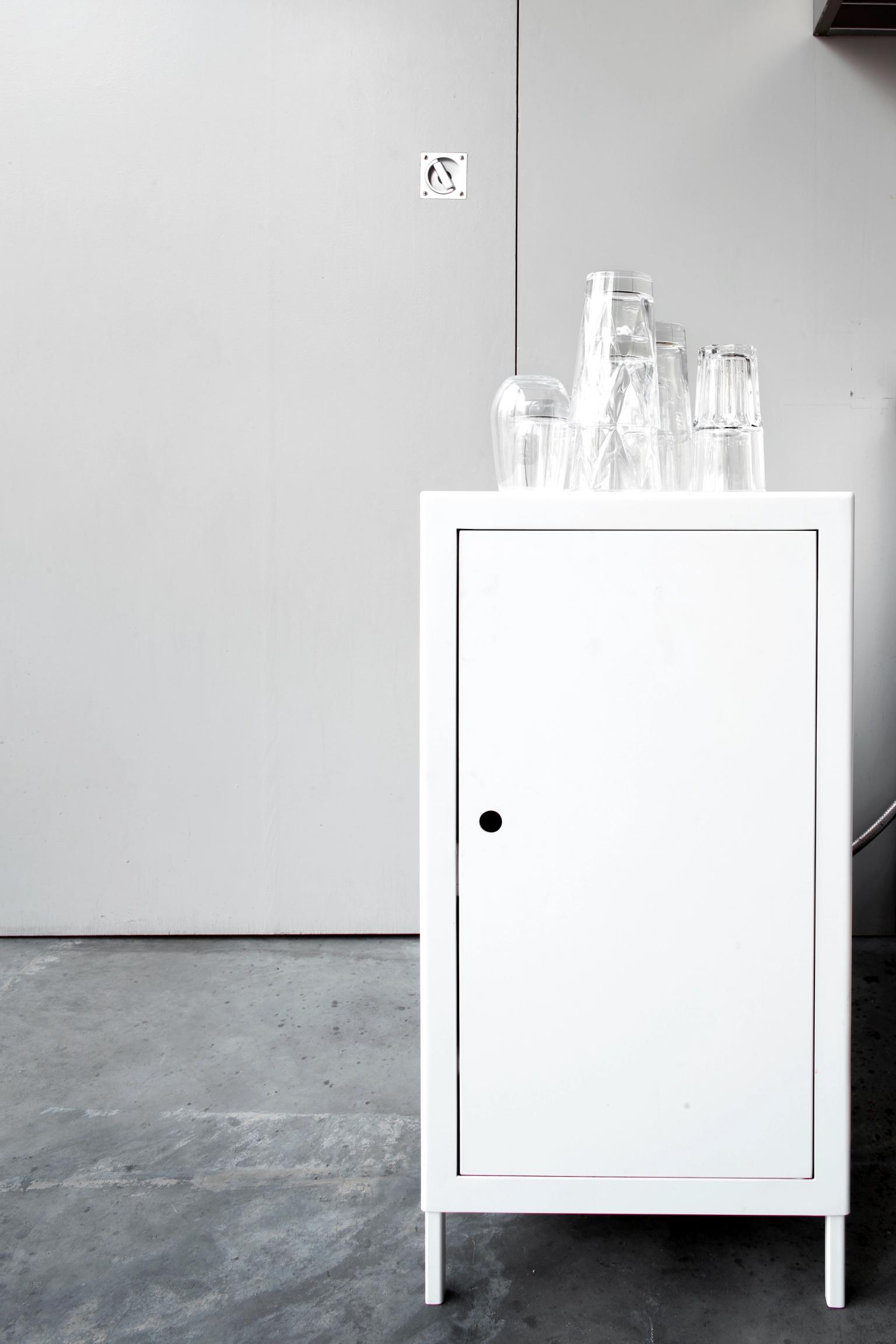
The system is made up of stands, shelves, tables and boxes, each defined by specific proportions and heights. Within this structure are more functional units such as sink stations, toaster stands, storage boxes, recycling containers and elevated surfaces for cooking appliances. Each element is designed to work both independently and as part of a larger constellation.
Some components are fixed and stable, while others are mobile, often placed on castor wheels so they can be moved as needed. Instead of one continuous kitchen layout, the system produces shifting clusters of use. The kitchen becomes something assembled in real time, rather than installed once and left unchanged.


Domestic Space in Motion, Social Use and Everyday Life
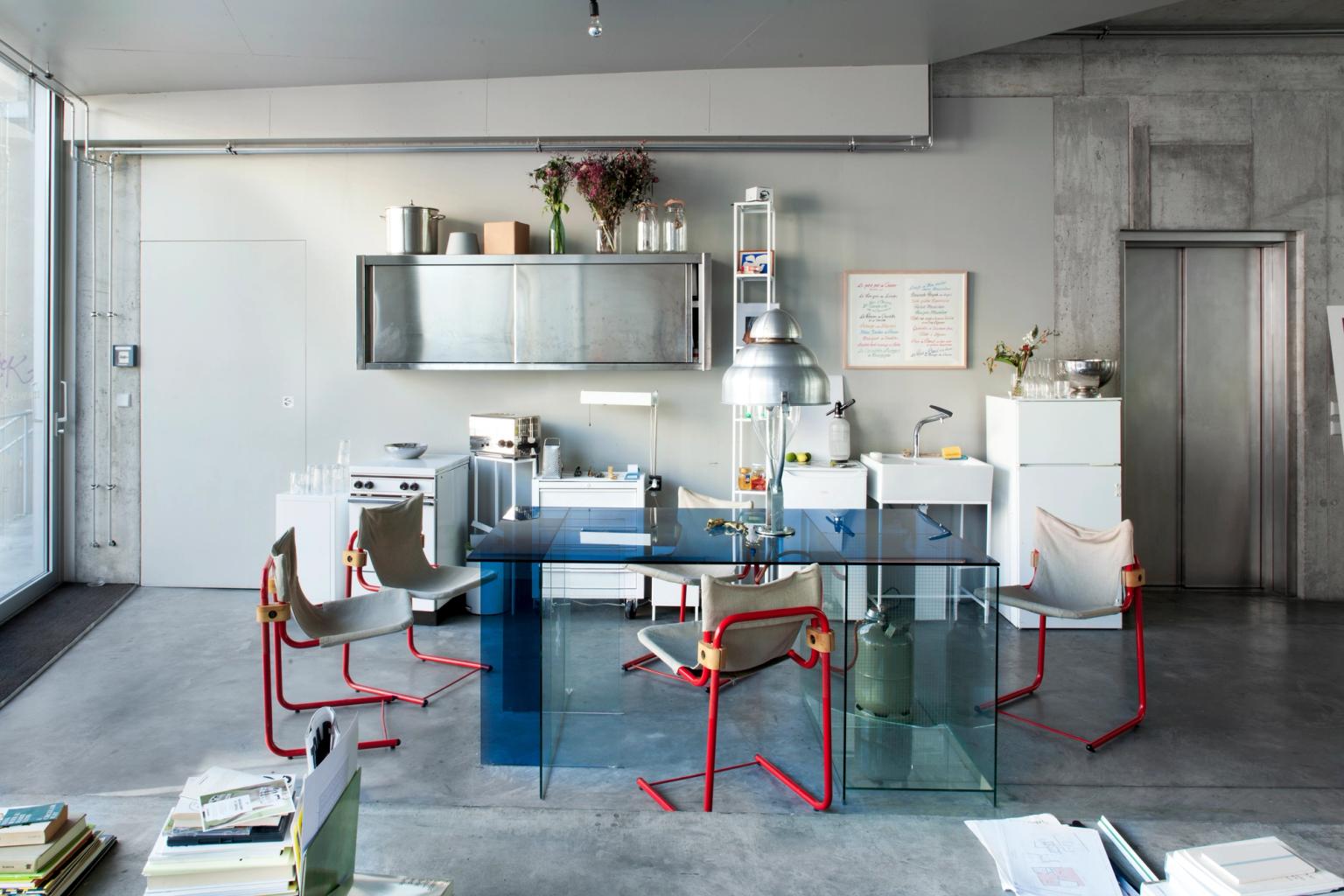
Free Kitchen challenges the idea that a kitchen must be anchored to walls and hidden infrastructure. Instead, it acknowledges that domestic life is unstable and constantly changing. People cook differently, live differently and share space in shifting ways, and the system is designed to accommodate that uncertainty. Rather than enforcing order, the kitchen becomes a loose field of objects that can be rearranged. It behaves less like fixed architecture and more like a working environment that adapts to daily routines. In this sense, the design does not resolve domestic life into a single ideal, but keeps it open and adjustable.
At its core, the project is concerned with how space shapes social behaviour. By removing the kitchen from the edges of the room, Free Kitchen places cooking and preparation in the centre of domestic life. This makes everyday actions more visible and shared, turning the kitchen into a social space rather than a hidden service zone.
The system reflects Sam Chermayeff Office’s broader interest in small-scale interactions, how people interrupt, gather, and coexist in shared environments. Instead of eliminating friction, the design allows it to exist as part of everyday life, treating domestic space as something negotiated rather than controlled.

An Open Framework
Free Kitchen remains an evolving system rather than a fixed product. It continues to be adapted in different spatial contexts, from apartments to experimental installations. While it uses industrial materials and standard appliances, its logic is not standardised. Each version is shaped by its users and the specific conditions of its space. In this way, the project operates as a framework rather than a solution. It does not define what a kitchen should be, but instead offers a structure that can be rearranged, questioned and reinterpreted over time.