
Dorte Mandrup
Ilulissat Icefjord Centre
- ArchitectDorte Mandrup
- PhotographerAdam Mørk
Melike Altınışık A project deeply rooted in fragile landscape. Its restrained geometry follows the terrain rather than imposing upon it. It represents architecture as environmental awareness and cultural sensitivity.

Landscape as Architecture
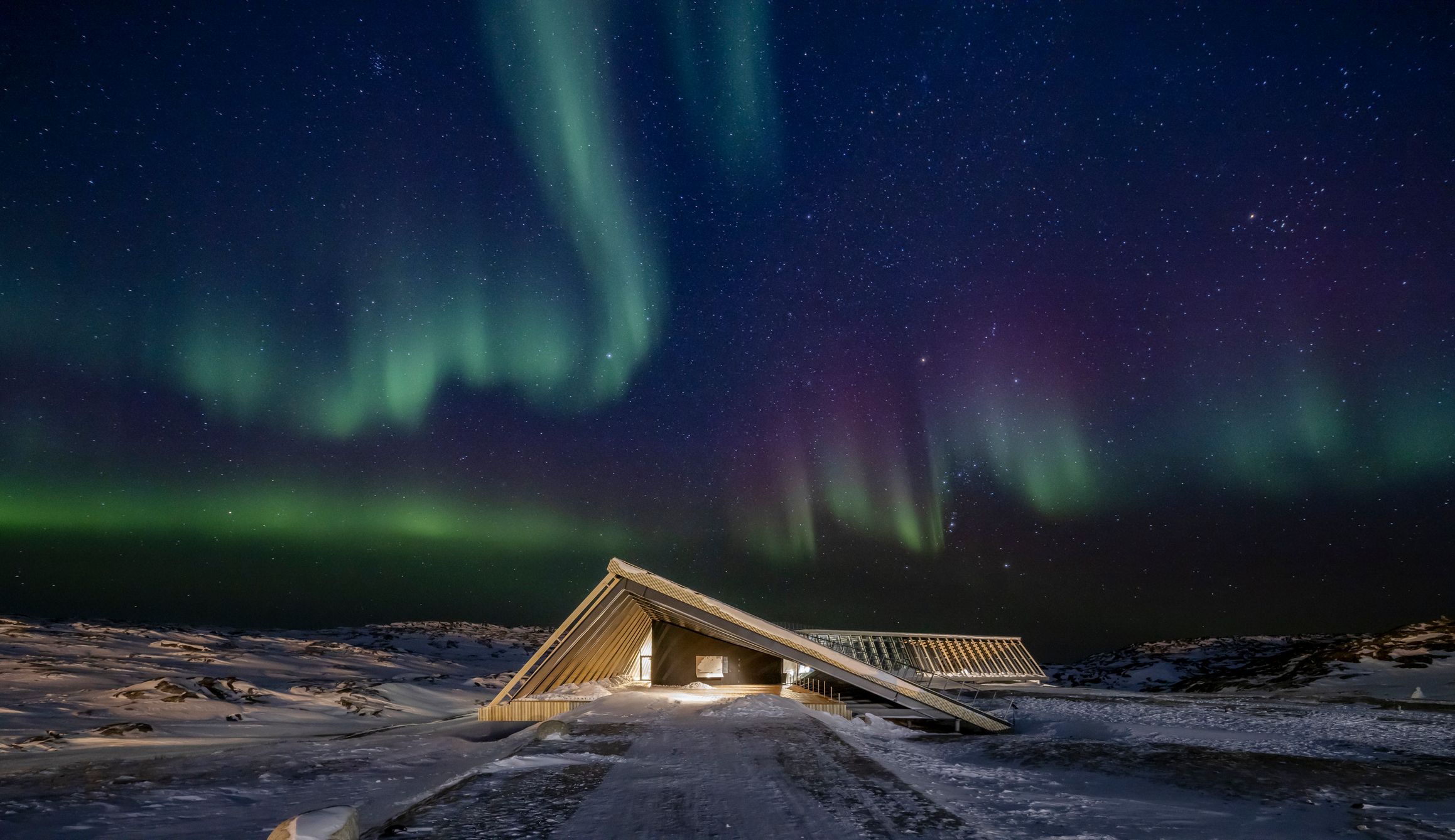
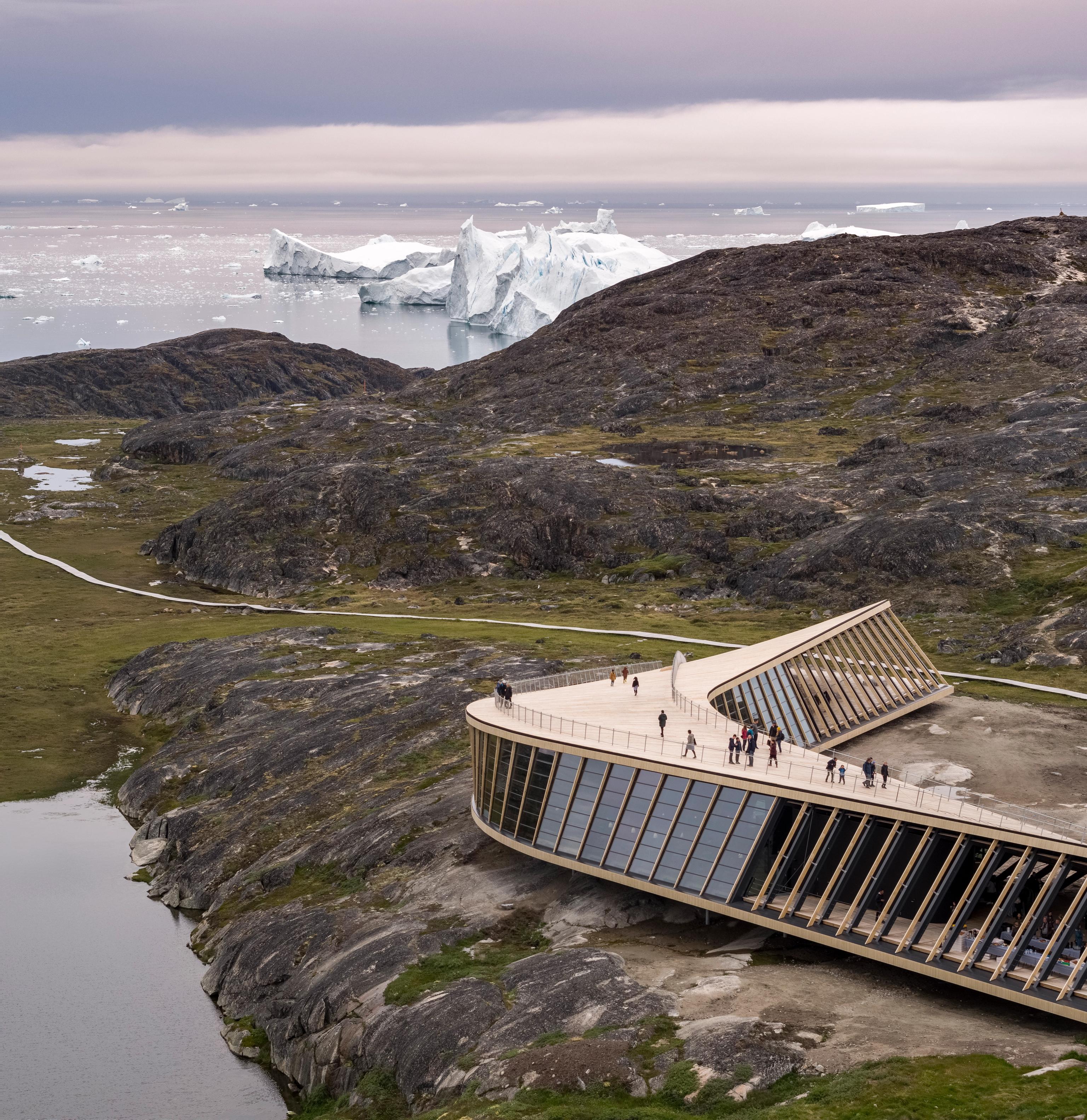
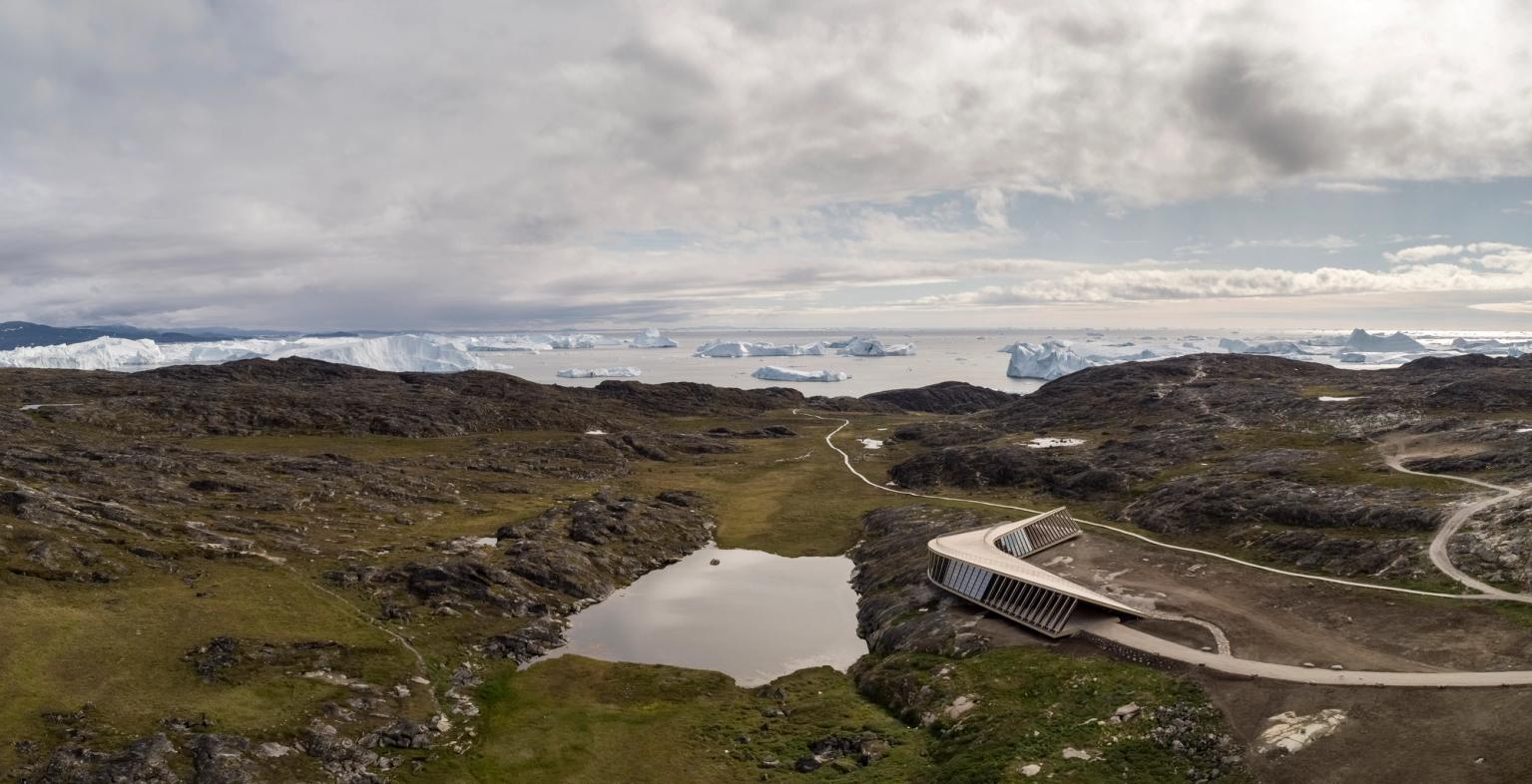
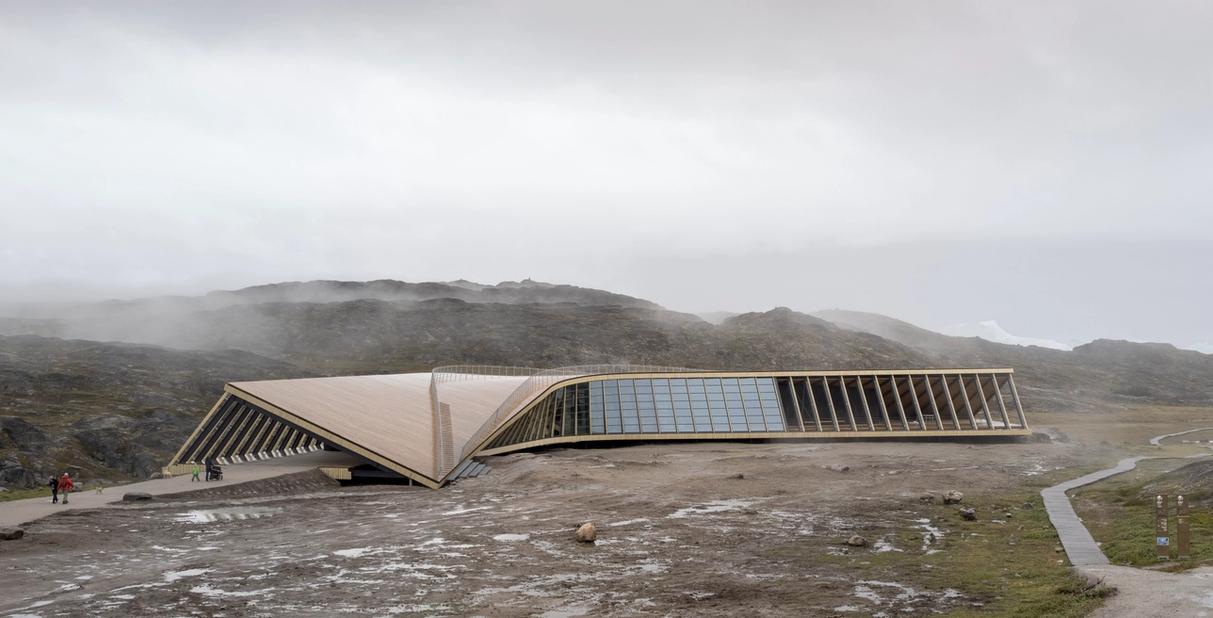
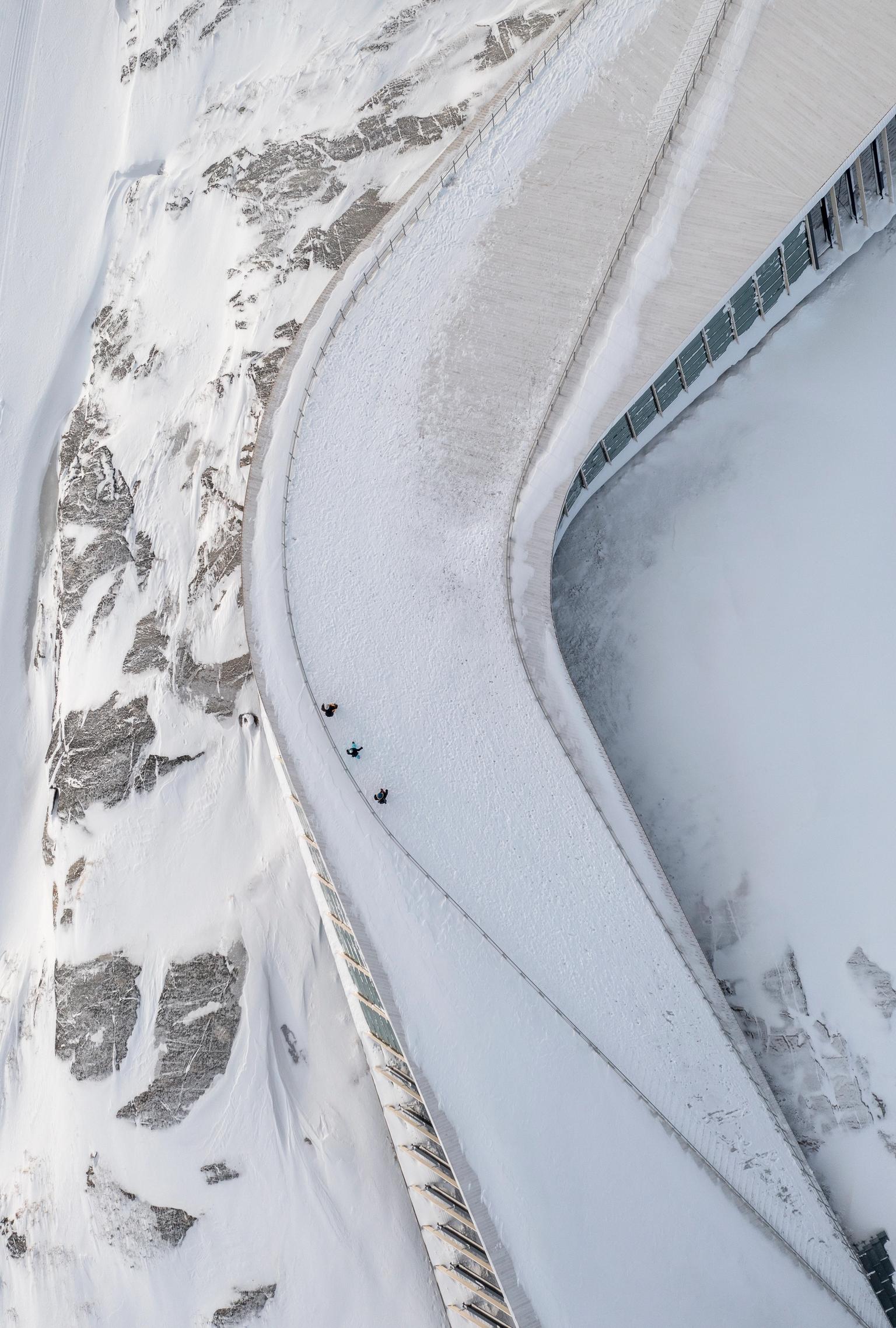
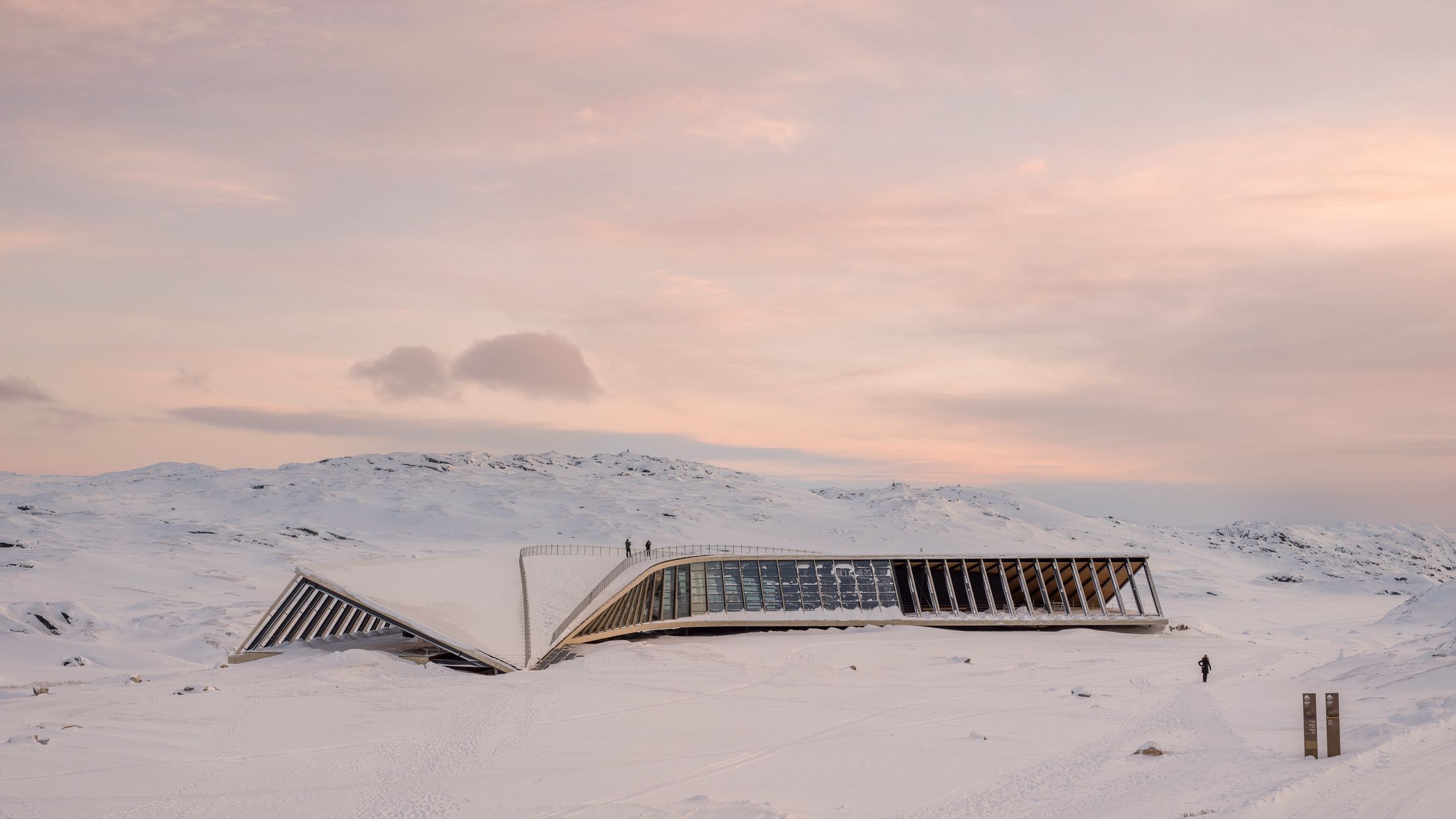
Located about 250 kilometres north of the Arctic Circle on the edge of the UNESCO-protected Kangiata Illorsua - Ilulissat Icefjord Centre near Ilulissat, the Icefjord Centre by Dorte Mandrup is conceived as a sculptural landscape intervention rather than a conventional visitor building. Positioned on a slight rise roughly one kilometre south of the town centre, the structure overlooks Sermeq Kujalleq, one of the world’s fastest-moving glaciers and one of the most visually expressive sites of climate transformation.
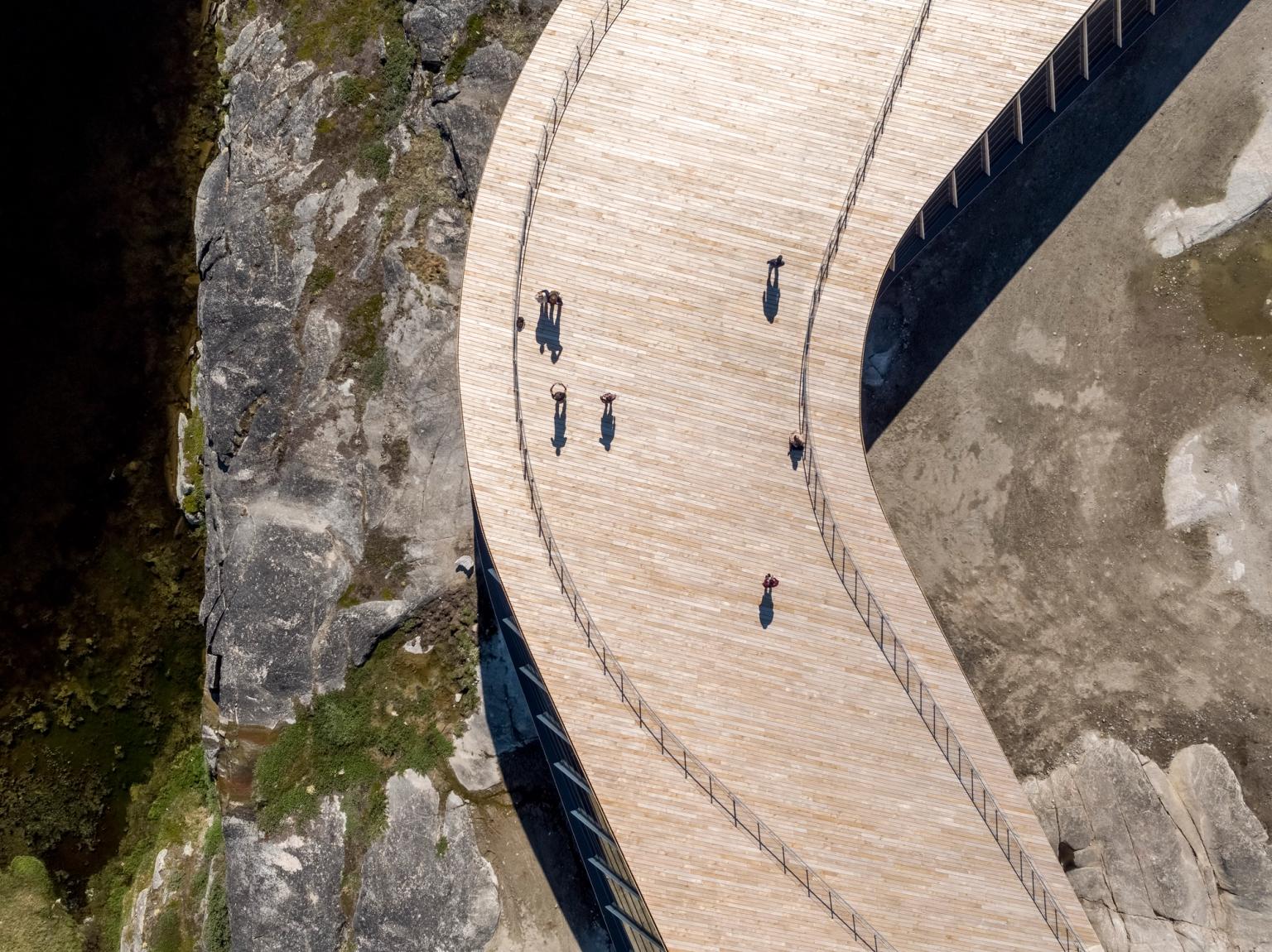

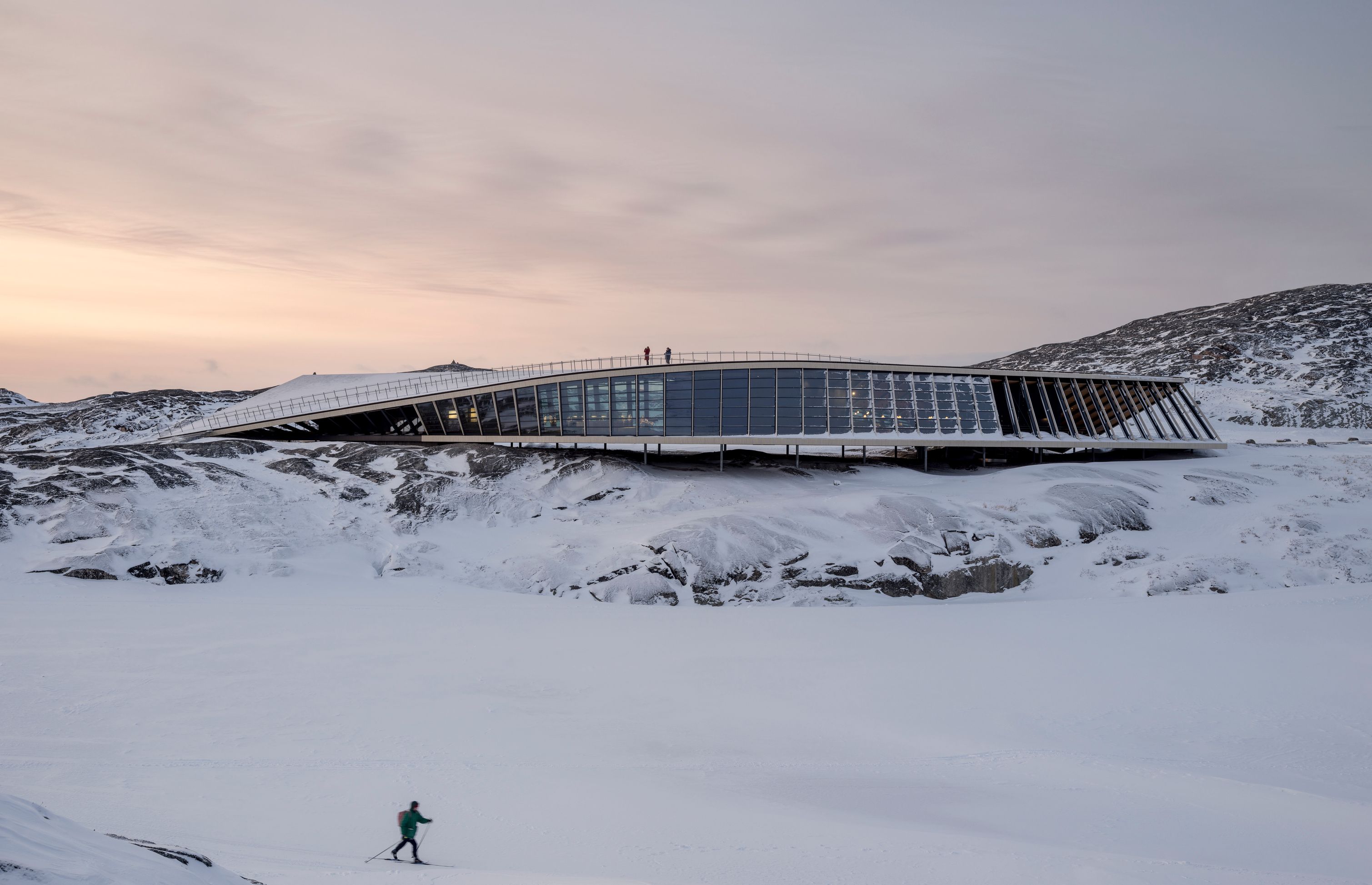
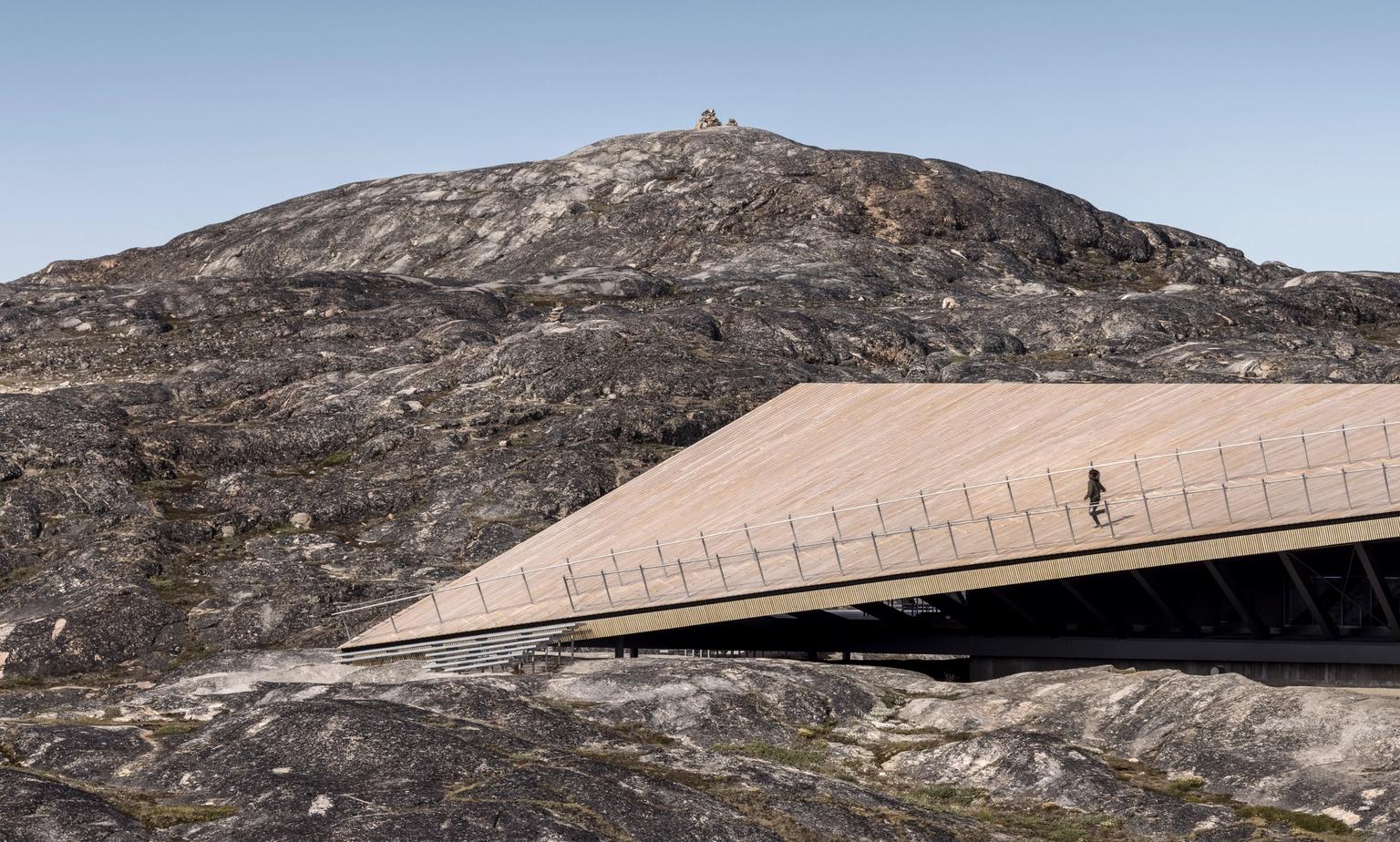
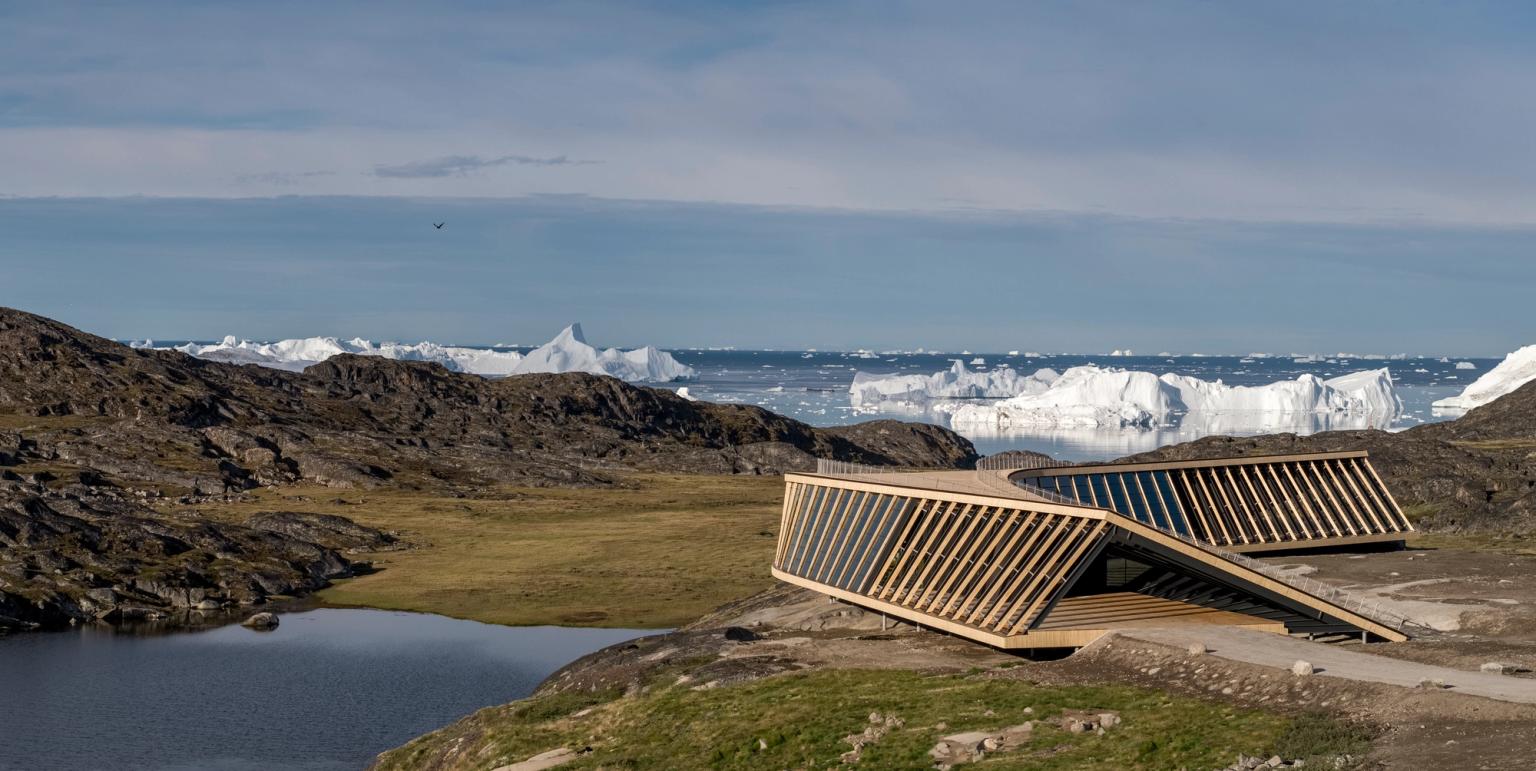
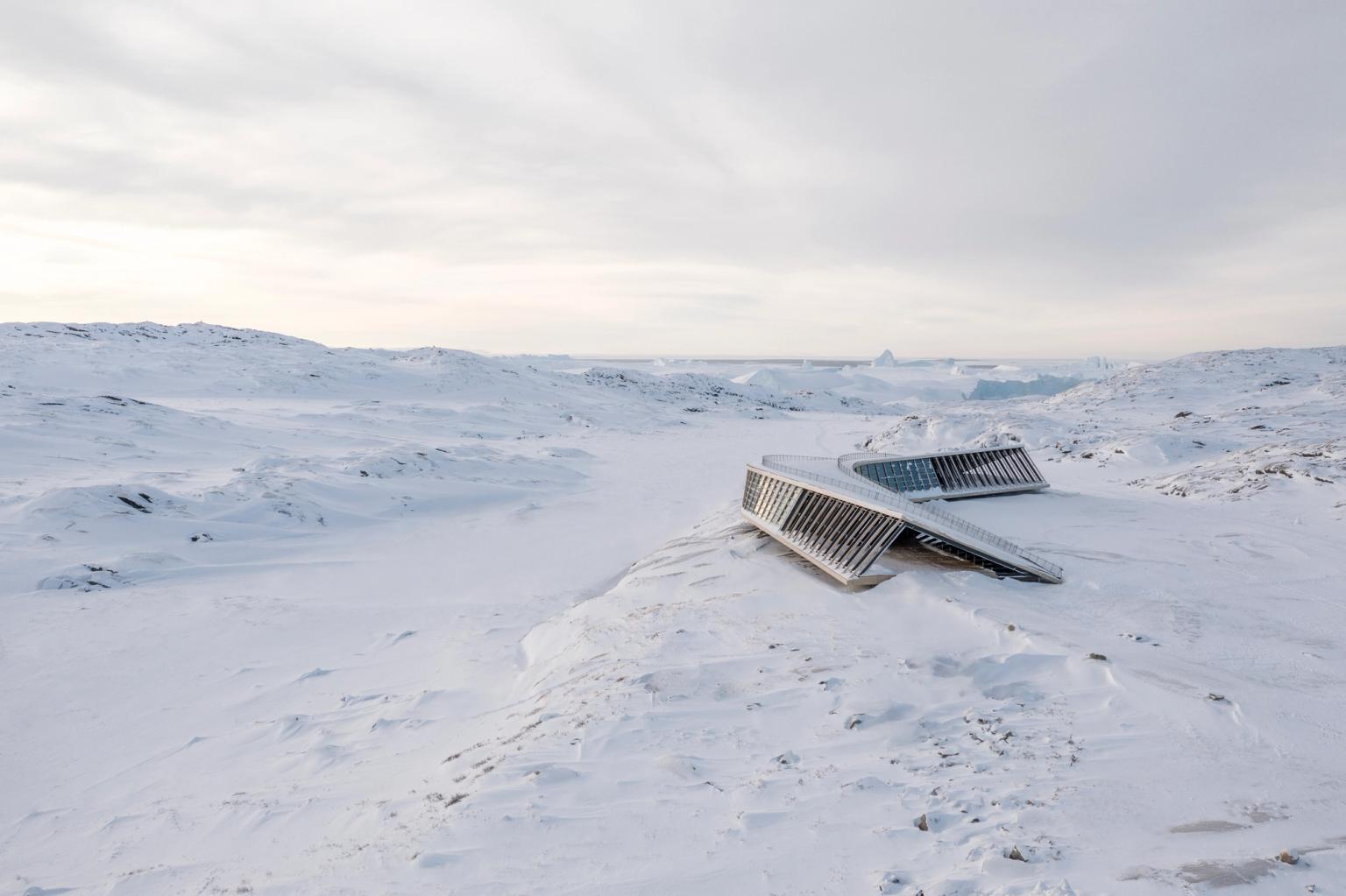
Inspired by the silhouette of a snowy owl’s wing, the aerodynamic form appears to hover above the tundra, functioning simultaneously as roof, public platform, and transitional gate between urban settlement and Arctic wilderness. The building’s east–west overhangs provide shelter from harsh weather while allowing the architecture to generate its own micro-landscape within the extreme environment.





Material Strategy and Climate Response
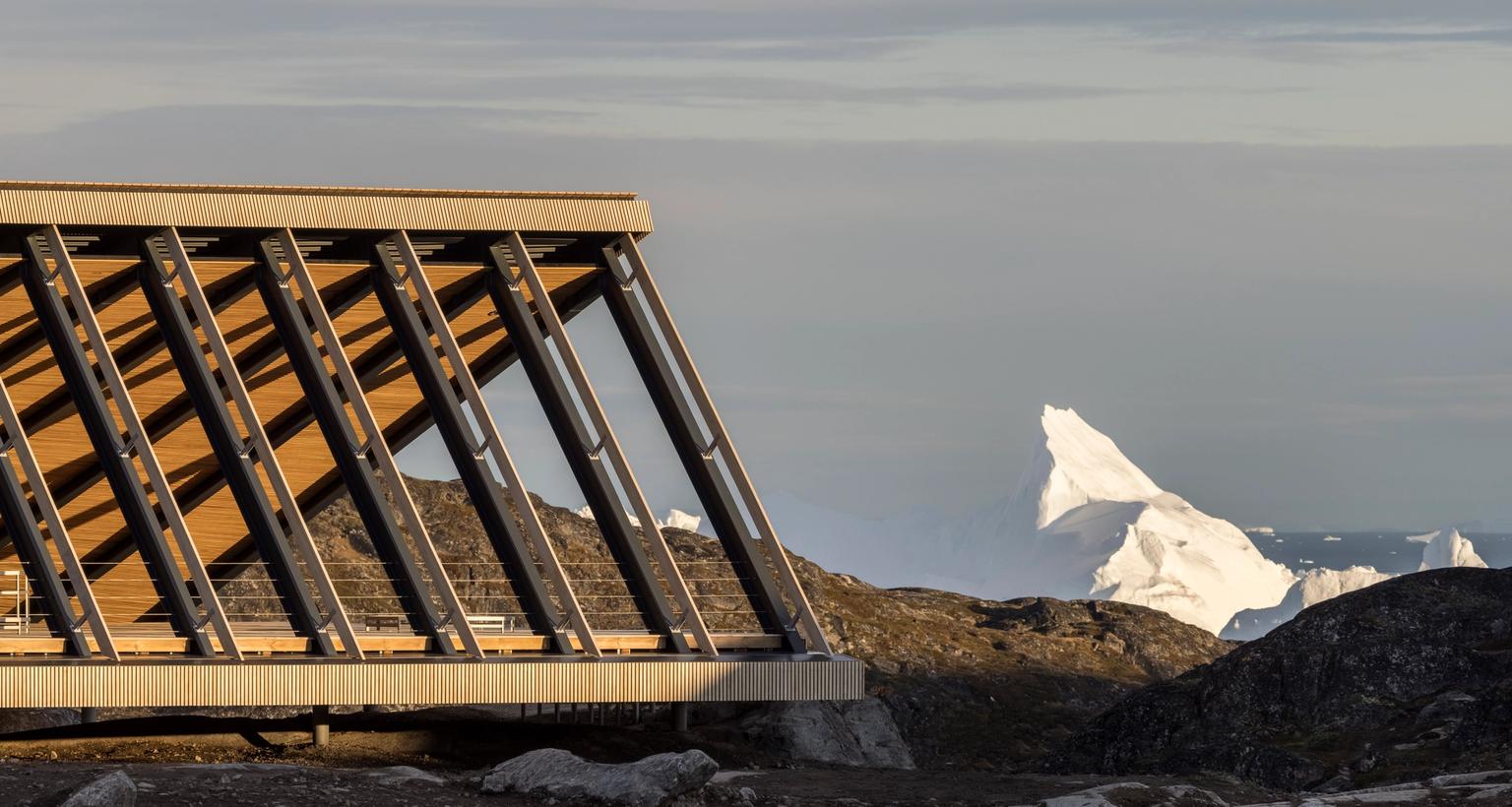
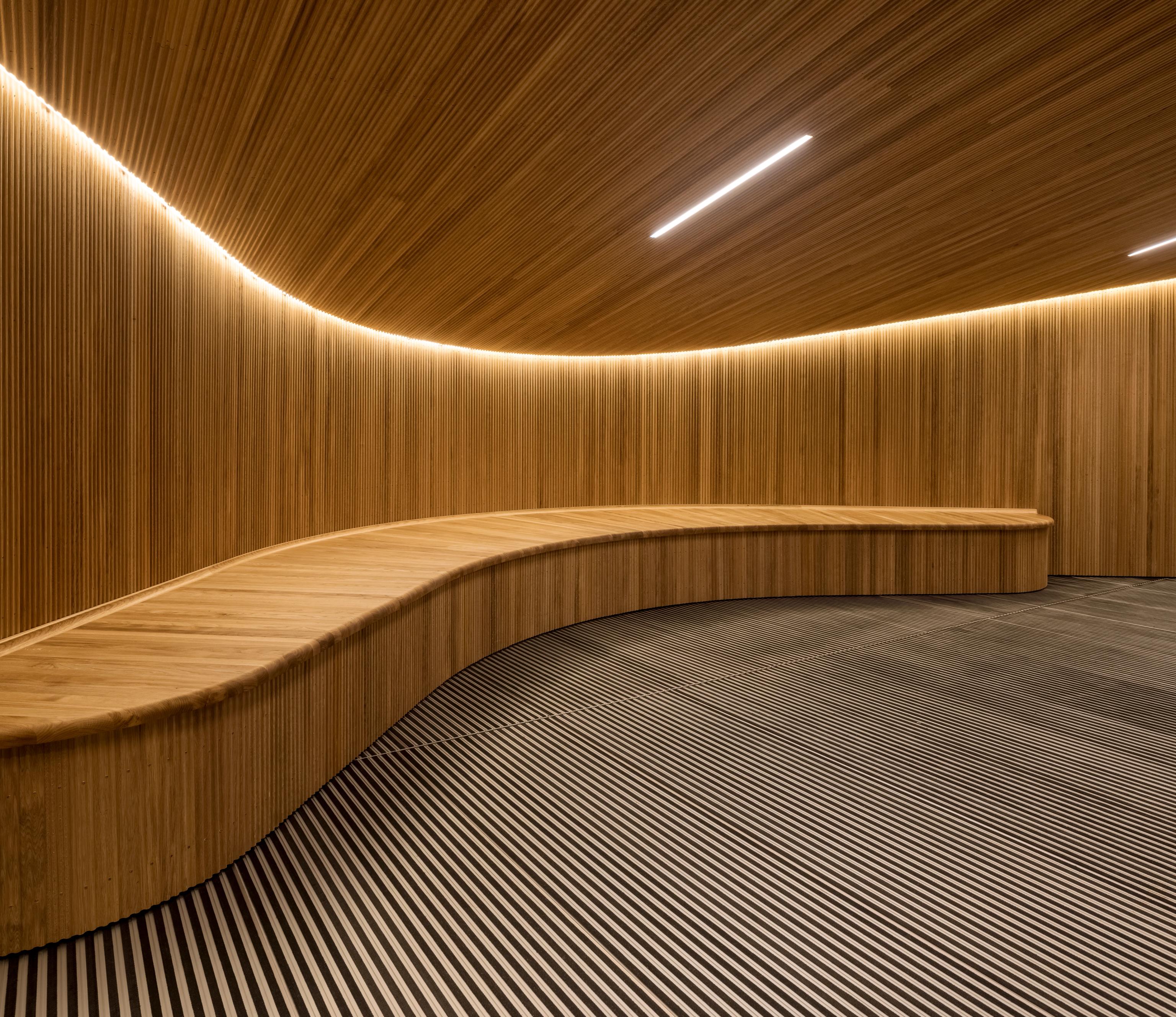
The Icefjord Centre is constructed using a restrained palette of steel, glass, and sustainably sourced European oak, chosen to meet both environmental and structural demands in an Arctic climate marked by freezing cycles and thawing periods. Fifty-two uniquely shaped steel frames carry the roof, façades, and floor slabs, allowing the building to touch the ground only through concrete column foundations. This design ensures that spring meltwater can flow freely beneath the structure, responding directly to the hydrological rhythms of the terrain. Wooden structural systems were avoided because continuous moisture and temperature fluctuation would undermine long-term stability. Instead, oak surfaces are used internally to provide thermal softness and visual warmth against the exterior’s technical precision.


Form, Movement, and Spatial Experience
Mandrup’s architectural language is rooted in sculptural thinking, shaped by her background in studies of sculpture and ceramics and her commitment to a hands-on design methodology. The building’s curved, streamlined body is not only aesthetic but functional - preventing snow accumulation along façades and beneath structural edges. The roof itself becomes an accessible landscape surface, allowing visitors to walk upward and experience the surrounding Arctic panorama from an elevated viewpoint.
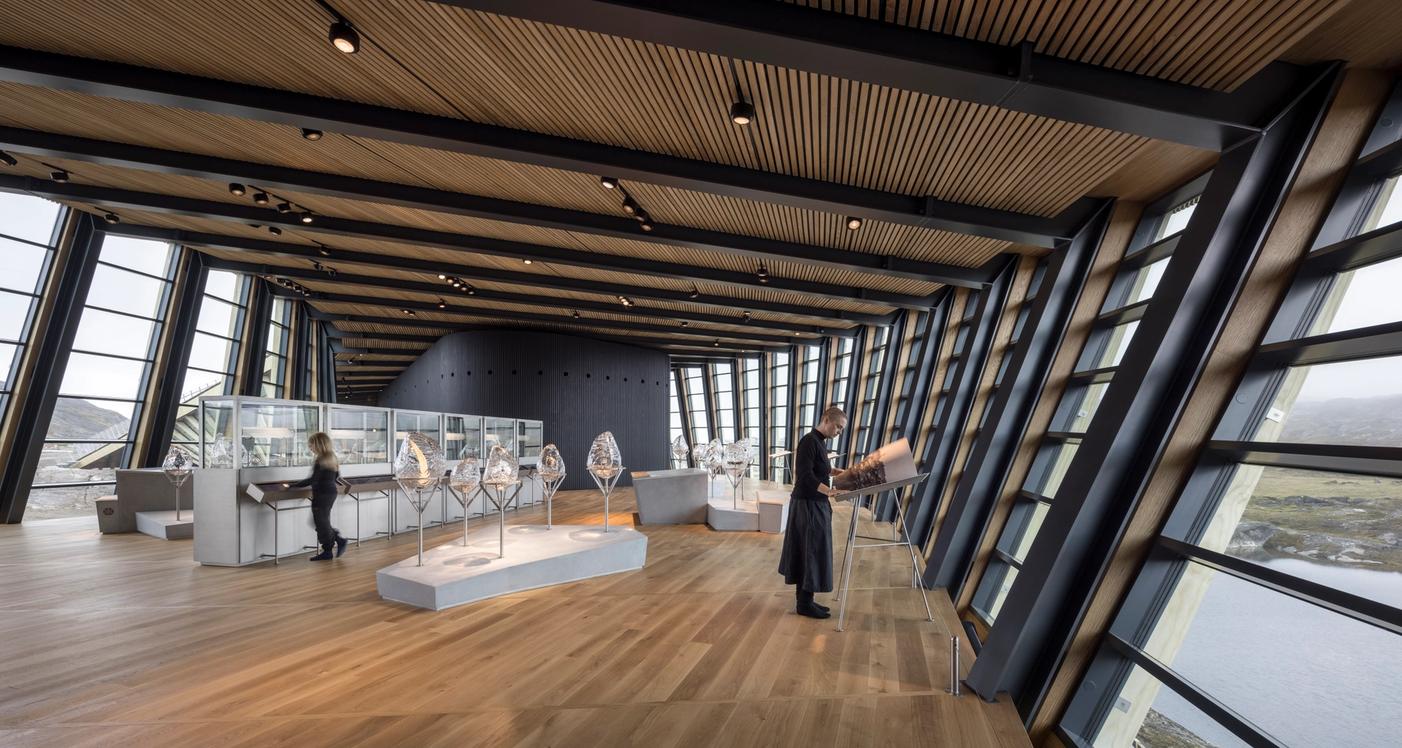
Inside, the approximately 1,500-square-metre building contains exhibition spaces, a cinema, café, and visitor facilities, with about 400 square metres dedicated to the permanent exhibition. Movement through the centre is designed as a gradual narrative transition where architecture frames nature rather than competing with it.

Cultural Continuity
The permanent exhibition “Sermeq pillugu Oqaluttuaq - The Story of Ice” explores the relationship between Arctic nature, human survival, and climate change. Central to the exhibition are ice cores drilled from the Greenland ice sheet, containing layered climatic records reaching more than 124,000 years into the past. Each compressed layer of snow functions as a natural archive, preserving traces of volcanic activity, atmospheric composition, and geological events long forgotten by human history.

The exhibition emphasizes the idea that while human societies may forget, the ice preserves memory. The project also reflects Indigenous Arctic life, acknowledging how Inuit communities historically depended on sea ice for hunting, fishing, transport, and material culture.

Dorte Mandrup and Architectural Position
Dorte Mandrup is a Danish architect educated at the Aarhus School of Architecture and founder of the Copenhagen-based studio Dorte Mandrup A/S, which employs roughly 75 people and has produced numerous award-winning projects. Her work is characterized by a conceptually strong and analytical approach to complex contextual problems, where form and materiality function as primary narrative instruments. Mandrup has contributed to international architectural debate, notably through her 2017 article “I am not a female architect. I am an architect,” which challenged gender stereotyping within the profession.
She has served on the board of Louisiana Museum of Modern Art and has been appointed to the Danish governmental heritage advisory body concerned with architectural conservation. Among her notable works are the Wadden Sea Centre and the planned Exile Museum Berlin, reinforcing her position as one of the leading voices in contemporary humanist and site-sensitive architecture.