
the work of
Julia Isídrez
- ArtistJulia Isidrez
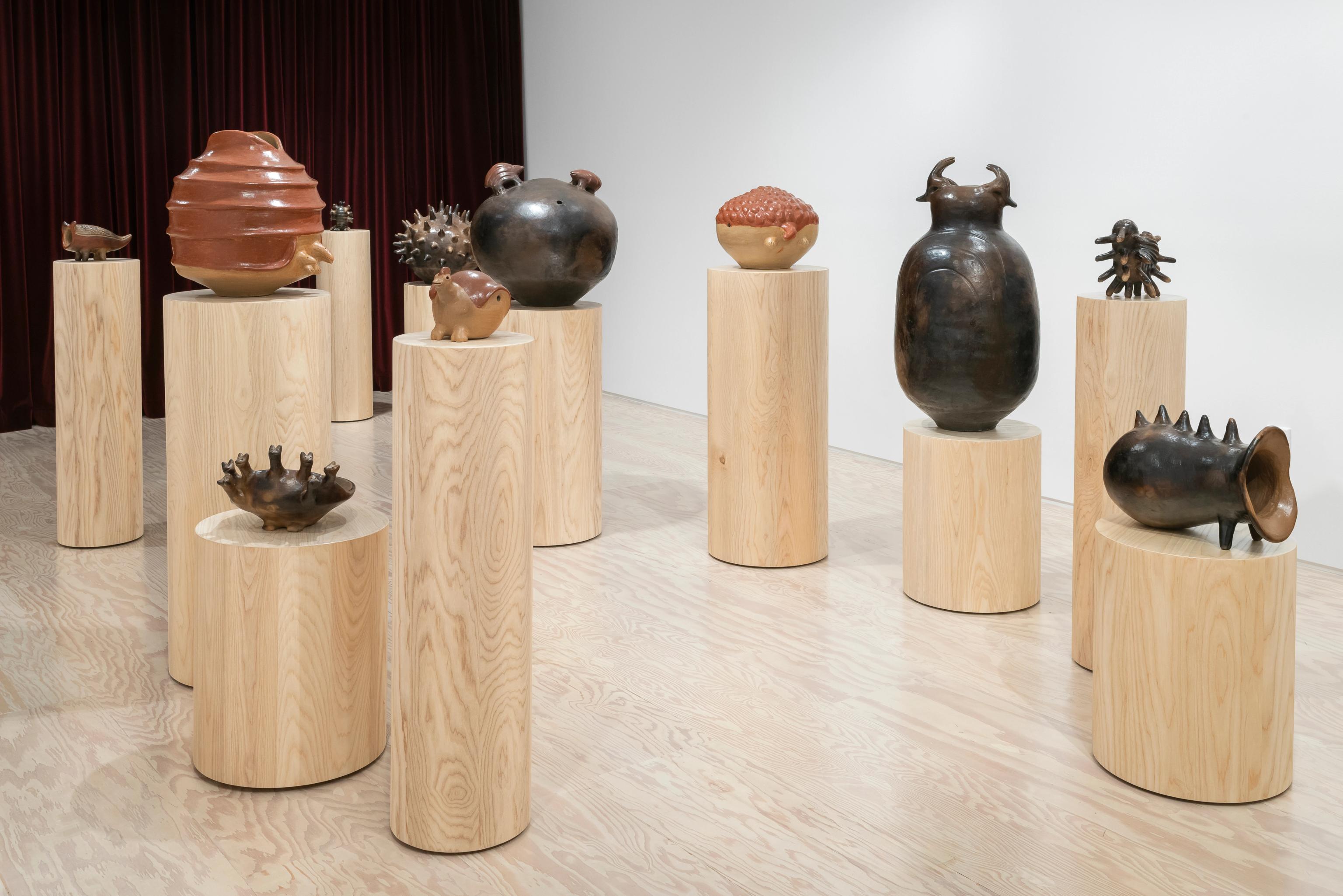
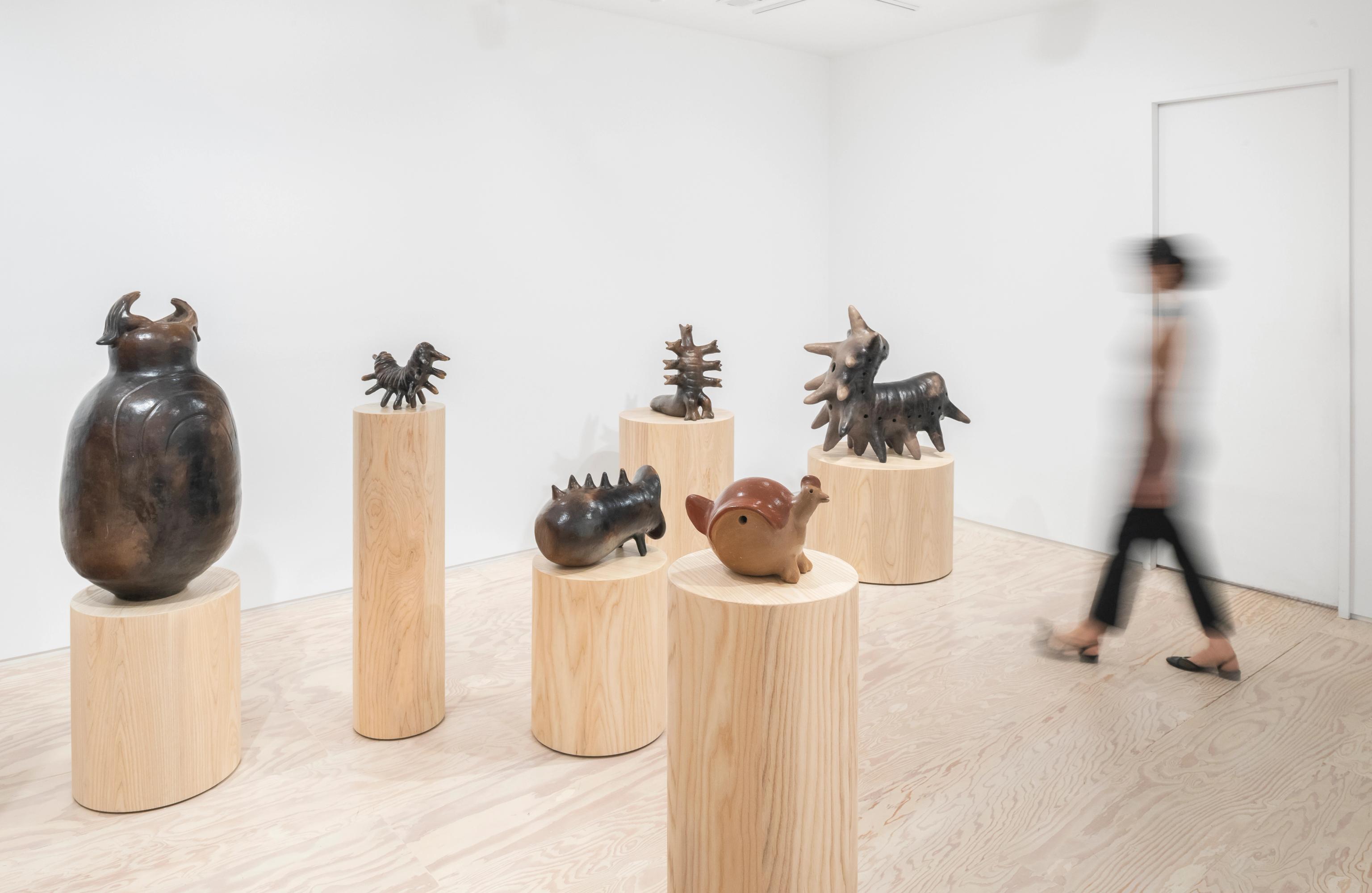
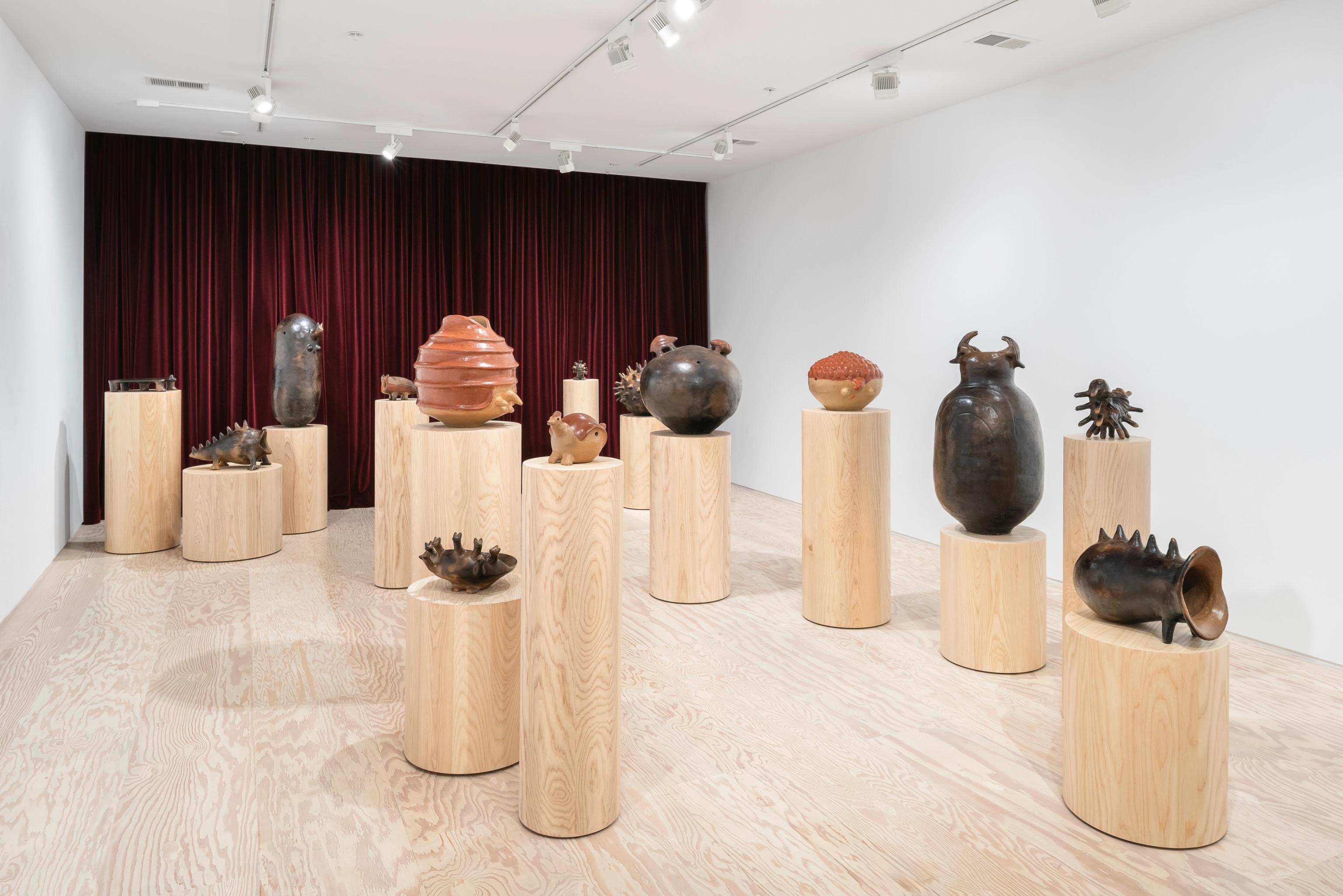
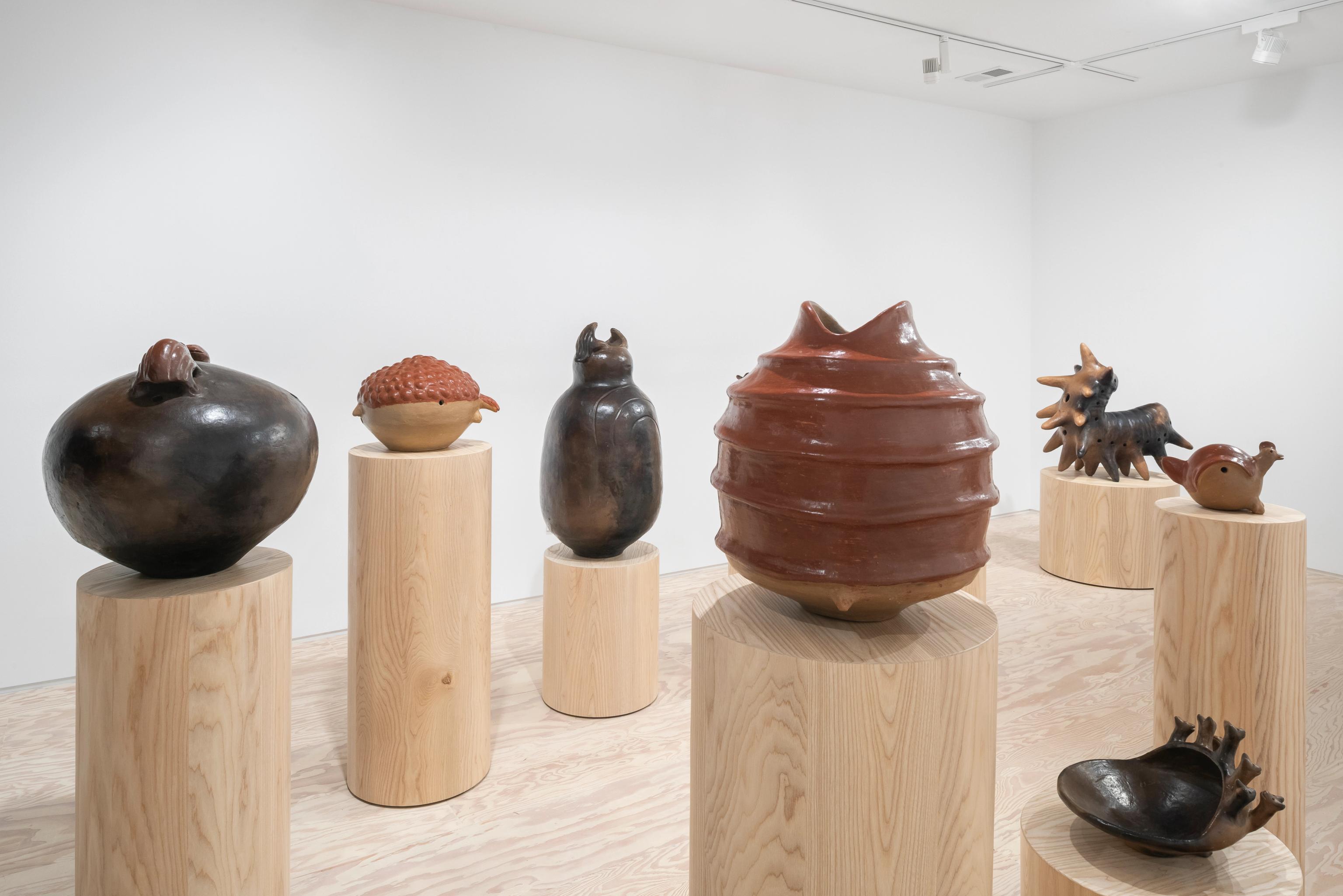
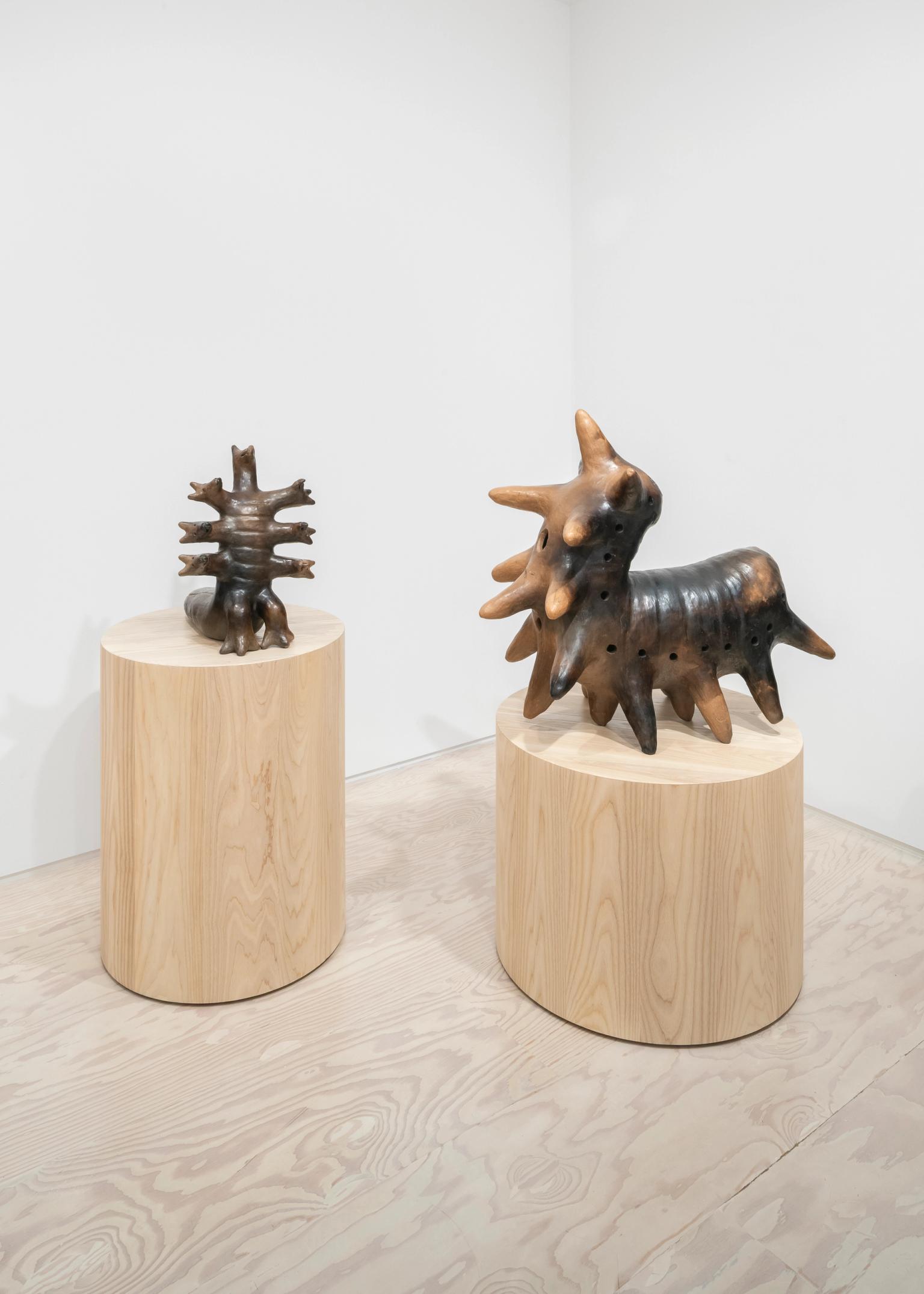
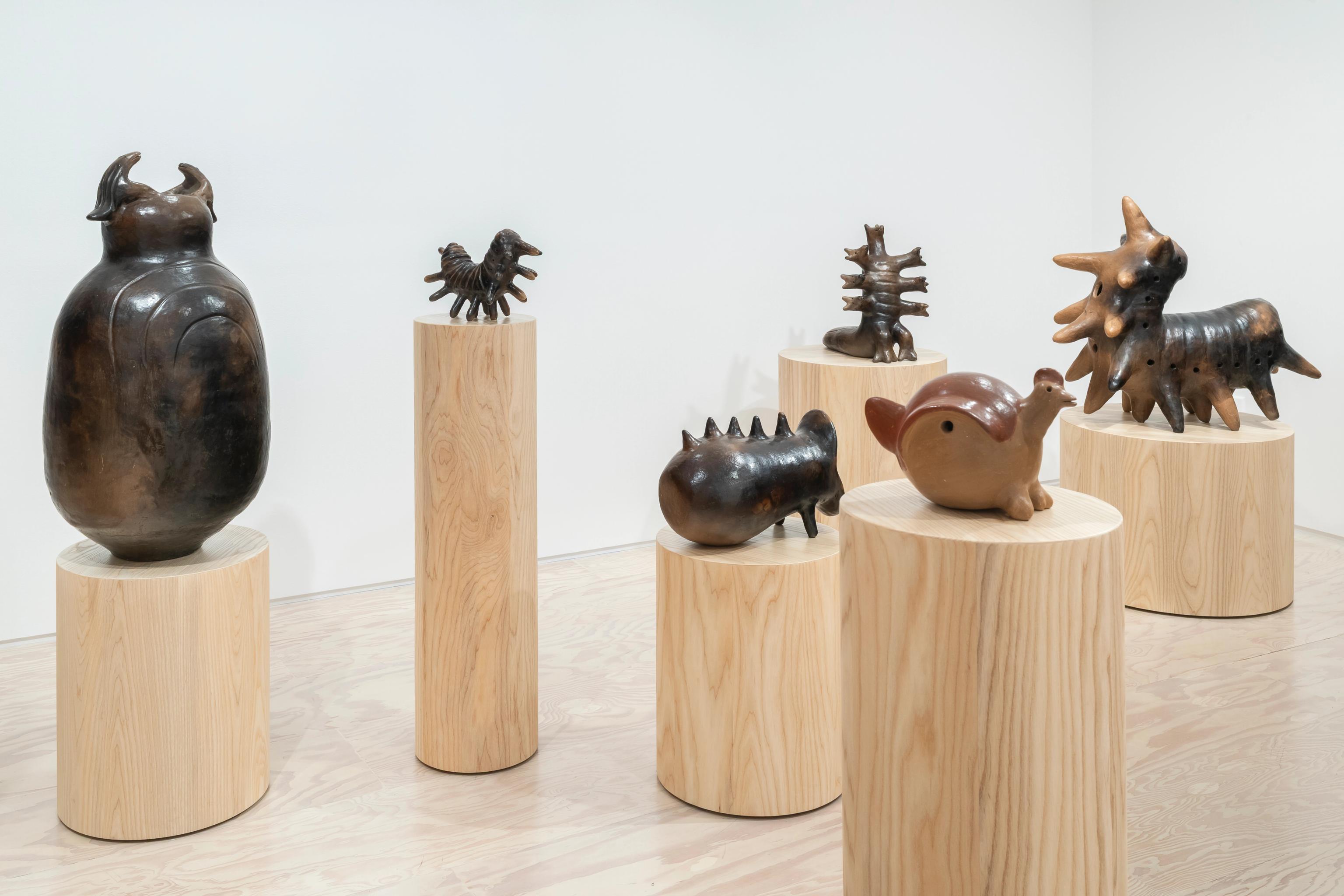
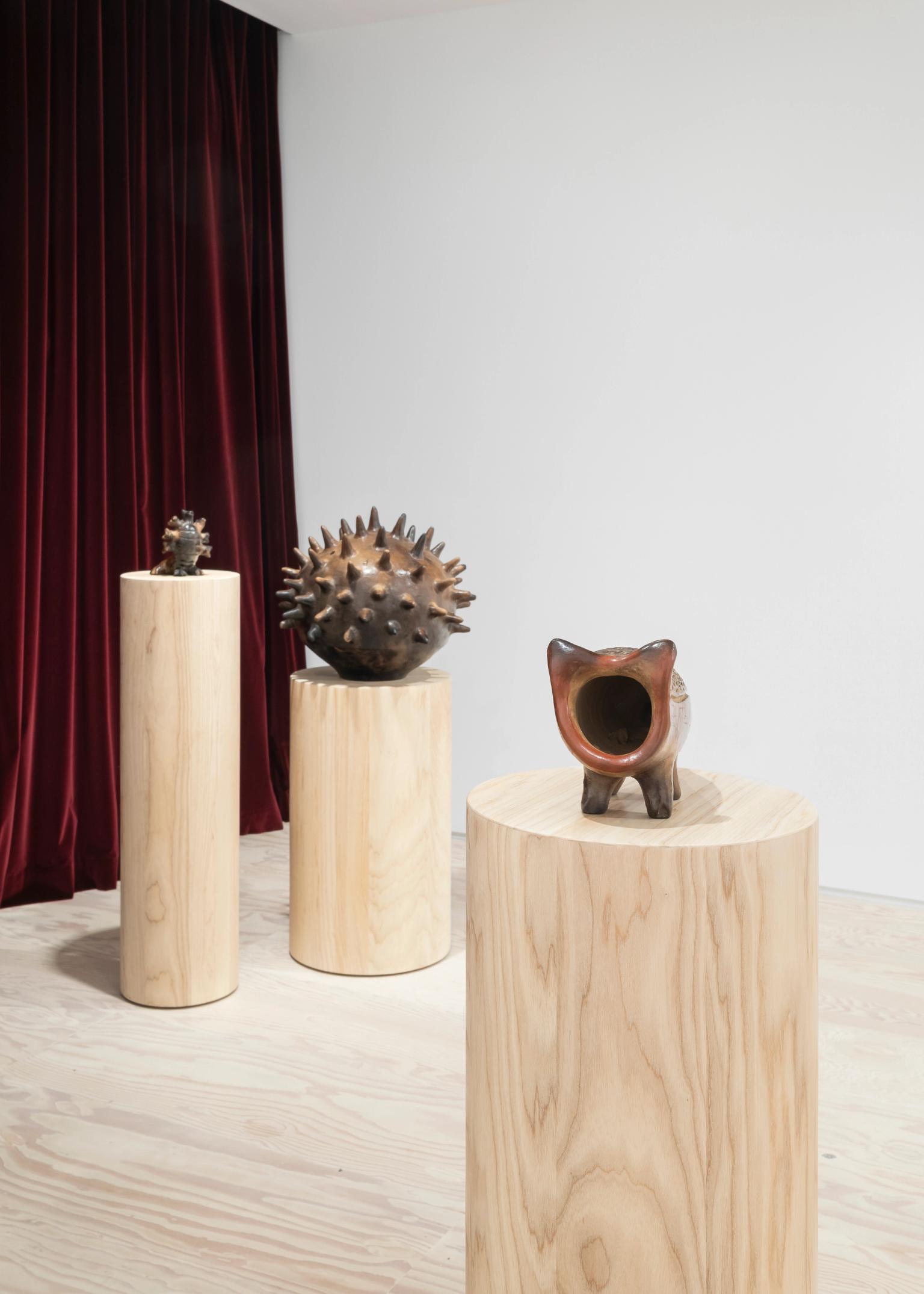
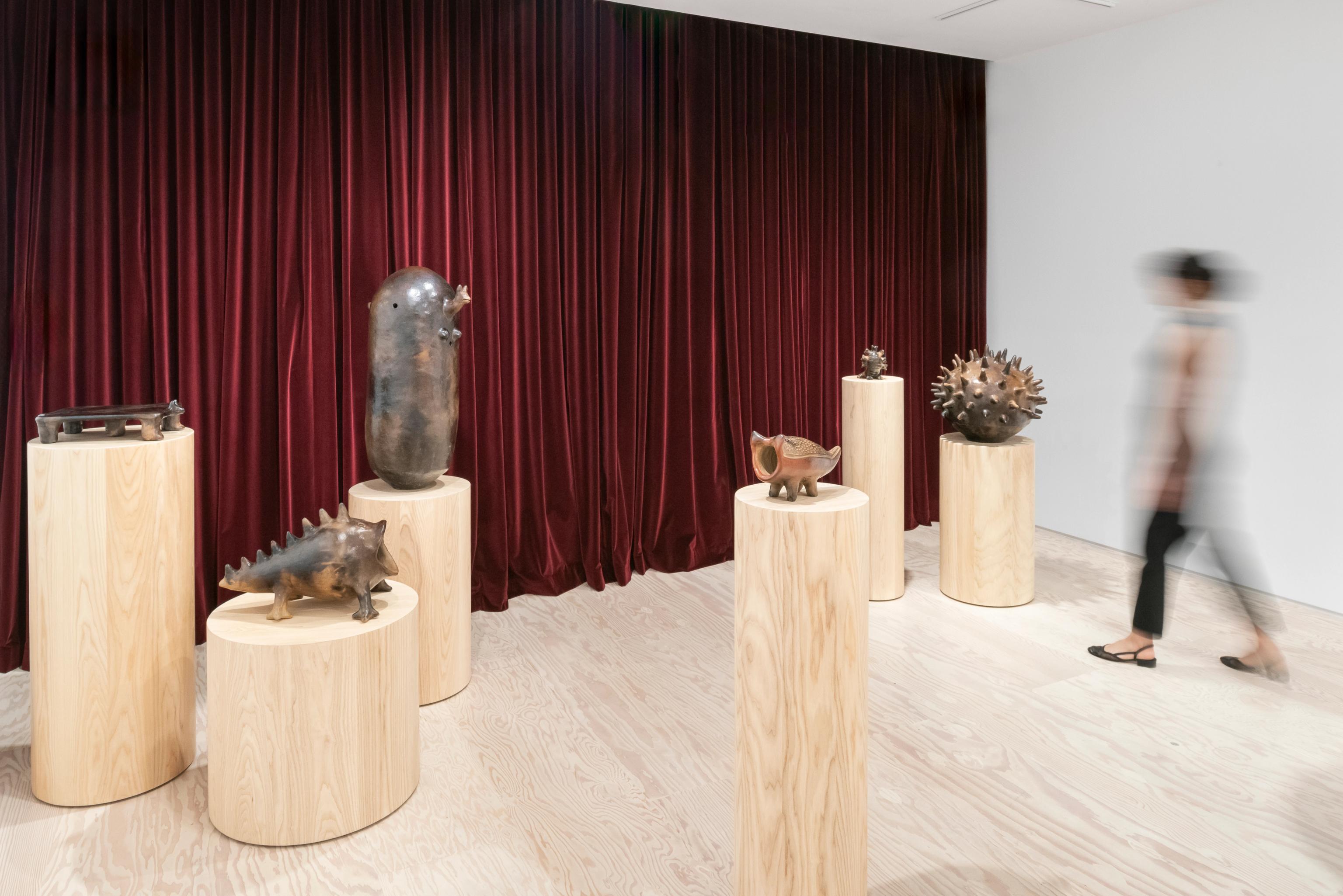
- GalleryInstallation views of Julia Isídrez, Zoophormes, 2025, Jessica Silverman, San Francisco, CA.
- PhotographerCourtesy of the artist, Gomide&Co, and Jessica Silverman. Photo: Phillip Maisel.
Luna Paiva Julia Isidrez's pottery techniques, rooted deeply in Guaraní tradition, have sustained families, traditions, and creative expression along an entirely matriarchal line. I had the fortune of meeting her in Paraguay before her work reached international recognition. She works with the red clay that stains the senderos, its paths and dirt roads, of the country.

Julia Isídrez
Julia Isídrez is a Guaraní ceramicist from Itá, Paraguay, whose practice is deeply rooted in an unbroken matrilineal tradition of pottery. She learned the craft from her mother, who learned it from hers, carrying forward a lineage where clay is not only material but memory. Her work exists between inheritance and invention, where ancestral techniques remain active while forms continuously evolve into something more personal, more speculative, and more alive.
Her practice has gained increasing international recognition, including participation in the 2024 Venice Biennale. Zoophormes, presented at Jessica Silverman Gallery in 2025, marks her first solo exhibition on the West Coast, bringing together works that read like a private ecosystem of beings, part animal, part object, part myth.

The Exhibition as a Living Bestiary
Zoophormes unfolds as a world populated by ceramic creatures that resist clear classification. The works feel neither purely sculptural nor purely functional, but instead occupy a space where vessels become bodies and bodies become vessels. Frogs, centipedes, alpacas, and hybrid forms emerge from clay as if shaped by both memory and instinct.
Rather than illustrating stories, these pieces behave like fragments of a larger mythology. They suggest a landscape where nature is not observed from a distance but absorbed into form. Each object carries a sense of presence, solid, grounded, and slightly unsettled, like something found rather than made.

Materials, Gesture, and Transformation
Isídrez’s process is inseparable from the physical and ecological reality of her surroundings in Itá. She works with locally sourced clays, often using hand-built coil techniques that allow forms to grow slowly and irregularly, as if following their own internal logic. Surface treatments come from natural pigments and smoke-firing methods that leave behind deep, almost skin-like finishes.
This attention to material is not decorative. It defines how each work holds time. Earth, water, and fire remain visible in the final objects, giving them a layered presence that feels both ancient and immediate. The result is a practice where transformation is not hidden, but left open and readable.

Lineage and Feminine Craft
At the core of Zoophormes is a continuity of feminine knowledge. The exhibition carries forward a tradition where ceramic practice is passed from mother to daughter, not as fixed technique but as living adaptation. Isídrez extends this lineage without breaking it, allowing inherited forms to shift into unexpected territories. Her sculptures often feel playful, even humorous at first glance, but they hold a deeper structure of cultural memory. They reflect a worldview where craft is not separated from life, and where making is a way of sustaining both identity and collective imagination.

A Practice Between Worlds
Within the exhibition, Isídrez positions clay as a medium that bridges the everyday and the mythological. Her figures do not belong to a single narrative or symbolic system. Instead, they operate as open forms, able to absorb folklore, ecology, and personal memory without resolving them into fixed meaning.
Zoophormes ultimately frames her practice as one of continuous becoming. It is less about representing nature than about sharing its logic: unstable, generative, and always in transformation.