
Joachim Patinir
Landscape with Saint Jerome
- ArtistJoachim Patinir
DUSTIN YELLIN The world landscape in the 16th century is where I found my home
A World in Miniature
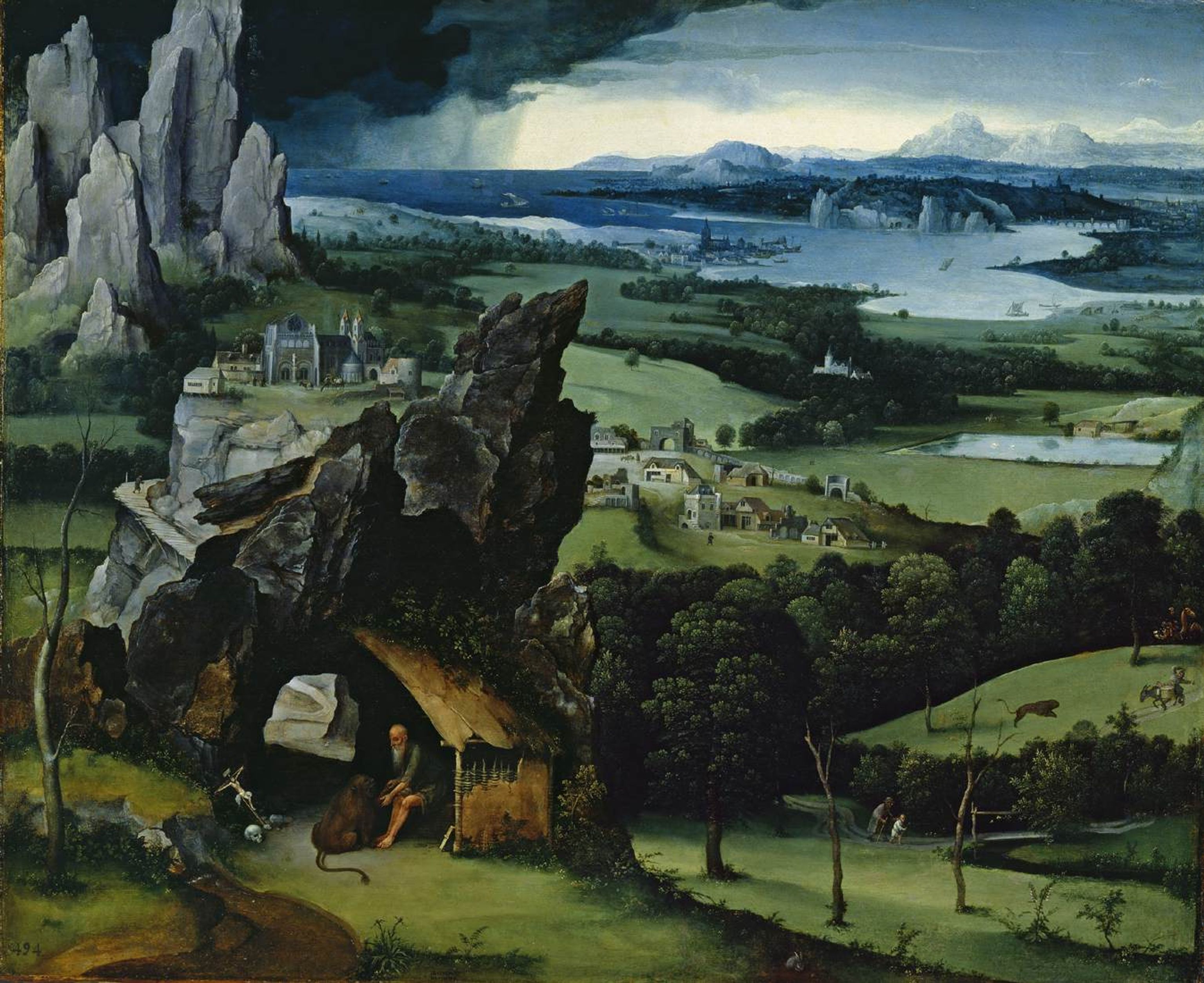
Painted around 1515, Joachim Patinir’s Landscape with Saint Jerome stands as one of the earliest masterpieces to elevate landscape from background to subject in its own right. Working in Antwerp during the Northern Renaissance, Patinir developed what contemporaries described as a “world landscape,” a sweeping vision that compresses vast geography into a single, unified view. In this painting, the biblical scholar Saint Jerome appears small, almost incidental, seated in contemplation within a rocky foreground. Yet beyond him unfolds an immense terrain of rivers, cliffs, forests, and distant towns, rendered in carefully layered tones that shift from earthy browns to luminous blues, creating a sense of depth that feels both real and imagined.
Silence Within Immensity
The work reflects both artistic innovation and spiritual meaning. Jerome, known for his translation of the Bible into Latin, is traditionally associated with withdrawal and reflection, often depicted in wilderness settings. Patinir expands this idea into something far more ambitious. The landscape becomes a metaphor for divine creation, vast and ordered, inviting the viewer to meditate alongside the saint. The detailed miniaturization of human activity in the distance contrasts with Jerome’s stillness, suggesting a world that continues in motion while spiritual insight requires pause. Patinir’s approach would influence generations of painters, helping to establish landscape painting as an independent and deeply expressive genre in European art.