
Jean Nouvel
Louvre Abu Dhabi
- ArchitectJean Nouvel
- PhotographerSarah Al Agroobi and Roland Halbe
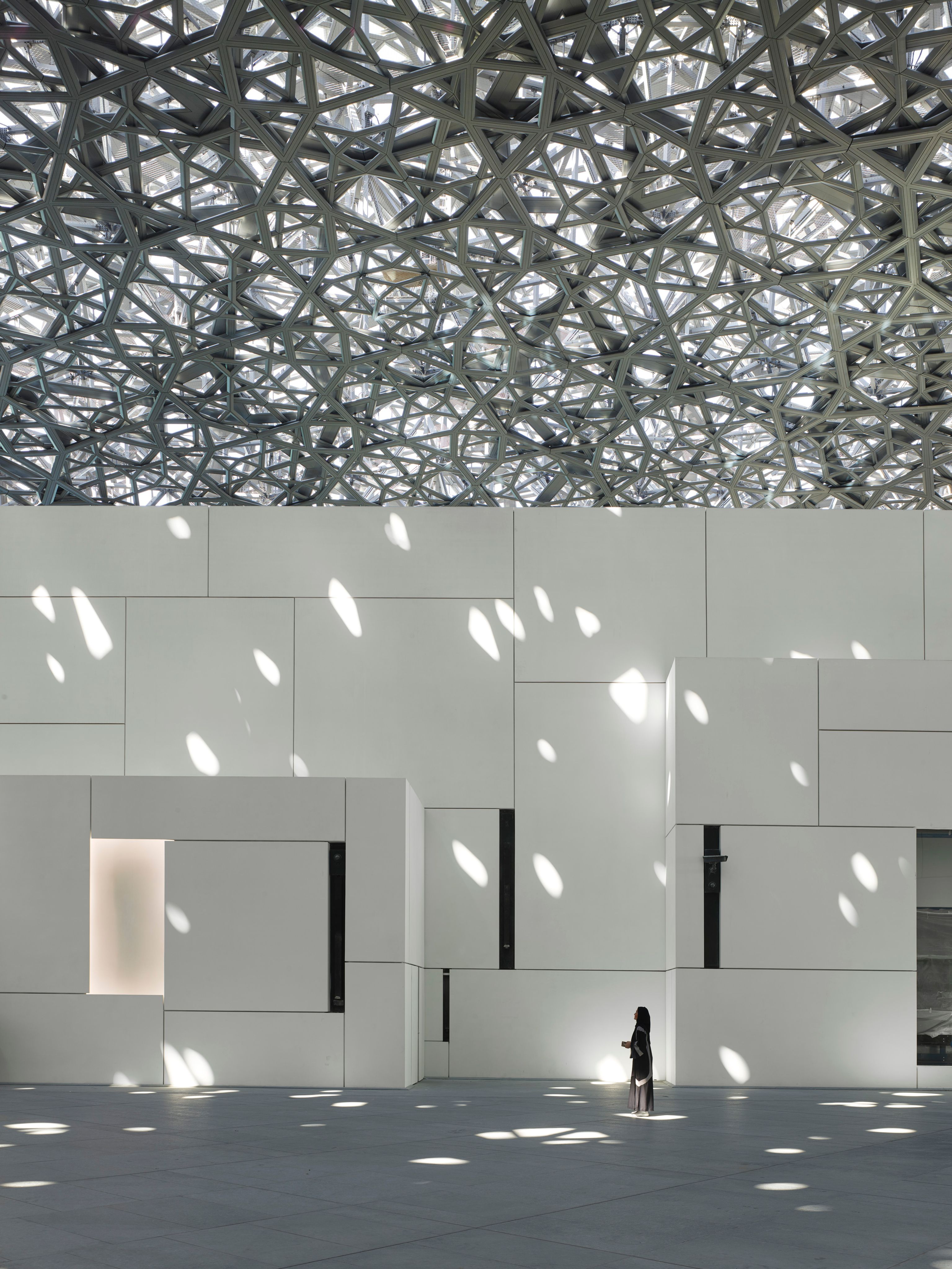
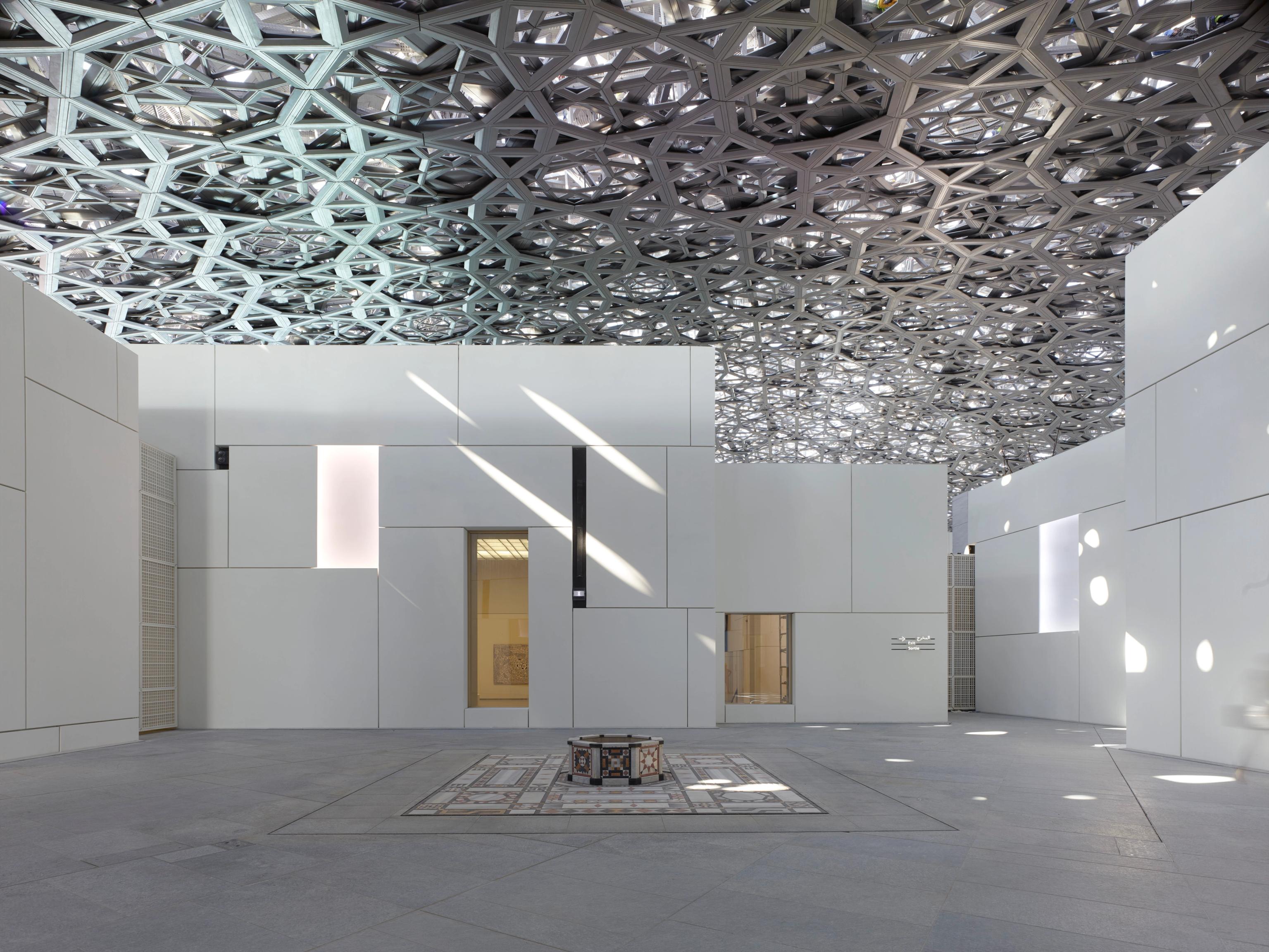
Melodie Leung Its vast latticed dome scatters light in continually shifting patterns. The white rectilinear galleries are arranged as though the entire project can be experienced as a microcosm under its own celestial sky.

A Museum Between Land and Sea
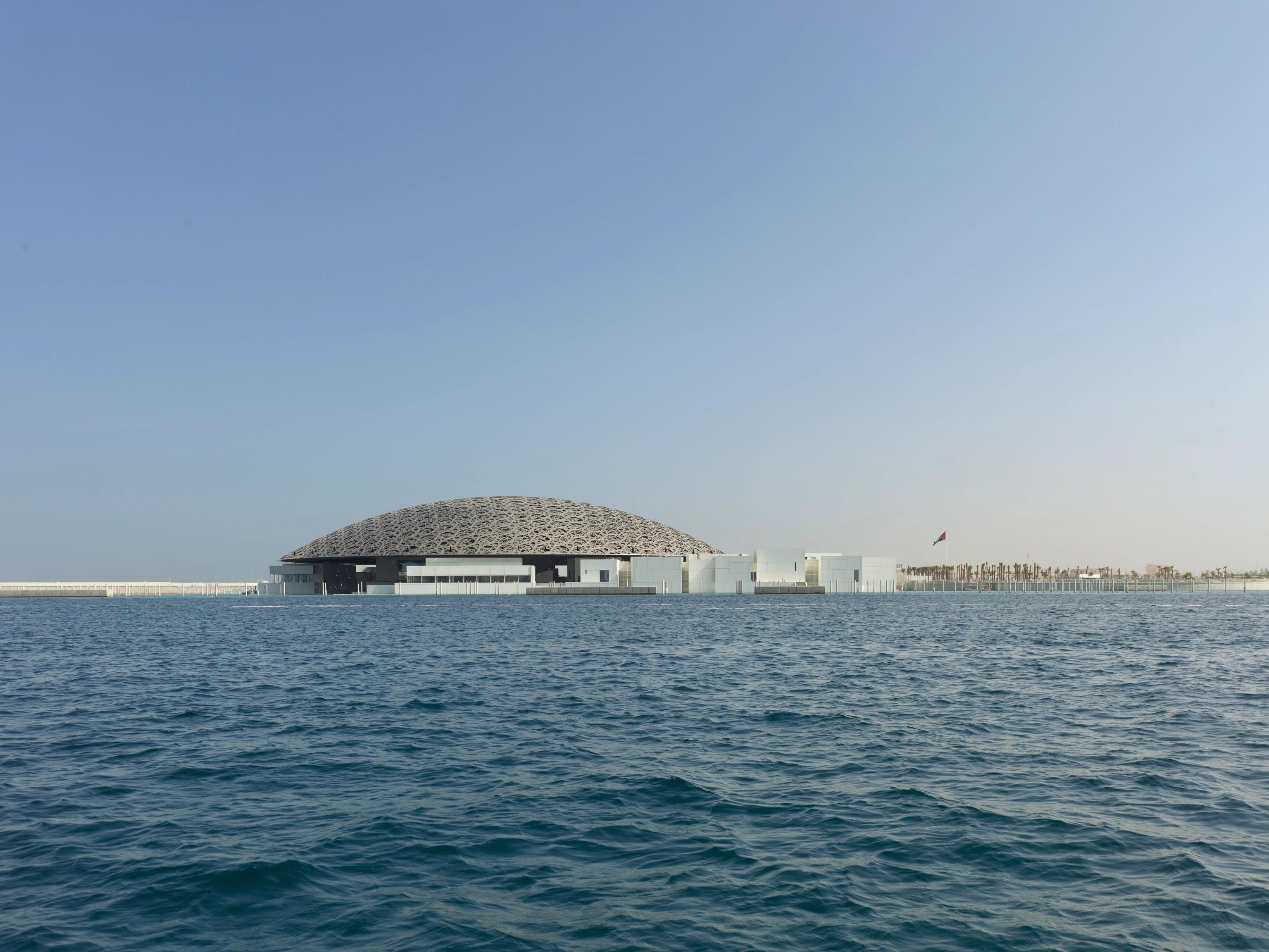
Louvre Abu Dhabi was designed as the cultural centrepiece of Abu Dhabi's new Cultural District on Saadiyat Island. Completed in 2017, the museum was designed by French architect Jean Nouvel as the first universal museum in the Arab world. Rather than creating a single monumental building, Nouvel developed the project as a collection of 55 connected buildings surrounded by the waters of the Arabian Gulf.

Inspired by the narrow streets and low-rise forms of traditional Arabian medinas, the museum invites visitors to move through galleries, courtyards and open public spaces where architecture, water and light become part of the experience.

Jean Nouvel's Approach
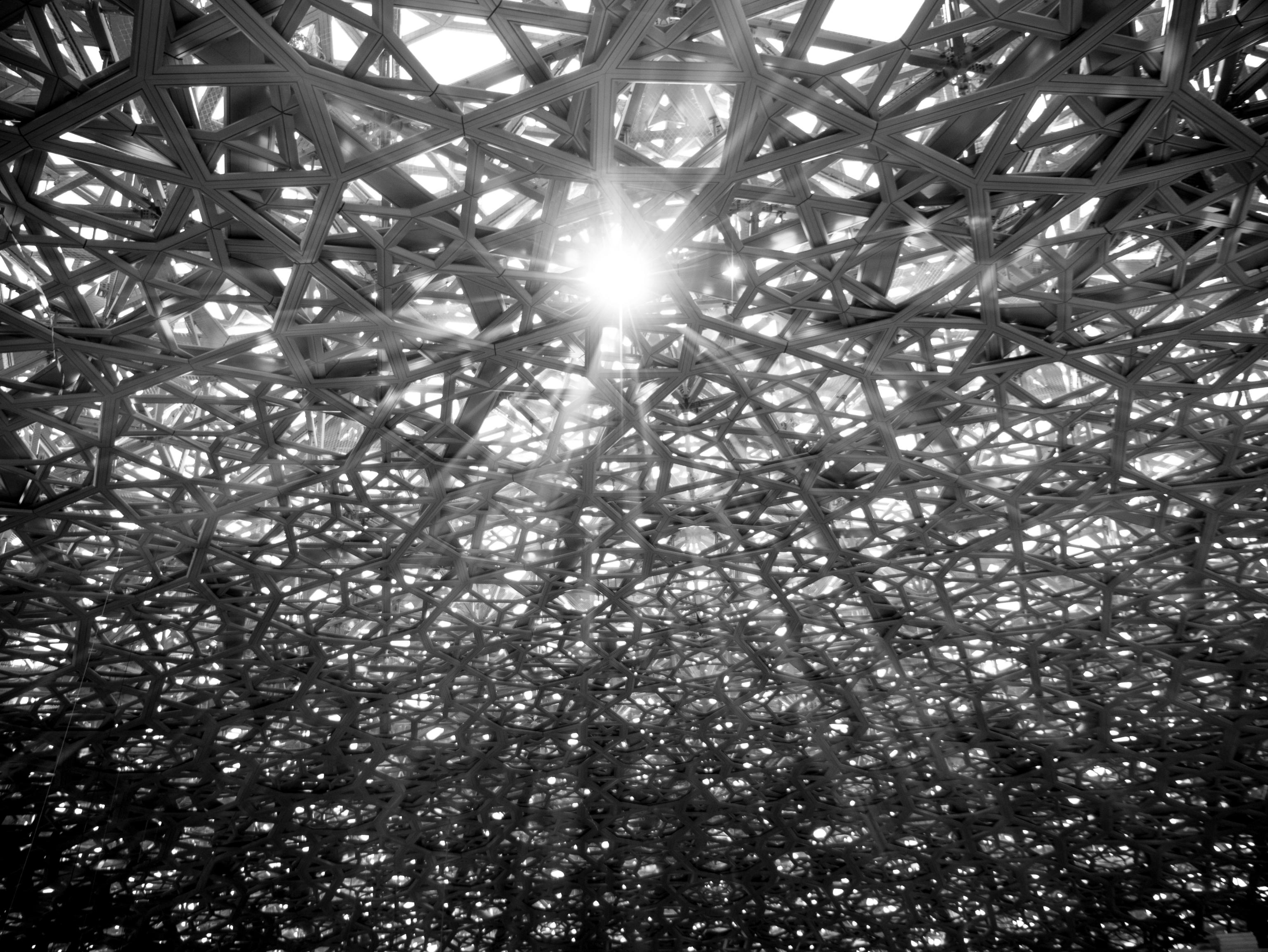
Born in France in 1945, Jean Nouvel has built an international reputation for architecture that responds directly to its surroundings. Instead of following one recognisable style, each of his projects is shaped by its location, climate and cultural context. His work often explores the relationship between light, transparency and materiality, creating buildings that feel closely connected to their environment. Awarded the Pritzker Prize in 2008, Nouvel approached Louvre Abu Dhabi as an opportunity to reinterpret the region's architectural traditions through a contemporary lens rather than simply recreating them.

The Dome and the Rain of Light
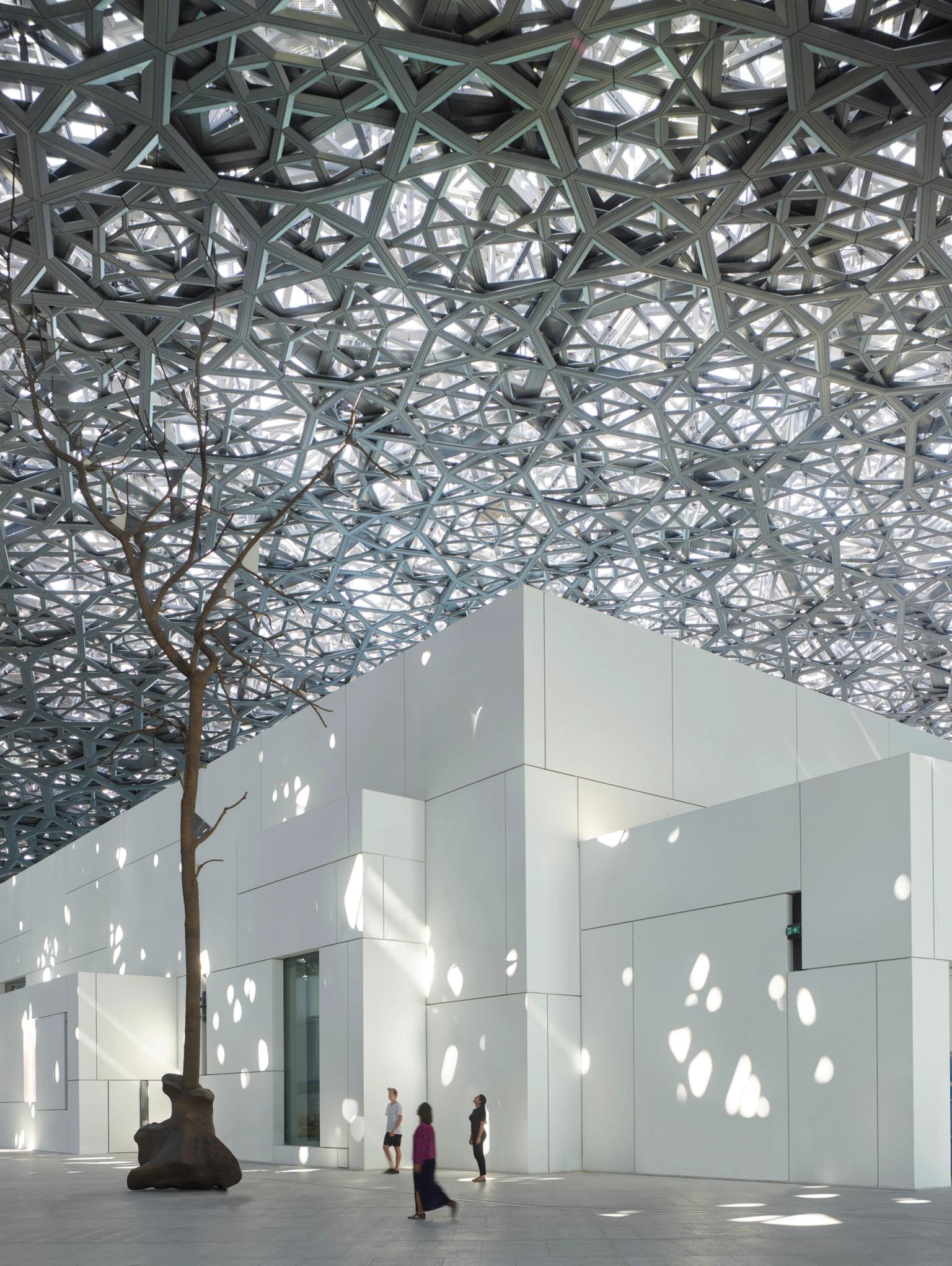
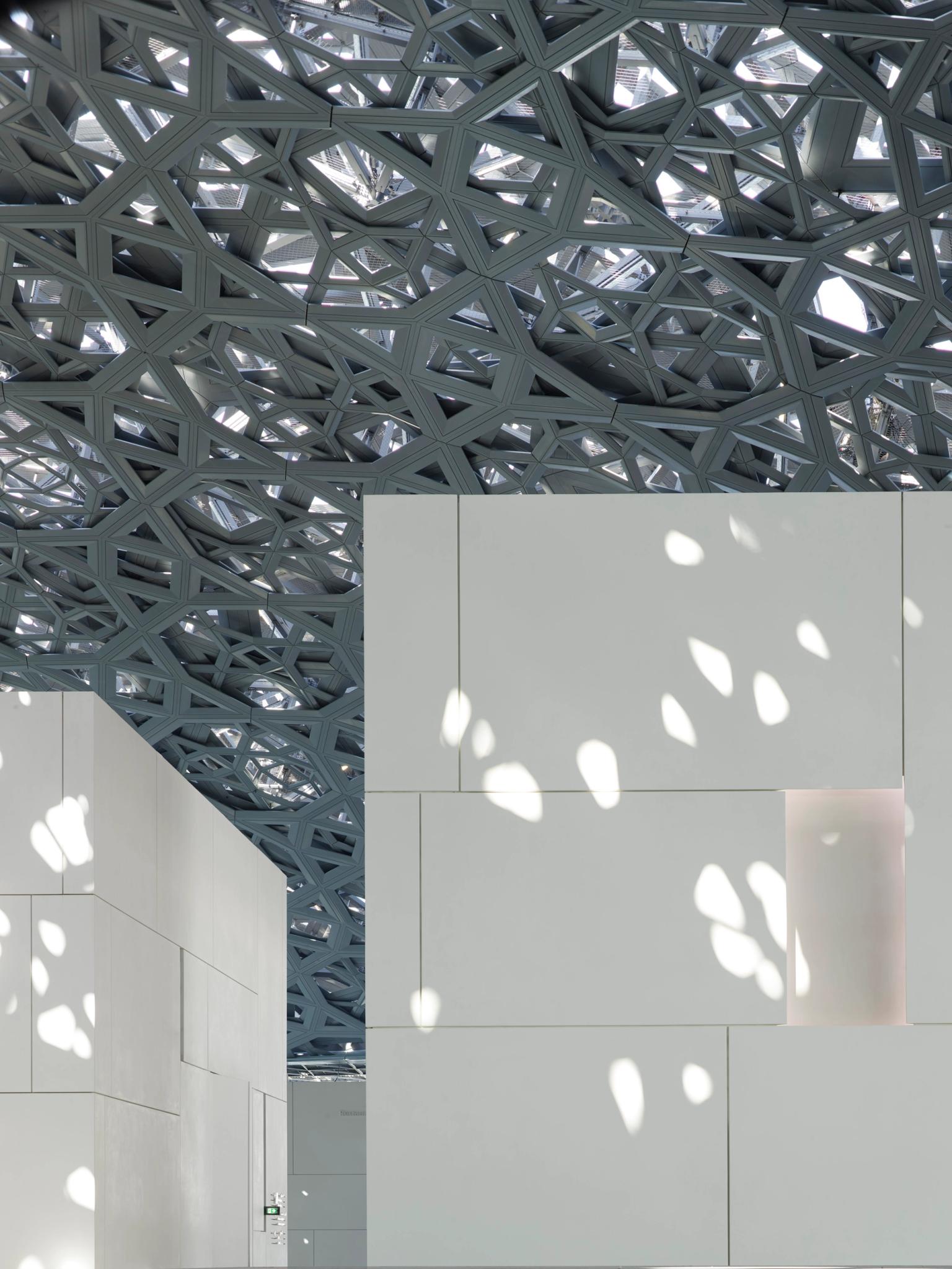
The defining feature of Louvre Abu Dhabi is its vast 180-metre-wide dome, which appears to float above the museum city. Inspired by the traditional dome found throughout Arab architecture, it has been transformed into a contemporary architectural statement. Built from eight overlapping layers of geometric stars, the structure filters sunlight to create the museum's signature Rain of Light effect. As daylight passes through thousands of openings, shifting patterns of light and shadow move across the buildings and public spaces below, recalling the experience of standing beneath the shade of palm trees.

Designing for Climate
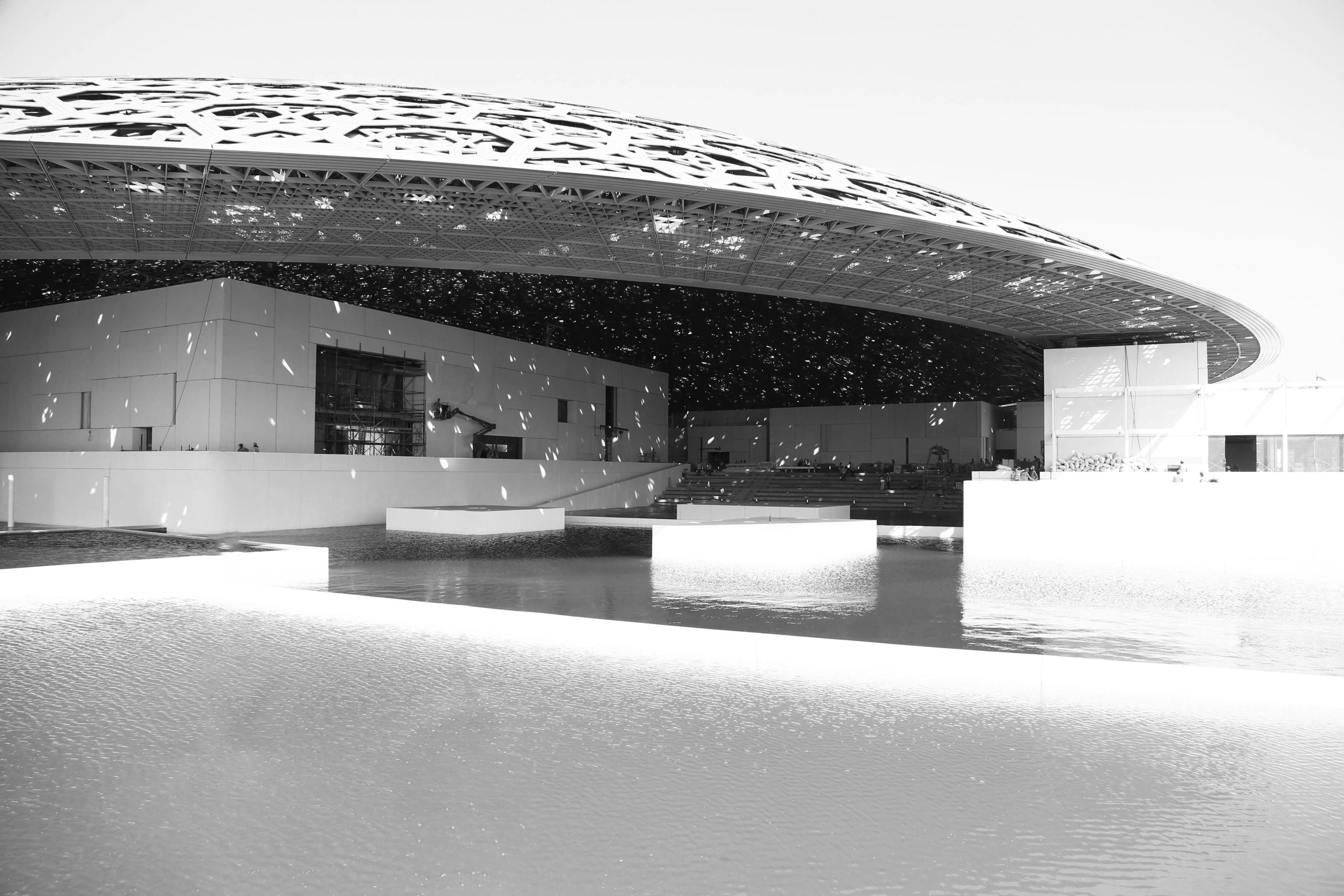
Beyond its striking appearance, the dome also plays an important environmental role. It protects the outdoor spaces from Abu Dhabi's intense sun while allowing natural daylight to reach the spaces below. Together with light-coloured materials, stone surfaces that retain cool temperatures and carefully engineered ventilation systems, the design creates a comfortable microclimate throughout the museum. By combining passive cooling strategies with modern engineering, the project demonstrates how traditional architectural principles can be adapted to meet contemporary environmental demands.

A Contemporary Cultural Landmark
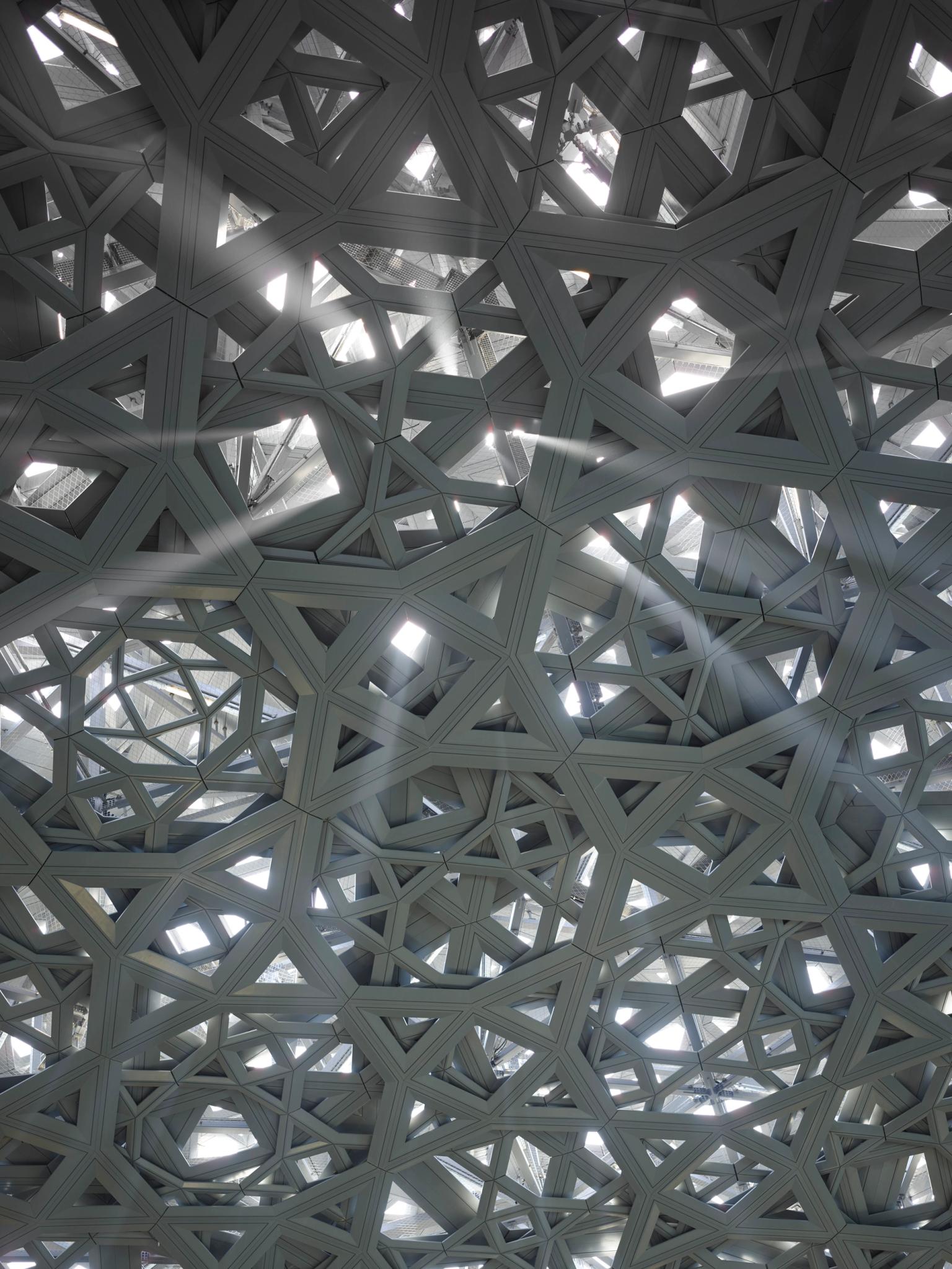
The architecture of Louvre Abu Dhabi extends beyond the exhibition galleries, bringing together public squares, cafés, walkways and waterfront spaces into one connected environment. Rather than separating visitors from the surrounding landscape, the museum encourages a continuous dialogue between architecture, the sea and the changing daylight. Jean Nouvel's design creates a place where the experience of moving through the building becomes just as significant as the artworks themselves, establishing Louvre Abu Dhabi as one of the most influential museum projects of the 21st century.