
AL_A
MAAT – Museum of Art, Architecture and Technology
- ArchitectAL_A
- PhotographerFG+SG Fotografia de Arquitectura
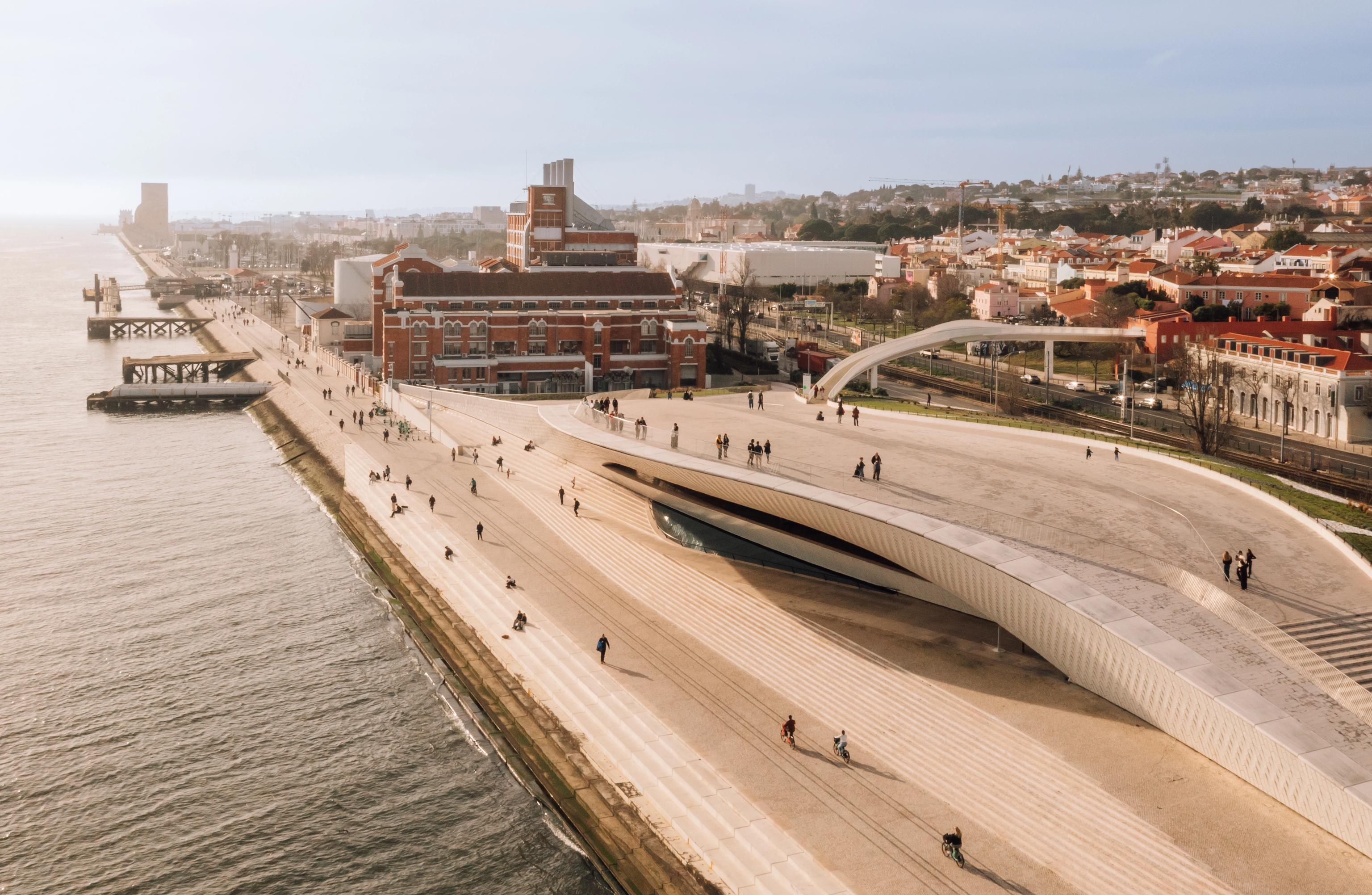
Melike Altınışık A sensitive dialogue between architecture, landscape, and public life. The building dissolves boundaries between city, river, and roofscape, offering a continuous spatial experience rather than a singular iconic object.

A Riverside Cultural Landmark
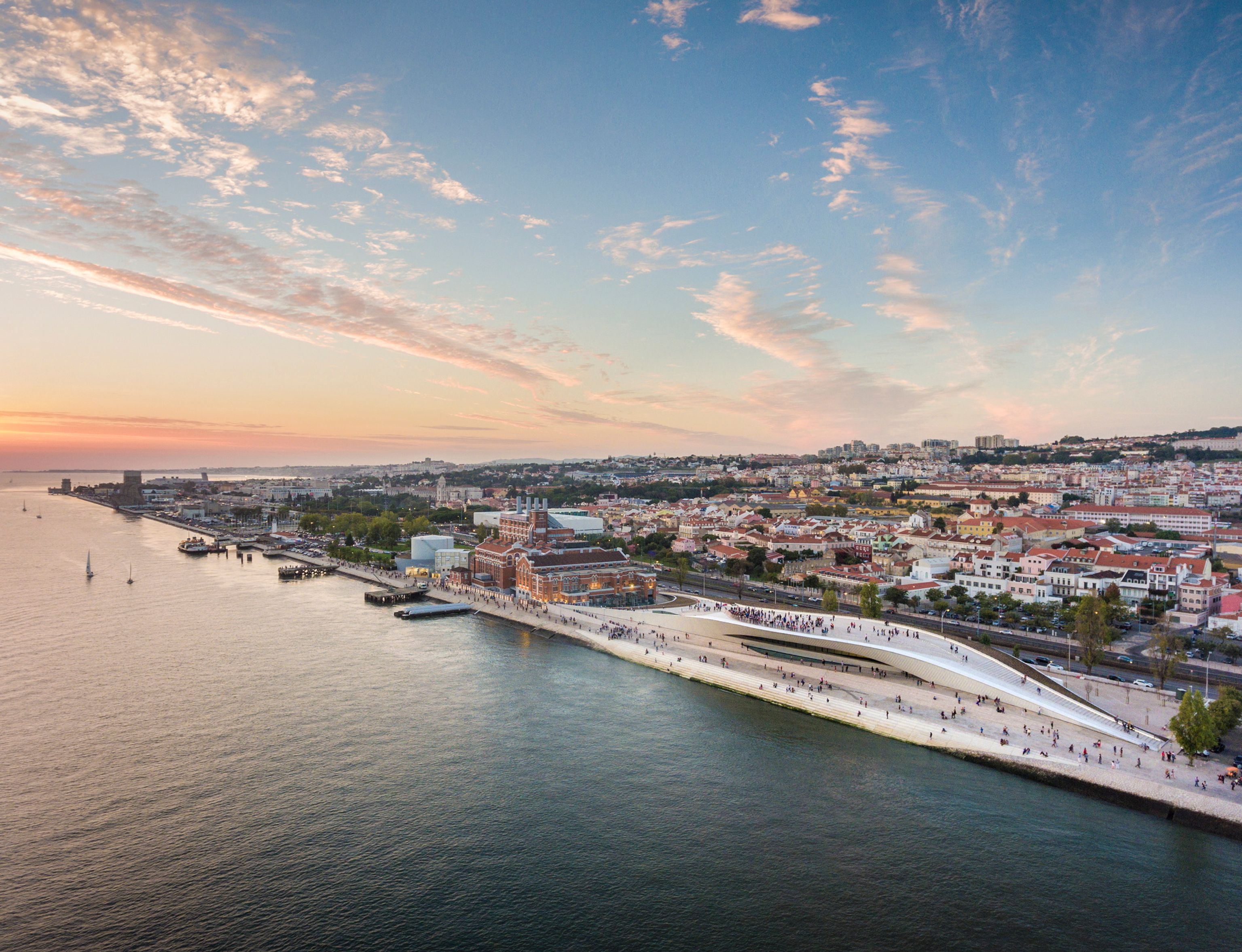
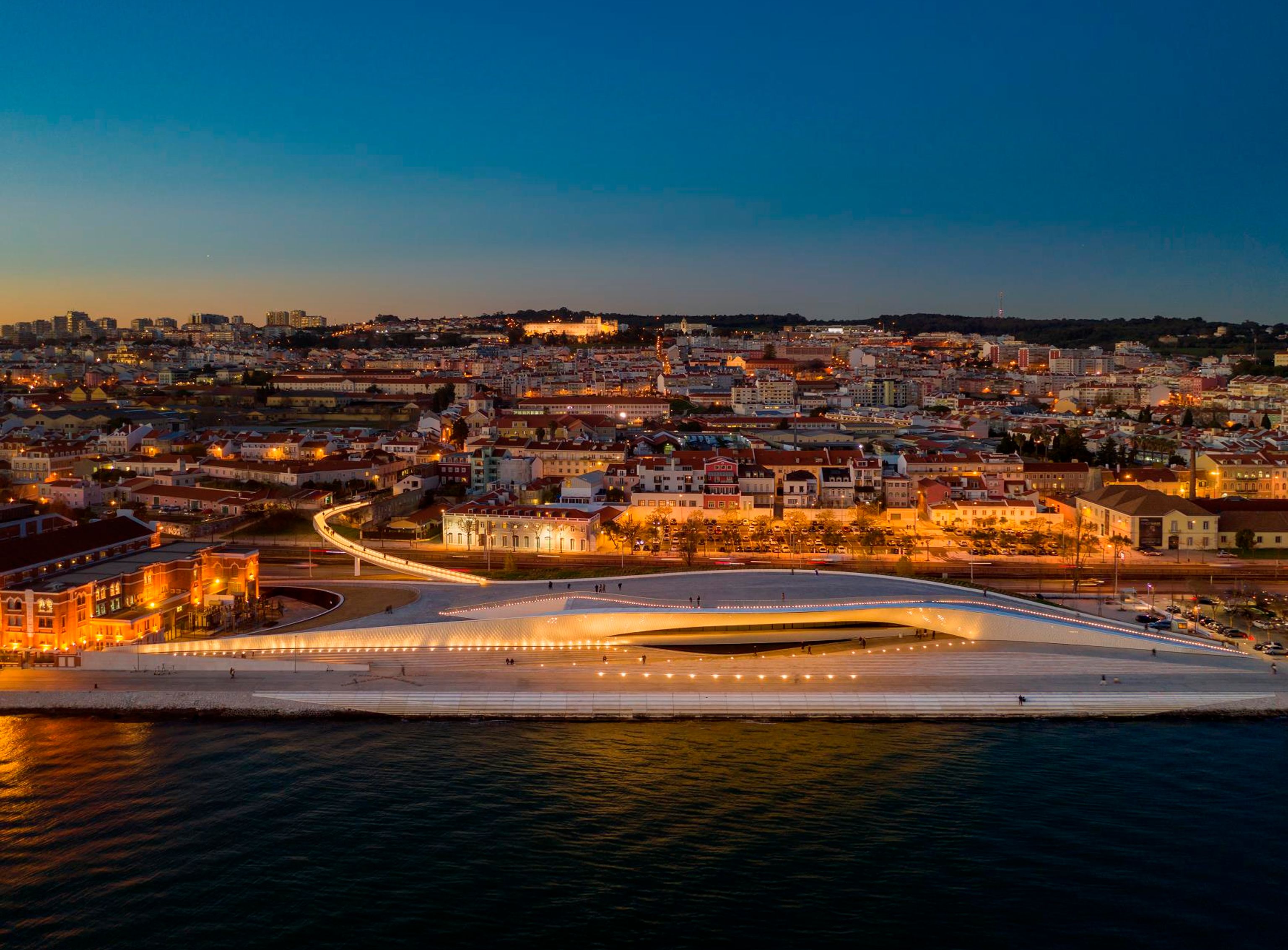
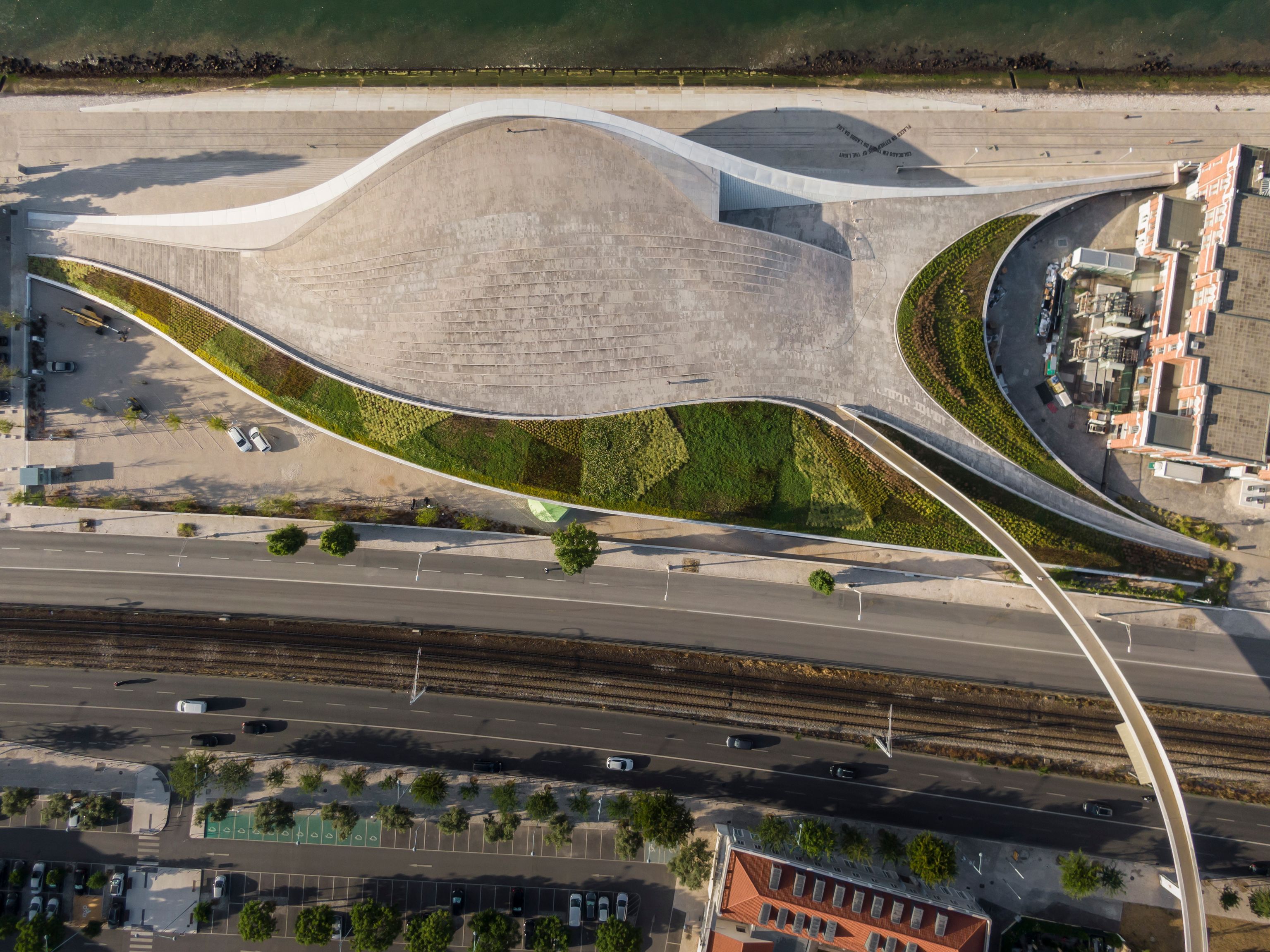
MAAT – the Museum of Art, Architecture and Technology – is a bold addition to Lisbon’s Belém district, stretching along the Tagus River on a 38,000-square-meter campus. The museum unites a newly built gallery by AL_A, led by RIBA Stirling Prize-winning architect Amanda Levete, with the historic Tejo Power Station, a 20th-century thermoelectric plant built in 1908. The site transforms Lisbon’s formerly disconnected riverfront into a continuous public space, integrating pedestrian pathways, terraces, and a roof promenade that invites exploration of both city and river.
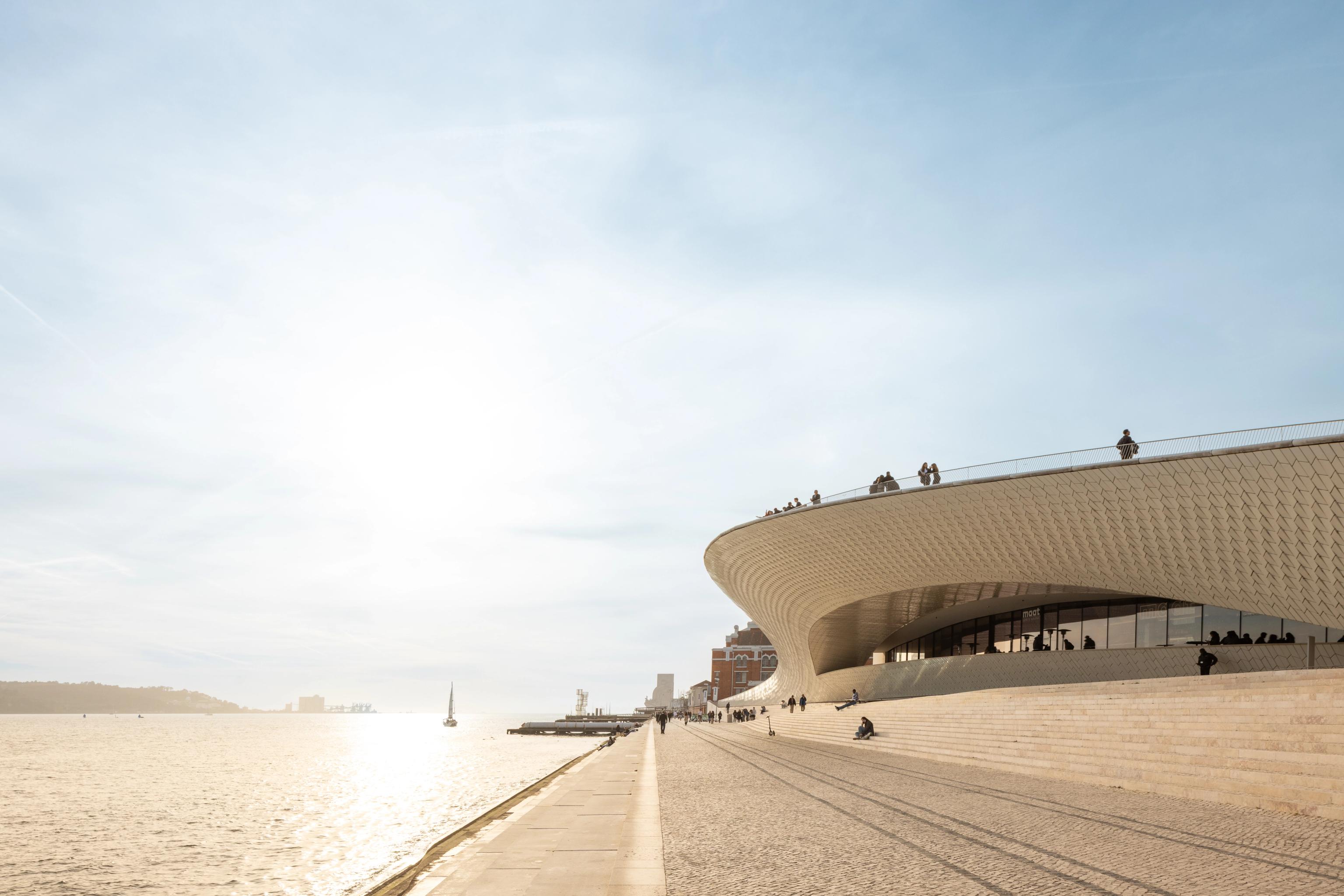

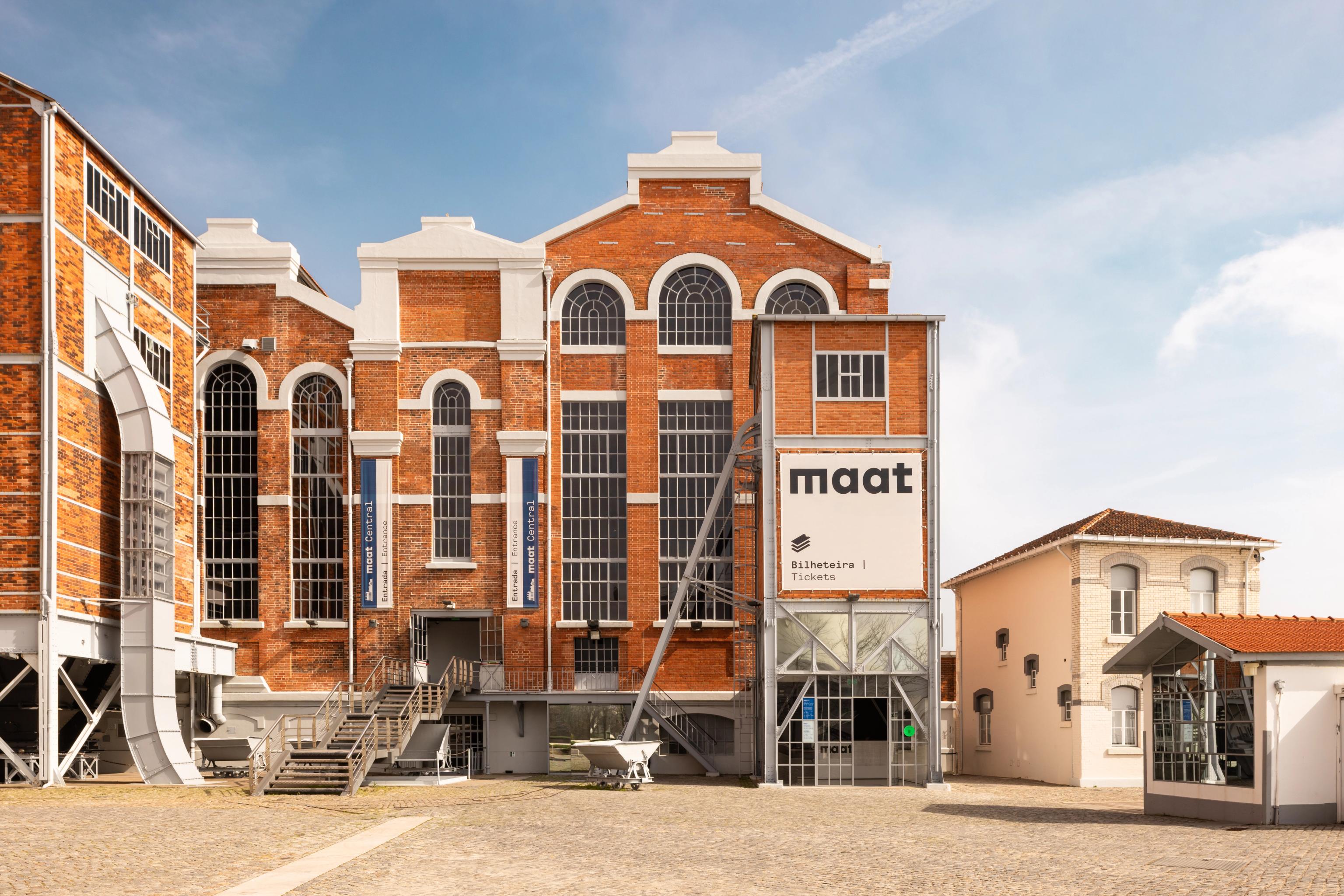
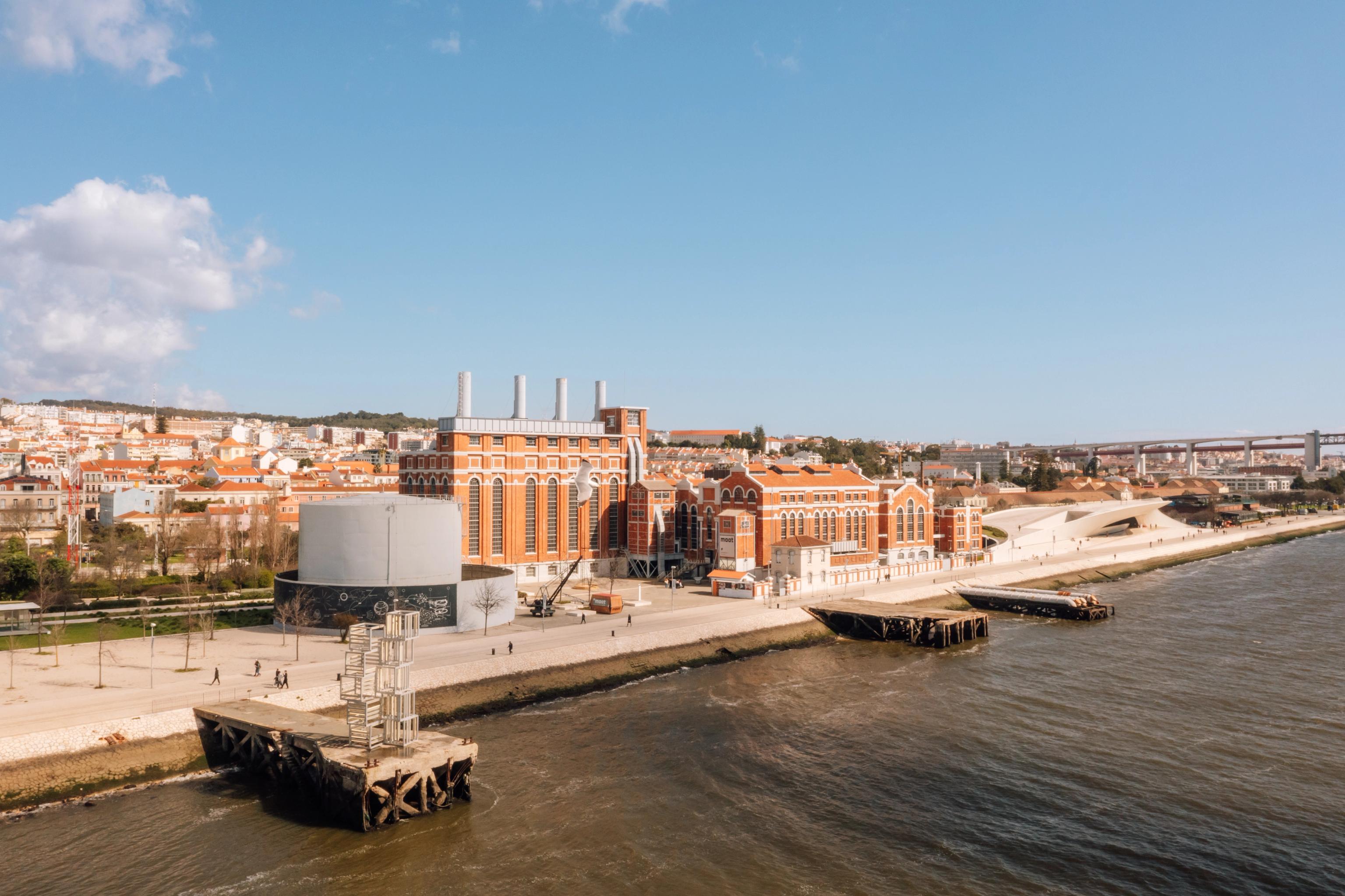
The MAAT Gallery, with its serpentine, low-slung form, contrasts with the monumental, rectilinear red-brick power station, creating a visual dialogue between contemporary and industrial architecture. The campus positions MAAT as an international hub for contemporary art, architecture, and technology, while anchoring Lisbon’s cultural identity in a historic and scenic setting.

Innovative Architecture and Visitor Experience
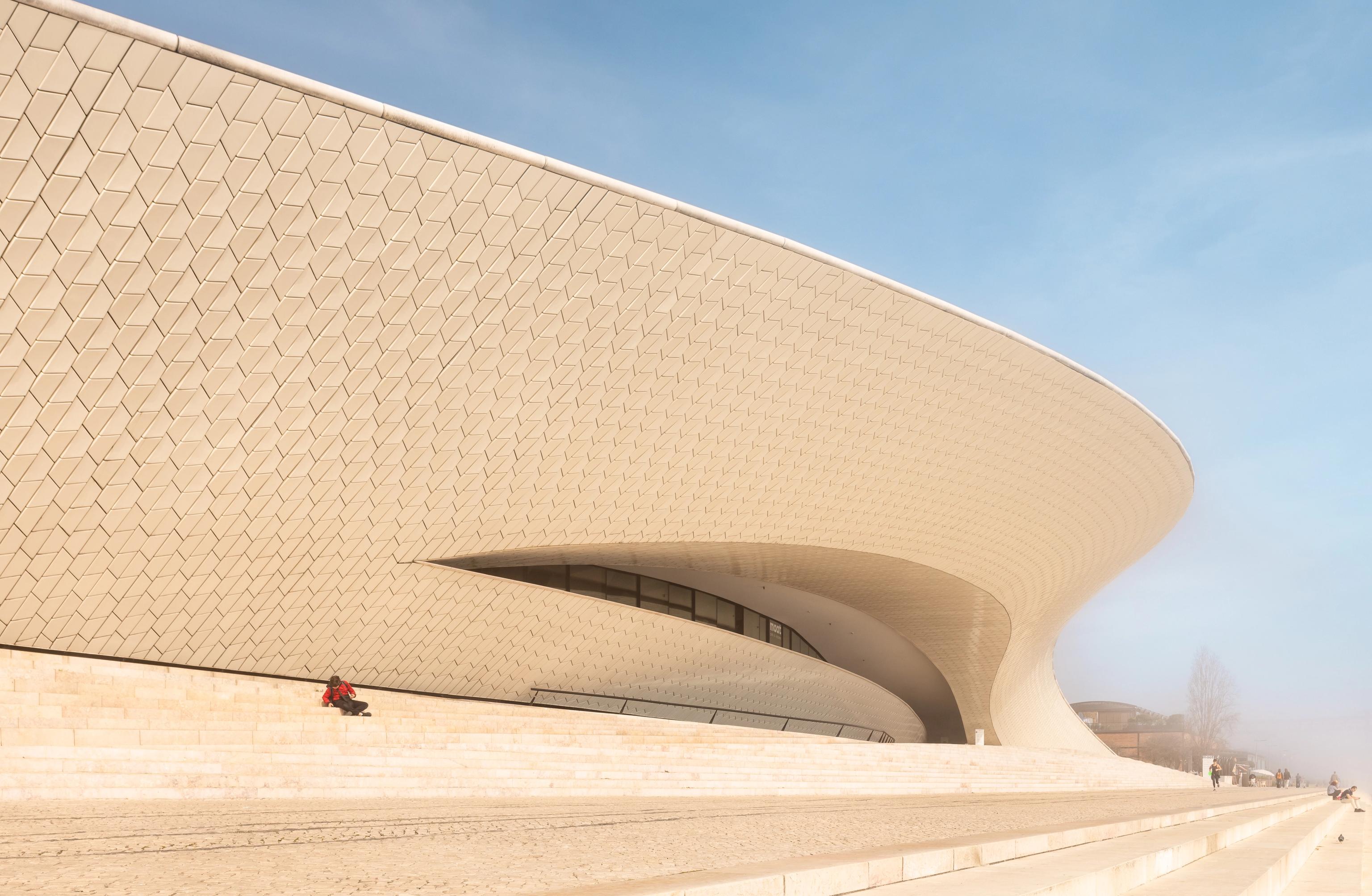
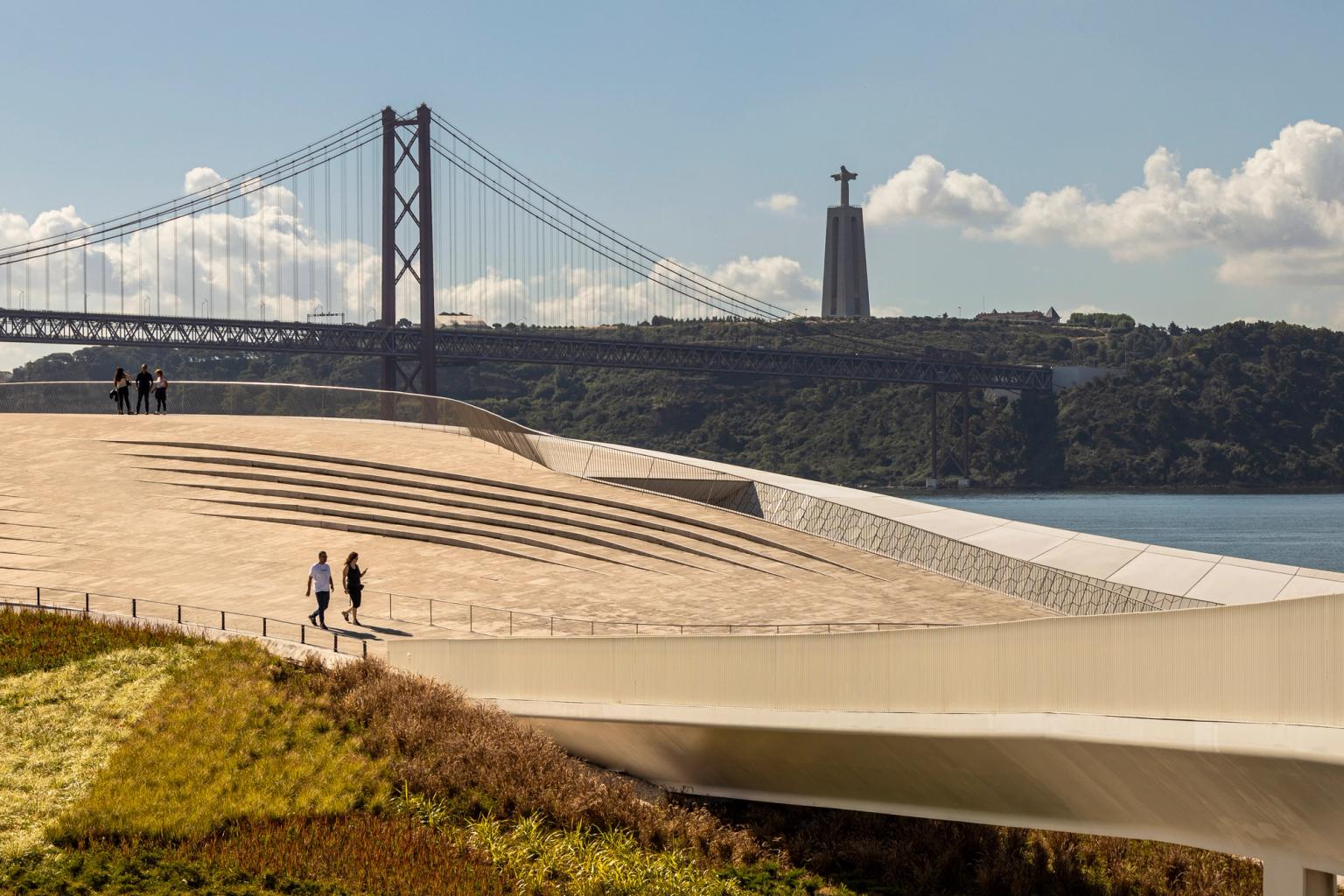
AL_A’s design emphasizes fluidity, interaction, and accessibility. The gallery’s gently sloping roof doubles as a public terrace, offering panoramic views over the Tagus River, the 25 de Abril Bridge, and the Cristo Rei statue. An elliptical opening in the roof marks the entry and provides intuitive orientation for visitors. Inside, the main gallery spans 70 by 40 meters without internal columns, allowing for large-scale installations, while four subterranean exhibition rooms feature glossy white floors and curving walls, designed for flexible programming.

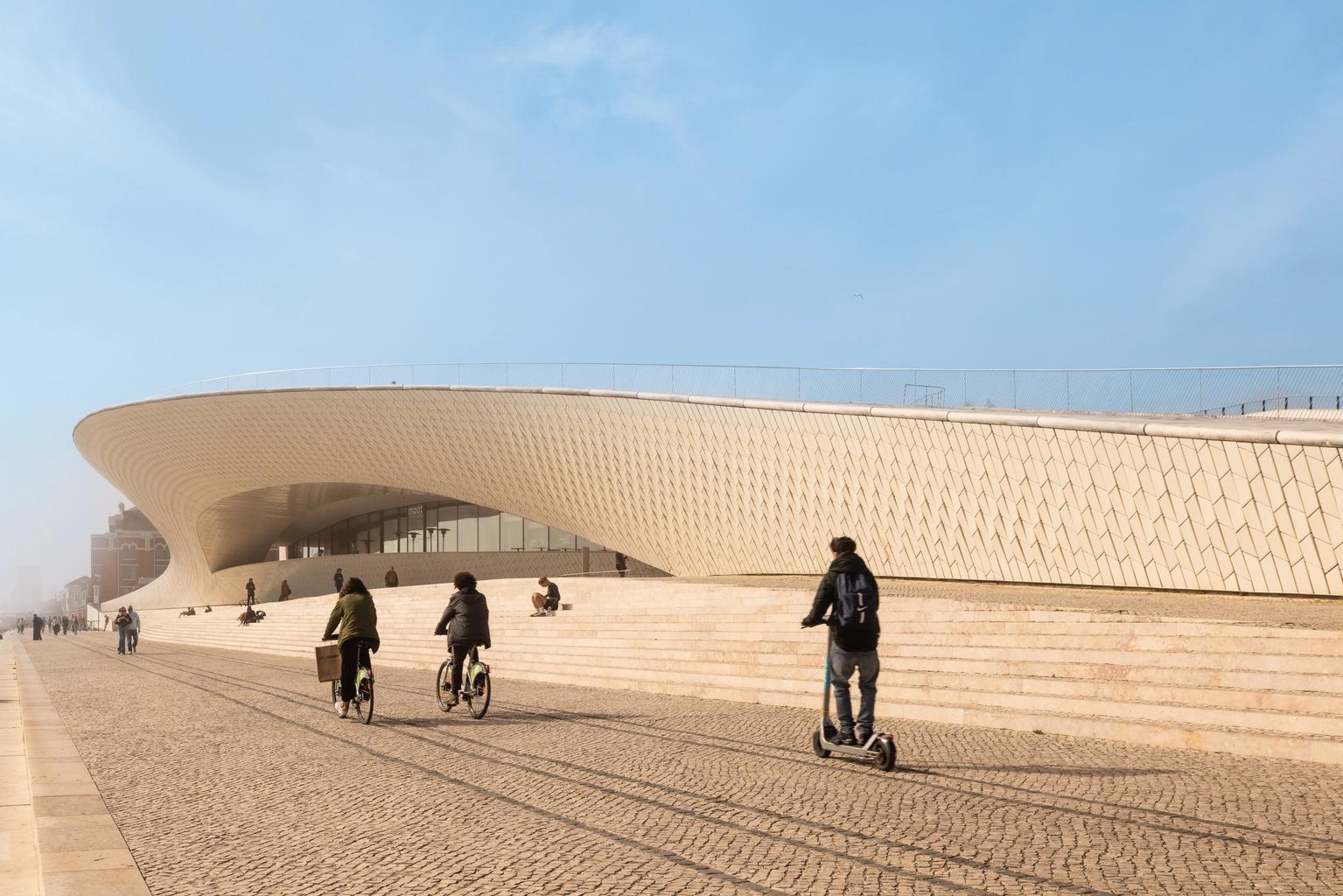

The façade is clad in nearly 15,000 three-dimensional crackle-glazed ceramic tiles, which shimmer and change with light, water reflections, and shadow, referencing Lisbon’s long history of decorative craftsmanship. Landscape architect Vladimir Djurovic created an integrated public realm that links the gallery to the power station, blending exterior pathways with interior circulation to encourage exploration and engagement across the entire campus.

Tejo Power Station: Industrial Heritage Reimagined
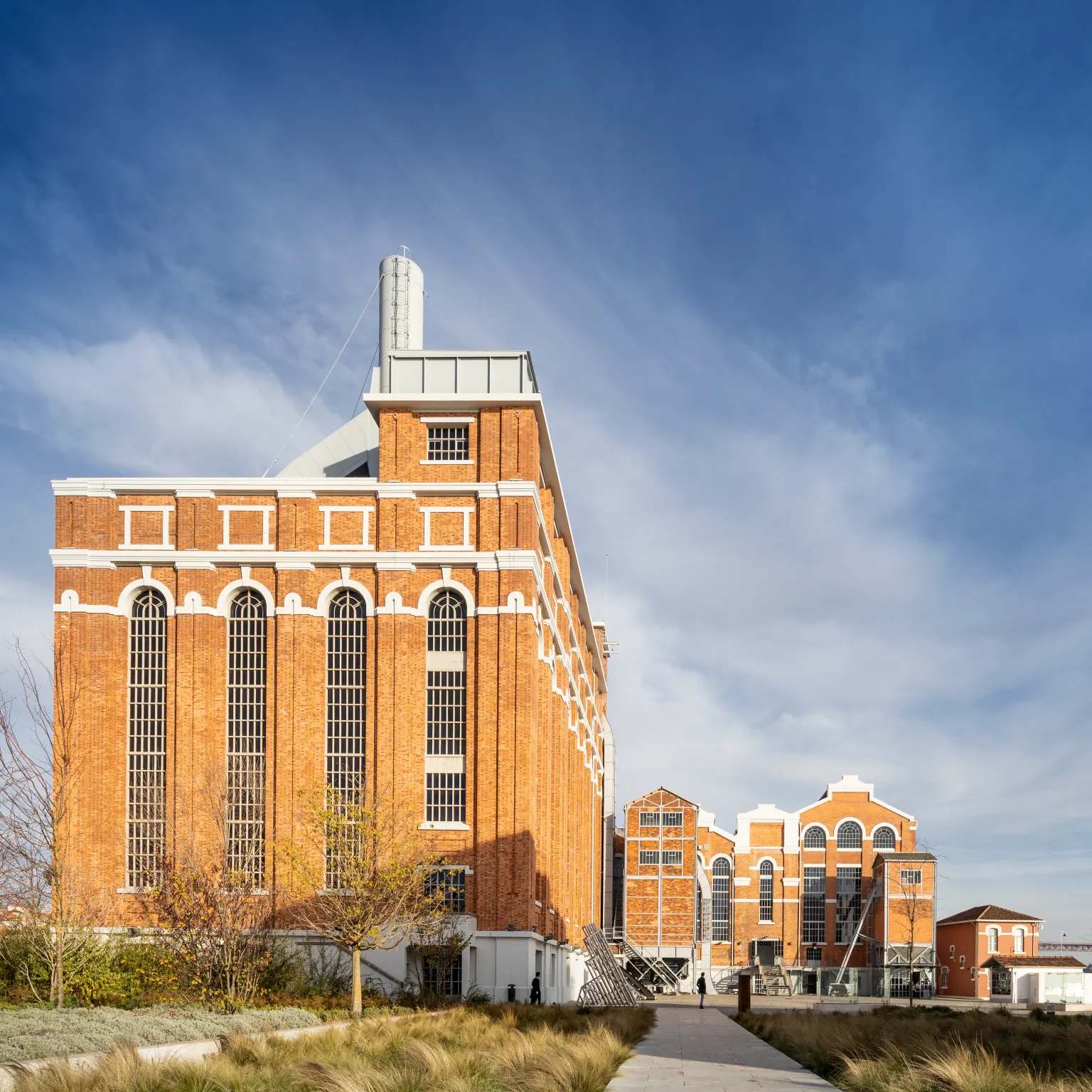
The Central Tejo Power Station ceased operations in 1975 but has been meticulously preserved and adapted as part of the MAAT campus. Its towering brick façades, large industrial windows, and turbine halls now host exhibitions that explore contemporary art alongside the EDP Foundation’s permanent collection, including works highlighting Portugal’s artistic and technological history. The building’s former machinery spaces are reinterpreted as flexible gallery halls, creating a striking contrast with the smooth, flowing geometry of the new gallery.
Together, the gallery and power station create a cohesive cultural complex where visitors can experience exhibitions, public events, and educational programs in spaces that blend historic industrial character with cutting-edge architectural design. This combination reinforces MAAT’s mission to foster critical debate, creative experimentation, and international dialogue across art, architecture, and technology.

Amanda Levete and AL_A
AL_A, founded by Amanda Levete in 2009 and led alongside Ho-Yin Ng, Alice Dietsch, and Matt Wilkinson, approaches architecture as a platform for civic engagement and cultural interaction. At MAAT, the studio integrates conceptual rigor, technical innovation, and material experimentation, producing a building that is sculptural yet fully functional. Levete emphasizes visitor experience, guiding movement through the gallery via ramps, terraces, and interior ramps, while connecting the museum to the broader urban landscape.
Every design decision, from the roof’s sweeping form to the tactile ceramic tiles and the flexible interior spaces, encourages public interaction and engagement with exhibitions. The museum’s programming spans national and international contemporary art, architecture, and technology, positioning MAAT as a dynamic cultural institution where architecture itself becomes part of the learning and discovery process.