
Pierre Chareau
Maison de Verre
- ArchitectPierre Chareau
Søren Pihlmann For many years, La Maison de Verre has been a project we regularly return to at the office. I remain fascinated by its understanding of architecture as a system of components, movement, and adjustment, where openness and precision operate as mutually dependent conditions.


A Radical House of Glass
Maison de Verre, built between 1928 and 1932 in the historic center of Paris, stands as one of the most daring architectural experiments of its era. Commissioned by Dr. Jean Dalsace and his wife Annie, the project transformed an aging property on Rue Saint-Guillaume into a hybrid of private residence and medical office.
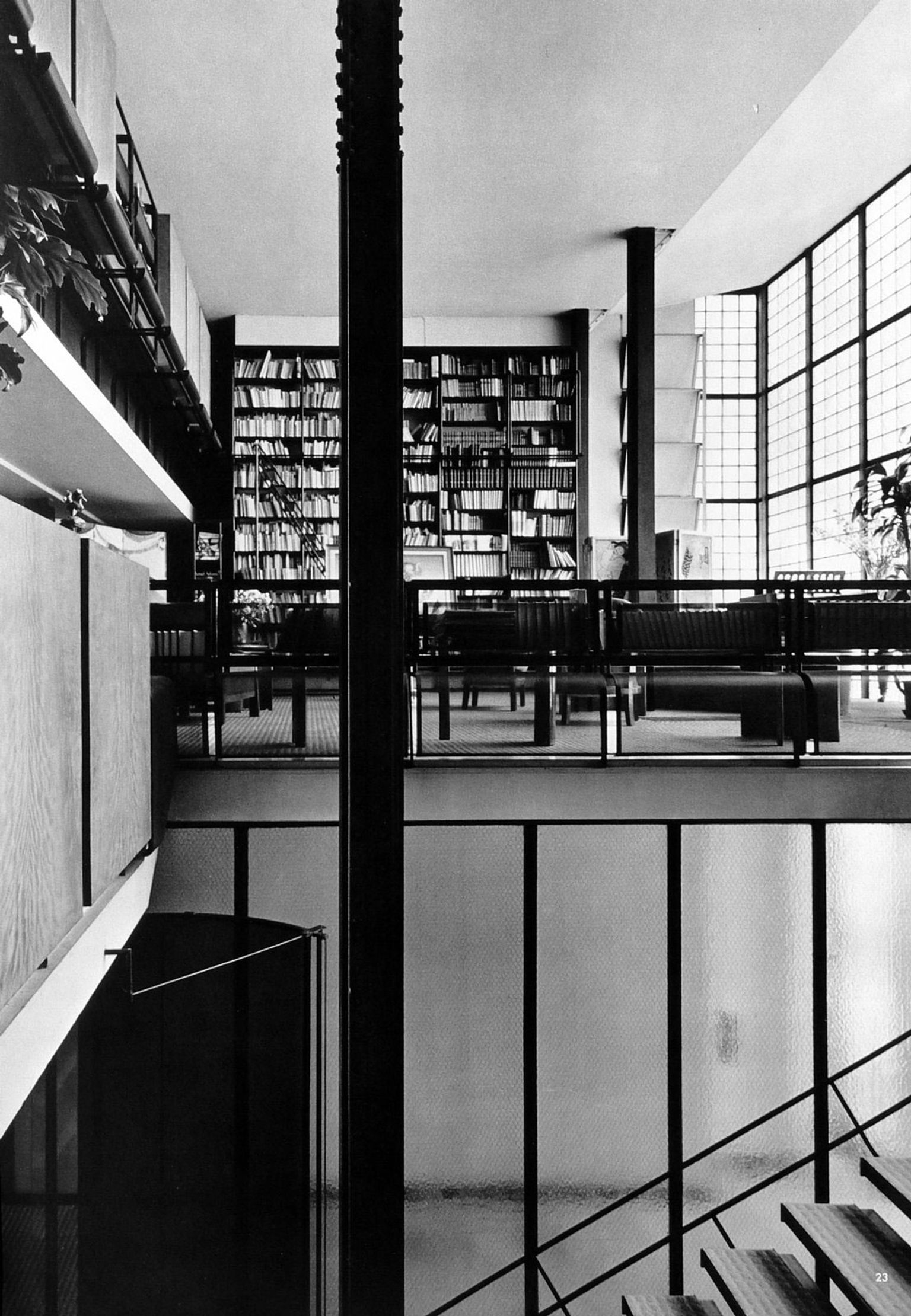
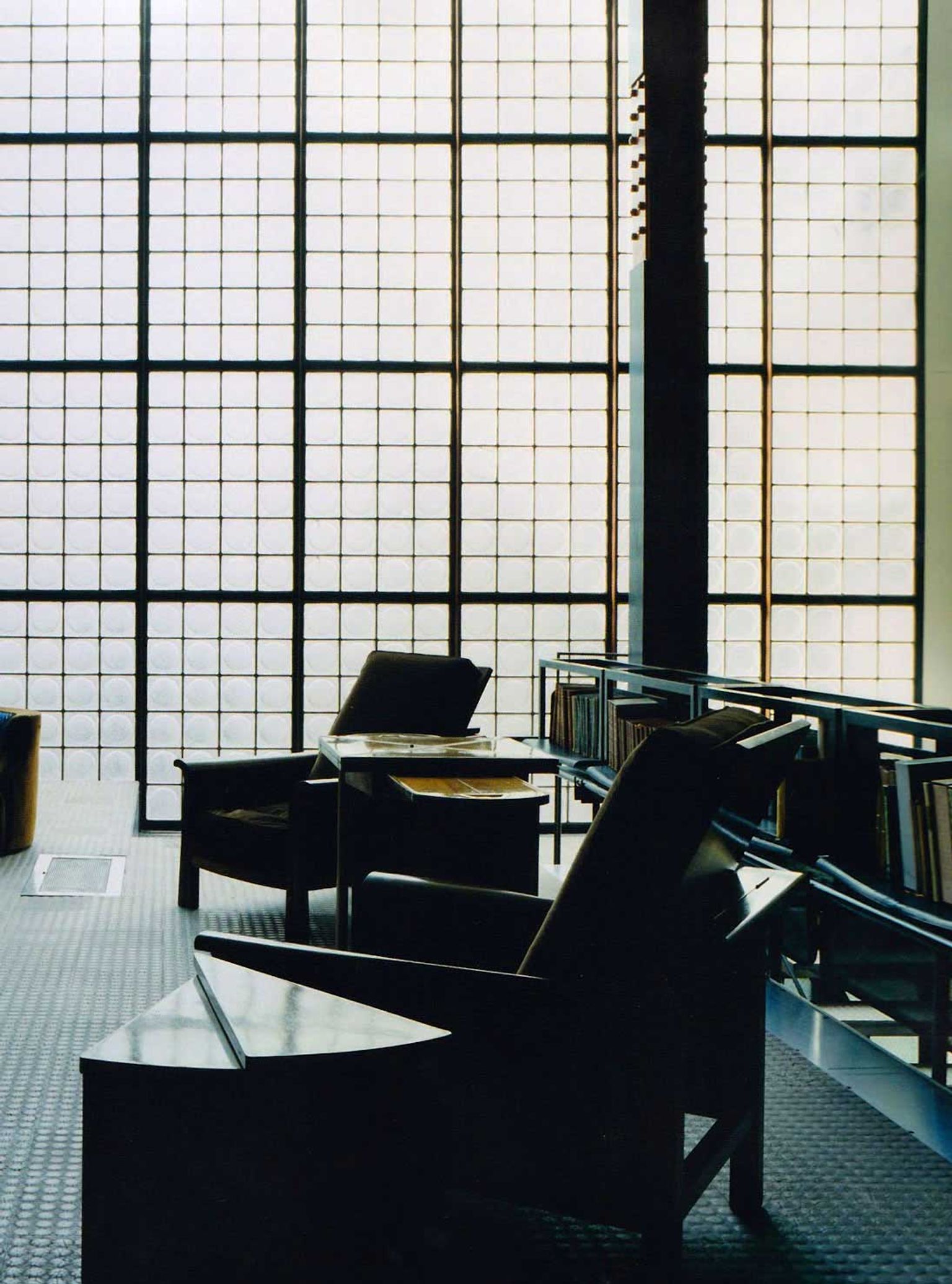
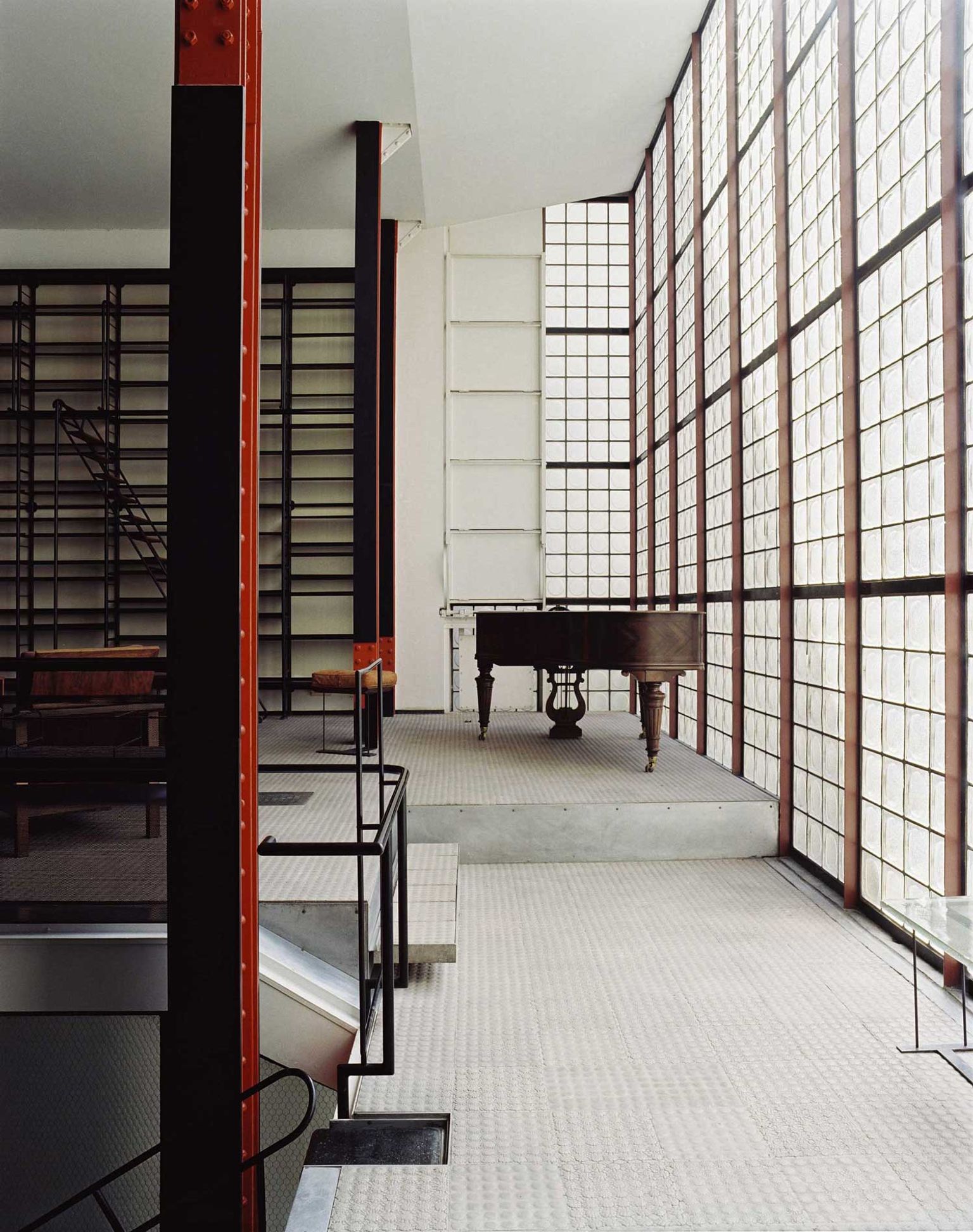
Constrained by the refusal of an elderly tenant to vacate the upper floors, the architects - furniture and interior designer Pierre Chareau, Dutch architect Bernard Bijvoet, and metalworker Louis Dalbet - reimagined the lower floors as a luminous glass pavilion. The house’s signature façades, composed of clear and translucent glass blocks supported by an exposed steel frame, challenged conventional domestic aesthetics and redefined transparency, light, and privacy in urban Parisian housing.


Material Innovation and Interior Mechanics
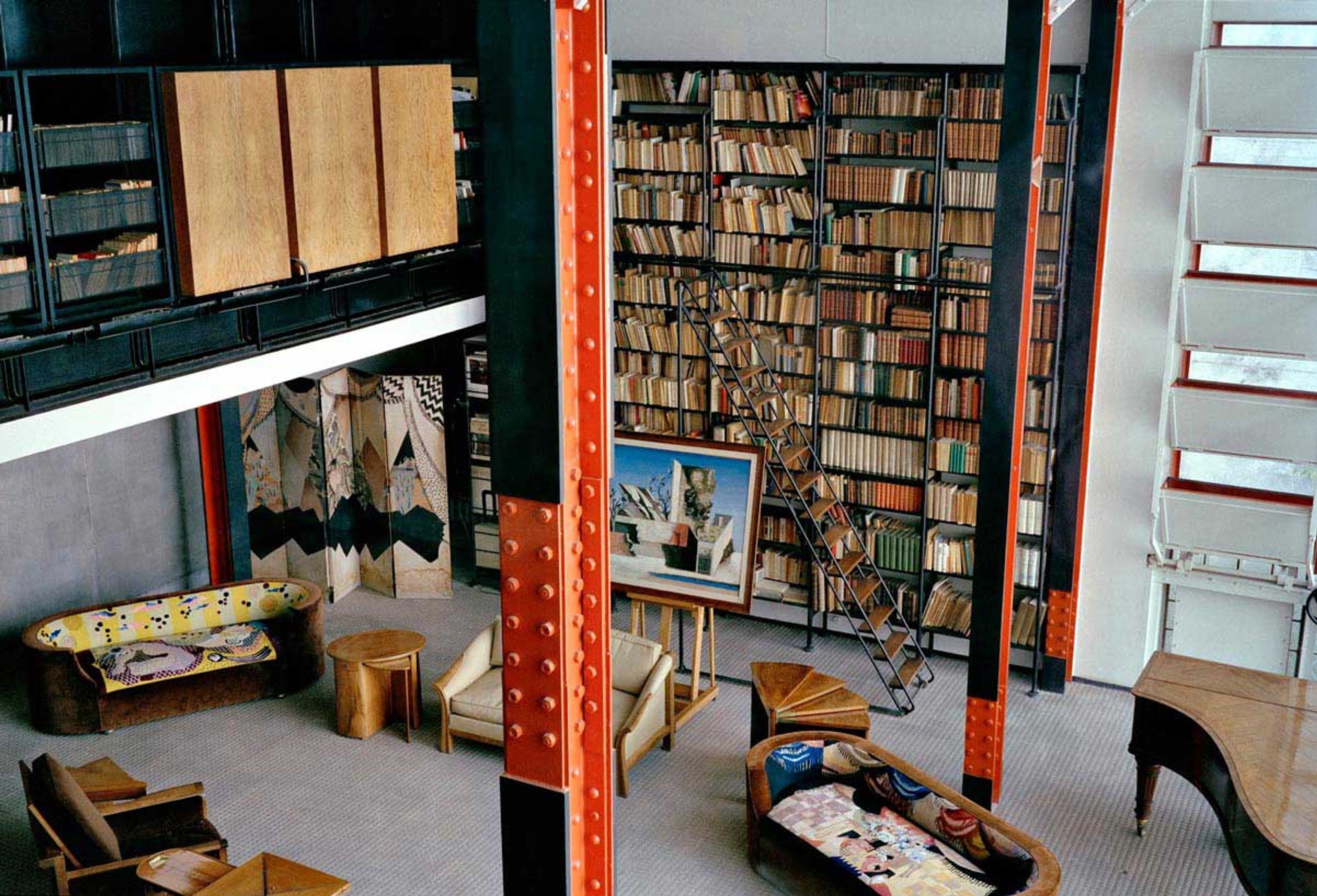
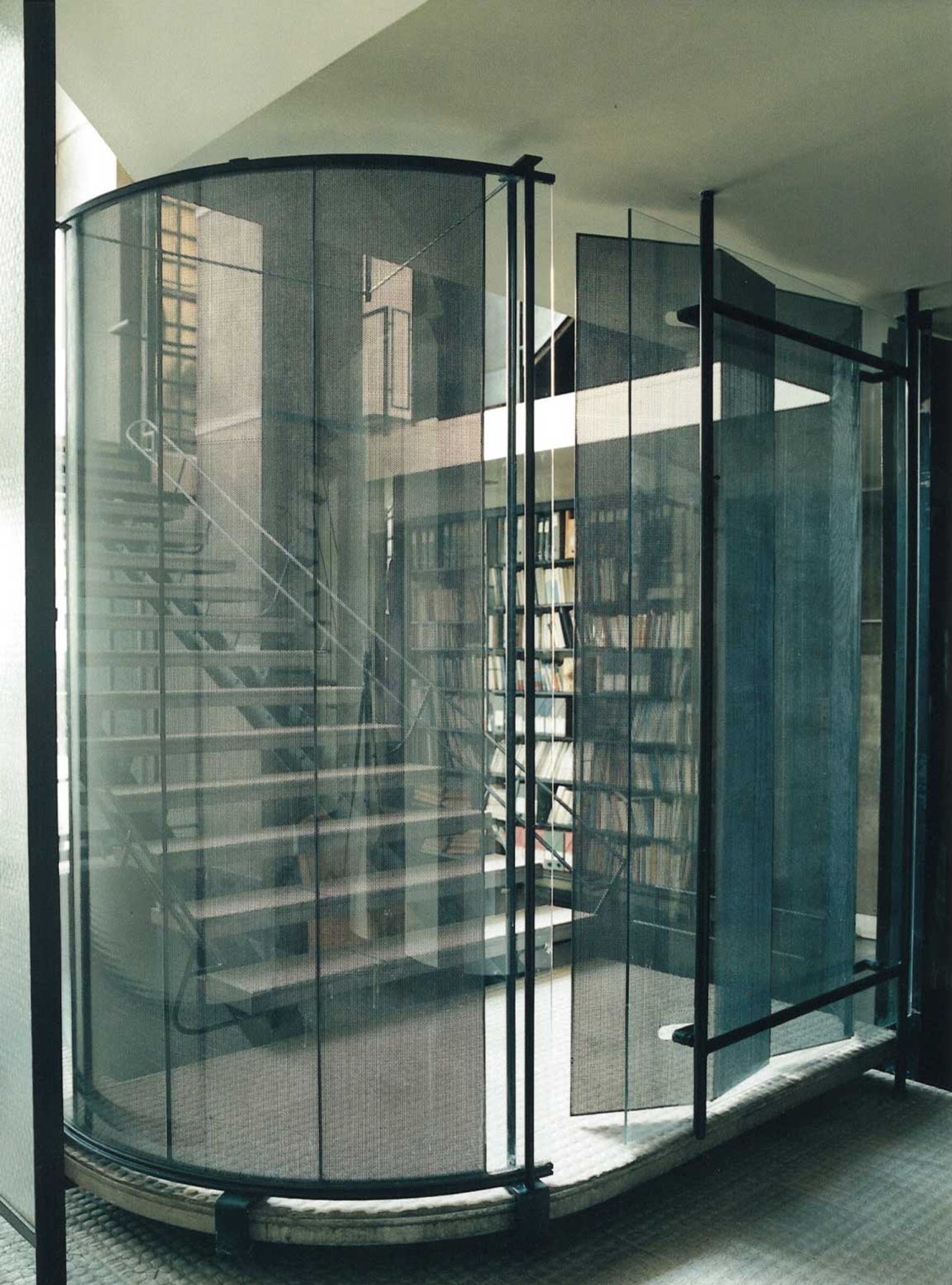
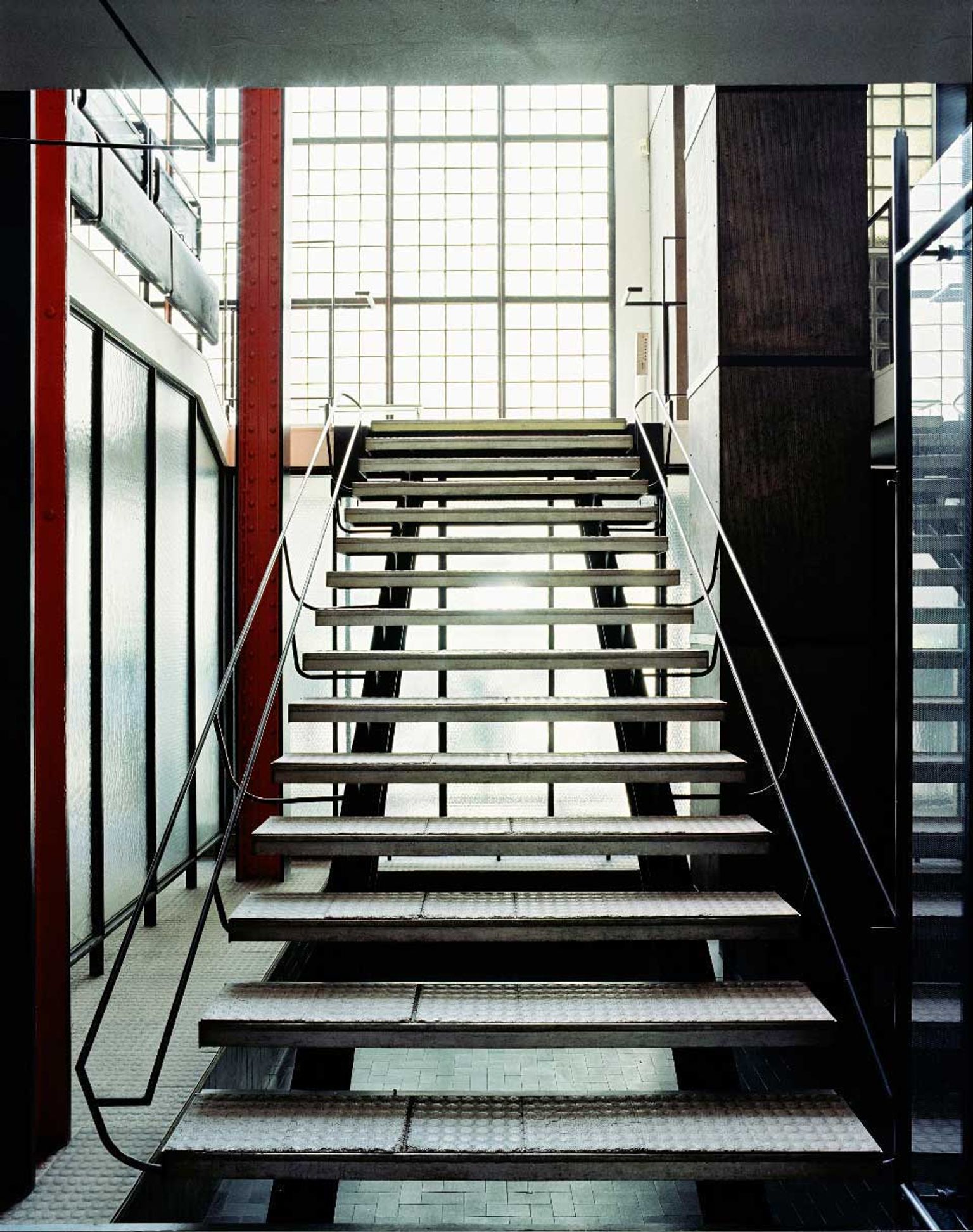
Maison de Verre is celebrated for its extraordinary use of materials and inventive interior devices. Industrial steel beams, perforated metal screens, rubber floors, and mechanical fixtures converge with custom furniture, sliding partitions, and integrated storage to create flexible, open-plan interiors. Floors cantilever over the front and rear façades, maximizing window areas, while partitions - some rotating, sliding, or folding - allow inhabitants to constantly adjust levels of privacy and exposure.
Chareau’s meticulous craft merges architecture and interior design, so that bookshelves, stairs, cupboards, and lighting blend into a coherent, multifunctional structure. The house operates like a “machine for living,” though in Chareau’s hands this concept becomes a poetic choreography of movement, transparency, and spatial adaptability rather than a rigid functionalist doctrine.


Light, Space, and Urban Context
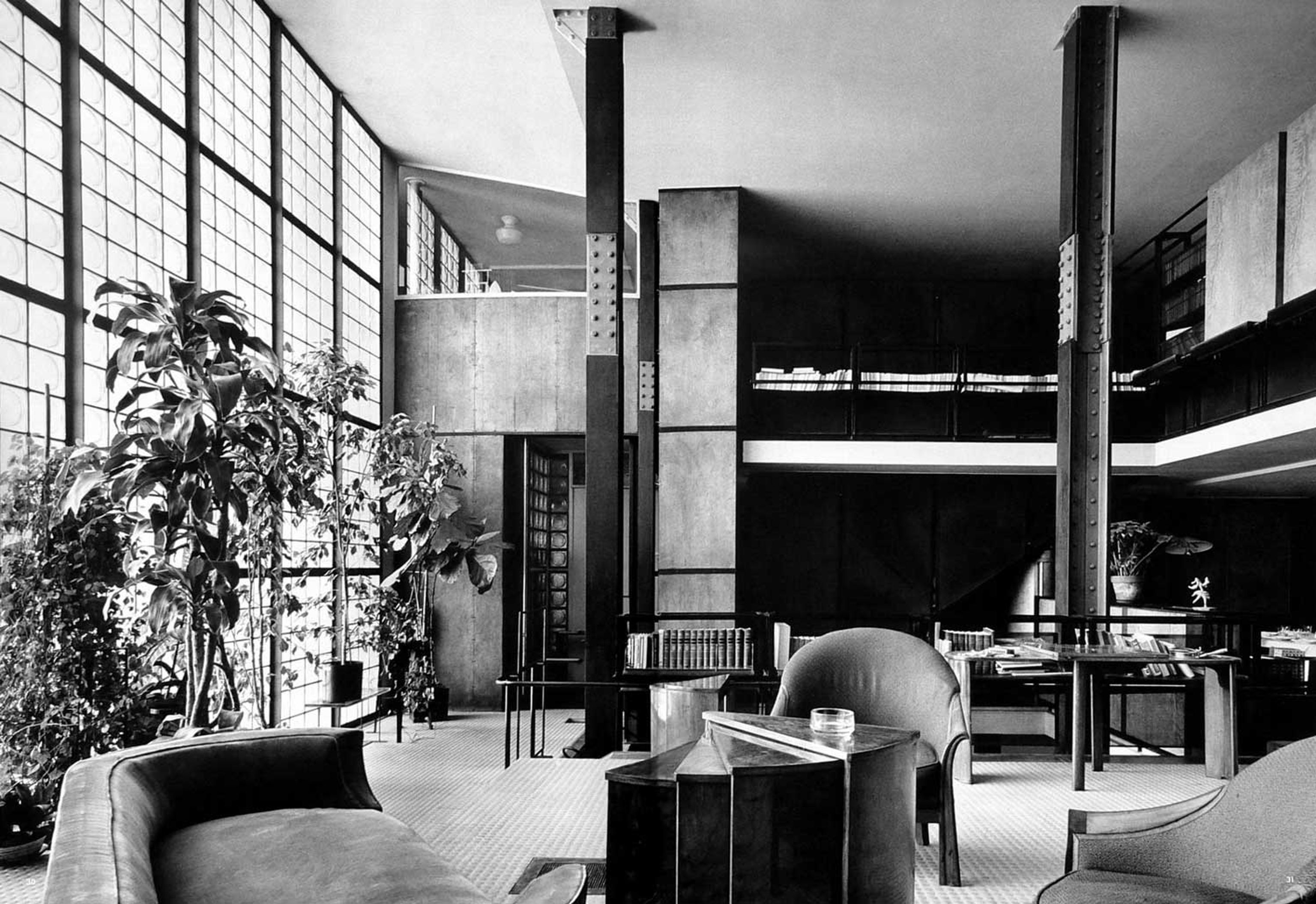
The Maison de Verre’s impact goes beyond its materials; it carefully negotiates the tension between openness and secrecy. Sitting between a paved entrance courtyard and a leafy garden, the house balances public, semi-private, and private zones. The glass façades admit light while shielding interiors from prying eyes, creating a constantly shifting interplay of luminosity, shadow, and visual layering. Internally, double-height living areas, lofted libraries, and mezzanines create a sense of vertical openness, while the inventive use of partitions and mechanical elements allows residents to reconfigure spaces according to daily needs.
This dynamic adaptability exemplifies Chareau’s vision of a house responsive to both human life and urban conditions.

Legacy and Cultural Resonance
Maison de Verre has become a canonical example of early modernist residential architecture, influencing architects and designers across Europe and beyond. Its experimental materiality, fluid spatial organization, and technical ingenuity anticipated later modernist and industrial design movements while retaining a distinctly poetic and domestic sensibility. The house’s glass block façades, glowing by day and illuminated at night, remain emblematic of twentieth-century innovation in light and transparency.
Today, the Maison de Verre is preserved and managed by the Association des Amis de la Maison de Verre, ensuring that this extraordinary synthesis of craft, technology, and spatial imagination continues to inspire new generations of architects, designers, and scholars.