
Praksis Arkitekter
Mediateket
- ArchitectPraksis Arkitekter
- PhotographerTorben Nielsen
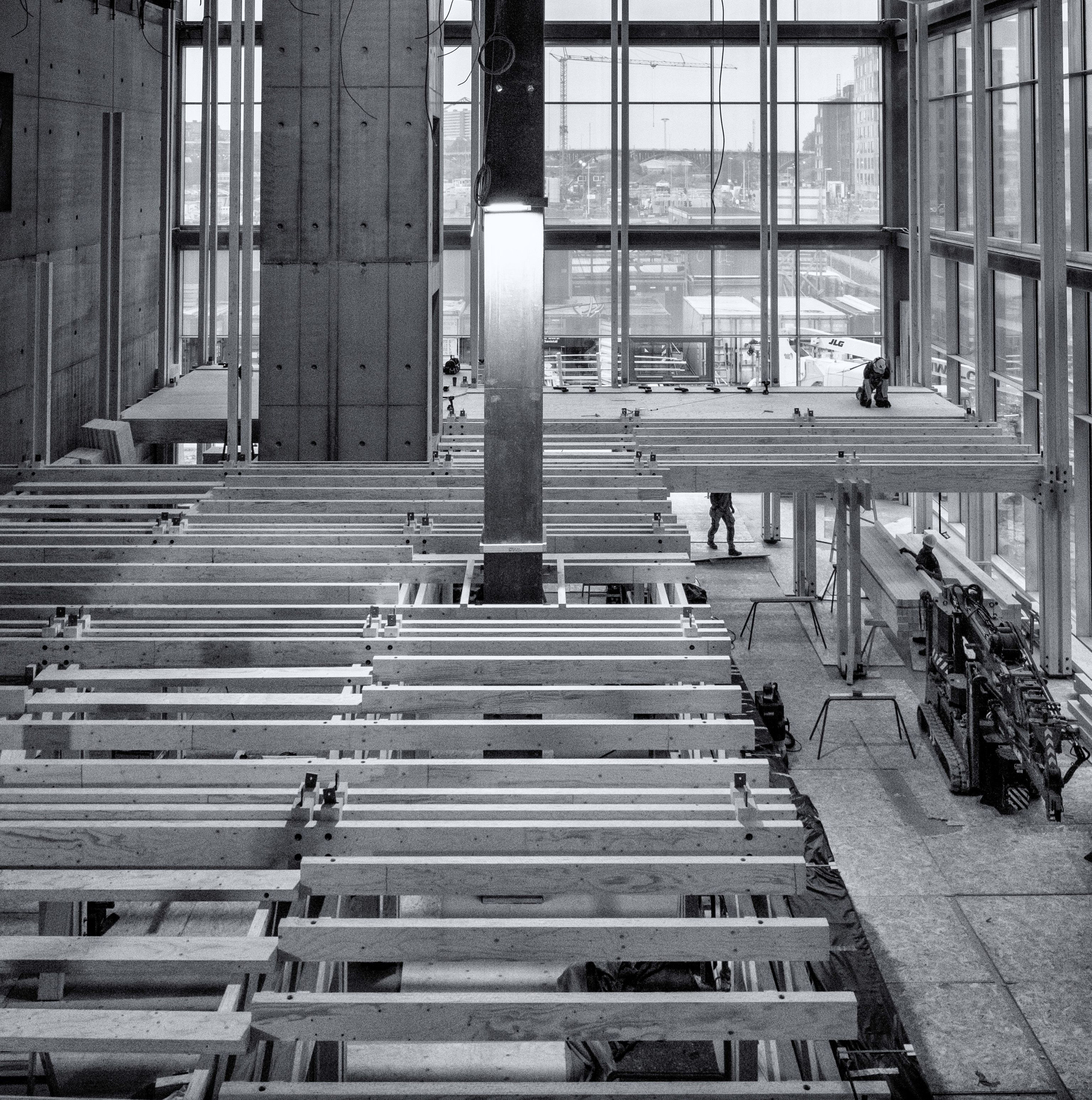
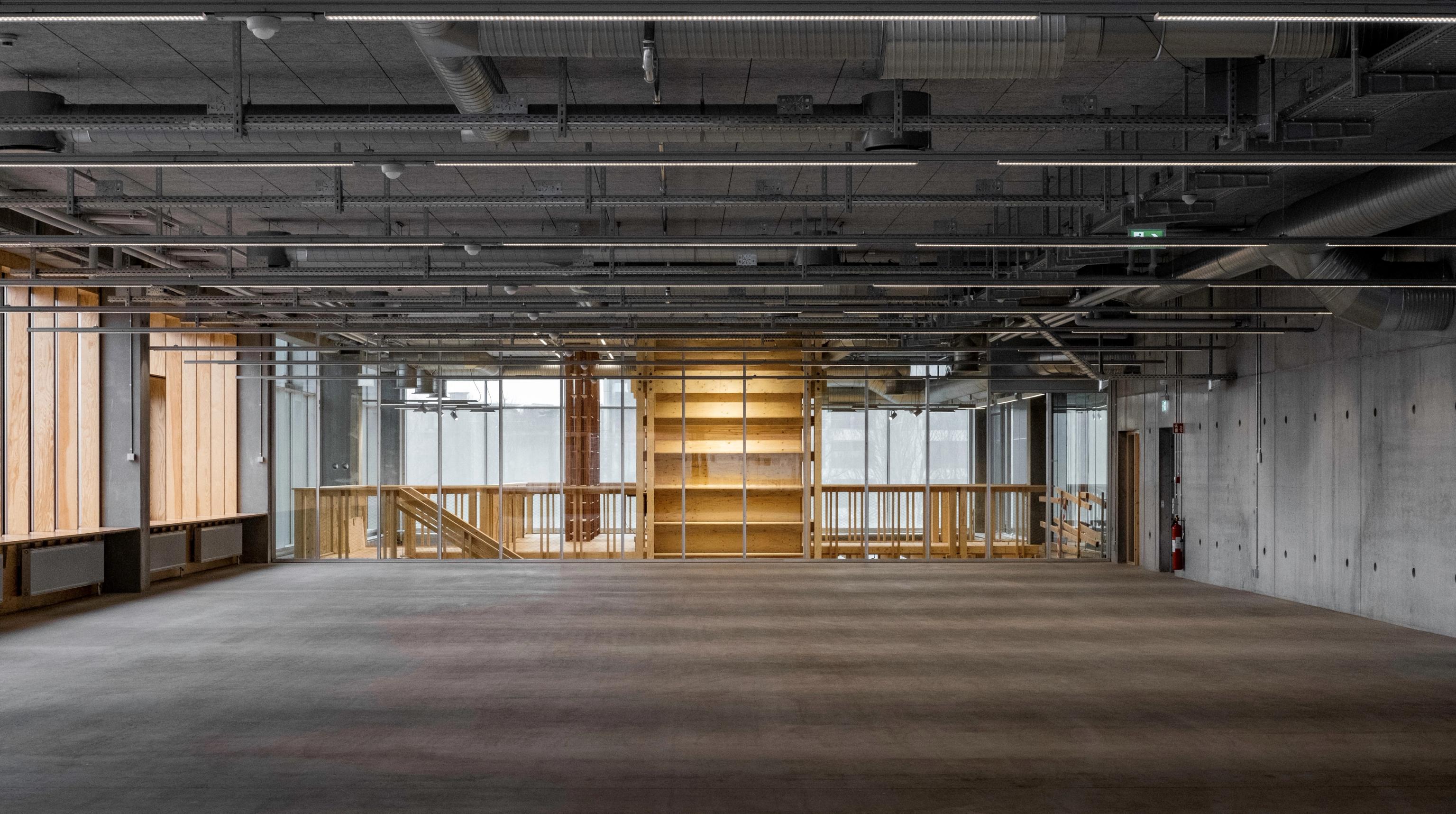
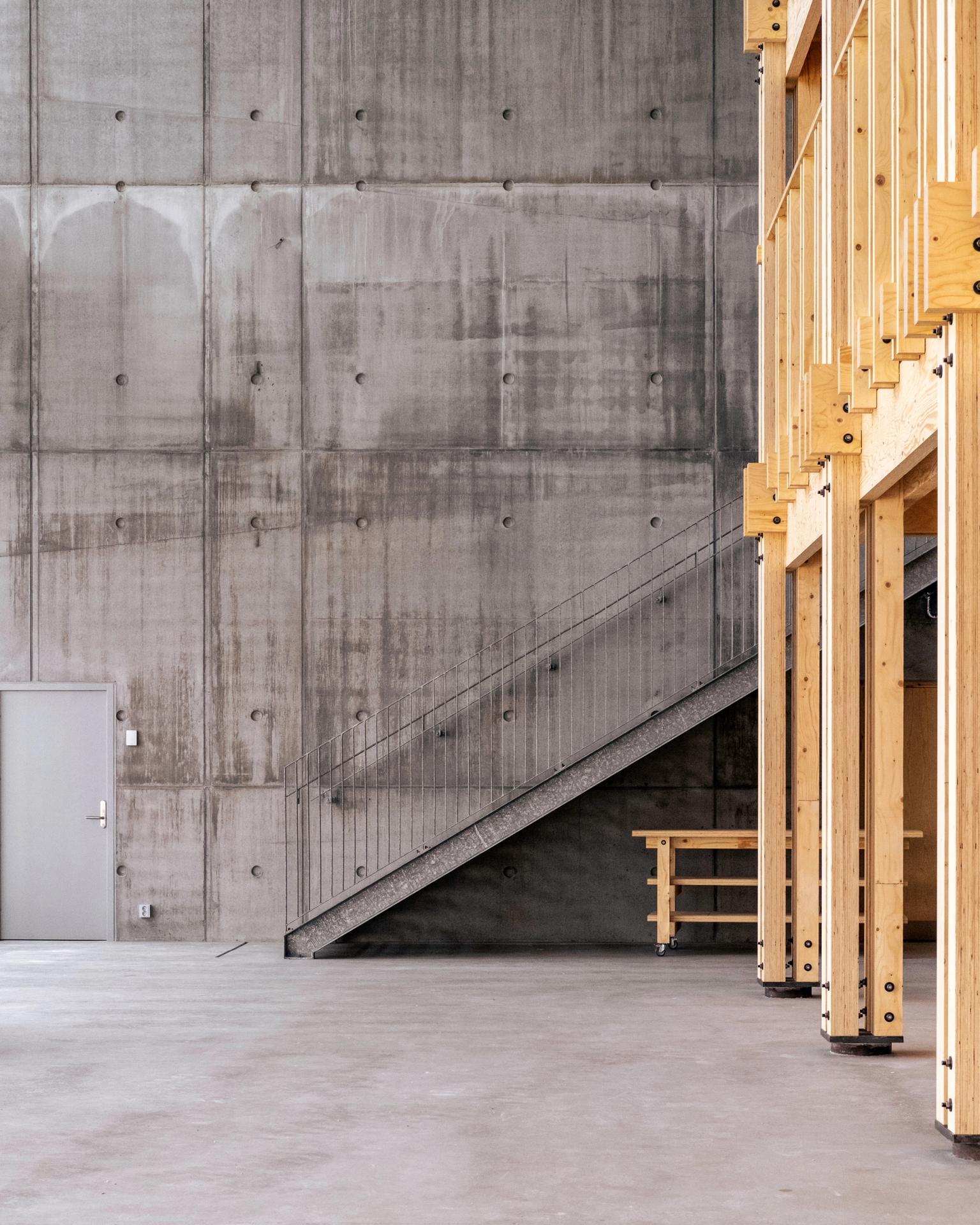
Frederik Gustav We experience the Mediateket at the Aarhus School of Architecture as a massive insertion within the building. The timber structure functions both as a gigantic piece of furniture and as a sculptural element that extends across the space. The strong material contrast makes it feel like an independent structure rather than an integrated part of the architecture.

A Furnitecture Landscape for Thought
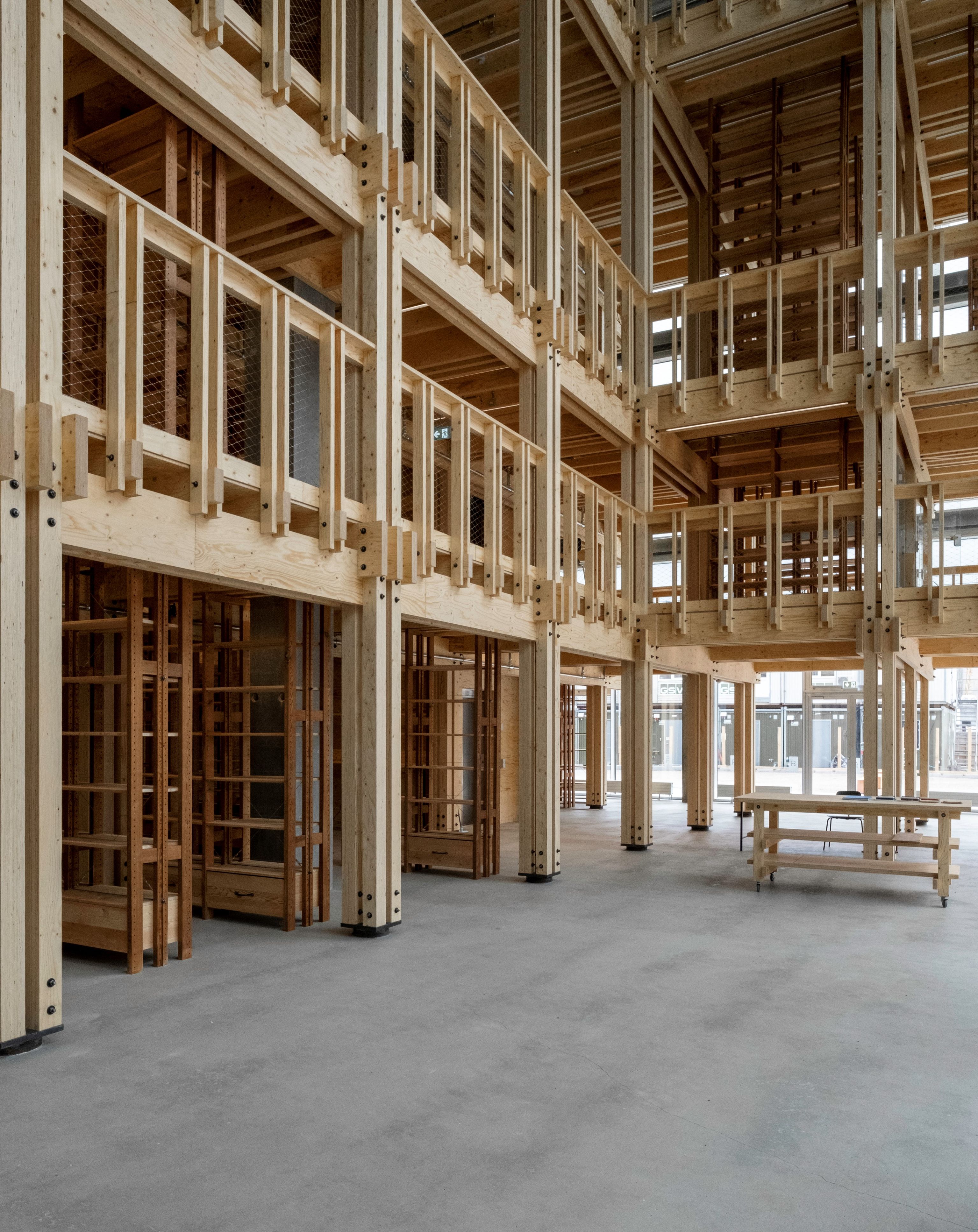
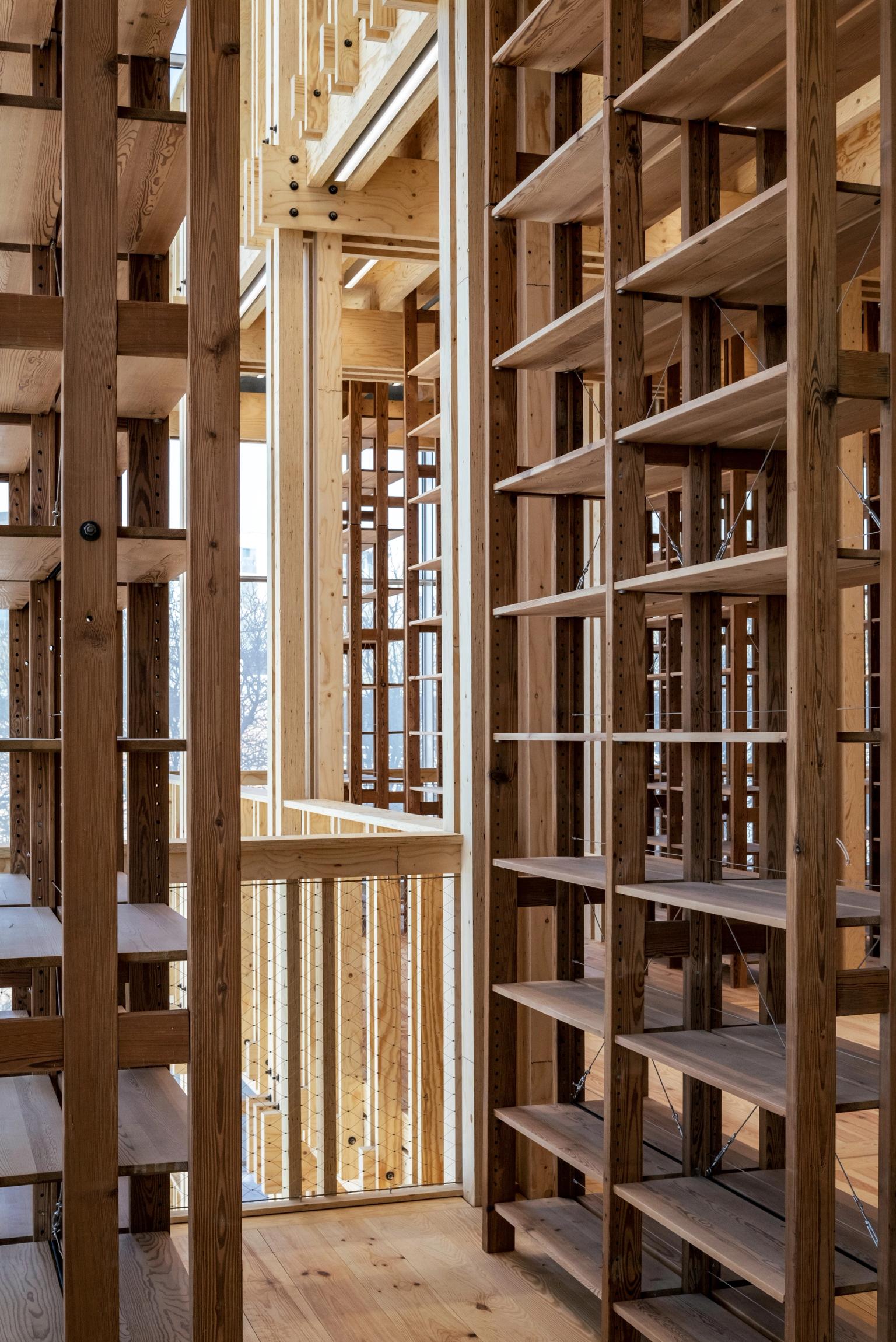
The Mediatek (Mediateket) inside the new Arkitektskolen Aarhus is conceived as a four-storey wooden installation that operates somewhere between furniture and architecture. Designed by Praksis Arkitekter, the project answers a fundamental challenge: how to create a space for individual study, quiet reading, and intellectual concentration inside a building otherwise defined by large workshop-like volumes and openness. The solution is a “house within a house” – a monumental wooden object placed inside the school’s 16-metre-high central space, yet remaining publicly accessible during daytime. Rather than isolating knowledge in a closed library, the Mediatek frames learning as a spatial and social condition, allowing contemplation to exist inside a larger collective environment.

Historical Memory Reassembled in Wood
The architectural concept begins with a historical gesture. The entire structural and geometric language of the Mediatek is derived from a shelving system originally designed by Danish architect Hack Kampmann for the archives that once occupied his buildings in Aarhus. The school received the preserved shelves from the old archive depot, allowing them to be reinterpreted as the DNA of the new installation.
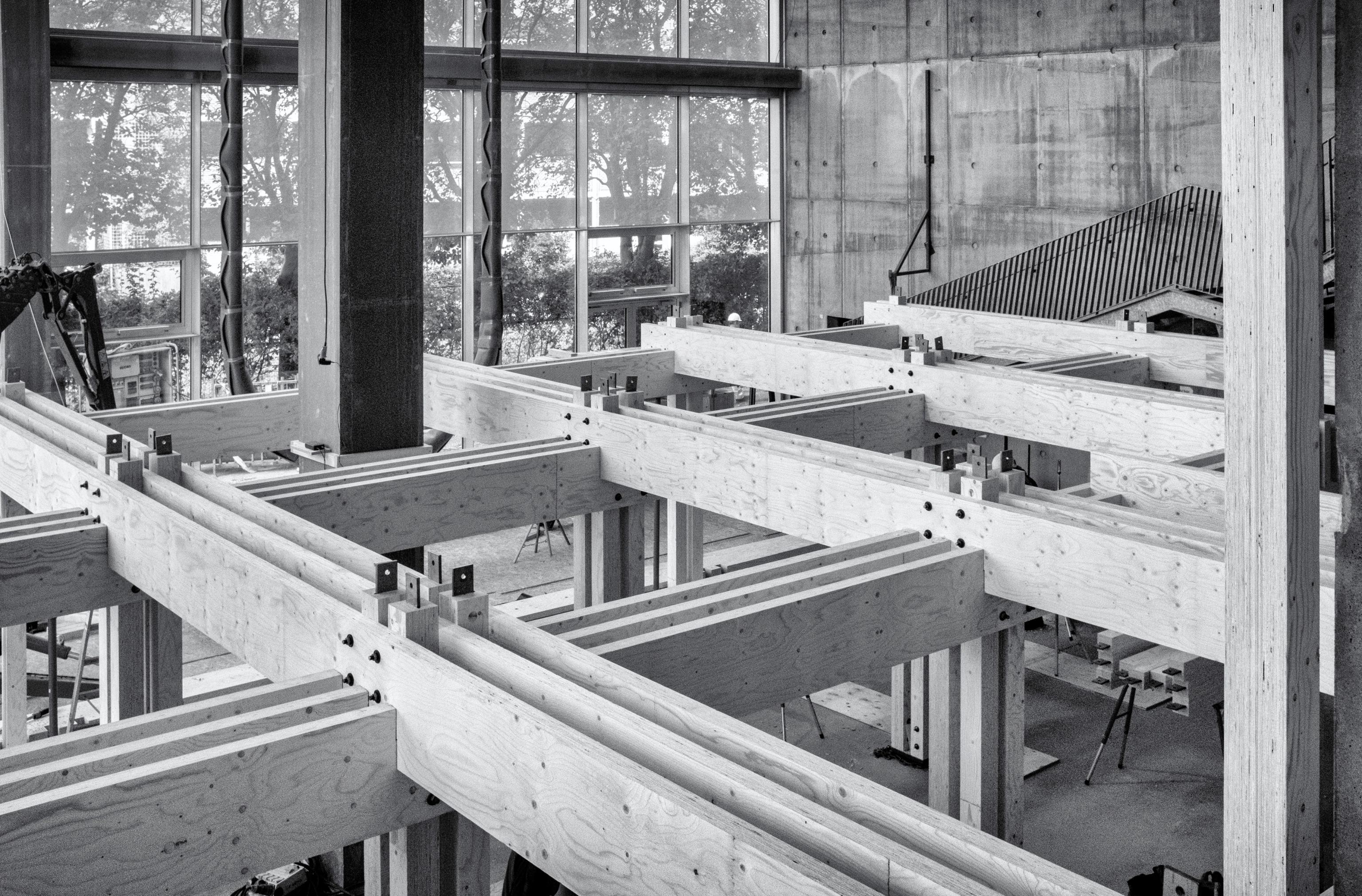
Constructed in high-quality raw pine and combined with LVL, laminated veneer lumber, the structure forms approximately 5.5 kilometres of columns, beams, and balusters. Spread across four levels, the system provides around 520 square metres of study space and more than 1600 shelf metres for books and learning materials. The re-use of Kampmann’s shelving is not nostalgic restoration but a transformation of historical artefacts into active architectural components, binding together past and present in a single spatial composition.

Scale, Body, and Architectural Atmosphere
The Mediatek is designed as a multi-scalar spatial experience where different dimensions of architecture coexist. The installation mediates between the scale of the book, the shelf, the human body, and the large concrete volume of the school. From any position inside the structure, multiple layers of space remain visible – producing a deep, saturated spatial perception rather than isolated rooms. High zones allow room for large architectural models and vertical movement, while smaller niches and lower ceiling pockets provide intimate study environments.
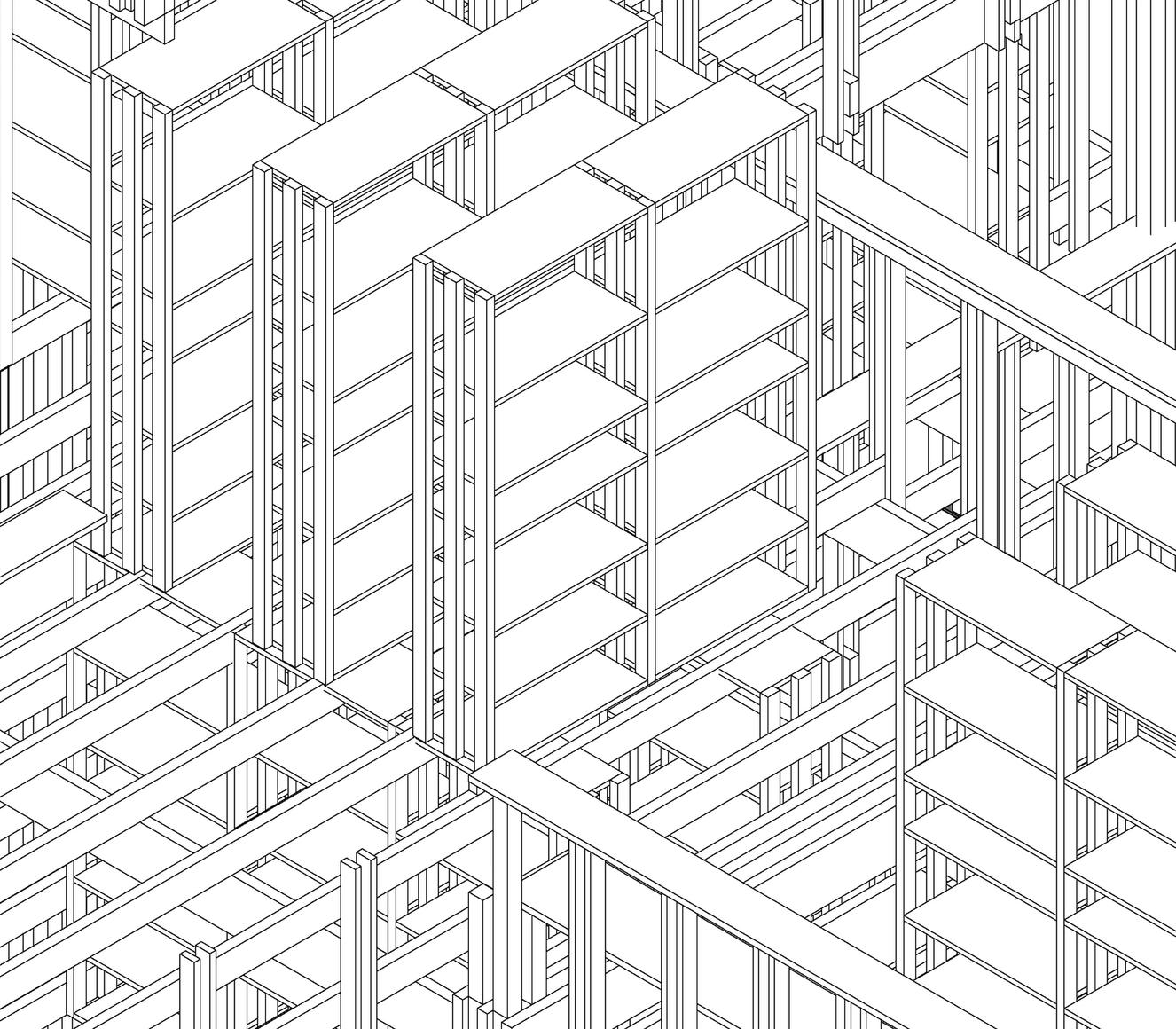

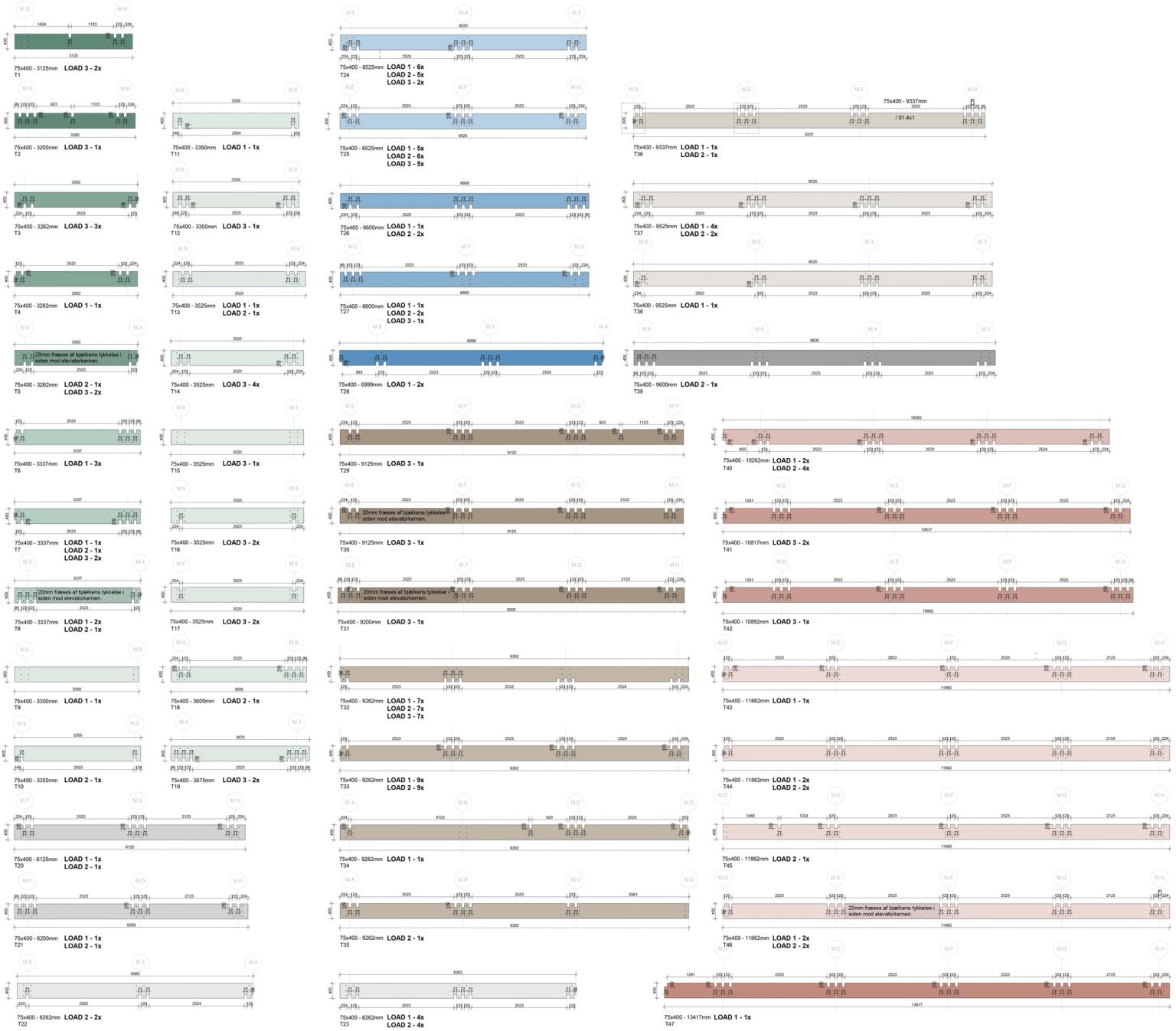

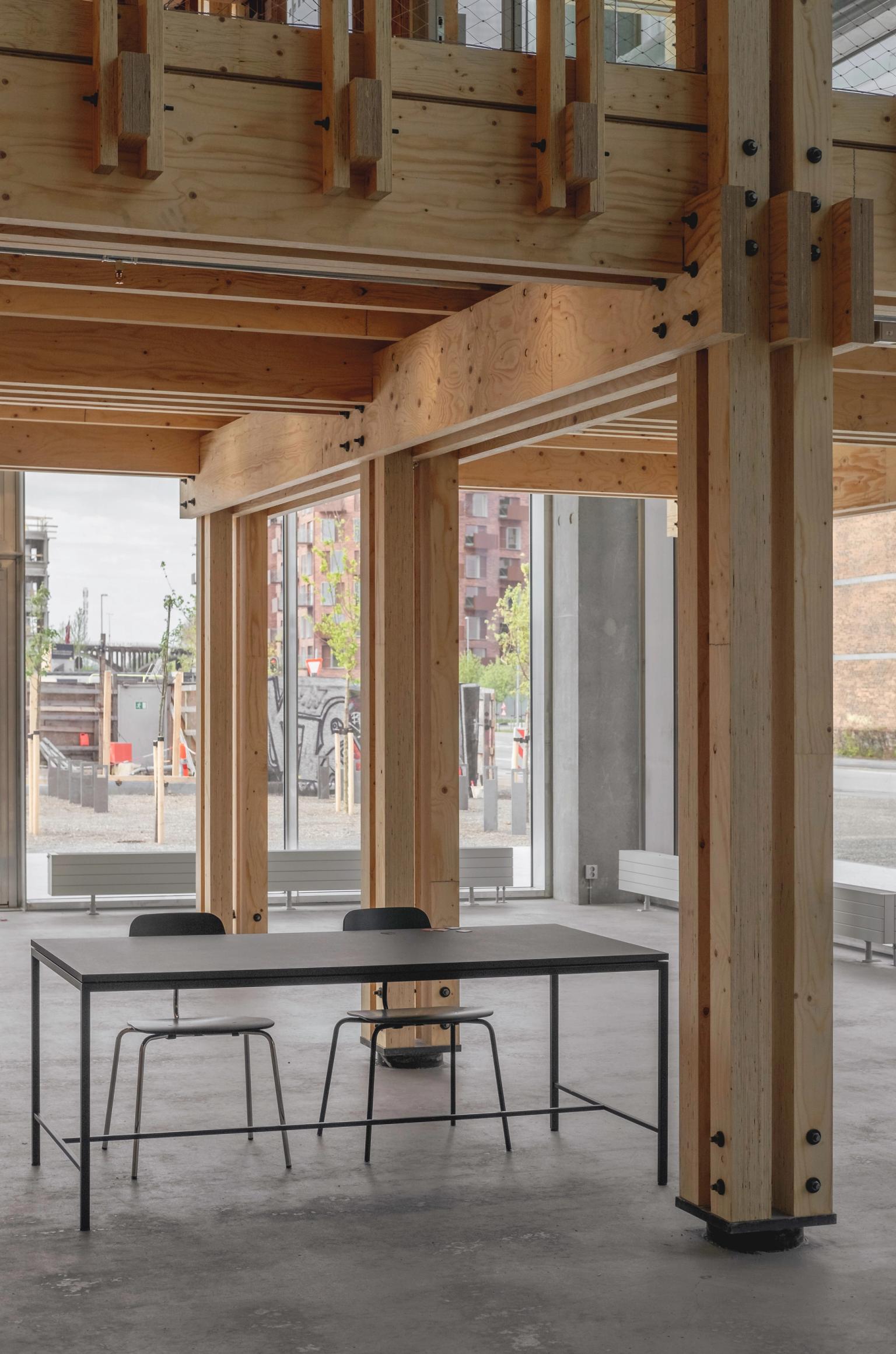
The geometric precision of machine-cut LVL elements contrasts with the warm, organic quality of wood fibres, creating a dialogue between industrial fabrication and tactile material presence. The construction is deliberately sober, robust, and prunk-free, echoing Kampmann’s own architectural ethos of restrained ornamentation and structural clarity.

Knowledge as Spatial Experience
The Mediatek functions as the intellectual and social heart of the architecture school, acting simultaneously as library, study landscape, exhibition frame, and public reference space. Positioned inside the “belly” of the new school building near the Godsbane area, the installation is visible when entering the central interior axis, where large glass facades allow evening light to spill outward and reveal the building’s cultural function. The design embraces the paradox of the programme: how to create quiet, inward-looking study zones without disconnecting them from the collective life of the school. Instead of separating work, archive, and gathering, the architecture interweaves them into a continuous learning environment.

Architecture Between History and Future Practice
Supported by Bygningsstyrelsen and the A.P. Møller Fonden, the Mediatek stands as both educational infrastructure and architectural statement. The reuse of Kampmann’s shelves functions as a cultural “tuning fork” – a subtle but meaningful reference to Aarhus’ architectural heritage, where Kampmann shaped much of the city’s built identity. Rather than treating history as decoration, the project transforms it into structure and atmosphere. The result is a total installation where wood, knowledge, and spatial narrative merge into a single tectonic system, demonstrating how architecture education itself can be expressed as built form – open, transparent, and intellectually charged.