
Diego Rivera and Juan O'Gorman
Museo Anahuacalli
- ArchitectJuan O'Gorman and Taller de Arquitectura, Mauricio Rocha
- ArtistDiego Rivera
- PhotographerRafael Gamo
Atelier Axo Museo Anahuacalli is a monumental museum rooted in pre-Hispanic architecture and material traditions. Built in volcanic stone, the building merges modern construction with ancient references, creating an architecture where cultural memory, symbolism, and mass define the spatial experience.
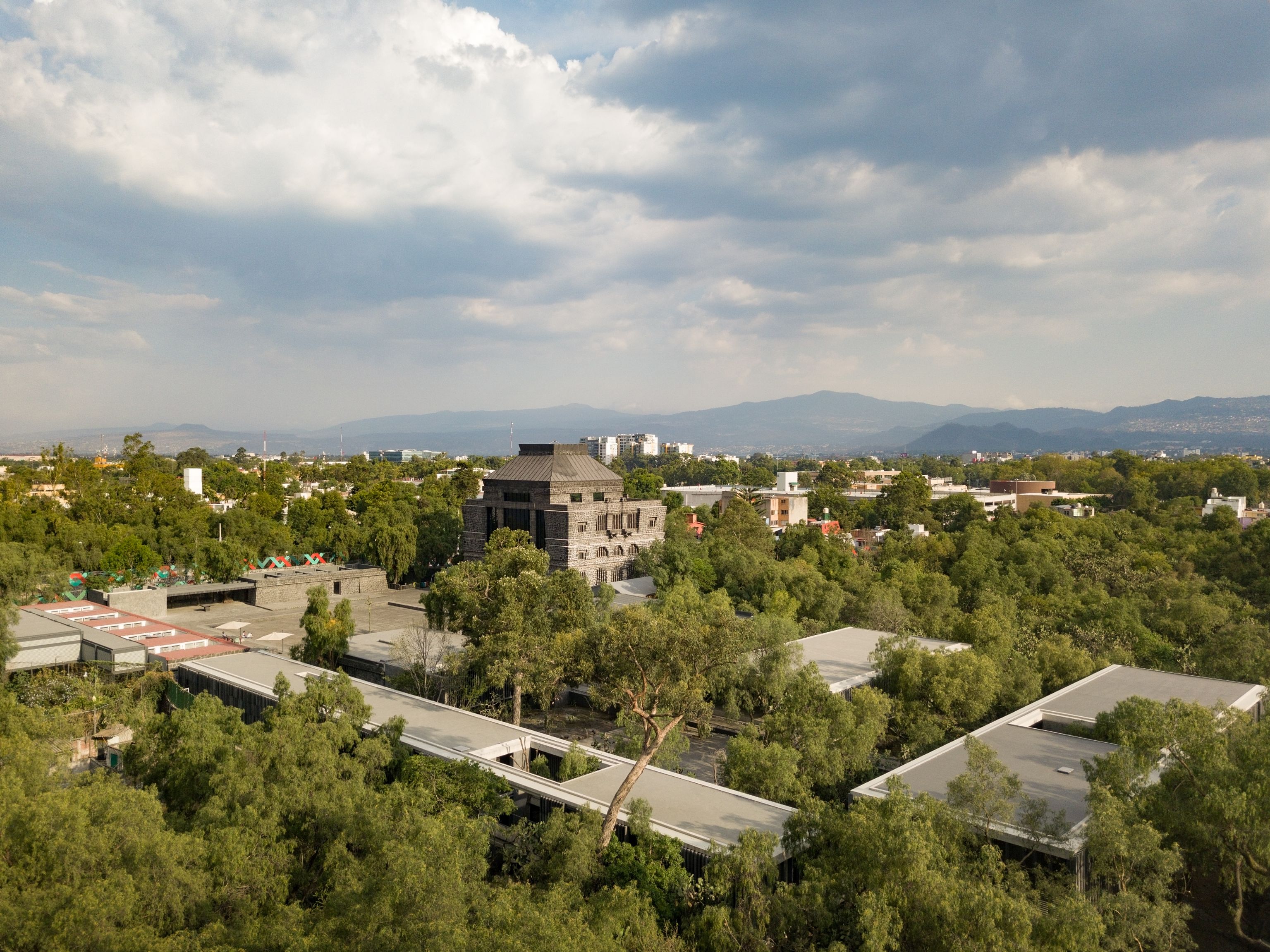

Temple of Mexican Identity in Volcanic Stone
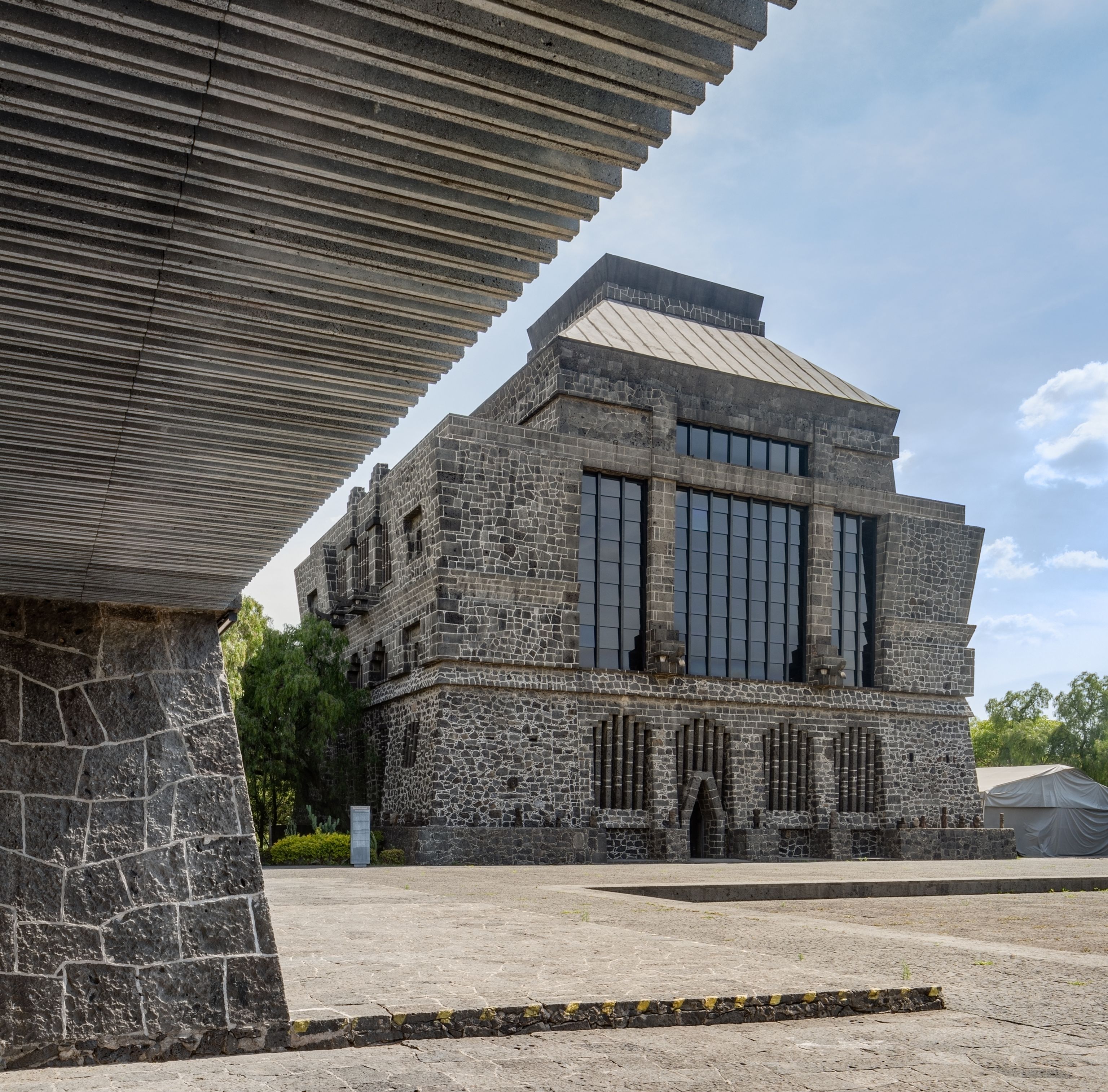
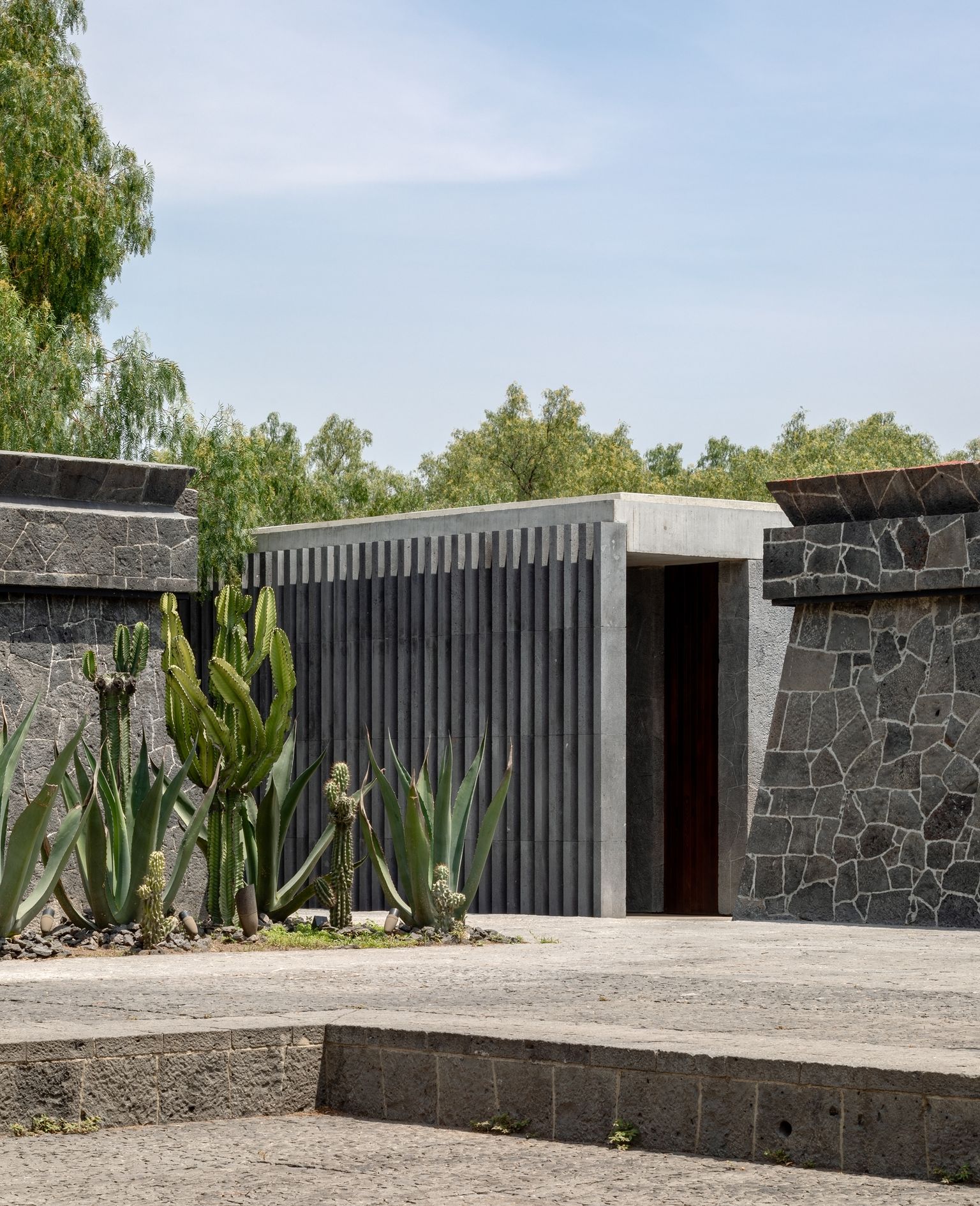
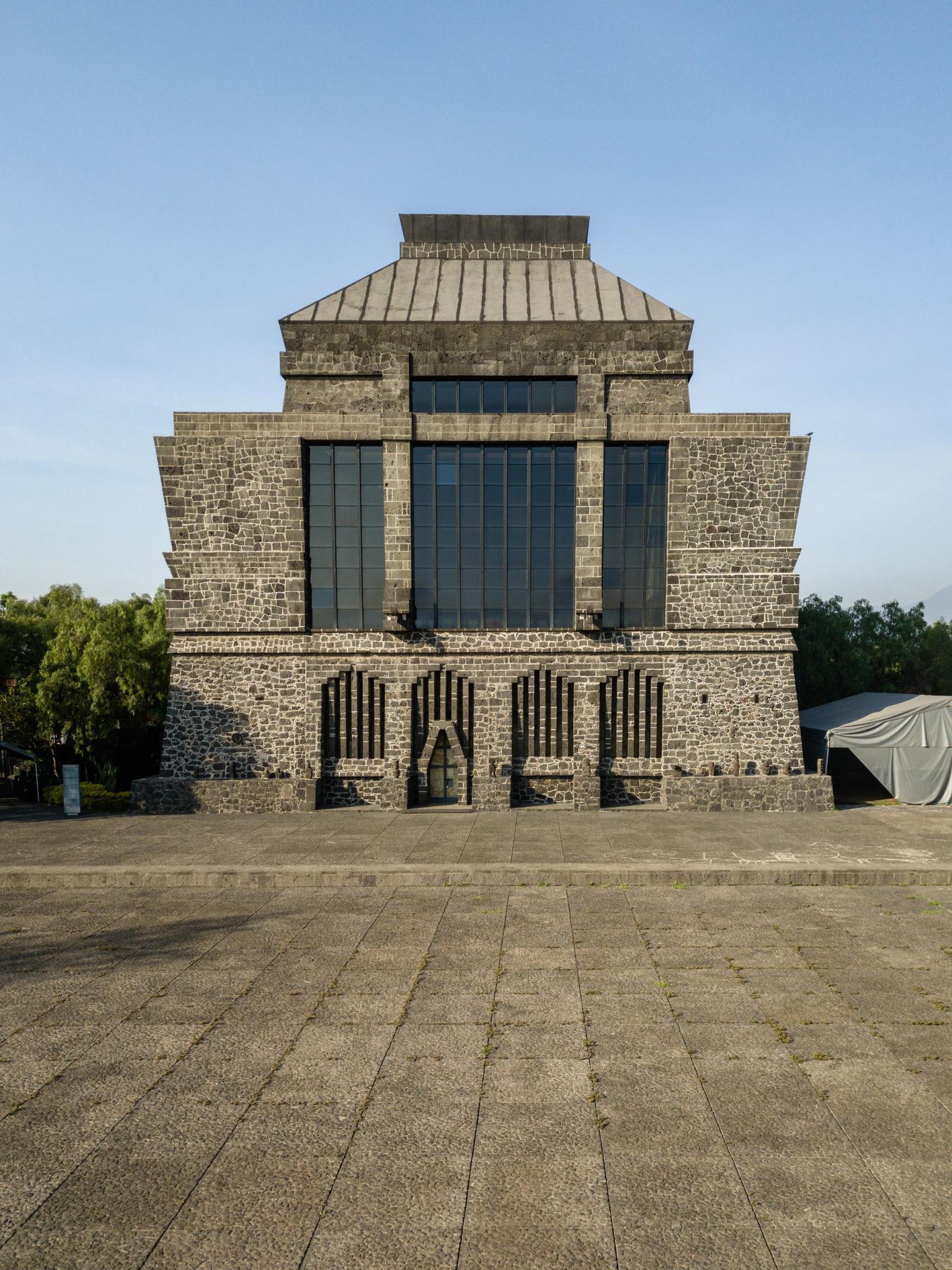
The Museo Anahuacalli, conceived by Diego Rivera, is not simply a museum but a monumental attempt to translate Mexican cultural memory into architecture. Rising from the volcanic plateau of El Pedregal, the building is constructed entirely from basaltic rock formed by the eruption of the Xitle volcano, allowing the structure to appear as if it were excavated rather than built. Rivera envisioned the museum as a temple dedicated to the artistic spirit of pre-Hispanic Mexico, merging mythological symbolism with modern cultural purpose.
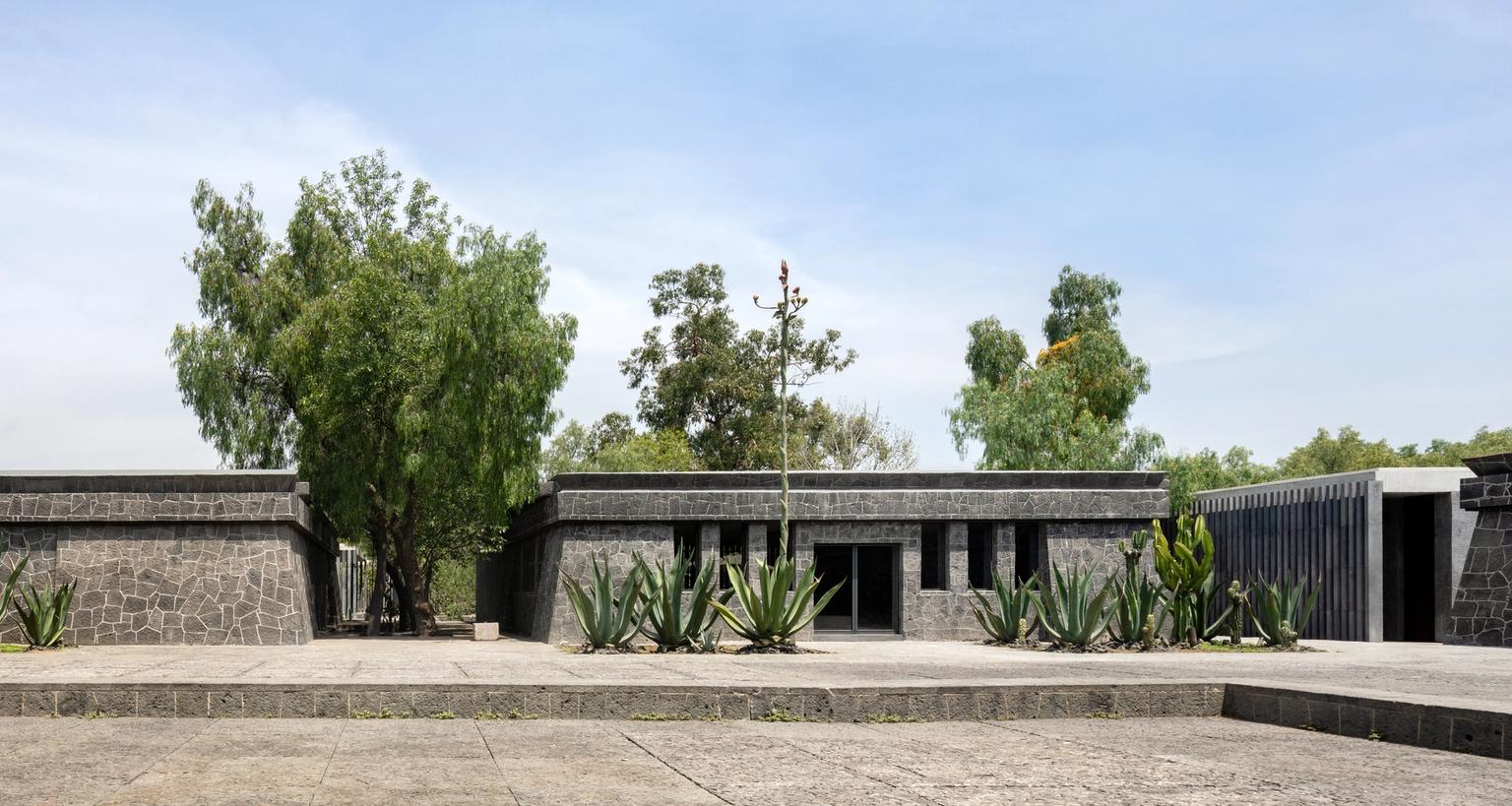
The pyramidal massing, sloping walls, and controlled apertures recall Mesoamerican ceremonial architecture, while the dark stone surface anchors the building physically and metaphysically within the landscape. The museum therefore functions as a sculptural landscape object as much as an architectural institution.


Organic Modernism and the Search for a Native Architectural Language
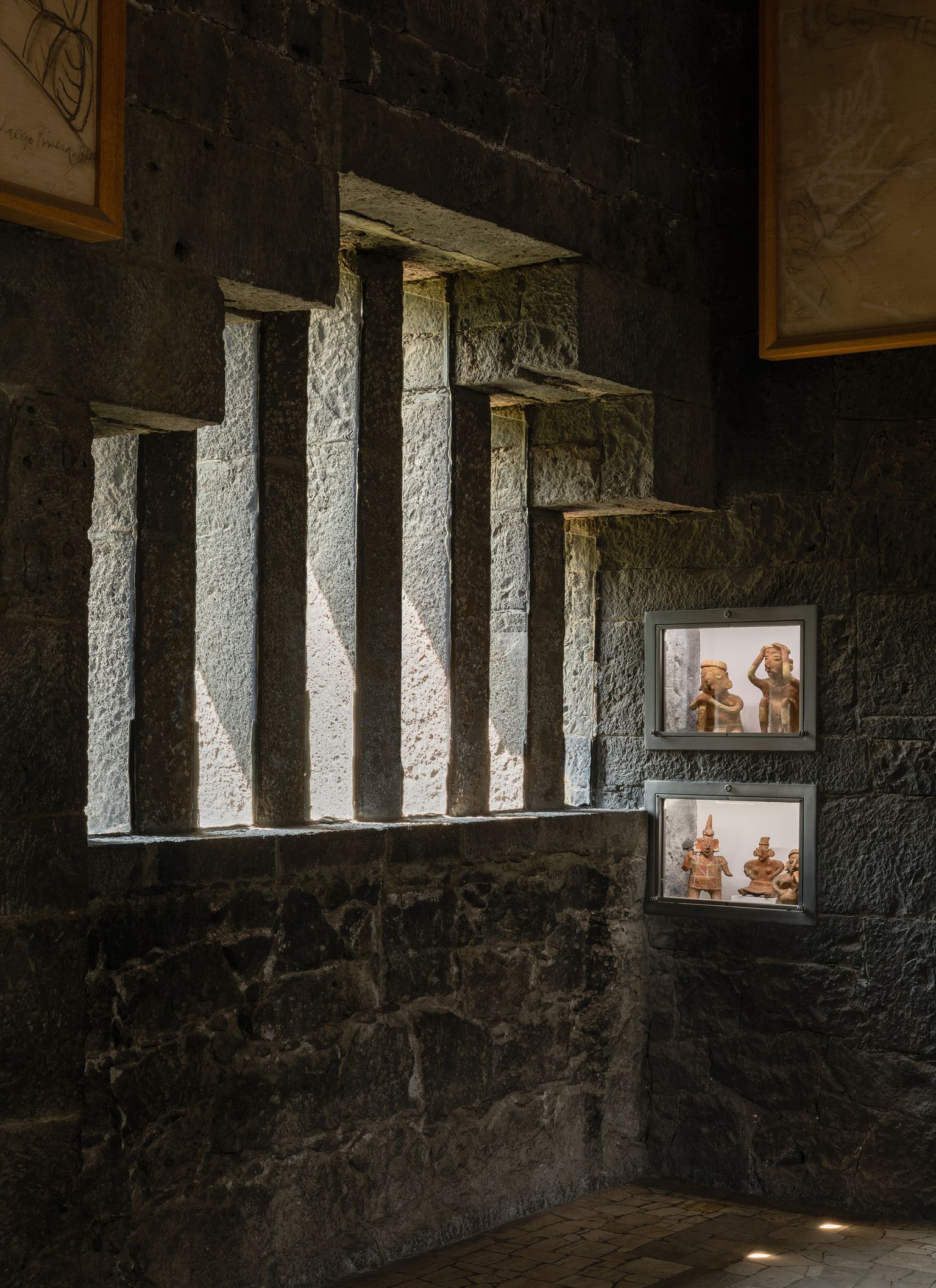
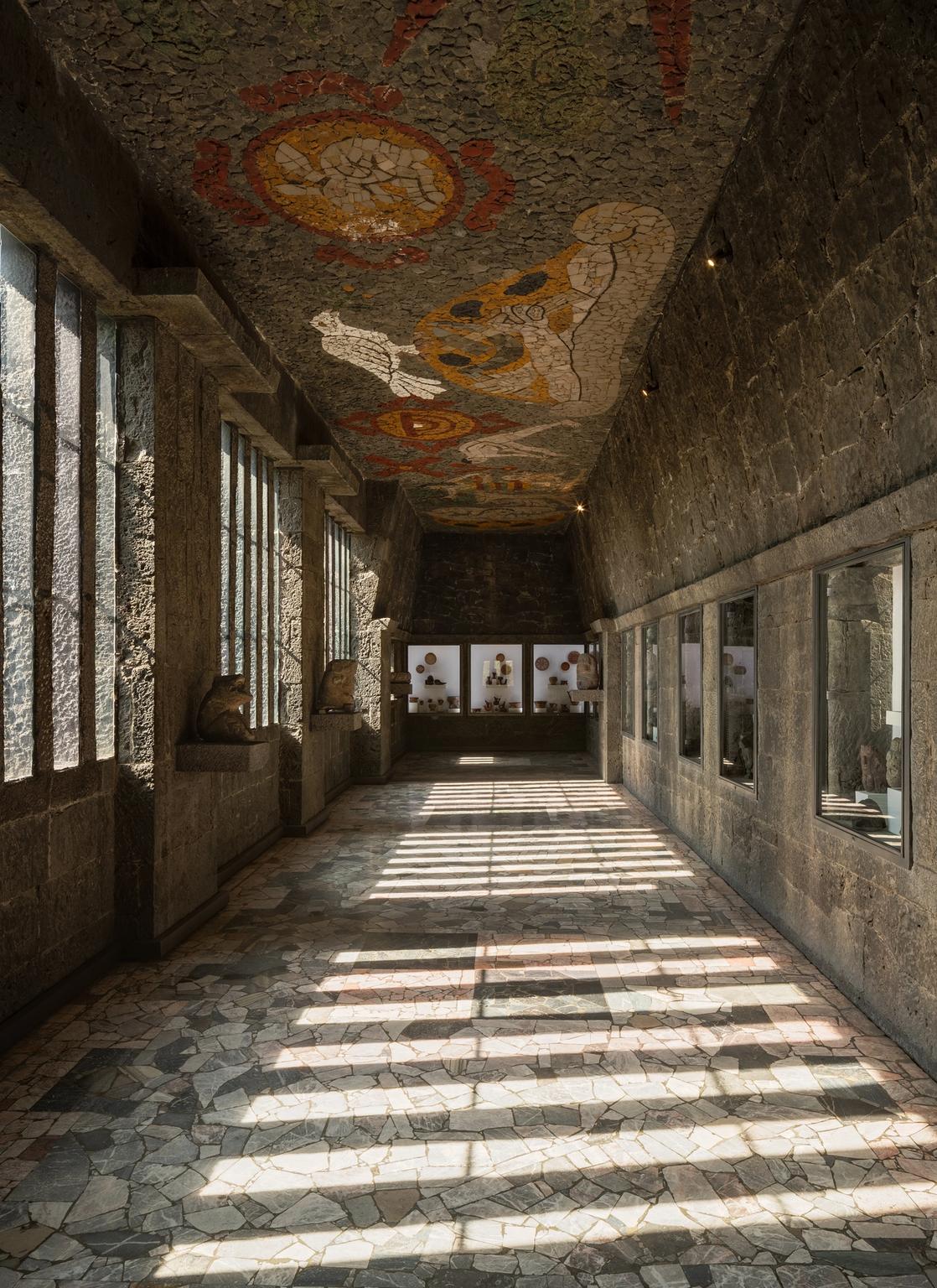
The architectural direction of Anahuacalli was shaped through collaboration with Juan O'Gorman, who helped translate Rivera’s conceptual vision into construction. O’Gorman’s design approach was a reaction against the global International Style that dominated mid-20th-century architecture, which he considered disconnected from Mexican environmental and cultural realities. Influenced by the organic architecture philosophy of Frank Lloyd Wright, the museum was instead conceived as a building growing from the land itself.
The heavy volcanic masonry, narrow vertical openings, and stepped volumetric composition echo both indigenous American construction traditions and Wright’s belief that architecture should respond directly to climate, geology, and human ritual behaviour. The result is a hybrid vernacular modernism that resists universalised architectural language in favour of a culturally specific spatial identity.





The Pre-Columbian Collection
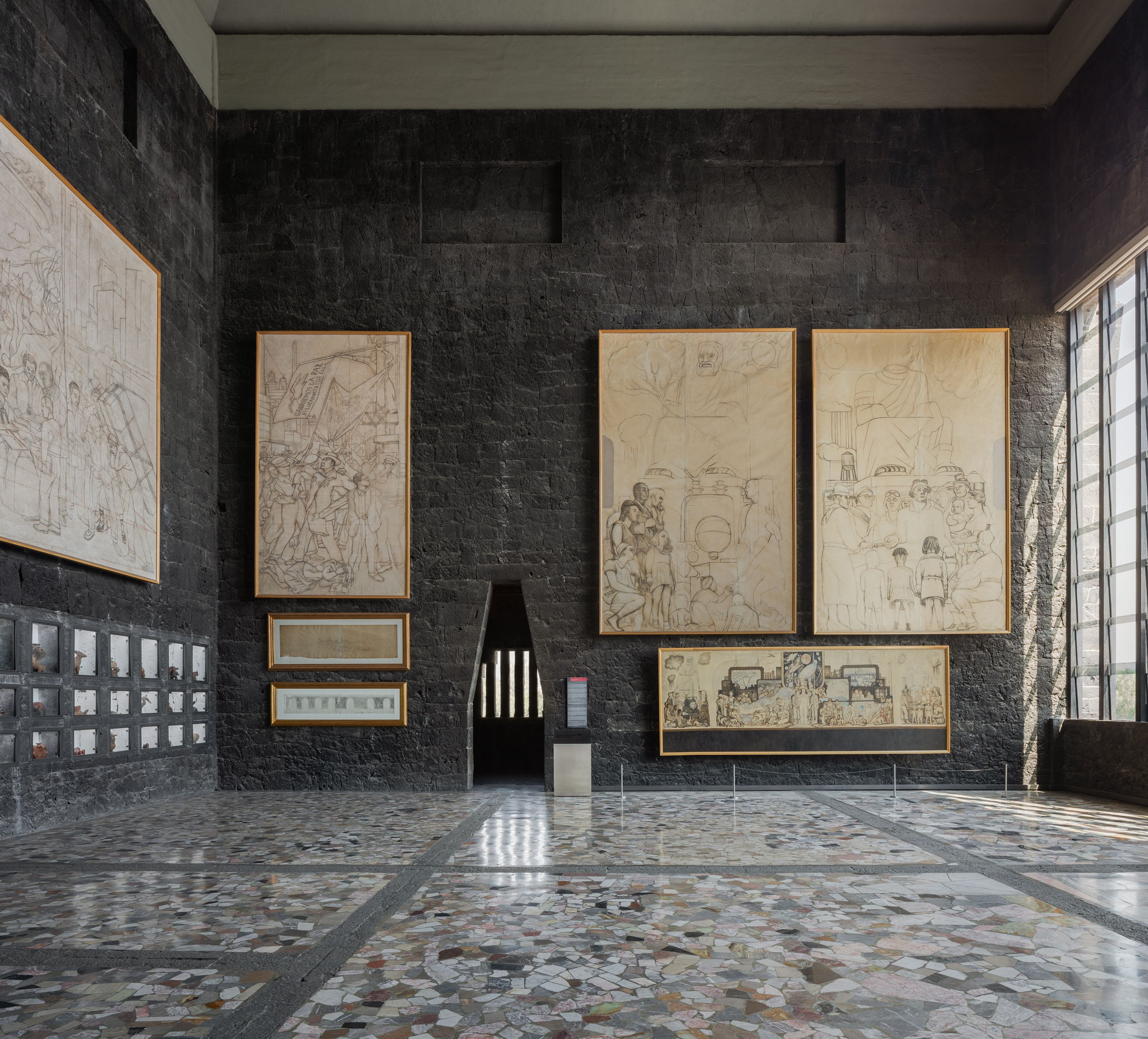
At the heart of the museum lies Rivera’s extraordinary pre-Hispanic collection, which he began assembling in childhood and later rebuilt after financial circumstances forced the loss of his early objects. Over the course of his life he collected more than 60,000 artefacts from across Mesoamerica, ultimately selecting approximately 2,000 works for permanent display.
The collection includes pottery, funerary masks, ceramic figures, and ritual sculptures representing civilisations such as the Olmec, Zapotec, Toltec, Nahua, and Teotihuacan cultures. Rivera did not organise the objects according to archaeological taxonomy but according to emotional and symbolic resonance. Influenced by anthropological and philosophical ideas of ritual energy, he sought to restore what he perceived as the spiritual mana of the artefacts – returning them from historical displacement into a living cultural presence.

Light, Space and Ritual Movement
The interior of Anahuacalli is structured as a mythological journey rather than a conventional exhibition sequence. Visitors move through a triadic spatial system corresponding to Mesoamerican cosmology: the underworld, the earthly realm, and the celestial sphere. The ground floor is intentionally shadowed and introspective, lit only by translucent alabaster panels that replace traditional glazing and create an amber, dreamlike luminosity. Narrow staircases and compressed corridors intensify the sensation of ritual passage, echoing pre-Columbian ceremonial movement between existential states. The intermediate level houses Rivera’s studio and major exhibition halls, where natural light becomes more present, symbolising life and terrestrial existence. The rooftop terraces open dramatically toward the ecological reserve and the distant volcanic horizon, allowing architecture, body, and landscape to converge in a single contemplative frame.


Contemporary Extension and the Living Museum Landscape
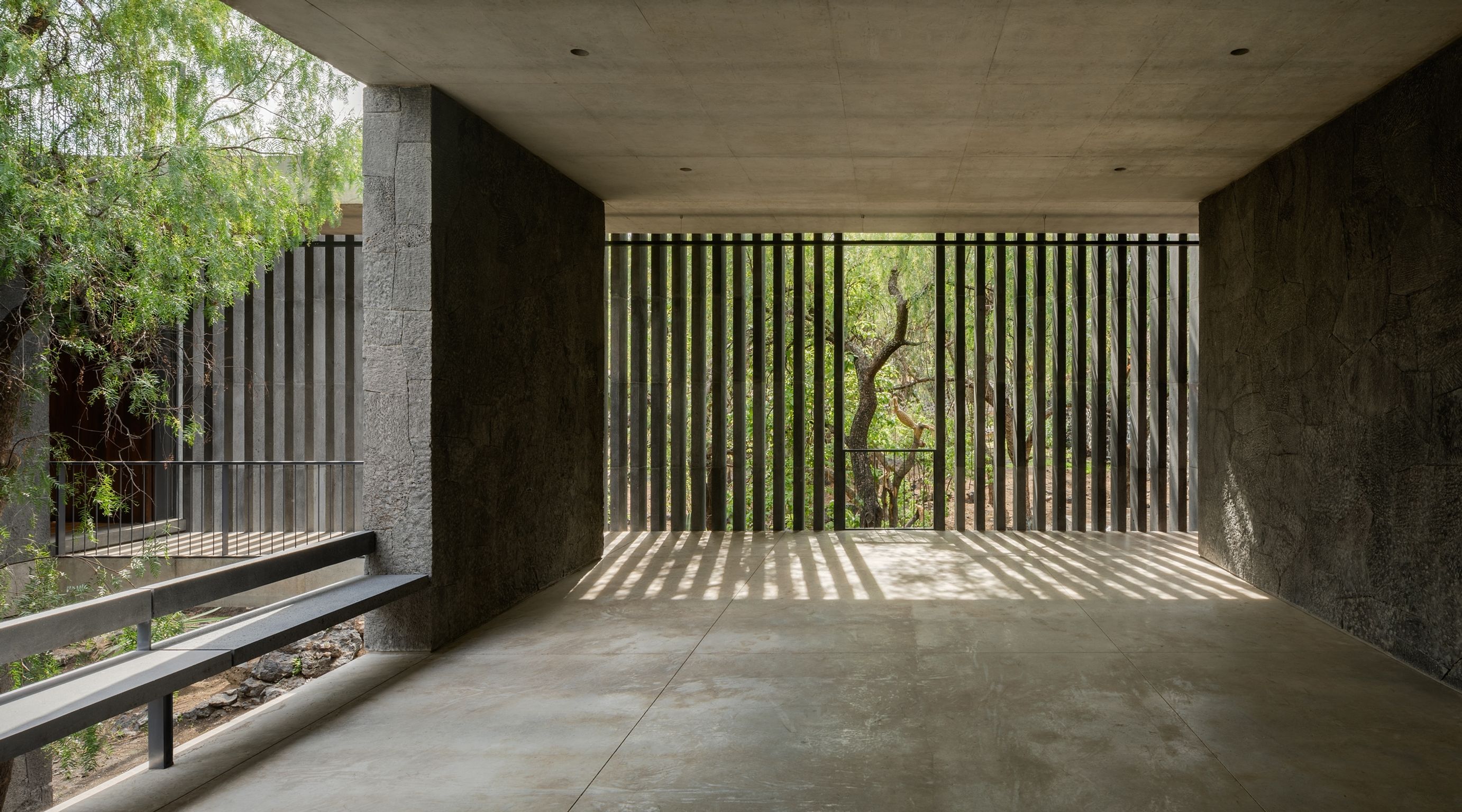
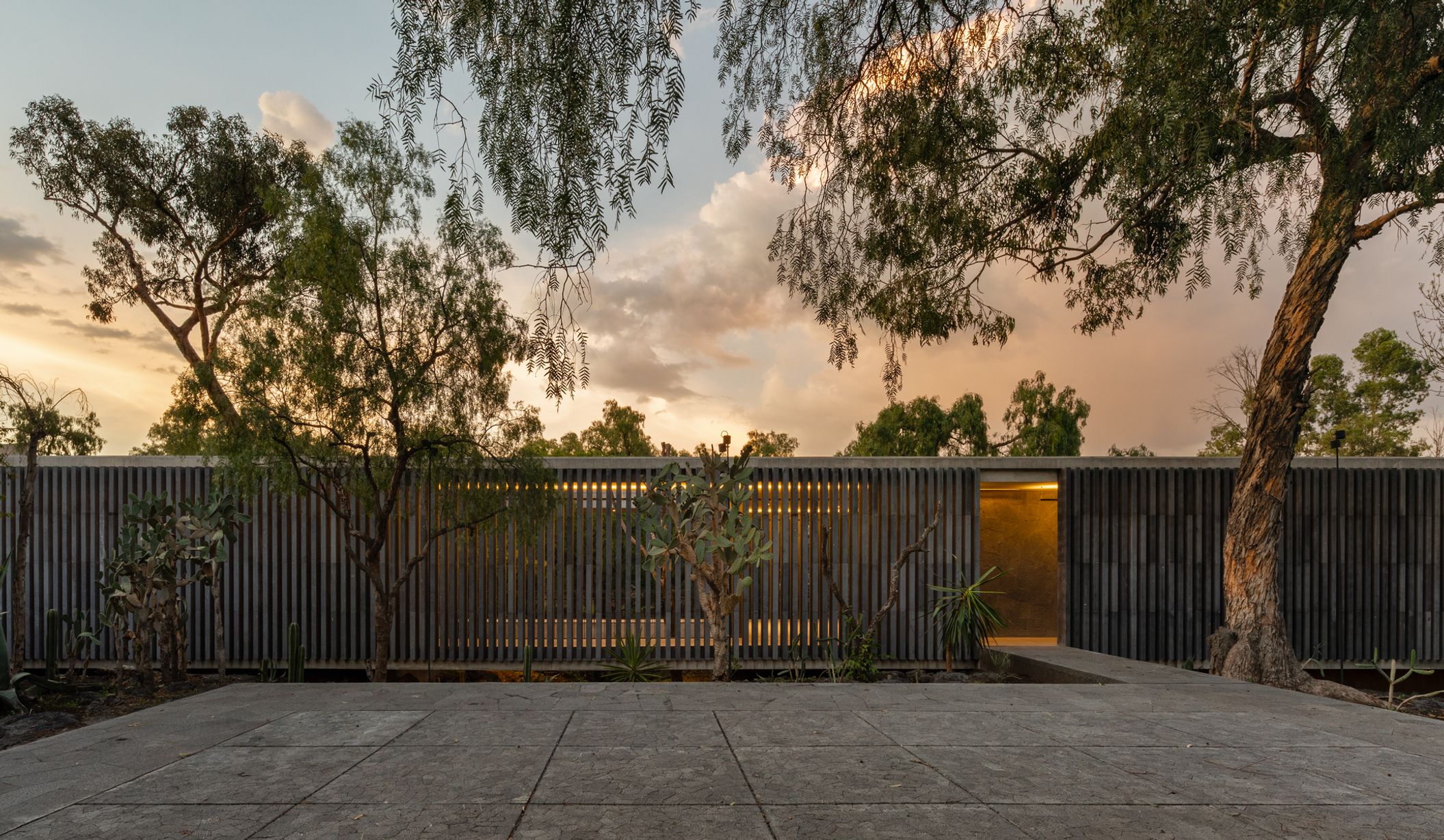
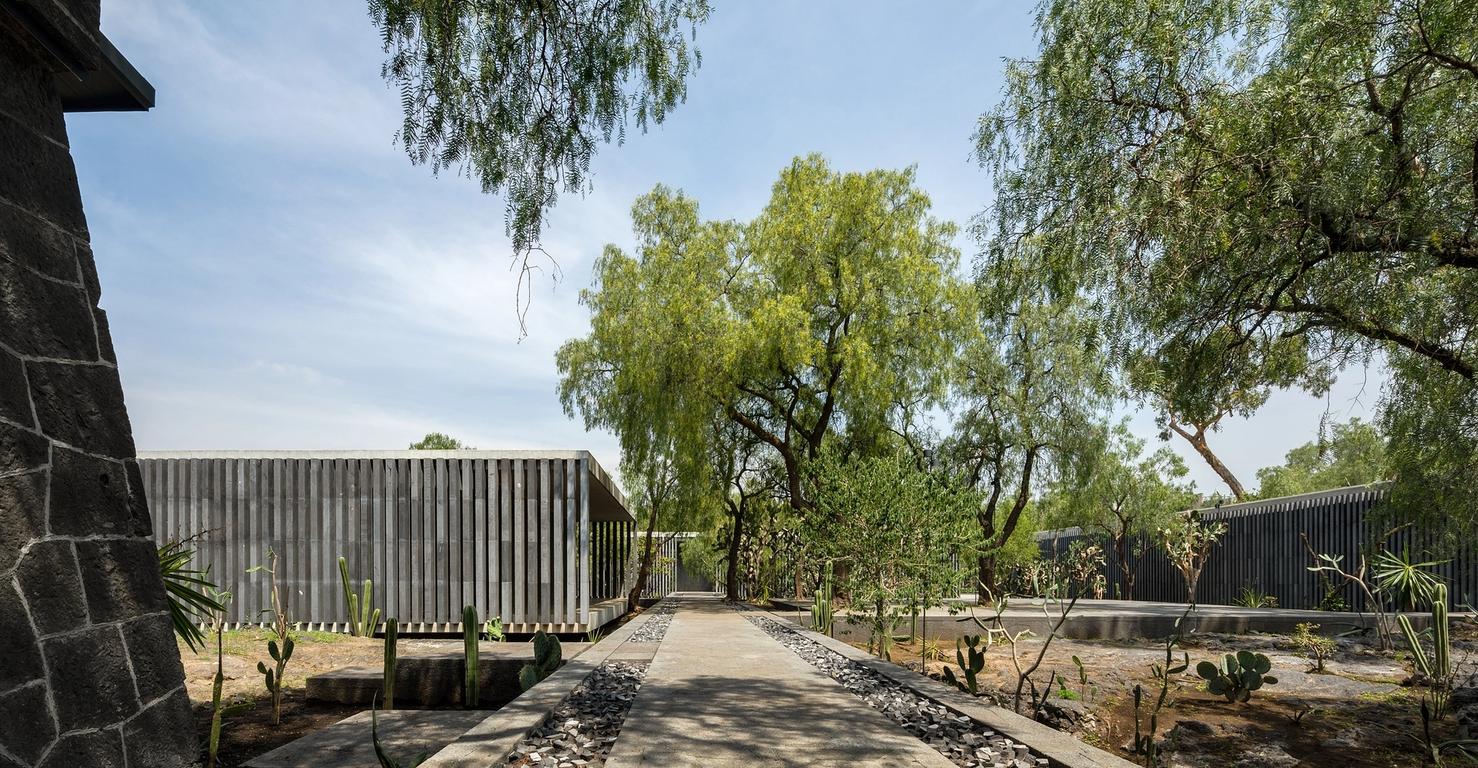
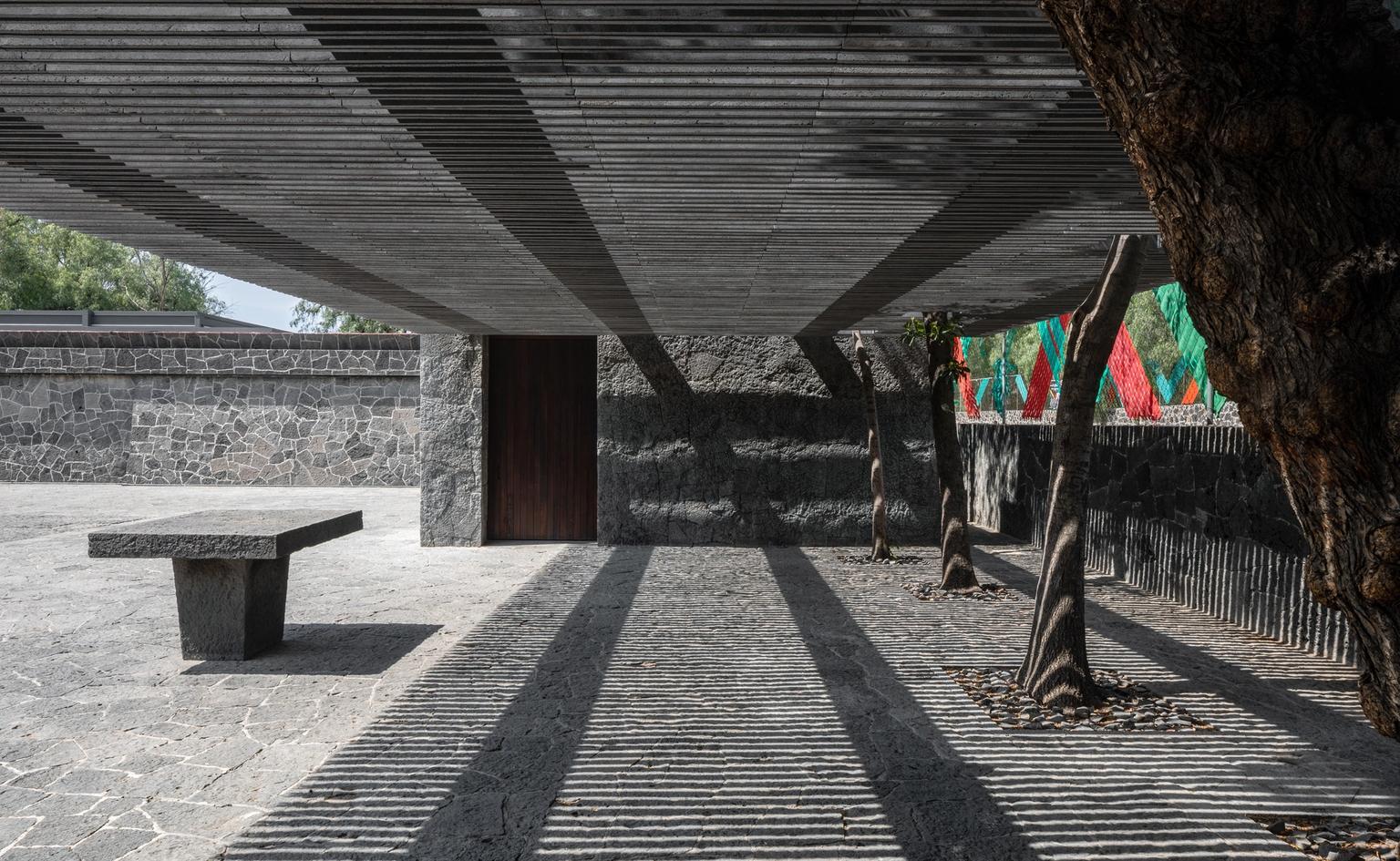
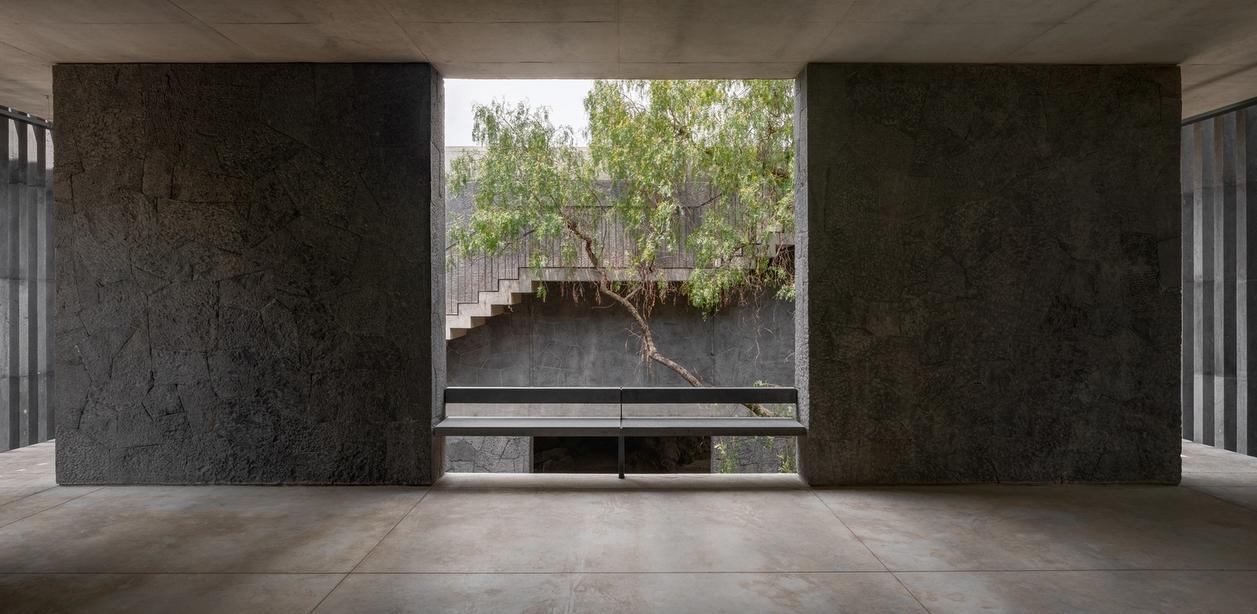
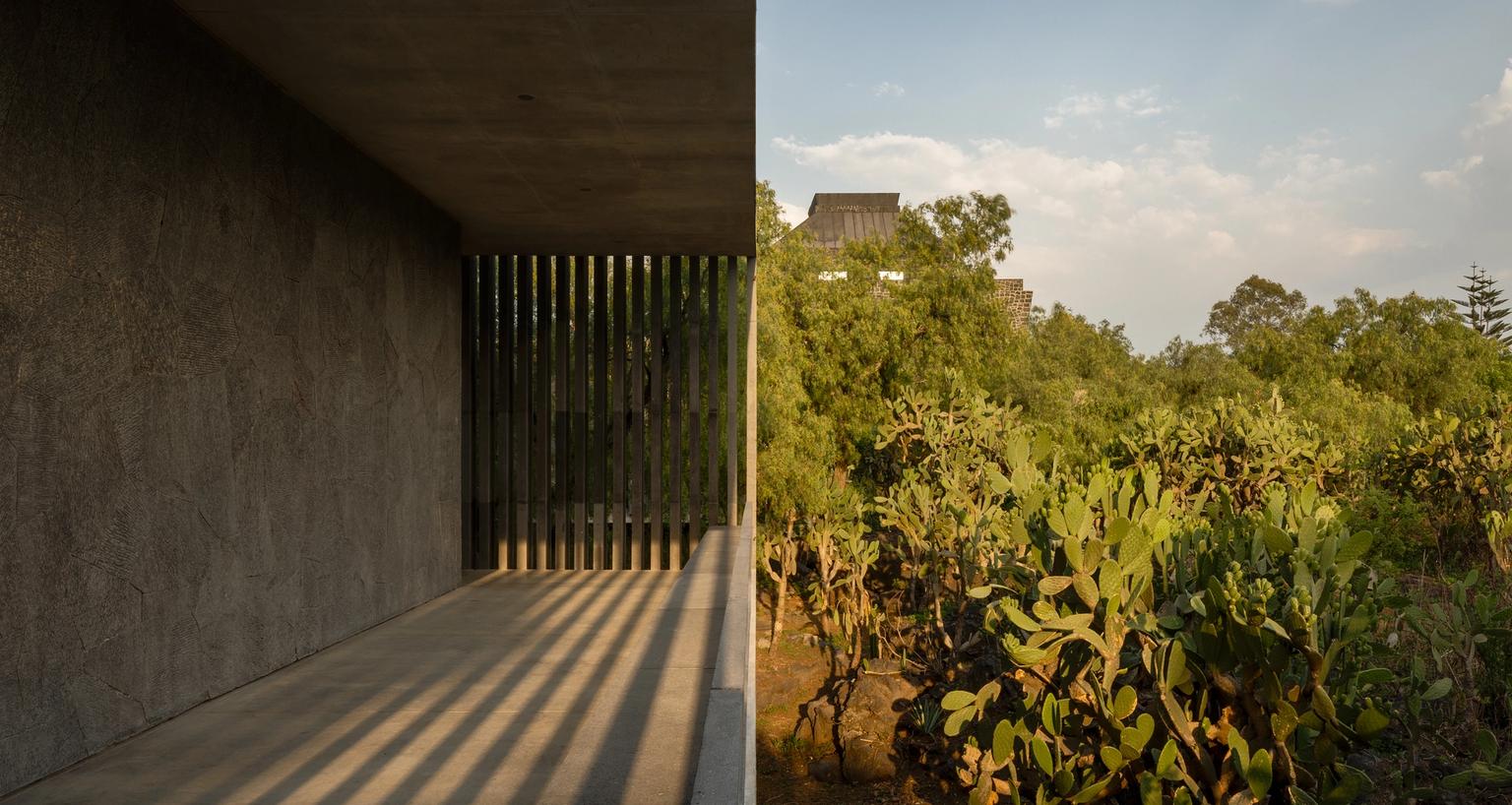
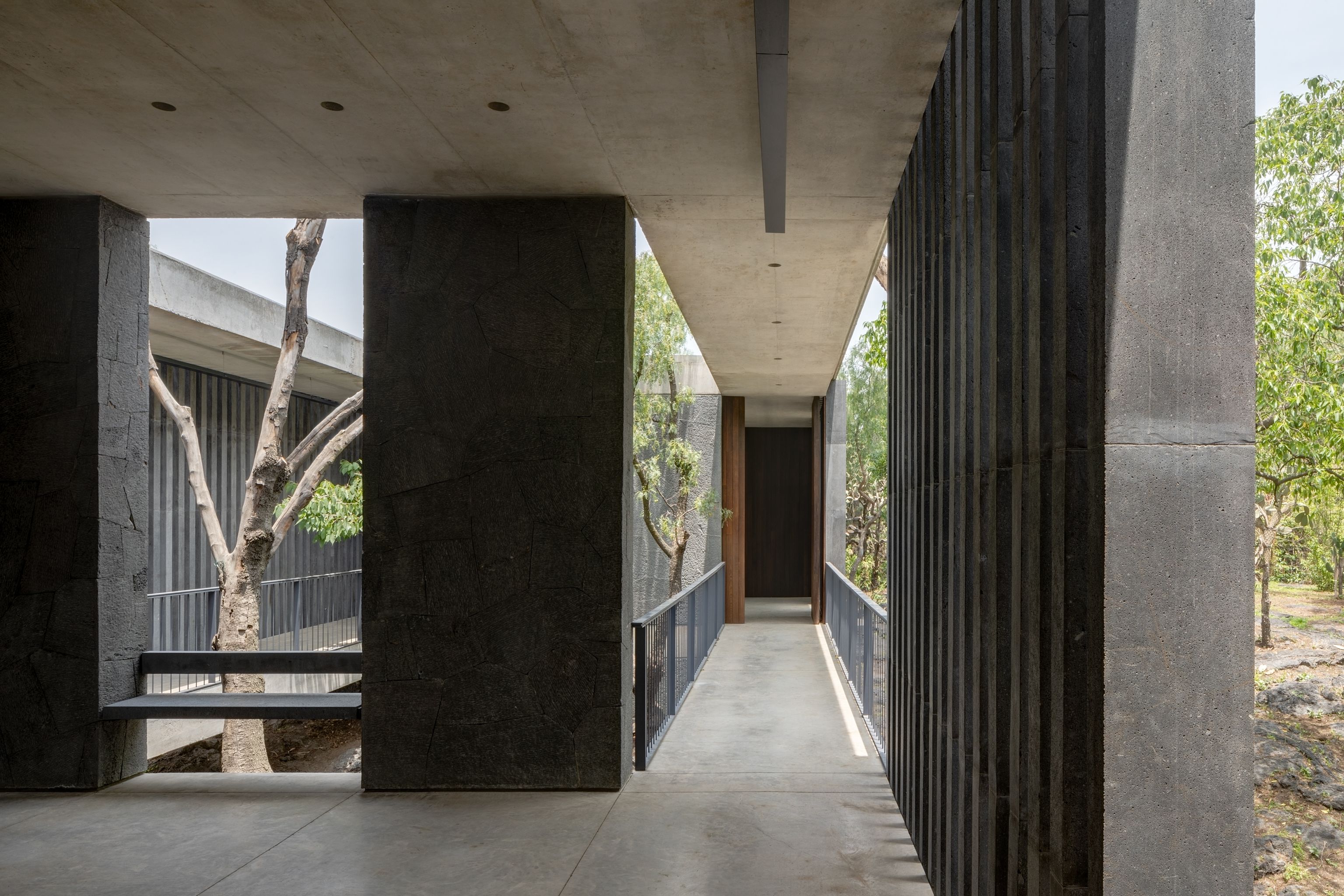
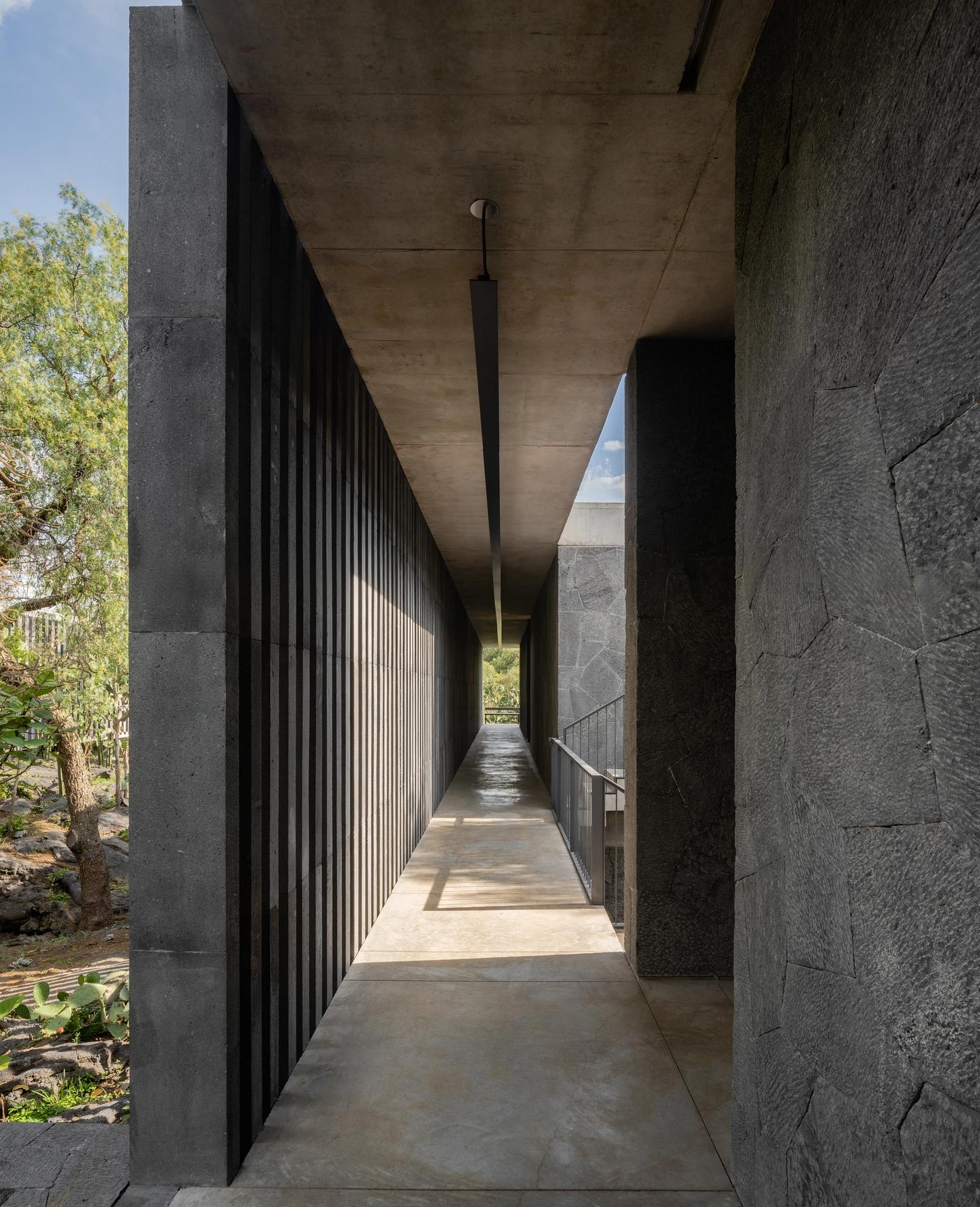
The museum’s continued evolution is shaped by the architectural work of Taller de Arquitectura Mauricio Rocha, founded by Mauricio Rocha Iturbide. The contemporary expansion does not seek to overwrite Rivera’s original temple-like structure but instead operates as a subtle spatial continuation of it. Rocha’s intervention introduces a series of low-lying pavilion volumes, walkways and service structures that hover gently above the volcanic rock terrain, reducing environmental impact while extending the museum’s functional and public capacity.
The design strategy emphasises architectural restraint: the new elements are conceived as connectors within a larger cultural landscape rather than as autonomous architectural statements. These additions accommodate storage, workshop spaces, administrative functions and artistic production areas, allowing the museum to respond to contemporary institutional demands while preserving the symbolic and spatial language established by Rivera.


Ecology and Cultural Community
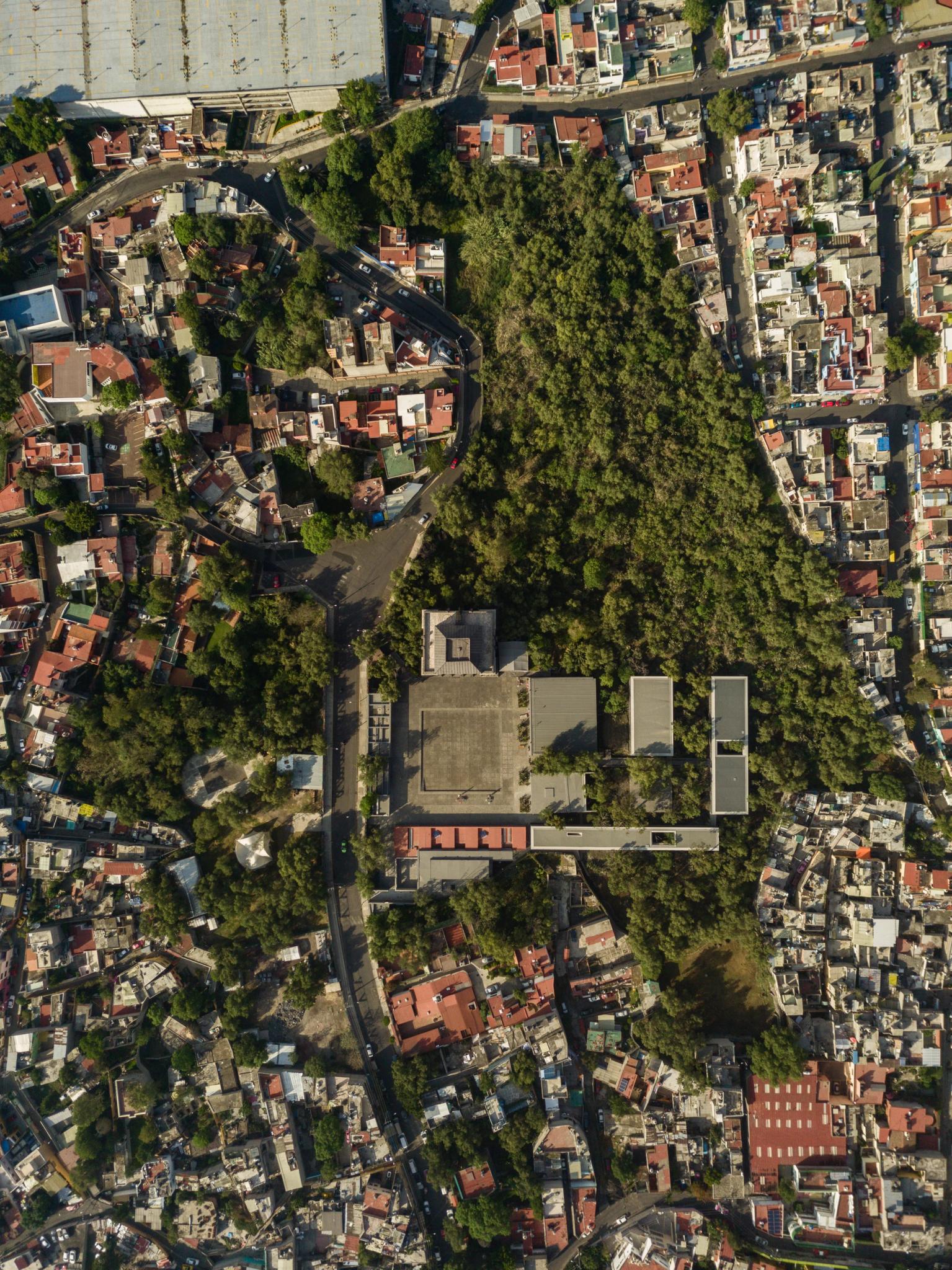
Rivera imagined Anahuacalli as the nucleus of a broader “ciudad de las artes”, a cultural ecosystem where artistic practice, education, and social life could coexist. Today the museum continues this ambition through multidisciplinary programming including theatre, dance, visual arts, traditional medicine, urban agriculture, and craft workshops. The surrounding ecological reserve, covering nearly four hectares, preserves endemic flora and fauna that evolved on volcanic soil, including rare species such as Pedregal begonia and native xerophytic vegetation.
The expansion by Rocha’s studio reinforces this vision by enabling the museum to operate as an open cultural infrastructure rather than a closed monumental object, supporting preservation, research, exhibition and creative education simultaneously within the volcanic landscape.