
Peter Märkli
Märkli Studio House – Rumisberg
- Architect Peter Märkli
- PhotographerHeinrich Helfenstein, Seraina Wirz, 2014
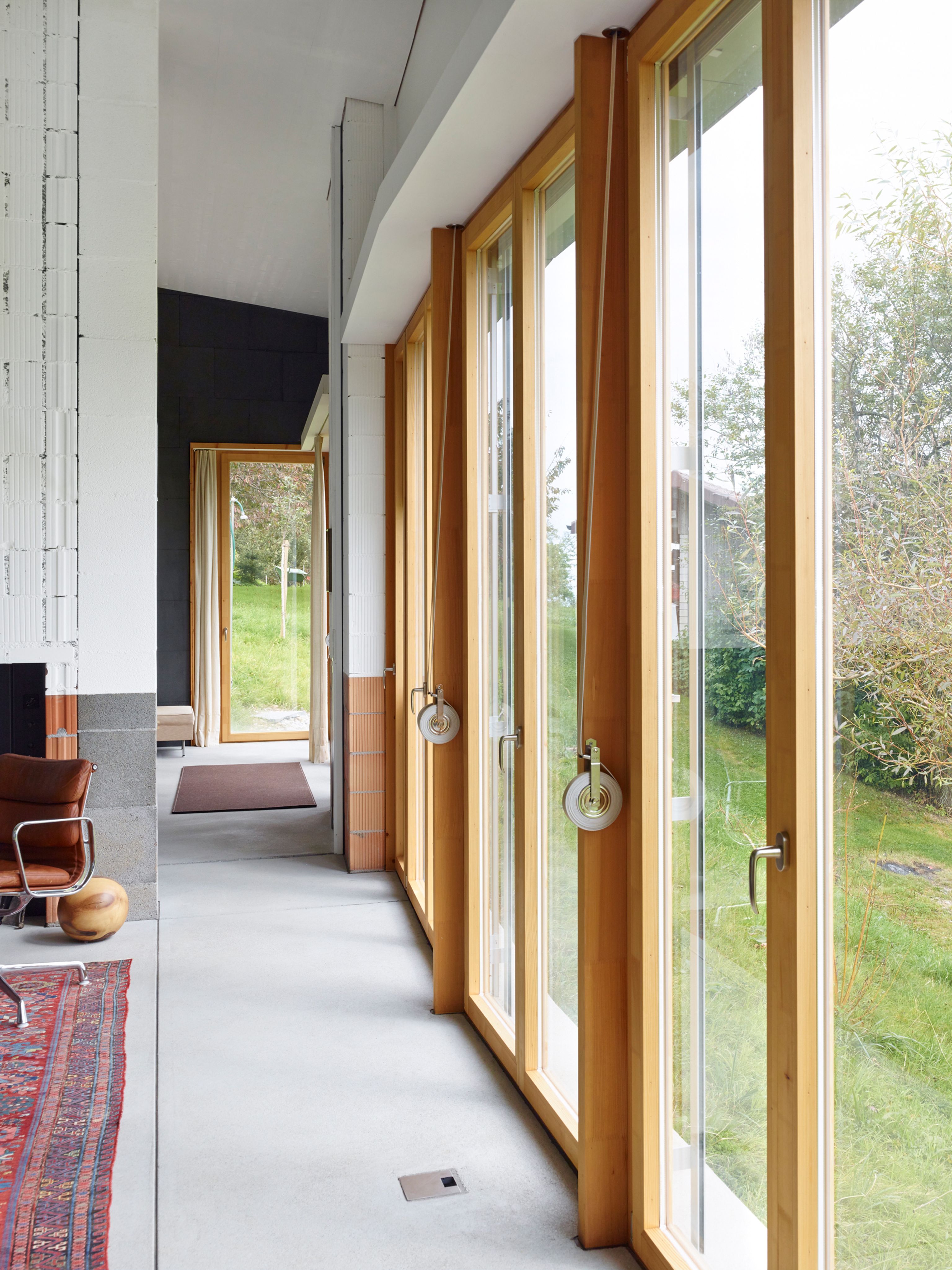
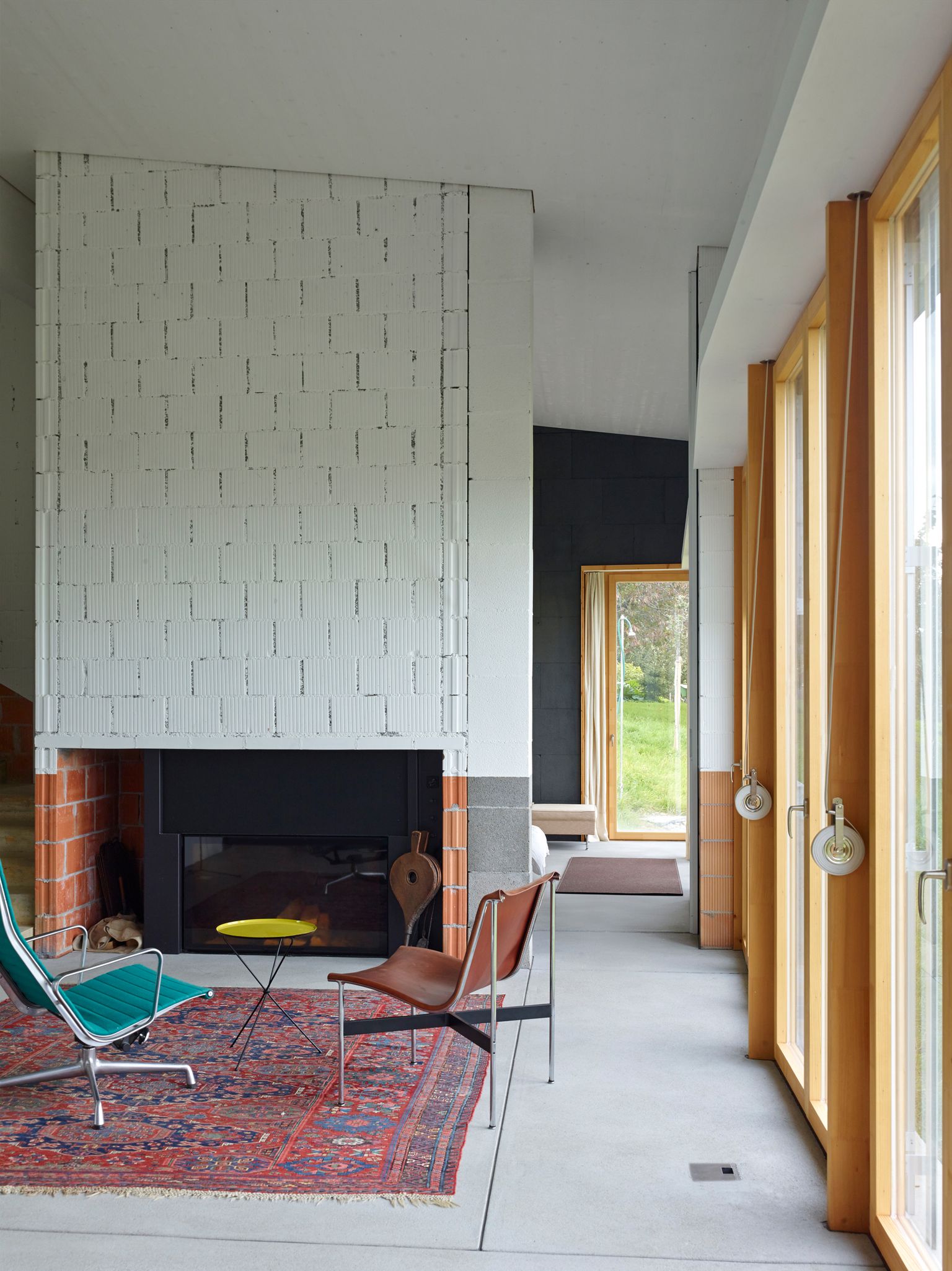
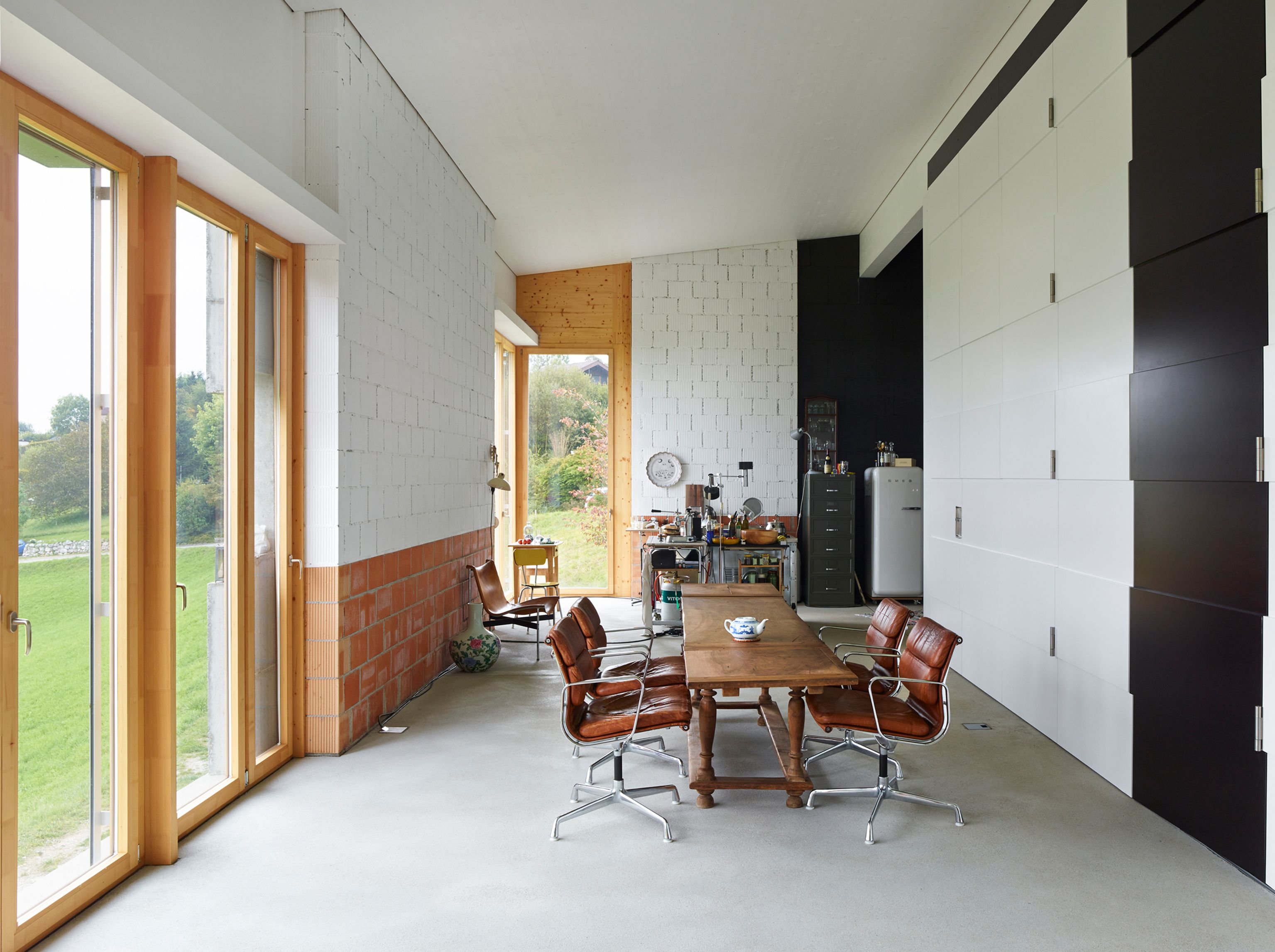
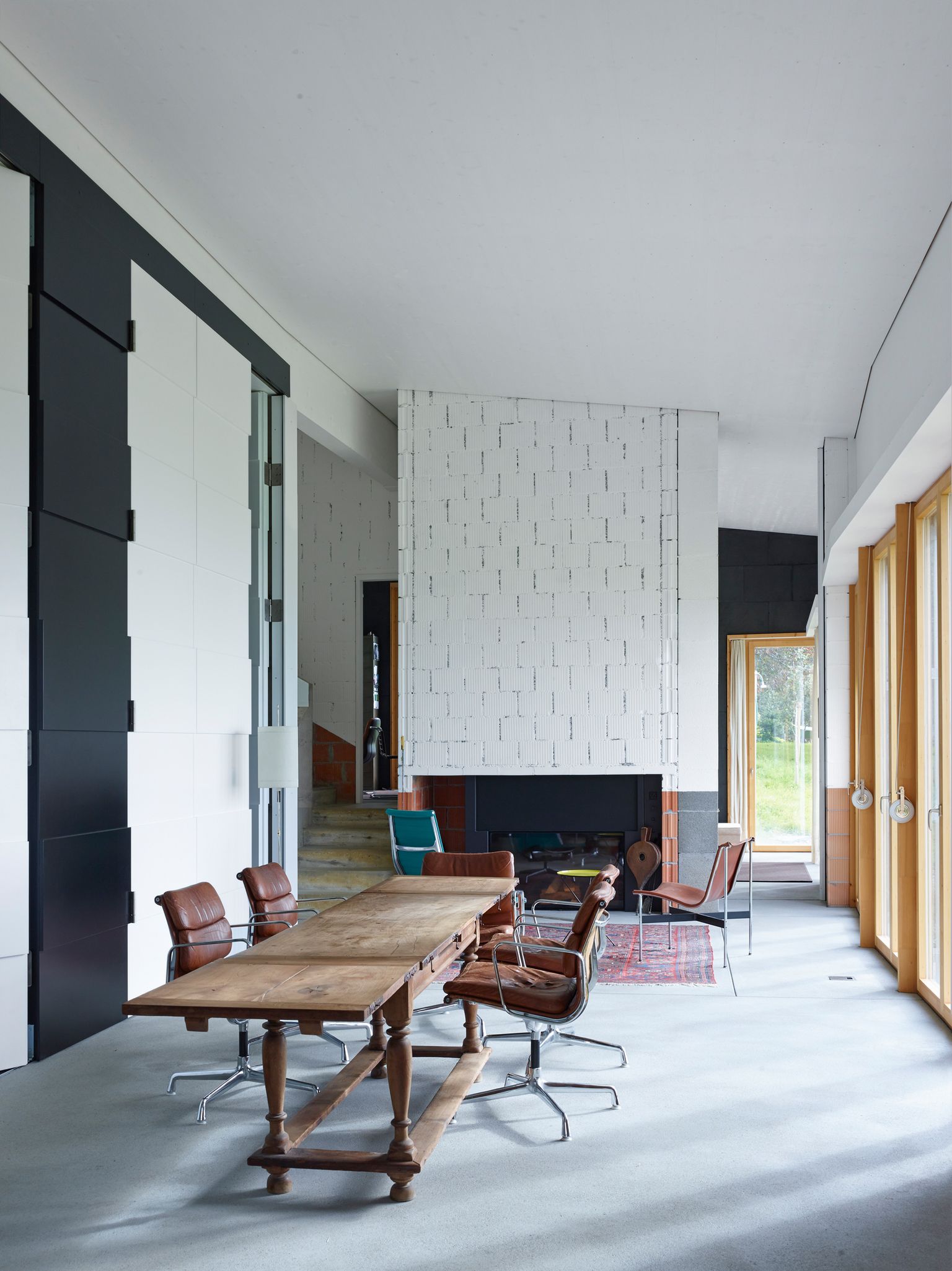
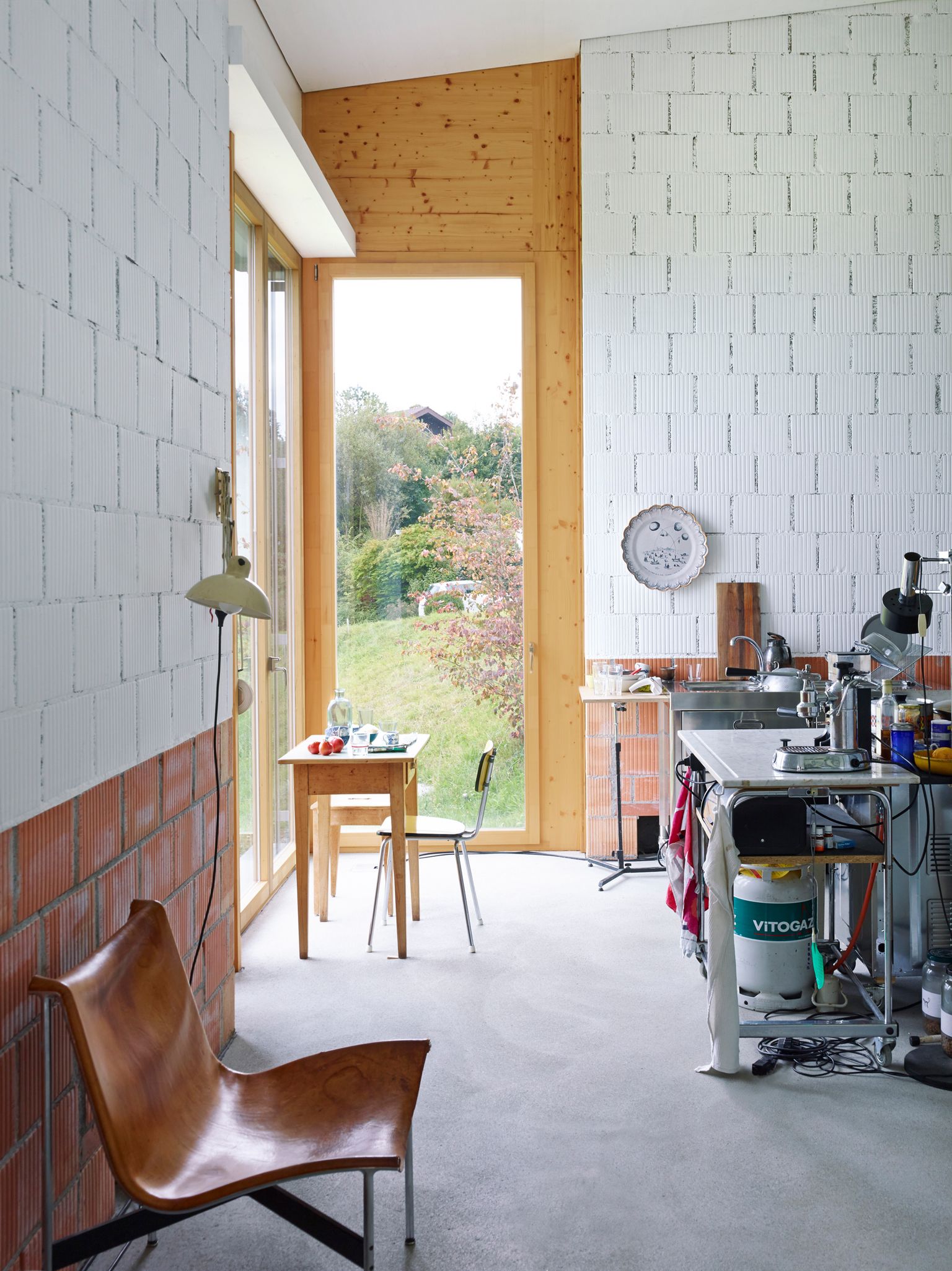
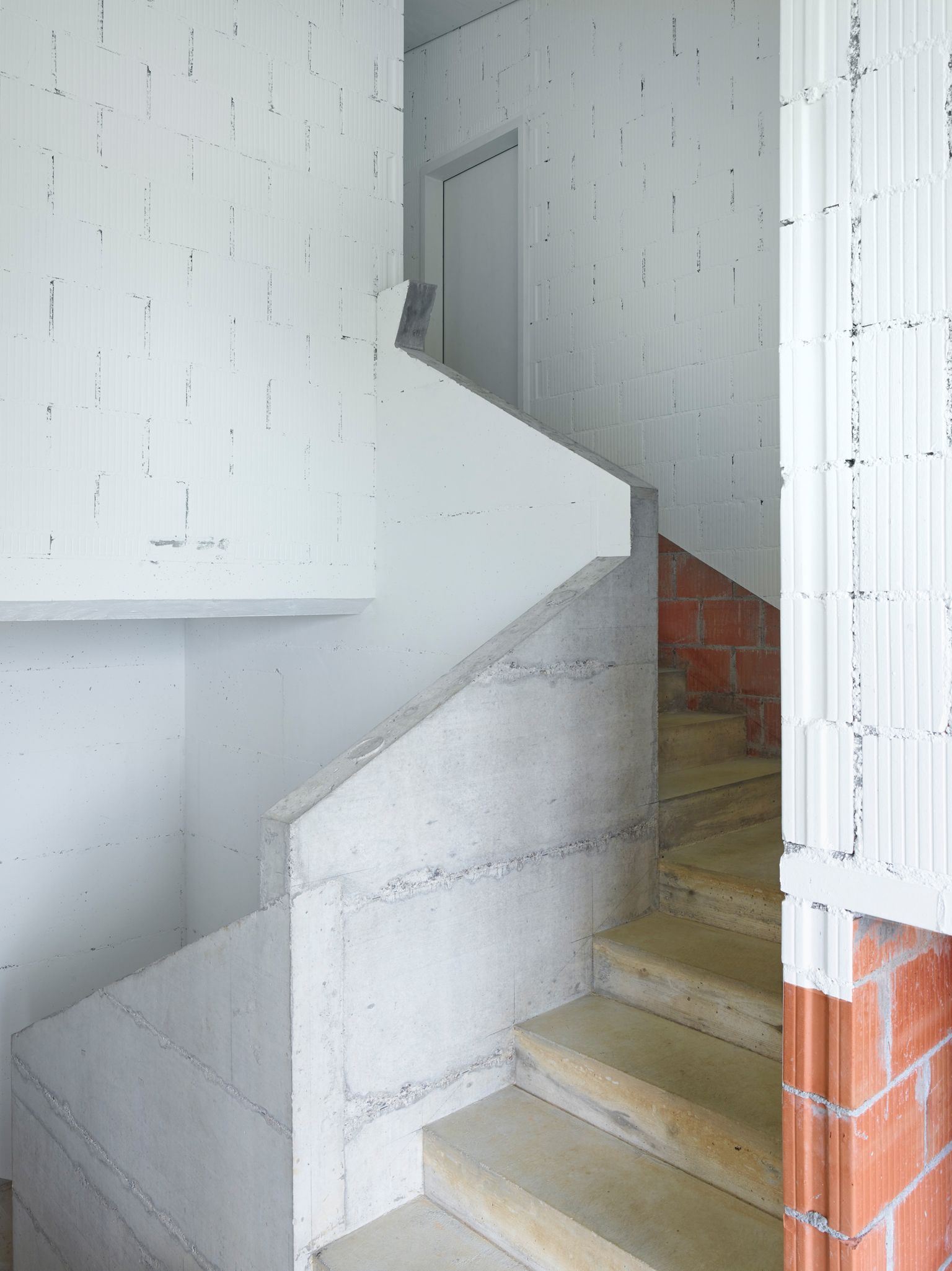
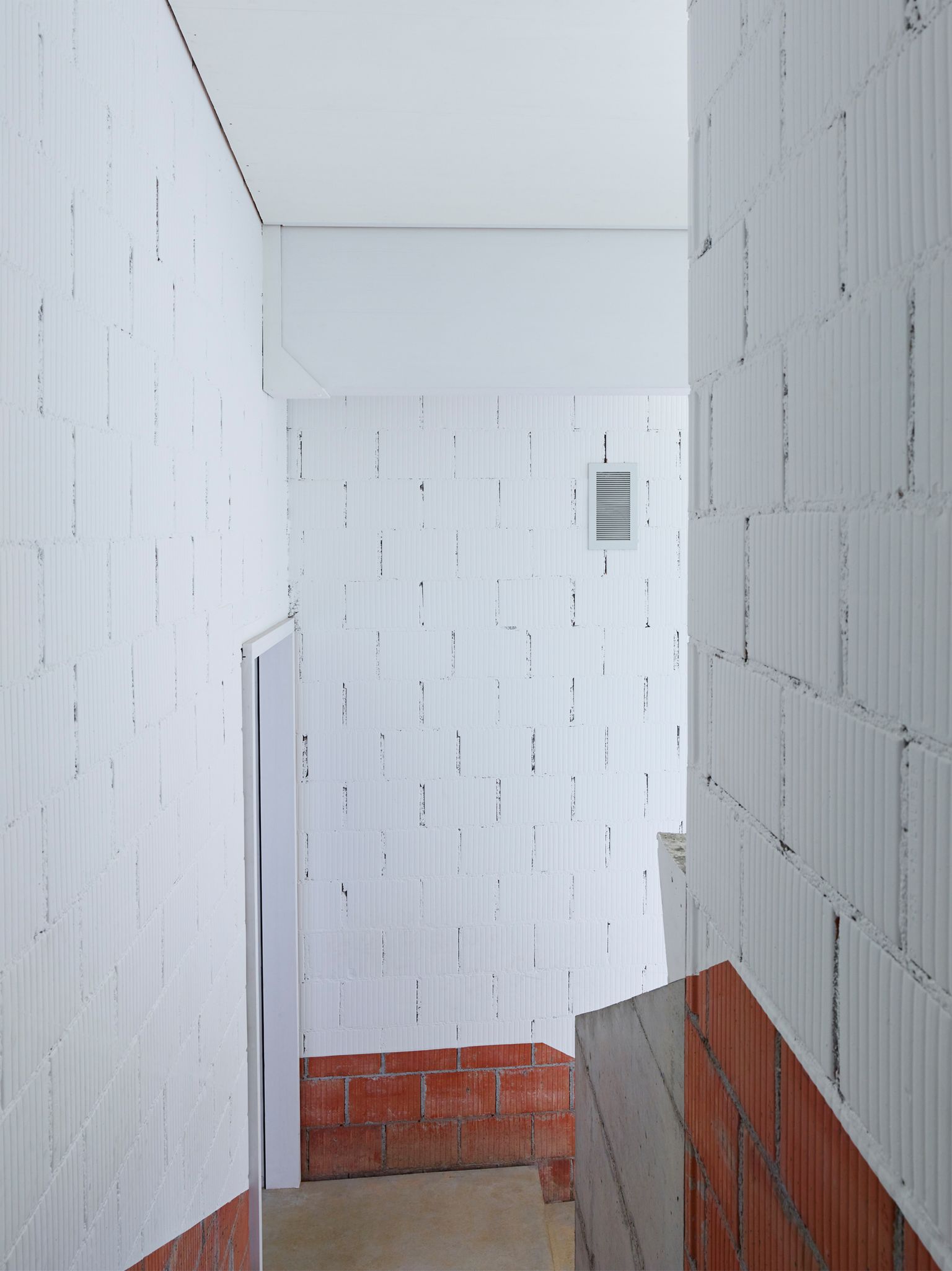
Praksis Arkitekter Peter Märkli’s Studio House is distinguished by its emphasis on materiality, where the tactile qualities of brick, concrete, and wood are carefully articulated. The walls and the staircase seem both heavy and light, flat and textured, simple and complex, ordinary and incredibly rich.

A House as a Way of Thinking
Peter Märkli’s Atelier Studio House in Rumisberg is not just a place to live and work, but a concentrated study in how architecture can frame perception. Designed by Swiss architect Peter Märkli, who established his practice Studio Märkli in 1978, the house continues his long-standing interest in proportion, history, and the emotional effects of space. Rather than treating the house as a simple residential object, Märkli approaches it as an instrument for seeing, an architectural lens that shapes how landscape, light, and interior life interact. The project reflects a broader architectural language that he has developed across works such as La Congiunta and Im Birch school, where clarity of structure and depth of perception are always more important than visual spectacle.

Framing the Landscape Like Cinema
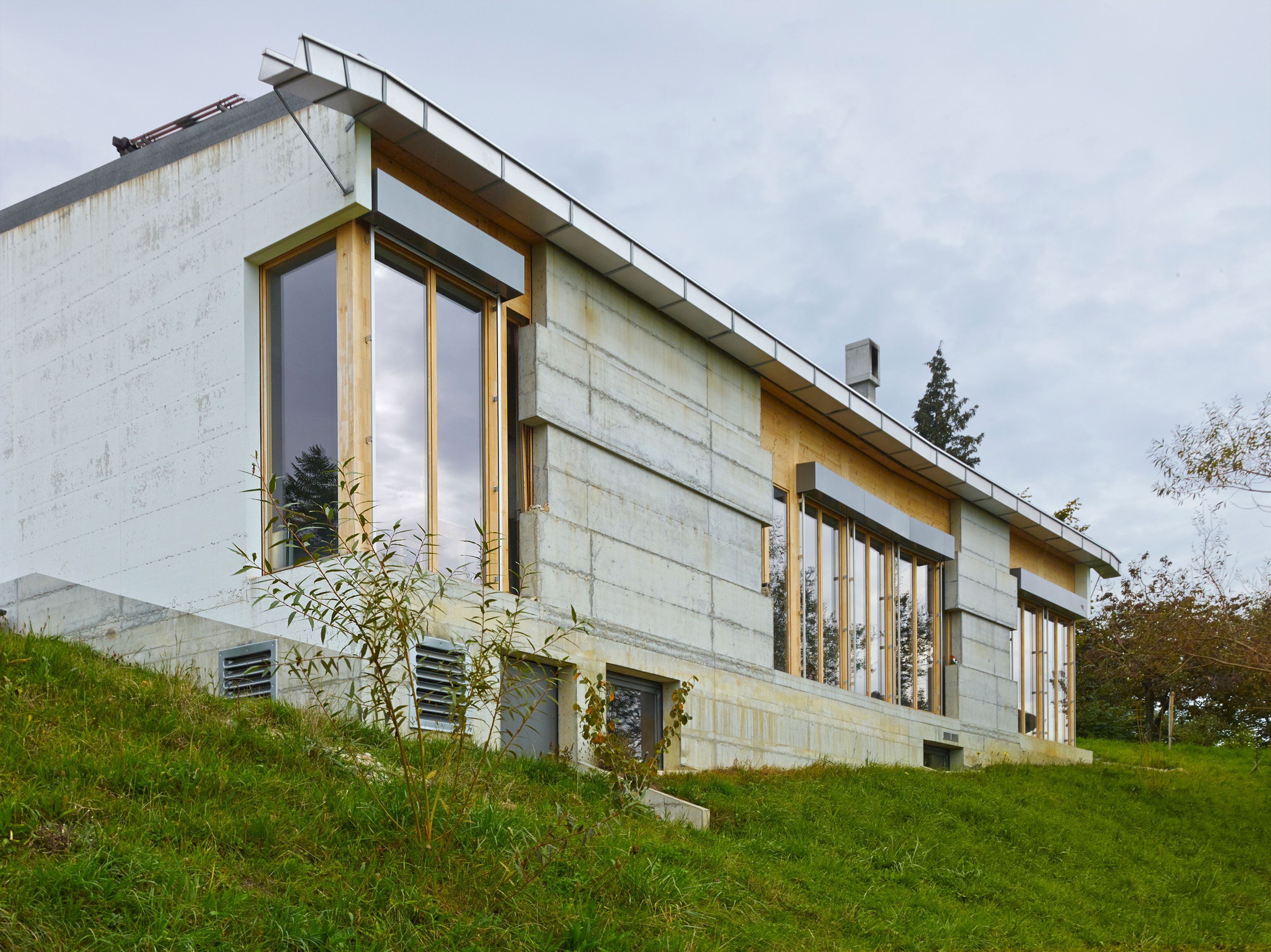
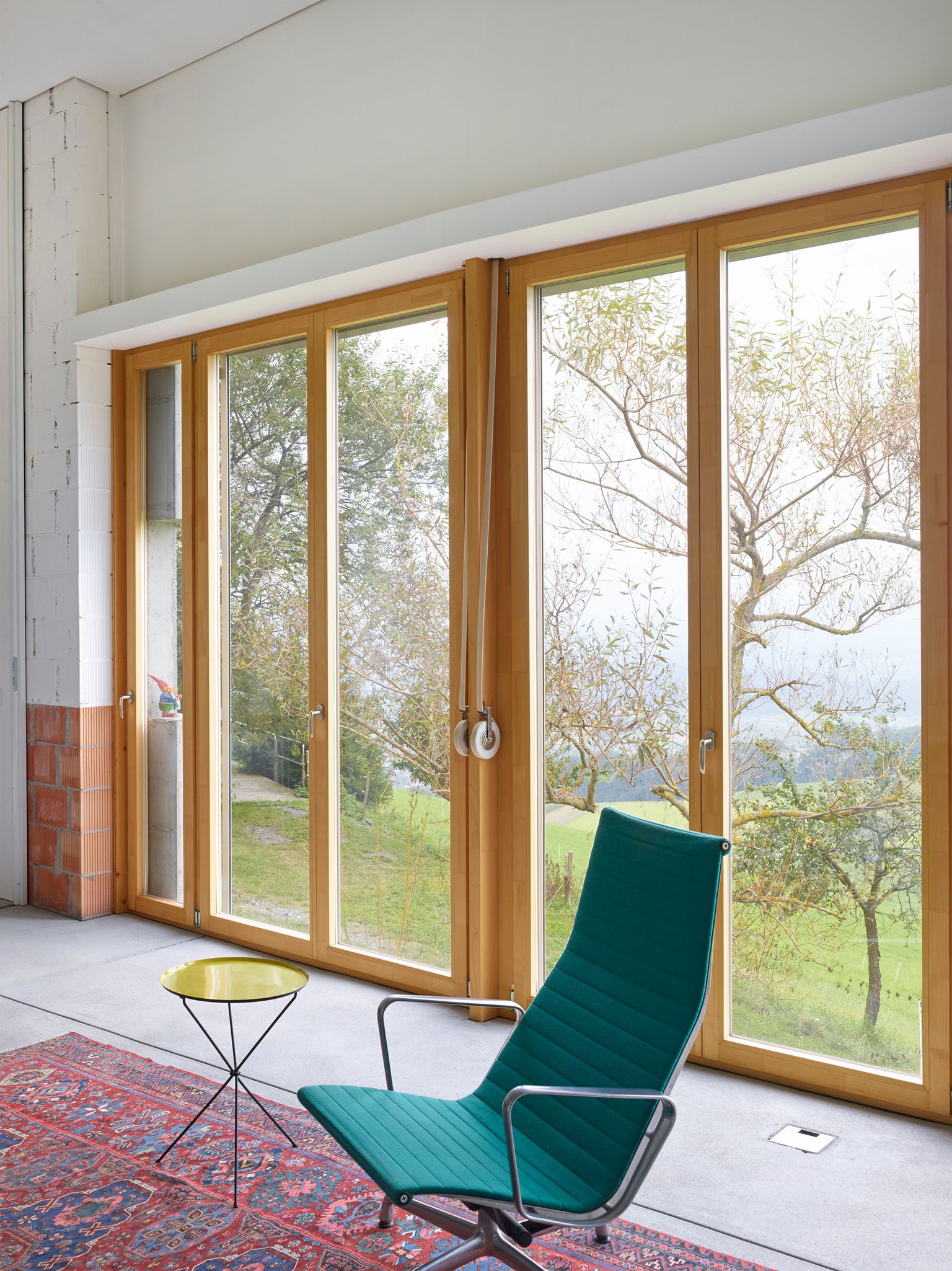
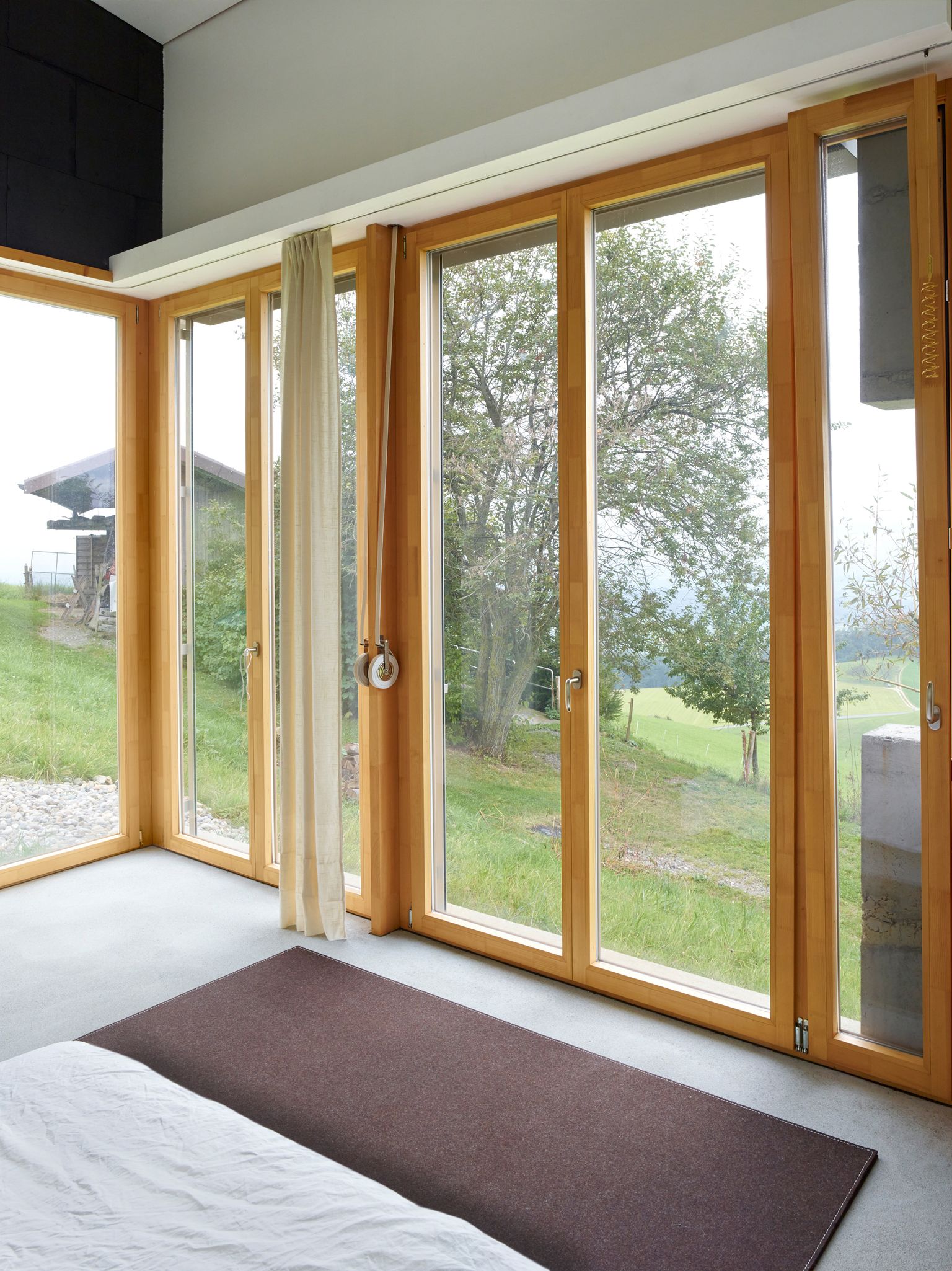
At the heart of the Märkli Studio House in Rumisberg is the main façade, where Märkli develops a careful tension between openness and control. Instead of creating a continuous glass wall that offers a single, fixed view, he deliberately breaks the façade into segments using piers and wall fragments. This allows the landscape to be experienced in layers, almost like cinematic cuts between scenes. The eye is guided rather than simply exposed, shifting between foreground and distance, between partial concealment and sudden openness. The effect is that the view is never consumed all at once; instead, it unfolds slowly, encouraging movement and attention. This approach reflects Märkli’s belief that architecture should not only show the world, but actively shape how it is seen.

Walls That Move Between Light and Shadow
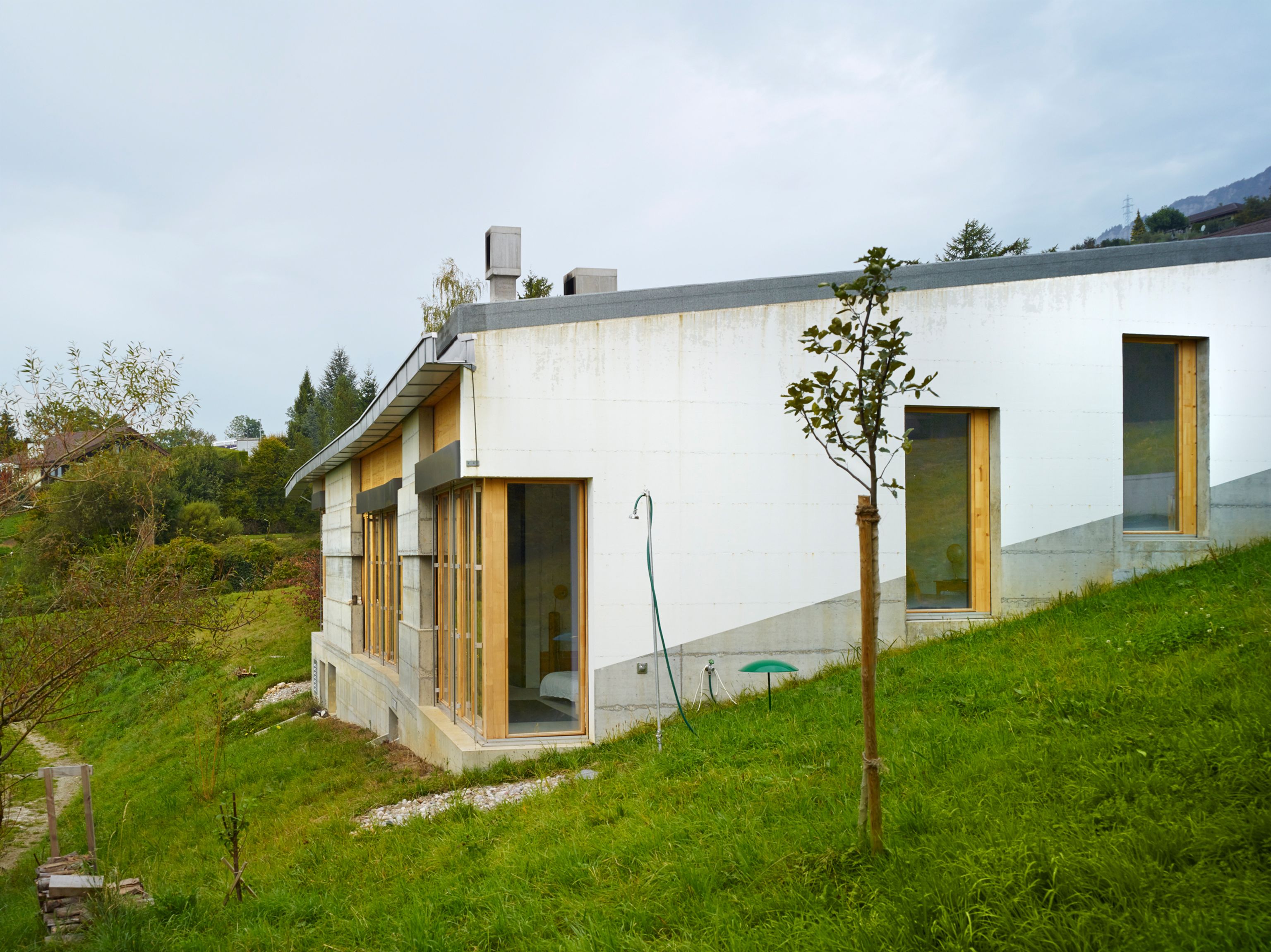
The remaining three sides of the house form a more enclosed system, anchoring the building into the sloped terrain. These walls are not neutral surfaces but carefully composed elements with a dark plinth that follows the land’s geometry, sometimes sinking low into the ground. This creates a strong layering effect, where black and white, light and shadow constantly shift depending on position and time of day. On the main façade, this becomes even more pronounced: projecting wall fragments catch the light and push it outward, while recessed areas withdraw into shadow. The result is not a flat architectural surface, but a deep spatial composition where the wall itself behaves almost like a landscape, changing character as you move along it.


The Intelligence of Construction
What appears visually poetic in The Studio House in Rumisberg is deeply rooted in architectural logic. Märkli does not treat construction as hidden infrastructure but as a visible language that defines experience. The thickness of walls, the rhythm of openings, and the positioning of structural elements all become tools for shaping perception. He often refers to the wall not as a simple boundary, but as something that can be cut, layered, and edited, much like a film sequence. In this sense, the house becomes a demonstration of how traditional architectural tools, when used consciously, can create complexity without relying on excess. Nothing is arbitrary; everything is part of a system that connects structure, atmosphere, and use.


A House Built From Architectural Memory
The Studio House in Rumisberg also reflects Märkli’s broader architectural education, shaped by Swiss building traditions, historical references, and mentors like Rudolf Olgiati. His work consistently draws from a long lineage of European construction methods, from rural farmhouses to classical urban systems, not as nostalgia but as working knowledge. In Rumisberg, this becomes visible in the way the house balances clarity and contradiction: solid yet open, heavy yet luminous, rational yet perceptually fluid. The project sits between past and present, showing how architectural memory can be reworked rather than repeated. It is not about inventing new forms for their own sake, but about reactivating known elements in ways that feel immediate and alive.


Architecture as Controlled Freedom
What ultimately defines The Studio House in Rumisberg is its sense of controlled freedom. Märkli does not design for spectacle or instant recognition, but for sustained attention over time. The house invites you to slow down your perception, to notice how light shifts across a wall or how a view changes depending on where you stand. In this way, it becomes a working environment that constantly refines the act of looking. Like much of his work, it resists simplicity while remaining legible, offering not a single idea of architecture, but a system of relations between space, body, and landscape that continues to unfold the longer you spend with it.