
Le Corbusier
Neelam Cinema
- ArchitectAditya Prakash, Le Corbusier and Pierre Jeanneret
- PhotographerEdmund Sumner
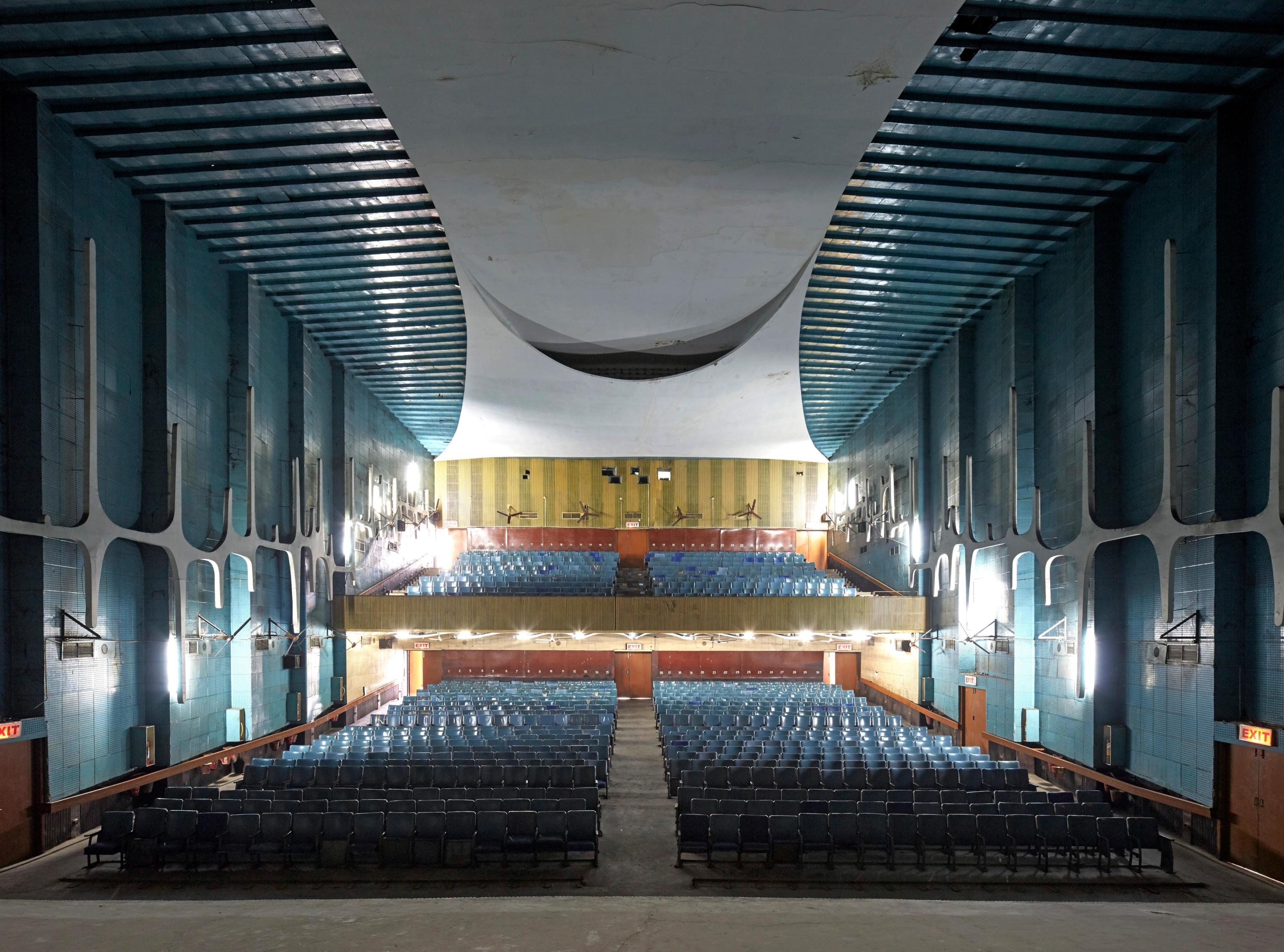
Eleni Petaloti What I love about Neelam Cinema is the collision between civic modernism and popular culture. The interiors carry Corbusier’s unmistakable formal rigor, yet they were designed for collective entertainment and spectacle. There’s a rawness and honesty to the material palette that feels incredibly relevant today.

A Modernist Heartbeat
In the middle of Chandigarh’s Sector 17, the commercial and social center of the city, sits Neelam Cinema, a building that quietly captures the spirit of post-independence India. Built in the early 1950s as part of Le Corbusier’s master plan for Chandigarh, the cinema was imagined not simply as a place to watch films, but as a civic space where modern life could unfold. At a time when India was shaping a new national identity after independence, Chandigarh became a symbol of progress, and Neelam Cinema became one of the places where that vision felt human and alive. While Le Corbusier focused heavily on monumental government buildings, it was spaces like Neelam that truly connected with everyday people. Even today, with Bollywood films still screening inside its walls, the building feels less like a preserved museum piece and more like a living fragment of modernist history.
The Architects
Although Neelam Cinema is closely tied to Le Corbusier’s Chandigarh, the building itself was designed by Indian architect Aditya Prakash under the guidance of Le Corbusier and Pierre Jeanneret. That distinction matters. Prakash was one of the young Indian architects working alongside the European modernists during the creation of Chandigarh, and his work brought a different sensitivity to the city’s architecture. He absorbed Le Corbusier’s strict modernist language – geometry, functionality, exposed materials – but translated it into something more emotional and culturally rooted.
Prakash was deeply interested in acoustics, movement, and the relationship between structure and atmosphere. His cinemas became spaces where technical precision met artistic freedom. Neelam reflects that balance perfectly: rigorous on the outside, expressive on the inside. It also represents a larger story about collaboration during Chandigarh’s creation, where Indian architects were not simply assistants to a European vision, but active contributors shaping the identity of a new city.

A Box With a Pulse
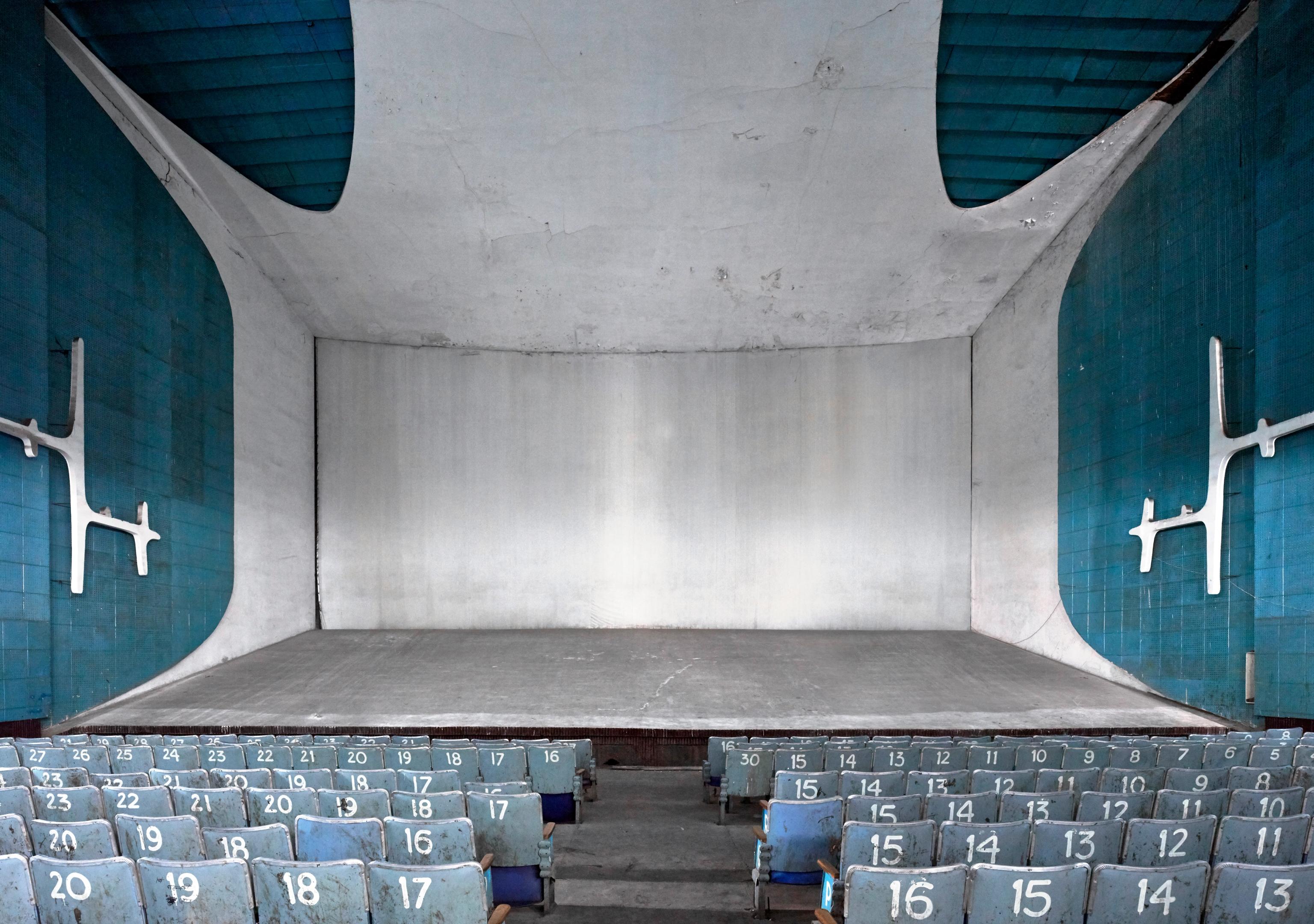
From the outside, Neelam Cinema feels restrained and almost severe. Two massive brick walls frame the structure, while a dramatic curved form rises above the entrance like a frozen sound wave. The building carries the discipline of modernism: clean geometry, exposed materials, no unnecessary decoration. But the simplicity is deceptive. That curved roofline was designed as part of the theater’s acoustic logic, extending the movement of sound through the architecture itself. Inside, the atmosphere changes completely.
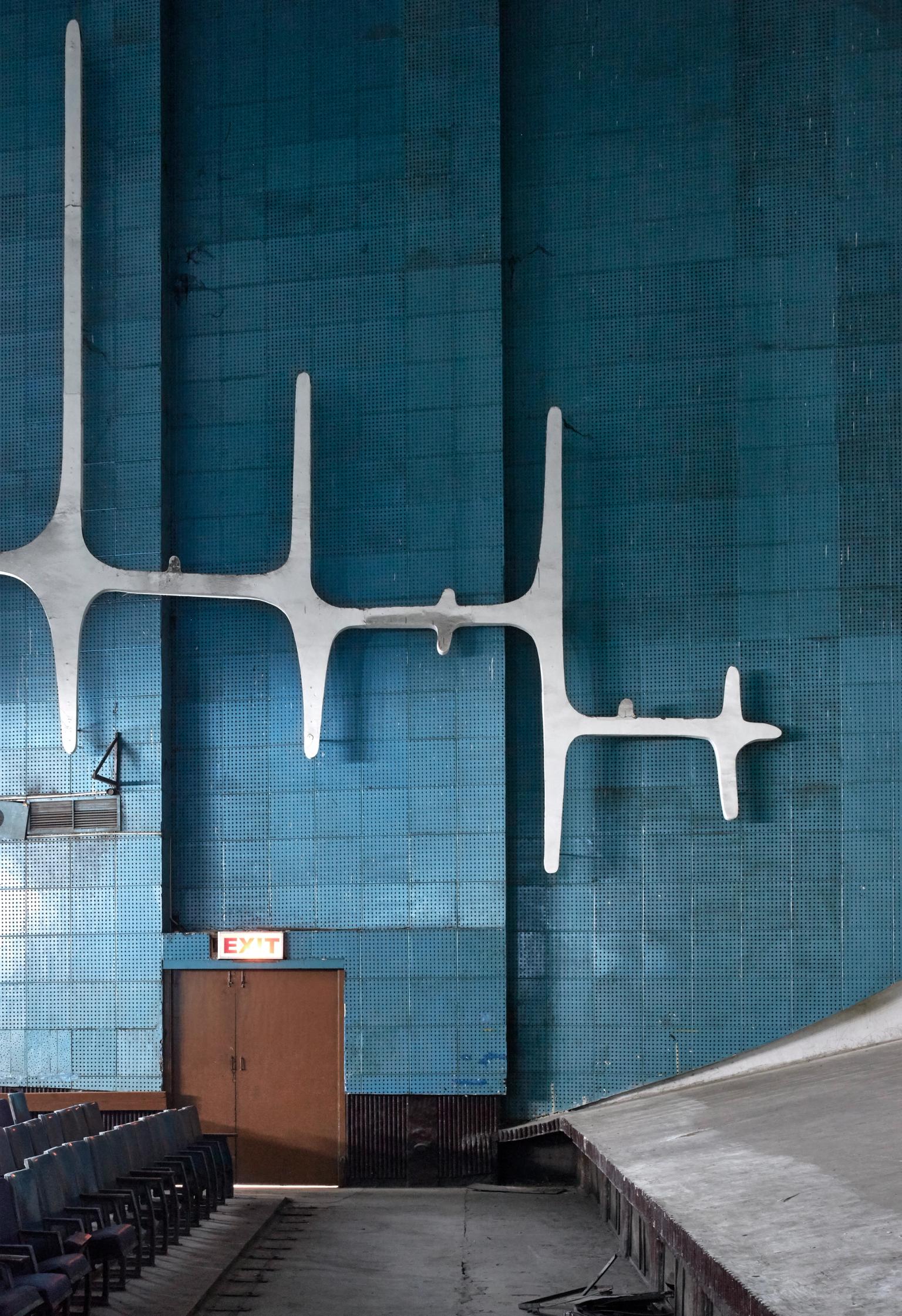
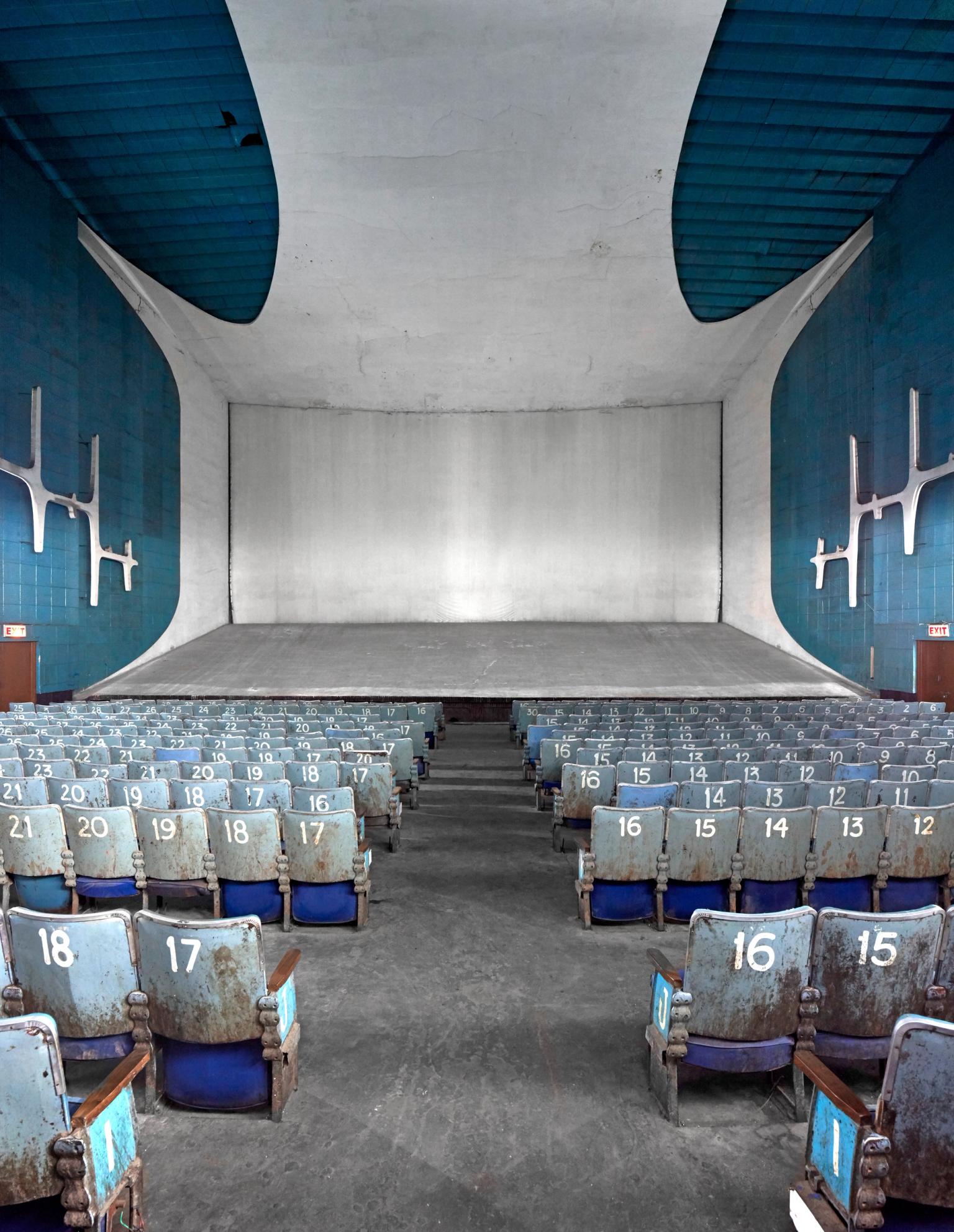
The auditorium opens into a deep world of blue tiles, sculptural surfaces, and metallic details shaped like sound waves running along the walls. Everything feels immersive, almost cinematic before the film even begins. The 960-seat hall transforms modernism into something sensual and emotional, showing how architecture can shape feeling as much as function. It is this contrast, the controlled exterior against the expressive interior, that makes Neelam Cinema feel so distinctive within Le Corbusier’s broader vision for Chandigarh.

Chandigarh’s Cultural Soul
What makes Neelam Cinema especially important is its place within the life of Chandigarh itself. While the Capitol Complex designed by Le Corbusier became the city’s architectural symbol internationally, Sector 17 became its emotional center locally. This was where people gathered, met friends, watched films, and experienced the energy of public life. Neelam stood at the center of that rhythm. In many ways, the cinema reveals something often forgotten about modernist planning: cities are remembered less for their monumental government buildings and more for the spaces where ordinary people create memories. The theater’s continuing existence gives Chandigarh a sense of continuity between past and present. Decades after its opening, the building still functions as intended, carrying traces of different generations who have passed through it. That endurance gives Neelam a warmth that many modernist buildings struggle to maintain.

Edmund Sumner’s Lens
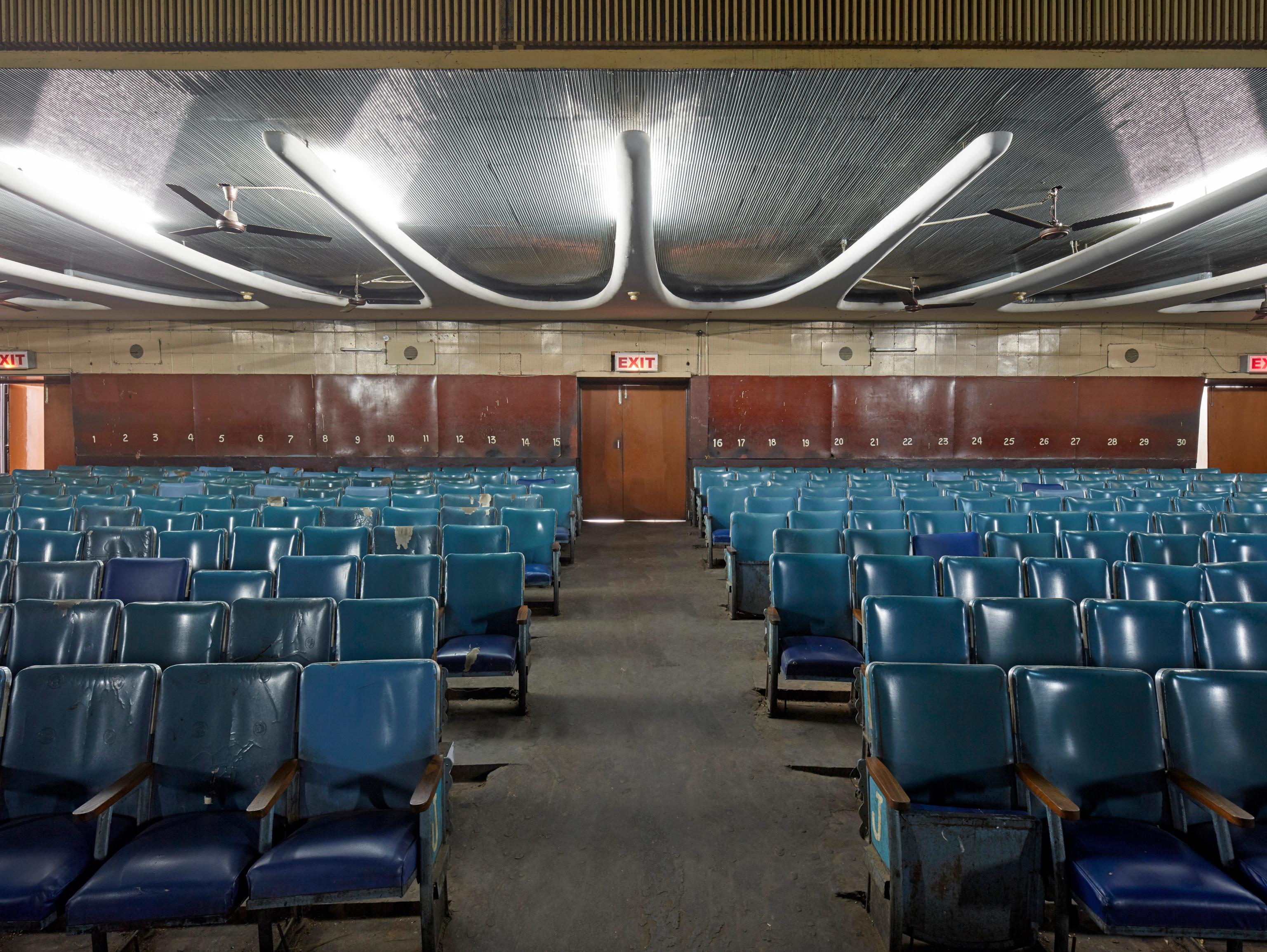
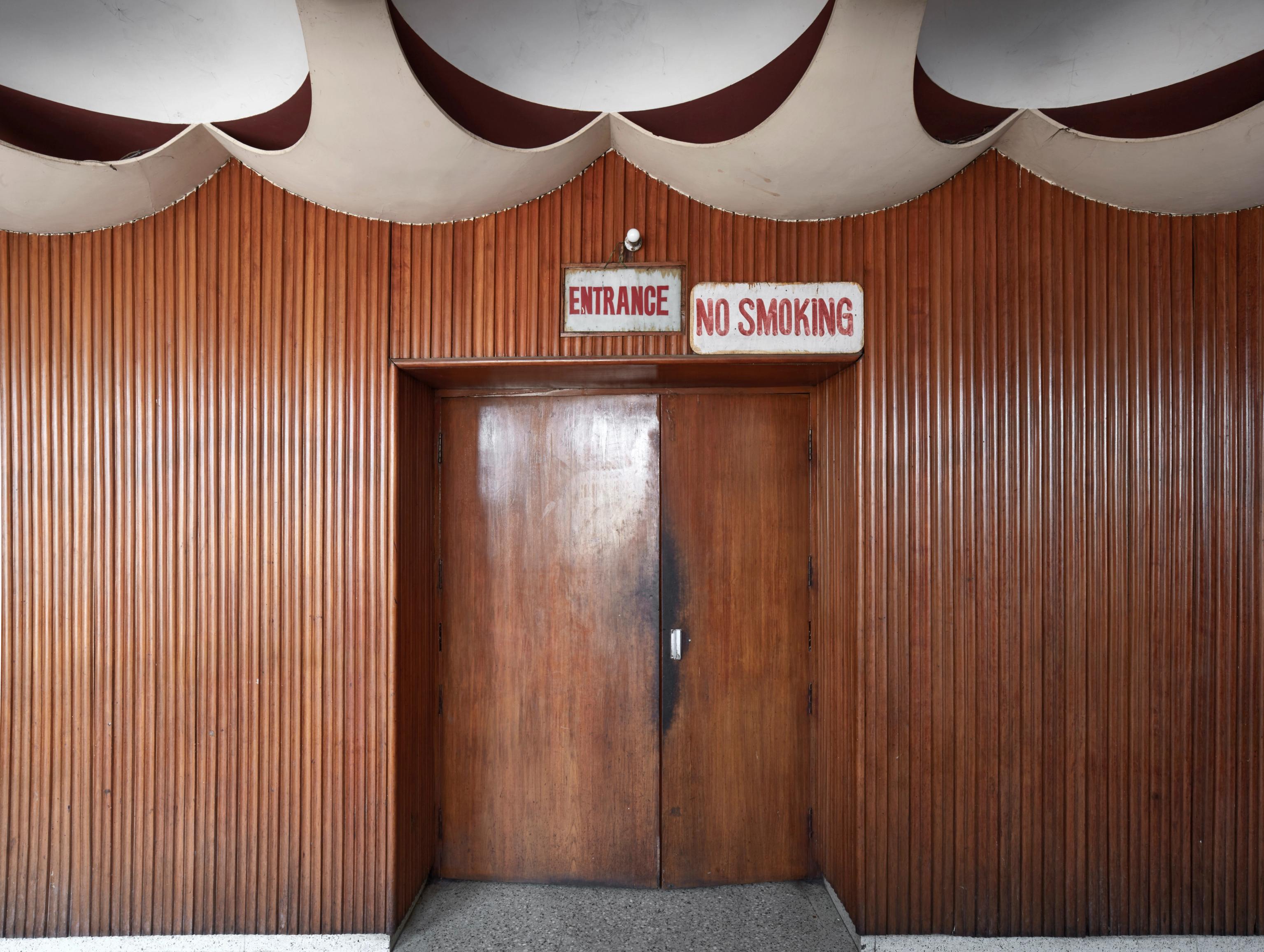
Part of Neelam Cinema’s recent resurgence in global architectural conversations comes through the photographs of British photographer Edmund Sumner. His images capture the building not as a pristine monument, but as a living space worn beautifully by time. Sumner photographed the cinema between film screenings, racing against the short pauses between Bollywood showings to document the interiors while they briefly emptied. His photographs highlight faded textures, aging blue tiles, soft light, and the strange stillness that exists inside old cinemas.
Rather than romanticizing decay, the images reveal how much atmosphere the building still holds. Through Sumner’s lens, Neelam feels suspended between eras, part futuristic dream, part historical memory. The photography also helped remind audiences outside India that some of modernism’s most powerful spaces exist far beyond Europe’s canonical landmarks.

An Uncertain Future
Despite its cultural and architectural importance, Neelam Cinema remains vulnerable. Unlike parts of Chandigarh that received UNESCO World Heritage recognition through Le Corbusier’s work, the theater itself is unprotected. That uncertainty hangs heavily over the building’s story, especially after the demolition of other cinemas designed by Aditya Prakash. Large single-screen theaters have become economically difficult to maintain, and many have been replaced by multiplex developments. Neelam survives in a fragile space between preservation and redevelopment. Yet that tension also makes the building feel incredibly relevant today. It represents more than a cinema or a modernist object, it stands for a disappearing idea of collective public space, where architecture, film, culture, and city life all merged together. Neelam Cinema shows that modernism was never only about concrete and grids. At its best, it is about imagining how people can live, gather, and dream together in a new world.