
Nikos Tsepetis and Michael Anastassiades
Red Jane
- DesignerNikos Tsepetis and Michael Anastassiades
- PhotographerHeidi Lerkenfeldt
MARIE-LOUISE HØSTBO A great collaboration between Nikos and Michael, and great products! (Nikos also owns Ammos Hotel, which is worth a visit, when staying on Crete)

A Bakery Hidden in Plain Sight
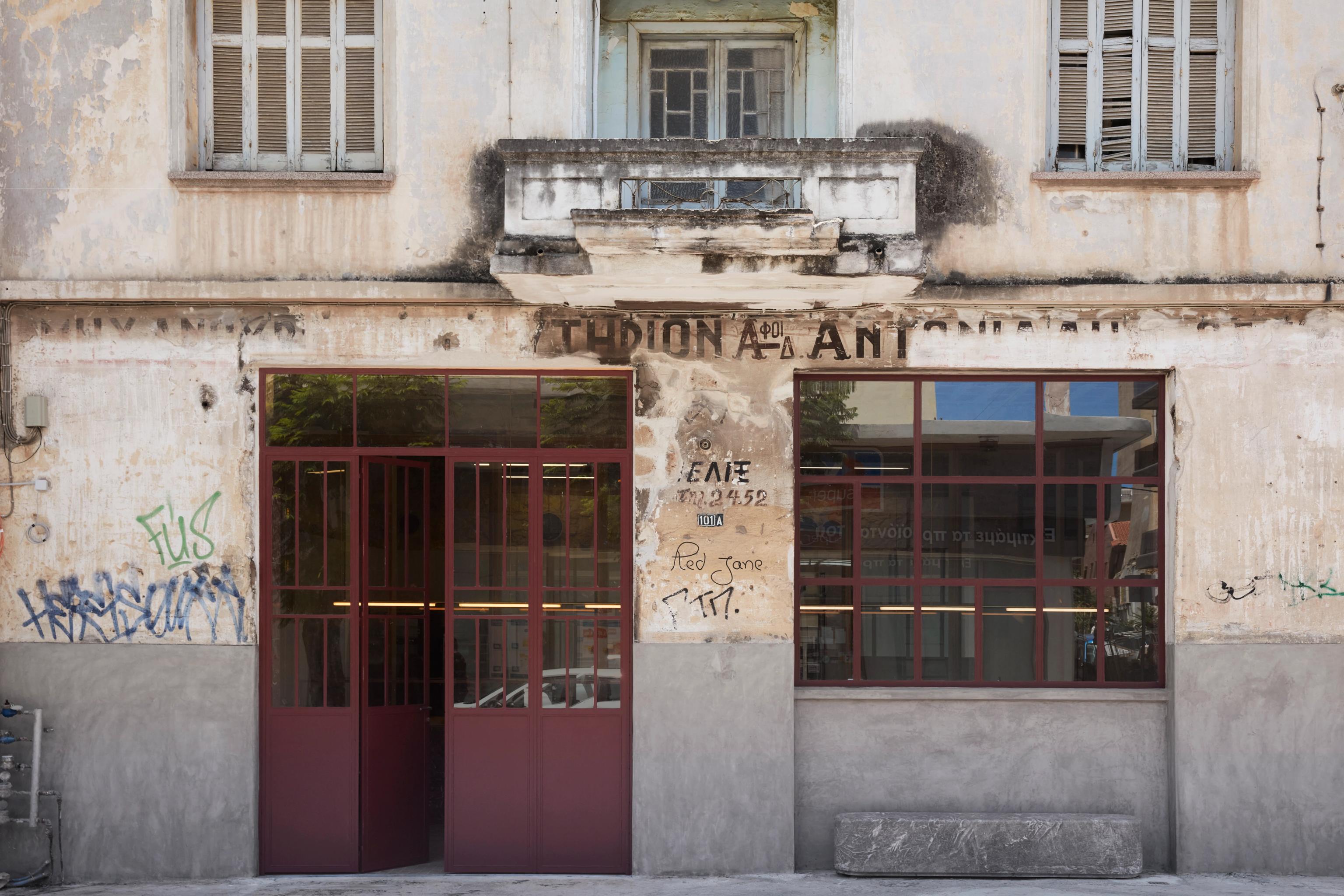
On a street in the centre of Chania, Crete, Red Jane is easy to miss. There is no polished sign announcing its presence, no obvious gesture designed to lure tourists inside. Instead, the name is handwritten onto the weathered concrete facade of a former foundry, its surface still marked by graffiti and the traces of another life. Behind it, however, is one of the most distinctive new spaces on the island.
Red Jane was created by Cretan hotelier, photographer and design enthusiast Nikos Tsepetis, the man behind the celebrated Ammos Hotel. For Tsepetis, the bakery was never simply a business venture. The idea had been in his head for years, long before he knew exactly what it would become. He knew only that, one day, he wanted to make something with the same attention to detail, character and sense of discovery that had shaped his work in hospitality.
The opportunity arrived in the form of an abandoned industrial building dating from the 1930s. Rather than erase its history, Tsepetis decided to work with it. The old foundry became the starting point for a project that would bring together bread, architecture, material and design.


From Foundry to Bakery
For the transformation, Tsepetis turned to Michael Anastassiades, the London based Cypriot designer known internationally for his lighting and furniture. Red Jane would become his first fully realised interior project, giving him the opportunity to approach the space as a complete environment rather than as a collection of individual objects or lighting elements.
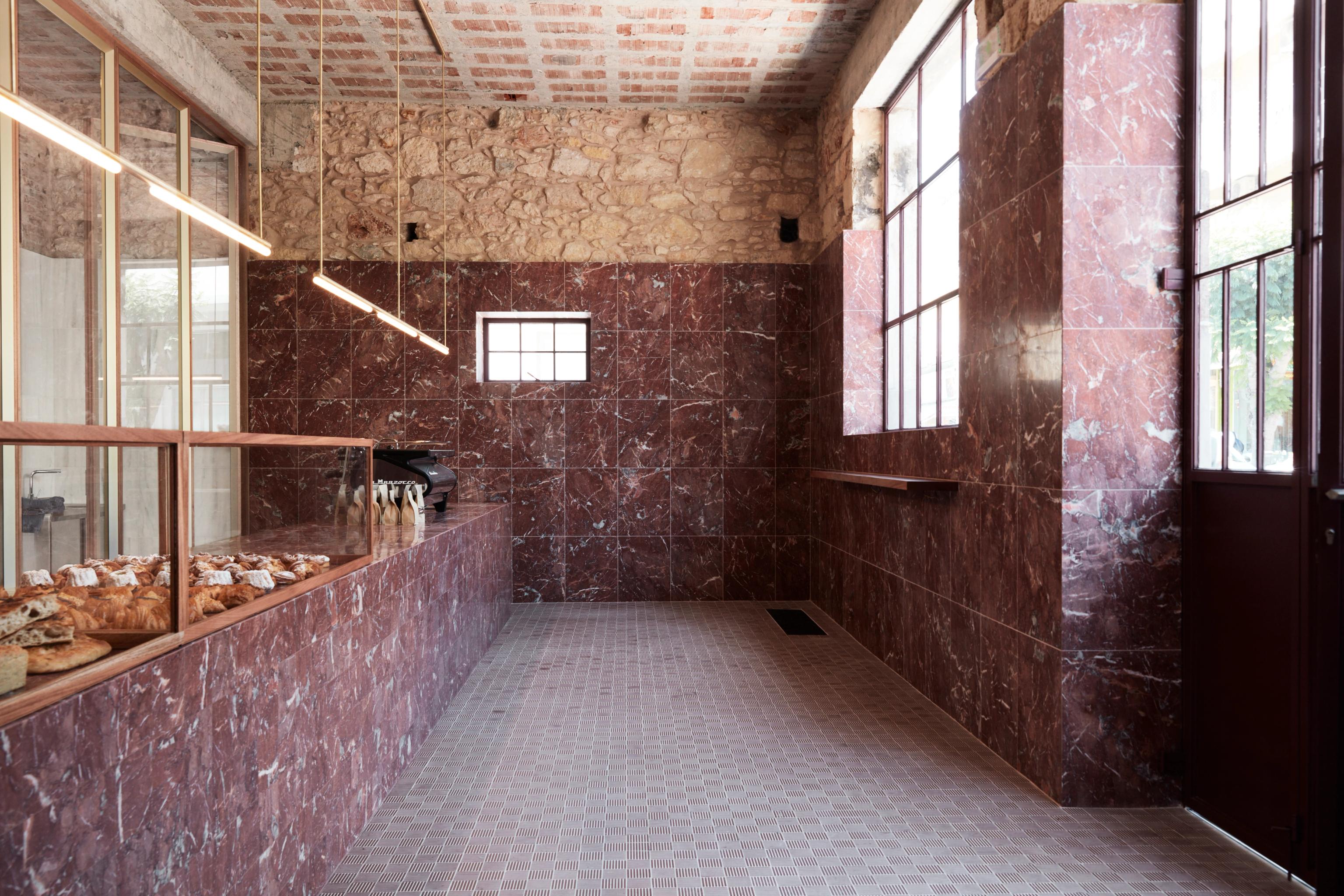
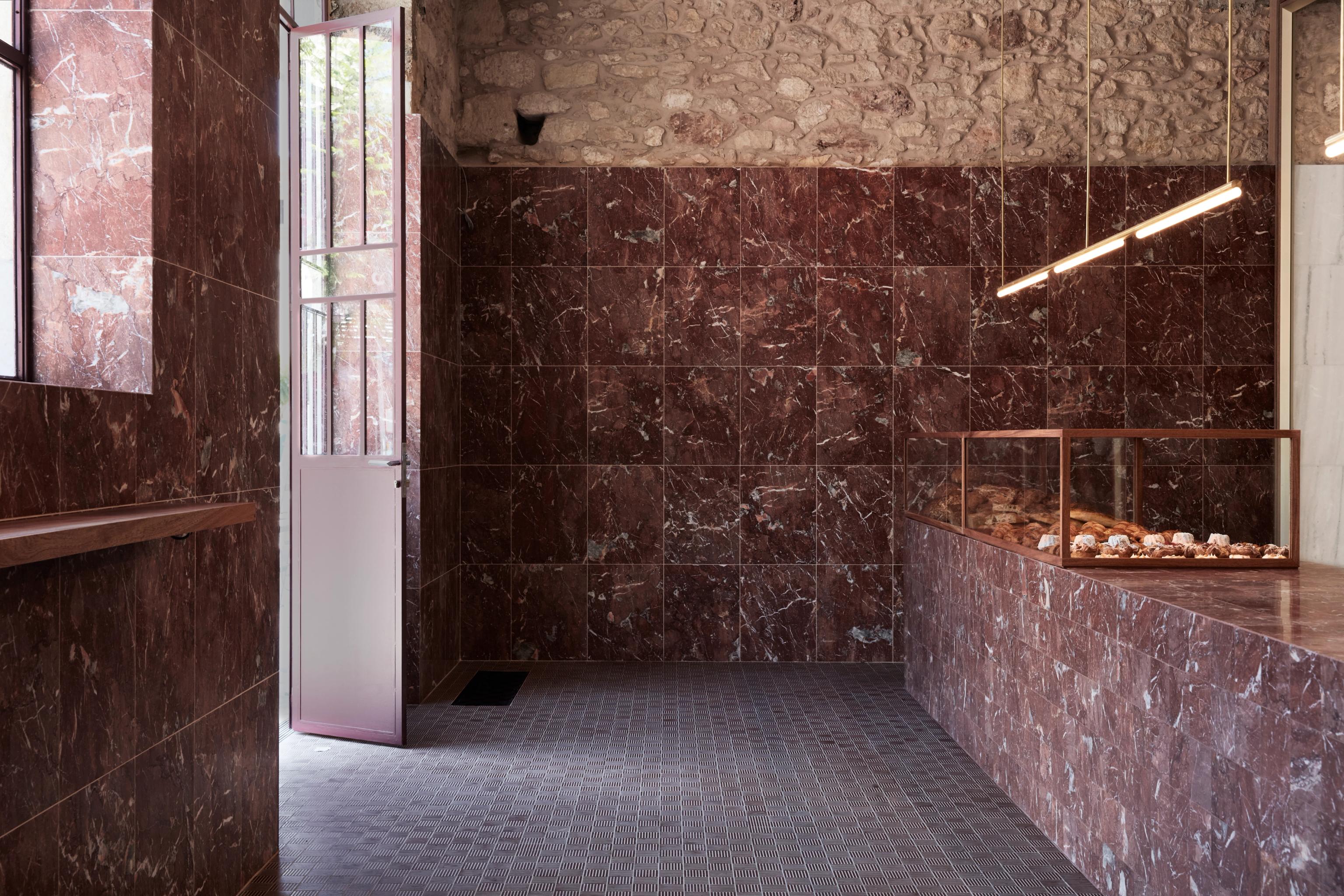
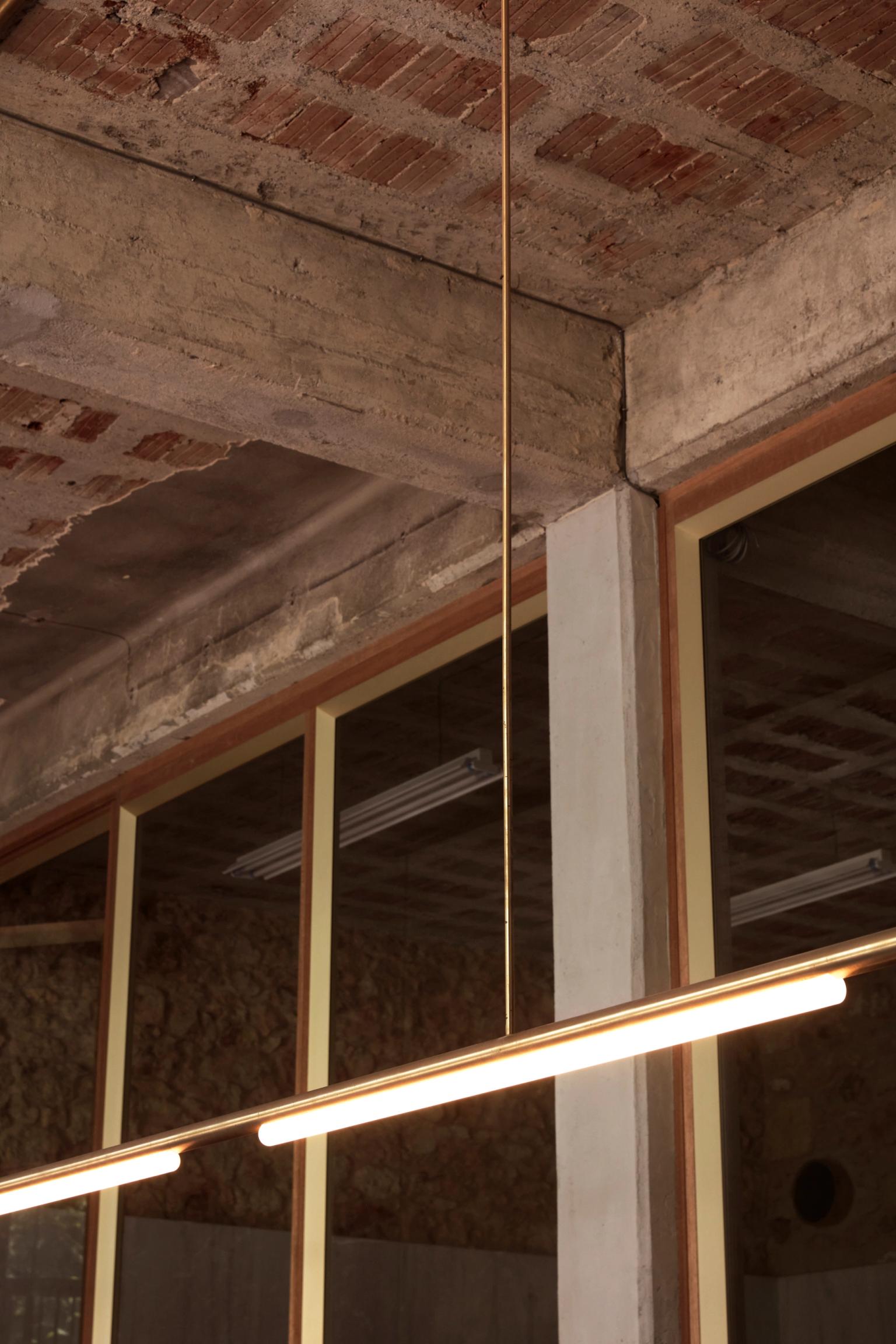
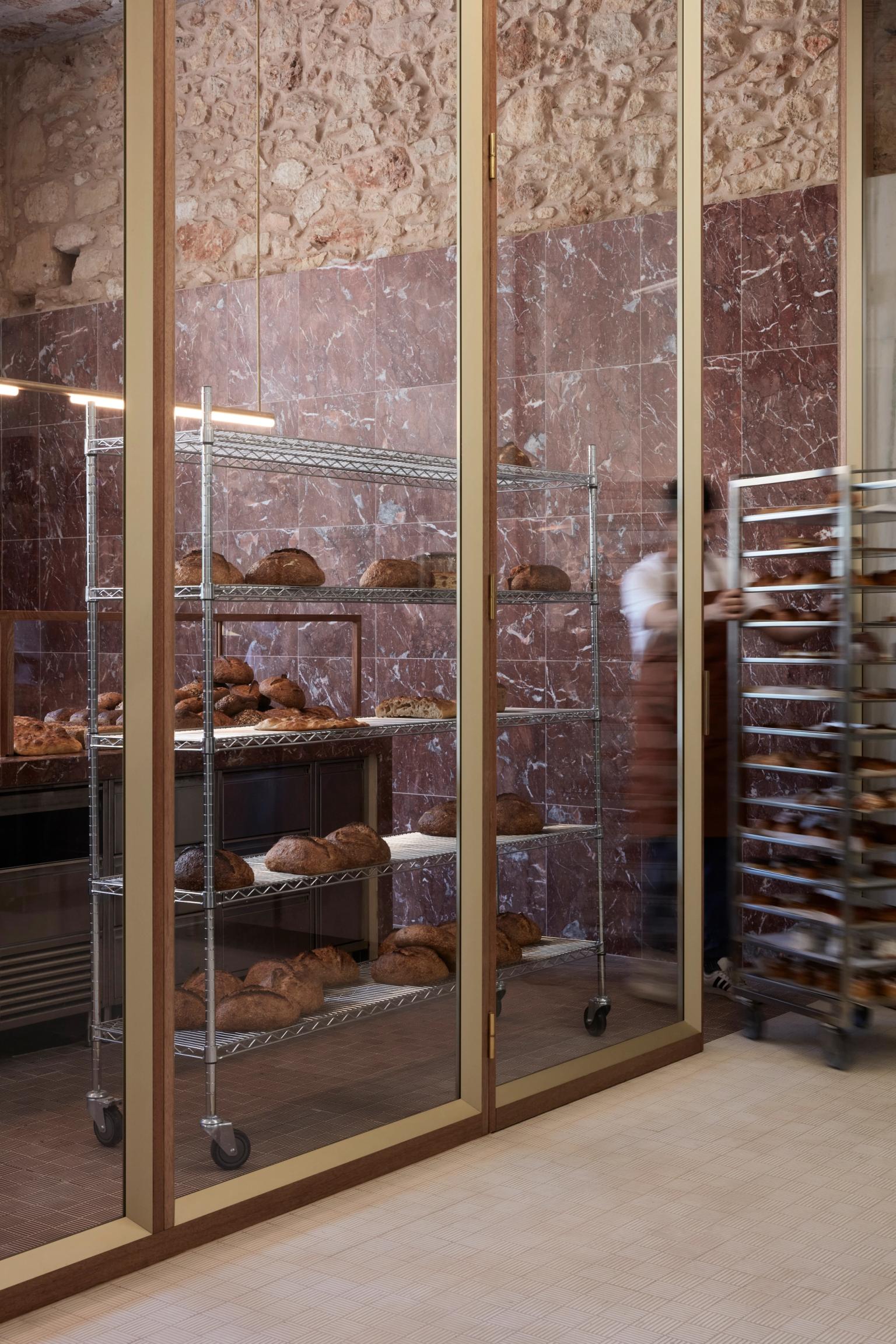
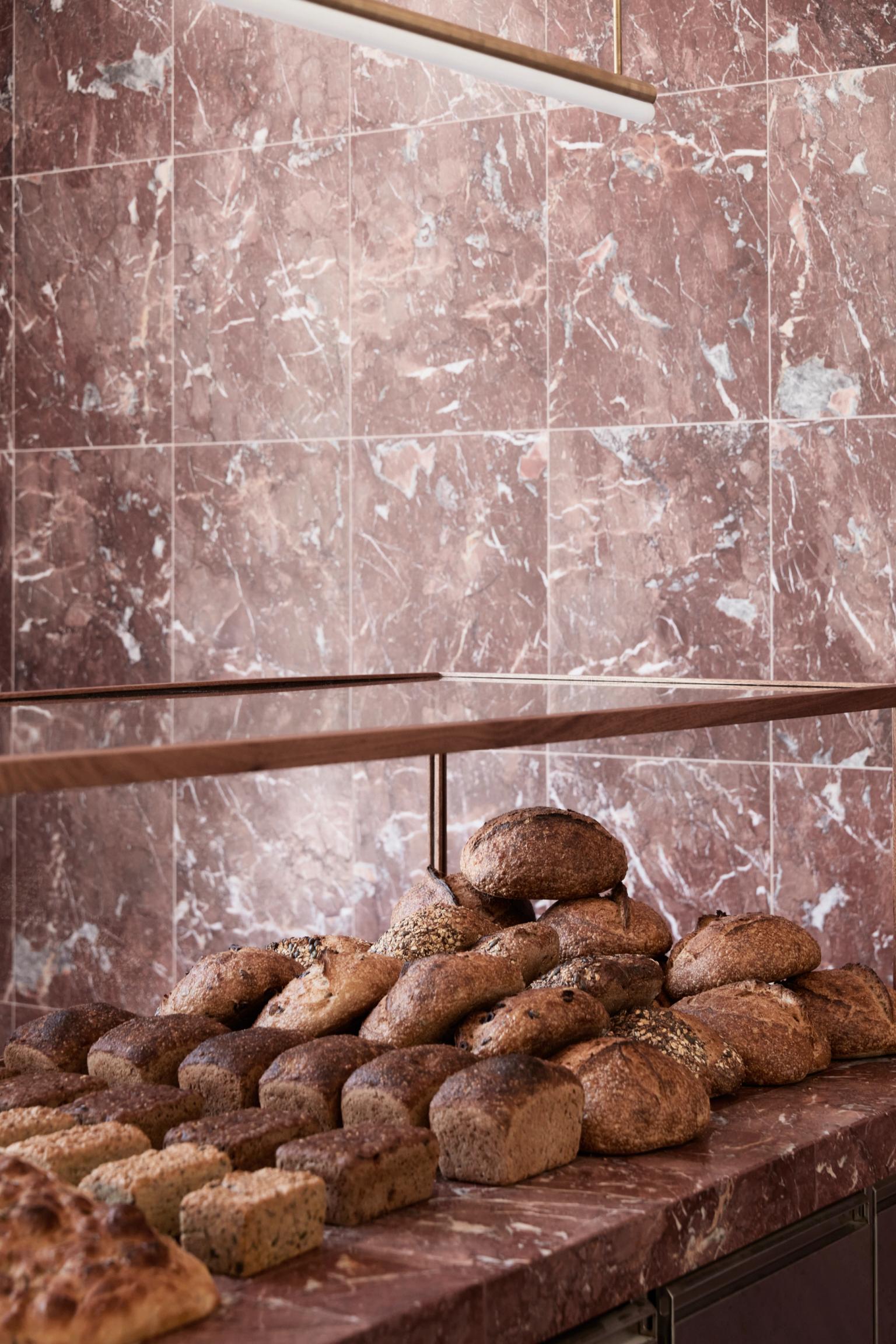
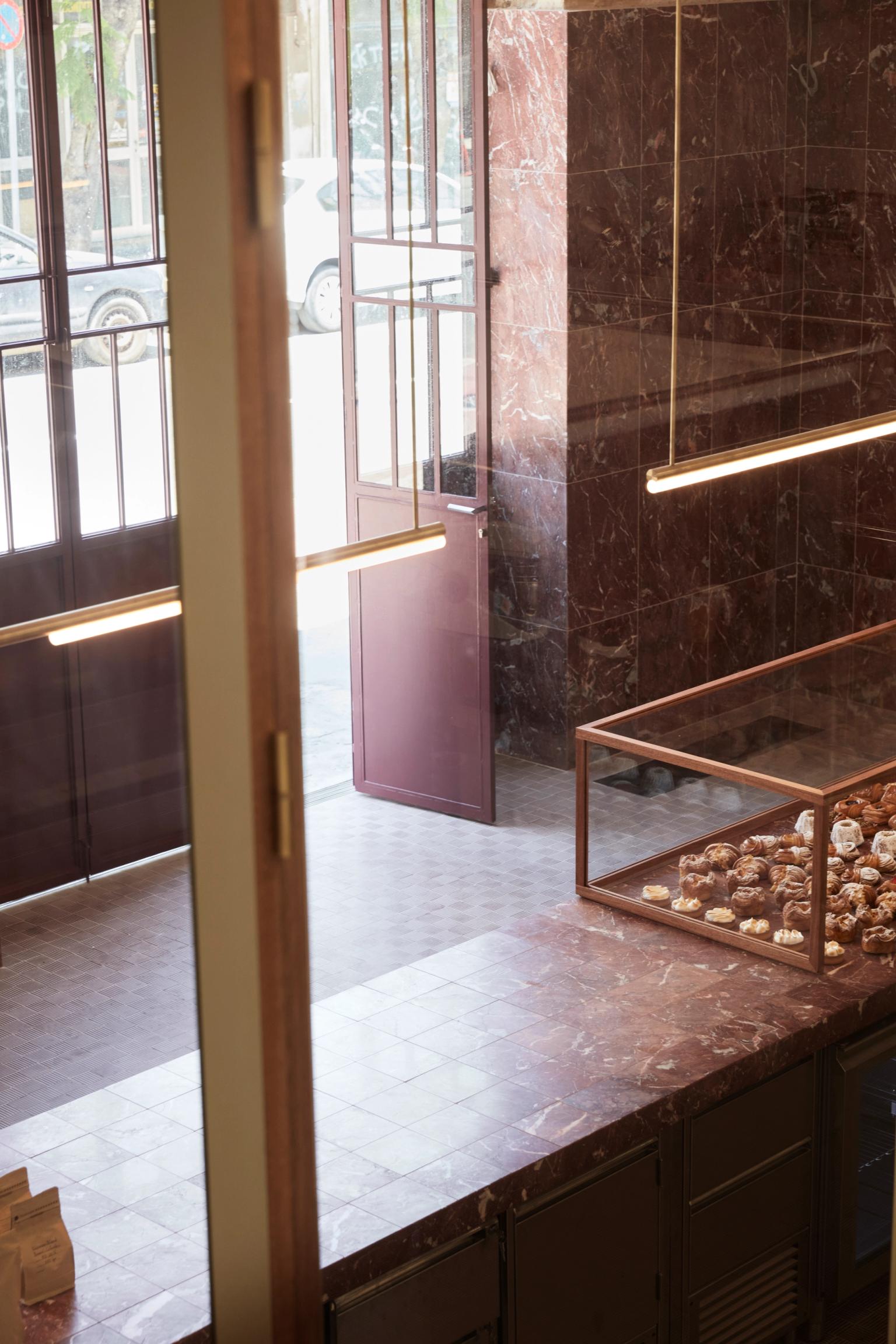
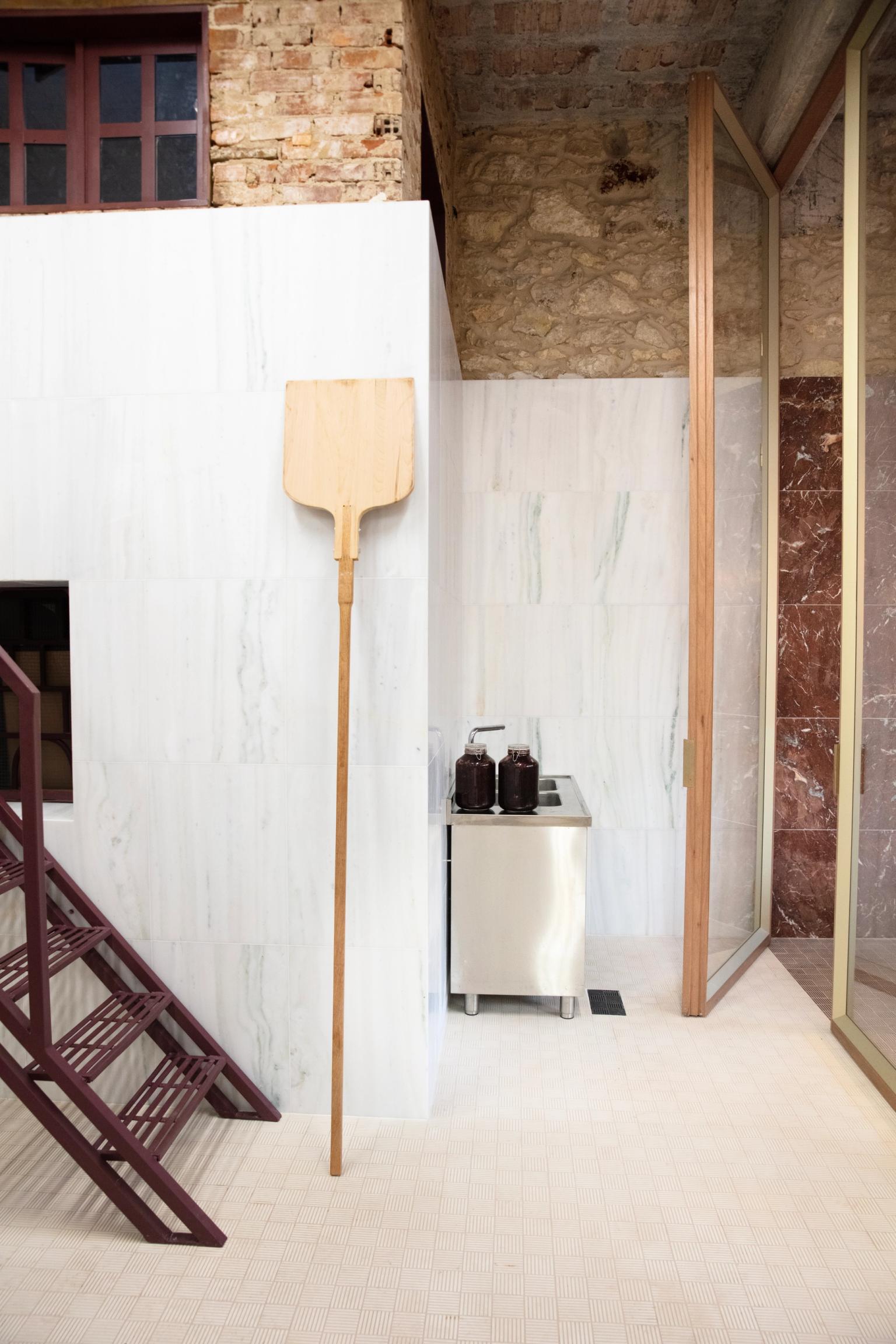
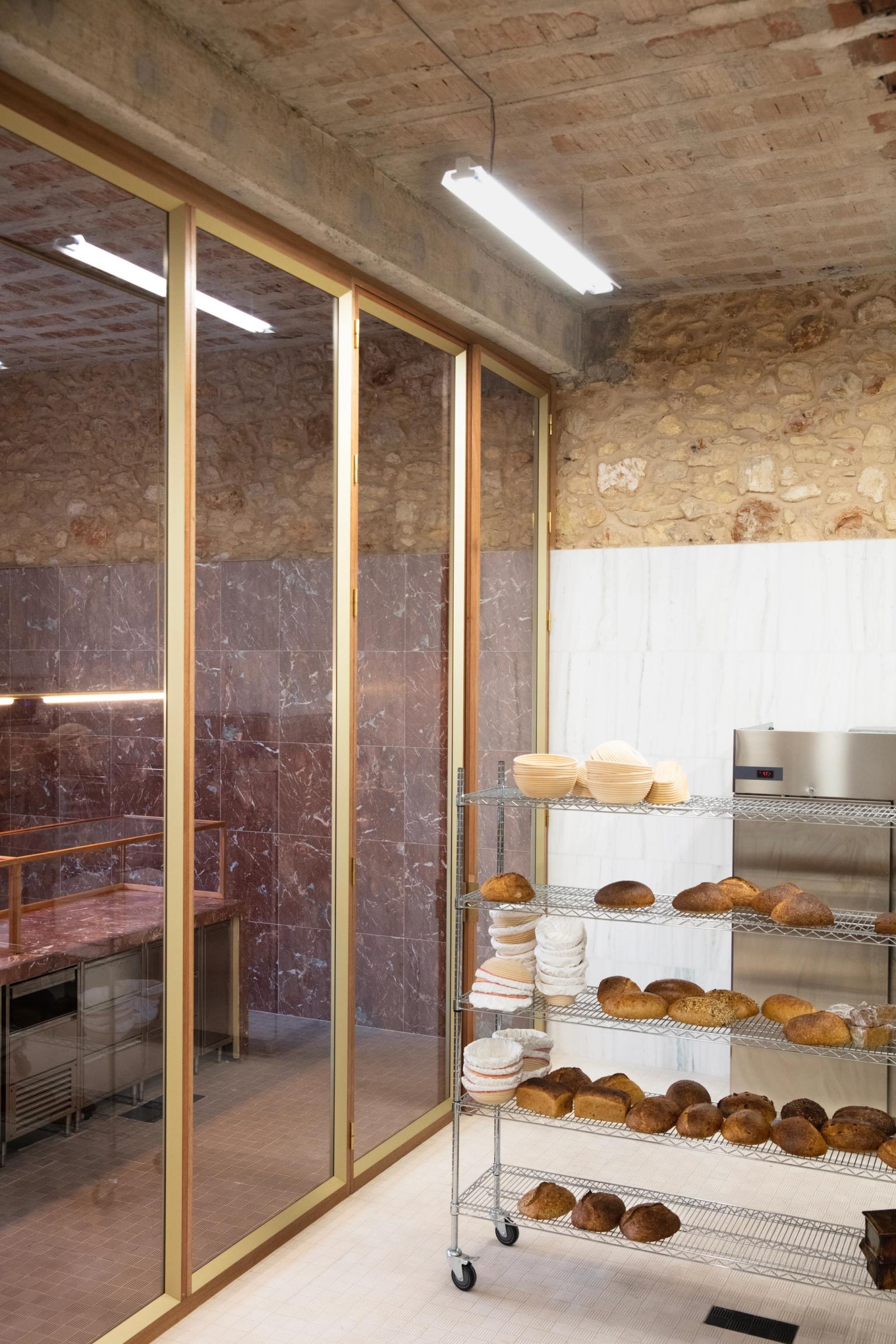
The exterior was deliberately left almost untouched. Inside, the language changes completely. White and red Greek marble form the counter and walls, creating a monumental surface that contrasts with the rough industrial shell of the building. Custom ceramic tiles, developed with Mutina, introduce another layer of texture, while Anastassiades's restrained lighting gives the space an almost gallery like atmosphere.


There is something particularly effective about the contradiction. The building still looks like an old industrial workshop, while inside everything has been reduced to essential forms and carefully chosen materials. Nothing is decorative for the sake of decoration. The design allows the physical work of baking to remain visible and central.
That relationship between craft and design is at the heart of Red Jane. Bread is not presented as an accessory to an attractive interior. The bakery itself becomes a place where two forms of making coexist.


Bread, Memory and a Name
The food followed the same philosophy. Red Jane's menu was developed over several years through a collaboration between head baker Seraphim Karantziounis, Eyal Schwartz, the former head baker and co founder of London's E5 Bakehouse, and pastry chef Konstantinos Kasidopoulos of Cannelait Paros.
The result moves between familiar European baking traditions and ingredients rooted in Greece. Sourdough loaves, croissants, cardamom buns, koulouri, pastries and cakes fill the marble counter, with organic flour sourced from a local mill using predominantly Greek grain. Coffee comes from carefully selected small farms and is roasted locally, extending the bakery's emphasis on craft beyond the oven.


Even the name has a story. Red Jane is a reference to Jane Fonda and the famous photograph of the actress in Vietnam. Tsepetis had carried the name around with him for years, initially imagining that it might belong to almost anything: a cheese workshop, a shop, perhaps a different kind of project altogether. Eventually it found its home above a bakery in Chania.
The name gives the project a slightly rebellious edge. Red Jane does not attempt to recreate some idealised version of traditional Crete. Instead, it suggests that a contemporary Cretan identity can be built from unexpected influences, from Greek marble and ancient food traditions to London baking, international design and a name borrowed from a piece of twentieth century political history.
Perhaps this is what makes Red Jane so compelling. It is not nostalgic, although it is deeply concerned with the past. It is not a design showroom, although every surface has been considered. And it is certainly not simply another fashionable bakery.
It is a place where an old industrial building, the rituals of bread making and a distinctly contemporary idea of Crete have been allowed to occupy the same room.
For Tsepetis, that seems to be the point. The most interesting places are rarely created by deciding exactly what they should be from the beginning. They emerge slowly, through people, materials, accidents and obsessions. Red Jane is the result of that process: a bakery that began with a name, found a home in an old foundry, and eventually became an unlikely meeting point between food, architecture and design.