
Hiroshi Nakamura & NAP
Sayama Forest Chapel
- ArchitectHiroshi Nakamura & NAP
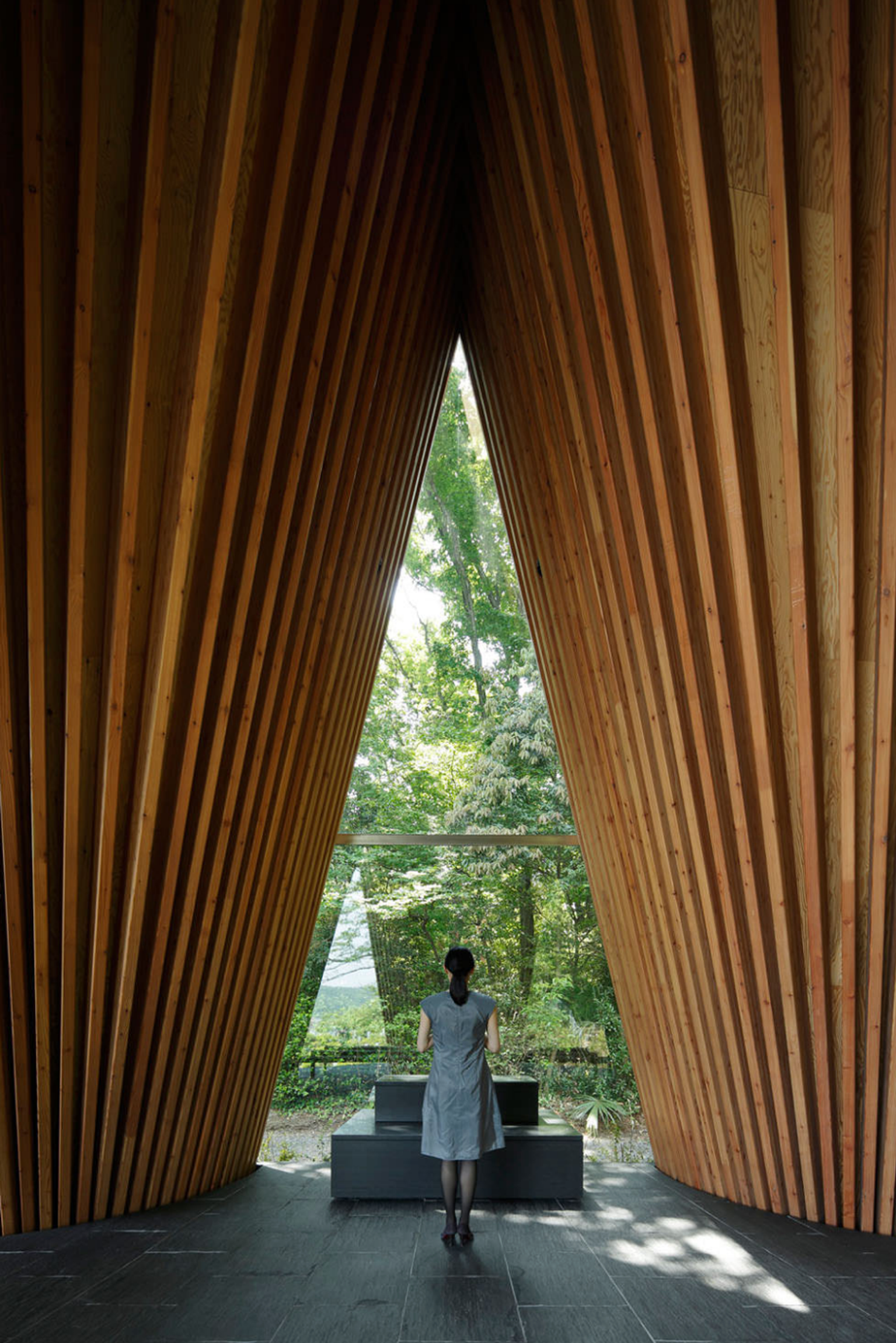
ELORA HARDY Sayama Forest Chapel feels like a reinvention of what a chapel could be, as if one had never seen a chapel before, but wanted to create a sacred shelter within a forest. Its leaning timber walls respond to the trees and come together, acknowledging that leaning on each other is mutually stabilizing. A subtle detail is that the floor has a 1cm slope, inclining us toward the forest. As a multi-faith place, this chapel brings us all back into connection with the natural world.

Where the Forest Becomes Sacred
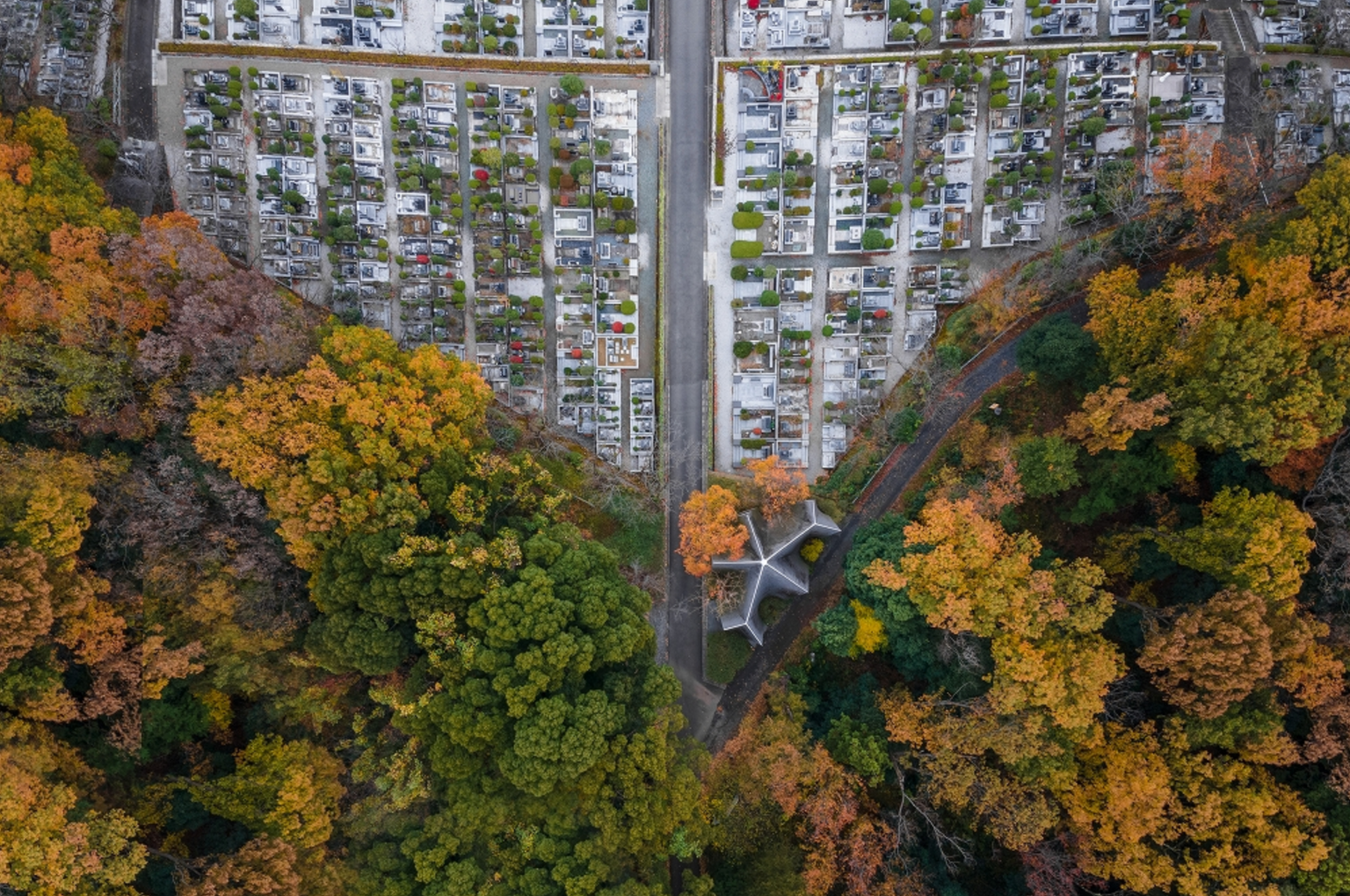
At the edge of a dense forest in Saitama, Japan, the Sayama Forest Chapel by Hiroshi Nakamura & NAP offers a quiet reflection on the relationship between architecture, nature and the rituals of mourning. Completed in 2014, the small chapel stands within Sayama Lakeside Cemetery, a place open to people of all religious beliefs. Rather than expressing spirituality through traditional religious symbols, Nakamura found a universal point of connection in the forest itself. Trees sustain life through the water they preserve, and in death, human beings eventually return to the earth. This simple cycle became the starting point for a building that invites visitors to direct their thoughts towards nature.
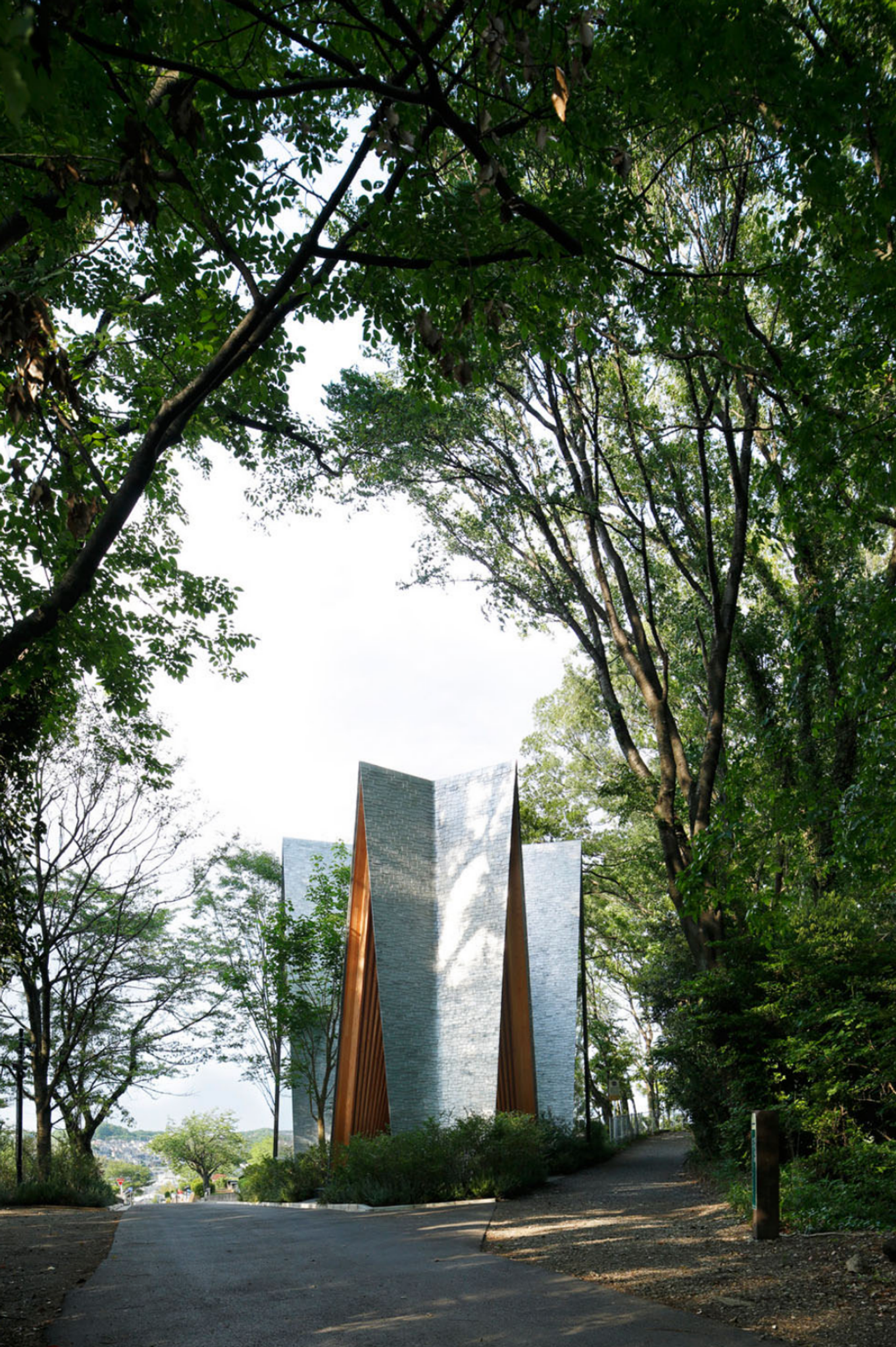

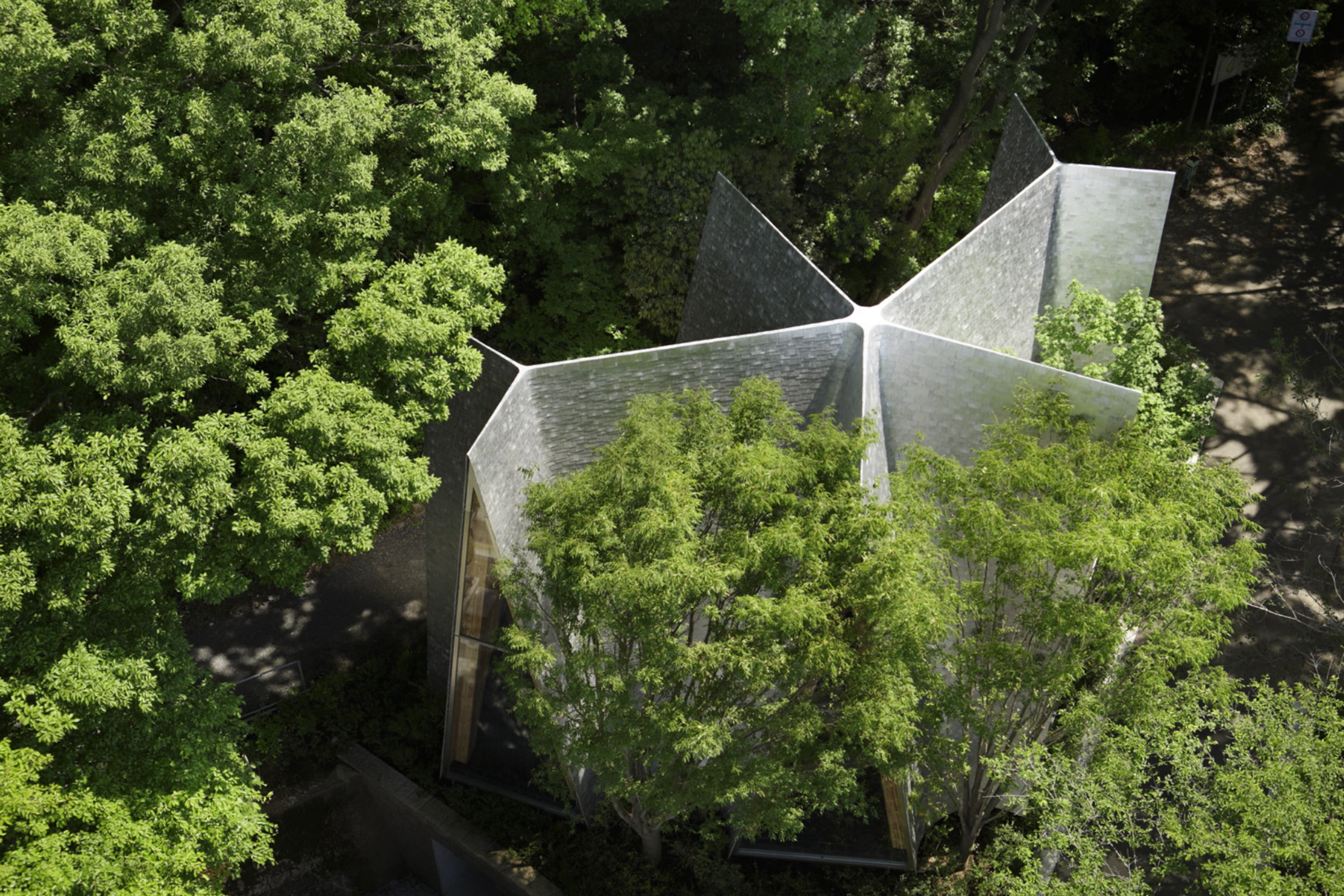
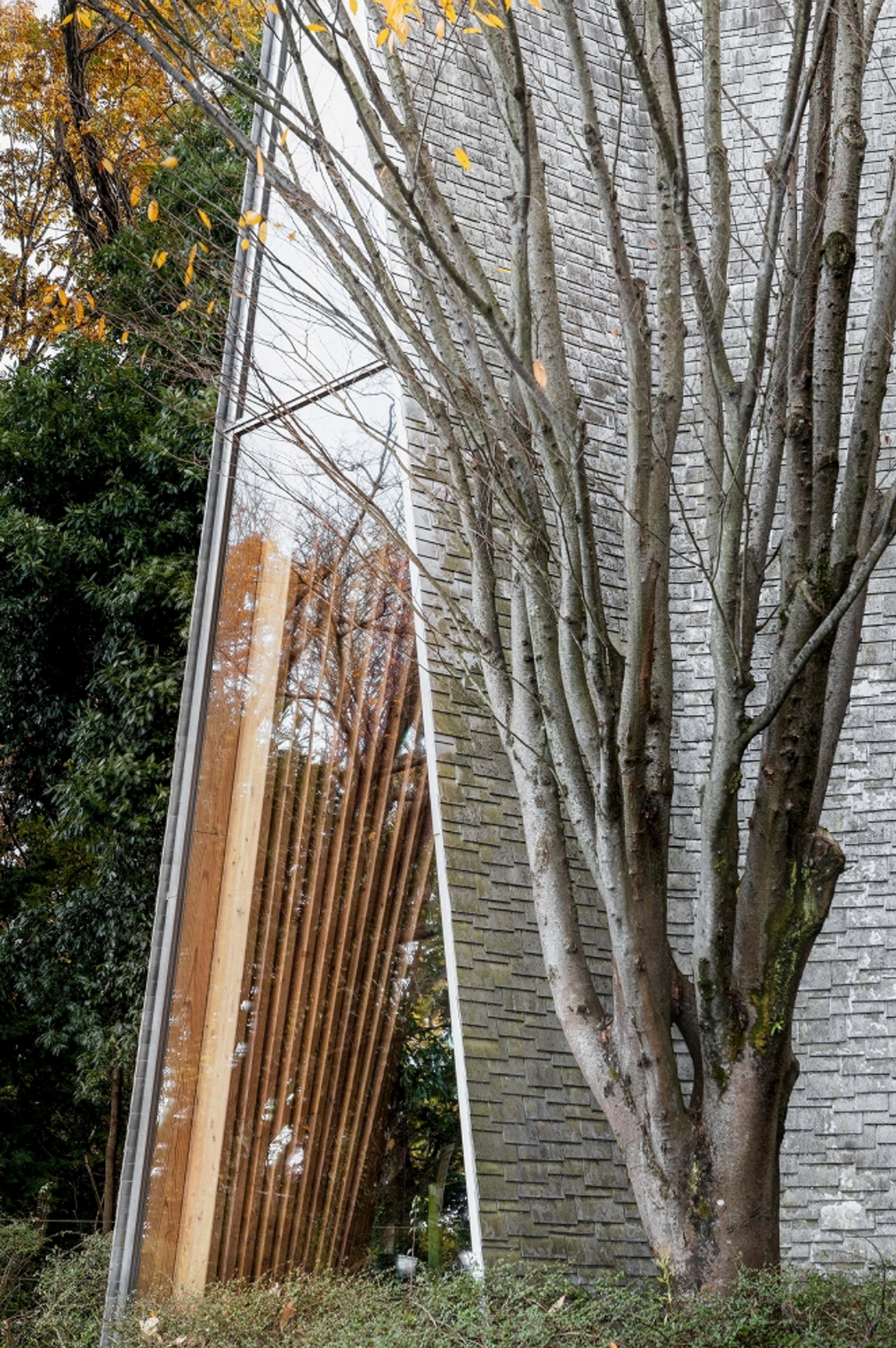
The chapel occupies a small triangular plot facing the woodland. Instead of clearing the site to make room for the architecture, Nakamura designed the building to embrace its surroundings, planting additional trees around its perimeter and allowing glimpses of the forest to appear between them. The result is a structure that feels less like an object placed in the landscape and more like a natural extension of it, a sheltered place for contemplation that remains intimately connected to the world beyond its walls.


The Gesture of Two Hands in Prayer
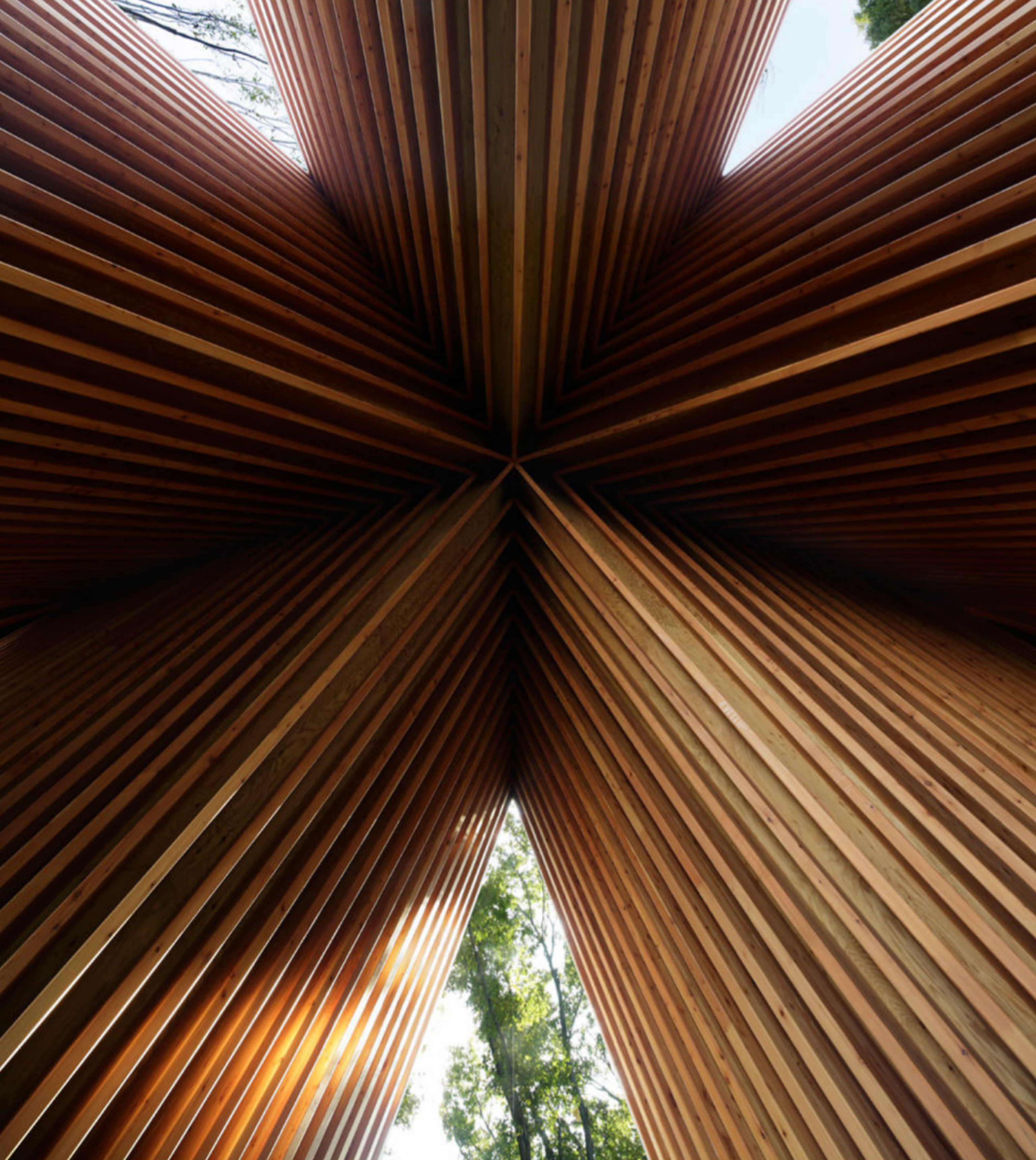
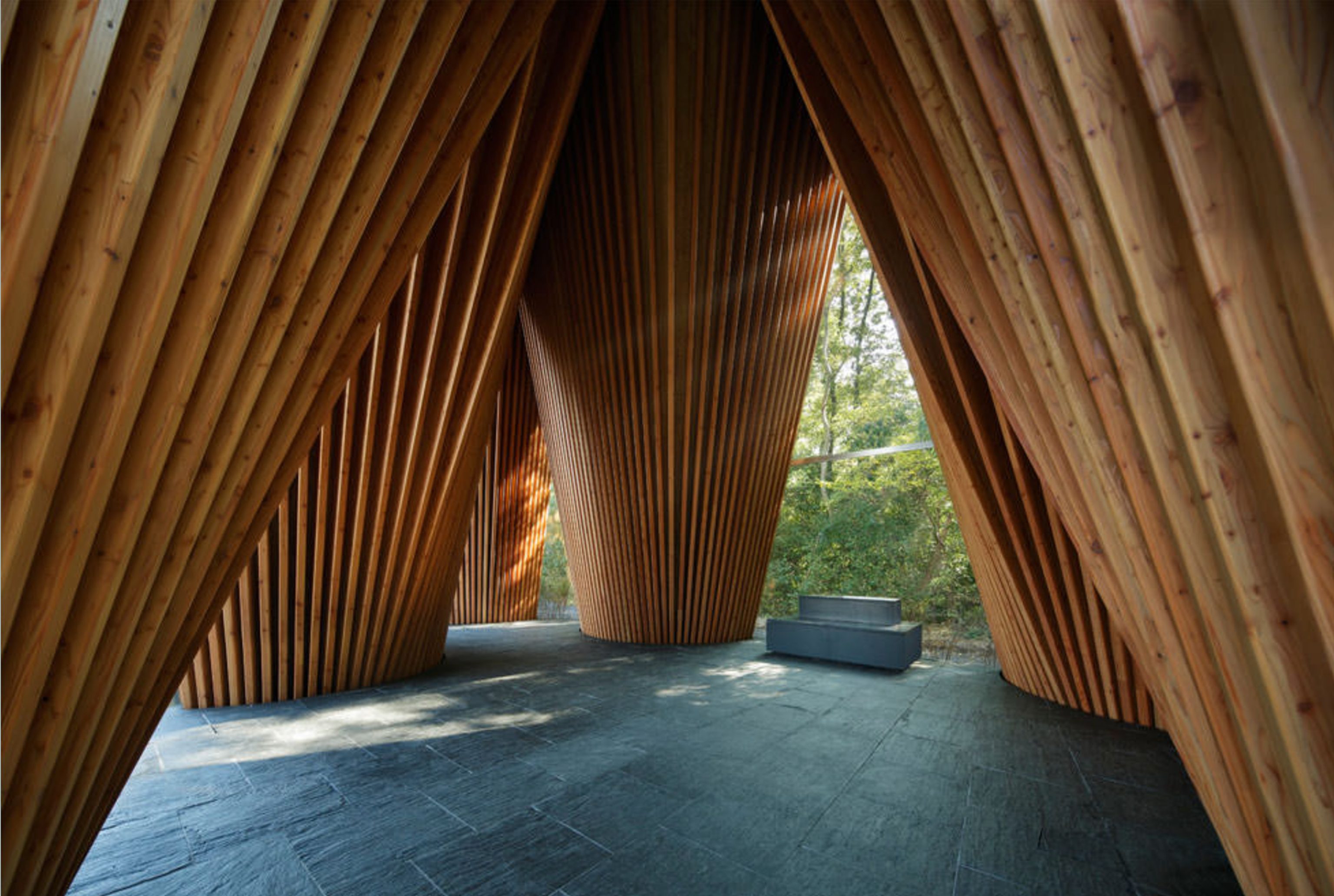
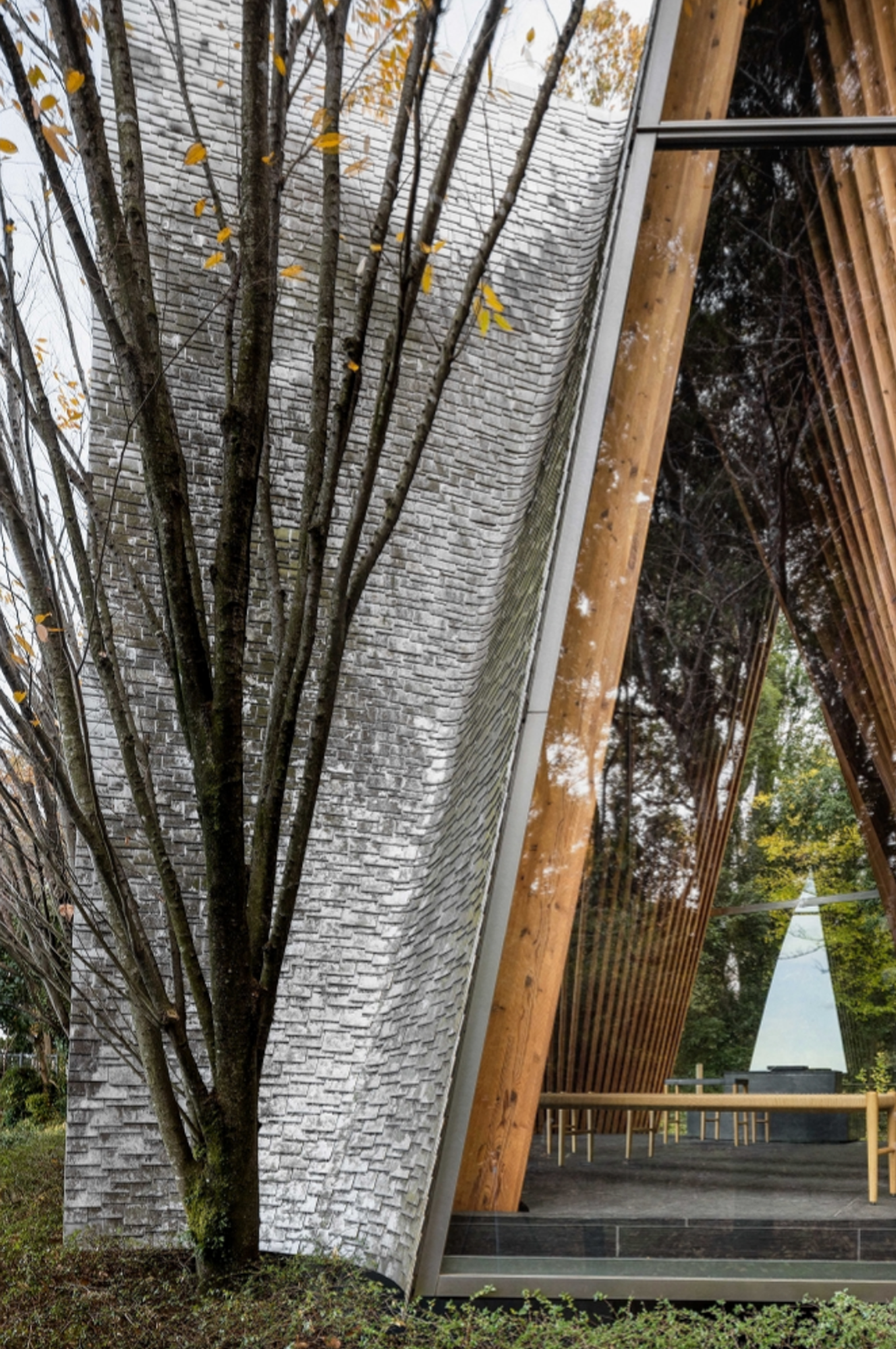
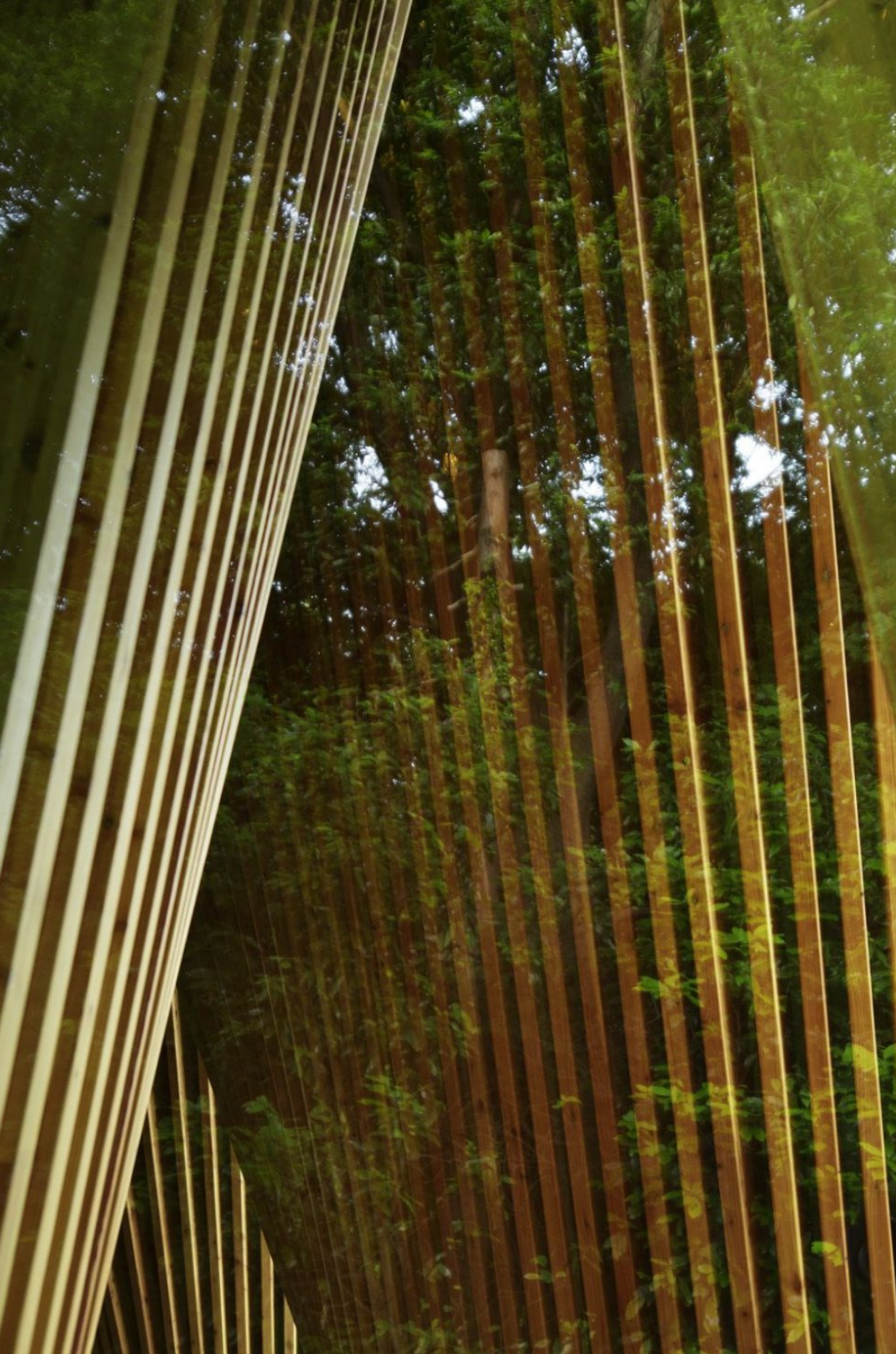
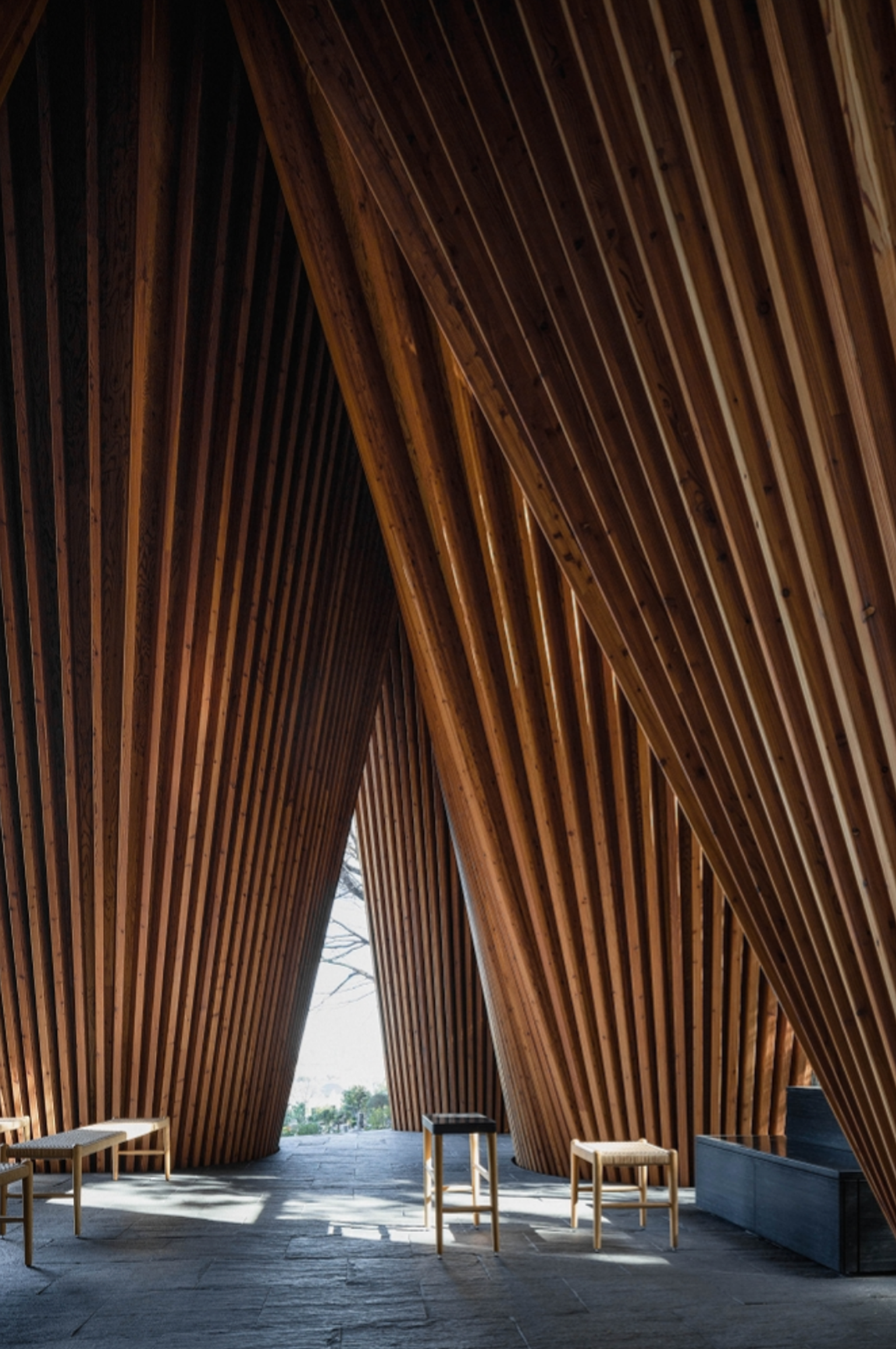
The chapel's distinctive silhouette emerges from a reinterpretation of gassho, a traditional Japanese structural form whose name refers to the gesture of bringing one's palms together in prayer. Inside, slender larch timber beams lean towards one another, meeting in an intricate arrangement of inverted Vs that extends in every direction. The resulting framework supports both vertical and lateral forces, allowing the building to achieve its expressive form without conventional seismic bracing walls. Its engineering is inseparable from its symbolism: the structure appears to gather itself into a gesture of reverence.
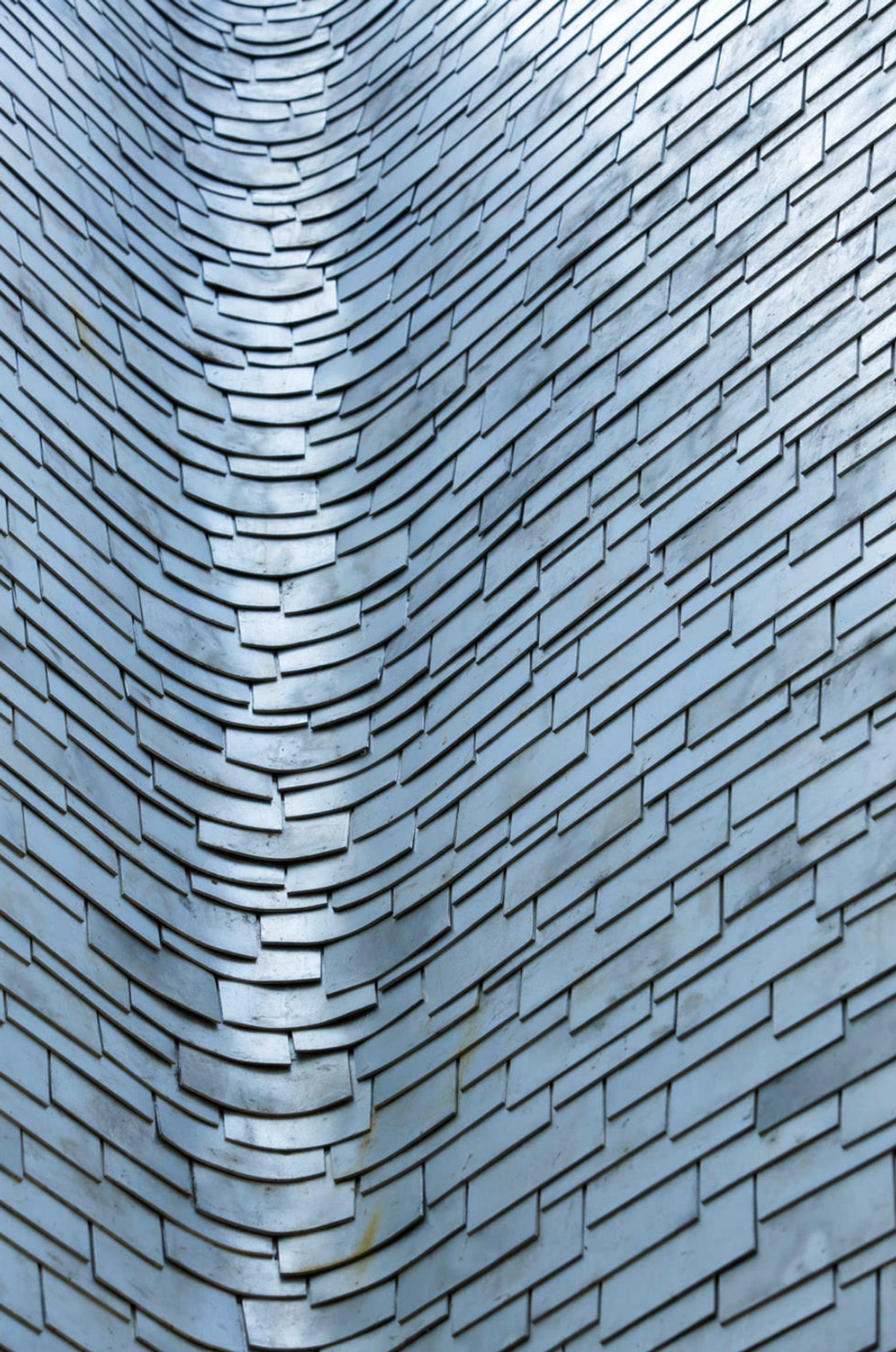
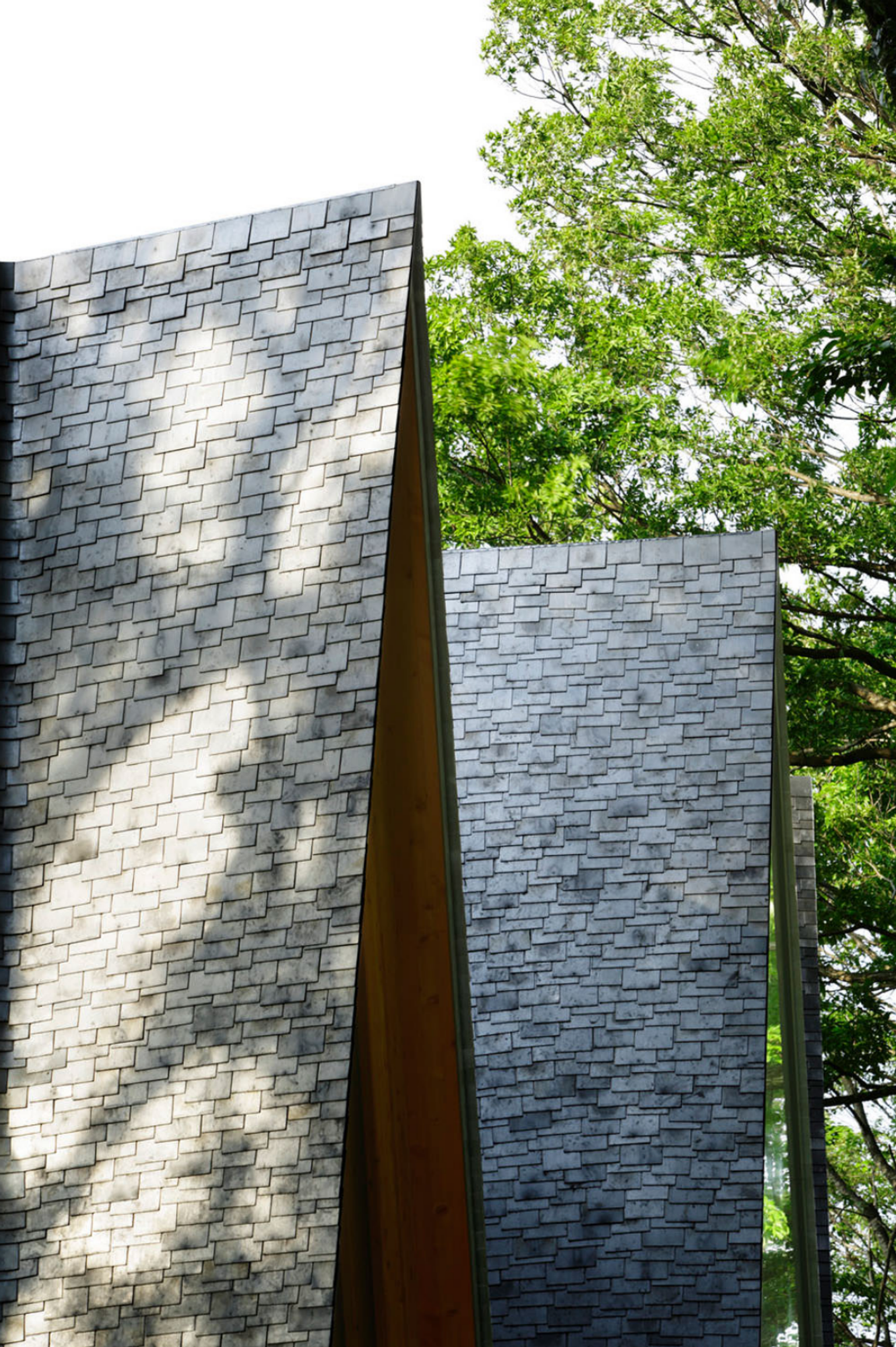
The walls incline inward to accommodate the surrounding tree branches, creating a protective envelope that rises towards the centre. Above, the complex timber framework is covered with thousands of small cast aluminium panels, developed in collaboration with local craftsmen. Each panel measures approximately 180 by 200 millimetres and is just four millimetres thick, allowing it to be shaped by hand to follow the roof's curved geometry. Their subtly rippled surfaces retain the marks of the casting process, giving the exterior a rich, tactile quality. As the aluminium responds to changing light and gradually acquires the traces of its environment, the building becomes a record of time rather than an attempt to resist it.






A Space for Grief and Renewal
Inside, the architecture gently guides visitors towards the forest. The slate floor slopes slightly towards the altar, encouraging an almost imperceptible forward inclination of the body. The rough surfaces and joints of the stone draw the eye towards a vanishing point in the woodland beyond, concentrating attention on the trees rather than on the architecture itself. Light enters through carefully positioned openings, illuminating the timber structure and creating a quiet interplay between the interior and the changing conditions outside.
The altar is positioned before a window framing the forest, while the flexible arrangement of the space allows it to accommodate different religious practices as well as moments of personal reflection. When visitors turn away from the altar, the view shifts towards the town beyond the benches, offering a gradual transition back to everyday life.

For Nakamura, architecture has the capacity to accompany people through grief without attempting to explain or resolve it. The chapel's form recalls the small, warm space created between two hands brought together in prayer. By translating this intimate gesture into an architectural experience, Sayama Forest Chapel offers a place of shelter that is neither monumental nor imposing. Its significance lies in the sensitivity with which it brings together structure, material and landscape, suggesting that spirituality need not be defined by a particular belief. Sometimes, it is enough to stand quietly among the trees and recognise our place within the larger cycle of life.