Nicolai Fuglsig
Sony - Bouncy Balls
- ClientSony
- AgencyFallon London
- Creative DirectorJuan Cabral
- DirectorNicolai Fuglsig
- CinematographerJoaquin Baca-Asay
- Production CompanyMJZ
- MusicJosé González
DAN PETERS This iconic ad cut through because it treats a technical product benefit (color), as a tactile, physical explosion of wonder rather than a spec sheet. By capturing 250,001 real bouncy balls in the real world, it rejects the digital "perfection" of CGI for a raw, gravity-defying honesty that feels more like a piece of art than a broadcast commercial.


A City That Bounced
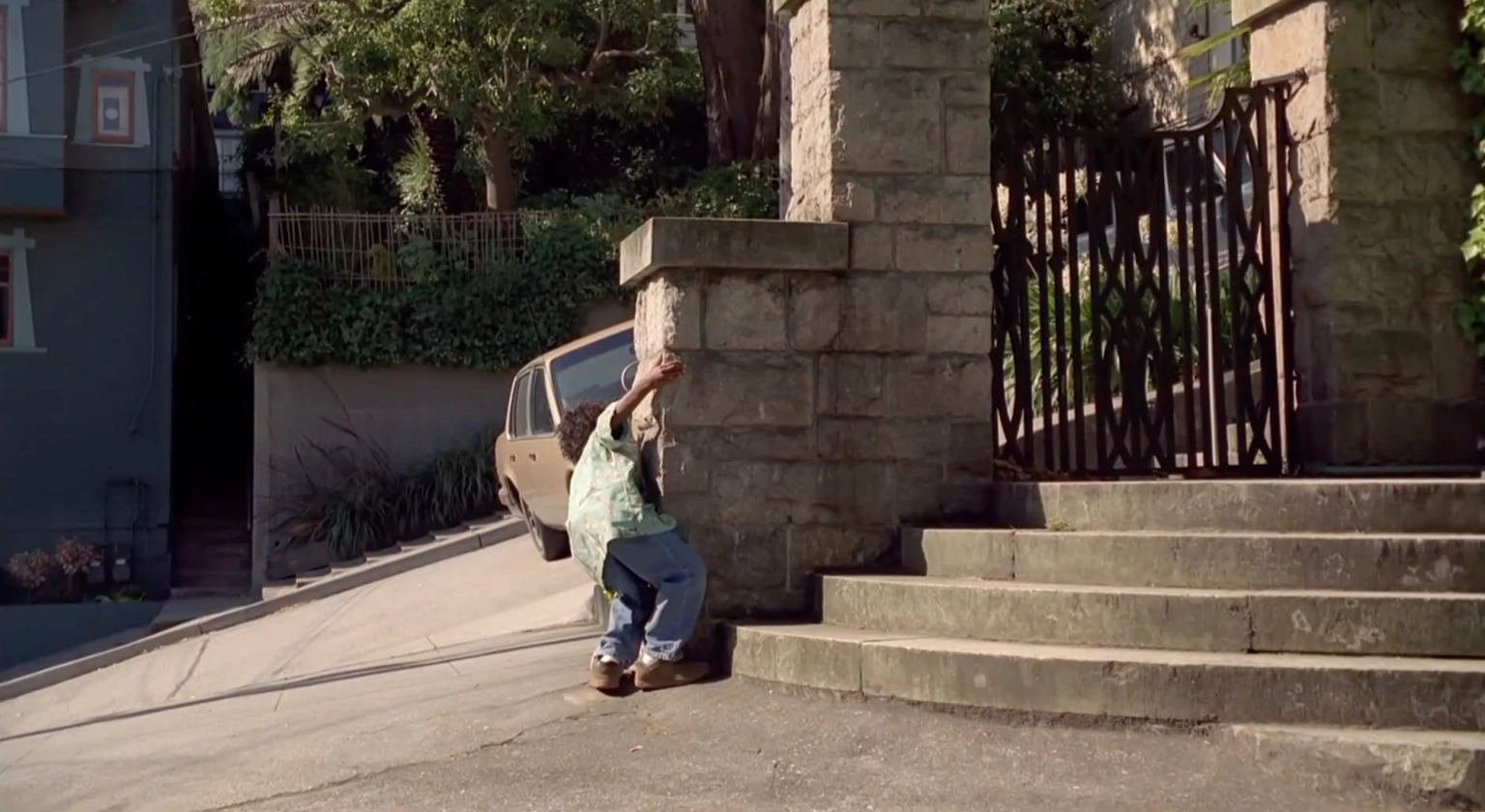
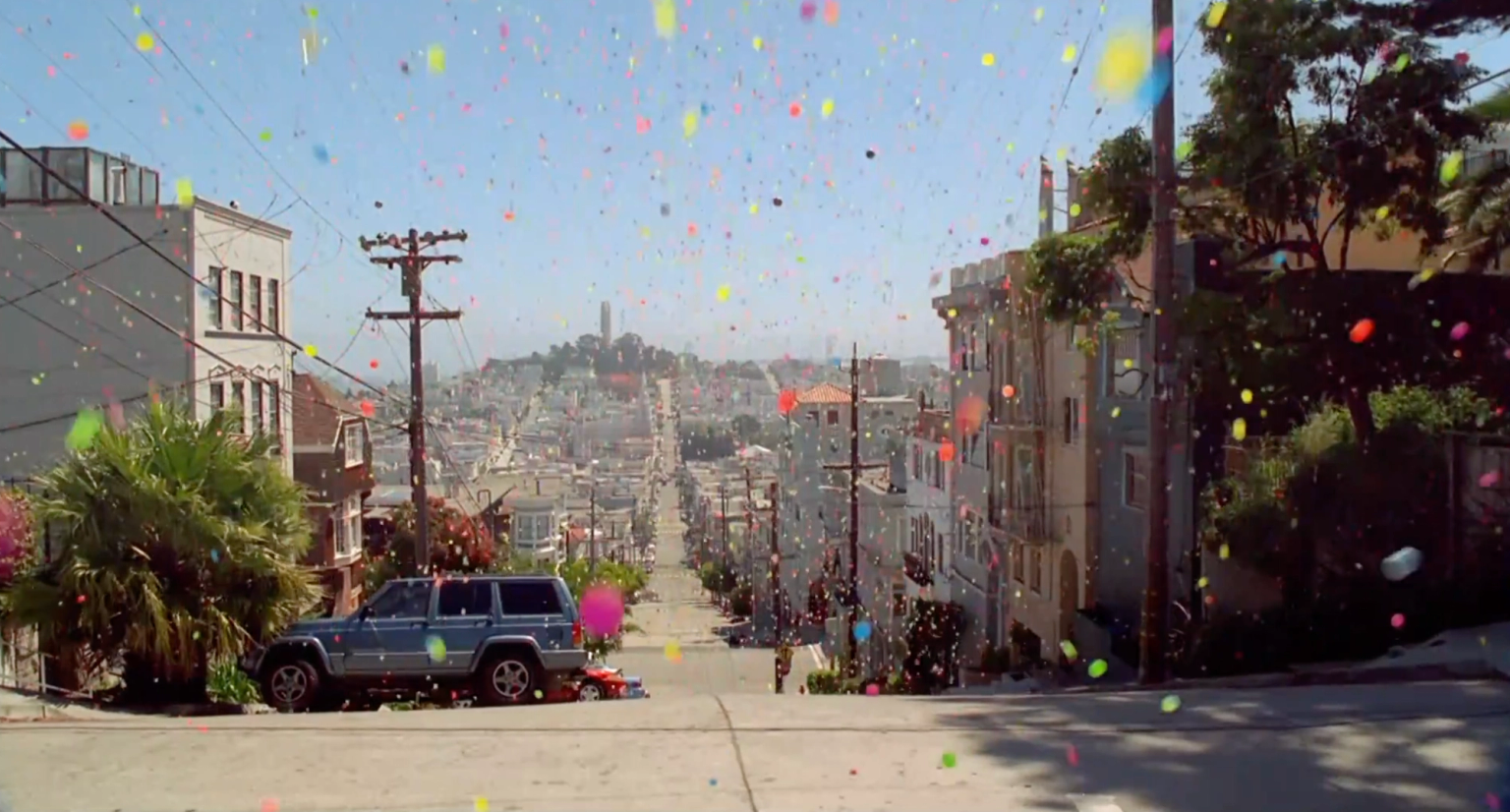
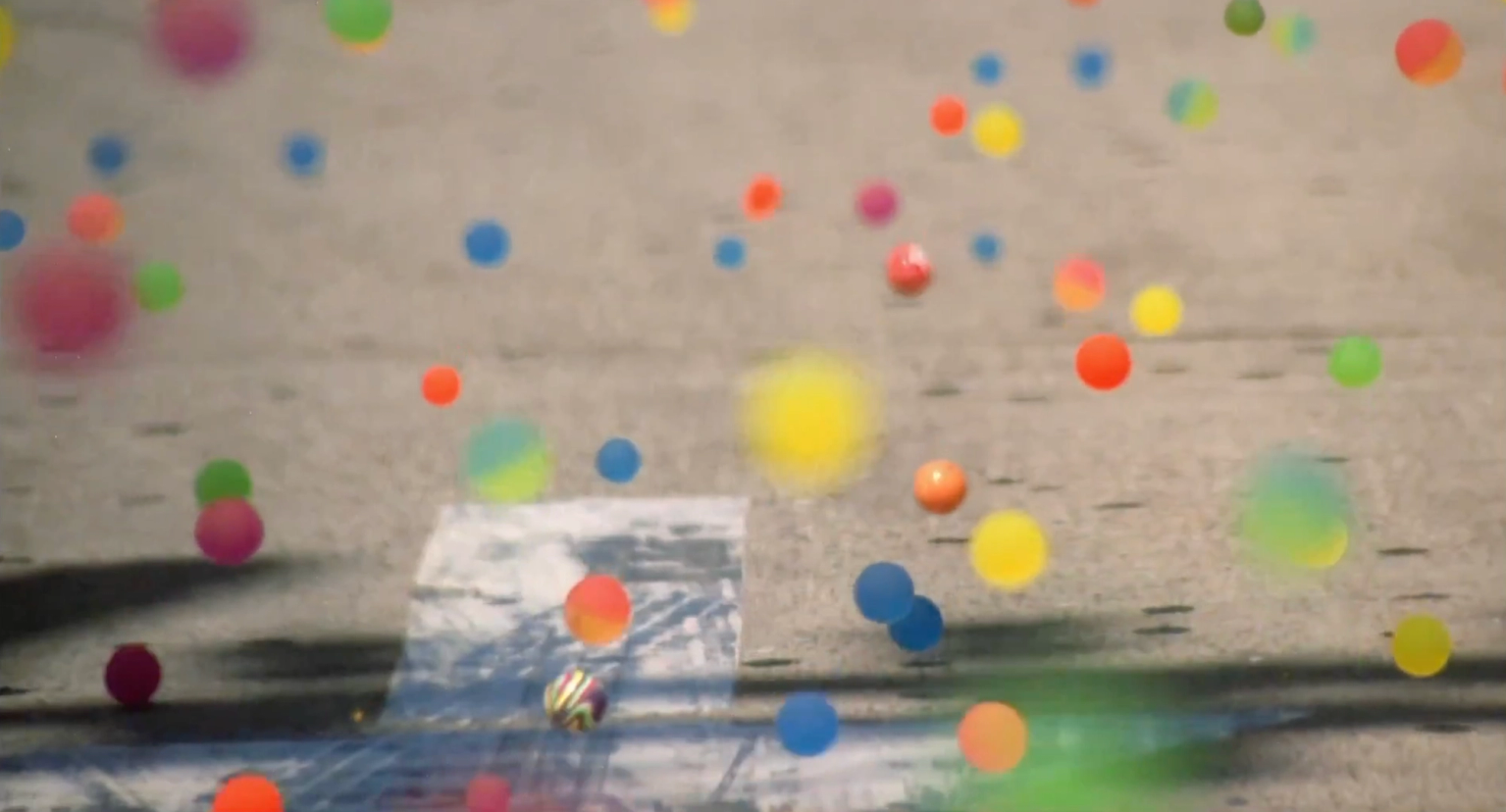
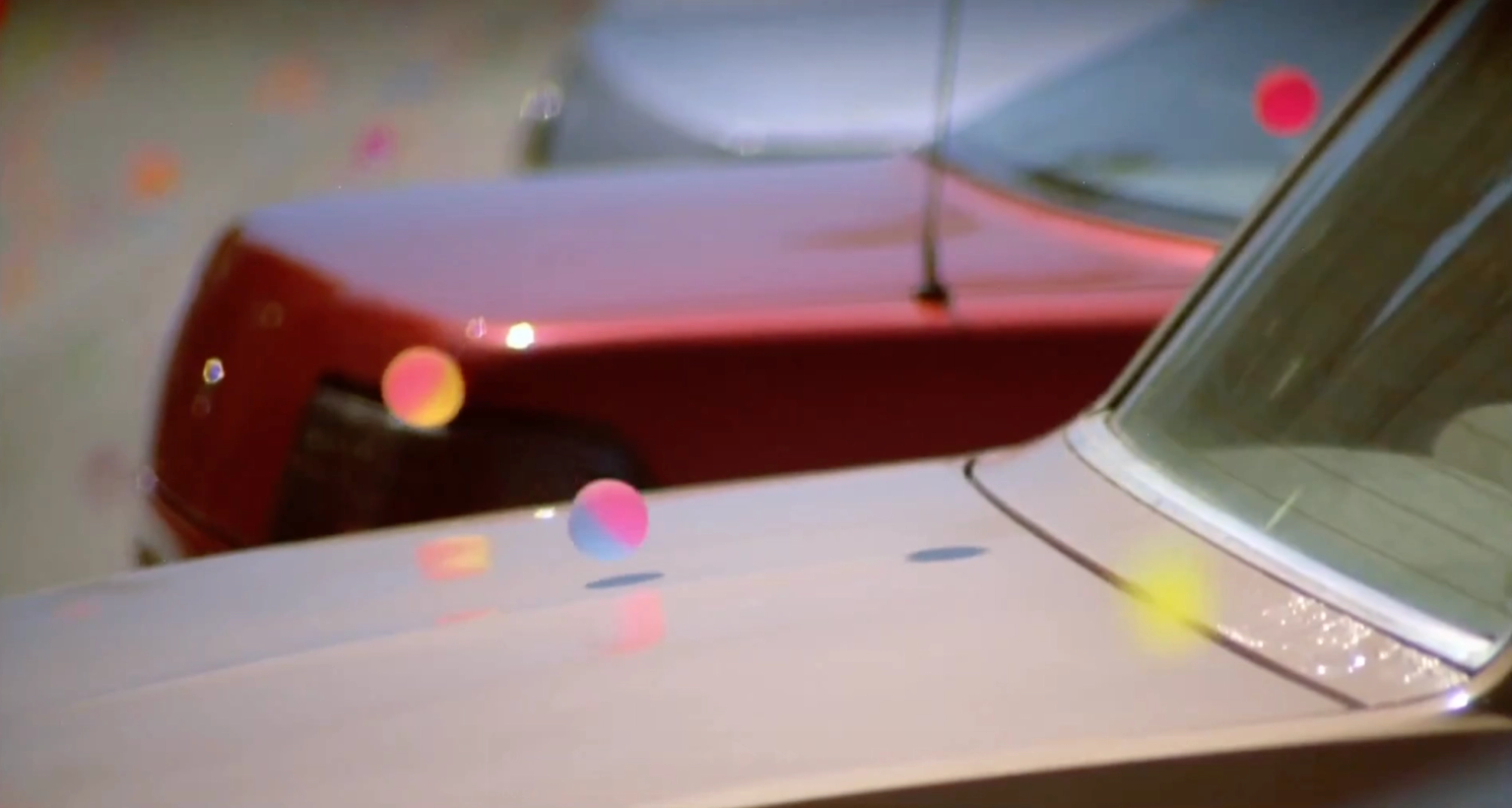
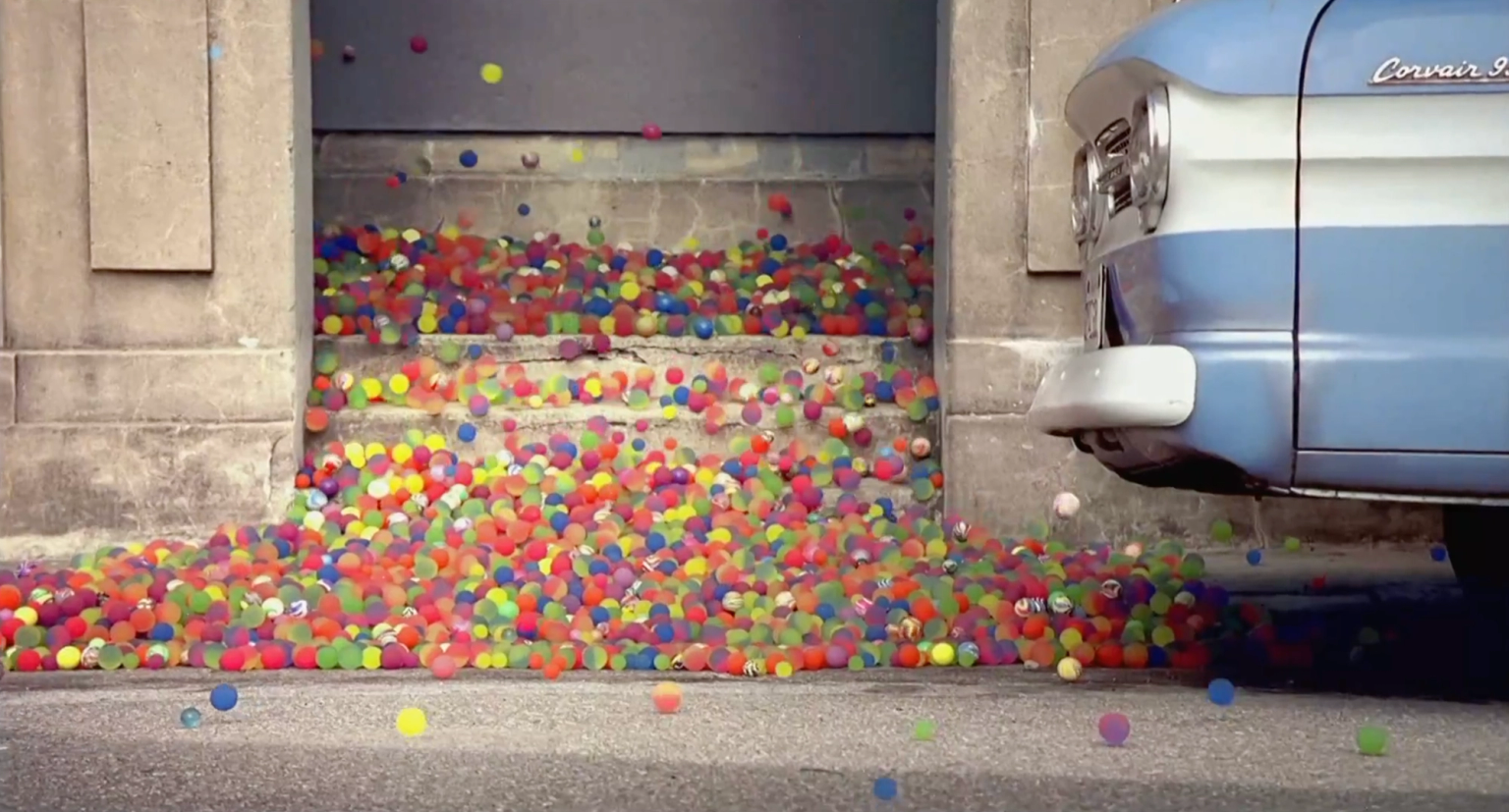
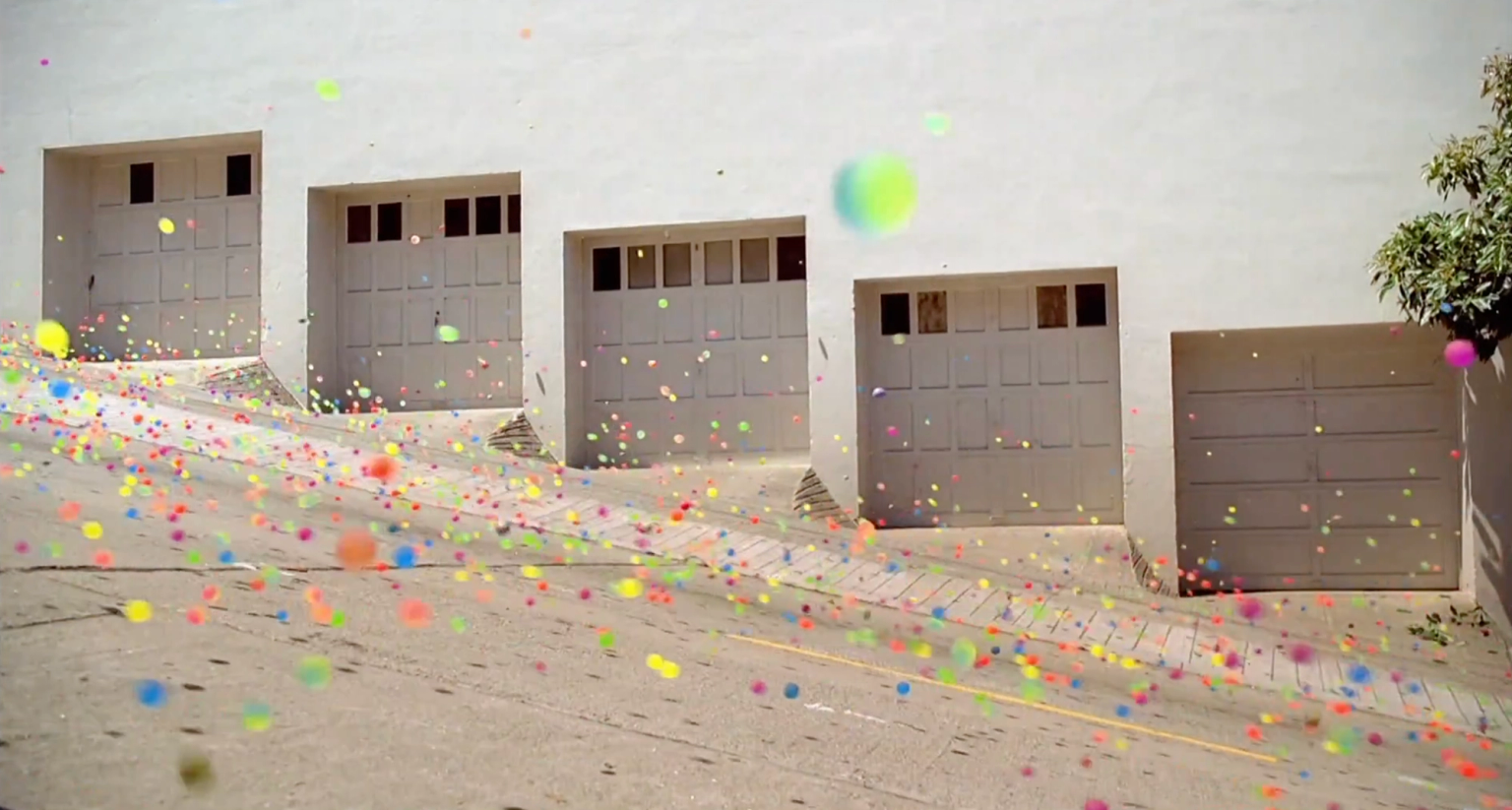
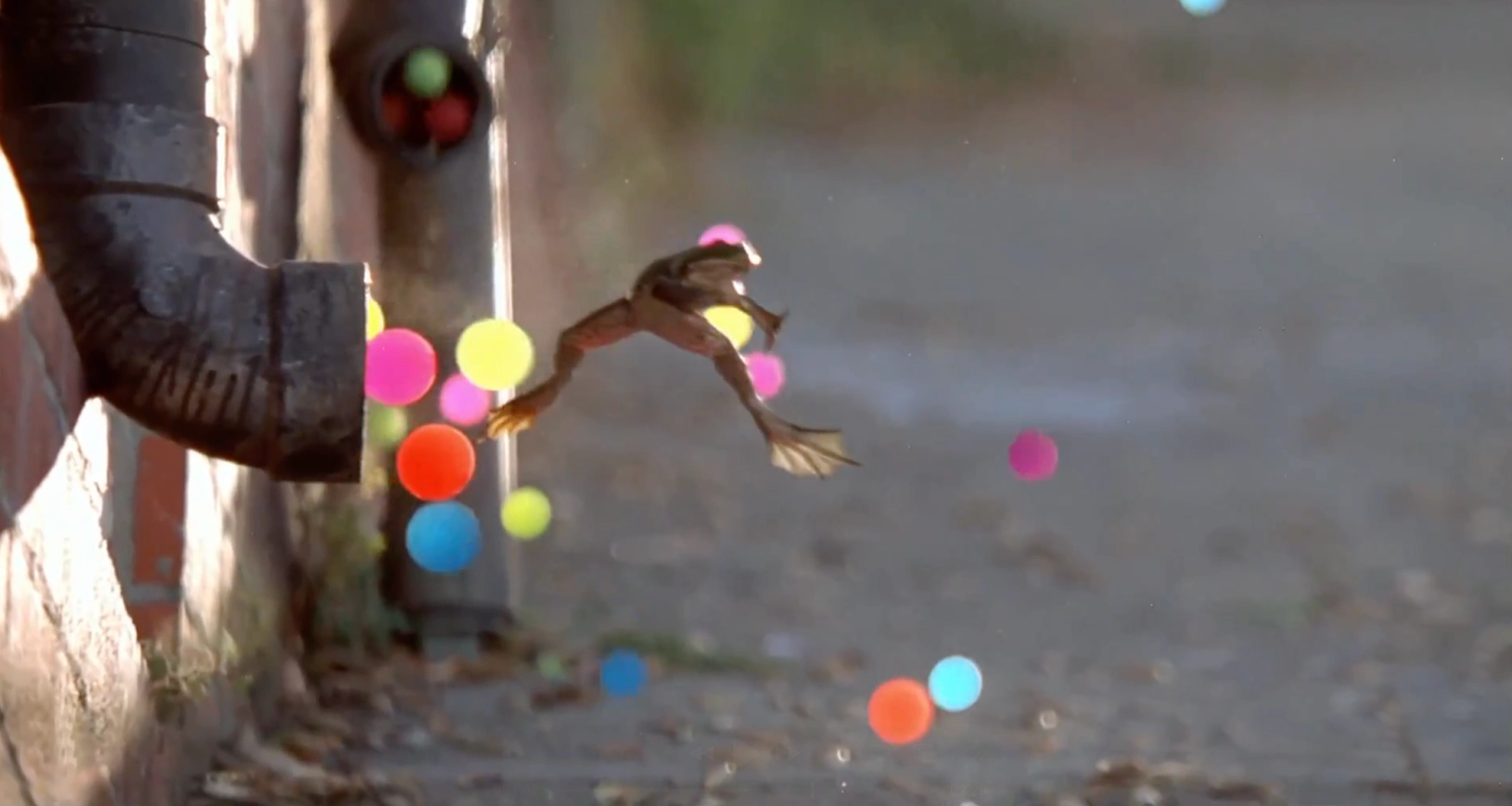
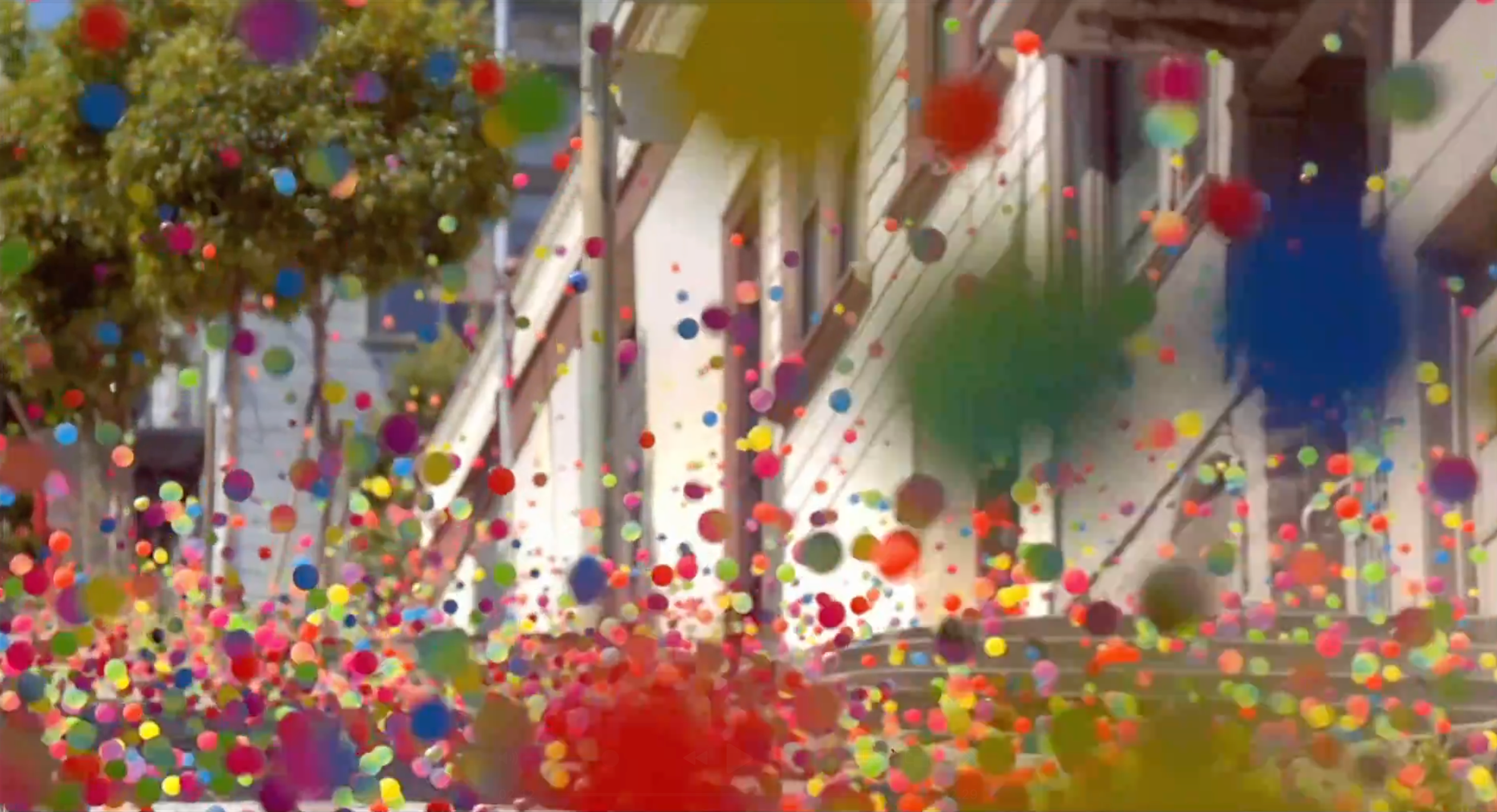
On a quiet summer morning in 2005, the steep streets of San Francisco became the stage for one of the most memorable television commercials ever made. Thousands of brightly coloured balls cascaded down the hills of the city, bouncing, colliding and scattering through intersections and stairways. The spectacle was filmed for Sony to promote its Bravia televisions and their ability to reproduce colour with extraordinary intensity. The result was the commercial widely known as Balls, a short film that quickly became a landmark in advertising.


An Idea Built on Colour
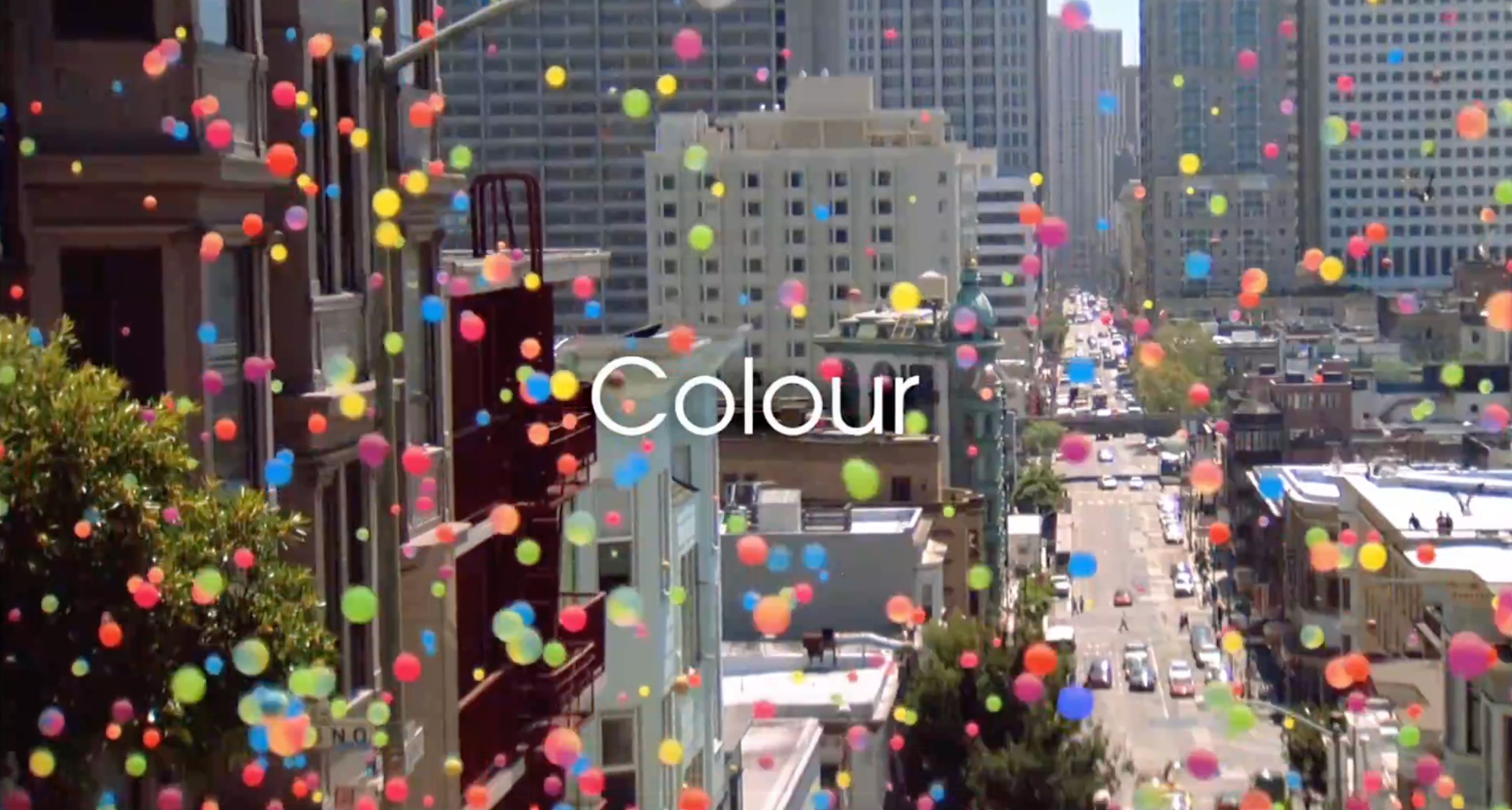
The concept emerged from the London office of Fallon, the advertising agency behind Sony’s Bravia campaign. The creative team wanted to demonstrate colour in a way that was simple, joyful and instantly understandable. Instead of relying on digital effects or technical explanations, they imagined a pure visual experience: colour unleashed in the real world.
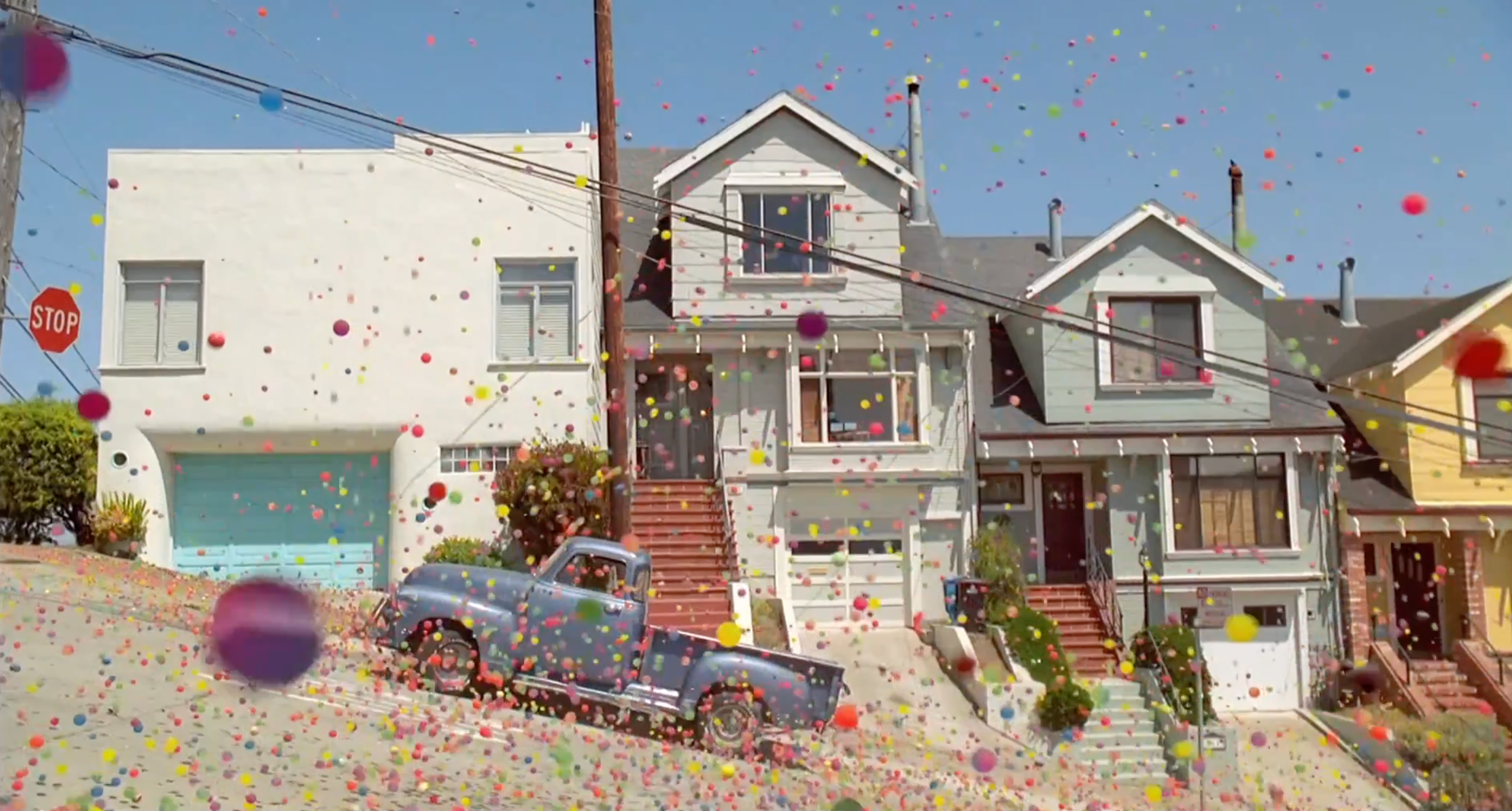
San Francisco’s iconic hills offered the perfect setting. The plan was straightforward in theory but ambitious in practice. Thousands of rubber balls would be released from the top of the streets and filmed as they bounced downwards, filling the urban landscape with movement and colour. The image would act as a metaphor for the vivid palette that Sony’s Bravia televisions promised.
Nicolai Fuglsig’s Direction
To bring the idea to life, Fallon collaborated with Danish director Nicolai Fuglsig, known for combining strong visual concepts with a documentary sense of realism. Fuglsig insisted that the spectacle should be created physically rather than digitally. The production would rely on real balls bouncing through real streets.
The shoot took place over several days in San Francisco. Approximately 250,000 rubber balls were released along the city’s famous slopes, including sections of Filbert Street. Carefully planned barriers and crews were positioned throughout the area to collect the balls after each take so they could be reused. Multiple cameras captured the action from different angles as the waves of colour flowed through the neighbourhood.
The soundtrack added another layer of atmosphere. The commercial used José González’s gentle acoustic cover of the song Heartbeats, a choice that contrasted with the chaotic movement of the balls and gave the film a strangely poetic tone.




A Carefully Orchestrated Spectacle
Despite its playful appearance, the production required meticulous planning. Streets were closed, residents were consulted and teams worked continuously to reset the thousands of balls between takes. Safety measures ensured that cars, buildings and pedestrians were protected while the balls surged downhill.
The final film avoided digital manipulation almost entirely. Apart from minor adjustments, what viewers saw on screen was the real event. The authenticity of the images became a defining feature of the commercial. In an era increasingly dominated by computer generated effects, the physical reality of the bouncing balls gave the film a refreshing sense of wonder.

Credits Behind the Bounce
The commercial was created by Fallon London for Sony’s Bravia television campaign. The concept came from the agency’s creative team, who sought a visually simple way to express the richness of colour that defined the new screens.
Danish director Nicolai Fuglsig brought the idea to life, insisting that the spectacle should be achieved physically rather than through digital effects. Production was handled by MJZ, the renowned commercial production company known for large scale and visually ambitious advertising work.
Cinematographer Joaquin Baca Asay shot the film, giving the images their luminous, cinematic quality. His camera follows the bouncing balls through San Francisco’s steep streets with a fluid sense of movement that heightens both the chaos and the beauty of the moment.
The commercial is set to José González’s acoustic cover of Heartbeats, originally written and recorded by the Swedish duo The Knife. The gentle, melancholic track became inseparable from the images and helped turn the commercial into a cultural moment.

Advertising That Became Culture
When the commercial premiered in 2005 it quickly gained international attention. Viewers shared the film online and the behind the scenes footage became almost as popular as the ad itself. It won numerous awards including the Grand Prix at the Cannes Lions International Festival of Creativity.
More importantly, the commercial demonstrated that advertising could still capture genuine spectacle. By combining a simple idea, a striking location and a commitment to physical production, the team created an image that remains embedded in popular culture.
Nearly two decades later, the sight of thousands of colourful balls bouncing through the streets of San Francisco still feels magical. It is a reminder that sometimes the most powerful images come from the simplest ideas, especially when they are allowed to unfold in the real world.