
Sigurd Lewerentz
St. Peter's Church
- ArchitectSigurd Lewerentz
- PhotographerKarl-Erik Olsson-Snogeröd, courtesy of ArkDes and Chen Hao
Nicolas Schuybroek A building made of brick, darkness, and gravity. Nothing feels composed for effect; everything feels inevitable. The space holds silence rather than displaying it. It teaches how architecture can be heavy and gentle at the same time.

St Peter's Church in Klippan
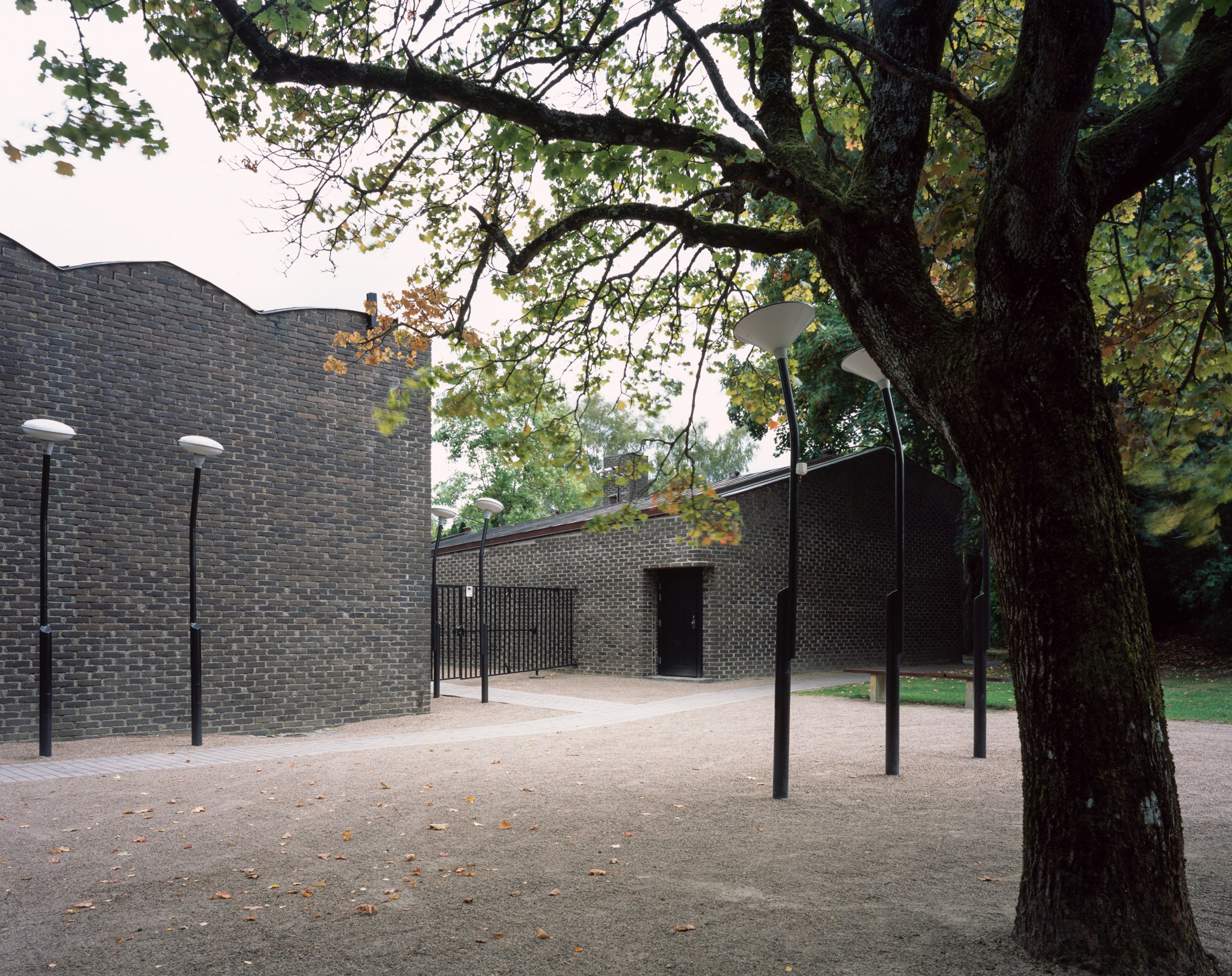
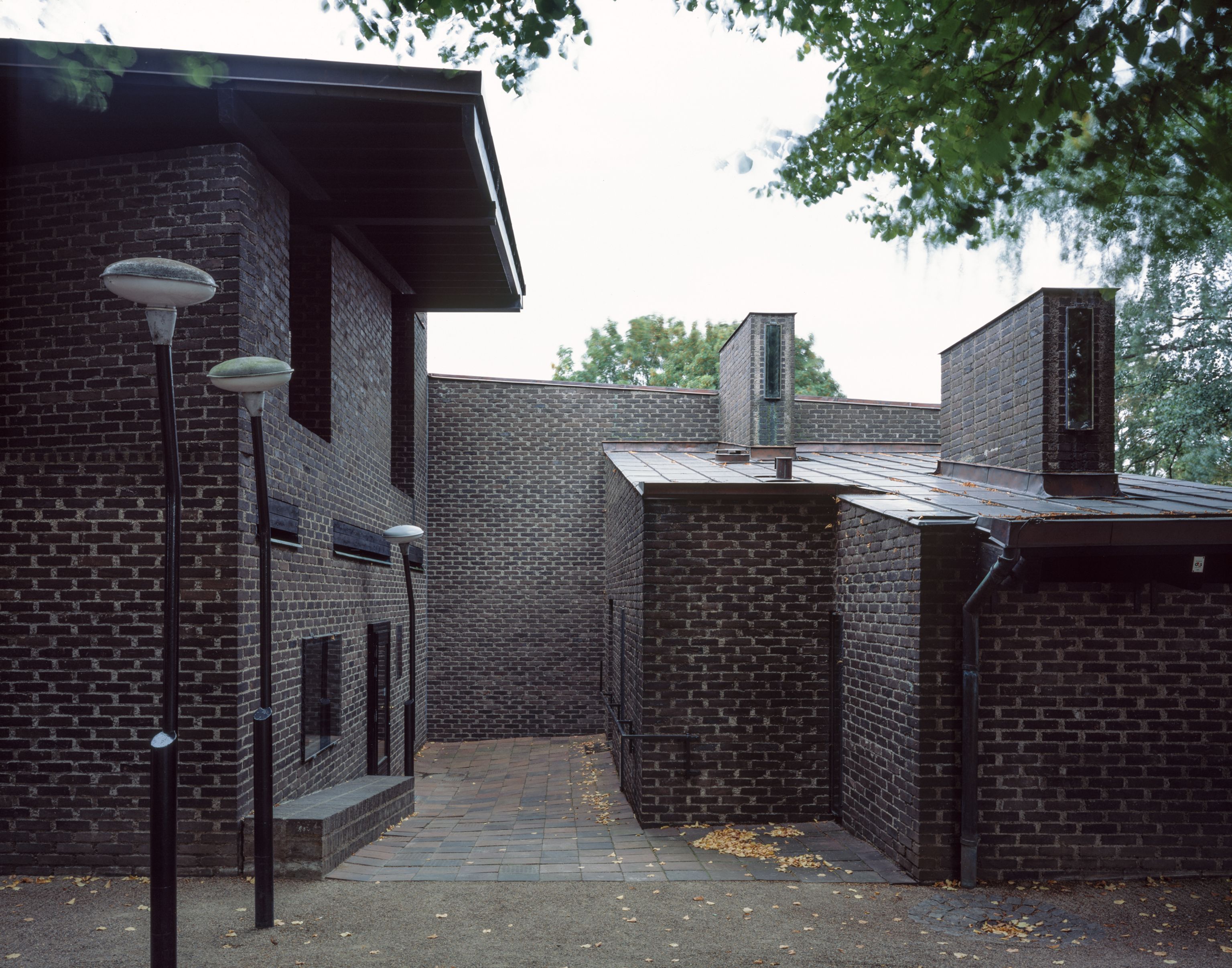
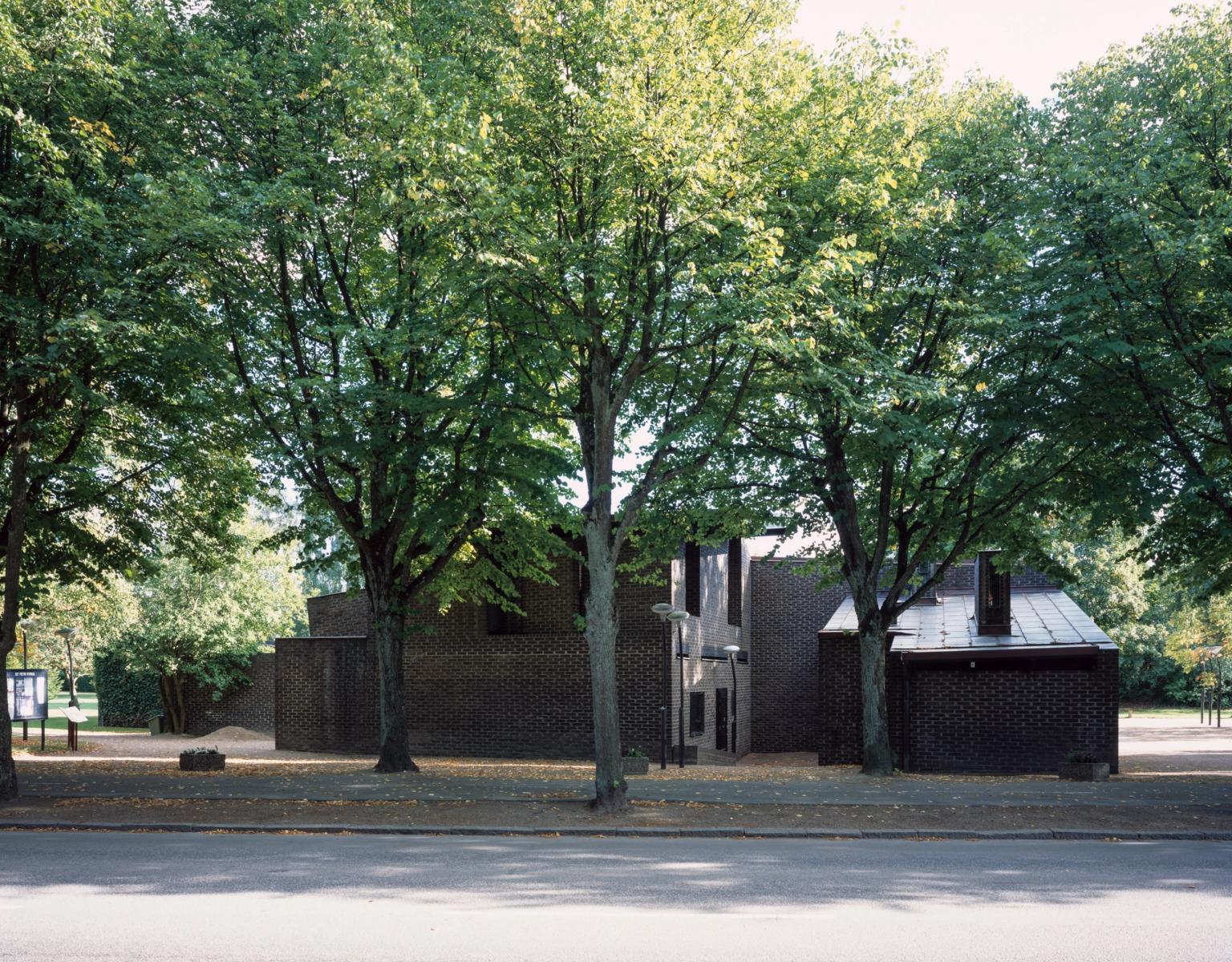
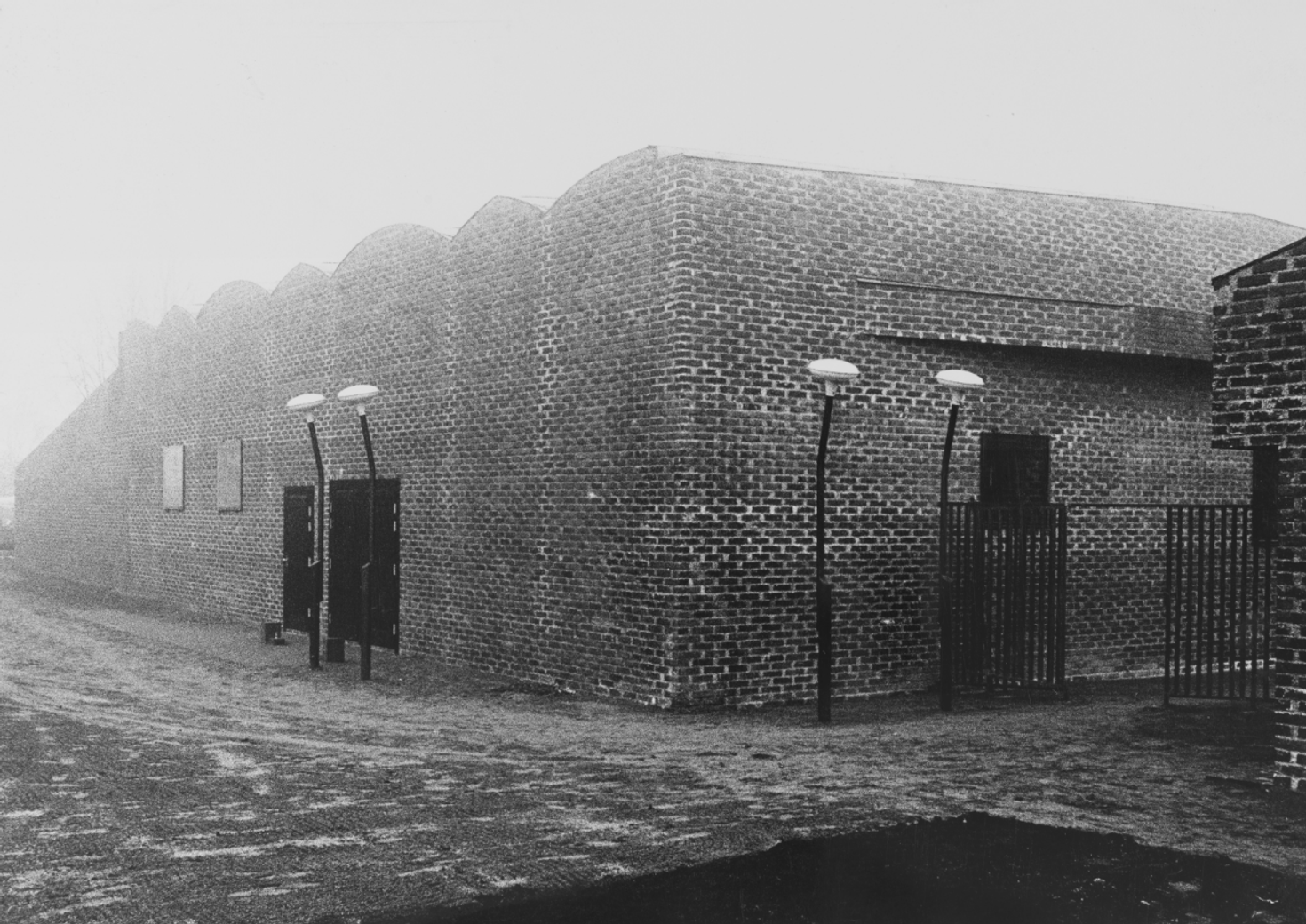
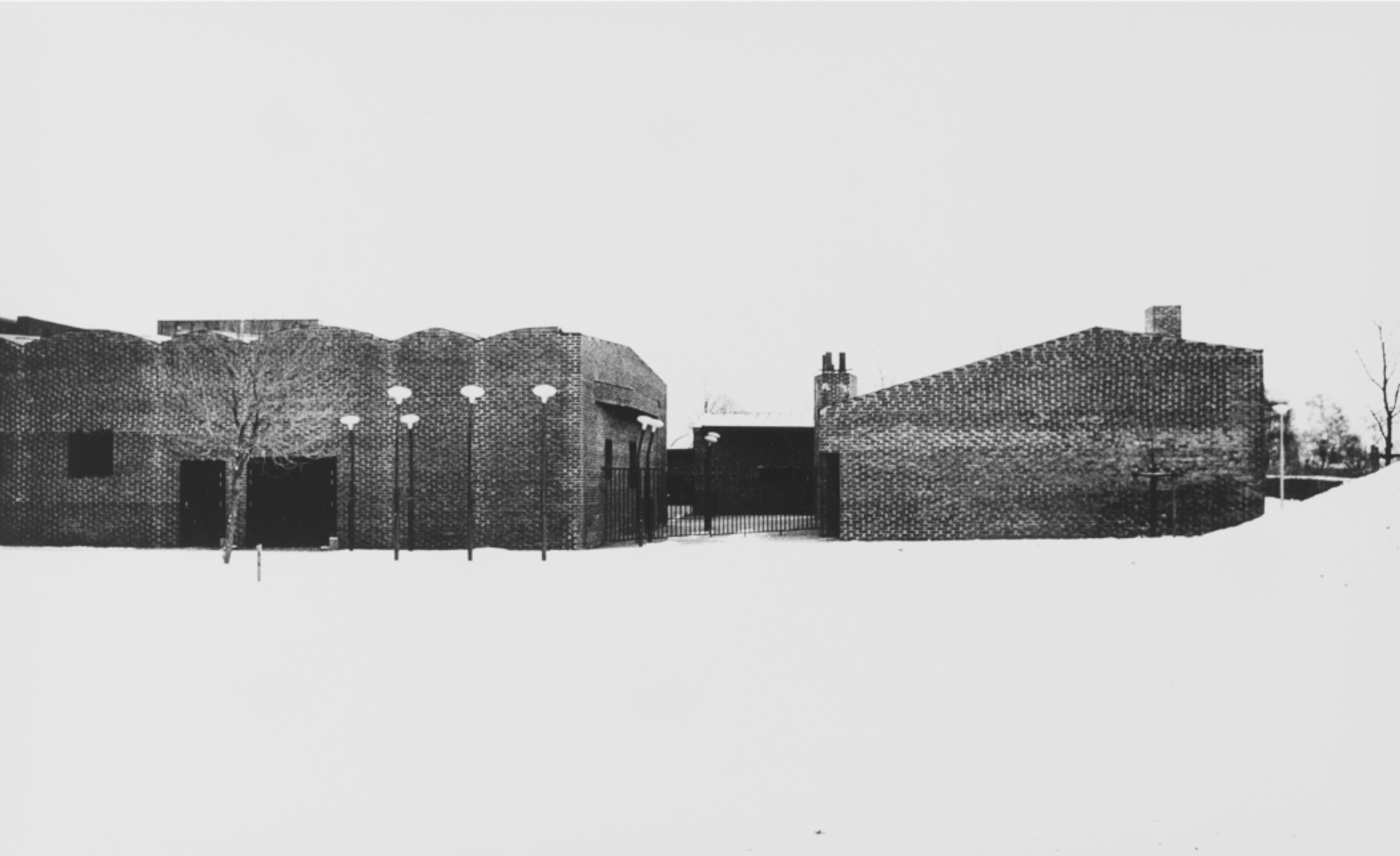
Located in Klippan, Sweden, St Peter's Church sits slightly removed from the town, embedded in a quiet landscape of trees and low, dispersed volumes. Rather than presenting itself as a single object, the project unfolds as a small ensemble of buildings, church, parish halls, offices, and courtyards, connected through a network of paths that structure movement across the site. The experience develops gradually: one moves through a sequence of outdoor and semi-enclosed spaces before reaching the main church, encountering subtle transitions rather than a direct arrival. Designed in the 1960s, the project rethinks the church not as an isolated monument, but as a spatial environment shaped by movement, enclosure, and time. Its presence is therefore less about visibility from afar and more about the internal relationships between spaces once inside the site.


The Architect and a Late-Career Project
The church was designed by Sigurd Lewerentz, a Swedish architect whose most significant work emerged late in his career after a long period of limited practice. Returning to architecture with a renewed focus, he approached the project with an emphasis on fundamental questions of construction, proportion, and material behavior rather than formal expression. His background in building and earlier exposure to European architectural traditions informed a method that prioritizes direct engagement with making over purely representational design.
In this project, that approach becomes particularly evident through his close involvement in the development of details and his willingness to let the building evolve through a continuous dialogue between drawing and construction. The result is a work that reflects a distilled version of his thinking, controlled, precise, and deeply rooted in how architecture is actually realized rather than how it is initially conceived on paper.

Rules, Construction, and the Logic of Making
A central principle of the project is the decision to never cut a brick, a constraint that fundamentally shaped both design and construction. This rule required every dimension, opening, and structural junction to align with the brick module from the outset. Instead of forcing the material to adapt to a predetermined form, the architecture was developed within the limits of the material itself. Construction was not treated as a strictly predefined process, but as something that unfolded on site, where adjustments and refinements could still occur during execution. Lewerentz remained closely involved throughout, often supervising work directly and allowing small decisions to be resolved in response to conditions as they emerged.

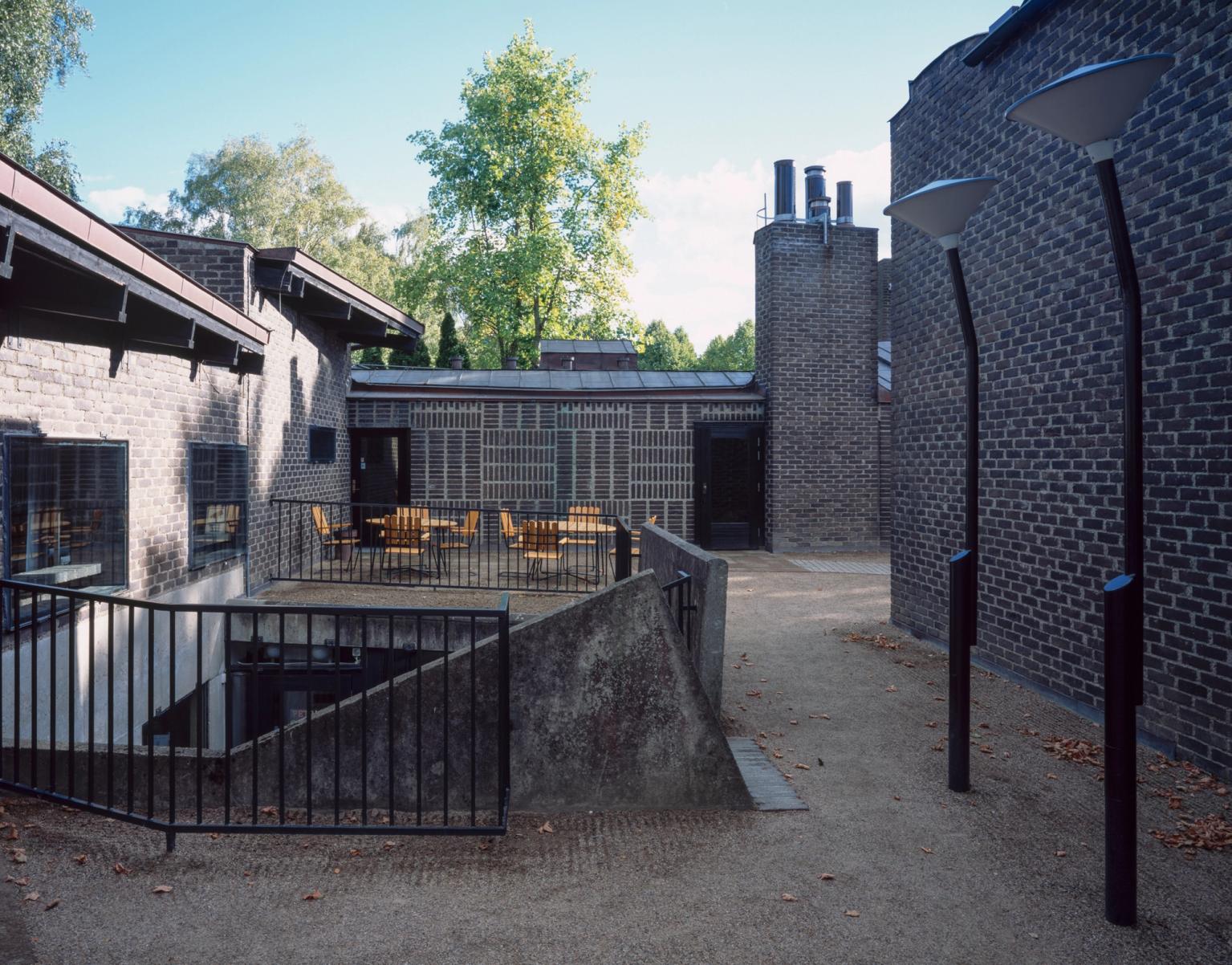

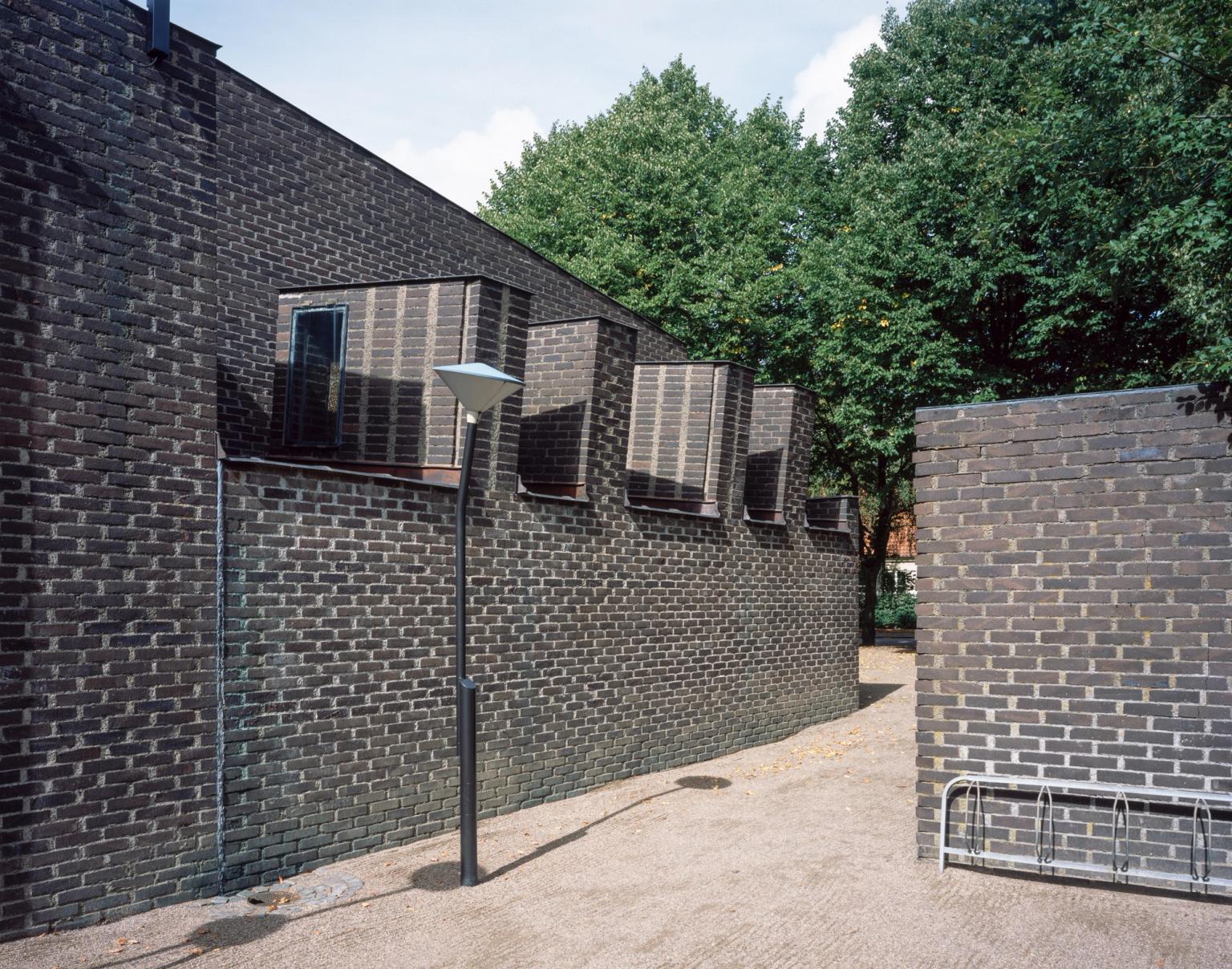


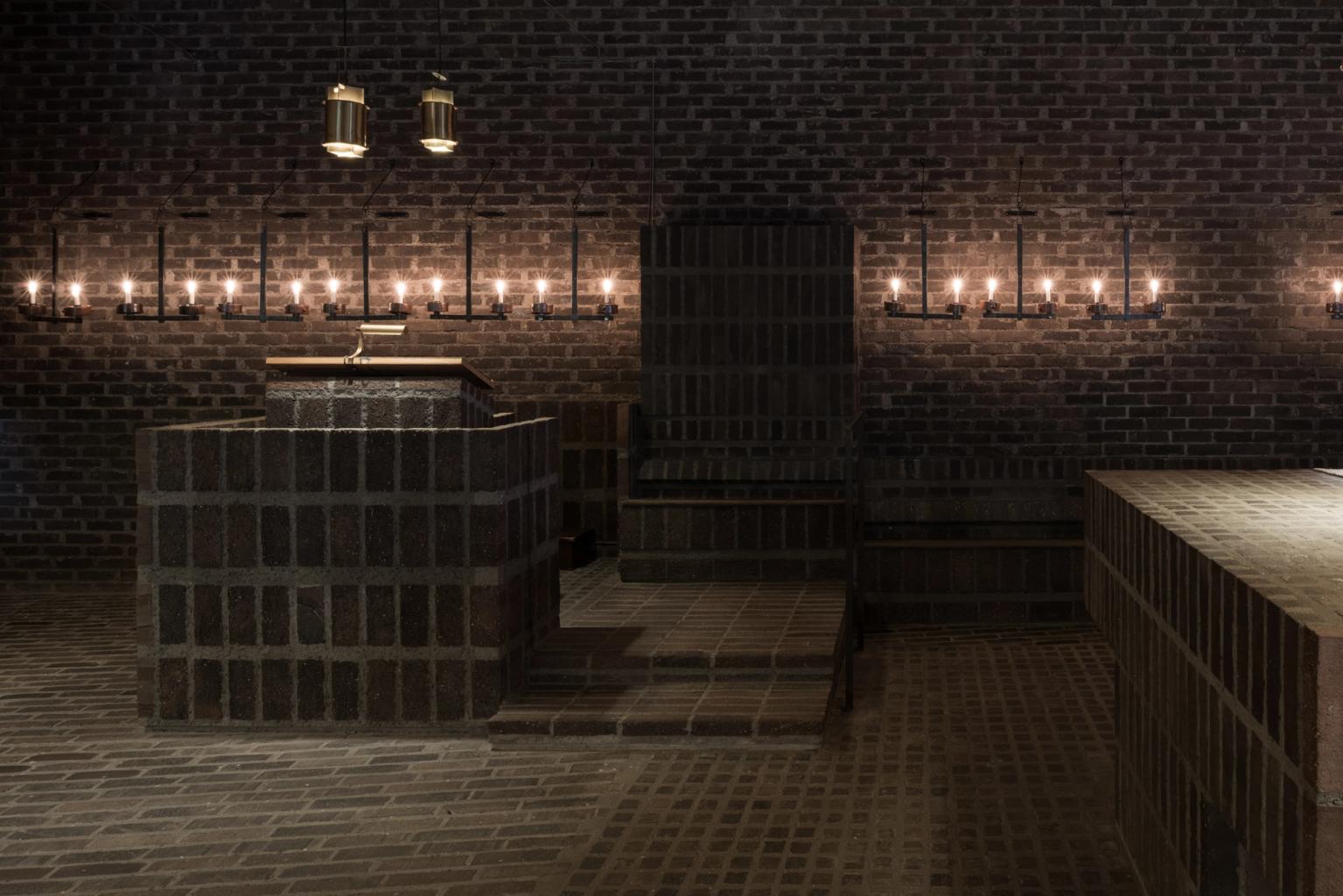

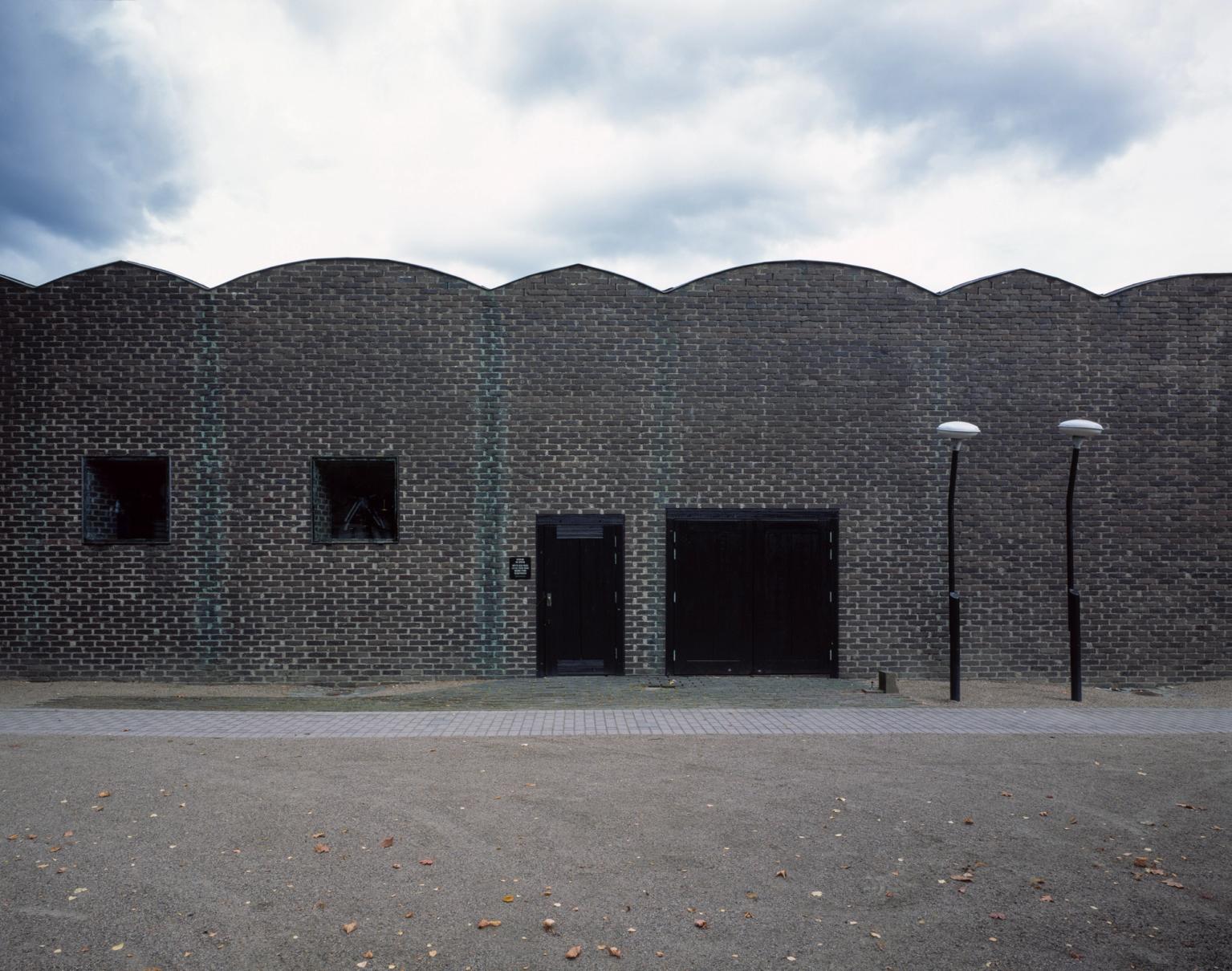

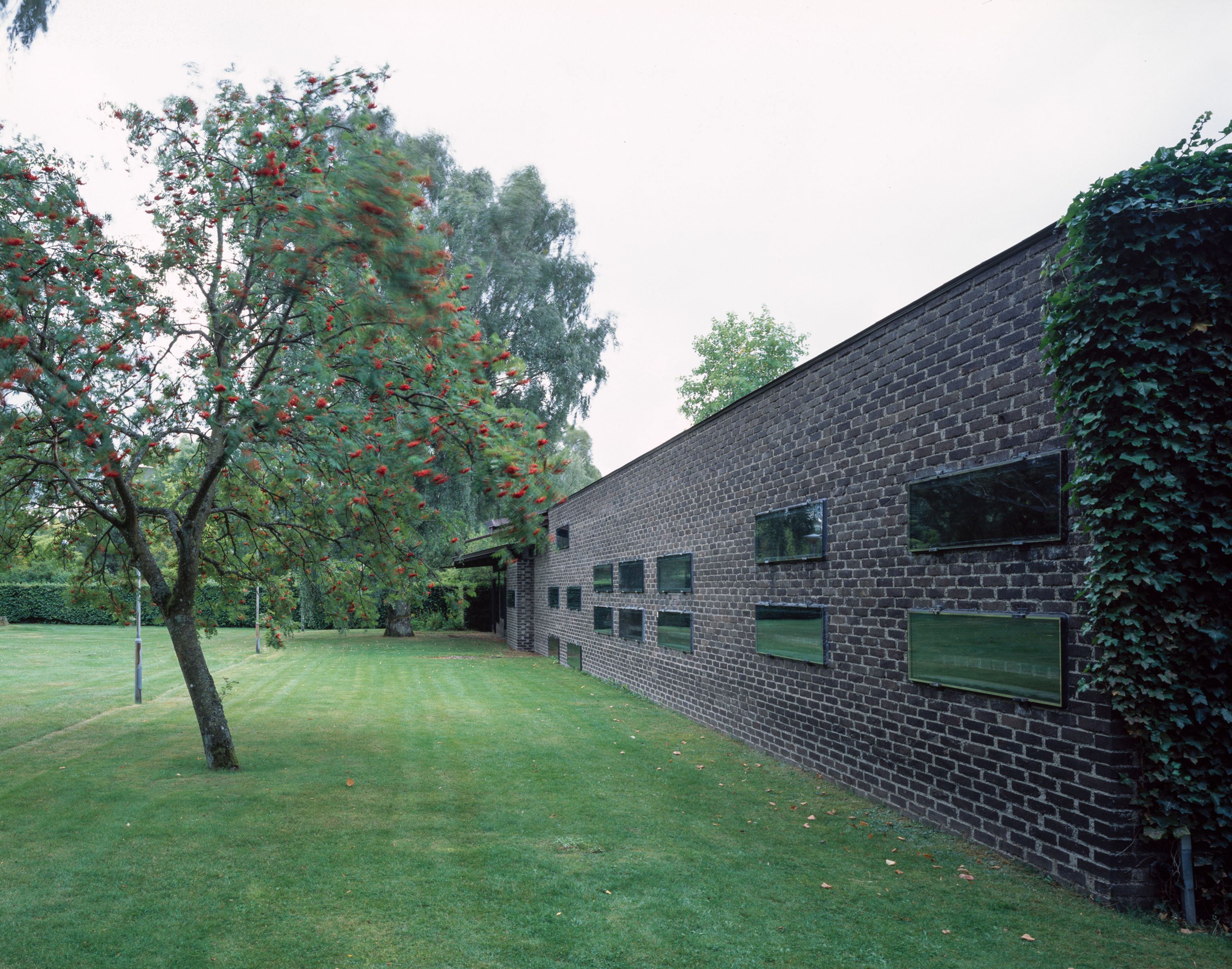
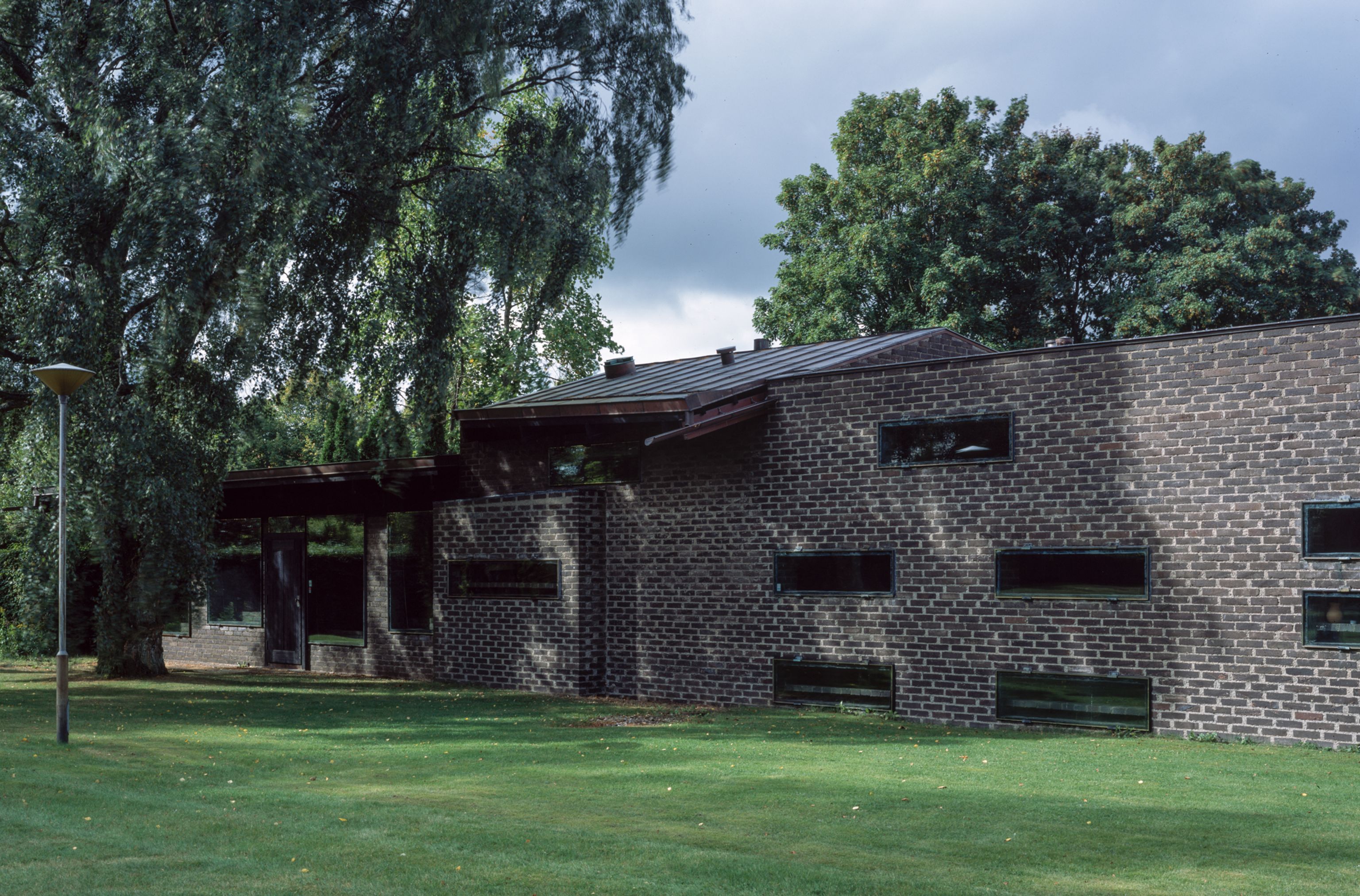
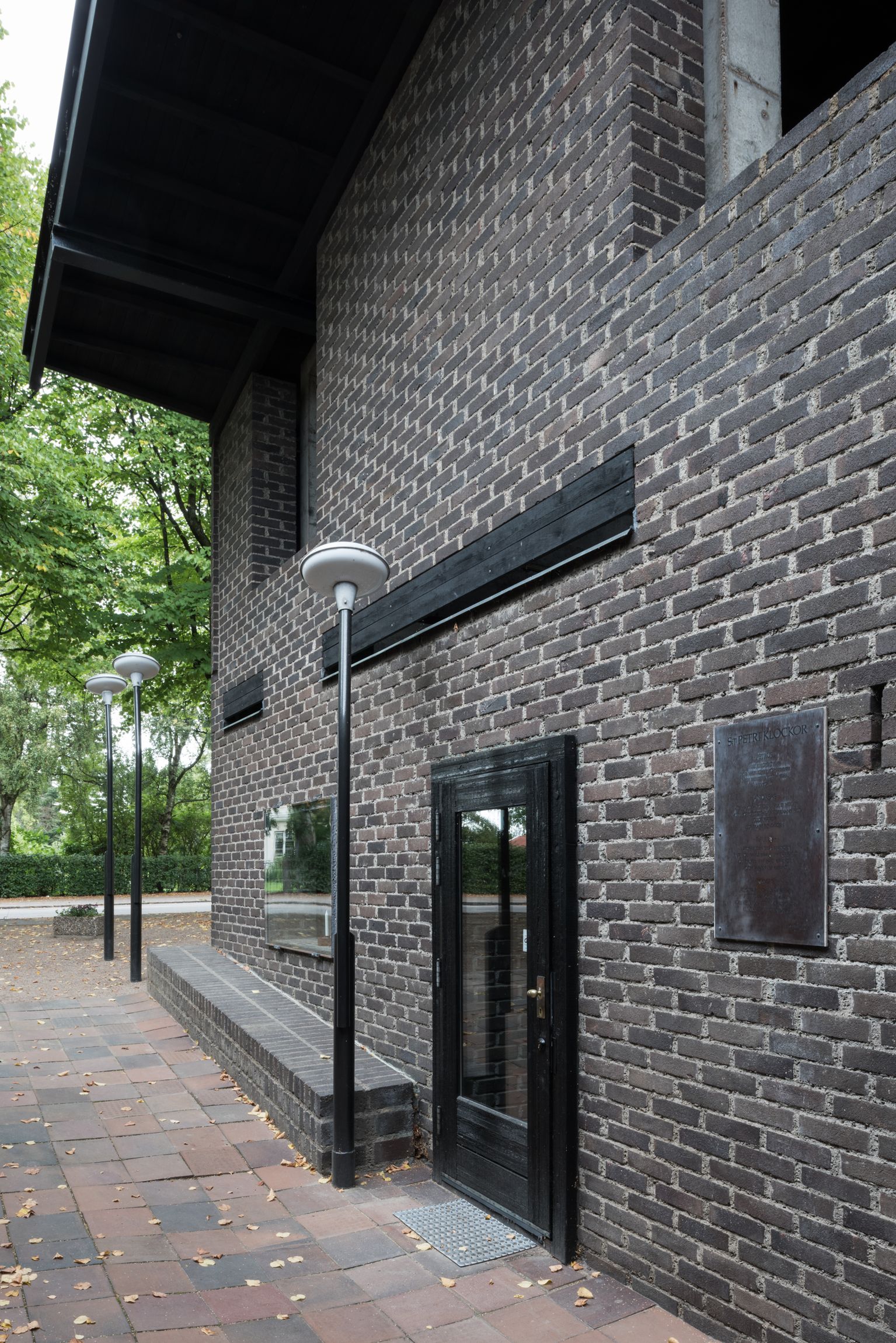
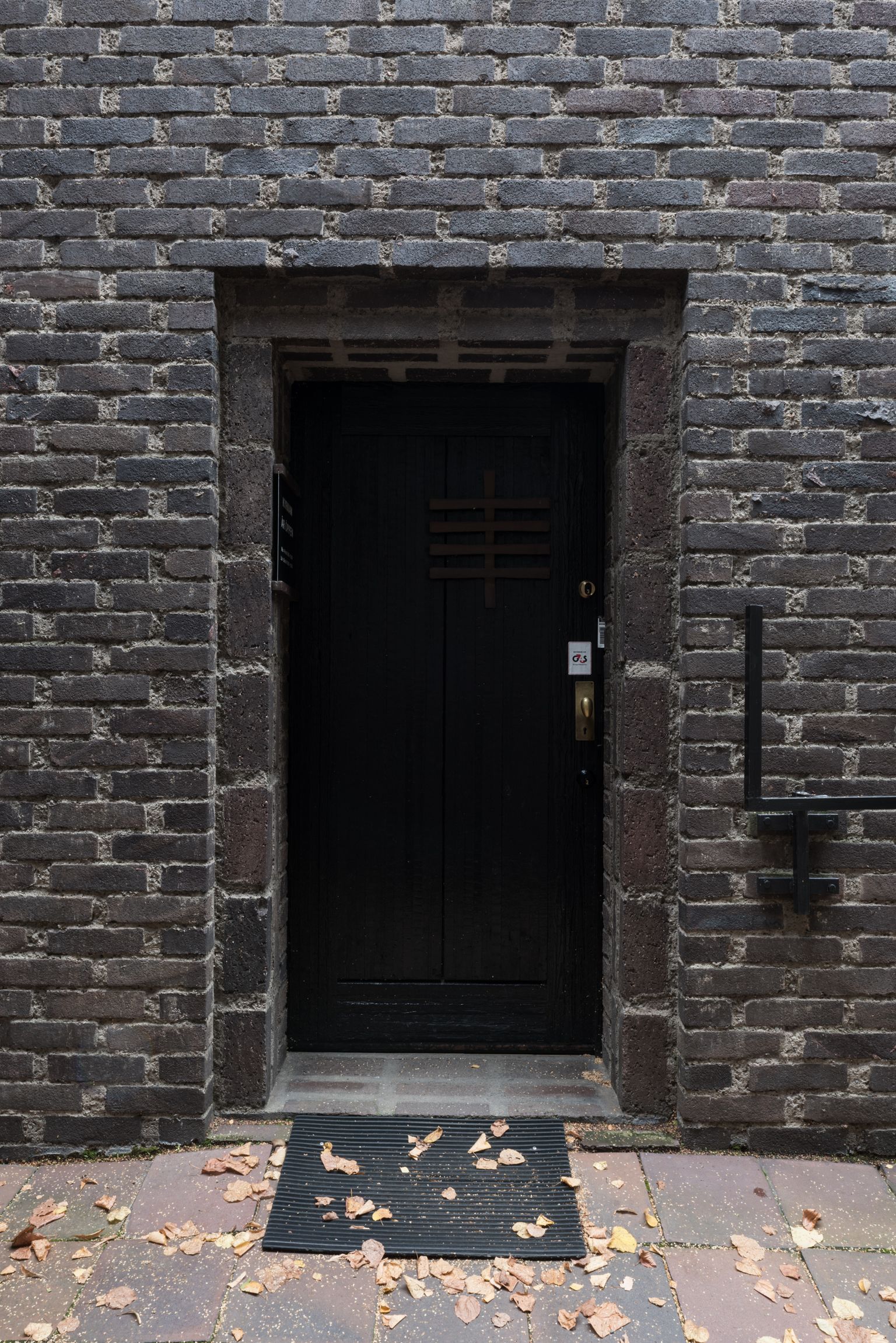
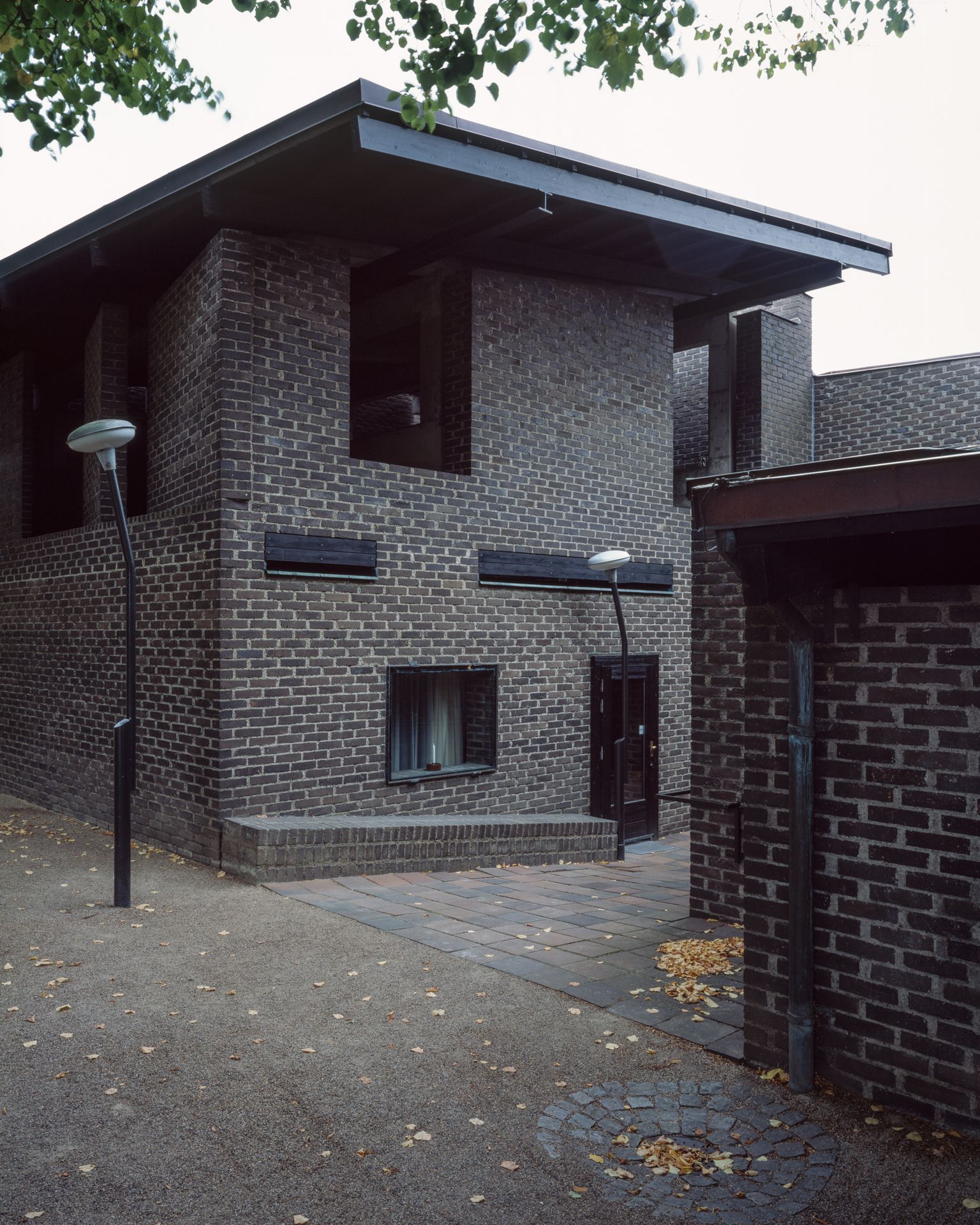
Bricks were laid with minimal reliance on precise leveling methods, resulting in subtle variations in alignment and joint thickness that remain visible in the finished building. Mortar joints are expressed rather than concealed, and the overall surface retains traces of manual labor. Rather than correcting these irregularities, they are incorporated as part of the architectural outcome. In this way, construction becomes legible as an integral part of the design, and the boundary between planning and making is intentionally blurred.


Materiality and Controlled Contradictions
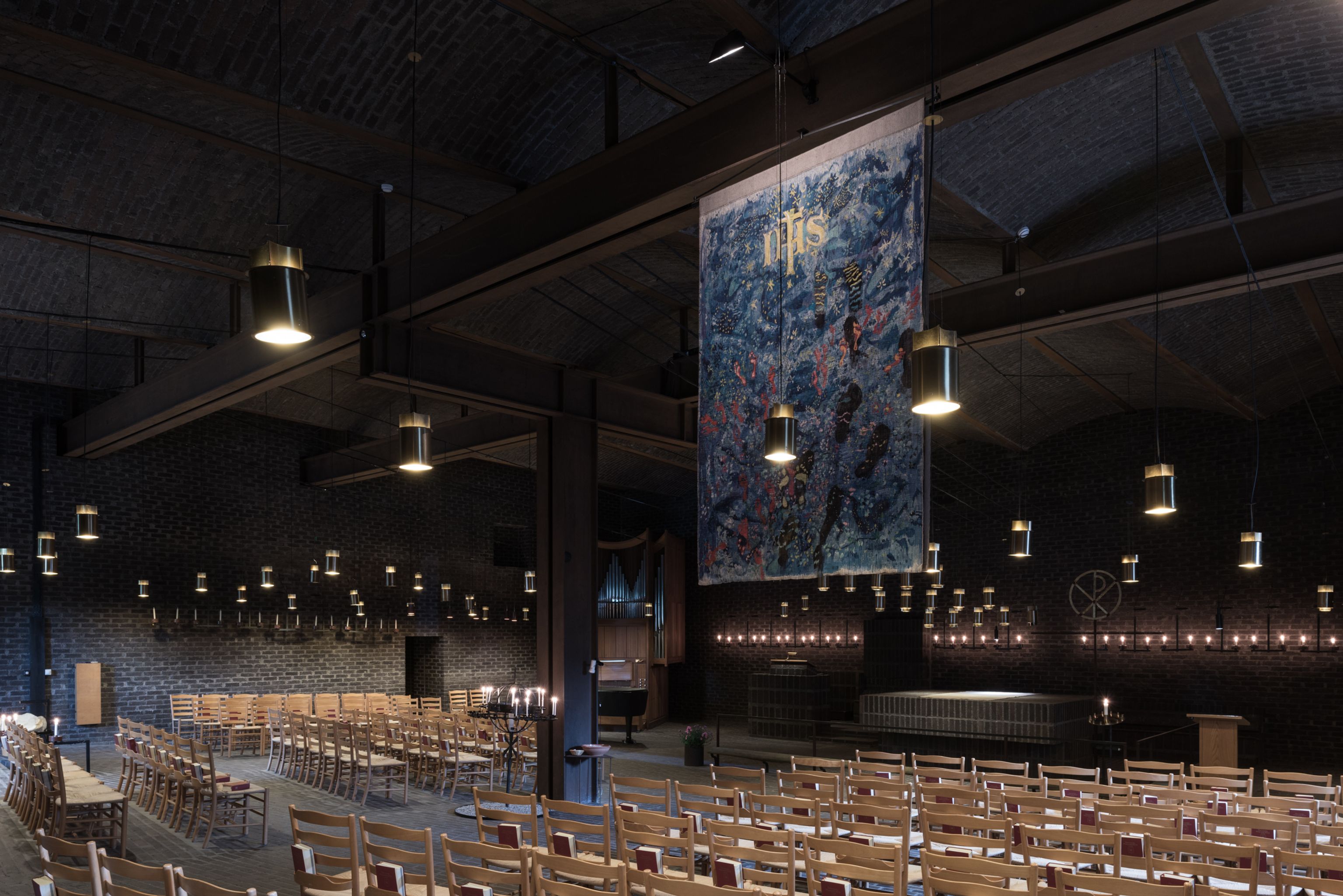
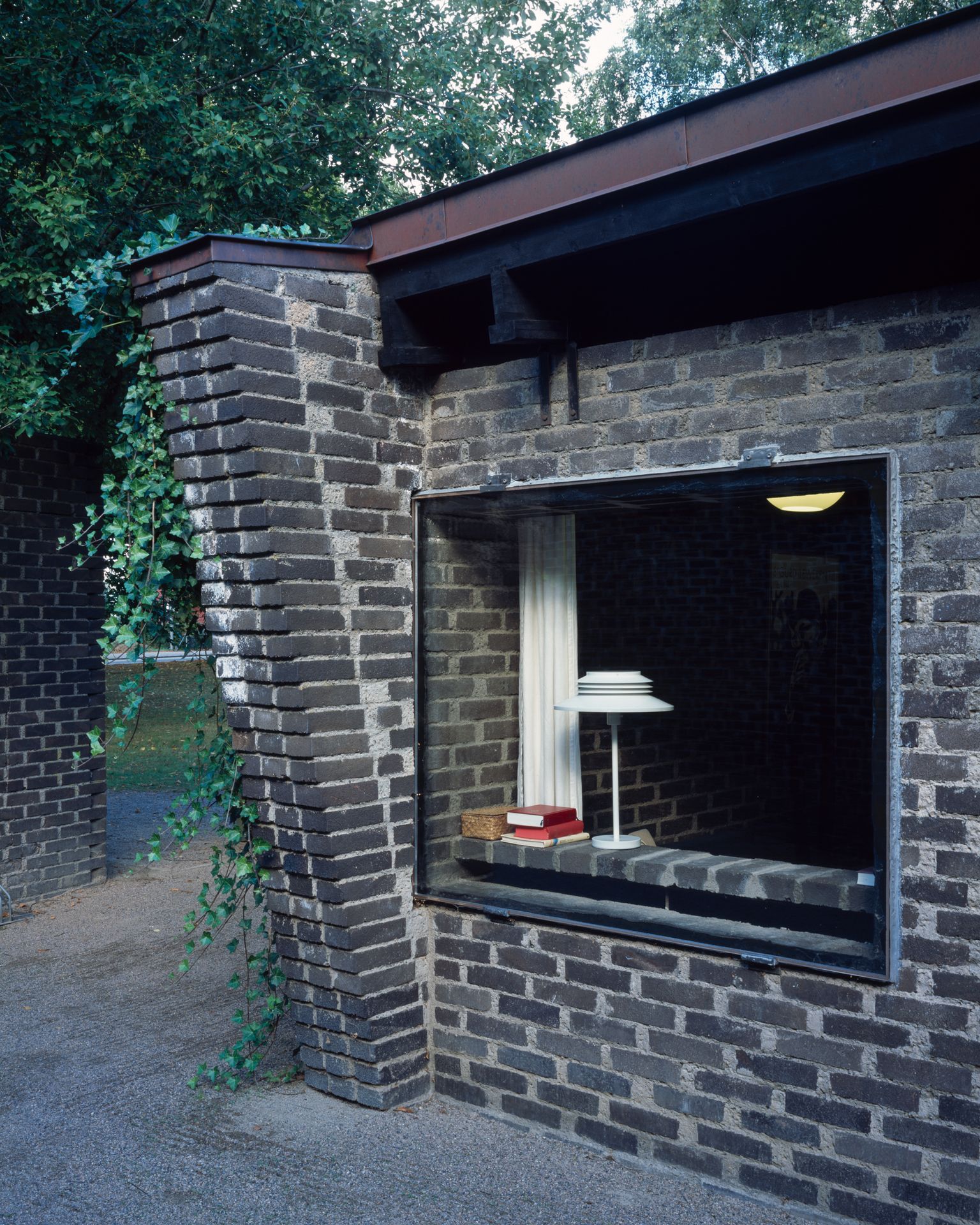
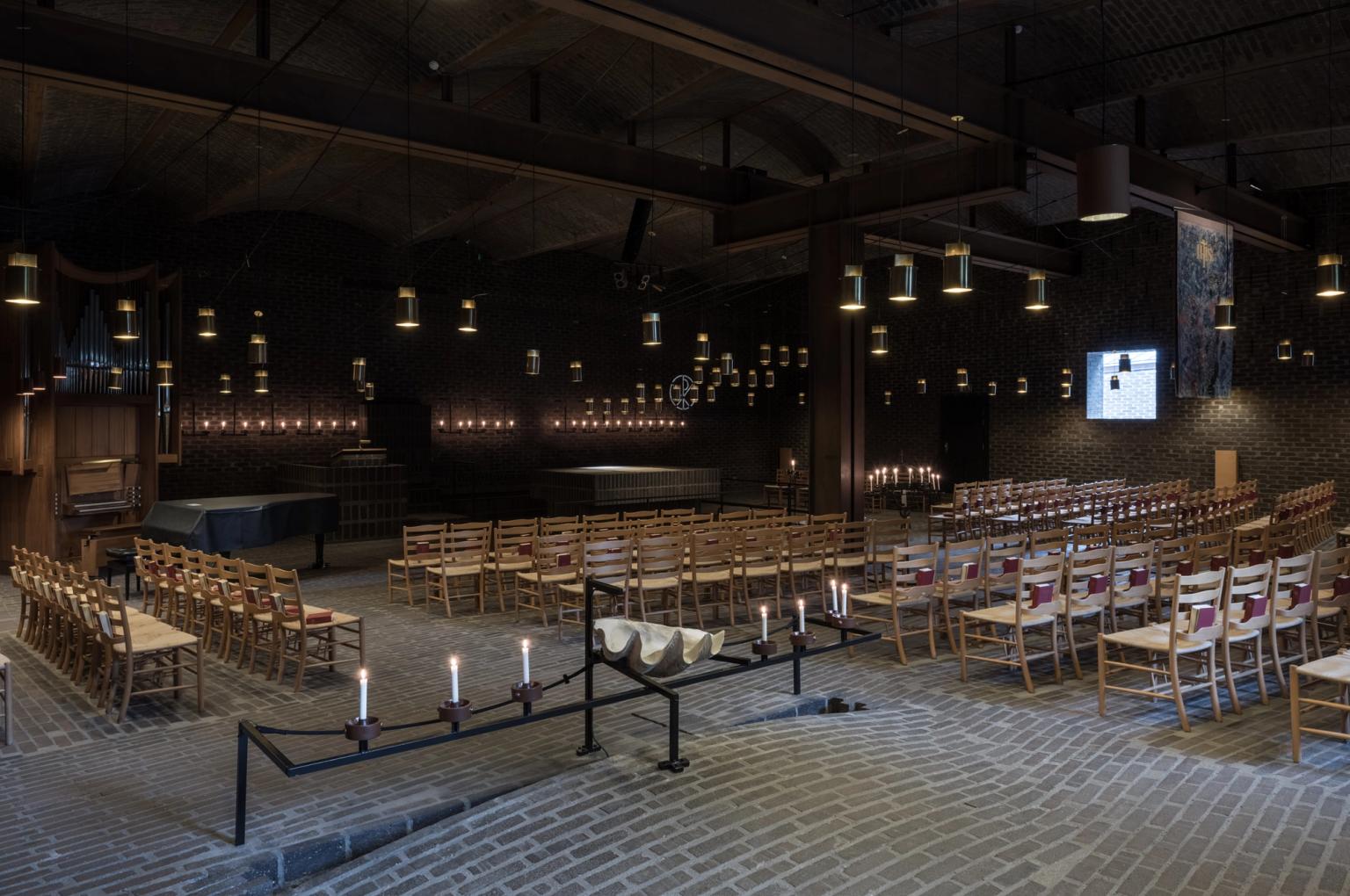
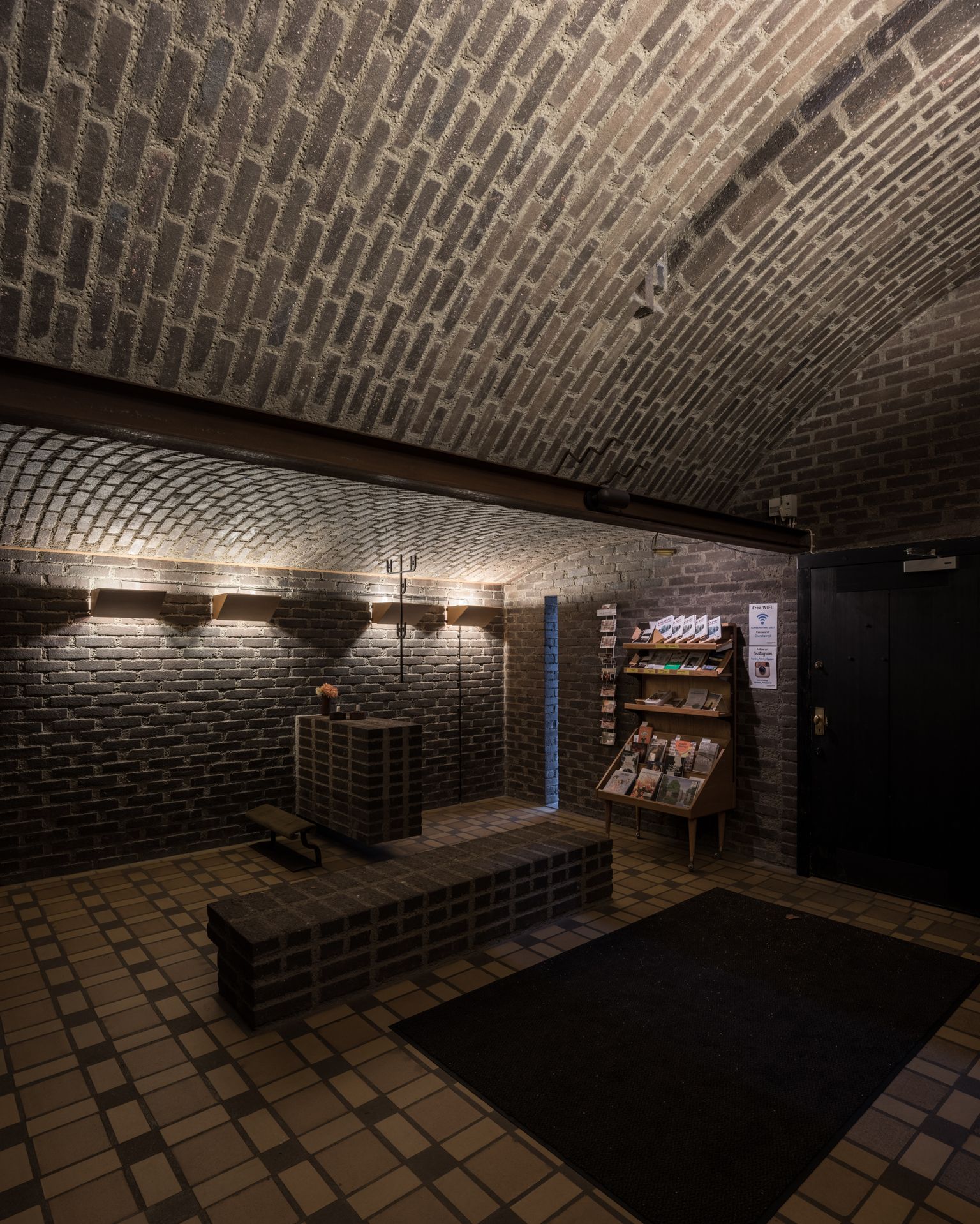
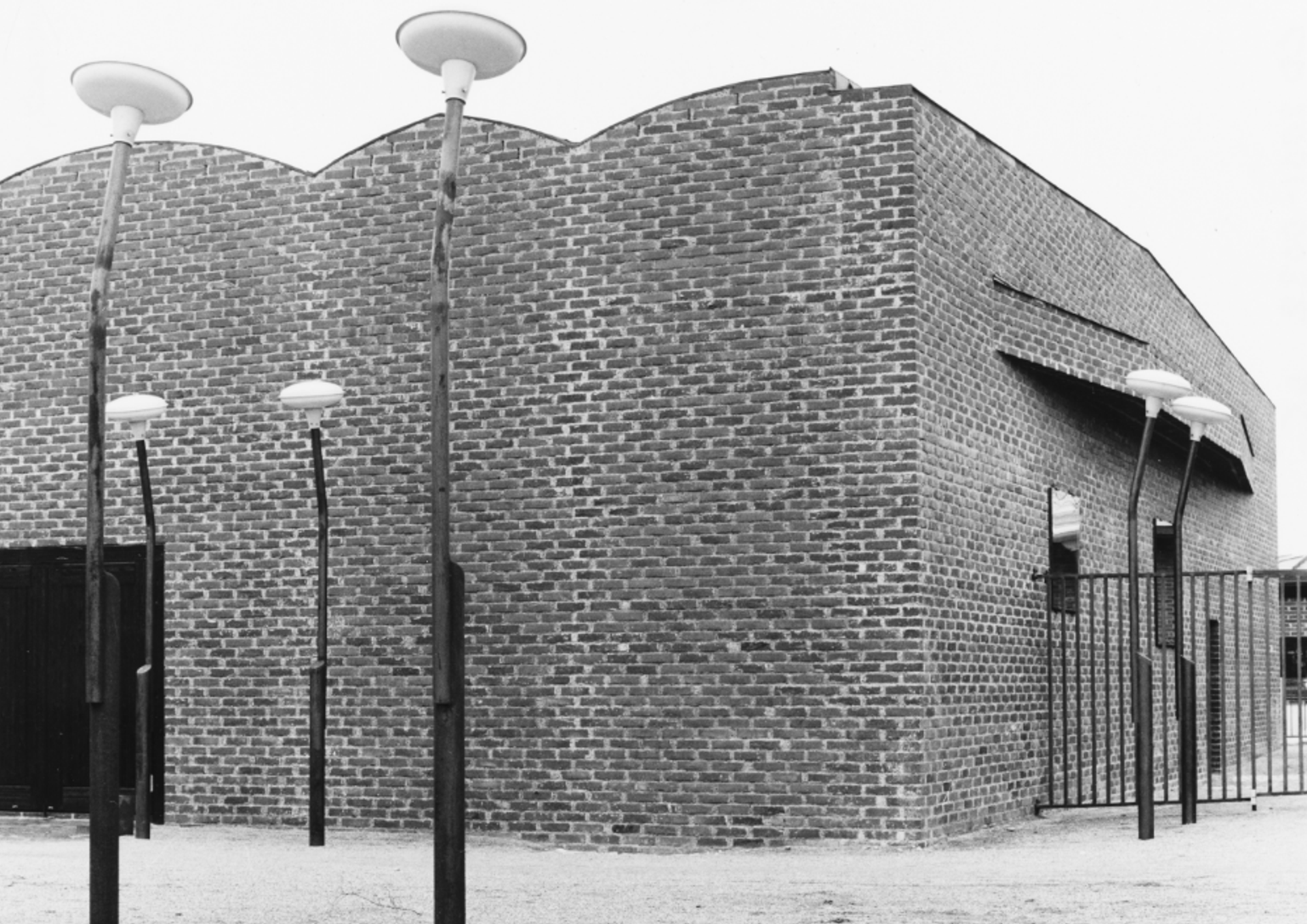
Brick defines the entire architectural environment, applied consistently across walls, floors, ceilings, and built-in elements. This continuity creates a unified material field in which structural and spatial components are closely interwoven. The bricks themselves are dark and textured, with surfaces that emphasize weight and irregularity rather than smoothness or refinement. Mortar joints remain visible and expressive, reinforcing the sense that the building is assembled rather than finished in a conventional sense.
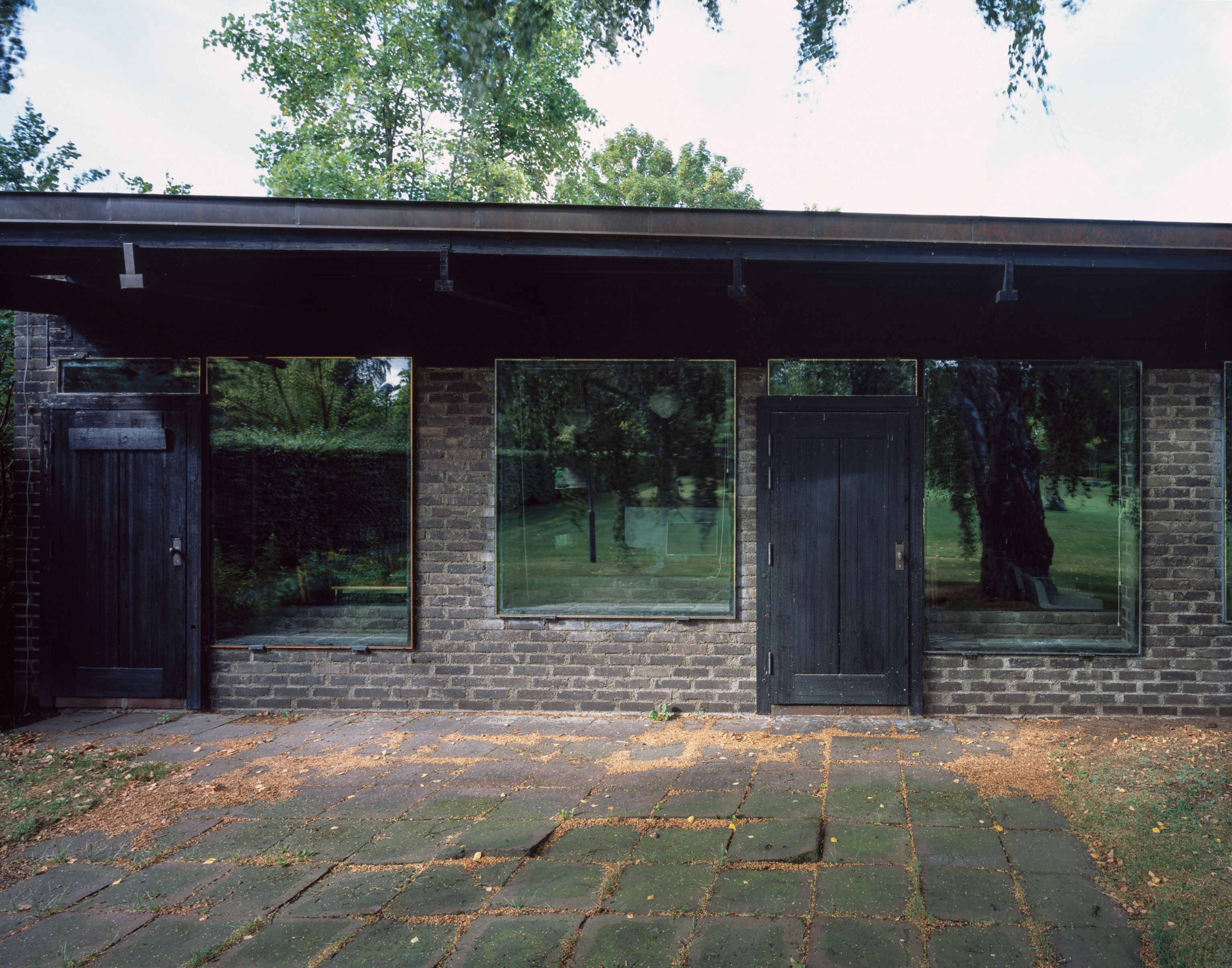

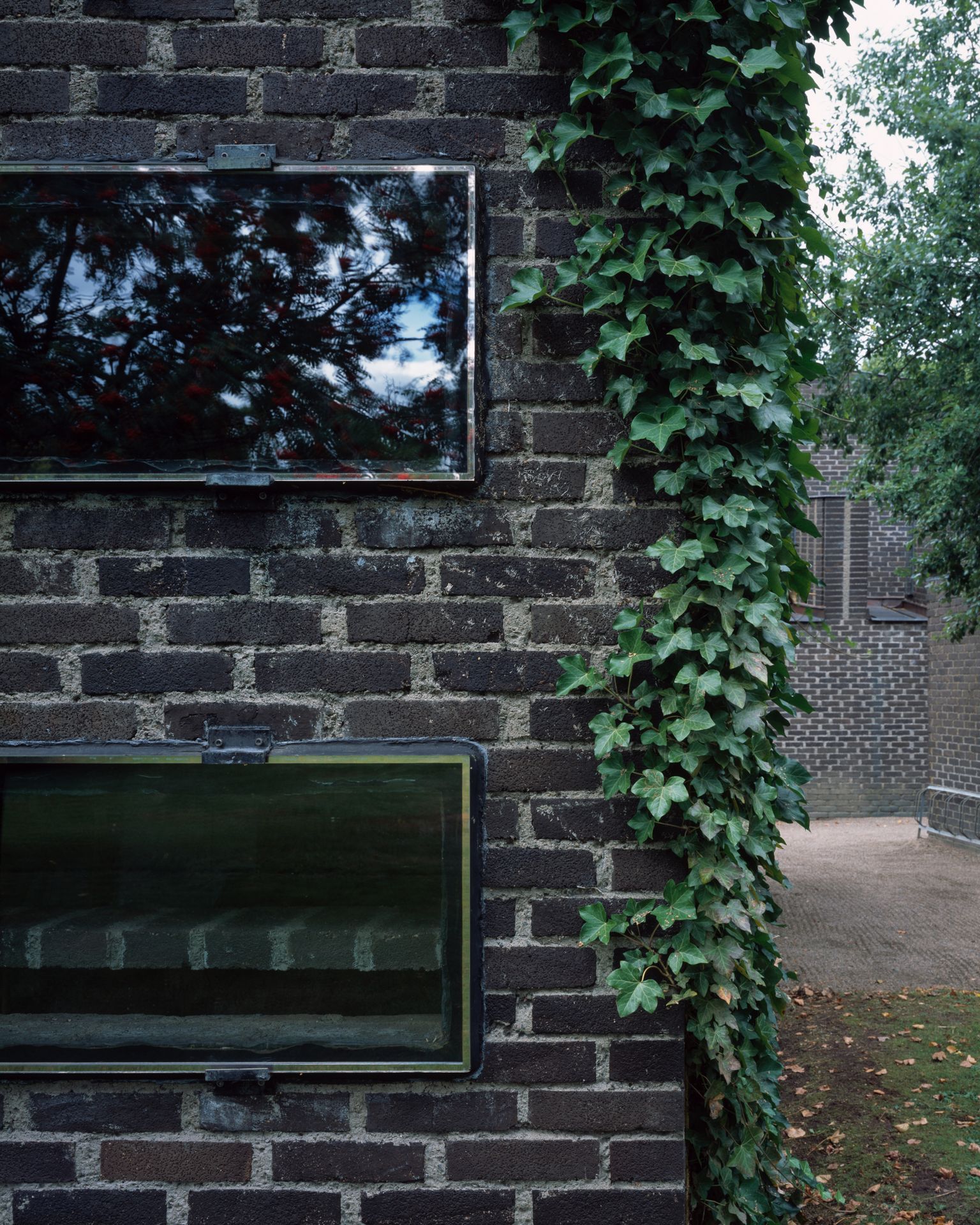
At the same time, the project introduces subtle tensions within this material consistency. Windows are mounted externally without traditional frames, appearing as thin glass surfaces attached to the brick rather than embedded within it. From the interior, they recede almost entirely, allowing the wall to read as continuous, while from the outside they register as precise interruptions in the mass. Structural elements such as steel beams and columns are integrated into the system in a way that is sometimes visible and sometimes concealed, creating a layered relationship between structure and appearance. These controlled contrasts add complexity without breaking the overall coherence, allowing the building to operate simultaneously as a unified material system and as a collection of carefully orchestrated distinctions.


Space, Atmosphere, and Legacy
The spatial sequence of the church is shaped by gradual transitions rather than immediate exposure. Access to the main interior is intentionally understated, reinforcing the sense of moving through a process of approach before arrival. Once inside, the nave is defined by clear geometry, yet its perception is modulated by asymmetry, variations in proportion, and a controlled use of natural light. The interior remains relatively dim, which softens the visual impact of the materials and encourages a slower, more attentive engagement with space.


Structural elements contribute directly to the spatial experience, with brick vaults supported by steel beams that converge at a central column, subtly suggesting a cross while remaining fundamentally structural. Across the building, space, structure, and material are interdependent rather than separated into distinct layers, resulting in an environment where construction logic and spatial perception align.

St Peter's Church is often regarded as a significant reference within architectural discourse for its uncompromising integration of material, construction, and spatial experience. It demonstrates an approach in which architectural meaning arises not from formal gestures, but from consistency, constraint, and precision in execution. Rather than seeking attention through spectacle, it establishes its significance through depth and coherence, offering an example of how architecture can operate as a carefully constructed system in which process and outcome are inseparable.