
Arianne Phillips
Tank Girl
- DirectorRachel Talalay
- Costume DesignerArianne Phillips
KRISSIE TORGERSON The idea of this movie feels more and more relevant as each news cycle passes, which is why it has been a rotating reference as of late. The wardrobe is amazing and honestly the soundtrack is just as good. Like most my selections it also has a dystopian twist.
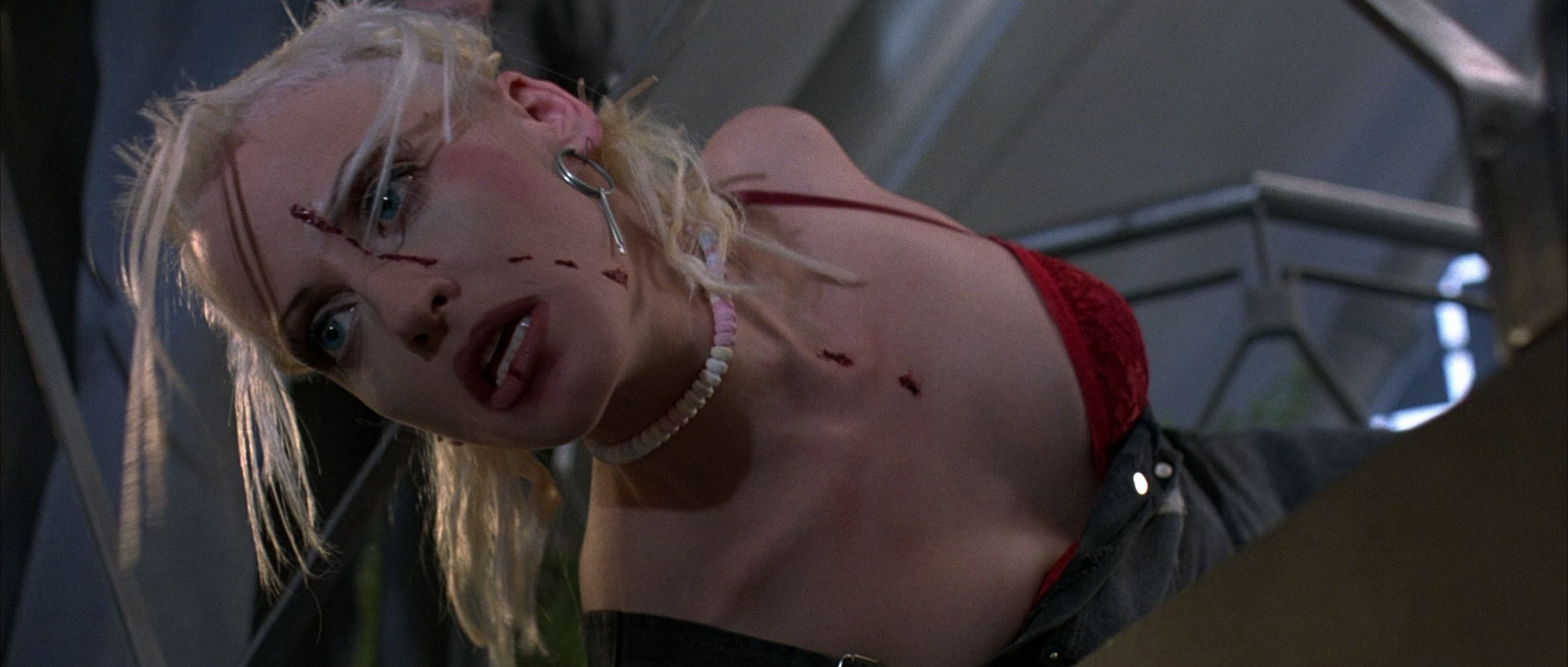

Dressed for Destruction: Arianne Phillips and the Clothes That Made Tank Girl
When Rachel Talalay set out to adapt the anarchic British comic strip Tank Girl for the screen in 1995, she knew the film's wardrobe had to feel as raw and alive as the character herself. Talalay wanted the costumes to feel relevant in the world of music and fashion, which is precisely why she pursued a young Arianne Phillips, who at the time was working as a stylist on music videos and fashion editorials. It was an unconventional choice, and both women knew it. They really took a chance on Phillips - Tank Girl was only the second movie she had ever designed. The gamble paid off in ways neither could have fully anticipated.
Phillips had been raised in northern California and relocated to New York in the early 1980s, where she began working as an assistant stylist, first gaining recognition for helping style Lenny Kravitz for his debut album. Her sensibility was forged at the intersection of music subculture and fashion provocation, which turned out to be exactly the right toolkit for a character who was part punk anarchist, part post-apocalyptic survivalist, and entirely her own invention. The look Phillips assembled for the lead - ripped stockings, paintbrush fingernails, goggles - was a constructed world that existed entirely for the inner self of Tank Girl and no one else.


Building a Wardrobe from the Ground Up
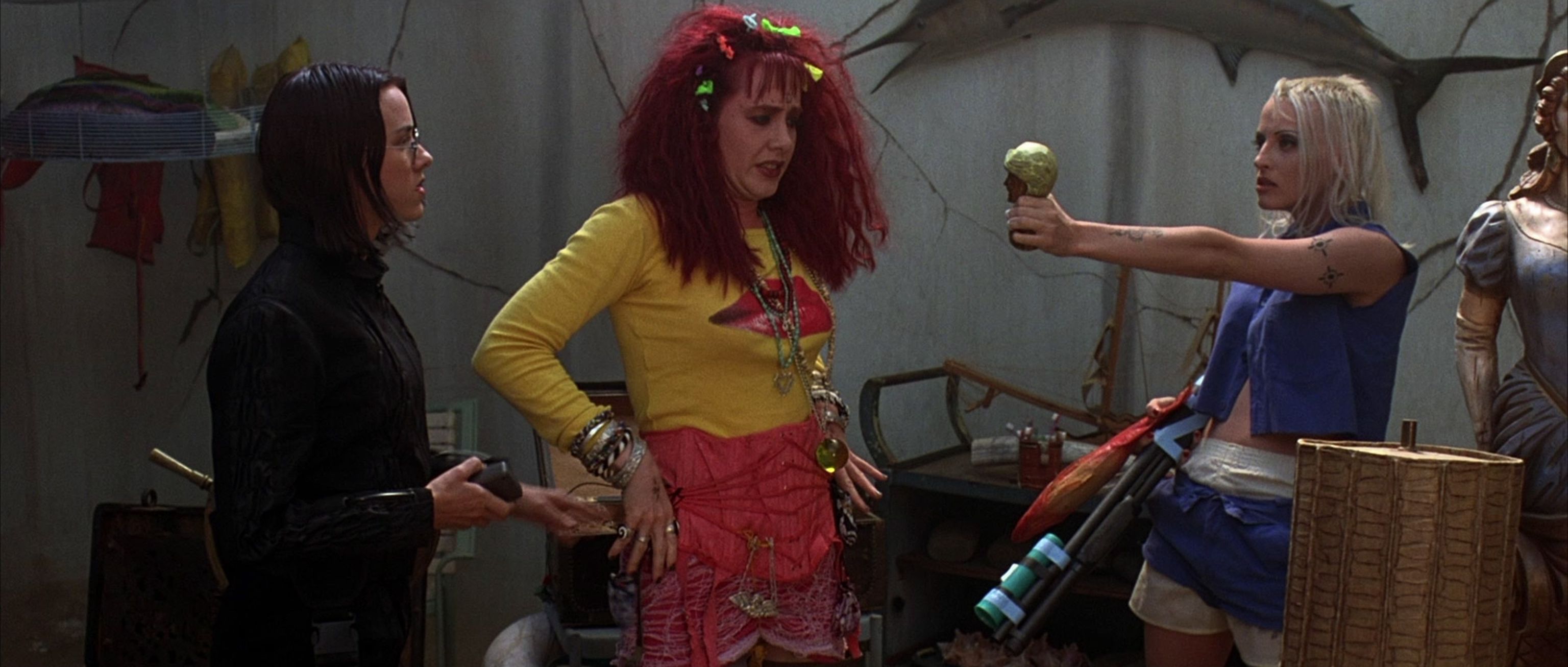
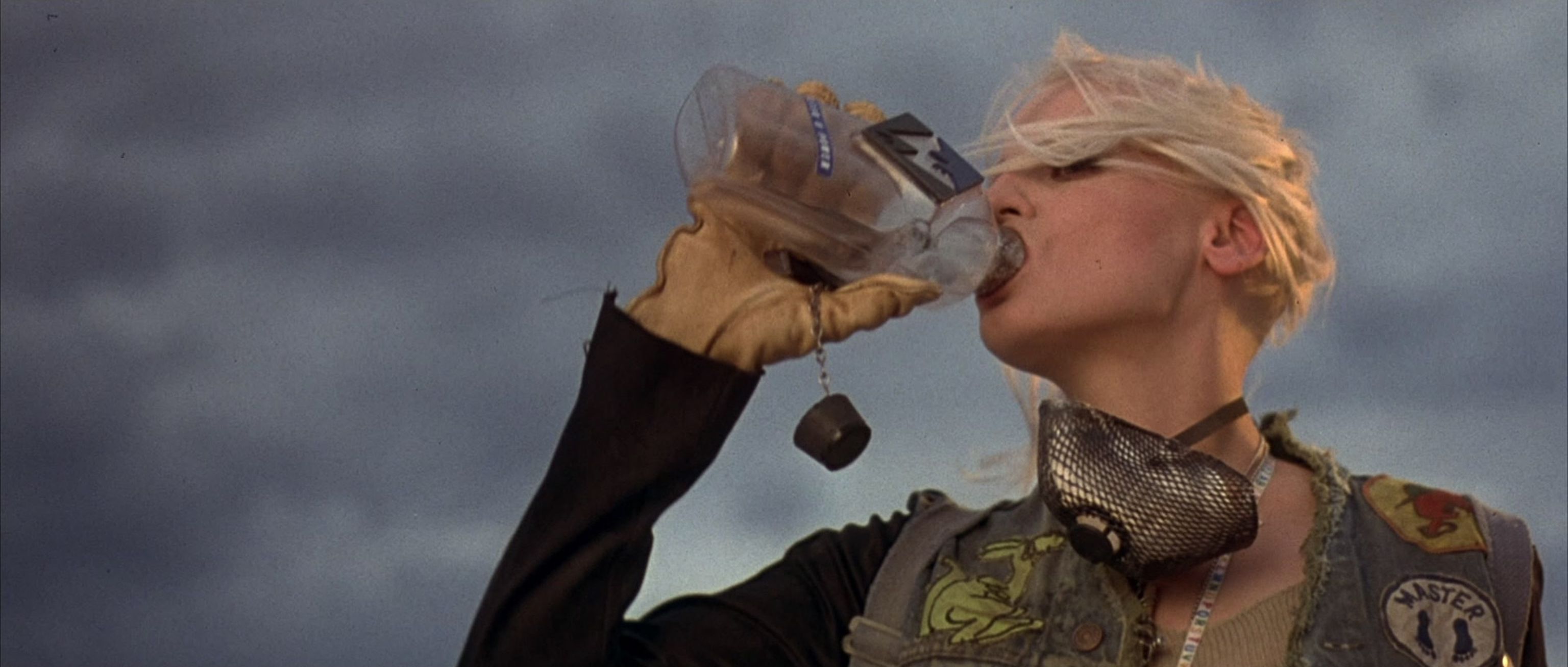
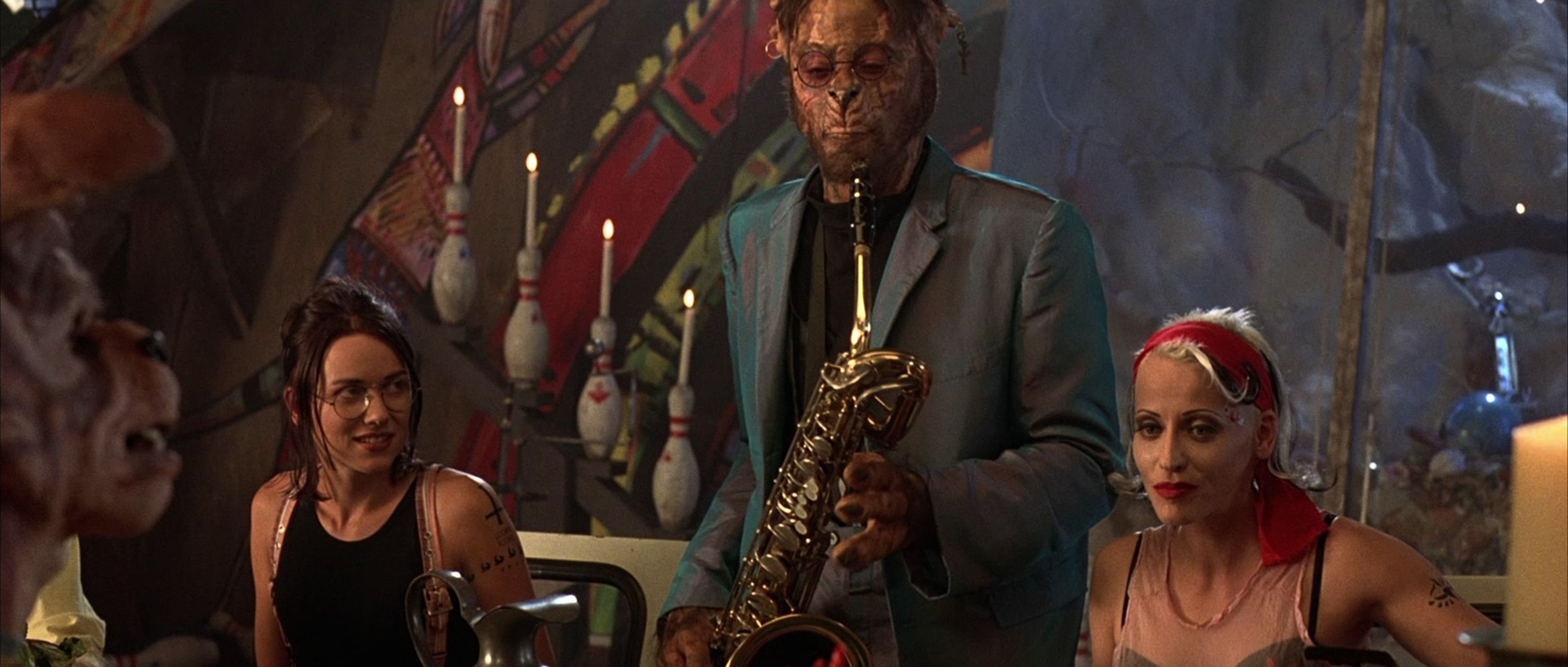
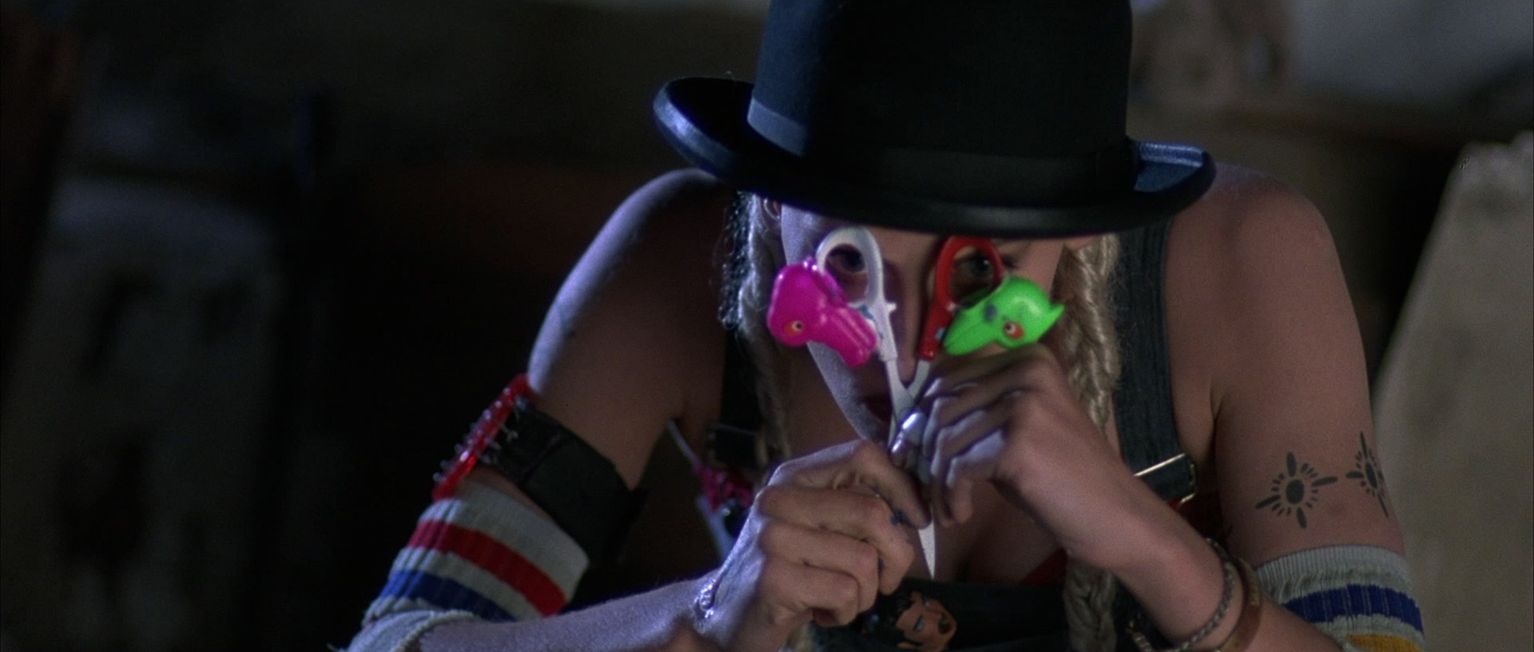
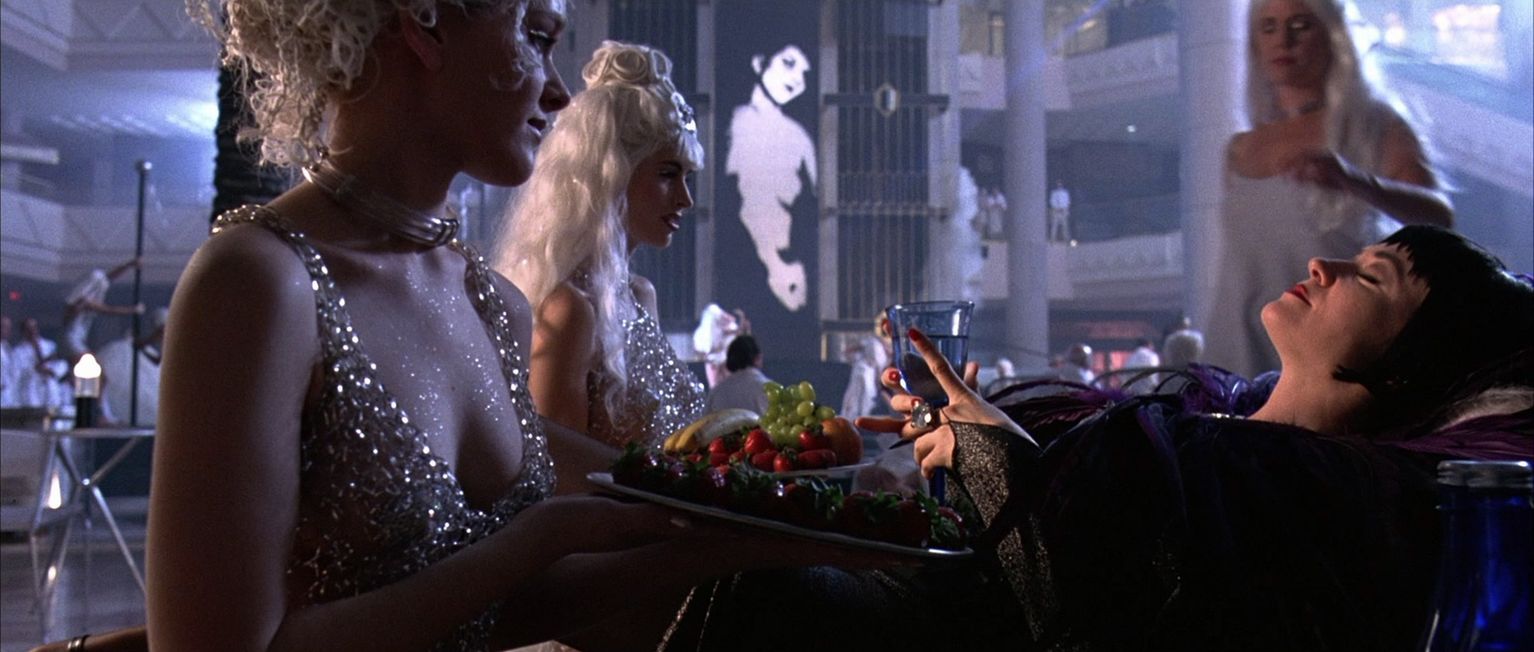
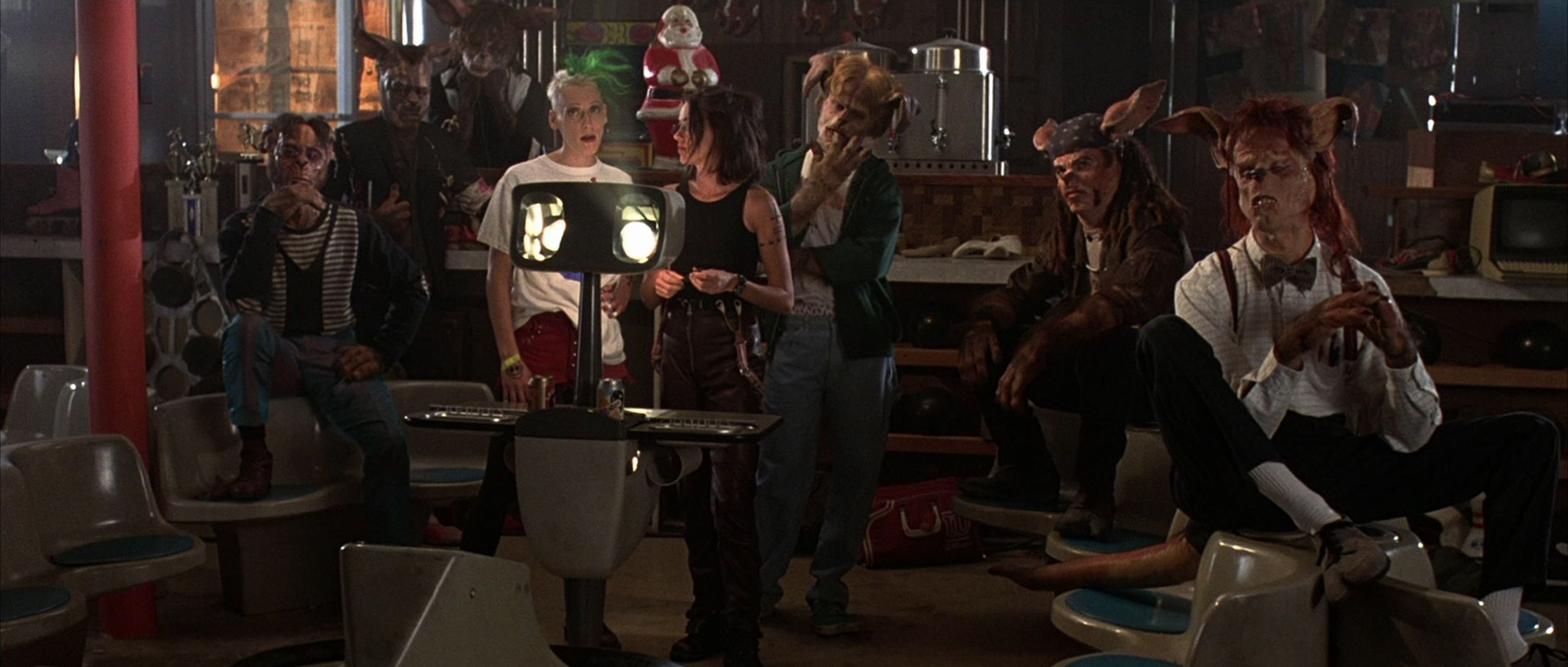
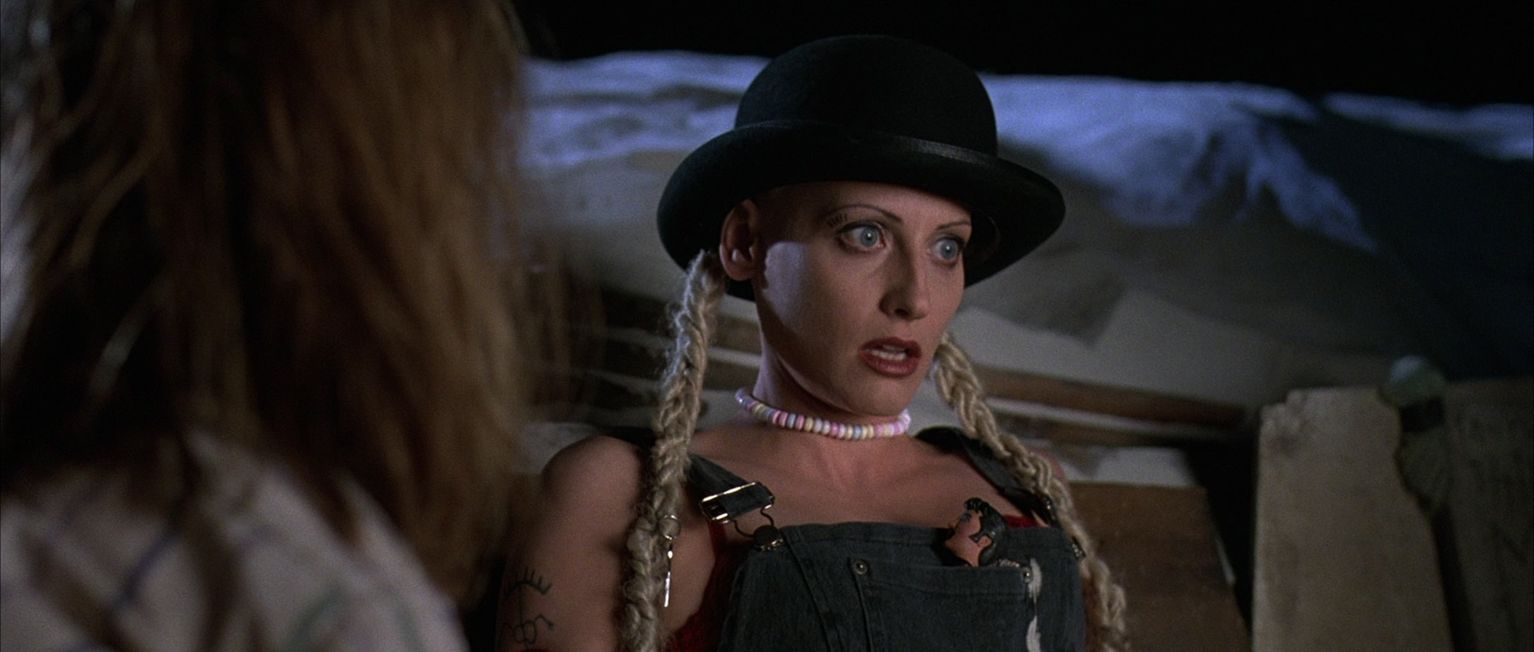
Phillips has said that to this day, Tank Girl remains the film for which she did the most costume design. Lori Petty's costumes were one hundred per cent made from scratch, as were Malcolm McDowell's character and Jet Girl's. For background characters, clothes were sourced and then overdyed or distressed. The world of the film demanded nothing less. Set in a parched, post-apocalyptic landscape where water had been monopolised by a corrupt corporation, every garment needed to carry the weight of that reality. The whole film took place in a water-starved world, so the costumes had to put that across just as much as the sets did.
Phillips's primary reference point was Jamie Hewlett's original illustration of the character. The purpose of costumes in film is to create character and move the story along, and there was no better source than Hewlett's vivid drawings - from the missile bra to the iconic '40 Watts' t-shirt, Phillips brought many of his ideas directly to life on screen. To push the authenticity even further, she physically aged the garments. Rather than simply distressing fabric in a workshop, Phillips and her team reportedly dragged costumes through the Arizona desert behind a jeep to make sure they bore the genuine marks of a harsh, unforgiving world.
Over the course of the film, Tank Girl wears dozens of different outfits. Her bleached blond mohawk shifts between looks - corn-rowed one scene, flipped the next - and even her eye colour changes, underlining how the wardrobe functions as an extension of the character's restless, shape-shifting energy.

A Future Fashion Legend in the Fitting Room
Perhaps the most startling footnote in the story of Tank Girl's costumes is the identity of one of Phillips's collaborators. As Phillips has revealed, an unknown designer and friend of hers worked alongside her to create some of Tank Girl's subversive, punk-inspired looks - a young Rick Owens, who at the point of production had only just launched his own label in 1994. The collaboration places Tank Girl at an extraordinary convergence of underground talent, two future heavyweights of fashion working in relative obscurity on a film that itself existed at the edge of mainstream culture.
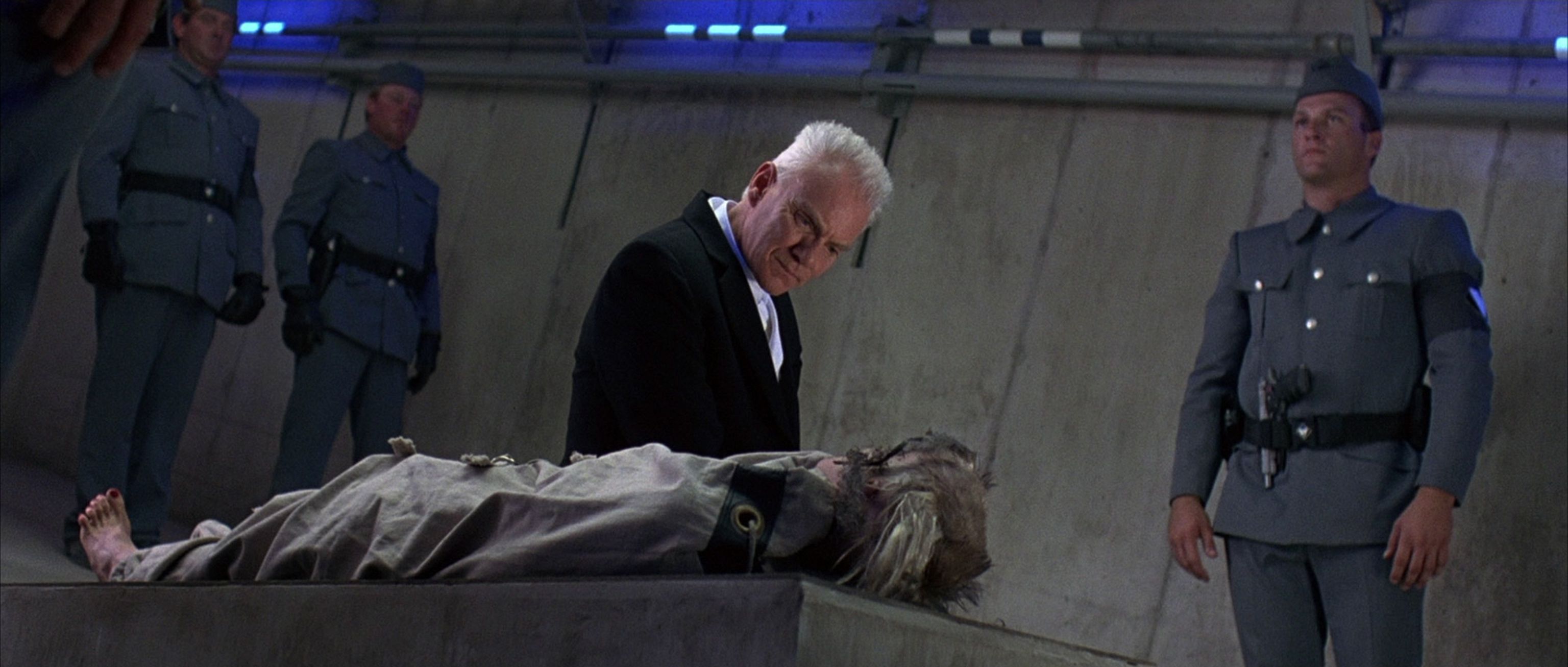
Phillips also had to fit Malcolm McDowell just two days before he began work, having had virtually no prior communication with him since he had been off on another project. She had designed everything he would wear - nothing was sourced off the rack - and she held her breath in the fitting room, hoping he would be aligned with the vision she had built from scratch.
The film was shaped by a broader creative climate that made Phillips's work feel inevitable rather than accidental. Tank Girl was one of the few pictures of its era that seemed actively influenced by riot grrrl music and art, and the costumes mirrored that spirit completely. Rachel Talalay had grown tired of female action heroes whose characteristics were simply those of men transferred to a female body - she saw in the Tank Girl comics a chance to bring to life a completely unique woman. Phillips's wardrobe was the most visible expression of that ambition.

A Legacy Stitched into Fashion
In the years since, Tank Girl has grown from cult oddity into genuine touchstone. Phillips went on to become one of Hollywood's most celebrated costume designers, earning Oscar nominations for films including Once Upon a Time in Hollywood, Walk the Line, and W.E. But the 1995 film retains a particular significance in her body of work, not least because of how far its influence has radiated outward into fashion. The missile bra, the distressed layers, the refusal to make a female body decorative rather than powerful - these ideas did not stay on screen.
What Arianne Phillips built in the Arizona desert, from Hewlett's drawings and raw fabric and the energy of a particular cultural moment, turned out to be something more durable than the post-apocalyptic wasteland it dressed. It became a template for how women could be clothed on film: not as accessories to a story, but as its driving, irreverent, unstoppable force.