
Walter De Maria
The Lightning Field
- ArtistWalter De Maria
ELIZABETH ROBERTS A lifelong dream is to stay overnight
Walter De Maria: The Architecture of Lightning
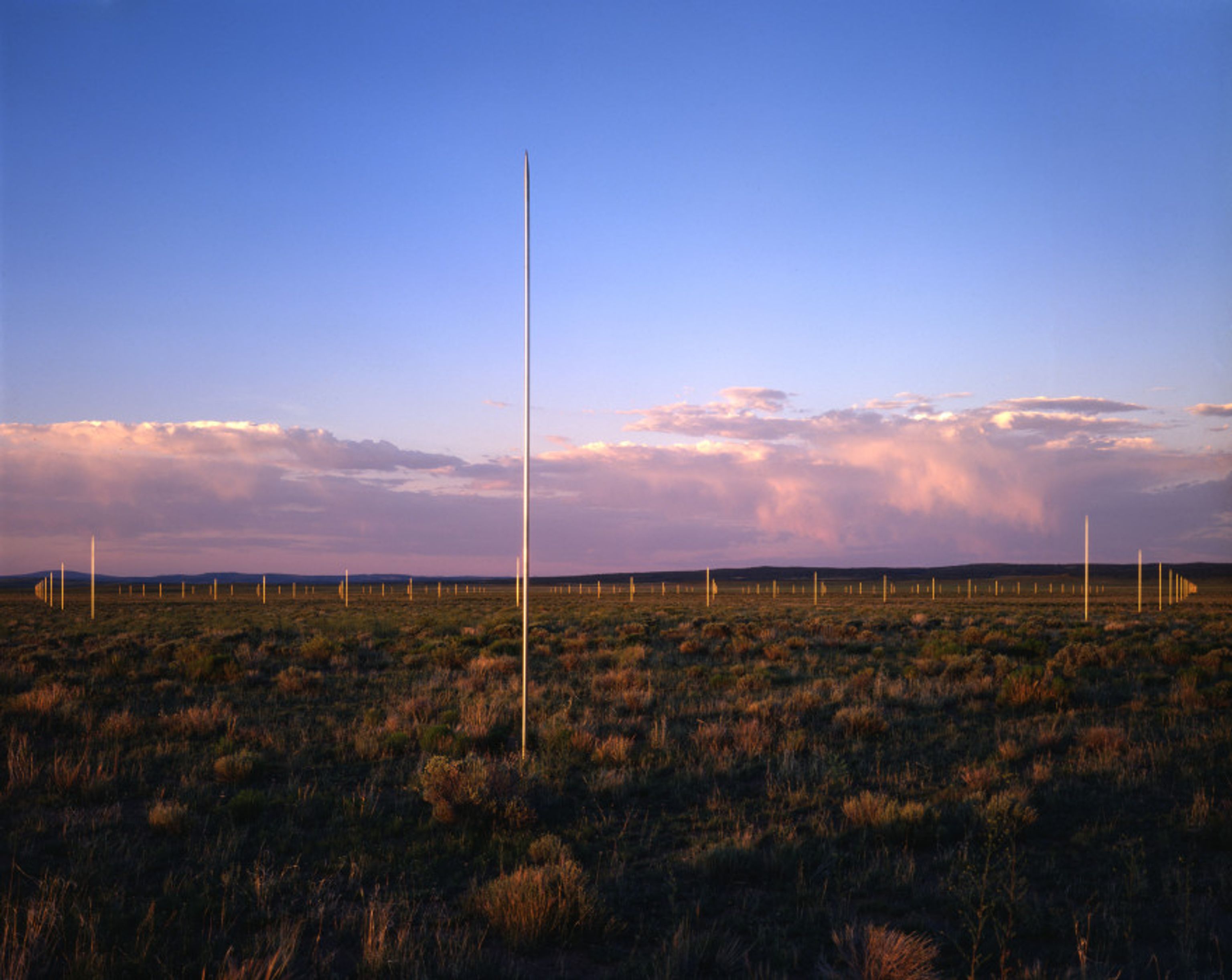
In the vastness of the New Mexican desert, where the horizon stretches uninterrupted across a landscape of grassland, mountains and open sky, Walter De Maria created one of the most extraordinary works of twentieth century art. The Lightning Field, completed in 1977, consists of 400 polished stainless steel poles arranged in a precise rectangular grid across an area measuring one mile by one kilometre. Rising approximately six metres above the ground, their pointed tips establish an invisible horizontal plane that seems to extend across the landscape. The work is at once monumental and remarkably restrained, a geometric intervention that transforms an immense natural environment through the repetition of a single element.
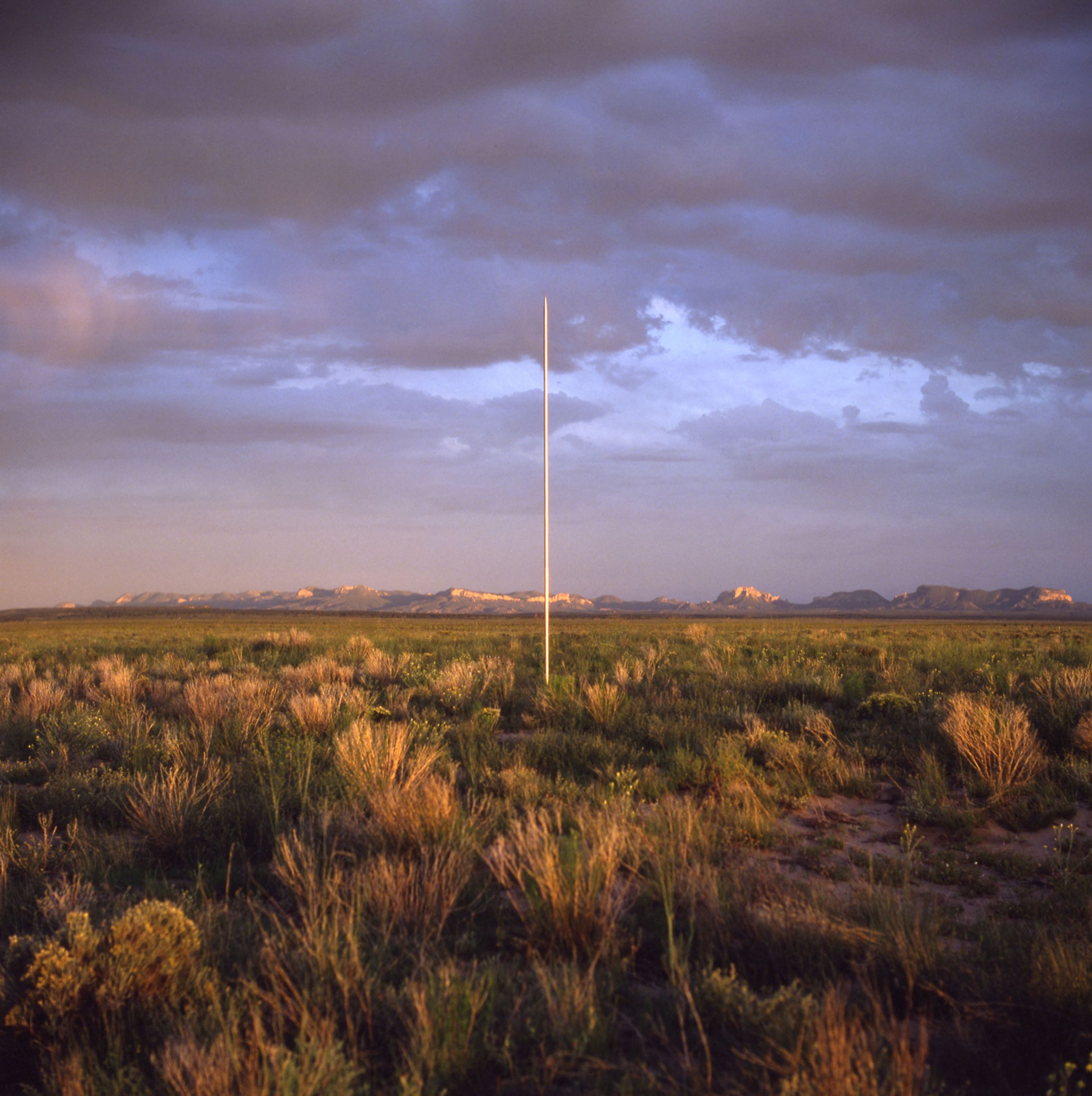
De Maria, a central figure in the development of Land Art and Minimalism, approached the landscape not as a backdrop for sculpture but as an integral part of the work itself. The installation was commissioned by Dia Art Foundation and developed over several years, requiring extensive surveying and careful consideration of the terrain. Although the poles appear identical, their individual heights vary to compensate for the undulating ground, ensuring that their tips align precisely. The resulting geometry is almost impossible to comprehend from a single vantage point. It is a sculpture that reveals itself through movement, distance and the gradual discovery of its scale.

A Dialogue Between Earth and Sky
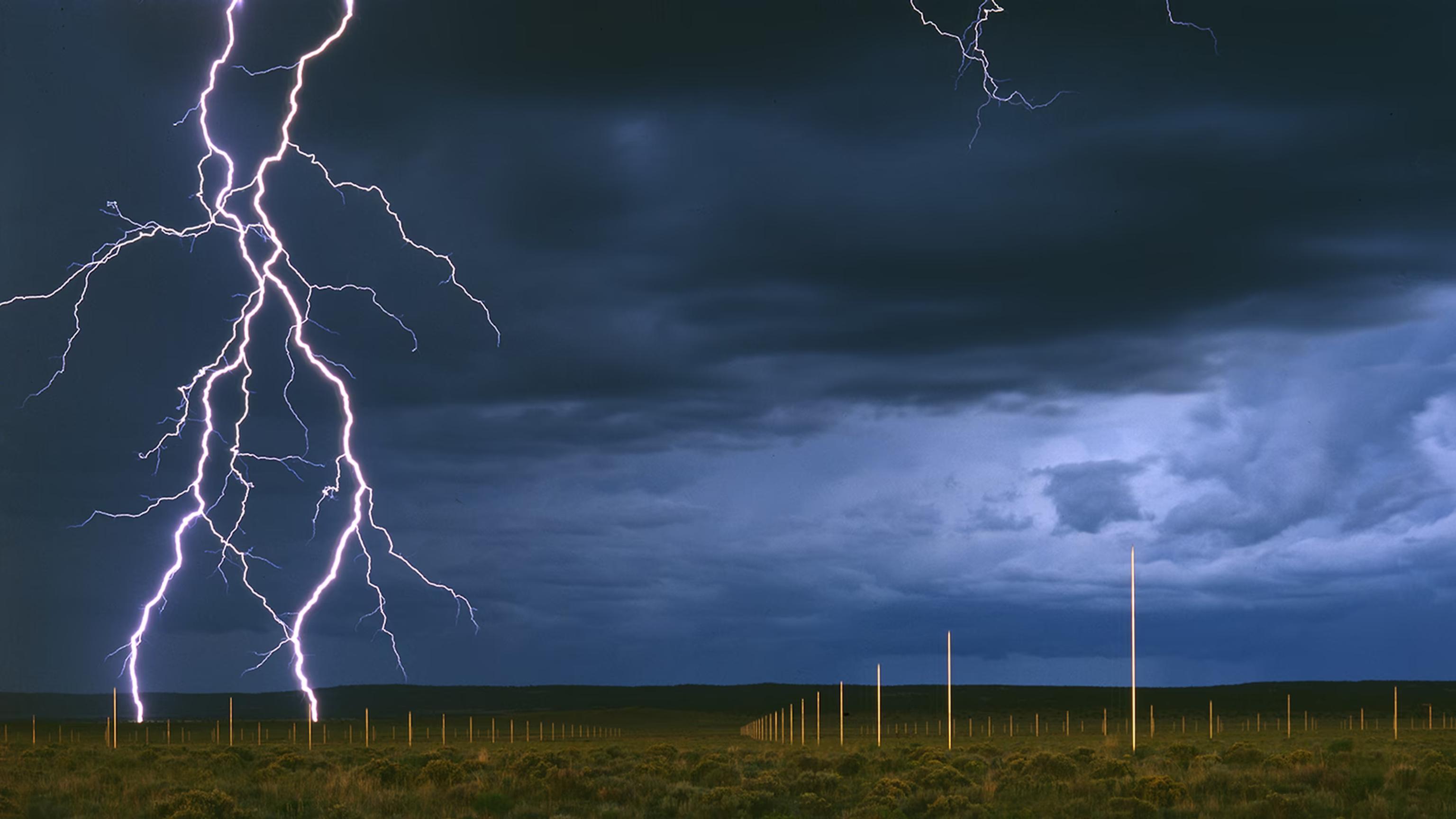
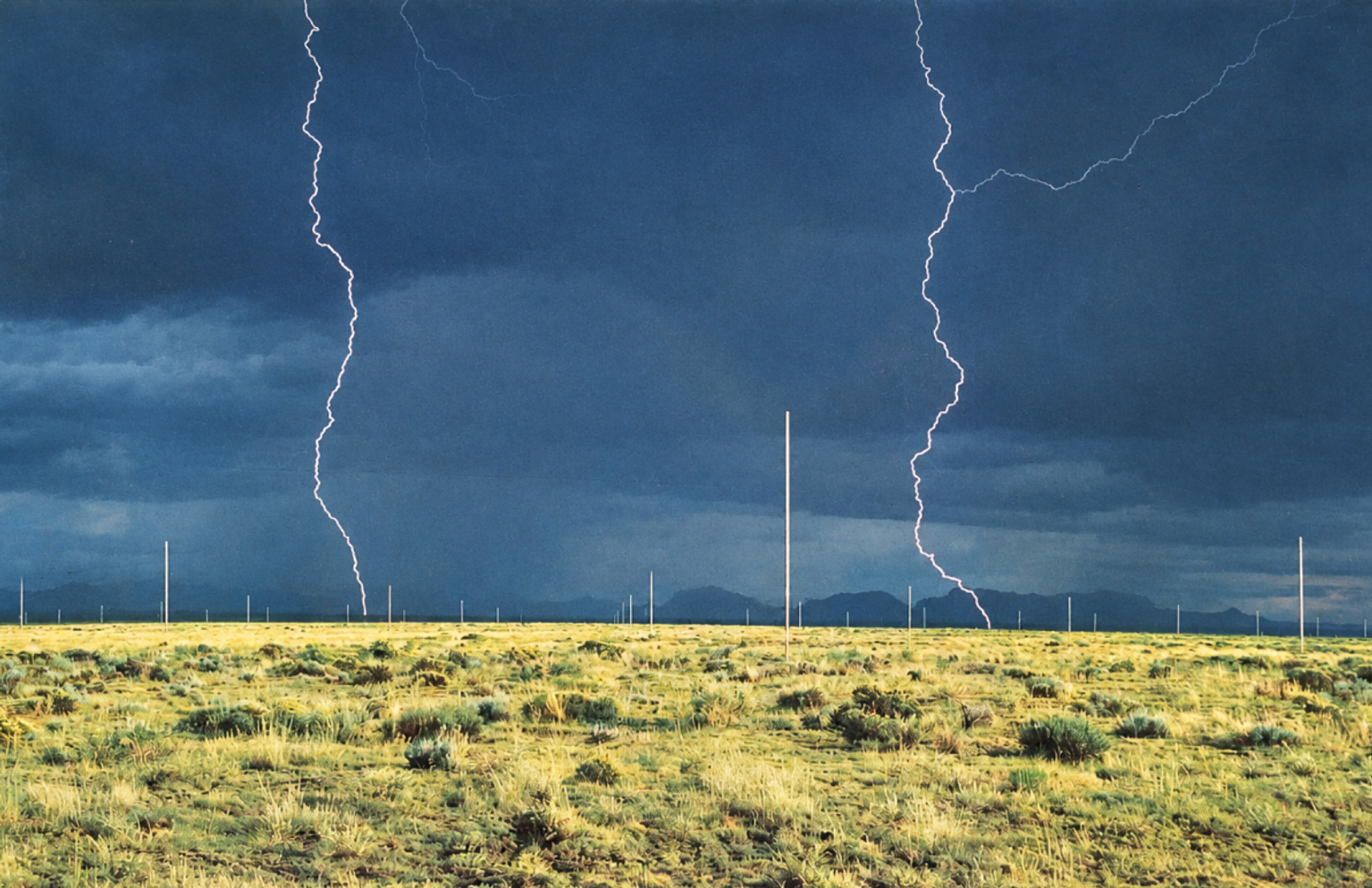
The title suggests a dramatic encounter between metal and electricity, yet the work's significance extends far beyond the spectacle of lightning. De Maria selected the remote site partly for its frequent thunderstorms, allowing the installation to exist in direct relationship with the atmospheric conditions of the desert. The polished steel reflects the changing light, shifting between near invisibility under the intense midday sun and a luminous presence at dawn and dusk. Clouds, rain, wind and the changing seasons continually alter the perception of the work, making it impossible to experience the same field twice.
The poles establish a rigorous mathematical order within an otherwise unpredictable landscape. Their regular spacing creates an almost architectural framework, while the surrounding environment introduces a sense of instability and change. The work operates through this contrast between human precision and natural phenomena. Its apparent simplicity conceals a complex relationship between geometry, perception and the passage of time.
Despite its name, The Lightning Field does not require an actual lightning strike to fulfil its purpose. The possibility of such an event is simply one dimension of a much broader experience. The work is concerned with the heightened awareness that emerges when the viewer is removed from the distractions of everyday life and placed within an environment defined by space, light and elemental forces.

The Experience of Time
Unlike a sculpture encountered within a museum, The Lightning Field demands an extended period of engagement. Its remote location and carefully controlled access encourage visitors to spend an entire day and night within the landscape, observing the subtle transformations that occur as the light changes. The experience becomes less about viewing an object and more about inhabiting a particular relationship with the environment.
At sunrise, the polished tips catch the first light, creating a sequence of reflections that gradually spreads across the grid. At sunset, the poles appear to glow against the darkening landscape, while the vastness of the installation becomes increasingly apparent. During the night, the sculpture recedes into darkness, leaving the viewer with the surrounding sky and the awareness of its immense scale.
There is a profound simplicity to De Maria's gesture. Four hundred steel poles, arranged according to a precise geometric system, become a means of experiencing something that cannot be controlled or fully anticipated. The work does not attempt to represent nature, nor does it impose a conventional narrative upon the landscape. Instead, it establishes a framework through which the viewer can become more attentive to the conditions already present.
More than four decades after its completion, The Lightning Field remains a defining example of how art can extend beyond the boundaries of the gallery to engage directly with the physical world. Its power lies not in its material complexity or visual spectacle, but in the relationship it establishes between the individual, the landscape and time. De Maria created an artwork that is both exact and open ended, a permanent structure whose meaning is continually transformed by the impermanence of the world around it.