
Louis Kahn
The Salk Institute
- ArchitectLouis Kahn
- ResearcherJonas Salk
- PhotographerSalk Institute
Pablo Bofill The Salk Institute has long been a reference for two university campuses we are designing in Morocco. An Architecture of Knowledge that is rigorous, open, and timeless.

Salk Institute for Biological Studies
Perched on the cliffs of La Jolla, California, the Salk Institute for Biological Studies is one of the most celebrated examples of twentieth-century architecture. Founded by Jonas Salk, the physician and researcher who developed the first successful polio vaccine, the institute opened in 1963 with the ambition of becoming more than a conventional scientific campus. Salk believed that the greatest discoveries happened when disciplines met, and he imagined a place where biology, art, philosophy, and human curiosity could exist side by side. When he approached architect Louis Kahn, he gave him a simple but extraordinary brief: to create “a facility worthy of a visit by Picasso.” The result was a building that has become as influential in architecture as the research conducted within its walls has been in science.

Louis Kahn’s Vision
The Salk Institute was designed by Louis I. Kahn and built between 1962 and 1965, at a point when the architect had fully developed the monumental style for which he is now known. Born in what is now Estonia before emigrating to the United States as a child, Kahn spent much of his career searching for an architecture that felt timeless rather than fashionable.
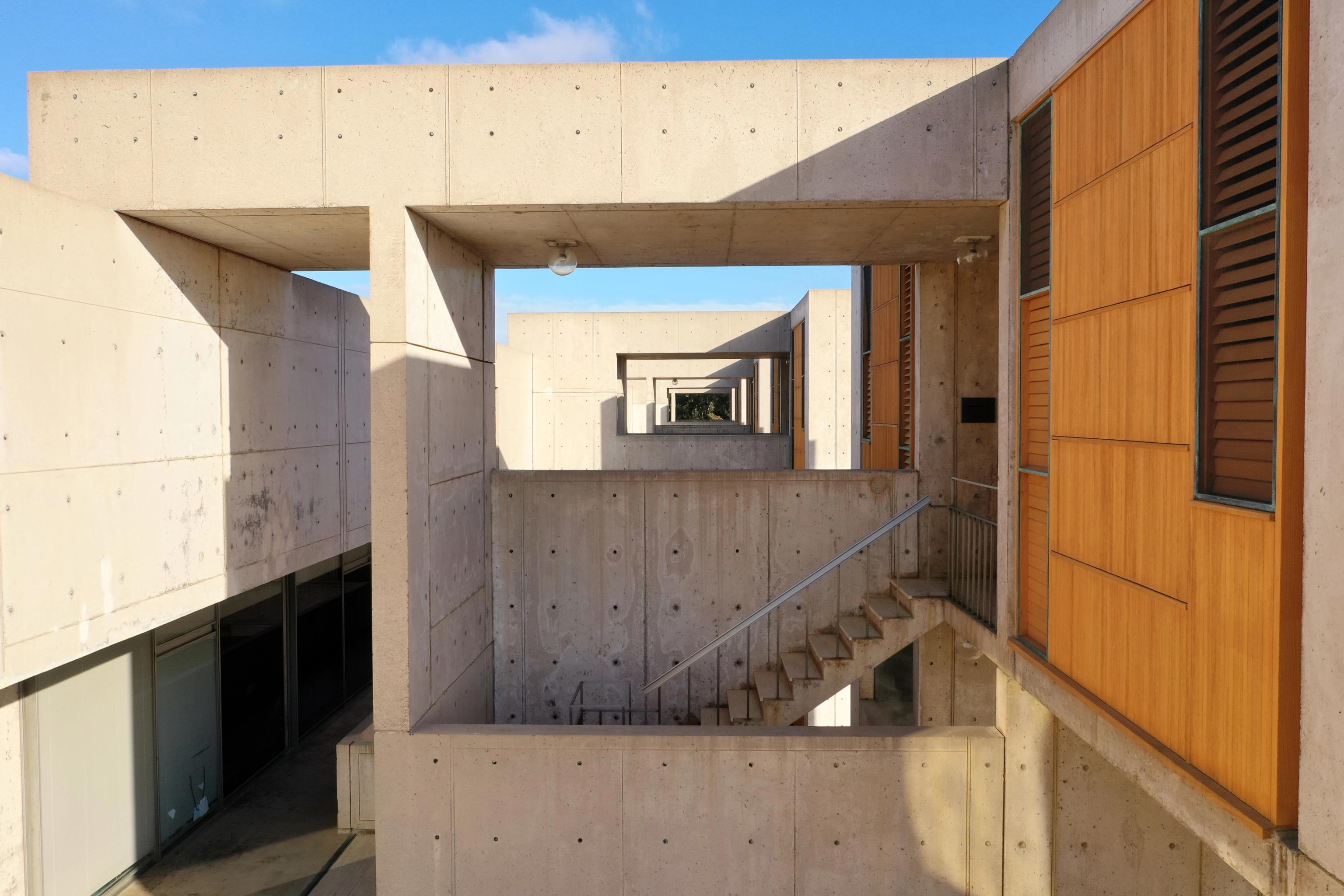
Influenced by his travels through the ancient ruins of Italy, Greece, and Egypt, he created buildings that celebrated weight, permanence, and the honest expression of materials. Instead of concealing a building’s structure, Kahn revealed it, allowing concrete, stone, and timber to speak for themselves. The Salk Institute is often regarded as the purest expression of these ideas and is widely considered one of the defining works of post-war modern architecture.

Space, Light and Landscape
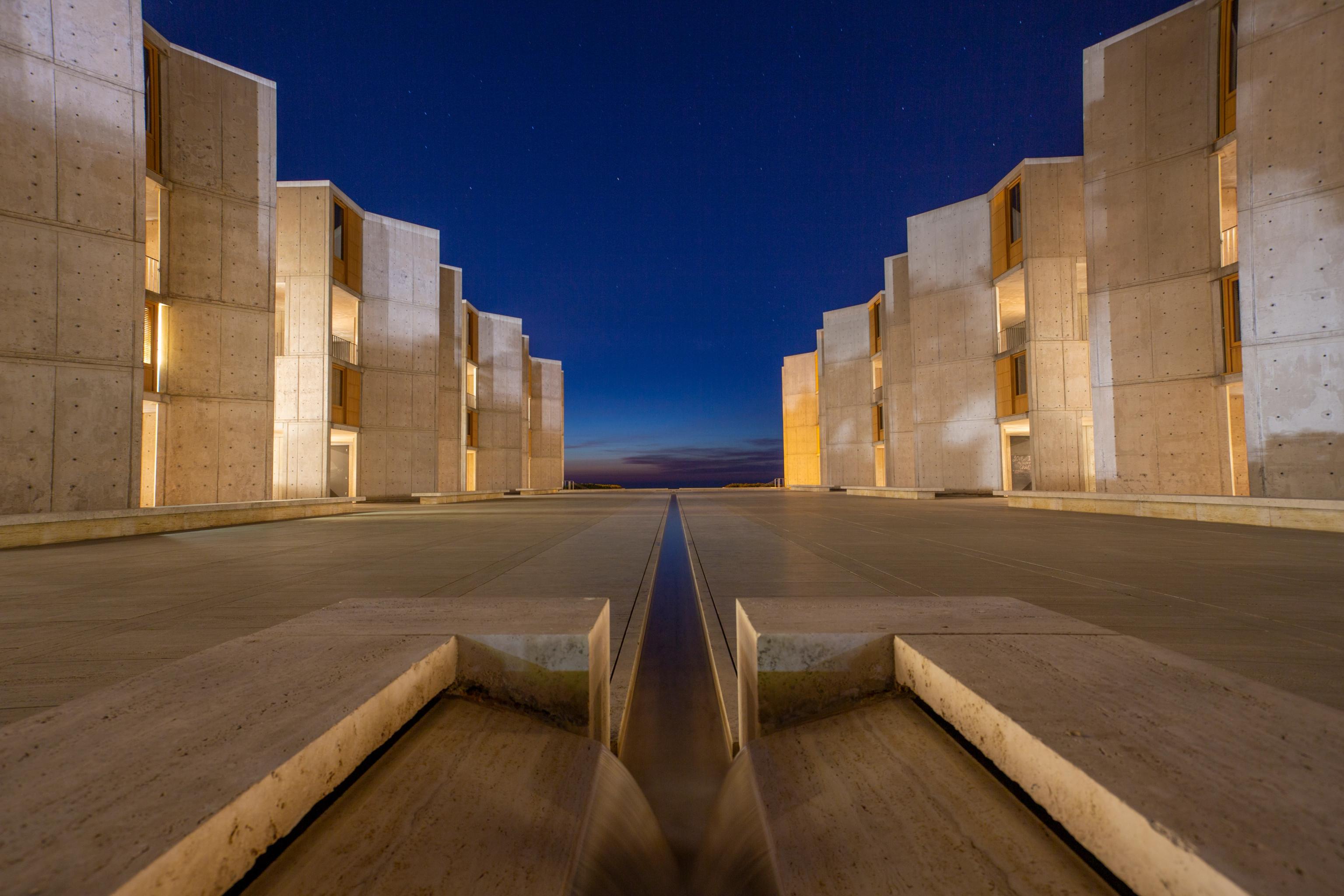
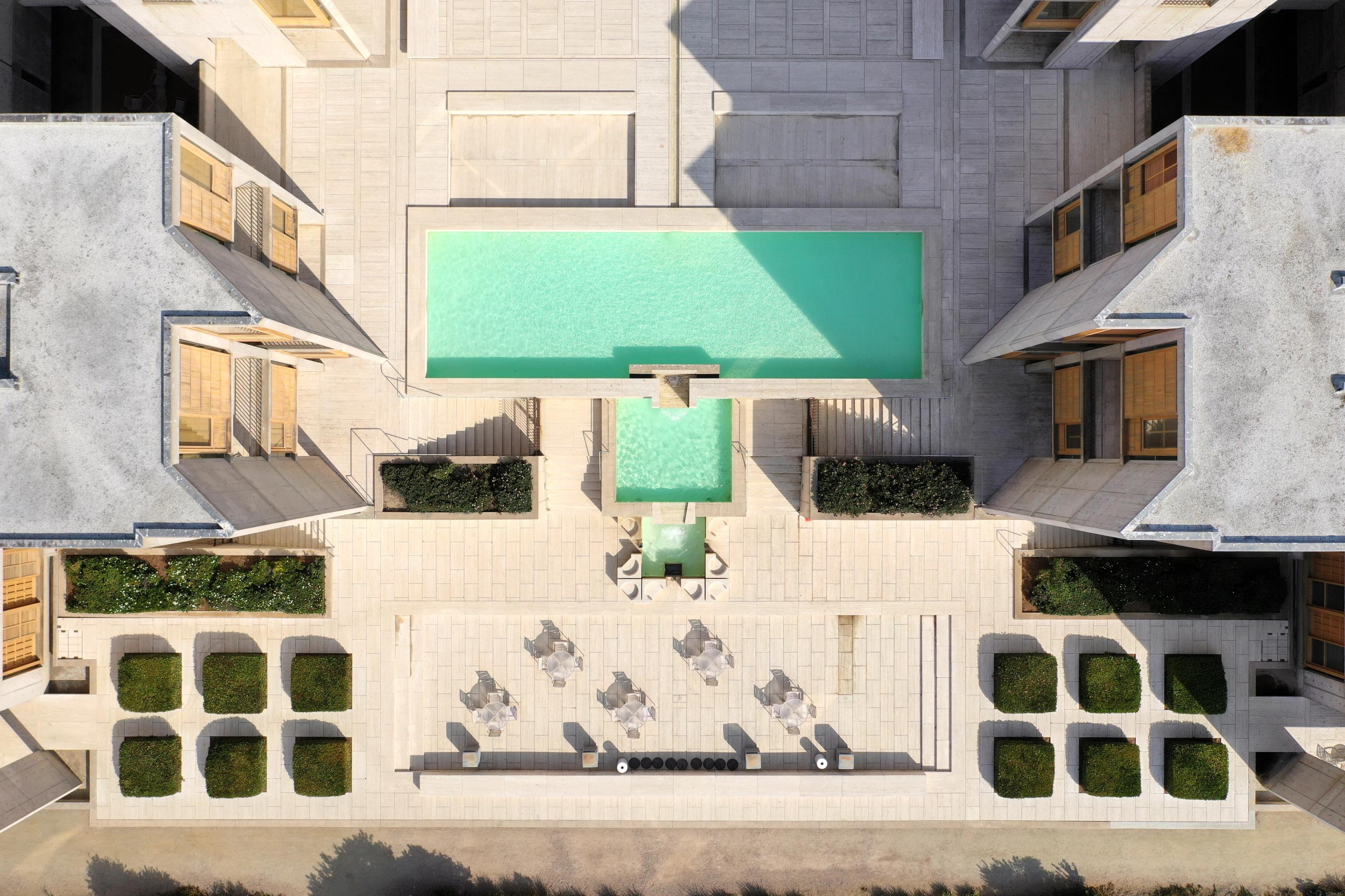
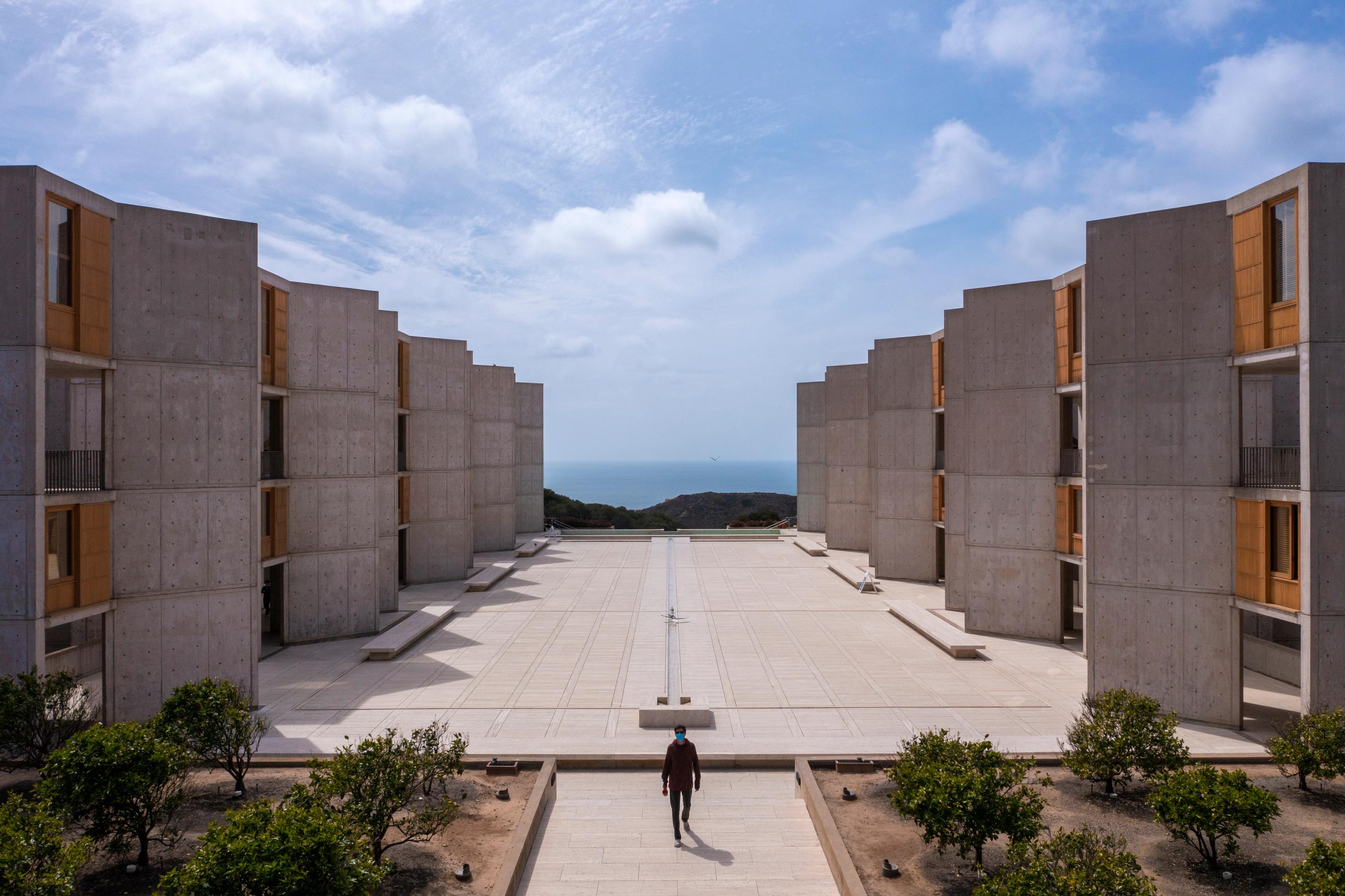
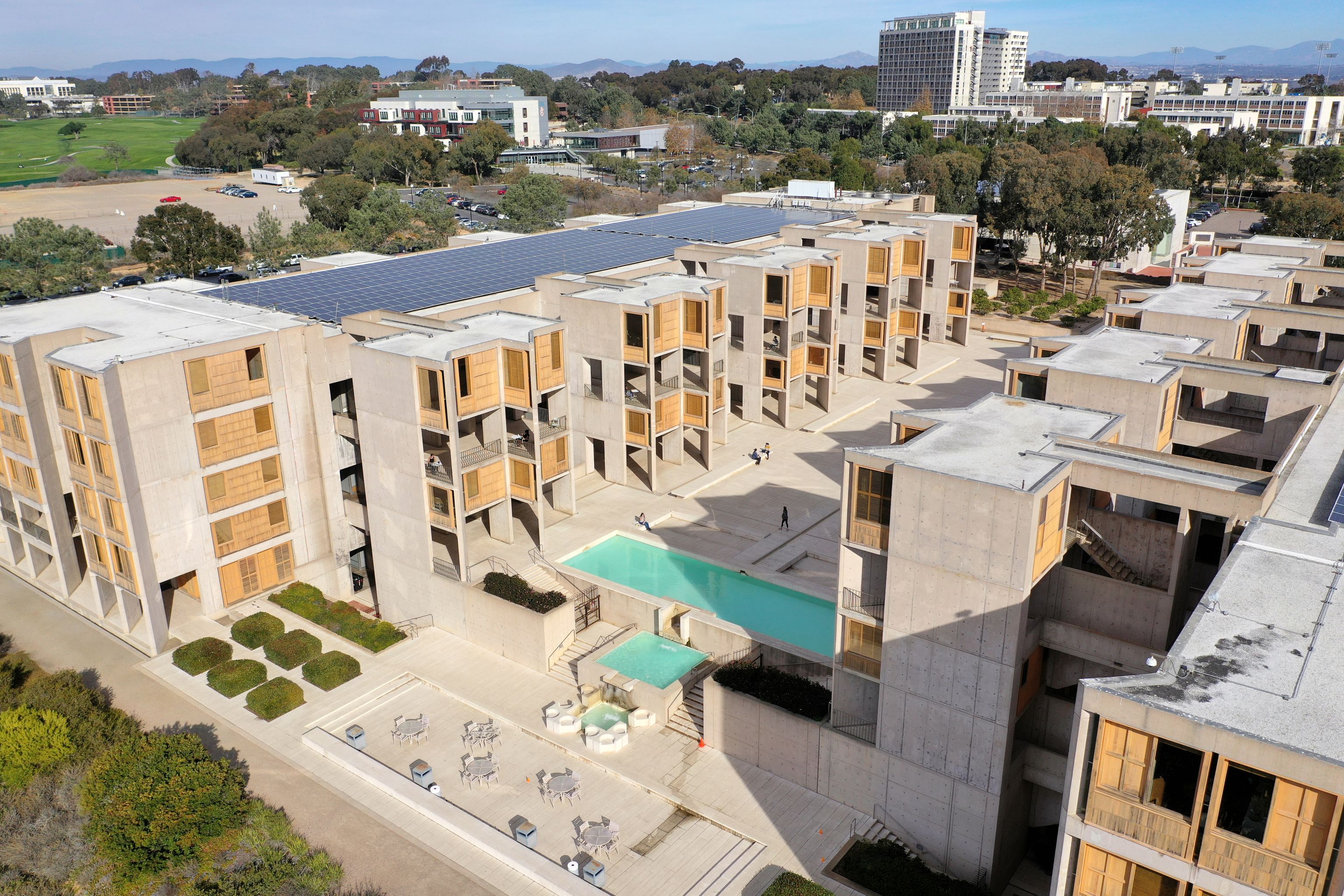
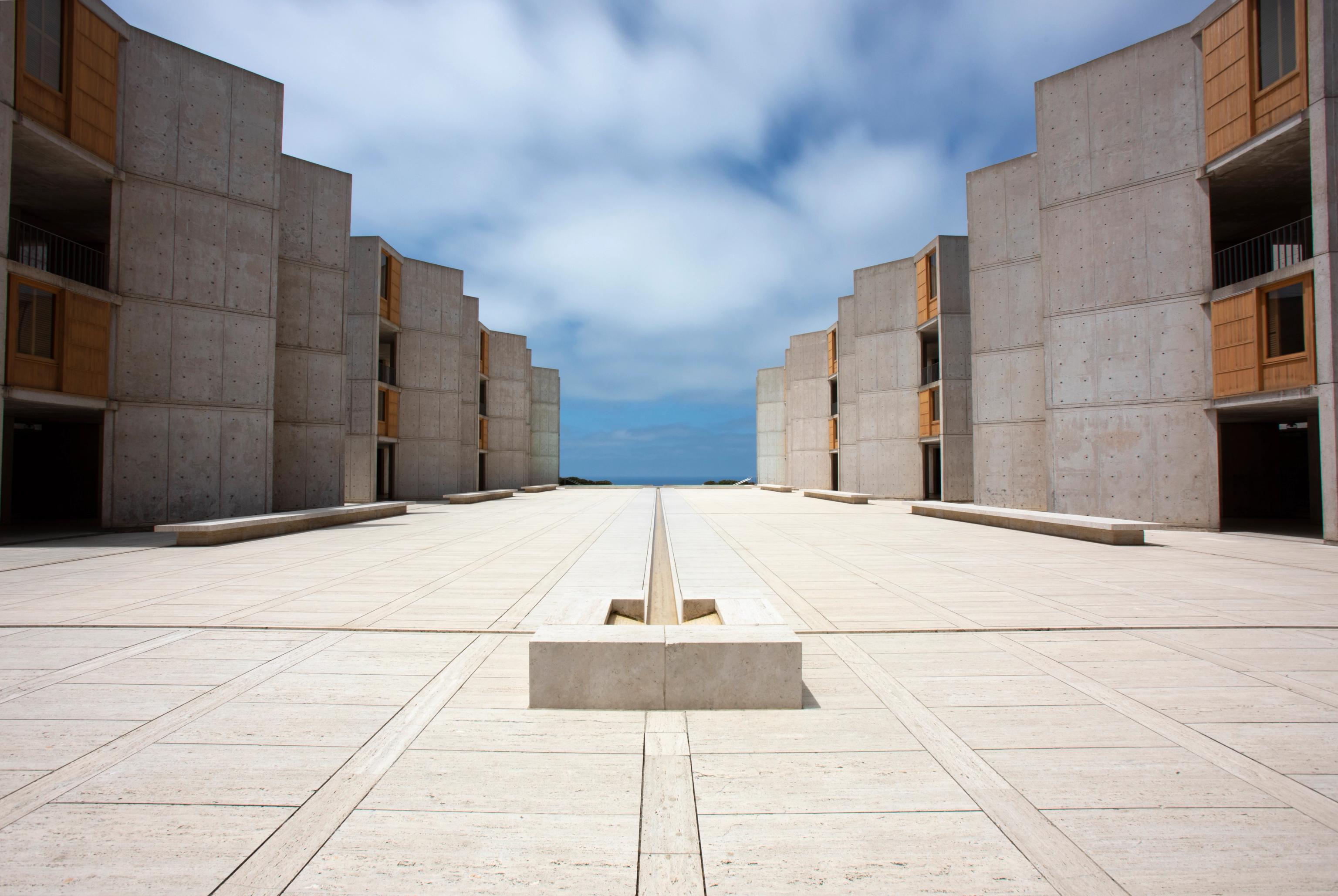
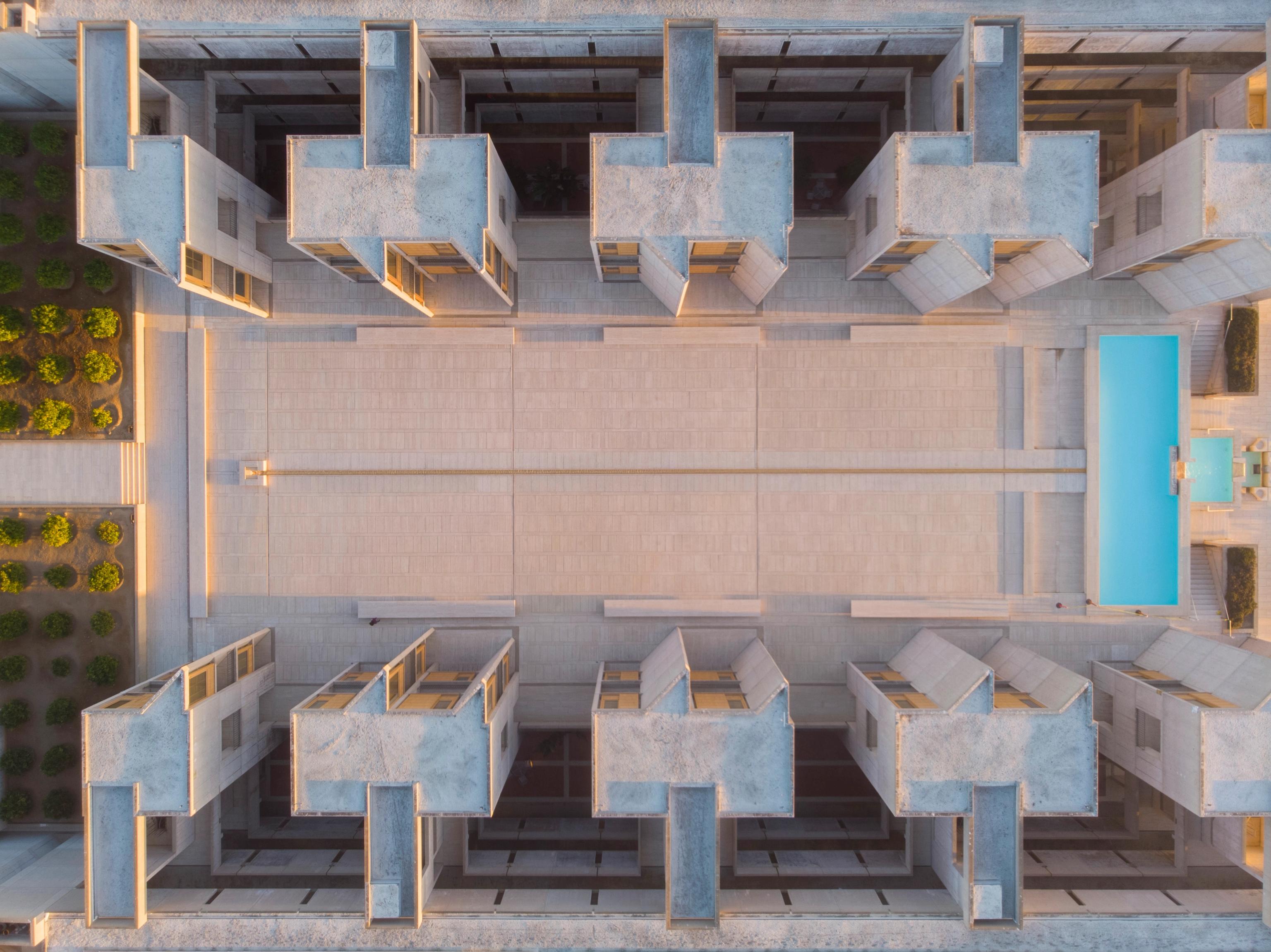
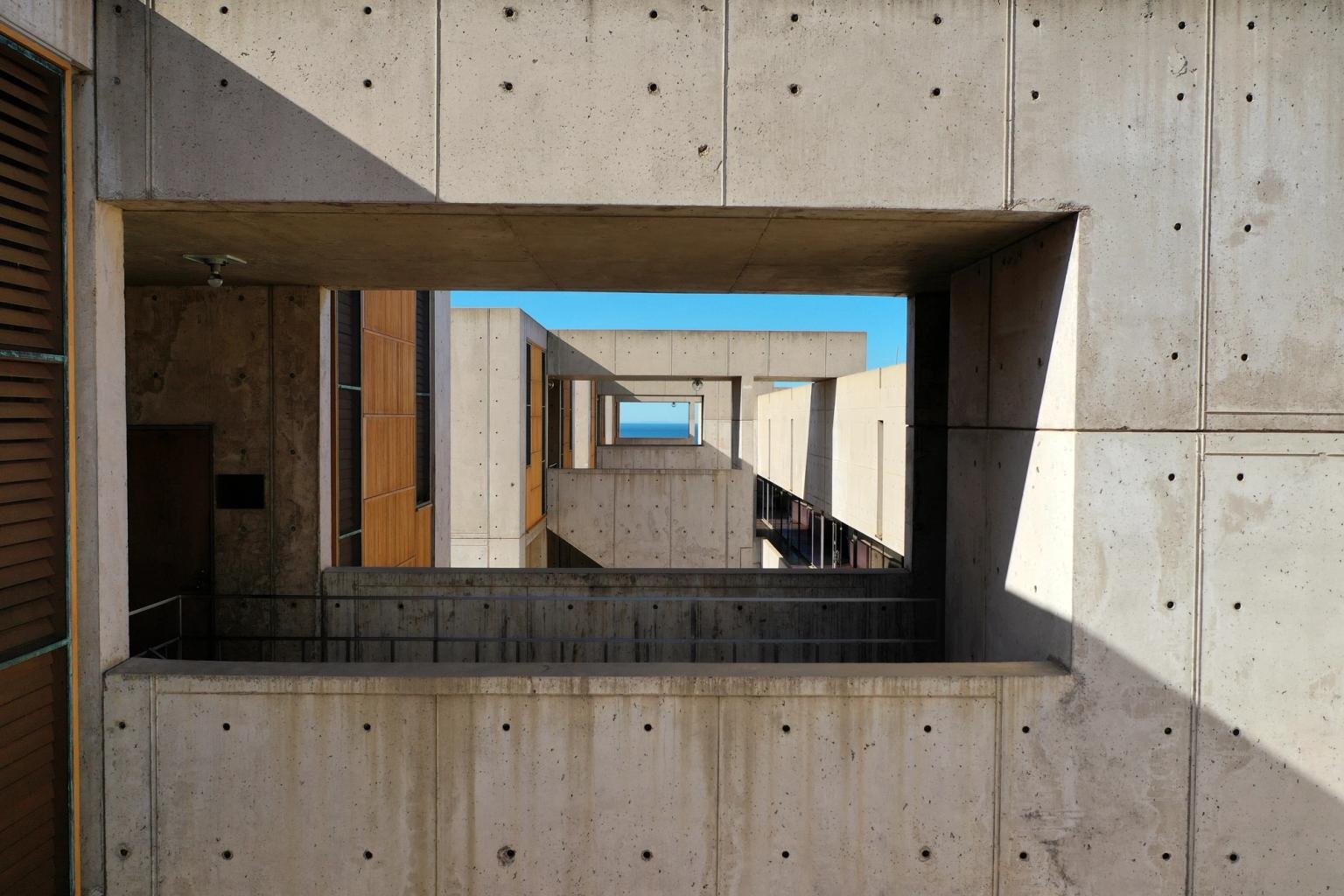
Kahn’s original proposal imagined the institute as a complete intellectual community, made up of laboratories, residential quarters, and a meeting house arranged across the site. Financial limitations meant that only the laboratory complex was realised, but the larger vision can still be sensed in the building’s calm and carefully ordered composition. Two symmetrical laboratory wings stand on either side of a vast open courtyard, framing an uninterrupted view of the Pacific Ocean. A narrow channel of water runs through the centre of the plaza, creating a visual connection between the building and the horizon beyond.
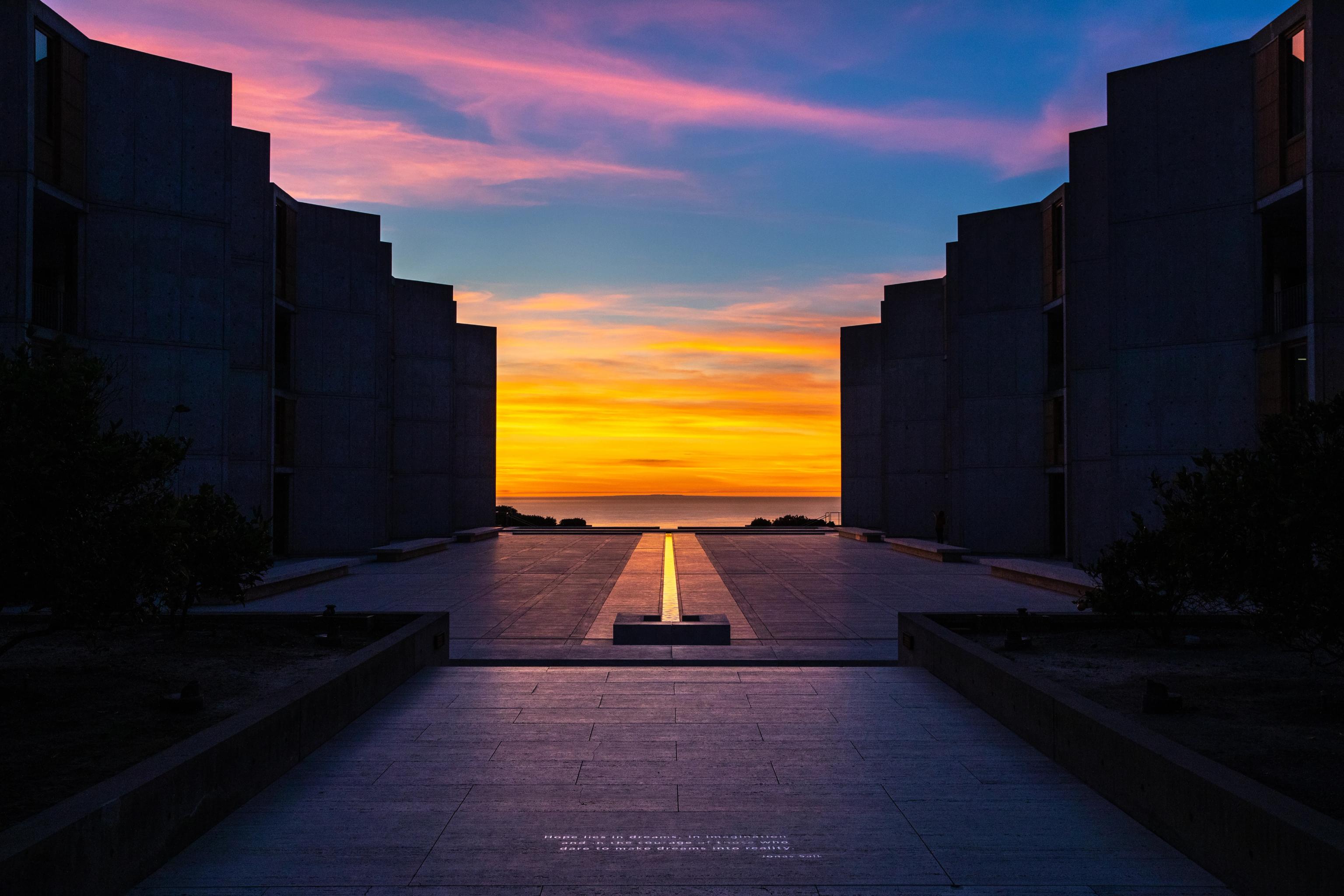

One of the project’s most defining decisions came late in the design process. Kahn had initially planned to fill the courtyard with gardens, but after consulting the Mexican architect Luis Barragán, he abandoned the idea entirely. Barragán argued that the space should remain empty, with only the thin “River of Life” water feature crossing its surface. The absence of decoration gives the plaza a quiet, almost meditative quality, allowing light, shadow, and the changing colours of the sky to become part of the architecture itself.


Architecture for Science
Although the Salk Institute is admired for its visual power, every part of the building was shaped by the practical needs of scientific research. Jonas Salk wanted laboratories that could adapt to future discoveries and technologies, and Kahn responded with an innovative design that separated the research spaces from the building’s mechanical systems. Dedicated service floors above each laboratory level house ventilation, pipes, and electrical infrastructure, making it possible to modify or upgrade the facilities without disrupting the work below. The laboratories themselves are open, flexible, and free of internal structural columns, encouraging collaboration while allowing the spaces to evolve over time.
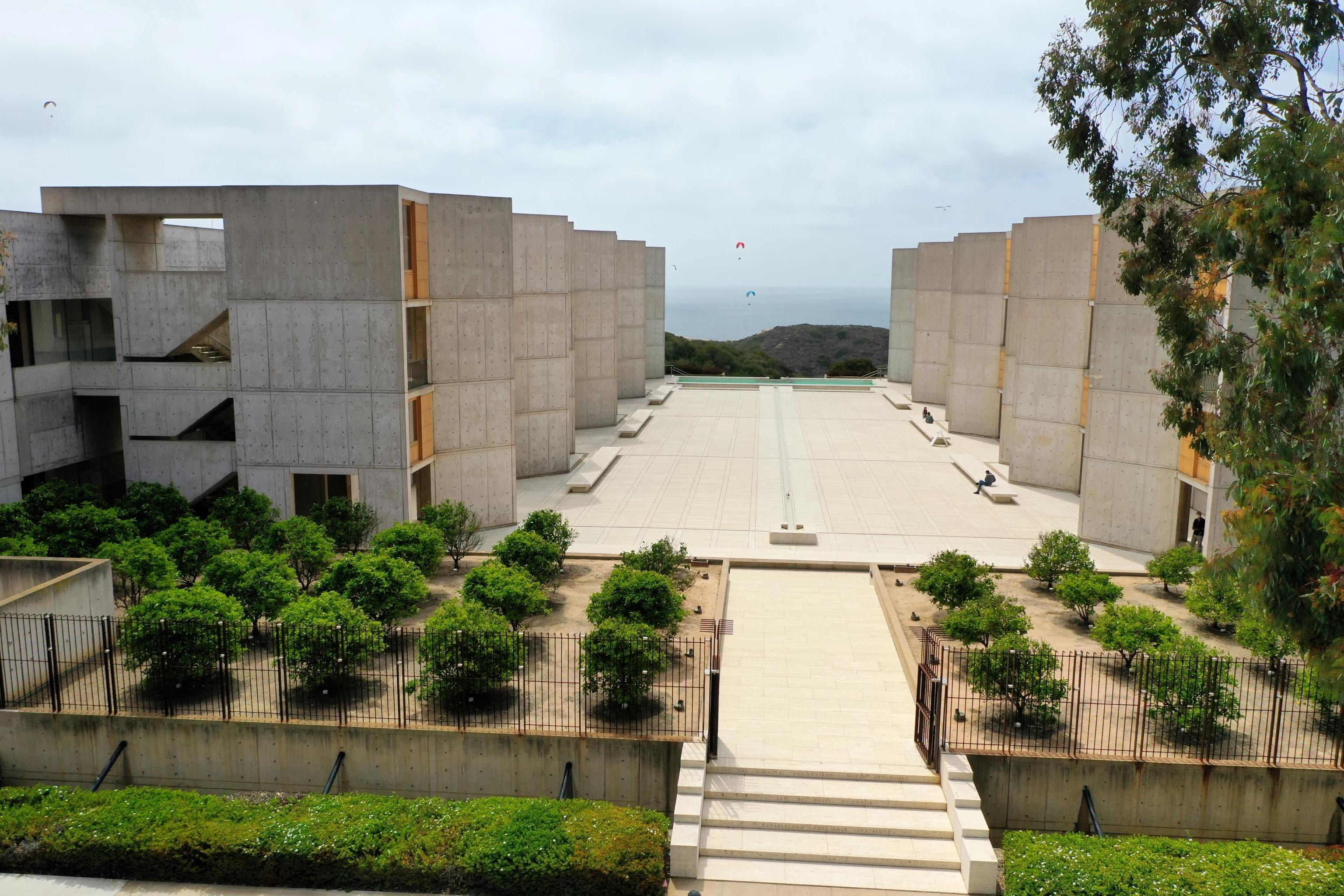

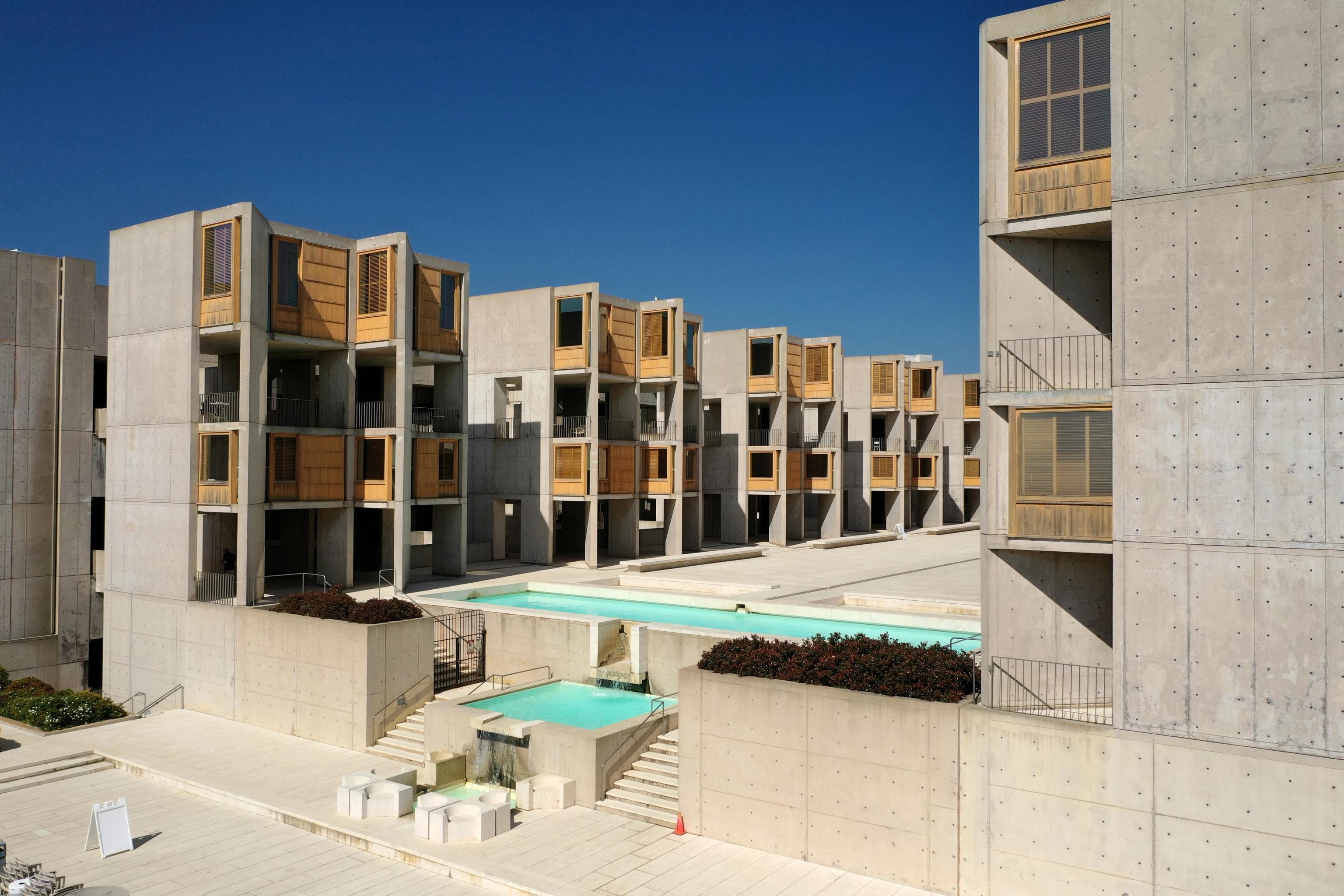
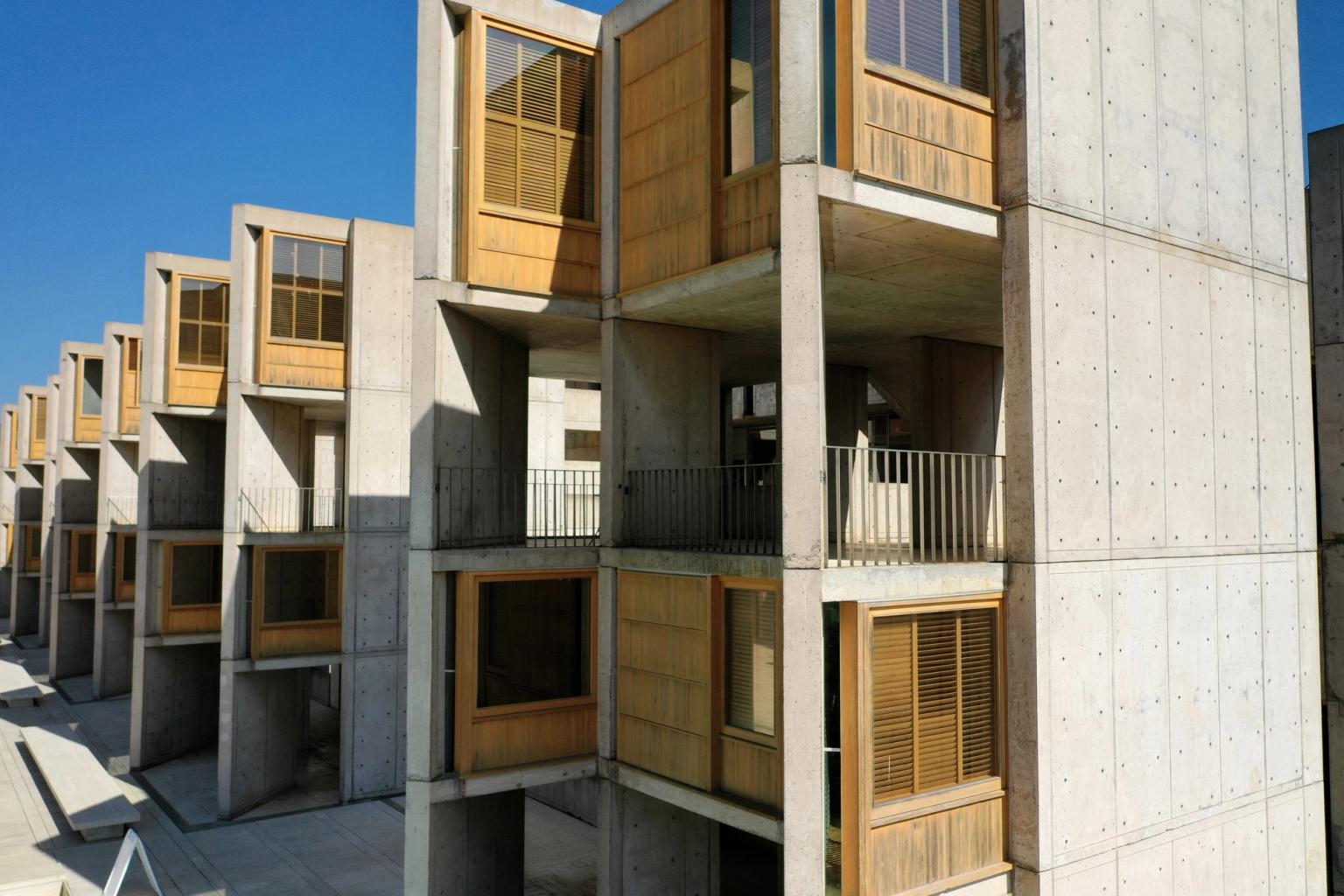
The balance between collective and individual work was equally important. Along the courtyard, a series of study towers contain small private offices where scientists can step away from the laboratory and work in solitude, each one carefully angled to capture views of the ocean. Kahn often spoke about the relationship between spaces that are “served” and those that “serve,” and nowhere is this philosophy clearer than at the Salk Institute, where technical innovation and quiet reflection are treated as equally essential parts of the creative process.


Material and Legacy
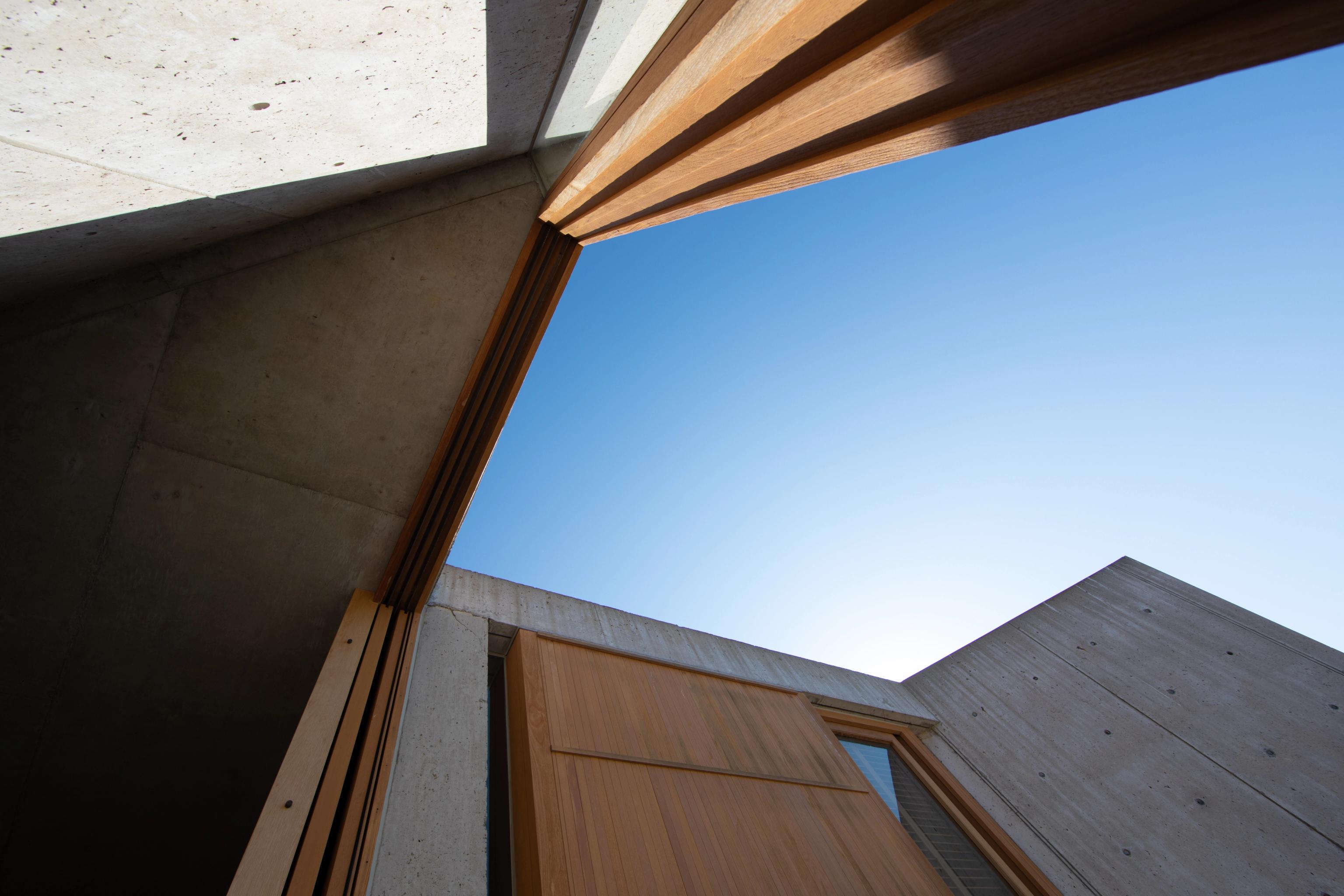
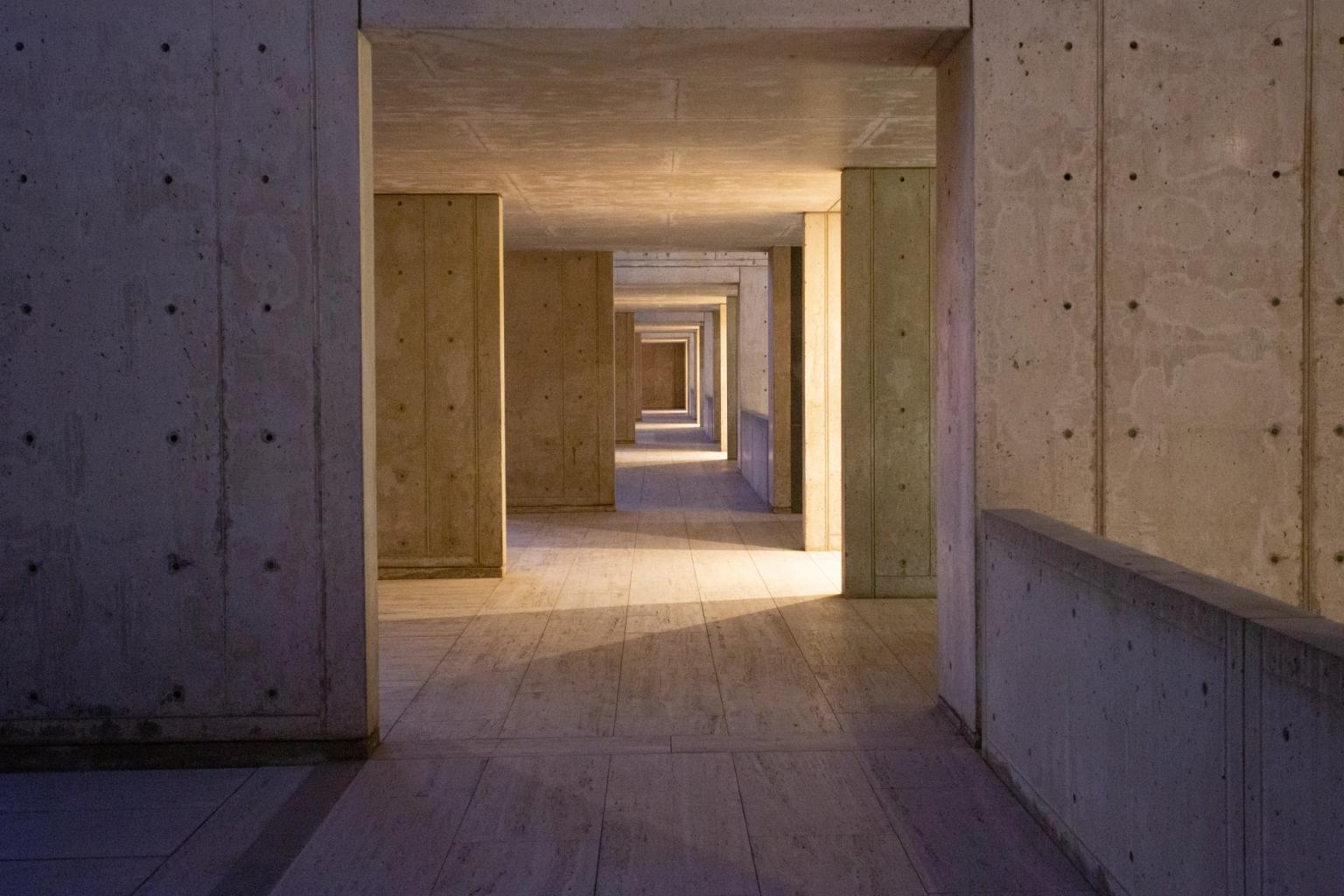
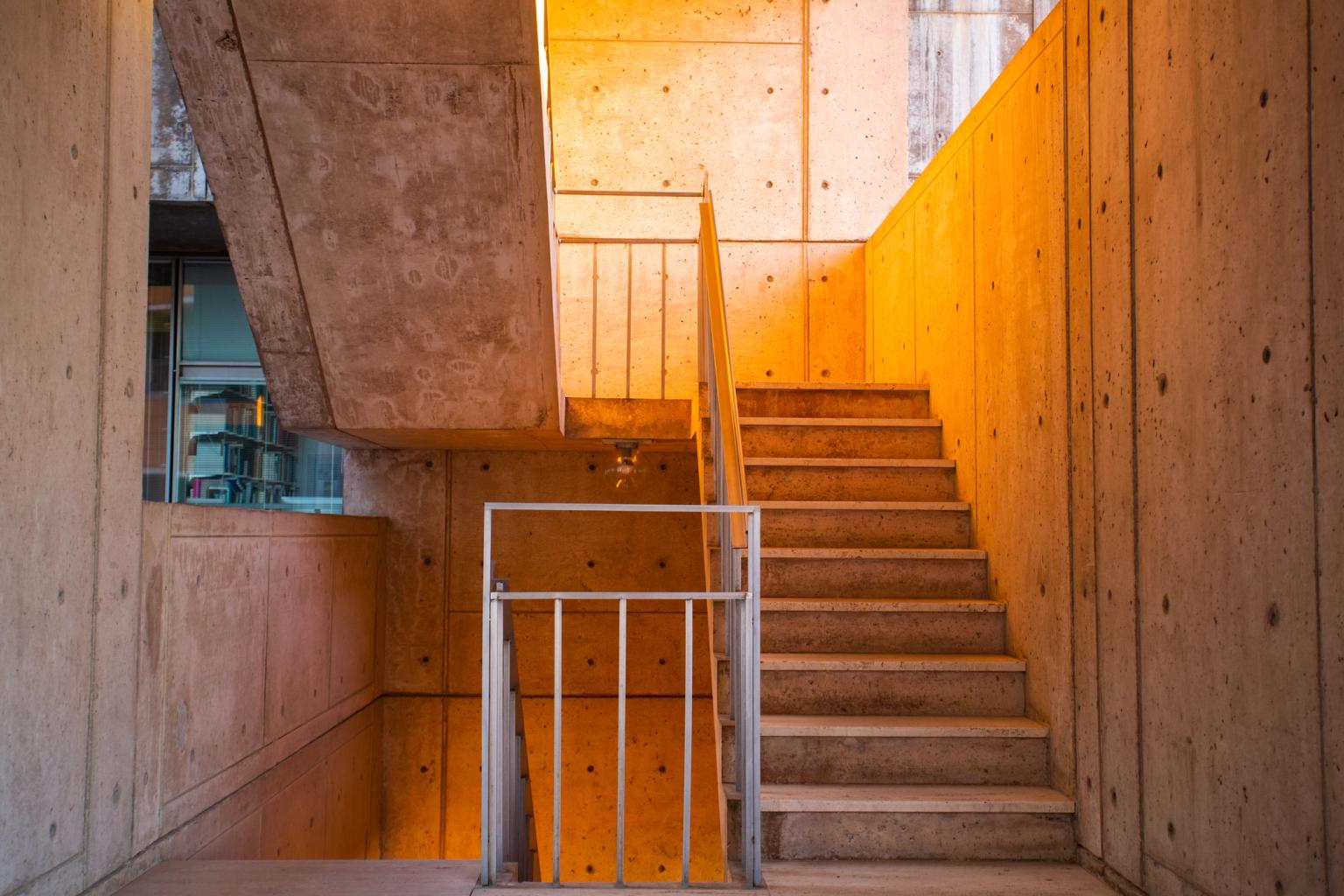
The atmosphere of the Salk Institute comes as much from its materials as from its form. Kahn worked with a restrained palette of exposed pozzolanic concrete, pale travertine stone, glass, and handcrafted teak wood. The concrete, inspired by ancient Roman construction methods, was designed to have a soft, warm tone that changes with the coastal light, while the teak panels add texture and warmth to the otherwise monumental composition. Rather than relying on ornament, the building finds beauty in proportion, craftsmanship, and the subtle play of natural light across its surfaces.
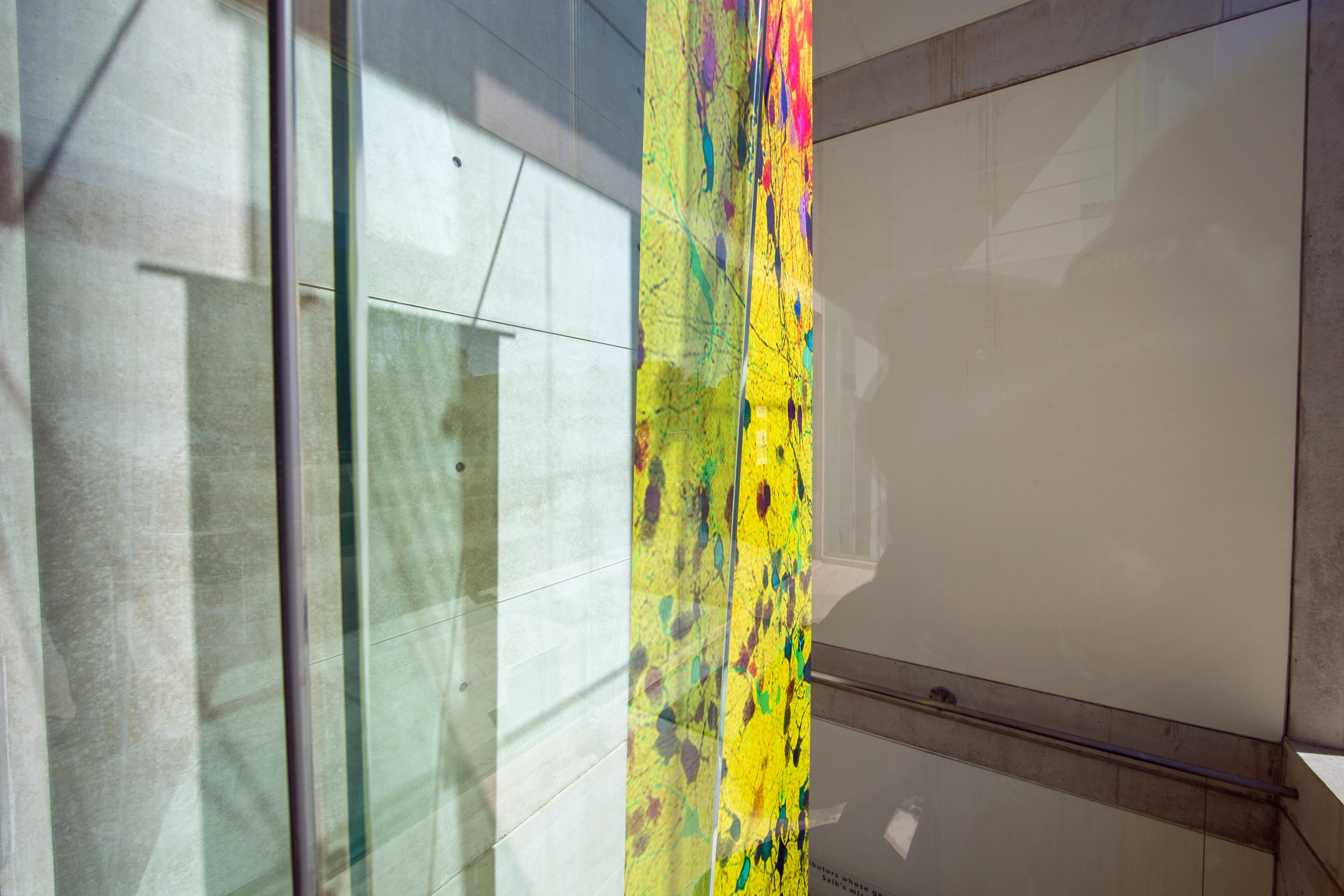

More than sixty years after its foundation, the Salk Institute remains one of the world’s leading centres for biological research, with pioneering work in genetics, neuroscience, ageing, and plant biology. At the same time, it has become an enduring architectural landmark, studied and visited by architects, artists, and students from around the world. Careful conservation projects have ensured that Kahn’s original vision continues to be preserved, allowing the institute to function not only as a place of scientific innovation but also as a lasting example of how architecture can shape the way people think, work, and imagine the future.