
the work of
Palle Nielsen
- ArtistPalle Nielsen
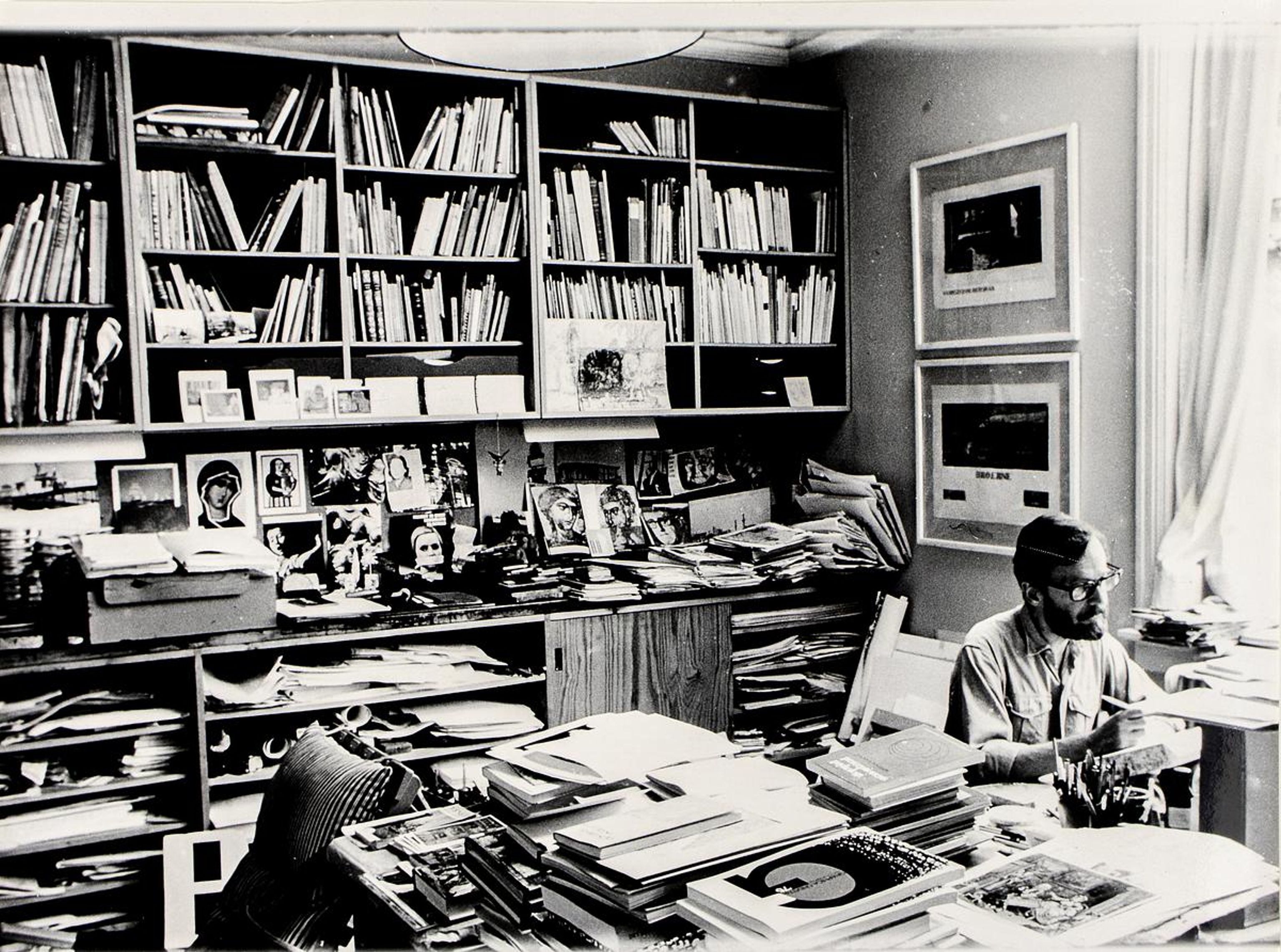
- PhotographerPalle Nielsens Arkiv, Fuglsang Kunstmuseum
Carl Krull Palle Nielsen was a highly regarded Danish graphic artist and painter, known for his powerful depictions of human existence, often exploring disaster, miracles, and the complexities of life. He gained particular recognition for his detailed graphic series, including the conceptually rich “The Abandoned City.” His key work, Orpheus and Eurydice (1955–59), a series of 53 linocuts, uses the classic myth to reflect on loss and the human condition in a post-war world.
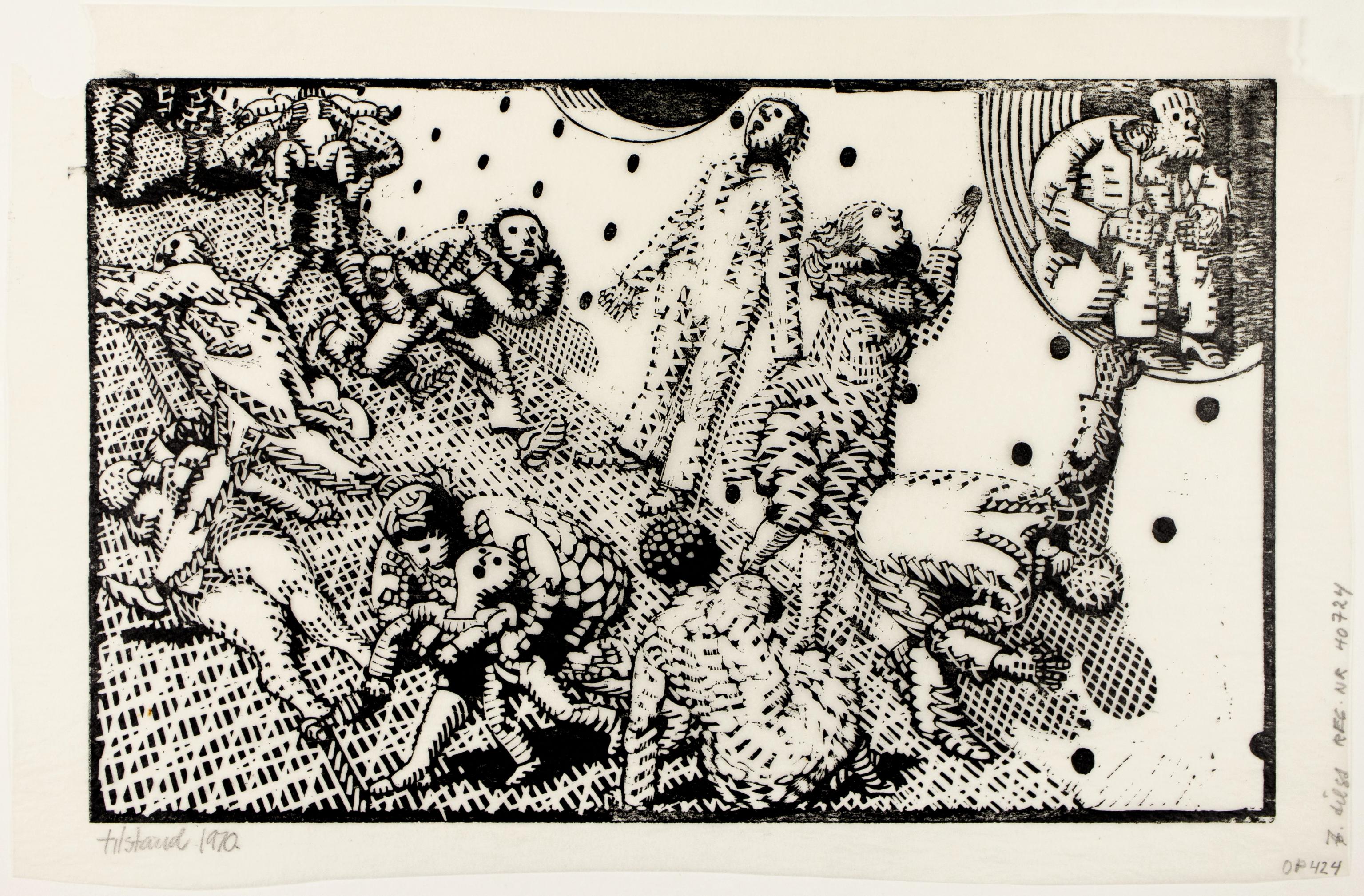

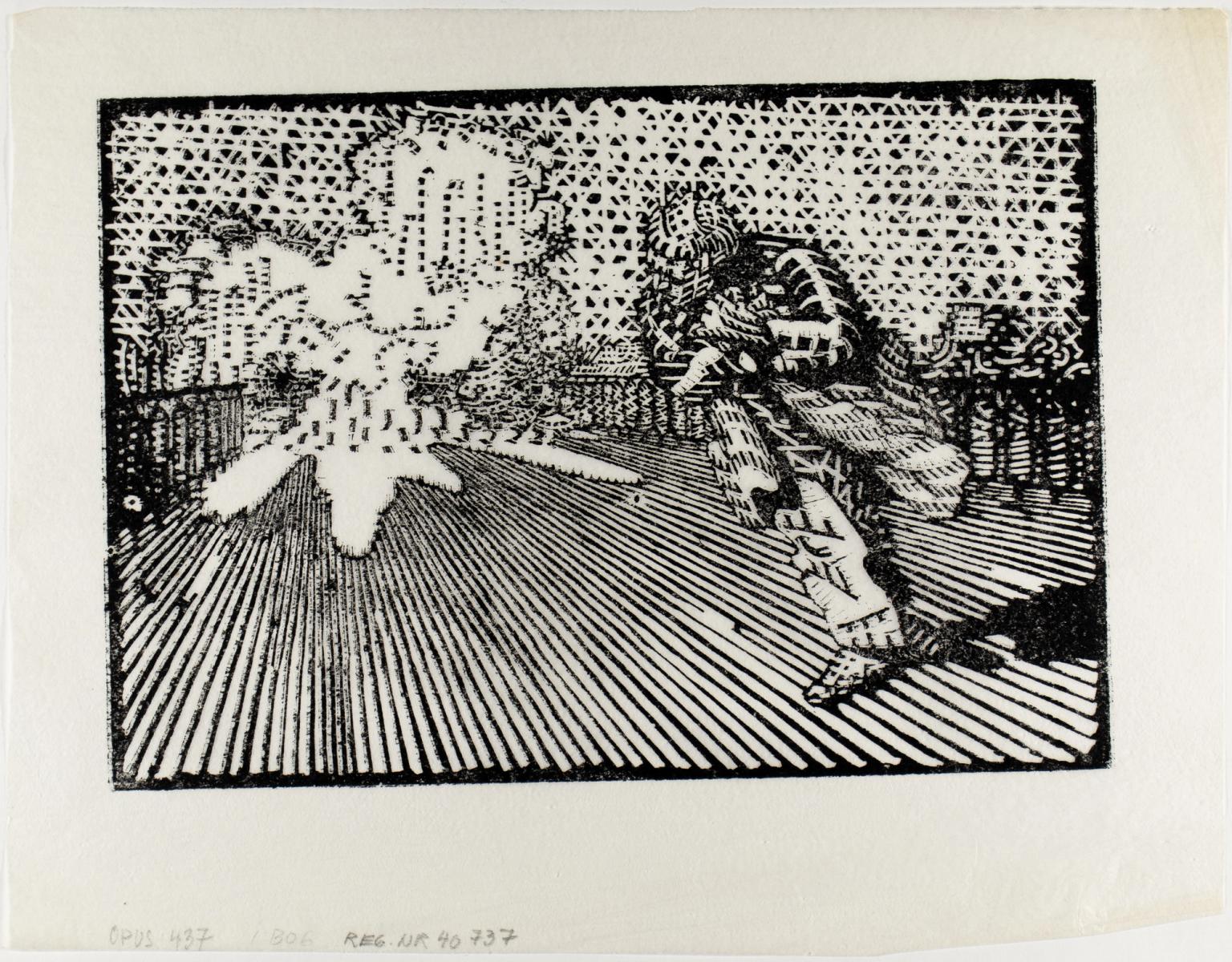

Palle Nielsen: Life and Artistic Vision
Palle Nielsen (1920–2000) was a Danish graphic artist and professor whose work spanned more than half a century, reflecting both the psychological and societal landscapes of the modern world. Educated at the Kunsthåndværkerskolen in Copenhagen, Erik Clemmensen’s painting school, and the Royal Danish Academy of Fine Arts under Kræsten Iversen and Aksel Jørgensen, Nielsen combined traditional training with an acute awareness of contemporary life. His career included professorships at both the Royal Danish Academy (1967–1973) and the Jutland Art Academy (1965–1966), and he was a member of Den Frie Udstilling.
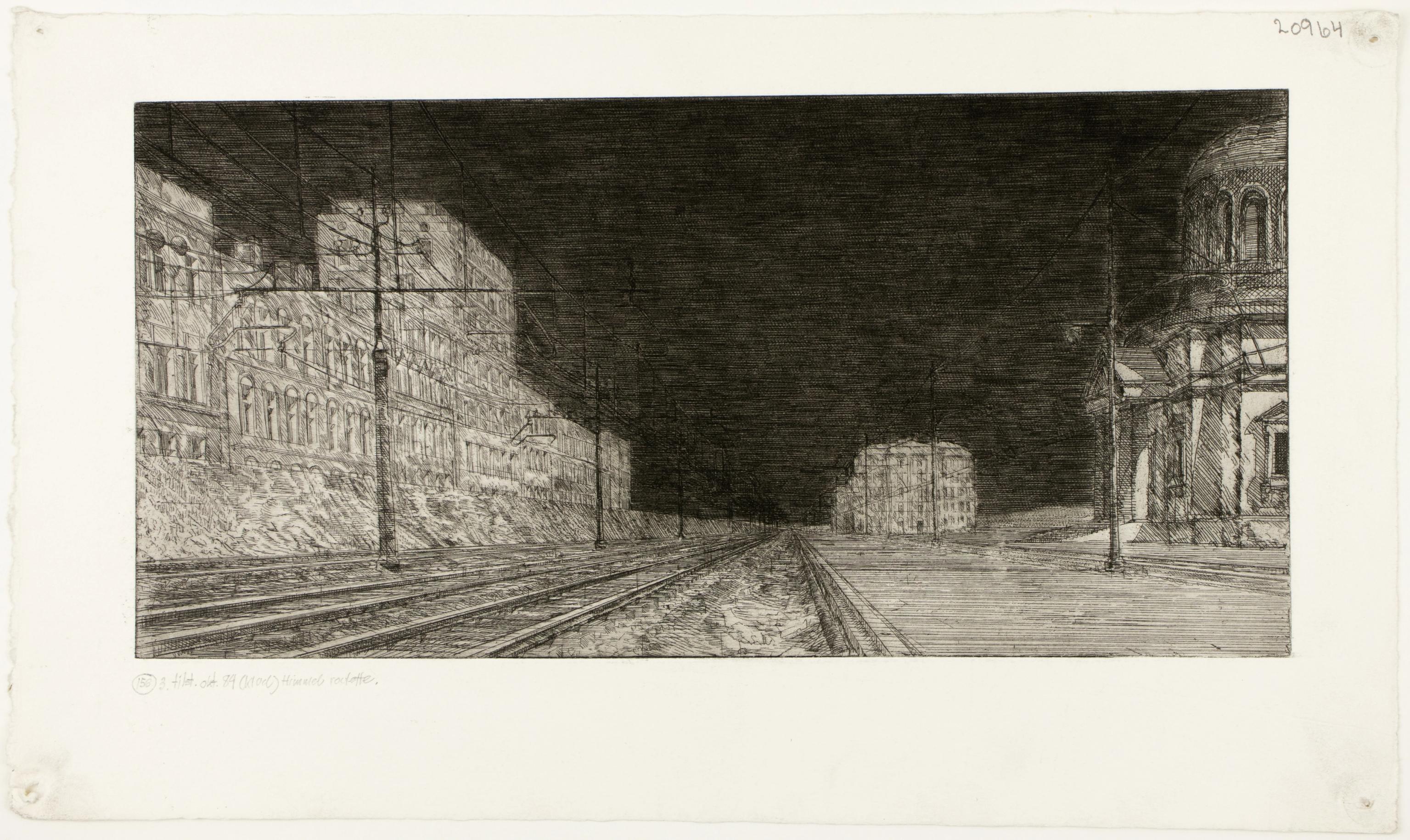
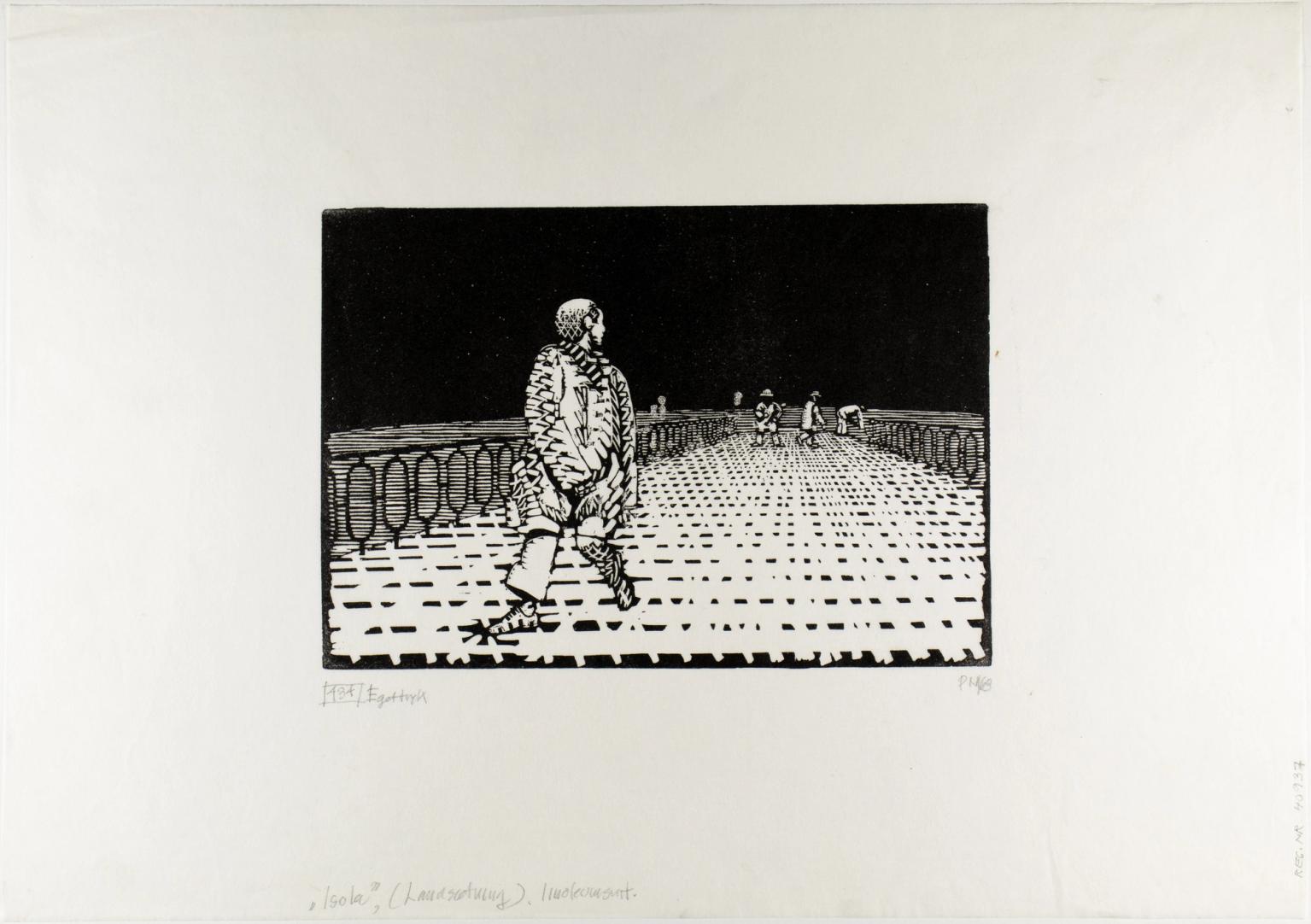
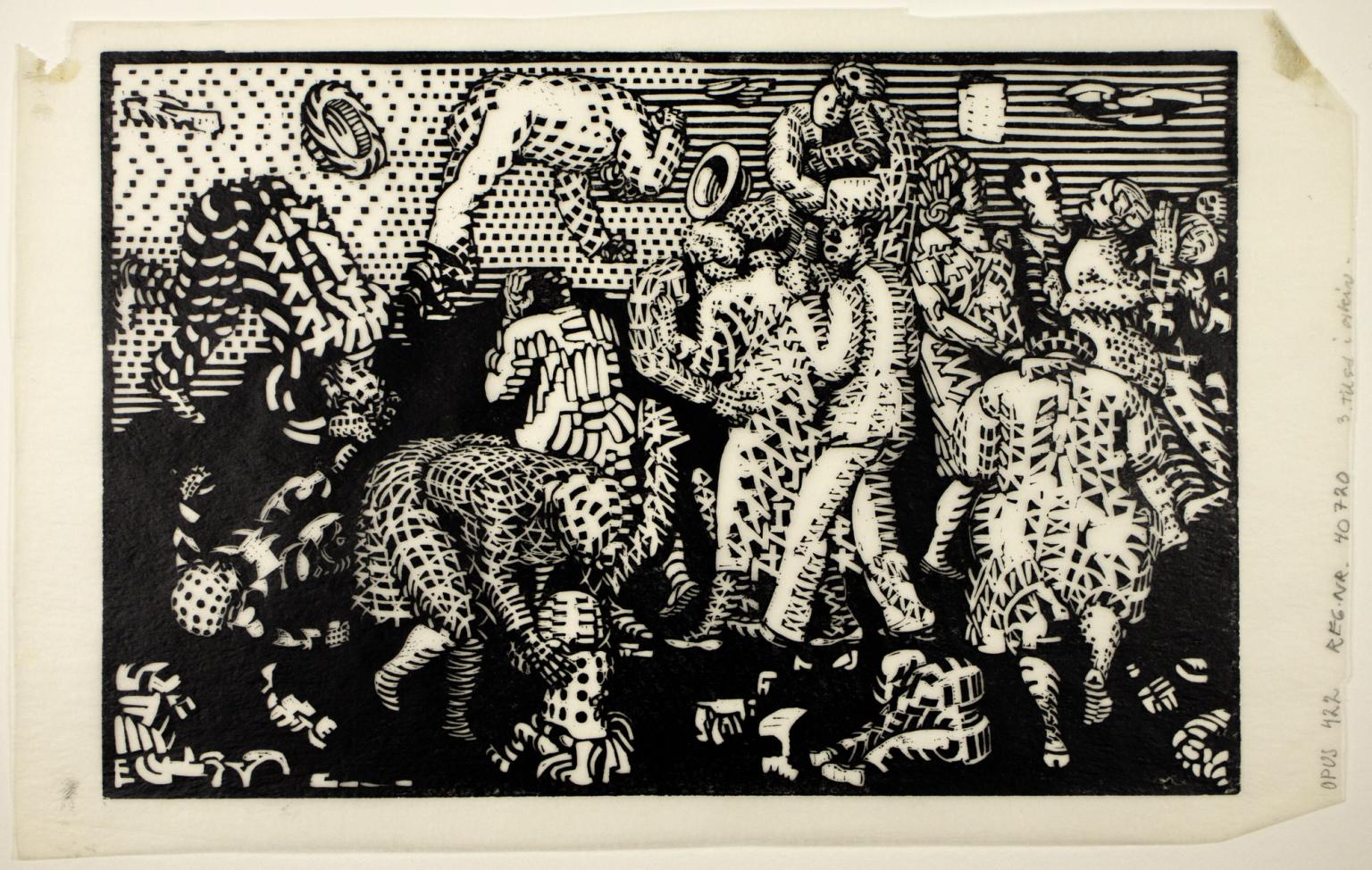
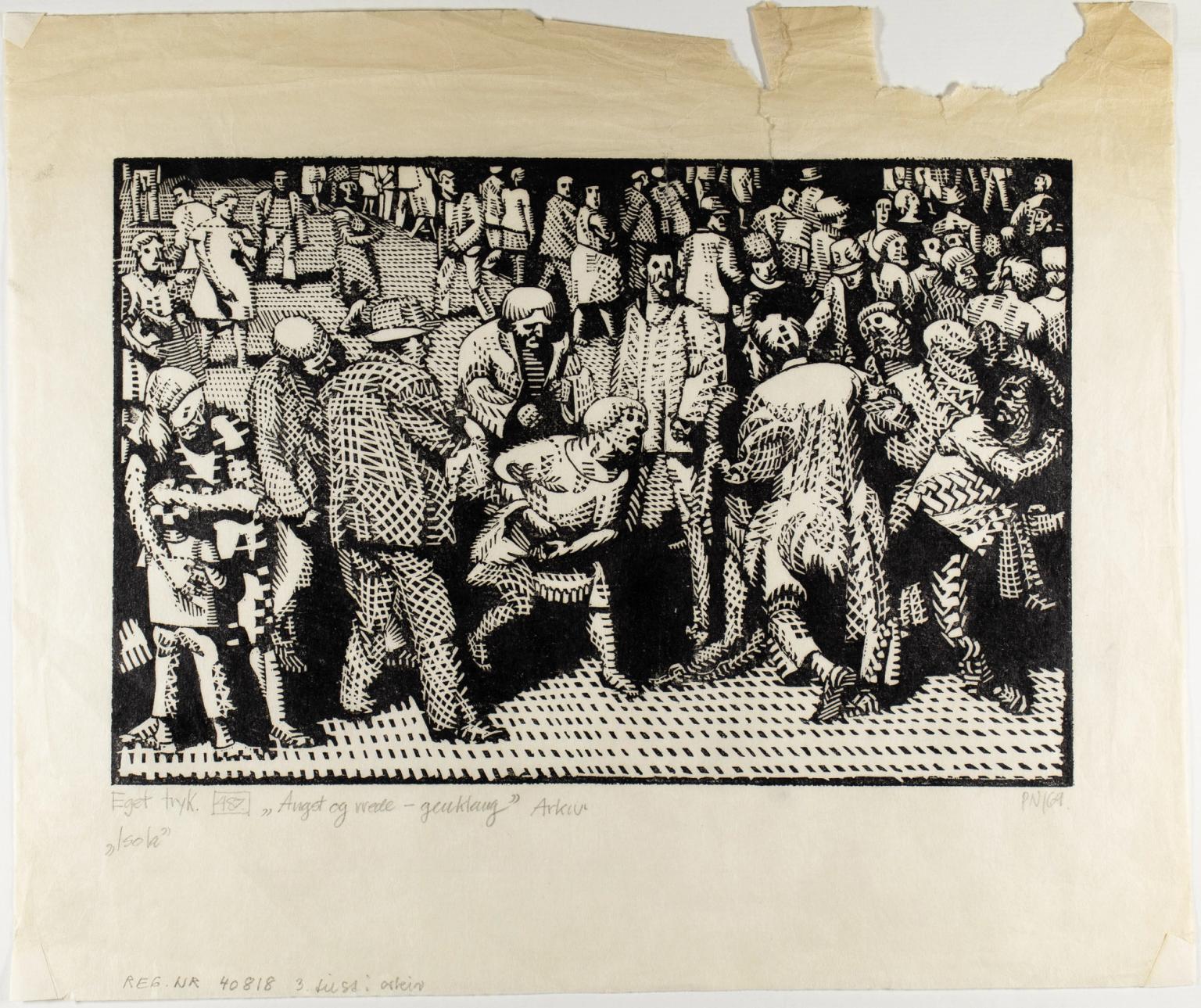
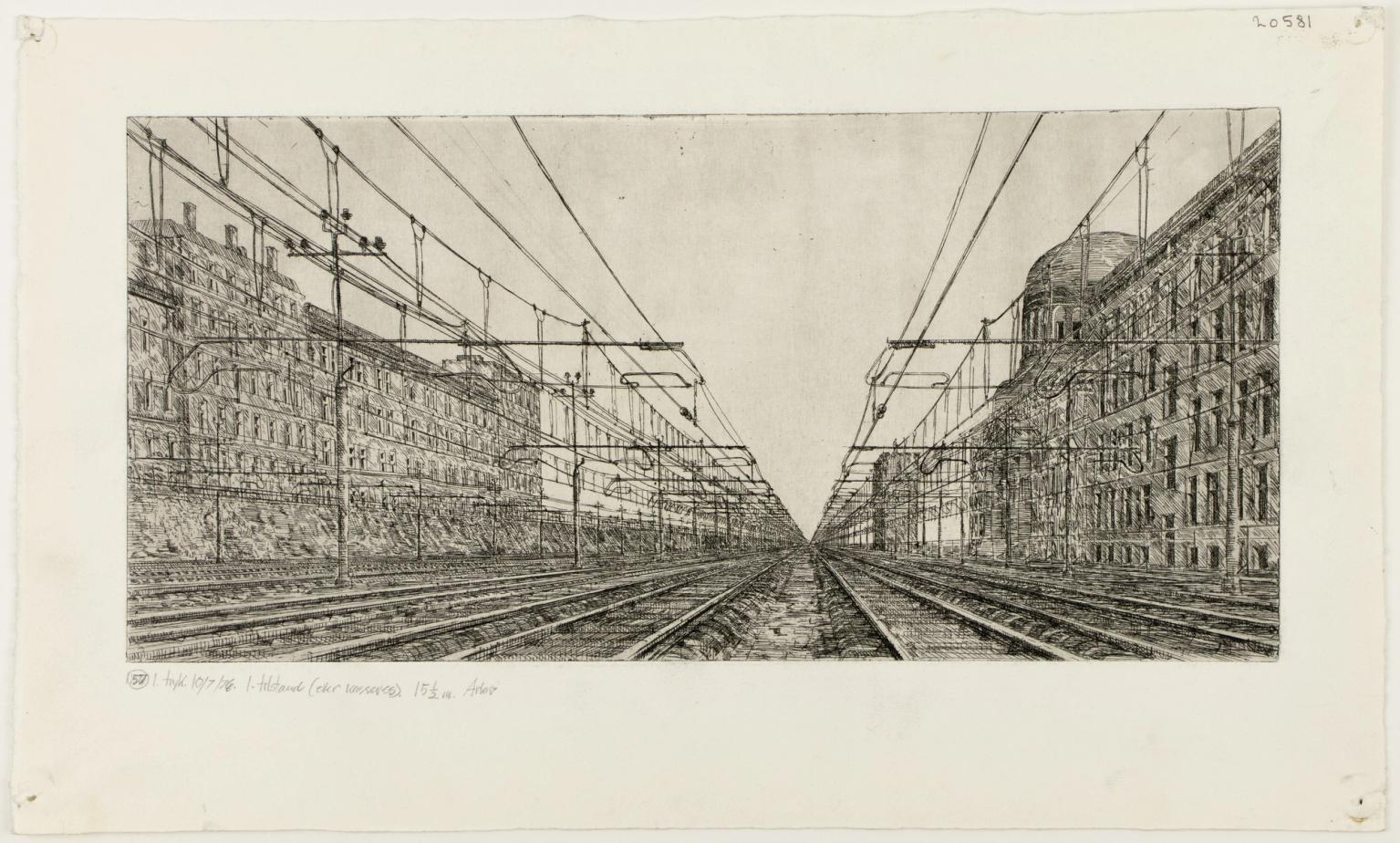
Nielsen exhibited widely, from Smithsonian Foundation venues to biennales in Venice, São Paulo, Tokyo, and Florence, as well as in major Danish institutions like Statens Museum for Kunst, Ny Carlsberg Glyptotek, and the Karen Blixen Museum. His artistic voice is defined by a mastery of linoleum and woodcut techniques, producing intricate black-and-white works that explore human vulnerability, isolation, and the tension between civilization and chaos. Nielsen’s cities and figures often appear both familiar and uncanny, creating a visual dialogue between architecture, memory, and existential experience.
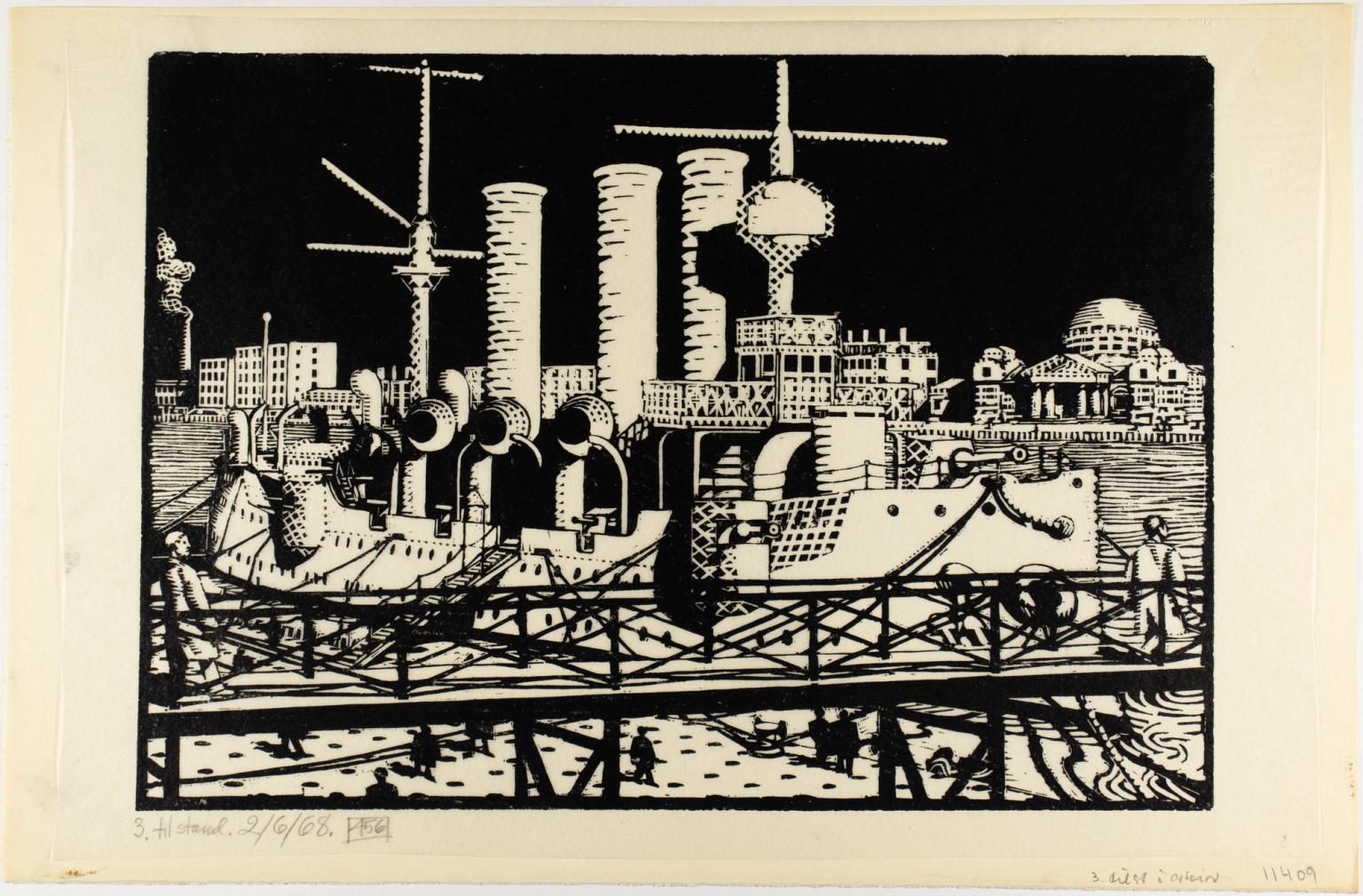

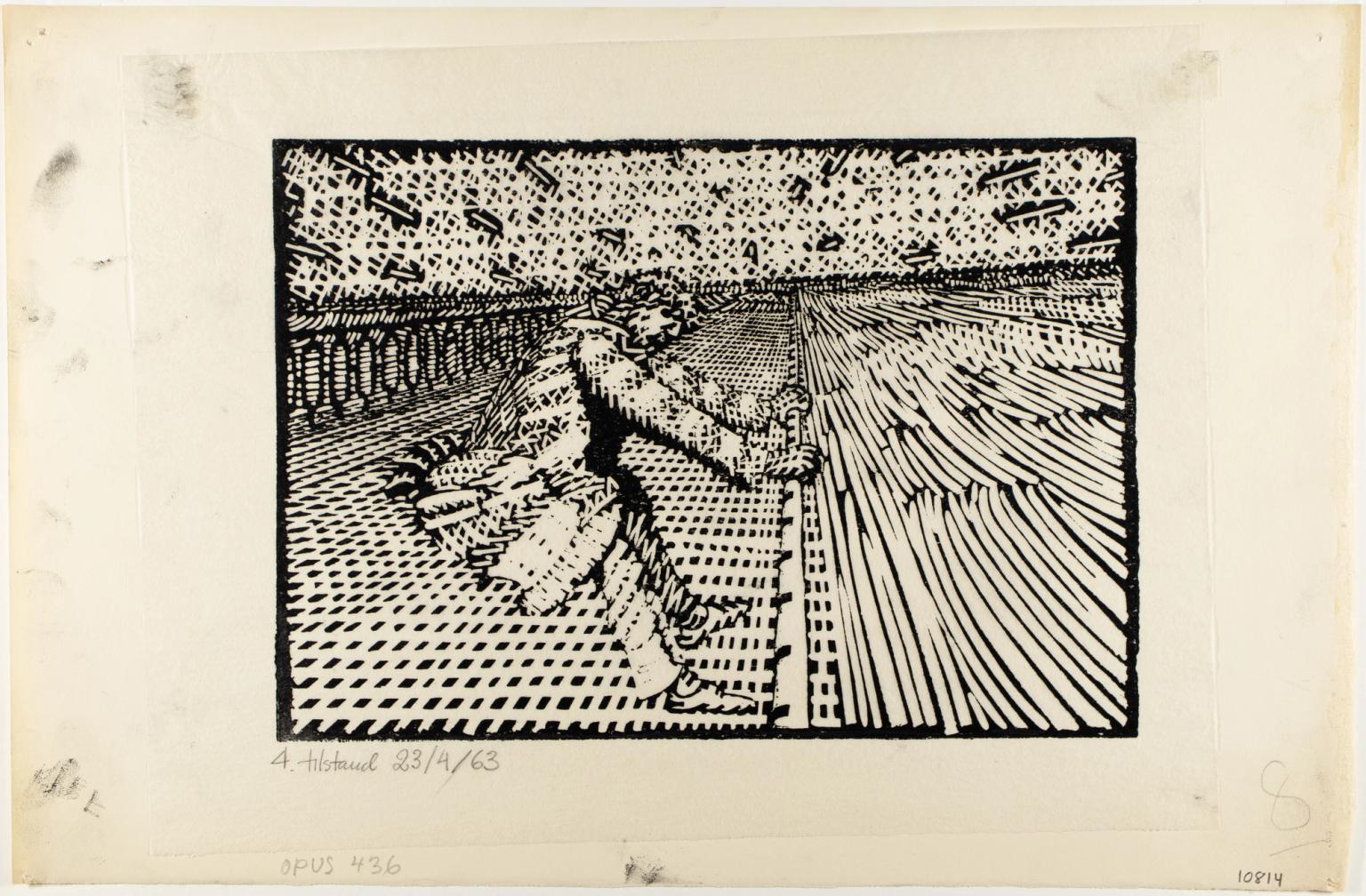





Orpheus and Eurydice: Postwar Reflections
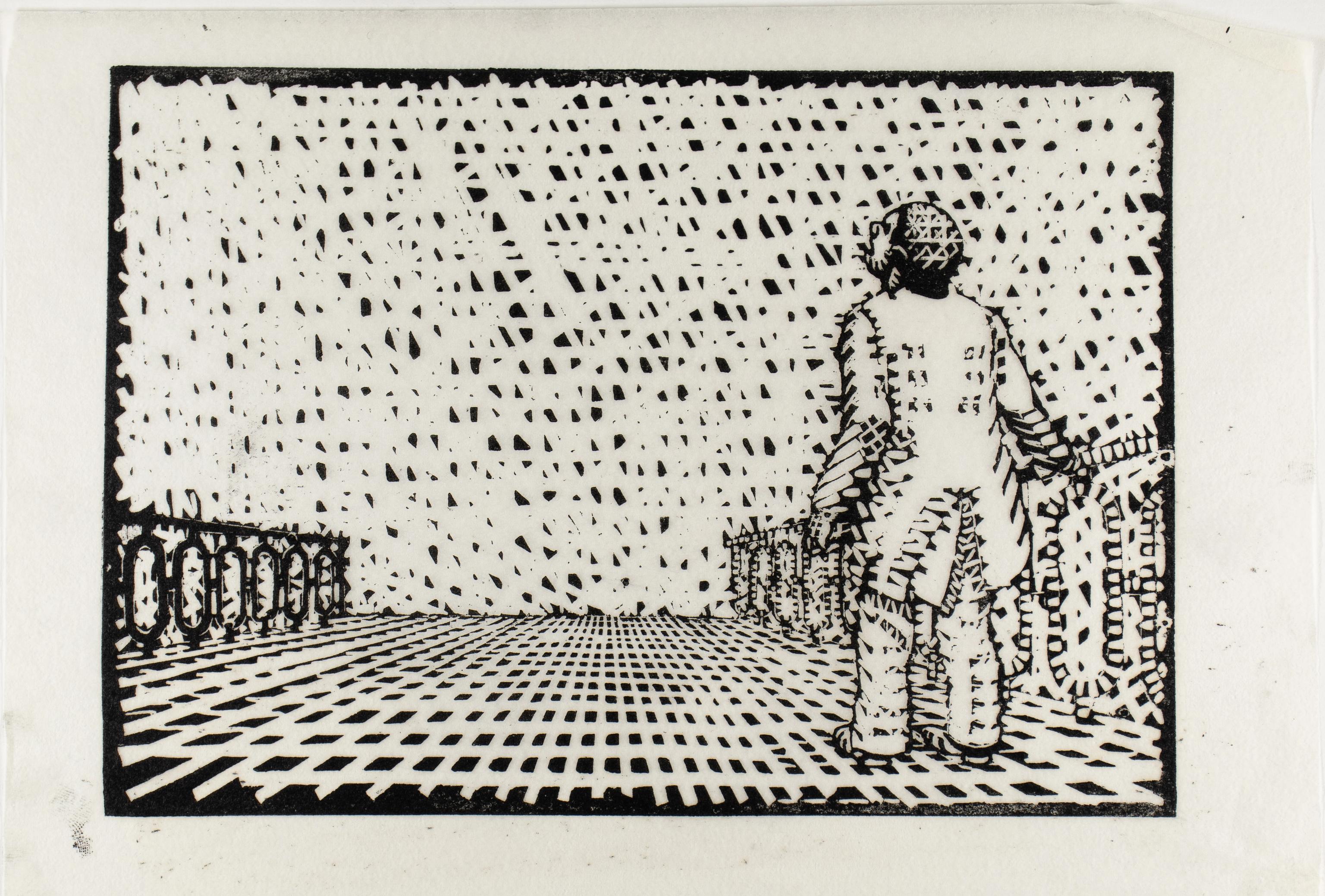
Nielsen’s Orpheus and Eurydice (1955-1959) is a series of 53 linoleum prints inspired by his travels through postwar Europe. The works blend mythological narrative with personal experience, exploring the tension between loss, mortality, and human agency. Nielsen described a dreamlike vision of seeing a dying figure through a train window, a moment that crystallized the ethical and existential themes of the series. The prints depict Orpheus as a figure navigating uncertainty and tragedy, embodying both resilience and the search for meaning in a world fractured by war.
Influences from Frans Masereel’s wordless novels are evident, but Nielsen’s emphasis on spatial depth and plasticity transforms each image into a singular meditation on time, movement, and human potential. The series functions as a sequential exploration of psychological and moral questions, where narrative, emotion, and visual rigor converge.
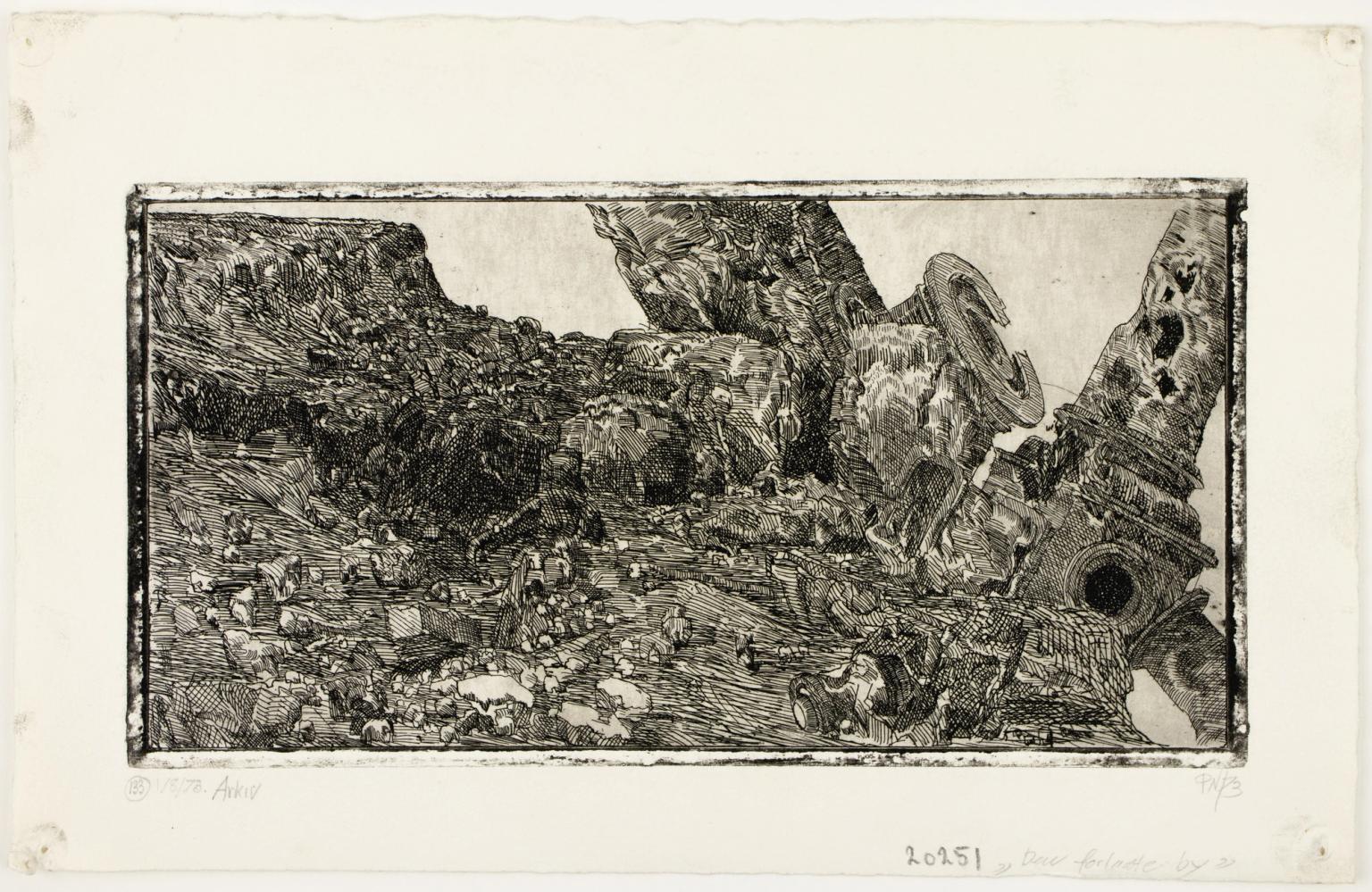

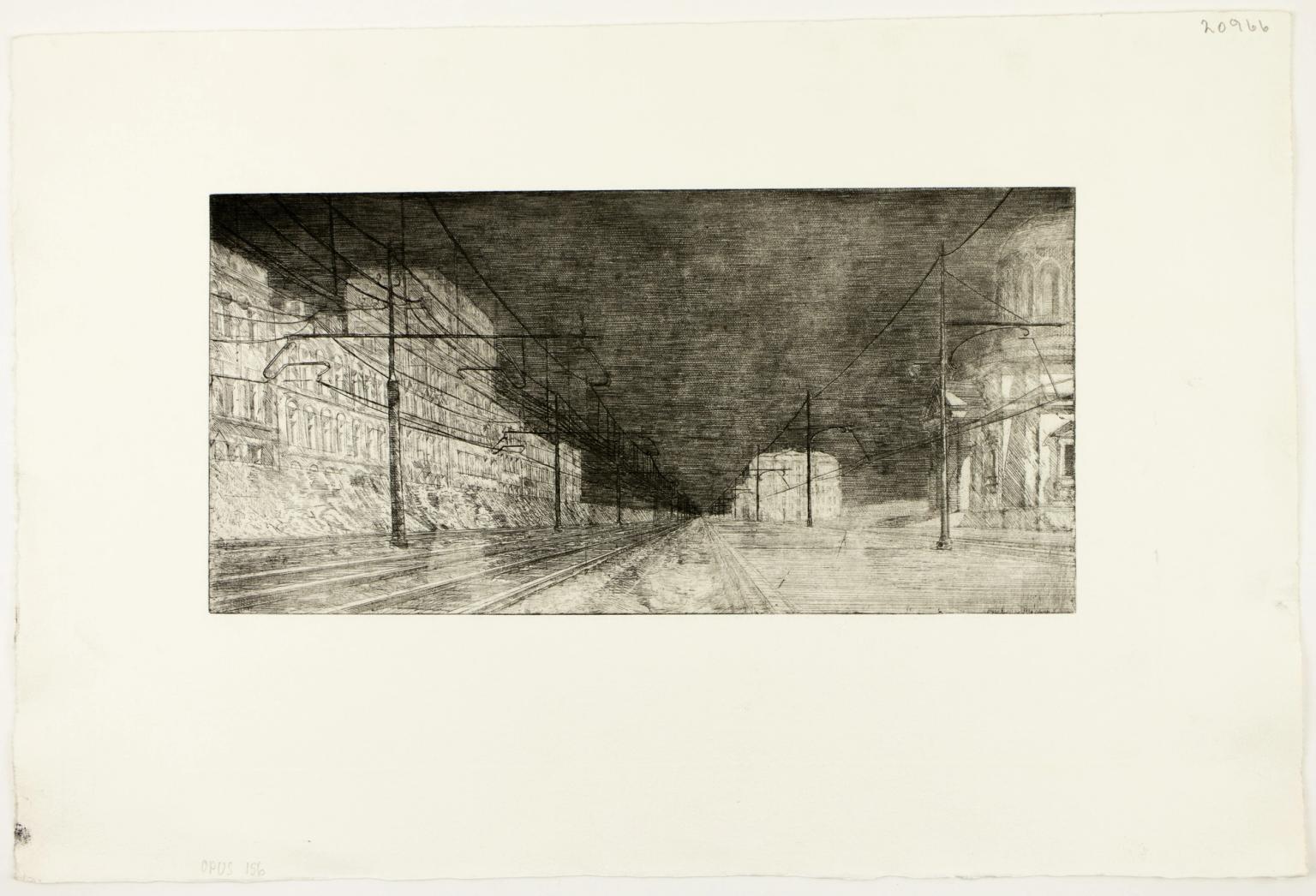

The Abandoned City: Modern Myth and Human Struggle
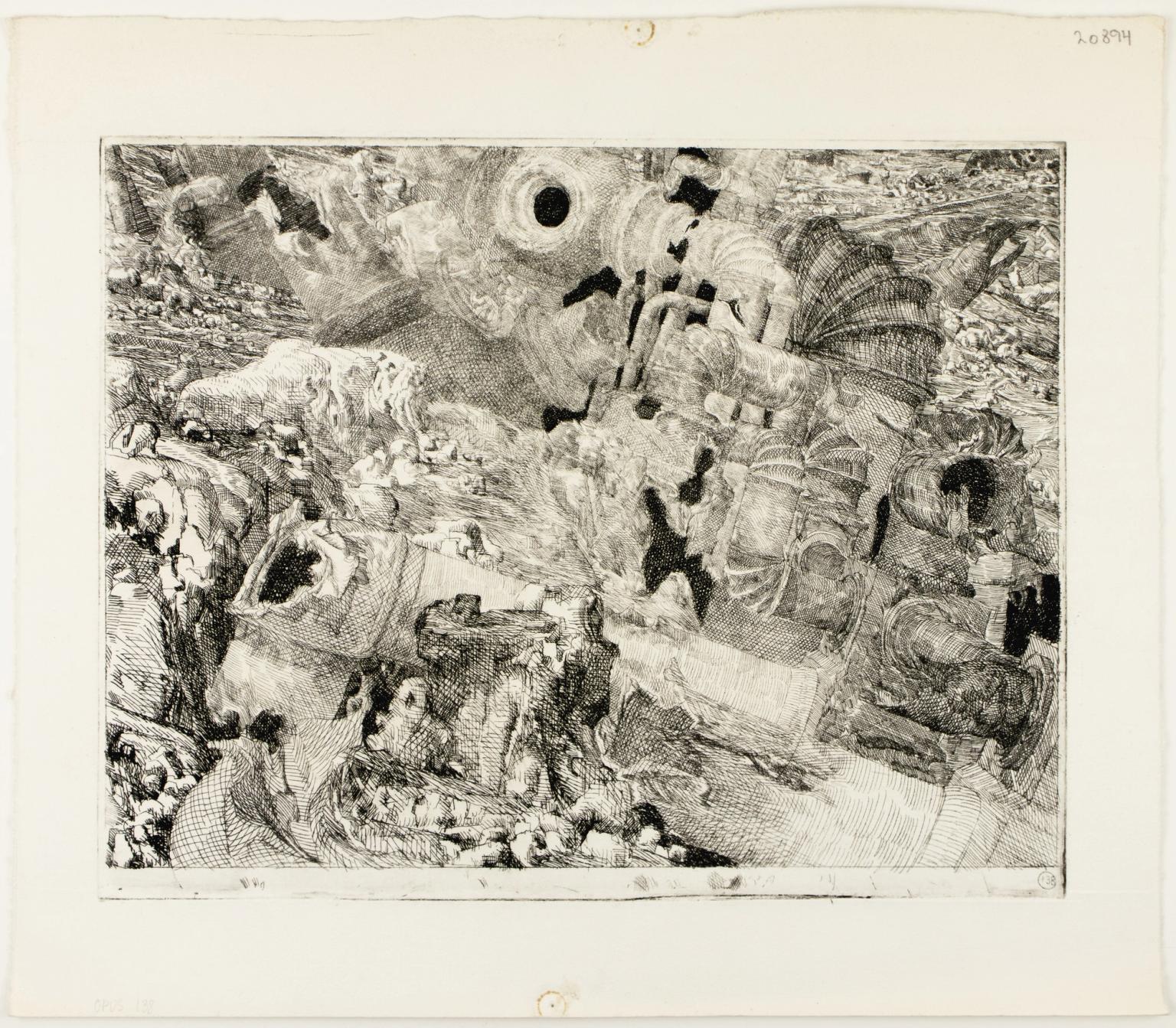
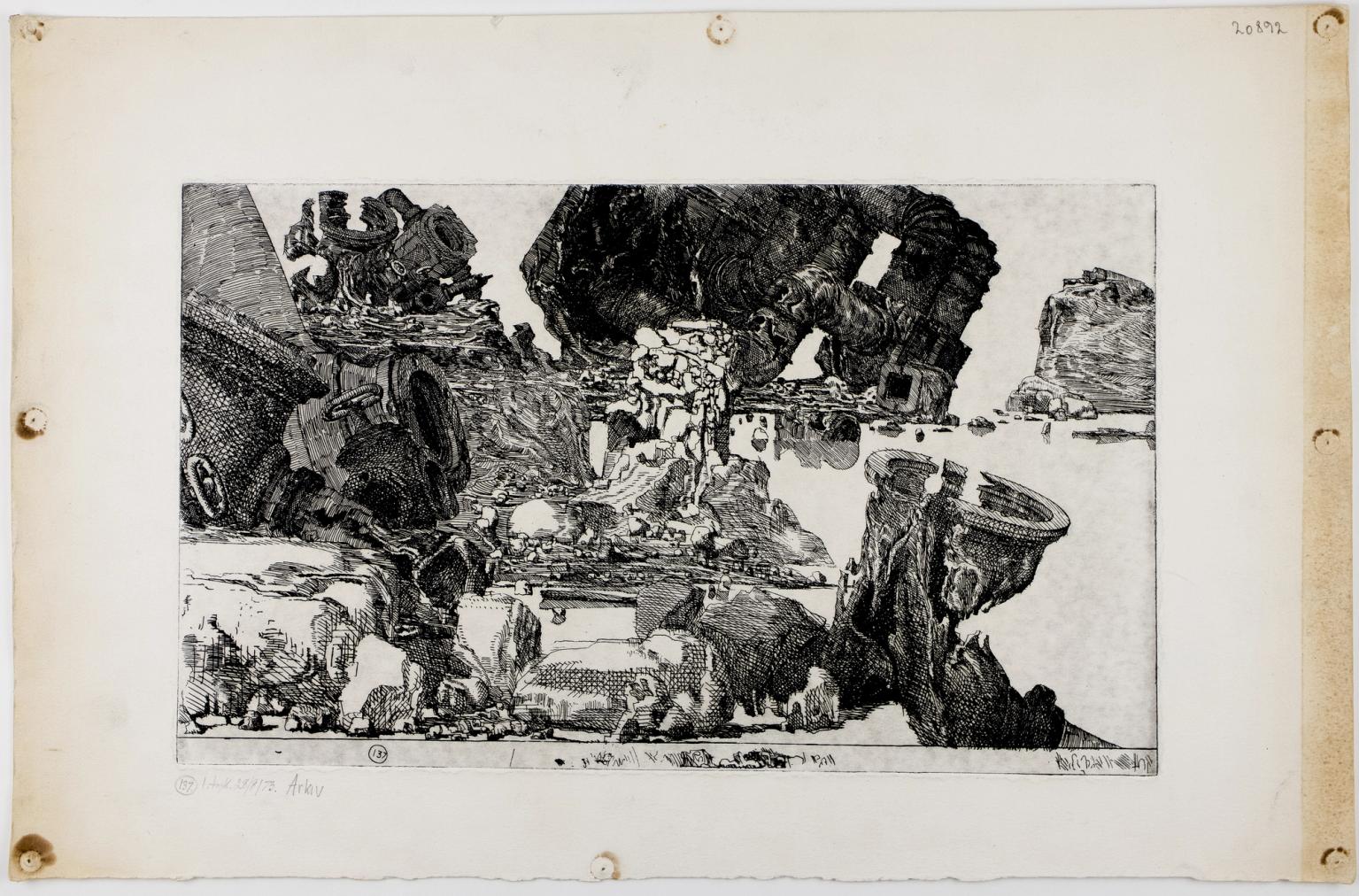
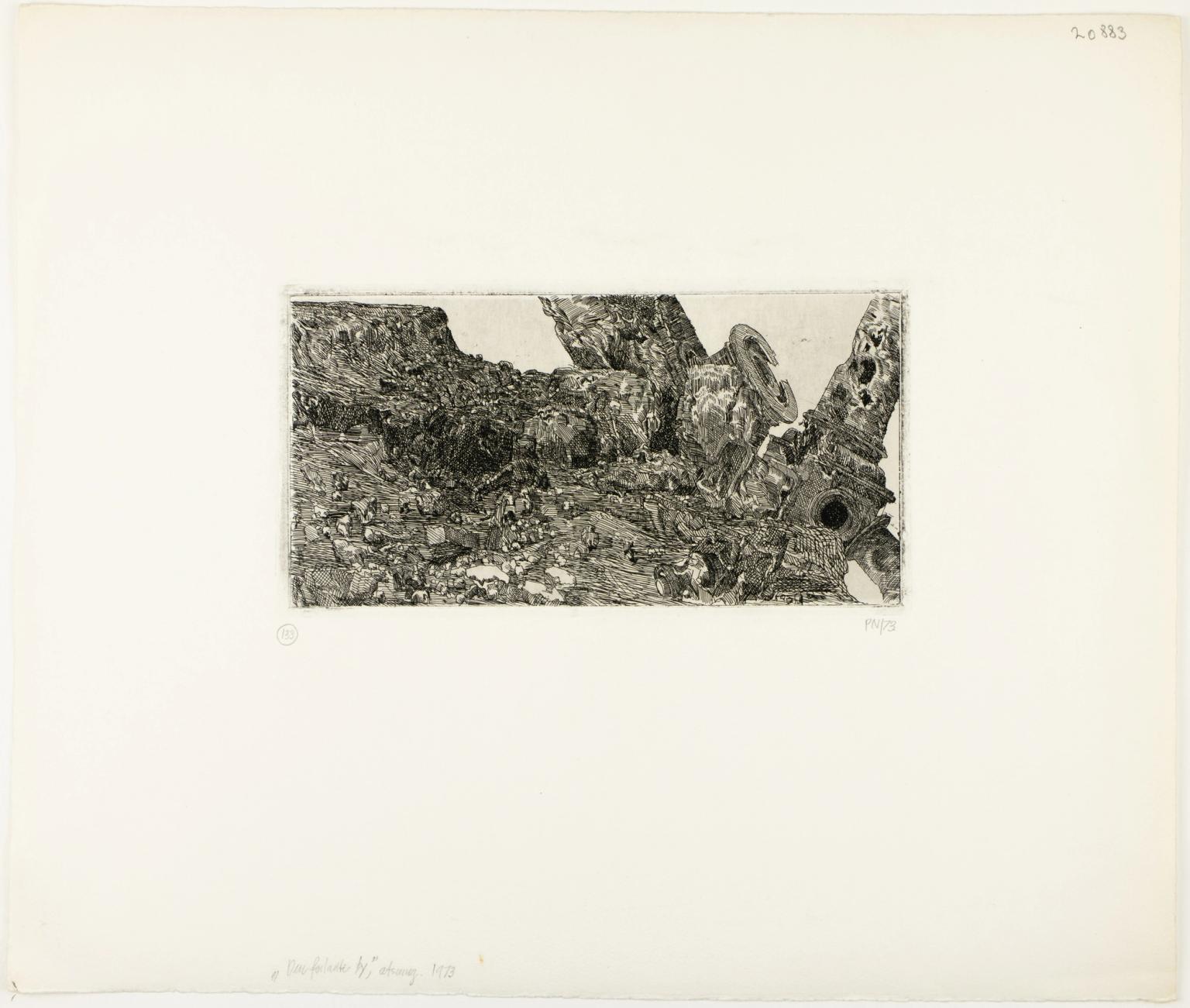
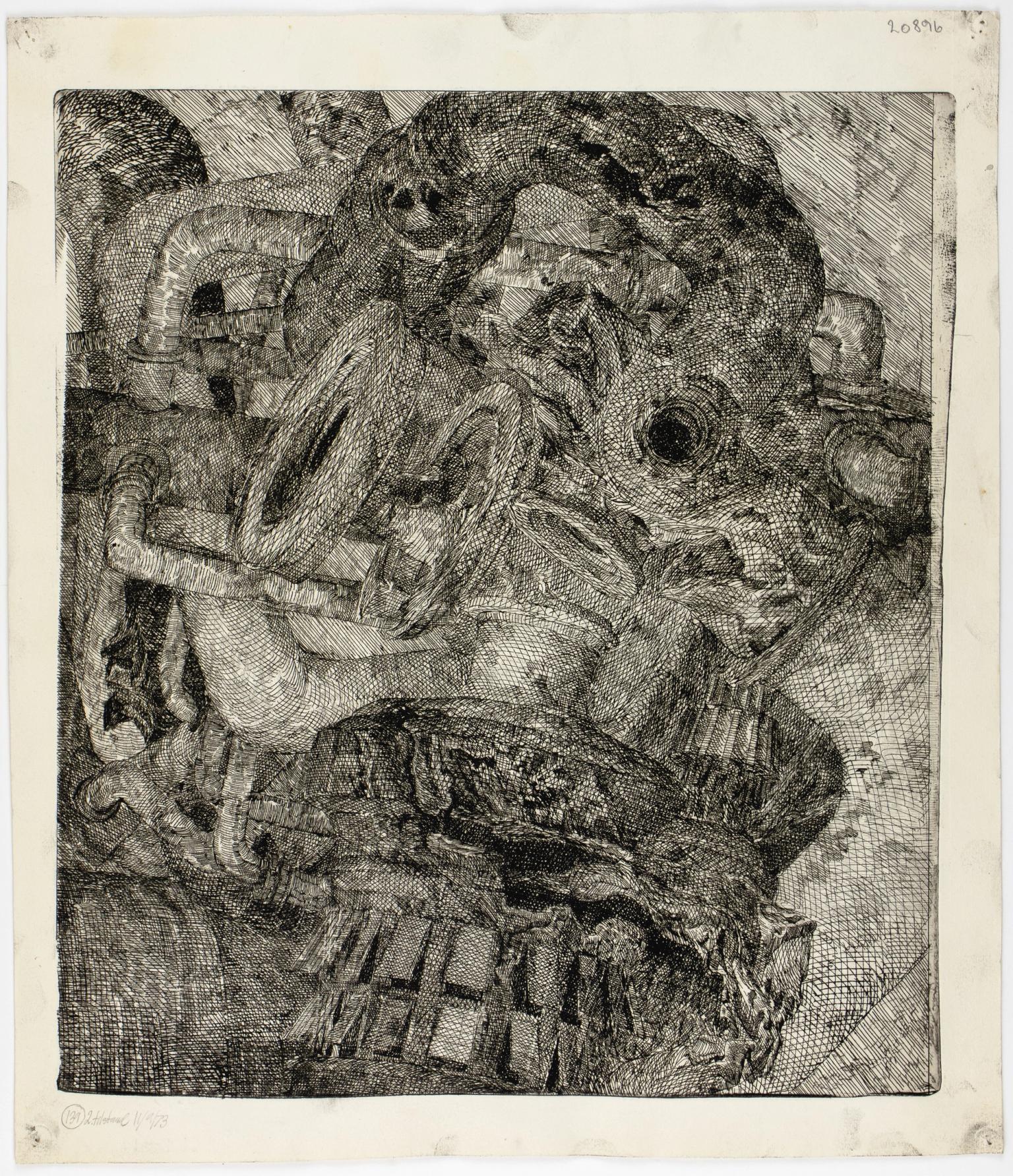
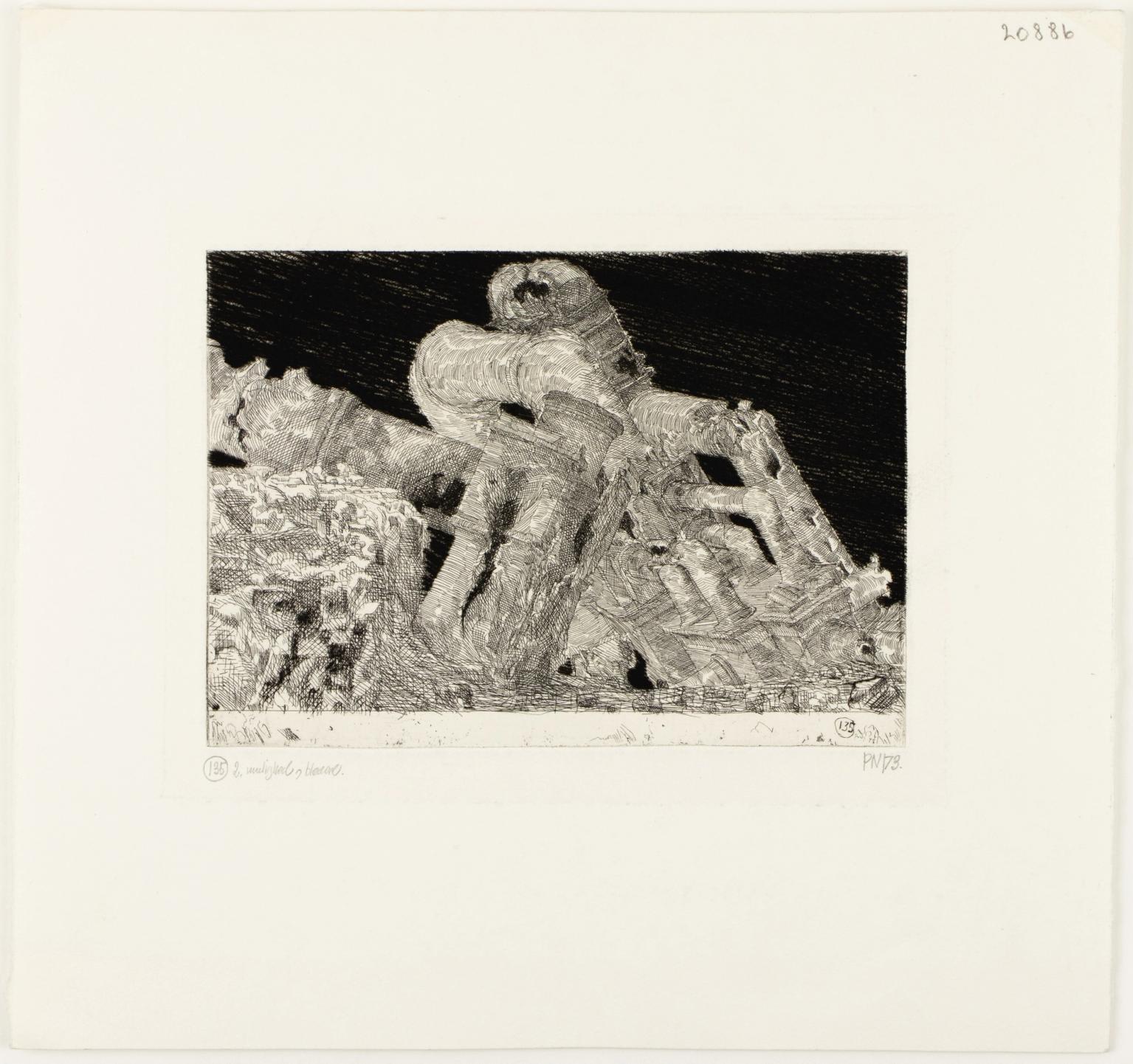
In The Abandoned City (1973), Den forladte by, Nielsen presents a dystopian urban landscape in 30 graphic works that depict the collapse of civilization and the persistence of human will. The series employs archetypal figures rather than individual portraits, illustrating fundamental human emotions such as fear, hope, and resilience. Skewed buildings, fractured horizons, and symbolic trees create a space where the city itself mirrors the inner state of its inhabitants. The narrative moves from catastrophe to tentative regeneration, suggesting that cultural memory and reflection are essential to survival.
Nielsen’s depiction of humans and cities as interconnected reflects his deep engagement with both historical and contemporary realities, showing that even in desolation, moments of awareness, empathy, and moral courage can emerge. The series stands as a meditation on the ethical and spiritual responsibilities of humanity in the face of social and environmental collapse, emphasizing both vulnerability and the potential for renewal.