
Peter Zumthor
Therme Vals
- ArchitectPeter Zumthor
- PhotographerFabrice Fouillet
Nicolas Schuybroek More landscape than building. Space is experienced through sequence, darkness, temperature, and sound. The architecture disappears behind atmosphere. It is about presence, not form.

Embedded in the Mountain
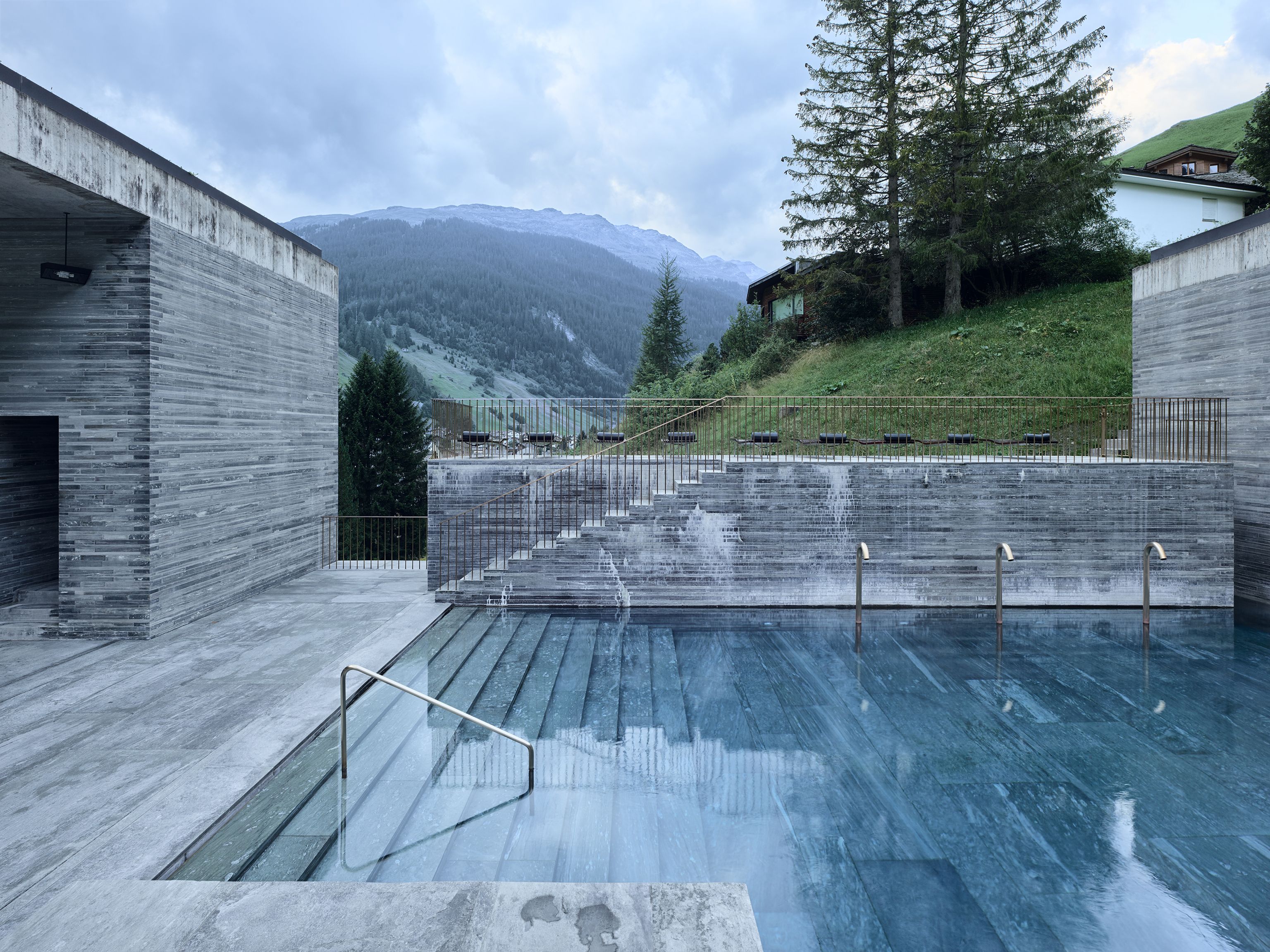
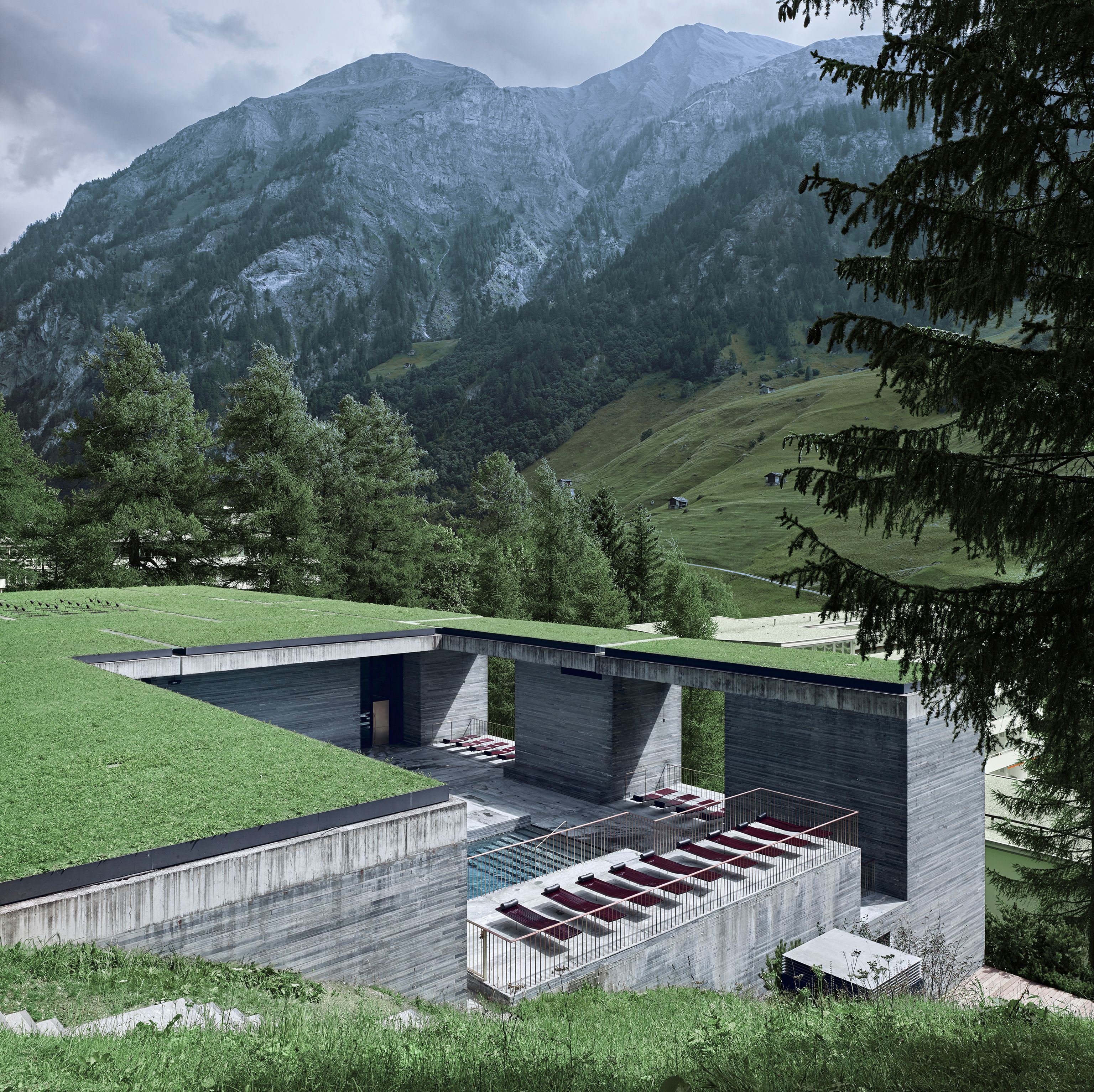
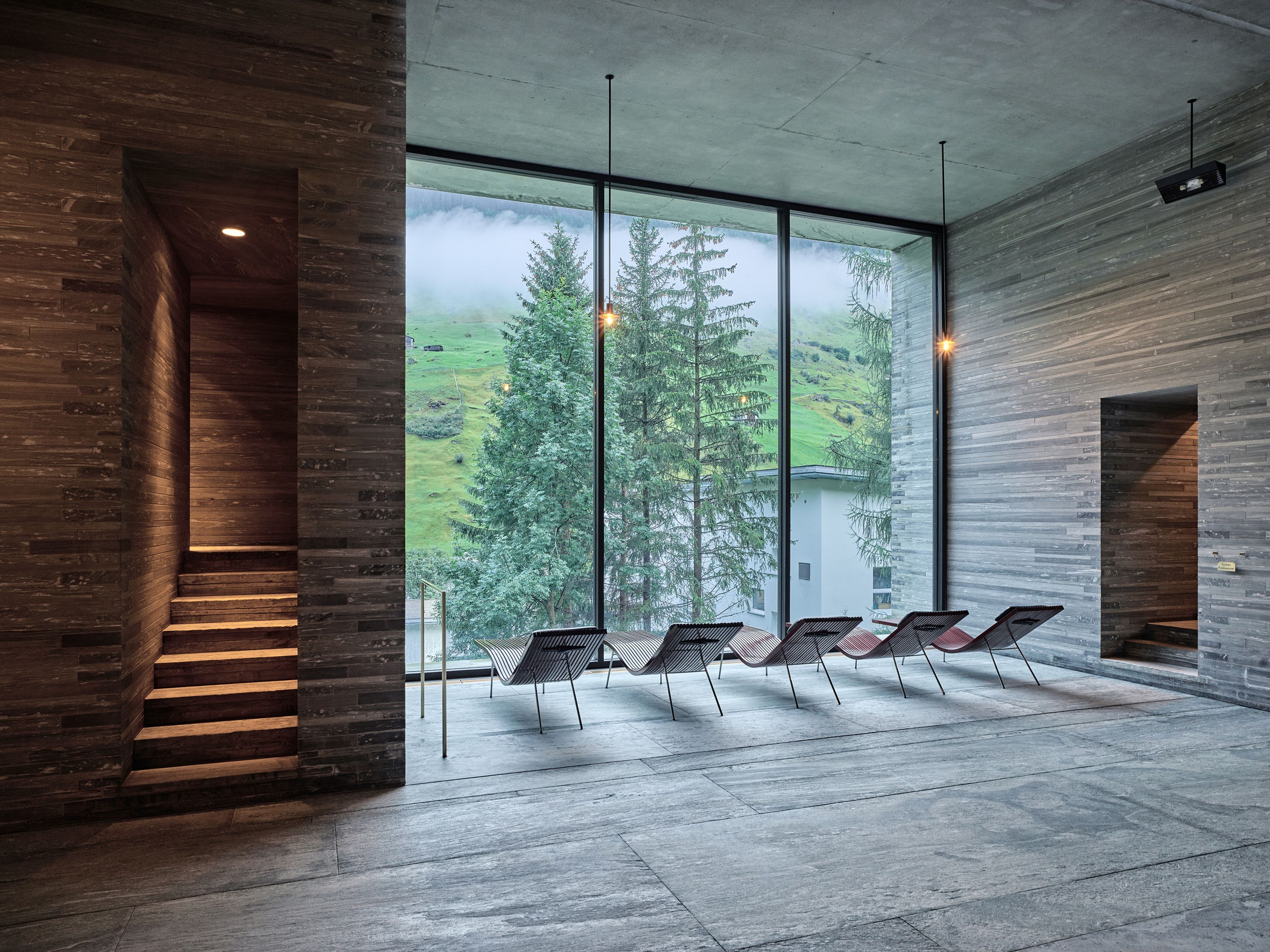
Located in the remote Alpine village of Vals in Switzerland’s Graubünden canton, Therme Vals emerges almost imperceptibly from the landscape. Designed by Peter Zumthor, a Swiss architect known for his uncompromising, minimalist approach and deeply sensory understanding of materials, and completed in 1996, the building is not placed on the site but carved into it, partially buried within the hillside, with a grass-covered roof that allows it to disappear into the terrain. Built directly above the St. Peter spring, Graubünden’s only thermal source, the project draws both its purpose and identity from the land itself. Rather than asserting a visual presence, Zumthor creates an architecture that feels discovered, ancient, grounded, and inseparable from its surroundings.

Stone as Structure, Stone as Atmosphere
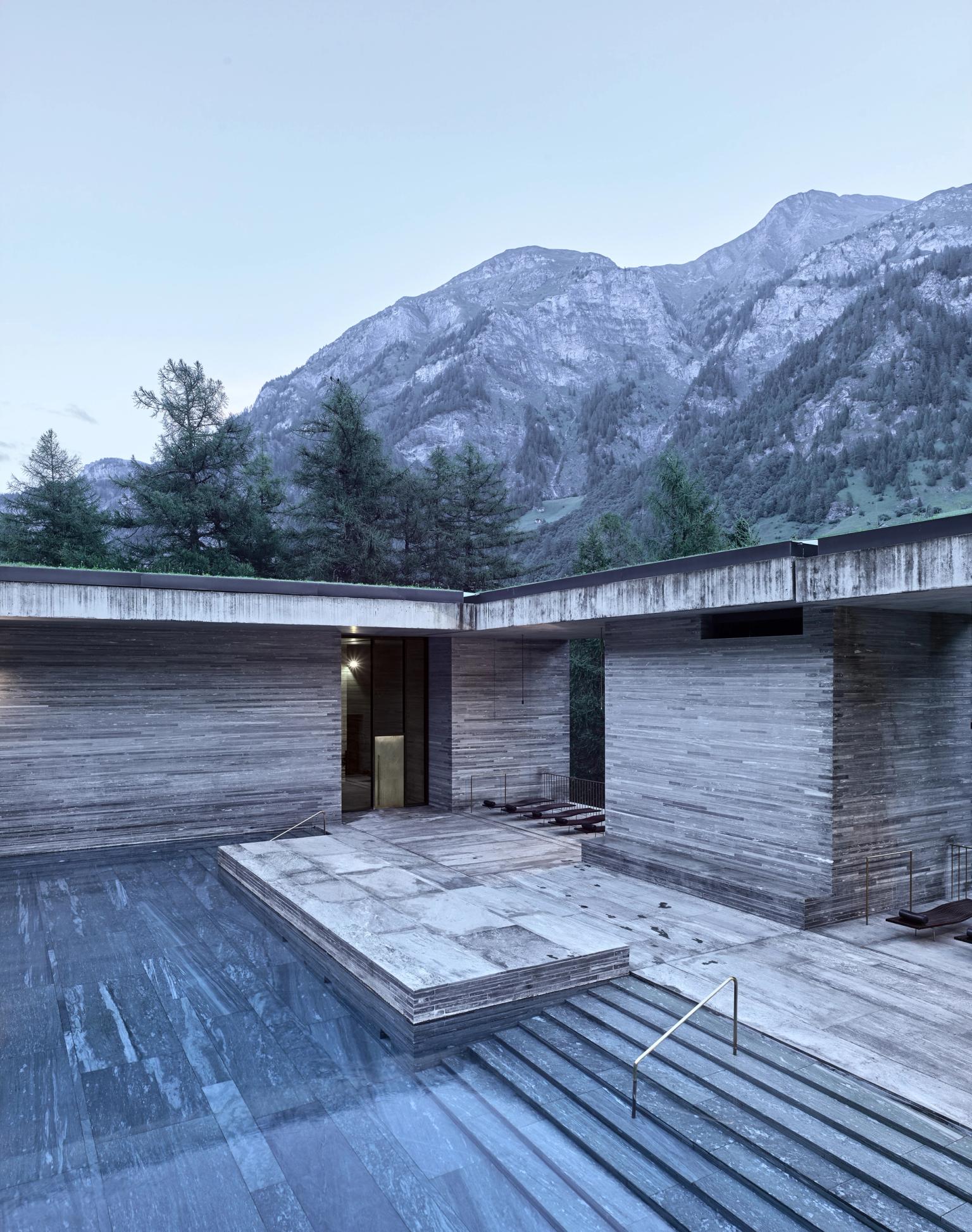
Constructed from over 60,000 slabs of locally quarried Vals quartzite, the building is defined by its material with almost obsessive clarity. The stone is not applied as a surface but used structurally, layered to form thick, striated walls that give the baths their weight and permanence. This approach reflects Zumthor’s belief that architecture begins with material, not form, and that meaning emerges through its handling. The cool density of the quartzite contrasts with the warmth of the water, creating a constant dialogue between body and building. Over time, the stone absorbs moisture, light, and touch, developing a patina that reinforces the sense that the structure has always belonged to this place.

Rooms and Rituals
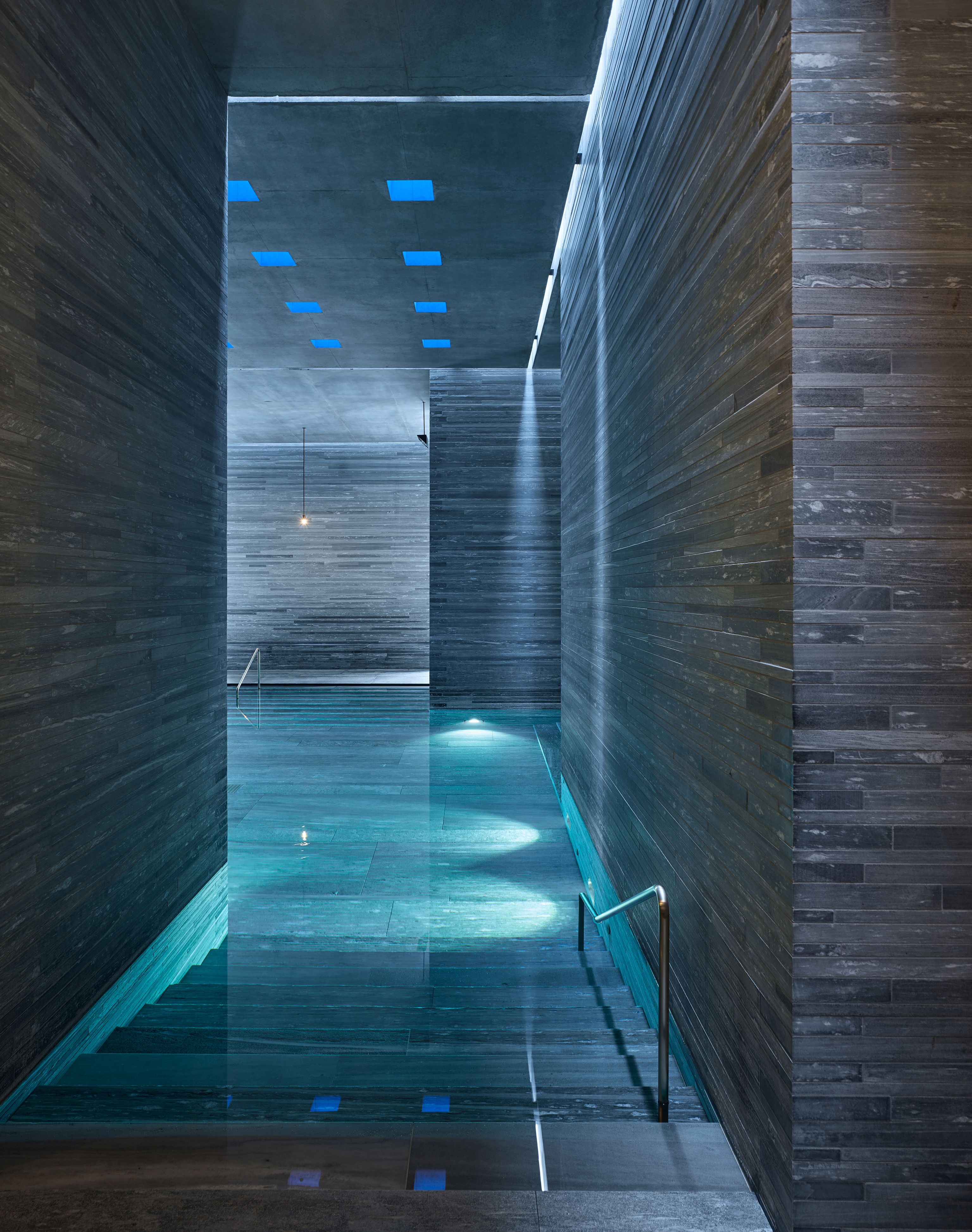
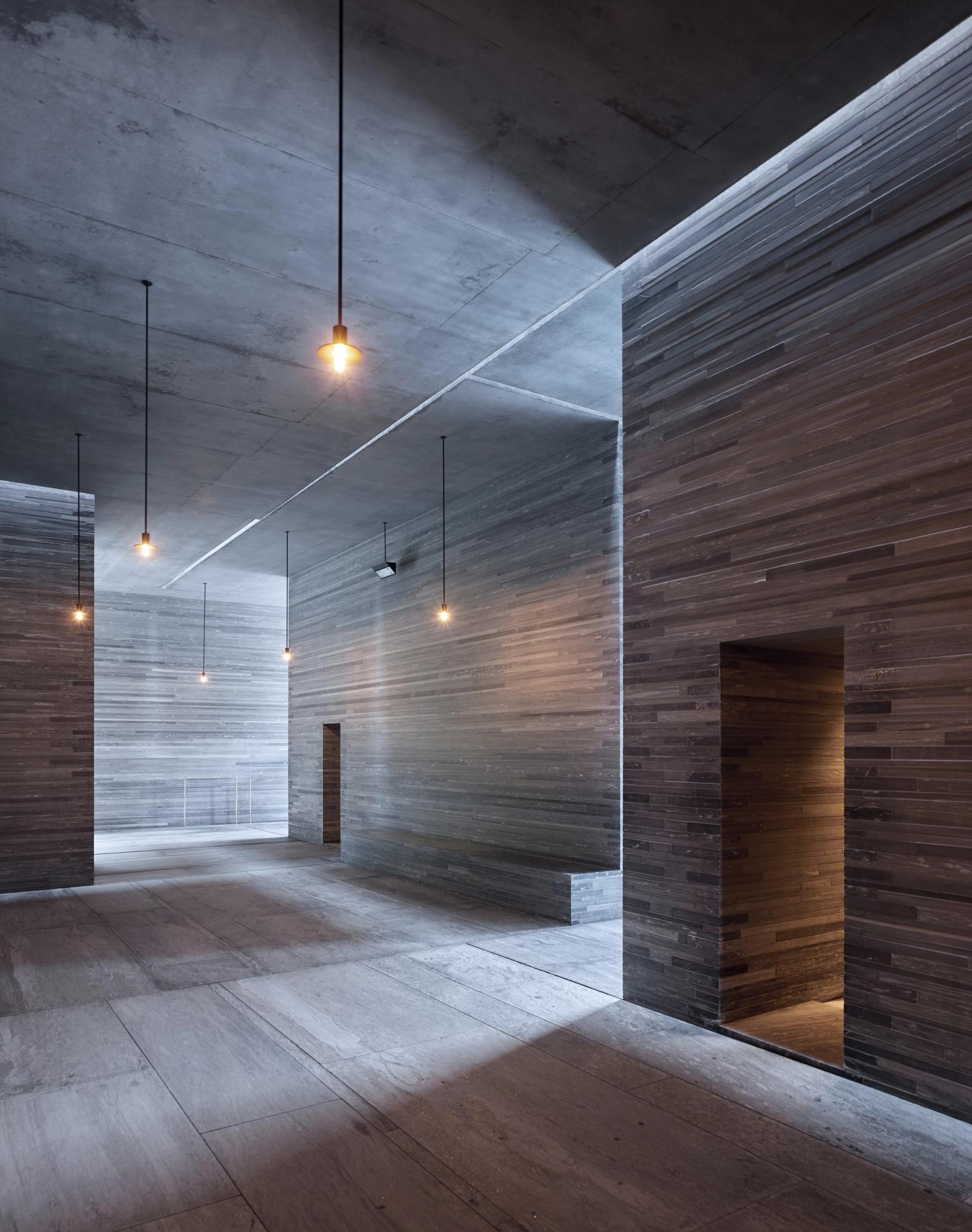
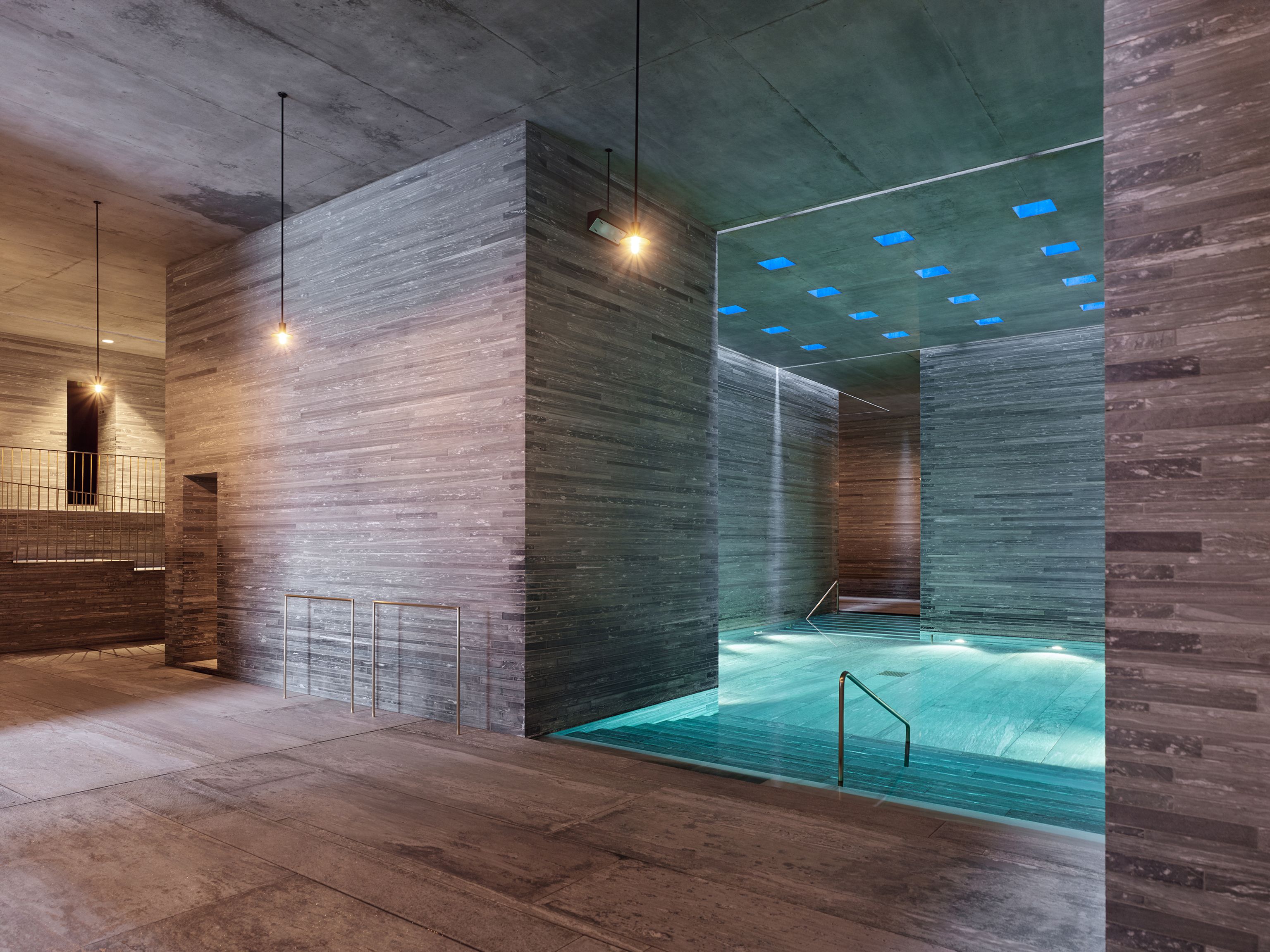
Inside, the baths unfold as a sequence of carefully composed spaces, stone volumes arranged like a fragmented grid, each housing a distinct atmosphere. There is no singular path; instead, visitors move freely between pools, saunas, and resting areas, discovering their own rhythm. Temperatures range from cold plunges at 10°C to steaming pools at 42°C, turning bathing into a ritual of contrasts. Narrow openings and roof slits allow light to enter in controlled beams, dissolving across surfaces and water. The spatial experience is one of compression and release, darkness and illumination, less a building to navigate, more a landscape to inhabit.

Architecture for the Senses
More than a spa, the Therme Vals operates as a total sensory environment. Sound is softened and amplified by stone; water echoes differently in each chamber; light shifts subtly throughout the day. Every element is calibrated to heighten awareness: the temperature of the water, the texture of the floors, the scent of damp stone. Artificial spectacle is absent, here are no grand gestures, only precise atmospheres. Zumthor’s architecture does not aim to impress visually but to be felt physically and emotionally, turning the act of bathing into an experience of presence, slowness, and introspection.

Legacy of Quiet Influence
Since its completion, the Therme Vals has become one of the most influential works of contemporary architecture, helping define a shift toward phenomenological and experience-driven design. It played a central role in establishing Zumthor’s reputation, culminating in his Pritzker Prize in 2009. Today, the baths are both a functioning wellness space and a place of architectural pilgrimage, visited not for spectacle, but for the rare intensity of its atmosphere. In an era often driven by image and speed, Therme Vals stands as a quiet counterpoint: a reminder that architecture can still move deeply, without ever raising its voice.