
Michael Gottlieb Bindesbøll
Thorvaldsens Museum
- ArchitectMichael Gottlieb Bindesbøll
- PhotographerDavid Stjernholm, Sarah Coghill, and Jakob Faurvig
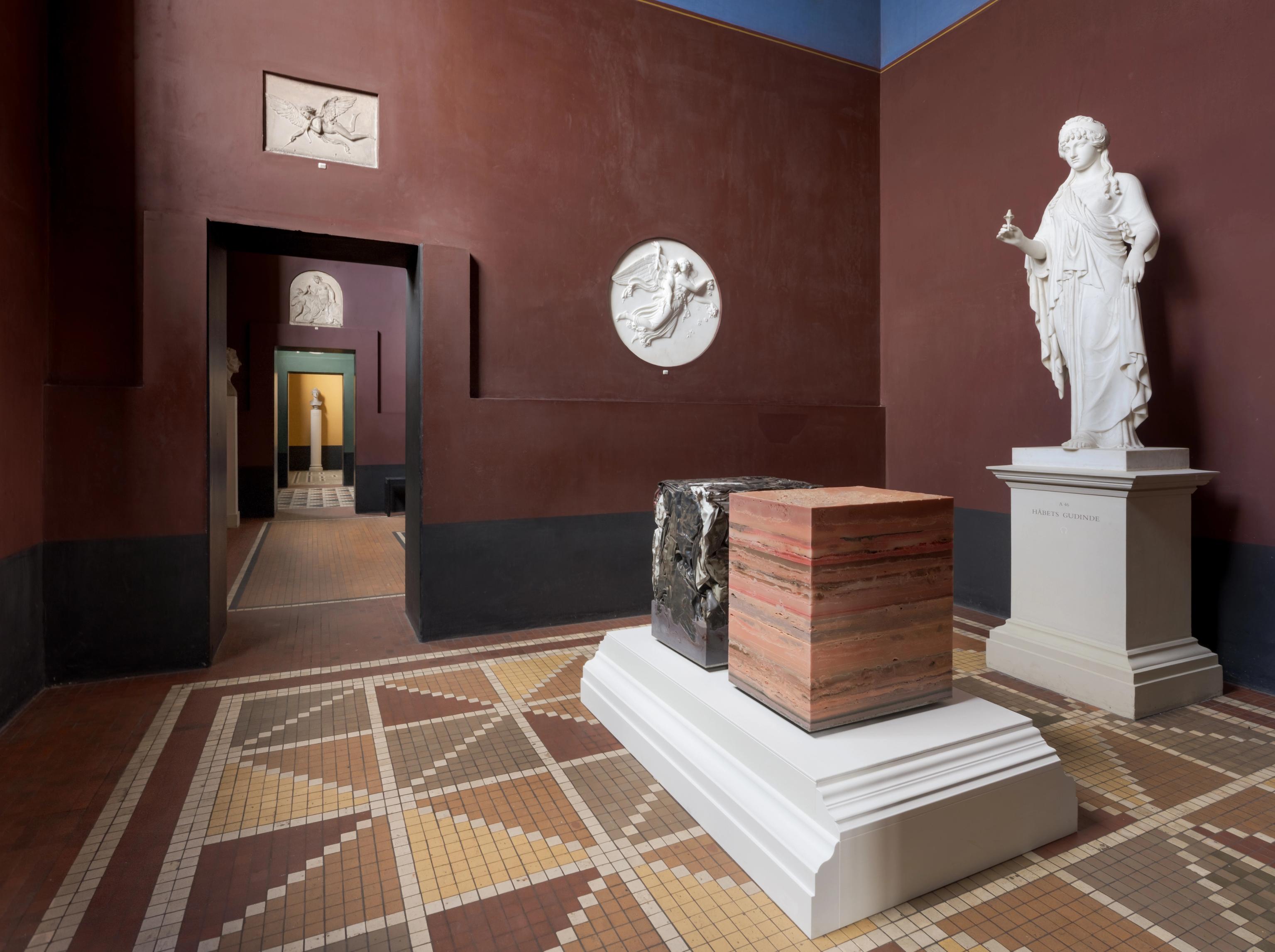
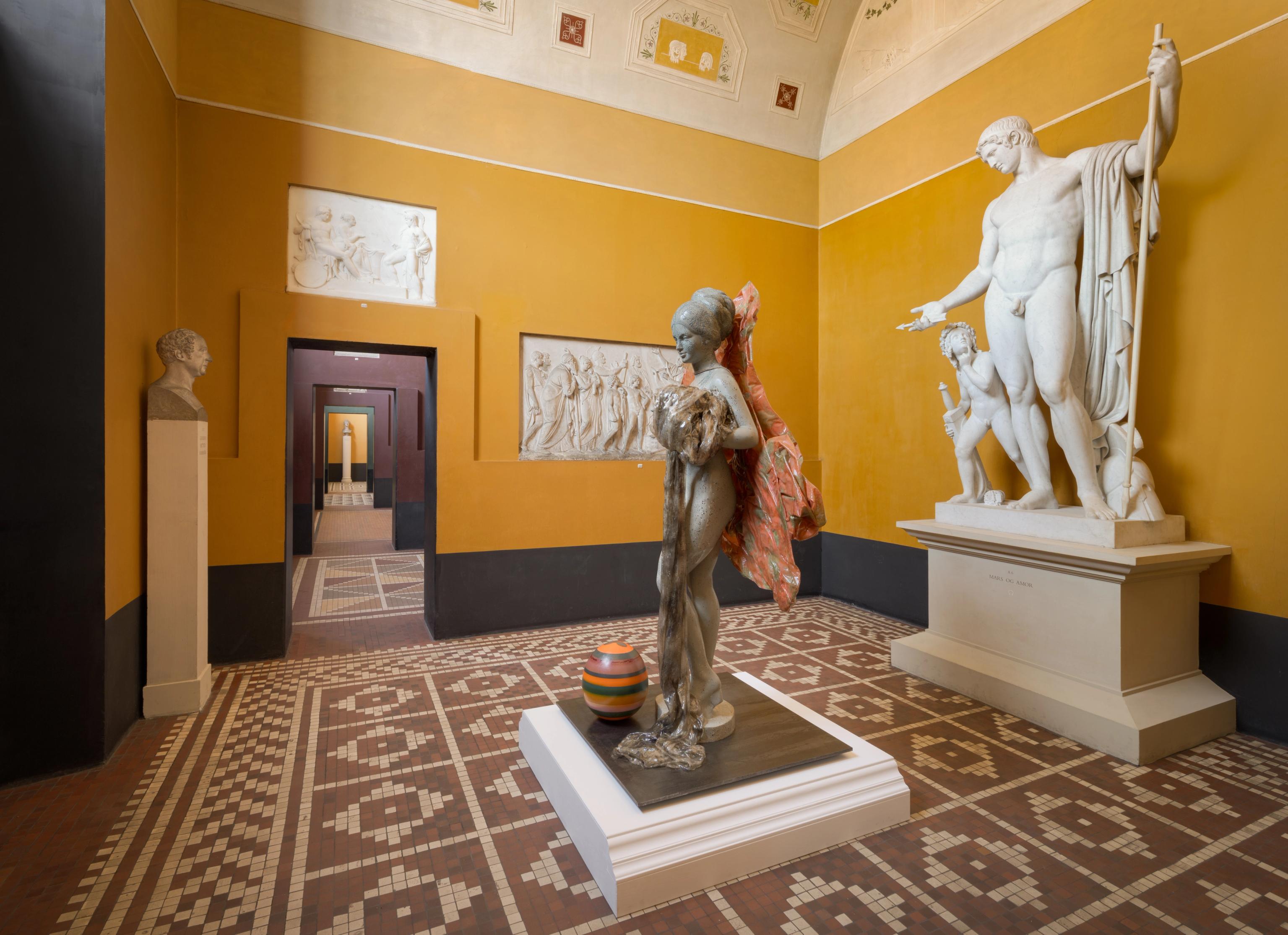
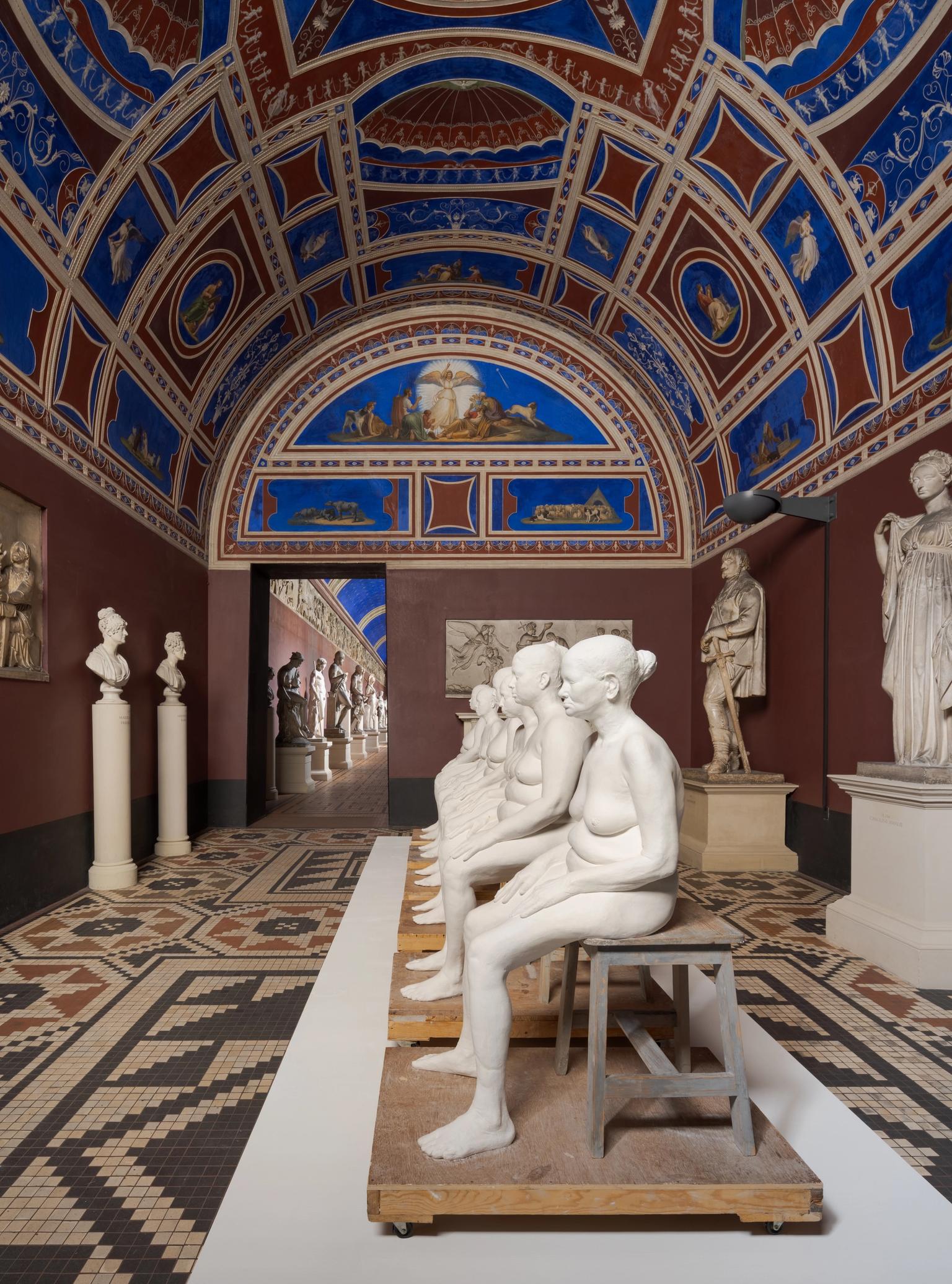
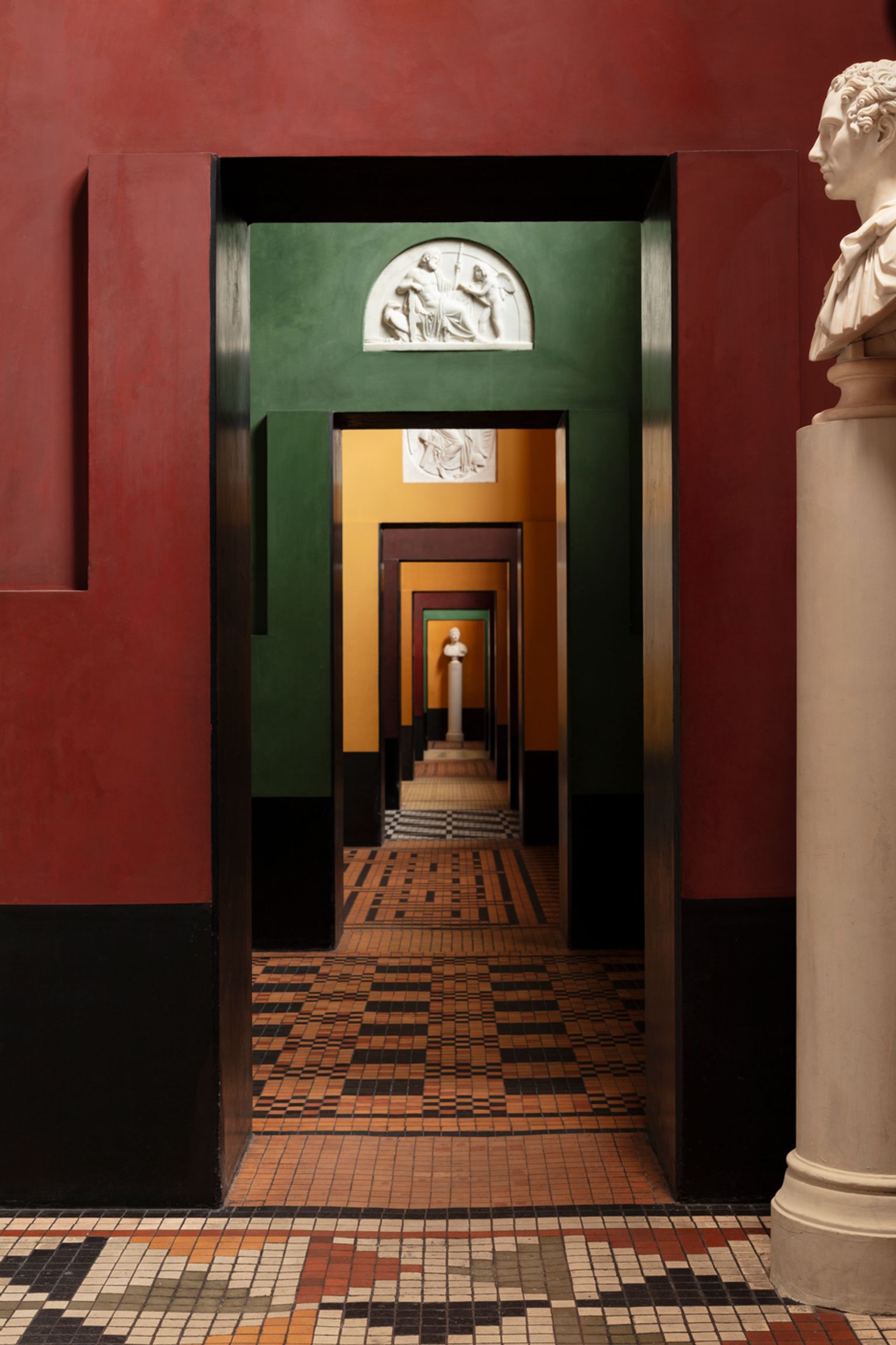
Sofie Brünner I often visit Thorvaldsens Museum in Copenhagen simply to study the floors! Comprising around 30 smaller galleries, each room features a unique mosaic pattern made from fired tiles in richly vibrant colours and striking combinations.
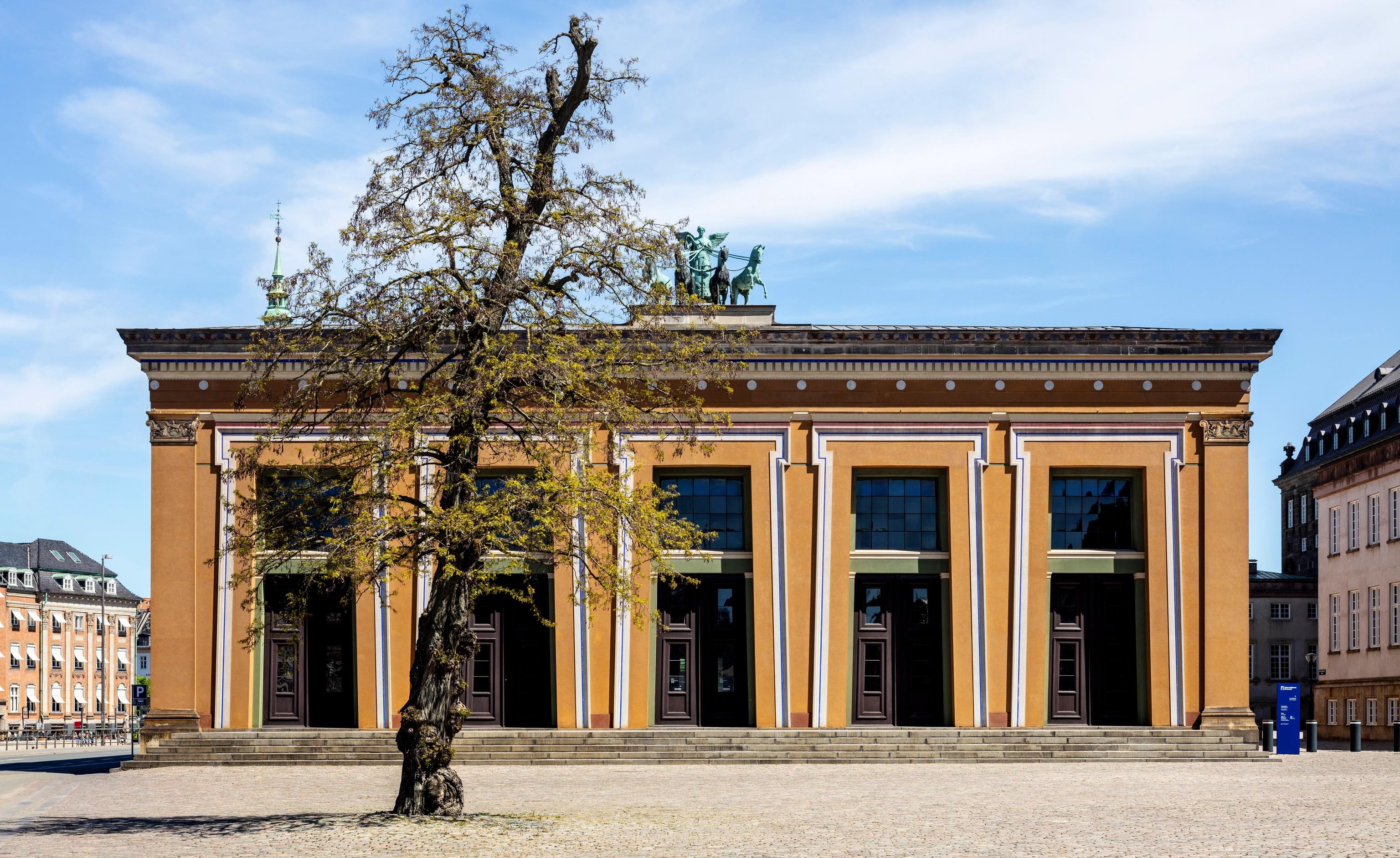

Thorvaldsens Museum
Thorvaldsens Museum, nestled on Slotsholmen beside Christiansborg in Copenhagen, stands as Denmark’s first purpose-built museum, completed in 1848. Designed by architect Michael Gottlieb Bindesbøll, the building was created specifically to house the works of the Danish sculptor Bertel Thorvaldsen (1770–1844). The museum’s conception reflects both a civic and cultural ambition: funded by Thorvaldsen himself, the Copenhagen Municipality, royal patrons, and a national fundraising effort, it embodies a 19th-century vision of public art access.
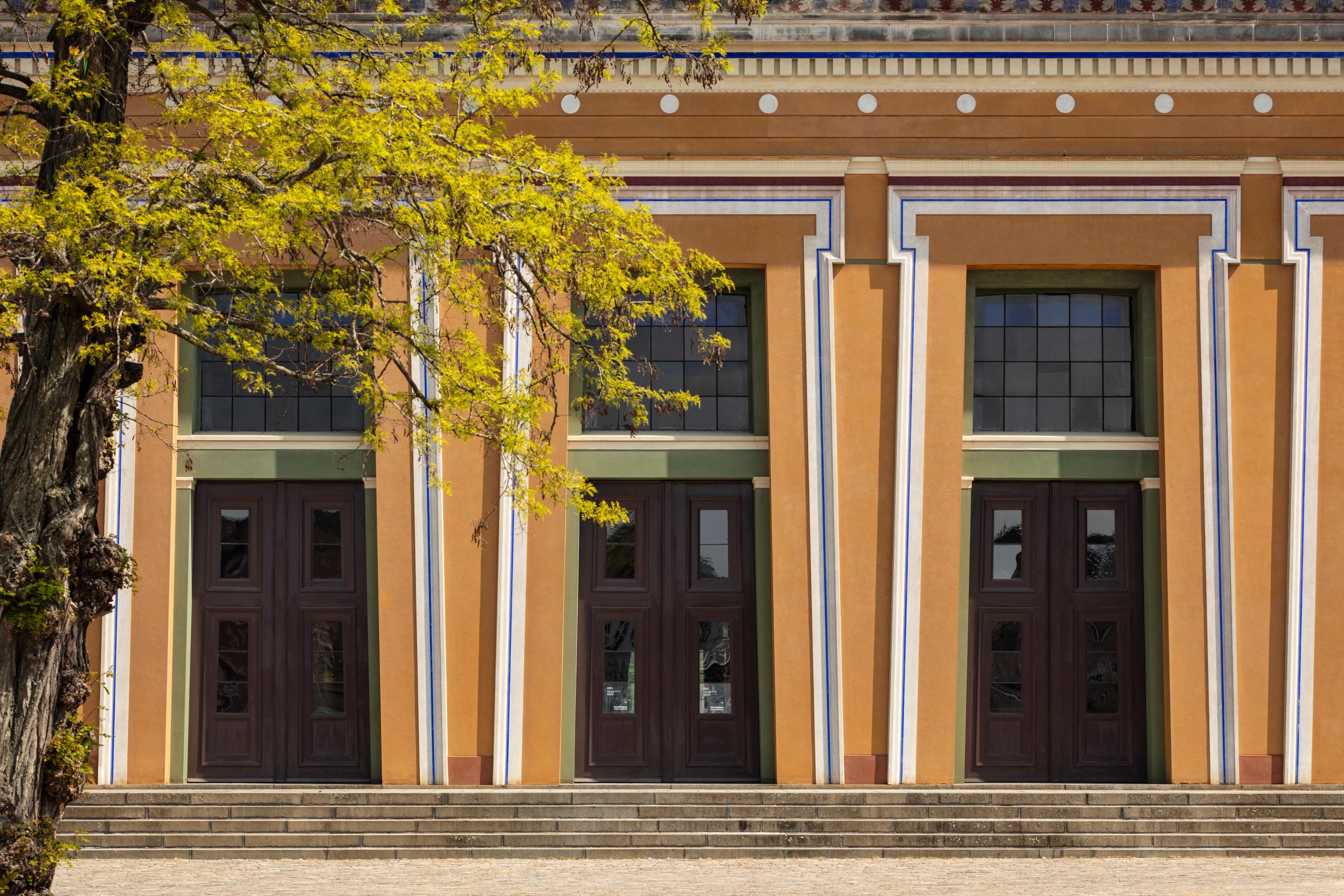
Bindesbøll’s design draws heavily on his studies of classical architecture in Greece and Italy, as well as the vibrant motifs uncovered in Pompeii and Herculaneum. These influences manifest in the building’s harmonious proportions, grand vaulted halls, and ornamental details, creating a sculptural environment that mirrors the art it houses. The museum is more than a repository; it is a statement of aesthetic ideals, integrating classical inspiration with the practical needs of art display.


Interior Design and Spatial Experience
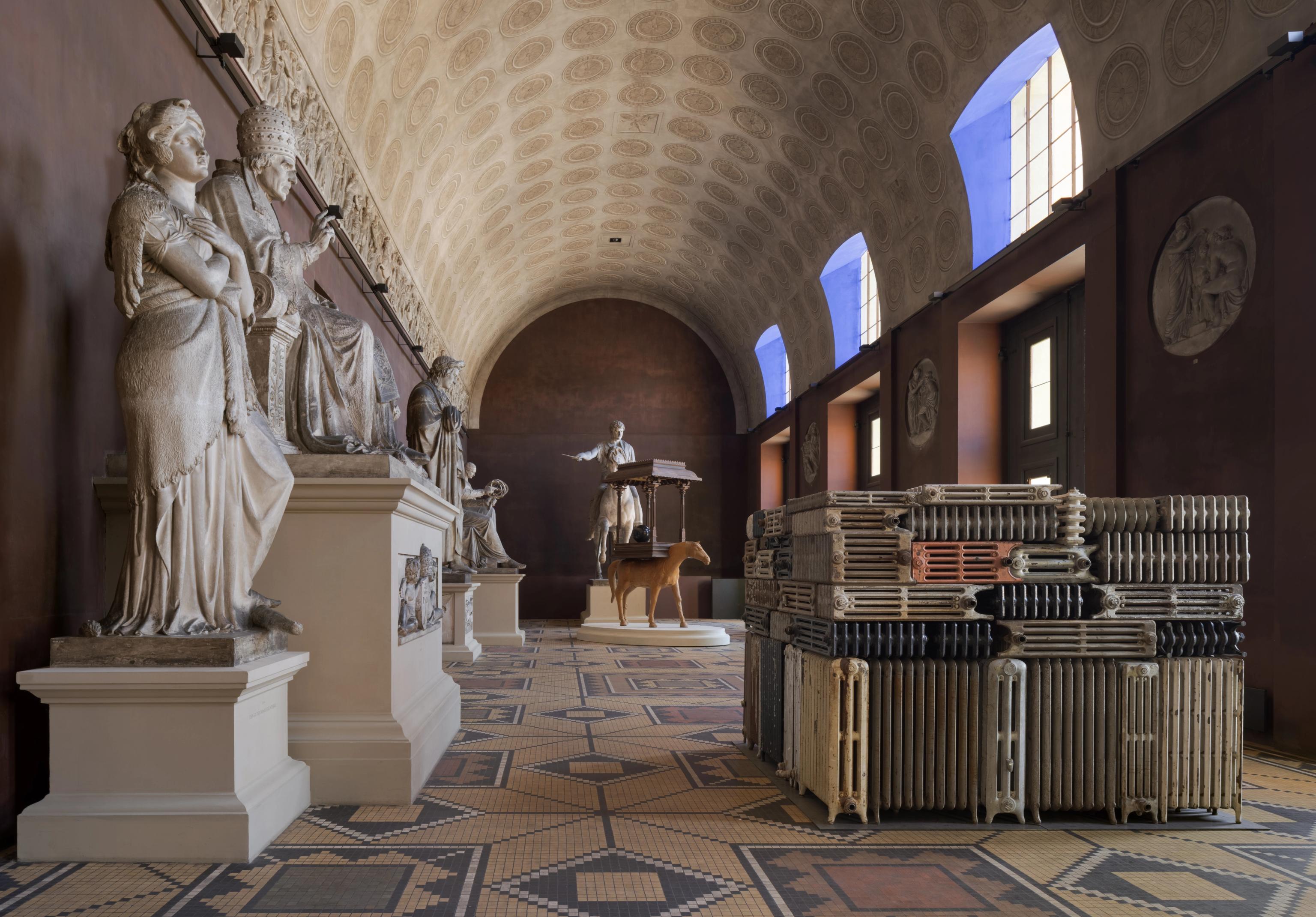
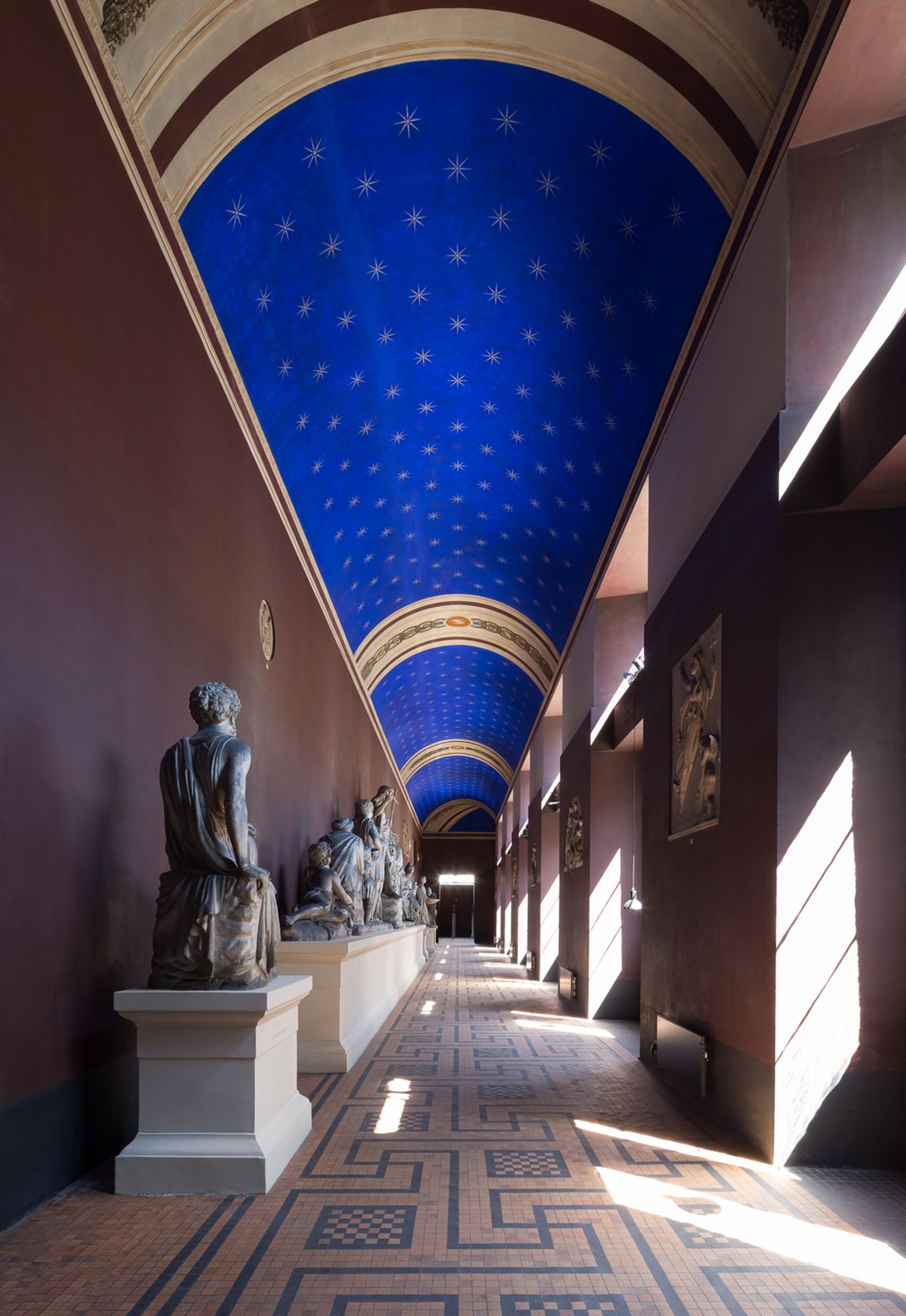
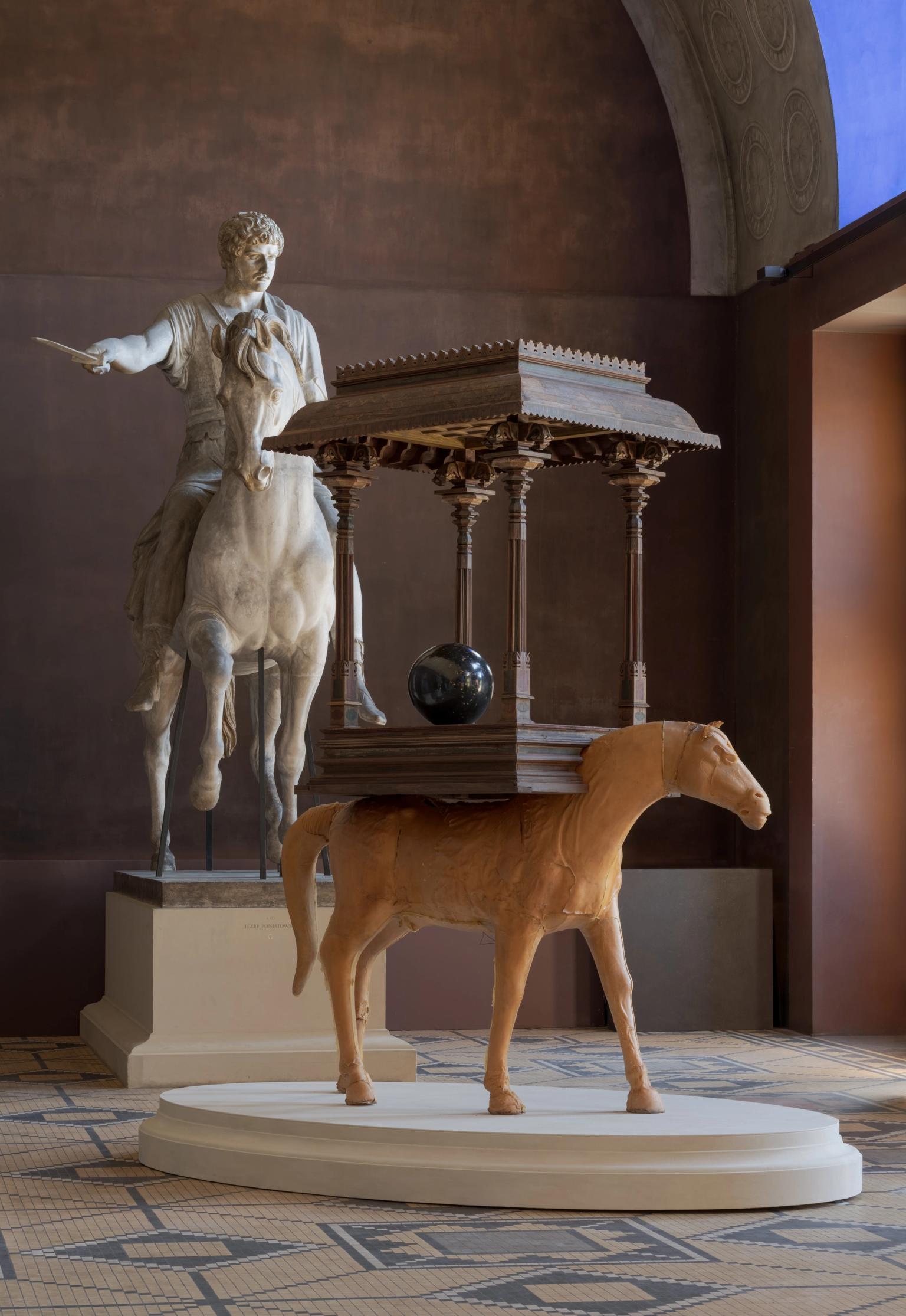
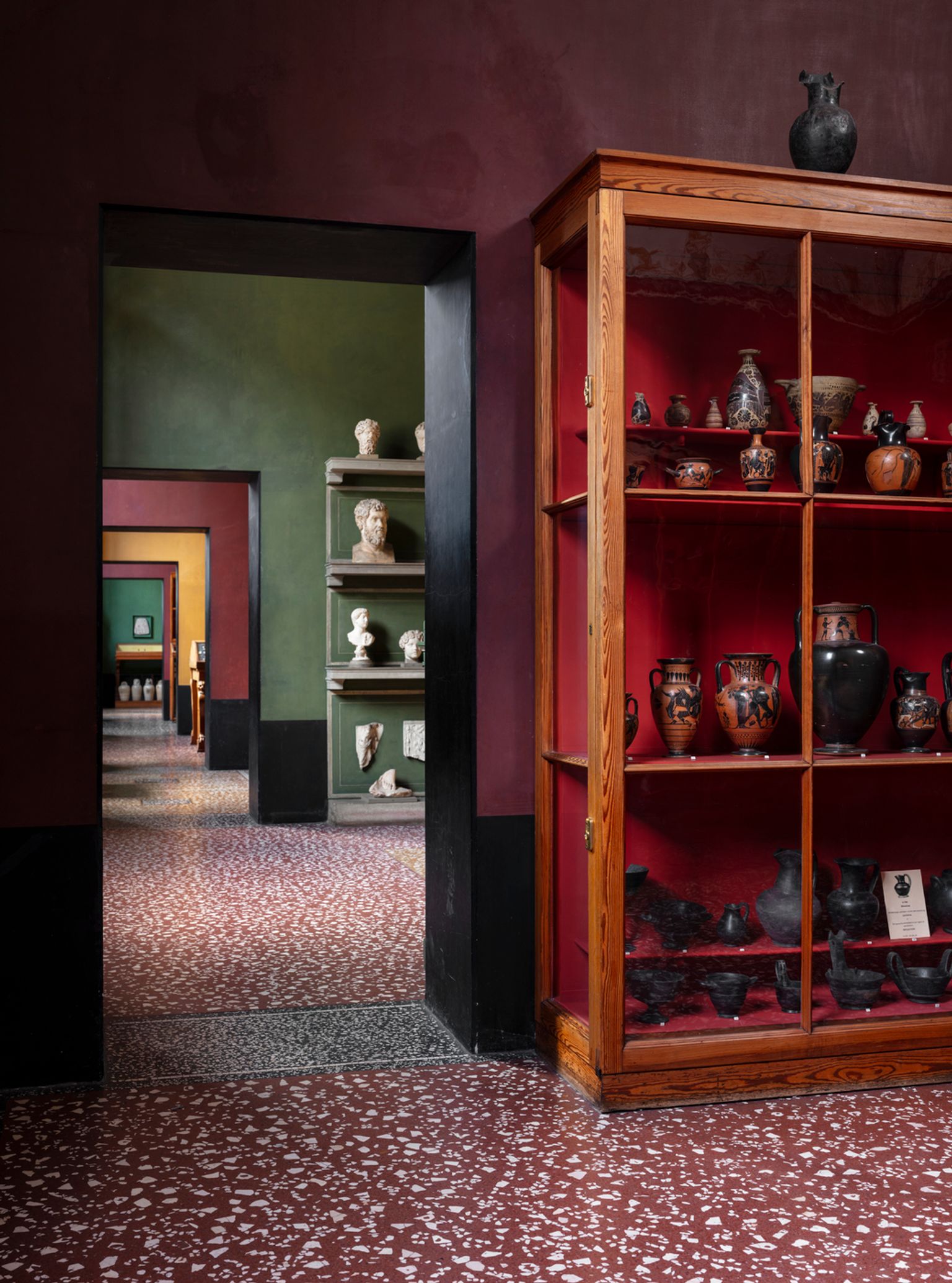
Inside, Thorvaldsens Museum offers an immersive sensory journey. The vaulted galleries, flooded with light from high atelier-style windows, were carefully oriented to illuminate Thorvaldsen’s marble and plaster sculptures throughout the day. Walls are adorned with rich, saturated colors that contrast yet complement the pale tones of the sculptures, creating an effect that is simultaneously dramatic and contemplative. The ceilings and friezes, inspired by classical Pompeian decoration, extend the classical dialogue from floor to overhead, producing a cohesive visual experience.
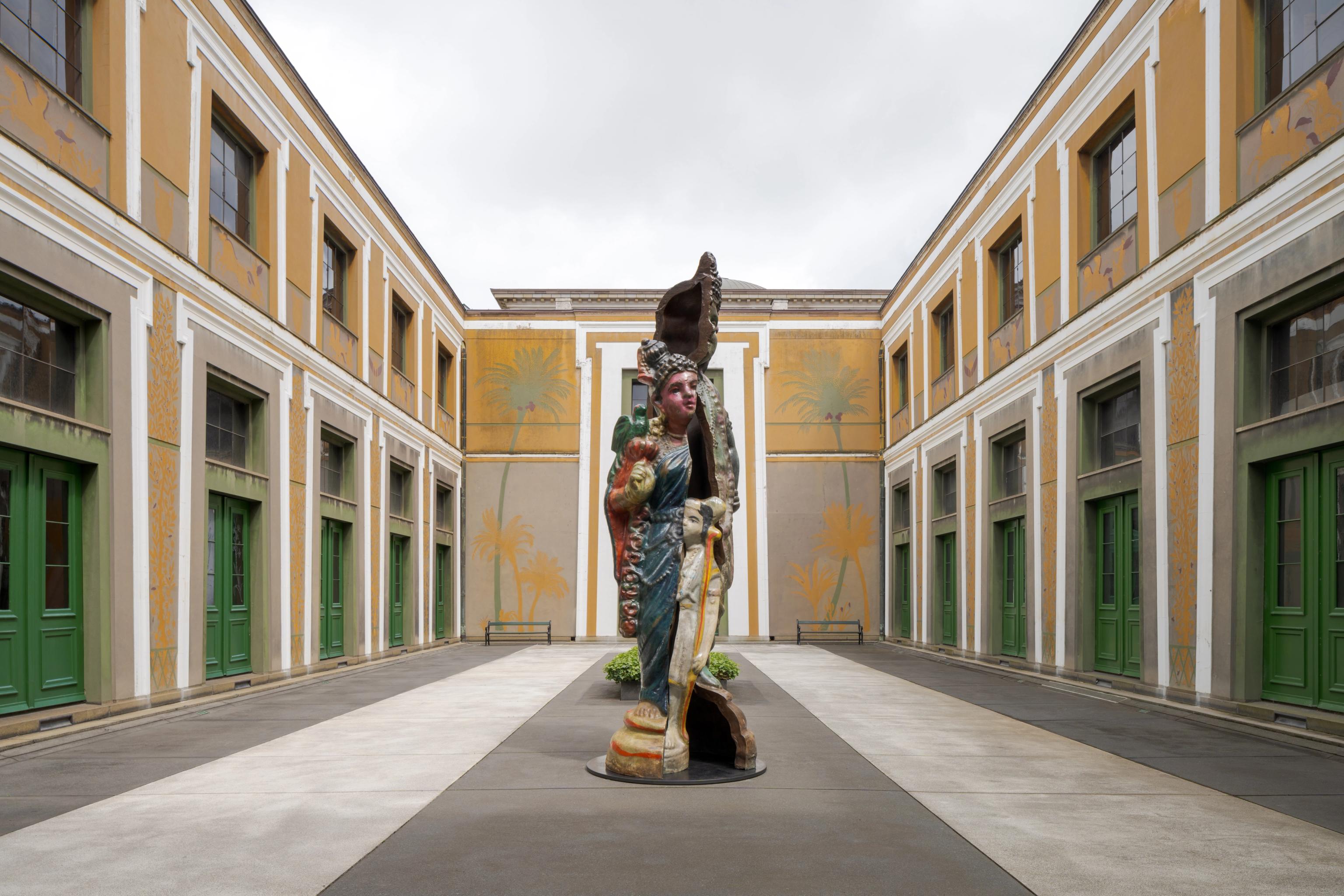
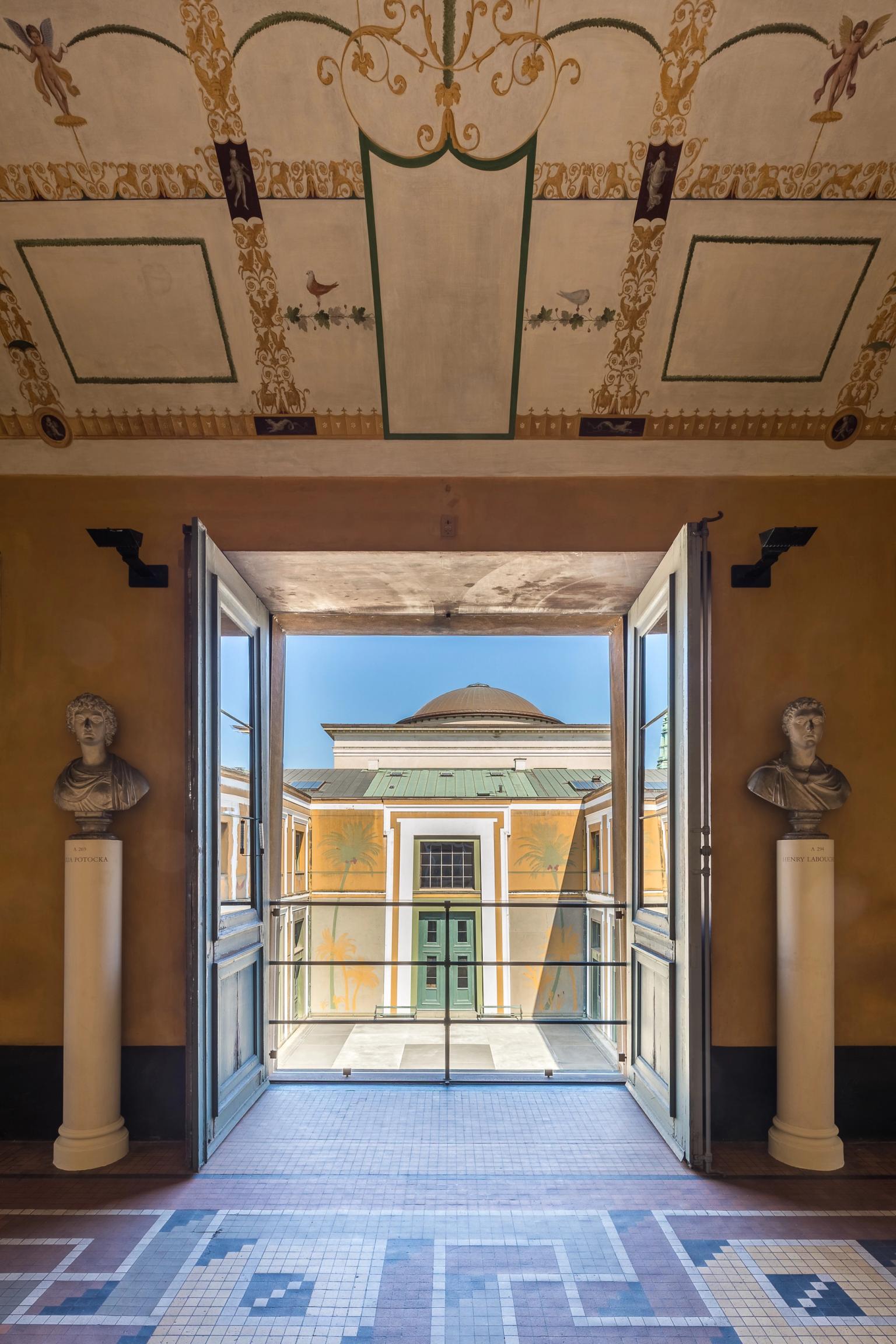
The interior courtyards, adorned with colorwashed walls and intricate detailing, integrate indoor and outdoor spaces, offering both ceremonial and meditative atmospheres. Visitors experience the museum as a carefully choreographed progression through scale, light, and texture, where every architectural element contributes to the perception of Thorvaldsen’s work.

Living Patterns
The museum’s mosaic floors exemplify Bindesbøll’s meticulous attention to pattern, color, and artisanal craft. Constructed from small, fired clay tiles arranged in geometric compositions, the floors combine durability with ornamental complexity. Original mosaics, laid by specialized Italian craftsmen, have been carefully preserved and restored, reflecting the mid-19th-century methods while maintaining the original principles of form and color.
Each hall features a unique arrangement, creating a rhythm beneath visitors’ feet that echoes the precise proportions of the sculptures above. Beyond mosaics, material choices throughout the museum – cement friezes, bronze sculptures, painted friezes by Jørgen Sonne, and natural stone detailing – demonstrate a commitment to craftsmanship, durability, and aesthetic unity. These design decisions reinforce the museum as both an artistic container and a work of art in its own right, where architectural surfaces dialogue seamlessly with the objects they display.


Cultural Significance
Thorvaldsens Museum remains the only place in the world to experience the full scope of Bertel Thorvaldsen’s oeuvre, from original plaster models to finished marble and bronze sculptures. Beyond sculpture, the museum houses his extensive collections of paintings, antiquities, coins, drawings, and personal objects, offering insight into the intellectual and material world of a 19th-century artist. Thorvaldsen’s gift of his works and archives to Copenhagen, coupled with the visionary architecture of Bindesbøll, created a holistic cultural environment that has influenced museum design and the preservation of classical art for generations.


The museum continues to operate as a cultural landmark, attracting both art historians and casual visitors, and its virtual extension ensures global access. The careful interplay of light, color, and material, alongside the narrative of Thorvaldsen’s life and artistic practice, ensures that every visit is not only an educational experience but an encounter with history, artistry, and architectural sophistication.