
The work of
Tim Teven
- DesignerTim Teven
BJARKE INGELS Tim Teven works with metals and standardized profiles - the generic components of industrial construction, familiar from the metal studs concealed within drywall. Using the tools and machinery of industrial manufacturing, he transforms these ordinary elements into highly sculptural, almost artisanal objects.

Bjarke Ingels on the work of Tim Teven
Tim Teven works with metals and standardized profiles - the generic components of industrial construction, familiar from the metal studs concealed within drywall. Using the tools and machinery of industrial manufacturing, he transforms these ordinary elements into highly sculptural, almost artisanal objects.
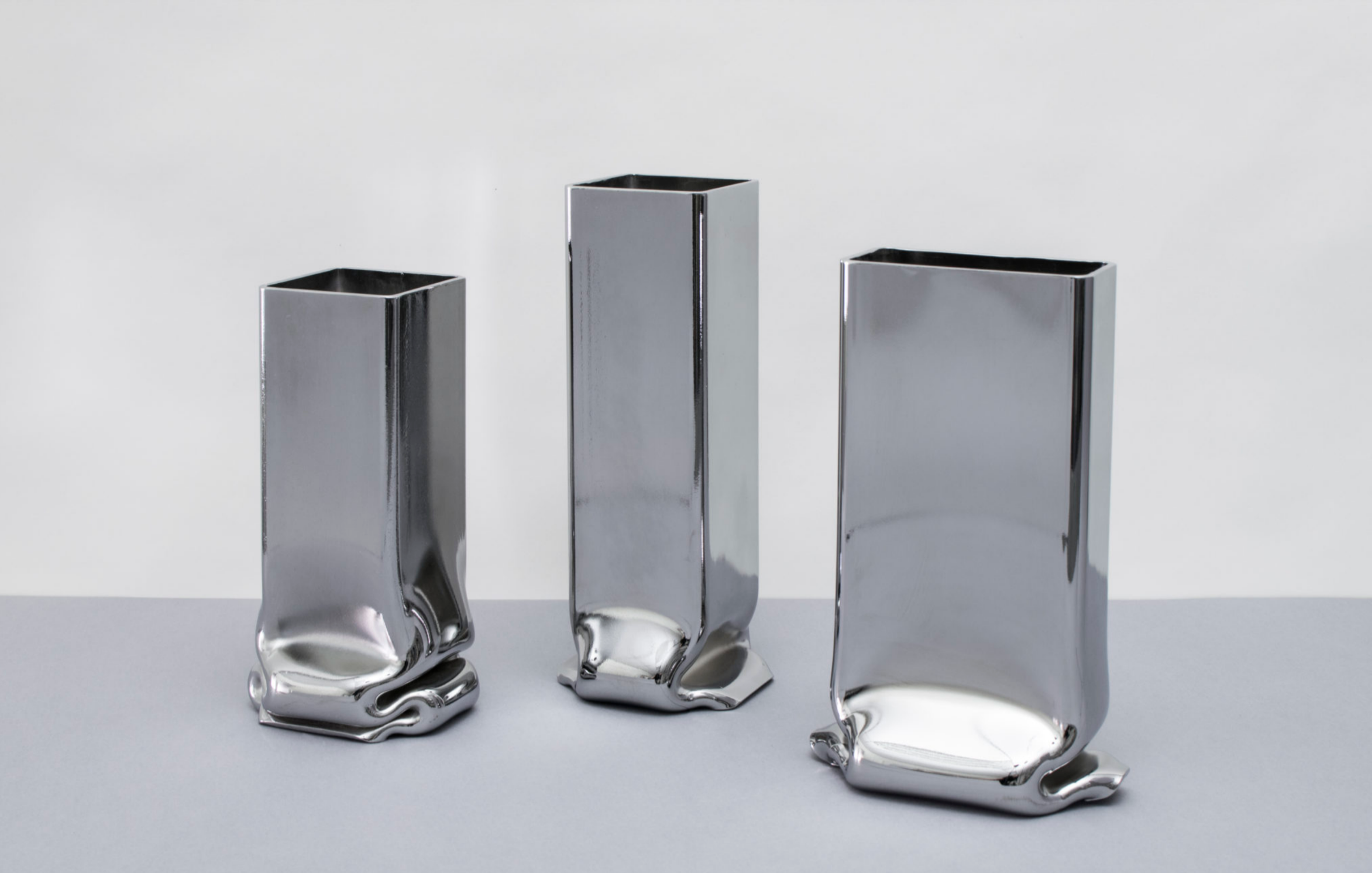
In the Pressure series, tubular metal is compressed into vases whose forms emerge from the unpredictable buckling of their walls. Industrial precision gives rise to sculptural irregularity, with something of the polished exuberance of Jeff Koons or the folded geometries of Frank Gehry.
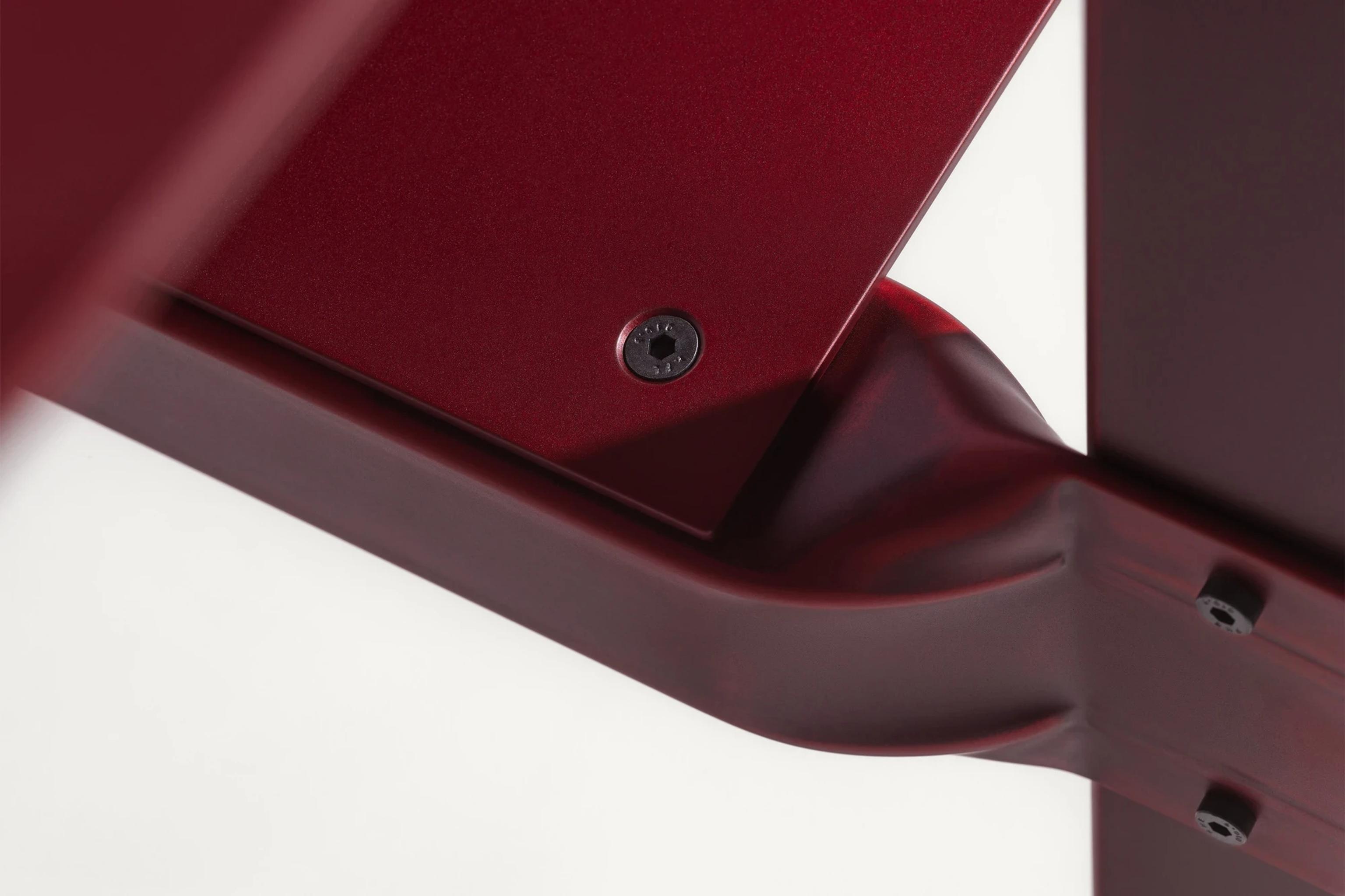
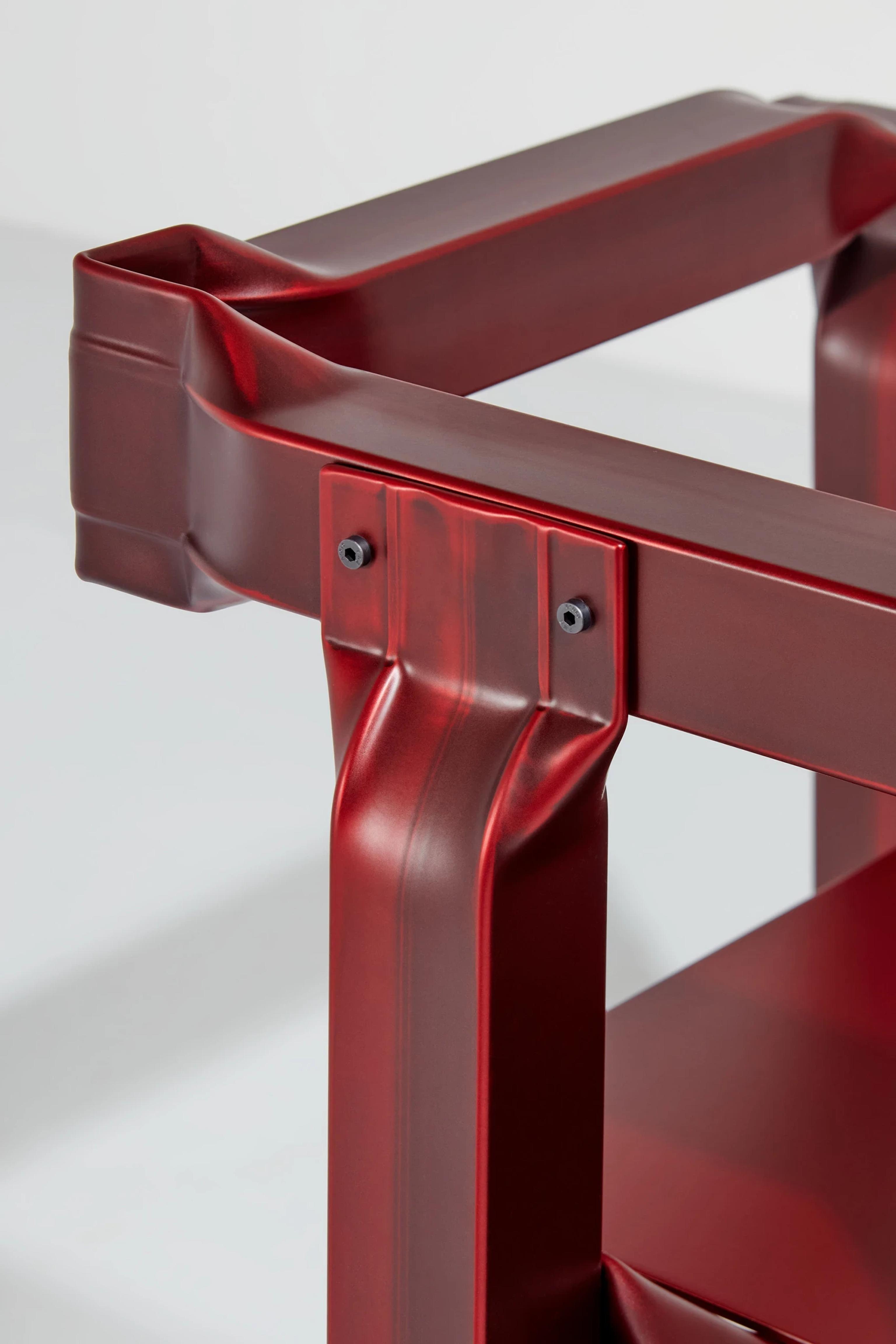
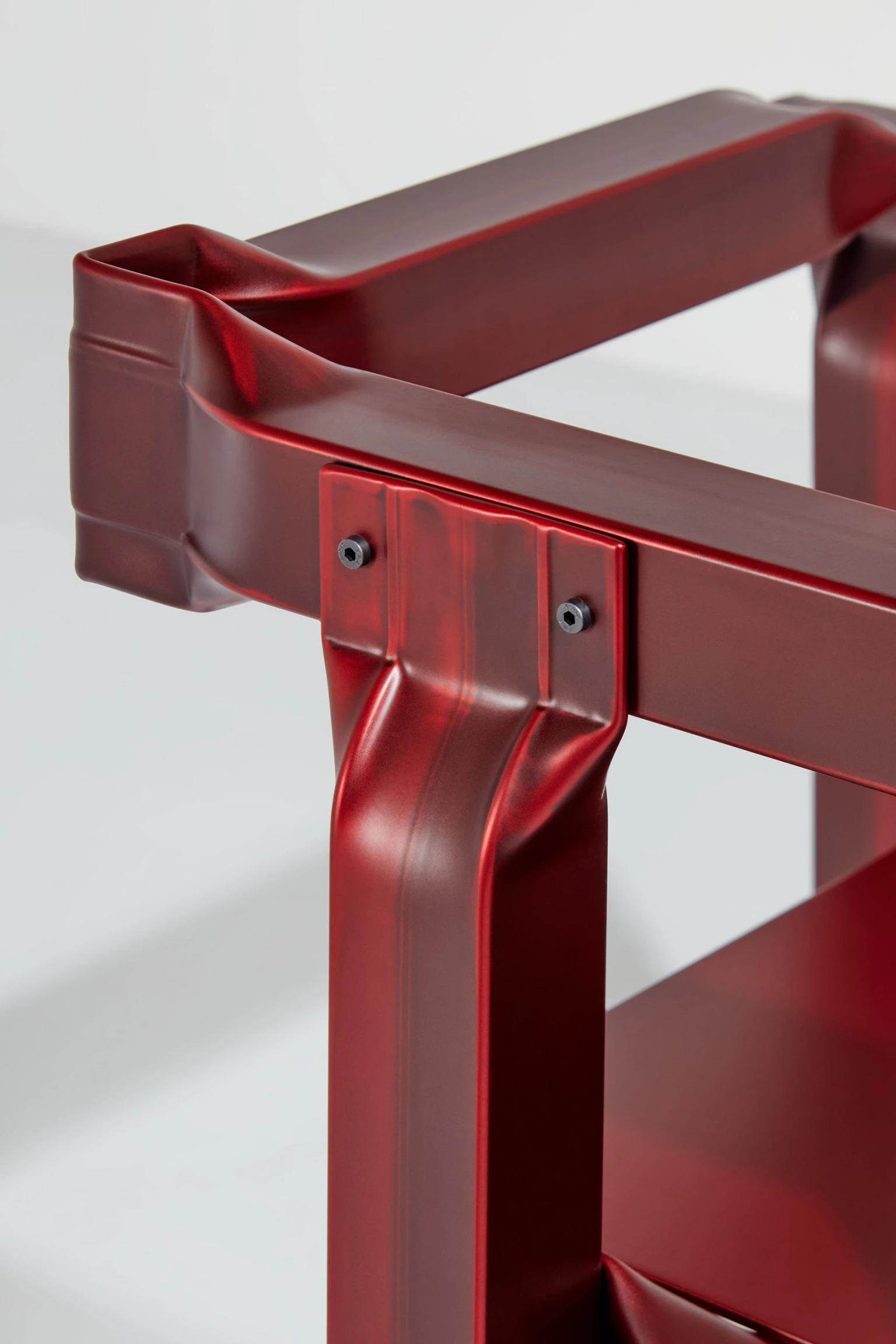
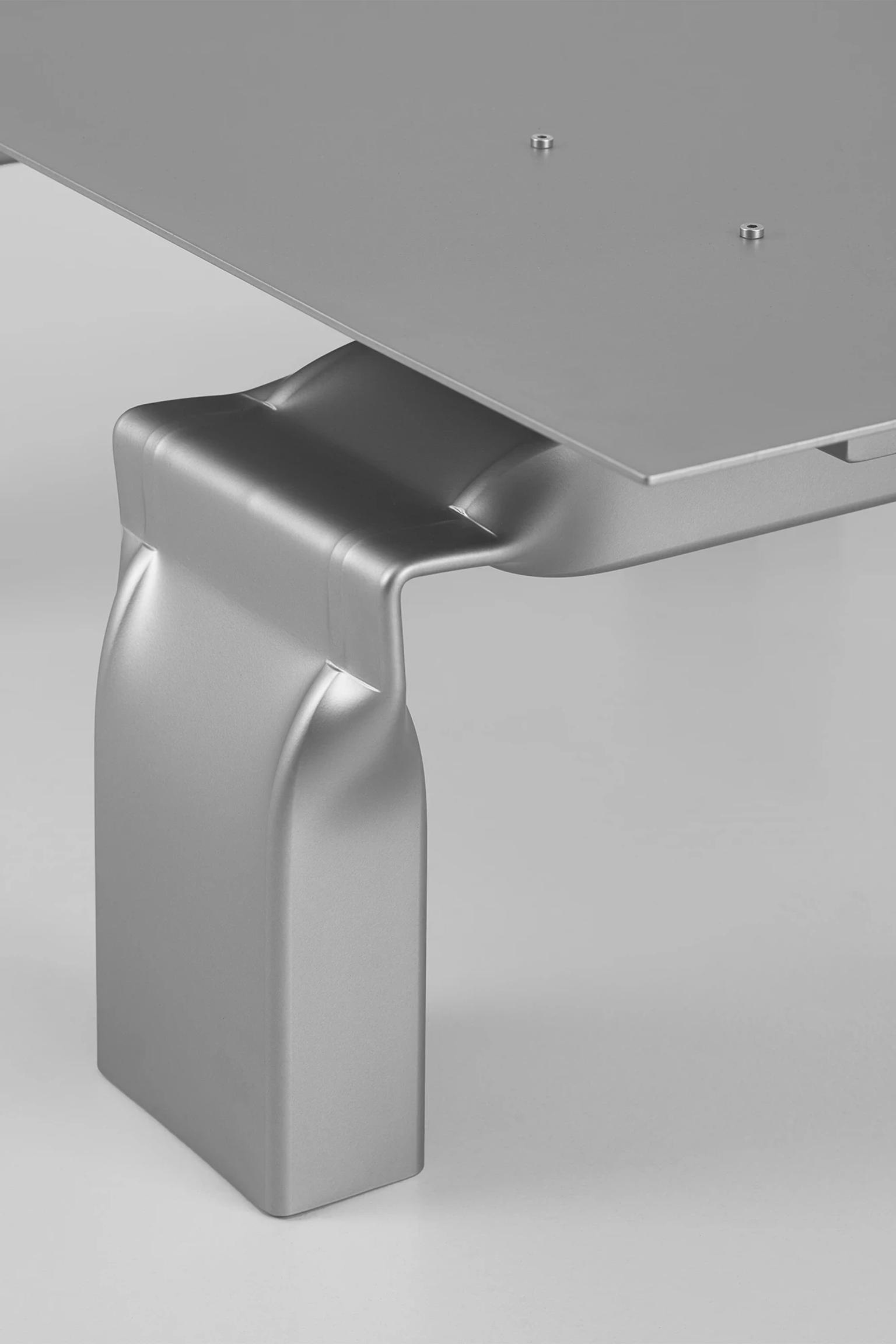
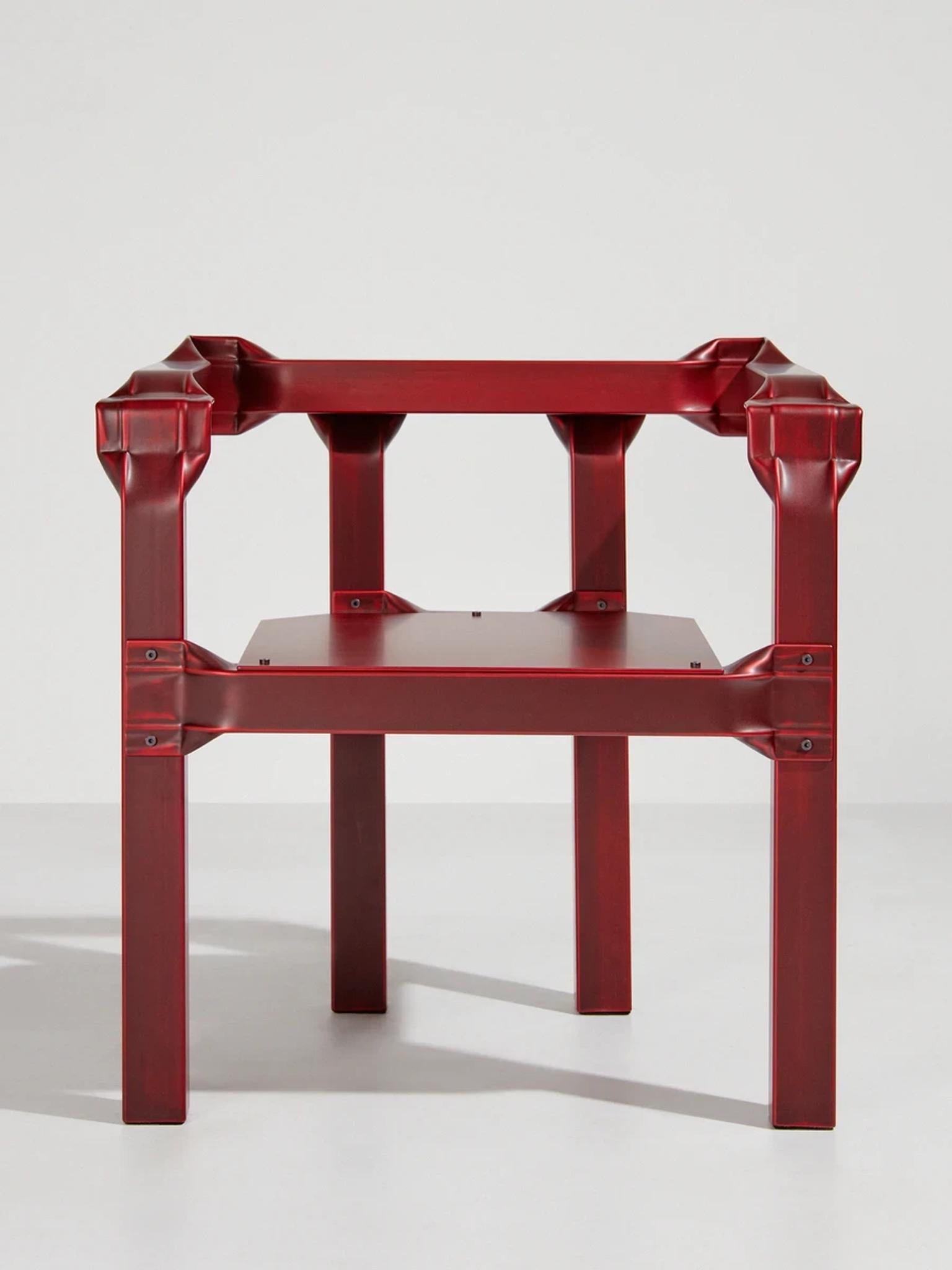
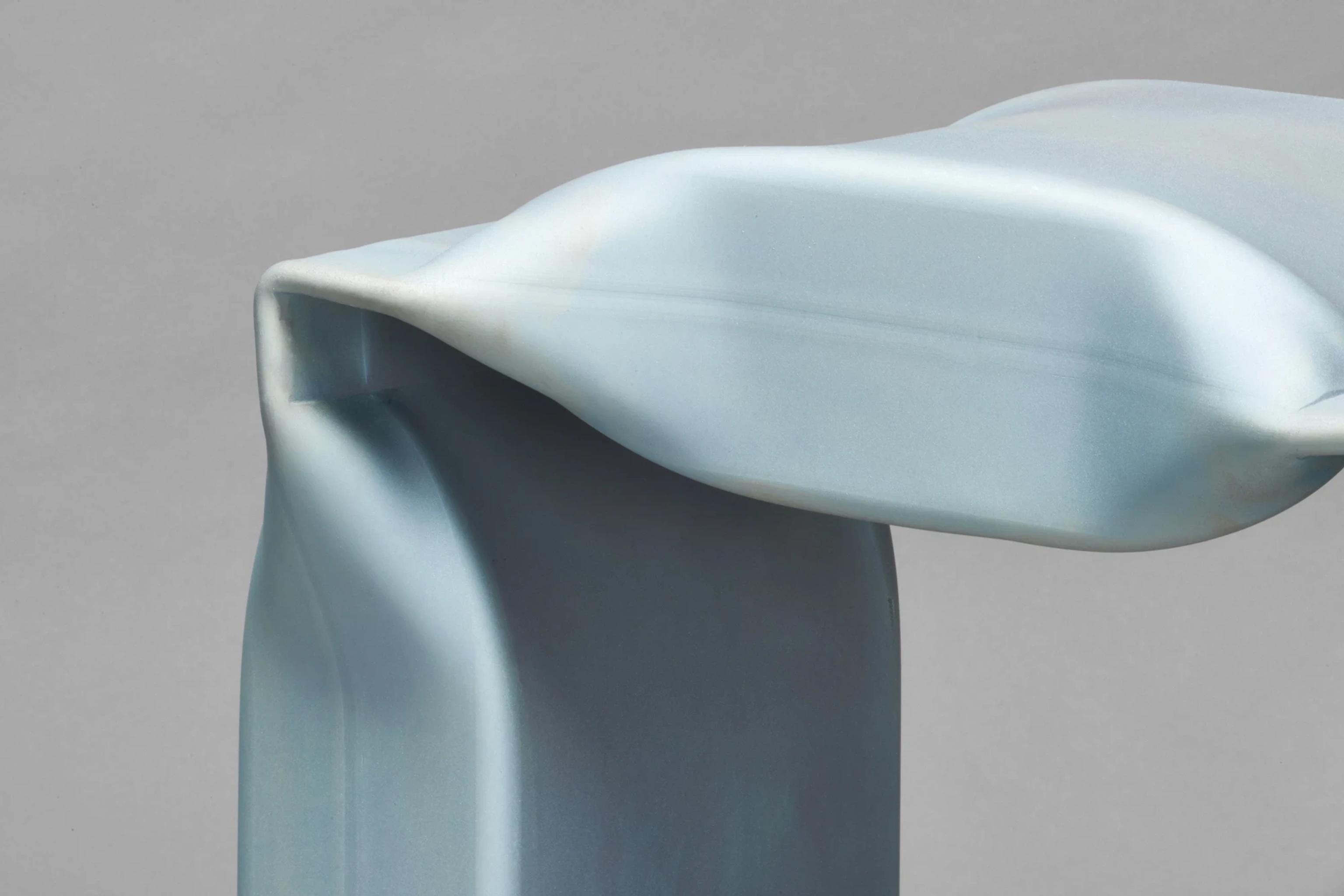
In the Tubular series, the simple act of bending a tube produces quirky, almost ornamental corners. As each straight extrusion turns, its walls flatten, crease and deform. The joint becomes an expression of the forces that shaped it - a decorative detail generated by the act of making.
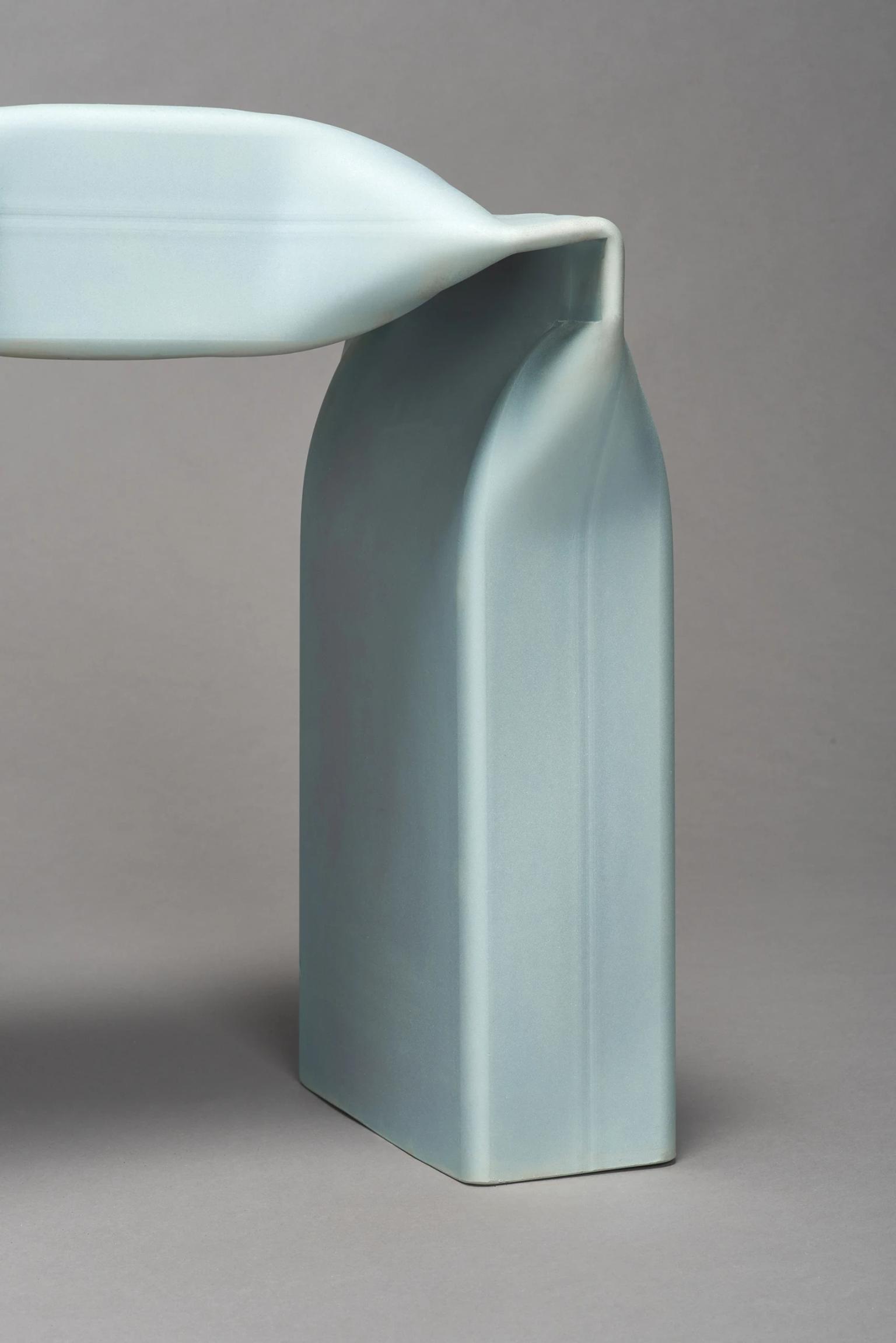
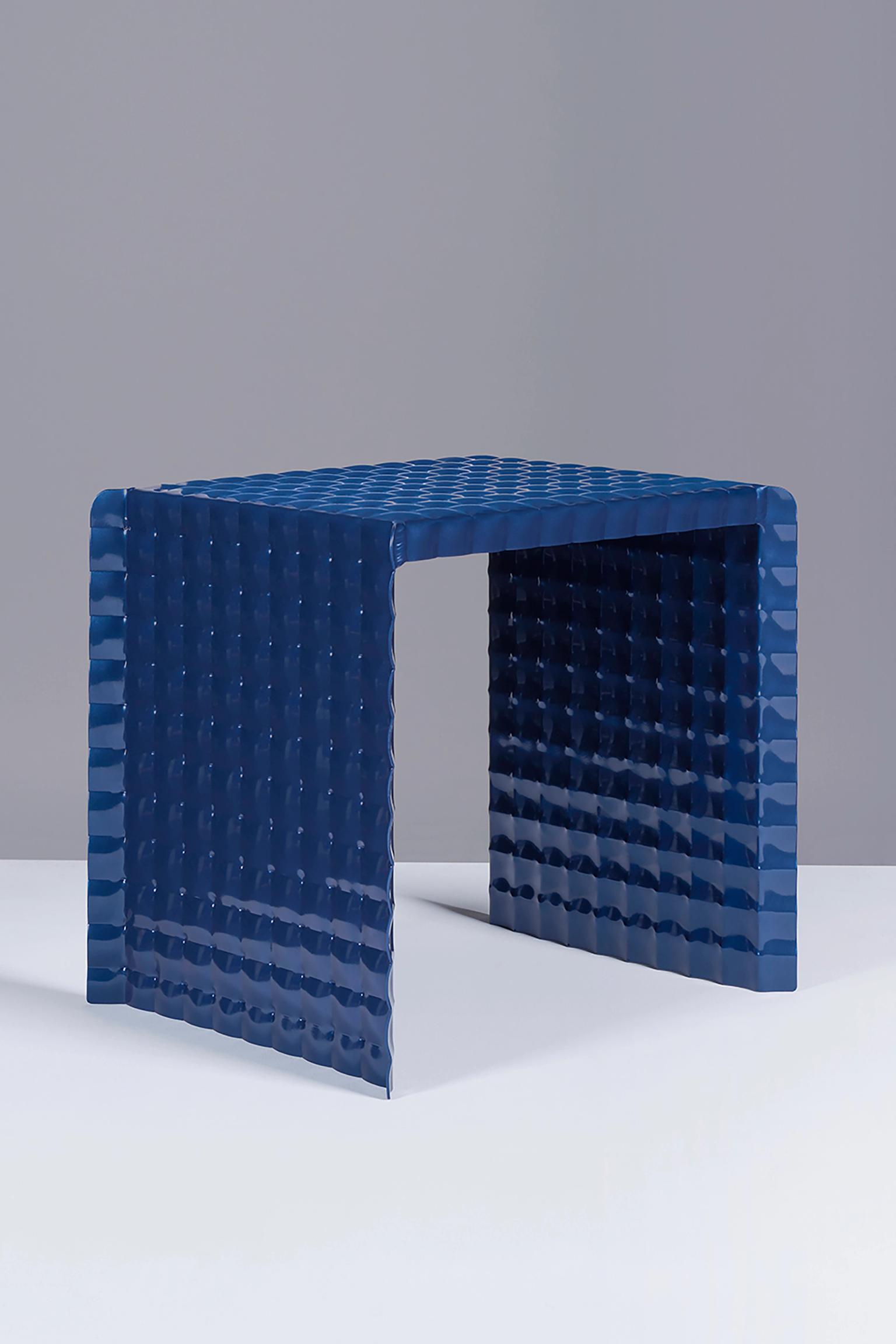
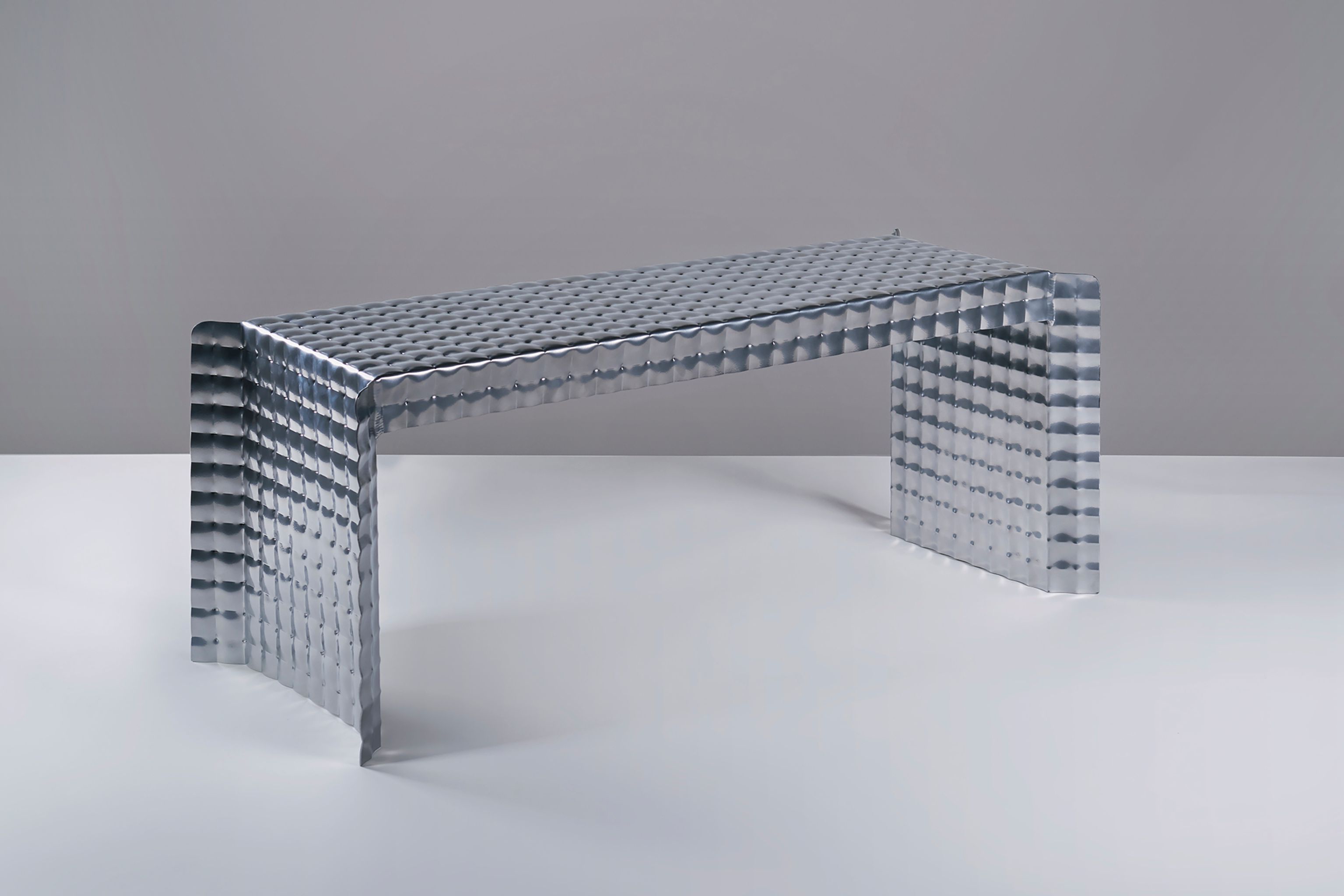
In the pressure benches and stools, thin sheet metal acquires a padded, almost upholstered appearance. Folds and indentations suggest the industrial equivalent of a fakir’s bed, giving the surface strength, texture and an effortless decorative quality. The steel seems to borrow the softness of fabric while retaining its structural character.
Across these works, Tim Teven uses the tools of the global industrial apparatus to create objects that feel artistic and artisanal. His forms draw their expression from the behavior of the material itself, creating poetry out of the practical.

The Beauty of Pressure
For Dutch designer Tim Teven, material is not simply a medium through which an idea takes shape. It is the starting point of the design process itself. Working at the intersection of industrial production, material experimentation and functional object making, Teven explores what happens when familiar materials are subjected to unfamiliar forces. His work is driven by a curiosity about the physical behaviour of metal, and by the possibility of turning technical processes into a distinctive visual language.
This approach is particularly evident in the Pressure series, where steel and aluminium are deliberately deformed under immense mechanical force. In the Pressure Vases, standard steel tubes are compressed until their rigid walls buckle into unexpected folds. What would ordinarily be considered a manufacturing defect becomes the defining feature of the object. The creases give the metal an almost soft, organic appearance, resembling fabric gathered by hand or a surface moulded from clay. At the same time, the deformation serves a practical purpose, with the compressed base forming a natural closure for the vessel.






When Metal Becomes Soft
The Pressure Stool and Bench extend this investigation from sculptural objects into furniture. Here, Teven works with thin aluminium sheets that are pressed into a repeating, cushion like pattern. The resulting surfaces appear padded and tactile, contradicting the hard, industrial character of the material. Yet the process is not merely aesthetic. The pressed pattern also increases the structural strength of the sheet, allowing relatively thin material to support the demands of everyday use.
This duality between appearance and performance lies at the heart of Teven's practice. Industrial processes become instruments of design, producing forms that are simultaneously functional and unexpected. Rather than concealing the mechanics behind an object, he allows the evidence of force to remain visible. The resulting folds, indentations and irregularities reveal how the material has been transformed, making the production process an essential part of the finished work.

A Language of Tubes
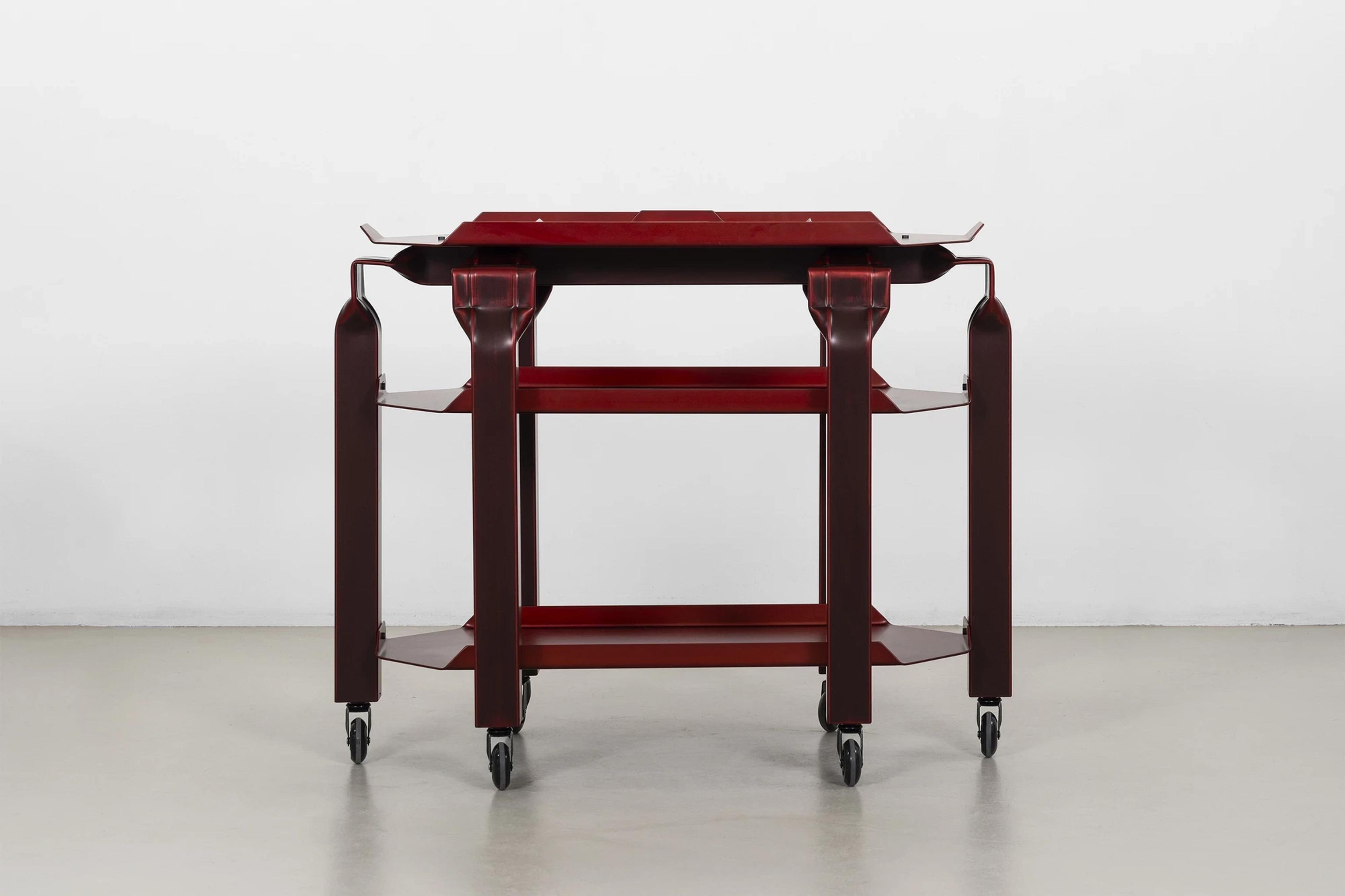
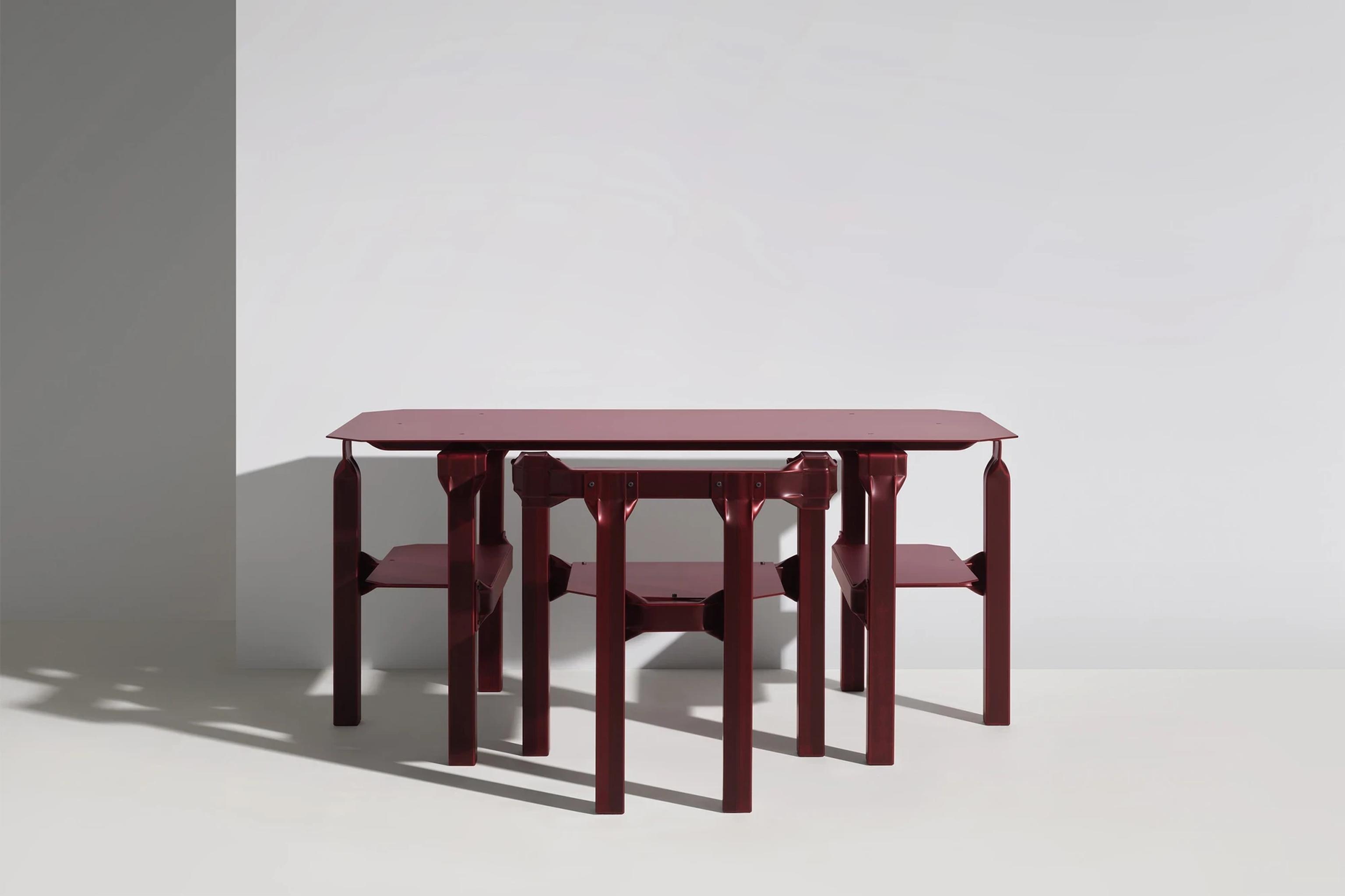
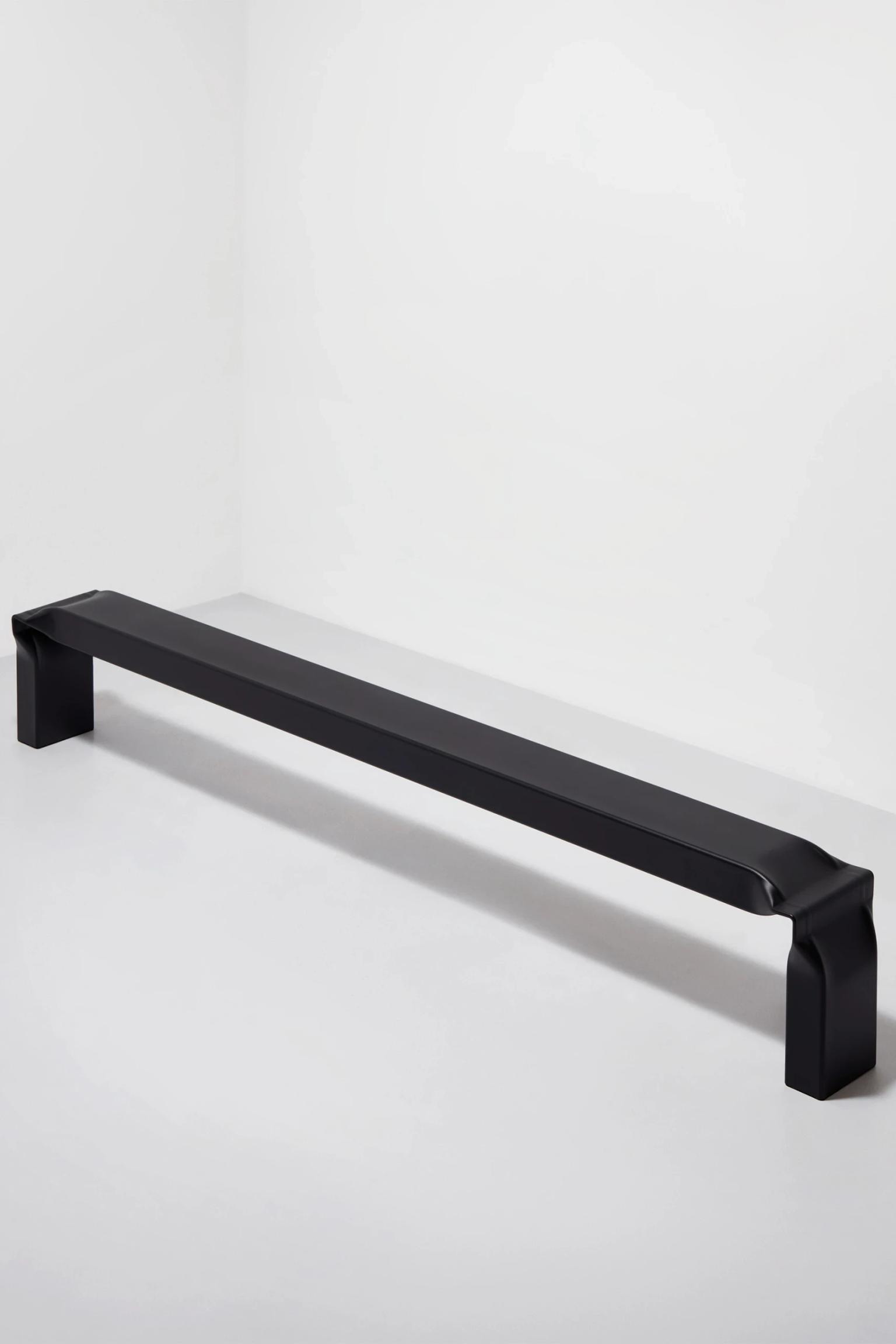
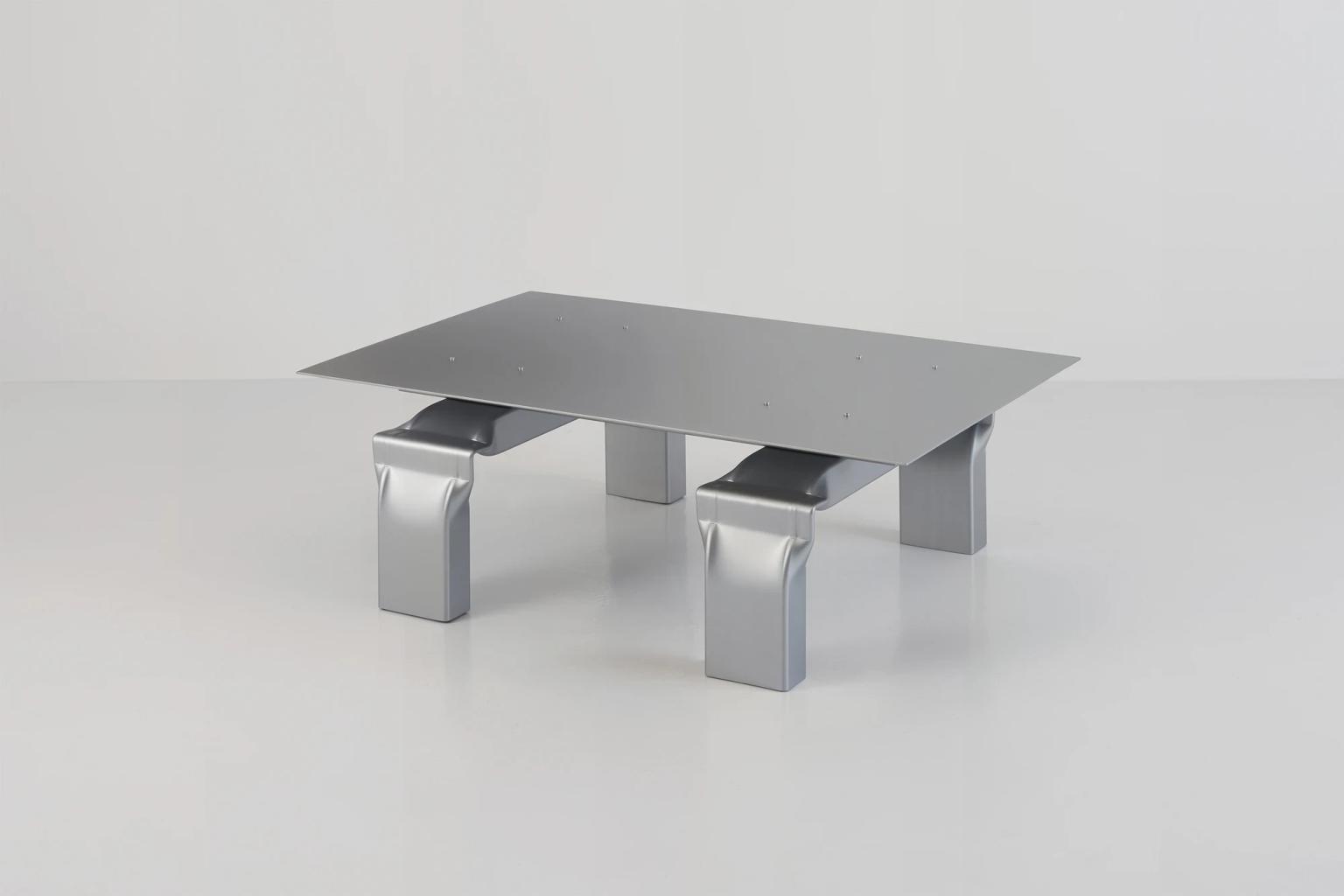
The same material driven curiosity continues in the Tube Collection, a series of furniture pieces developed from a single size of steel tubing. Originally prompted by material shortages during the pandemic, the collection began as an exercise in making the most of what was available in the studio. Through pressing and bending, Teven discovered a way to transform standard industrial tubes into chairs, stools, benches, tables and shelving.
Rather than relying on conventional joints and connections, the designer uses deformation to establish the structure and character of each piece. Tubes flatten, buckle and swell where they meet, creating transitions that appear almost soft despite their metallic construction. The resulting furniture has a curious balance of precision and spontaneity. Its underlying geometry remains simple, while the points of deformation introduce an expressive, almost sculptural quality.

There is an inherent tension between the controlled nature of industrial machinery and the unpredictability of the material under pressure. Teven develops repeatable techniques, yet each process allows the metal to respond in its own way. This interplay between control and chance gives the work its distinctive character, somewhere between industrial design and material sculpture.
Across both the Pressure and Tube series, Teven demonstrates how a simple technical intervention can generate an entire design vocabulary. By shifting attention away from the conventional shaping of materials and towards their behaviour under force, he finds new possibilities in processes usually associated with manufacturing efficiency. The result is a body of work in which function, construction and expression emerge from the same physical gesture. Metal is no longer simply shaped into an object. It becomes a record of the forces that brought it into being.