
Eero Saarinen
TWA Flight Center
- ArchitectEero Saarinen
- Photographer Cameron Blaylock
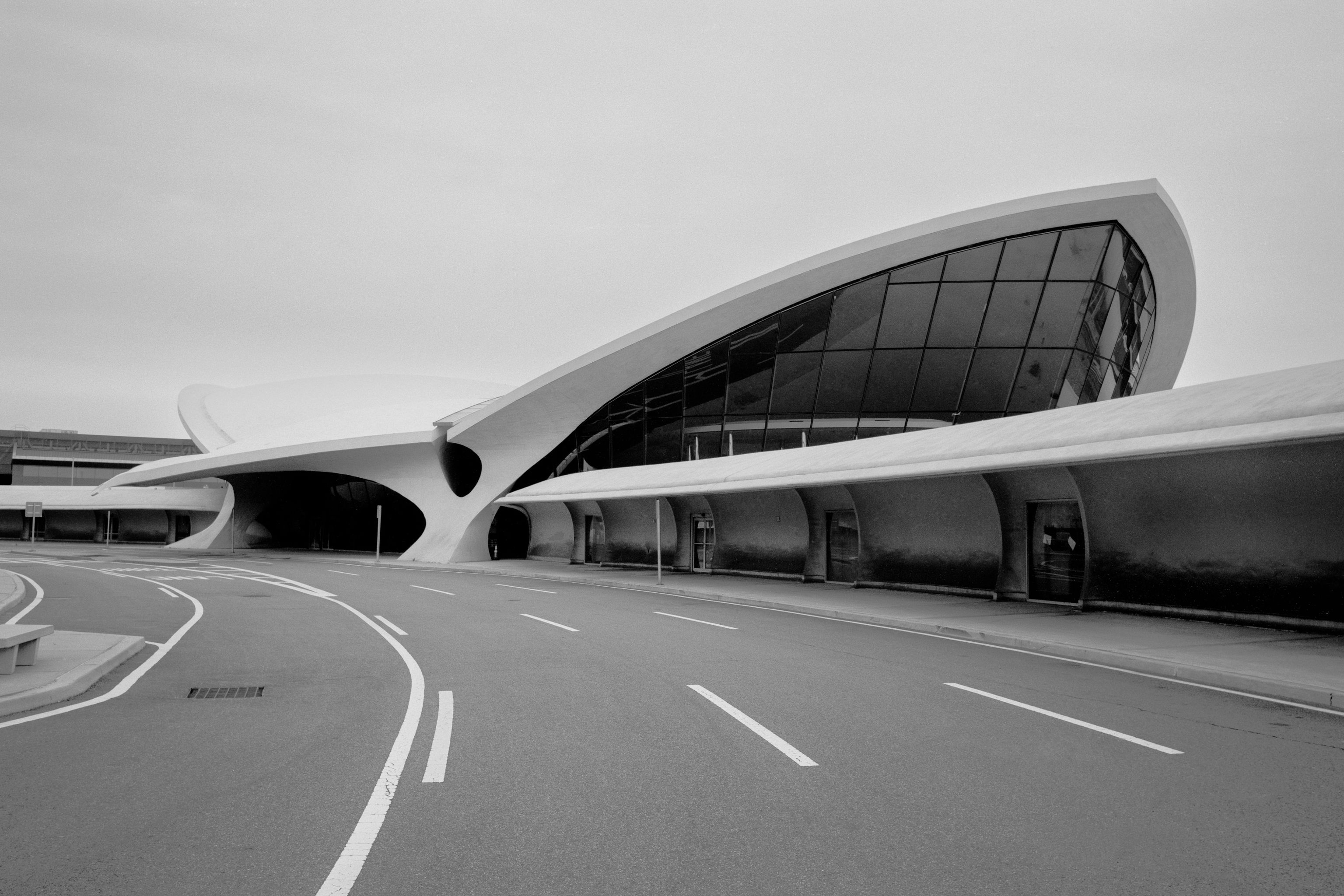
Melike Altınışık A masterwork where architecture is shaped by movement rather than static composition. The building translates speed, flow, and transition into spatial form. It remains a powerful reference for experiential and dynamic architecture.
The Architecture of the Jet Age Dream
Completed between 1955 and 1962, the iconic TWA Flight Center by Finnish-American architect and industrial designer, Eero Saarinen stands as one of the most poetic expressions of mid-century aviation optimism. Located at John F. Kennedy International Airport in New York City, the terminal was originally designed for Trans World Airlines as a spatial celebration of commercial flight and technological modernity. Emerging during the cultural momentum of the Jet Age, the building reframed airport infrastructure as an architectural spectacle where travel, speed, and human aspiration converged. The design draws on Futurist, Neo-futurist, and Googie architectural sensibilities, translating the dynamism of aviation into a sculptural form that seems permanently in motion.

The Winged Structure and Material Innovation
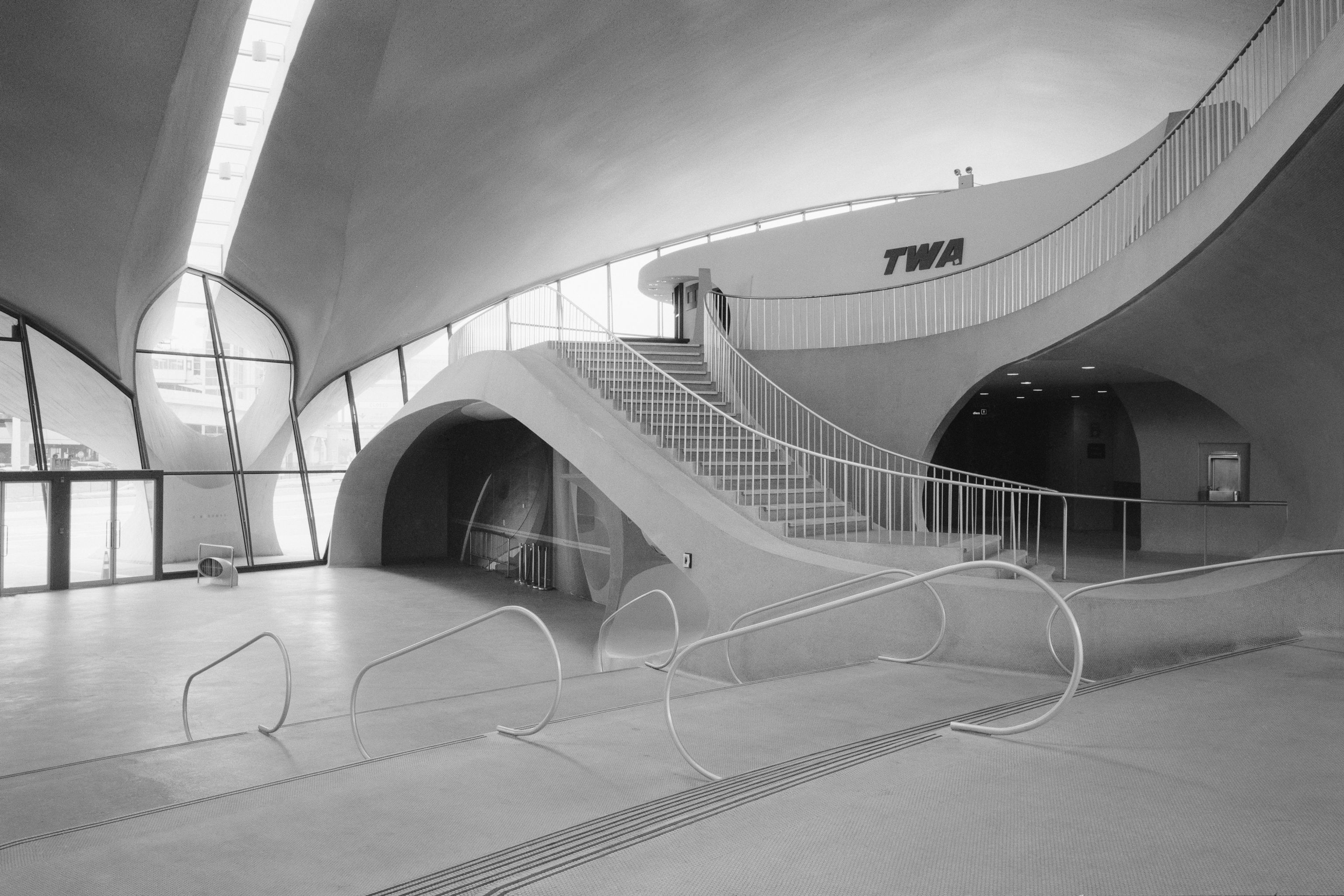
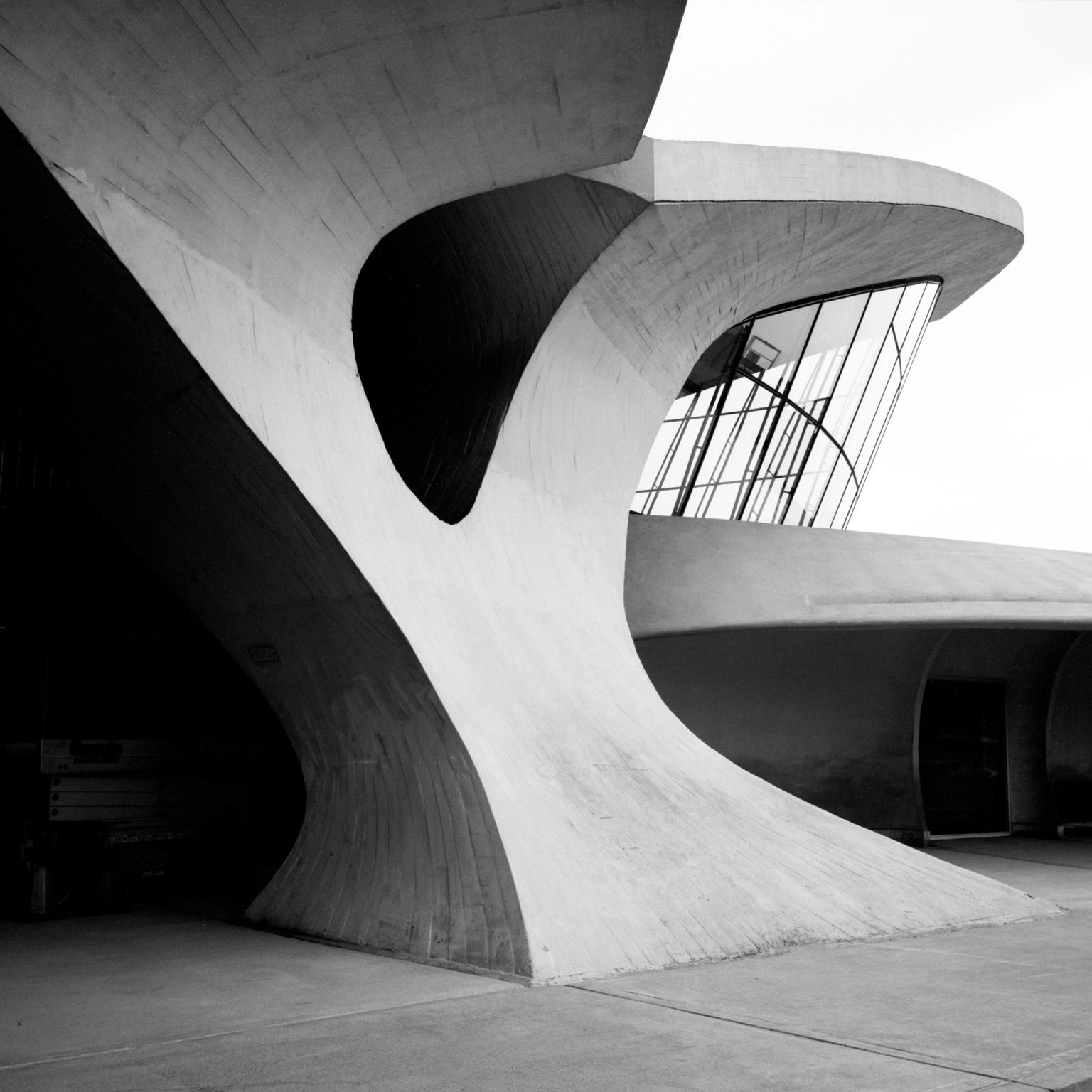
The building’s most defining feature is its thin-shell concrete roof, an engineering achievement of its time. The roof is composed of four intersecting shell segments that rise and fall like abstracted wings, spanning roughly 1.5 acres and weighing about 6,000 short tons. Supported by four Y-shaped piers measuring approximately 16 metres in height, the structure minimizes material use while allowing vast, uninterrupted interior space. The shell thickness varies dramatically, from about 180 millimetres at the edges to nearly one metre at the structural convergence, allowing the roof to balance structural efficiency with dramatic spatial expression. The design was made possible partly because the Port Authority’s jurisdiction allowed construction that would not have been feasible under New York City’s building code restrictions at the time.

Architecture as Movement and Passenger Theatre
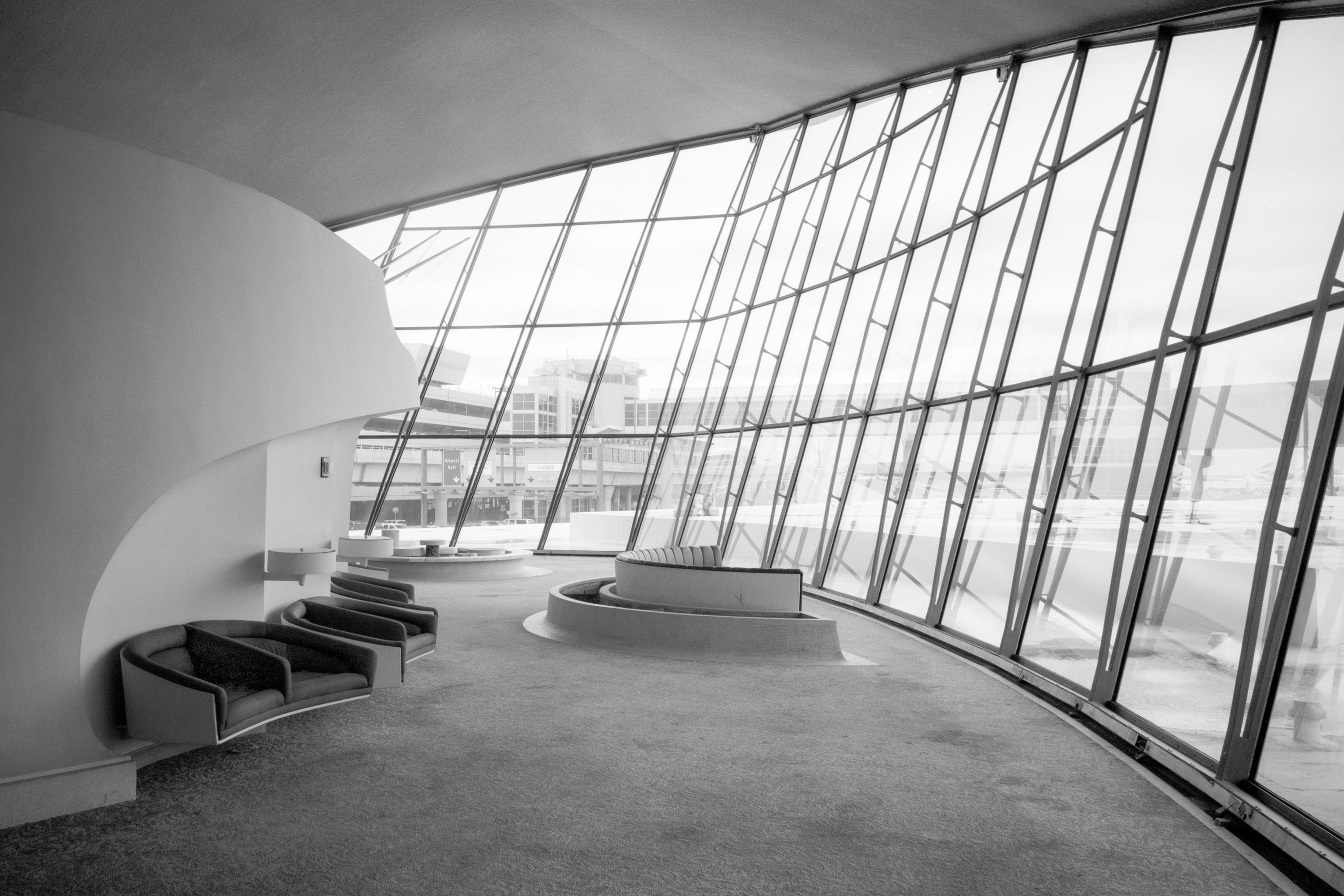
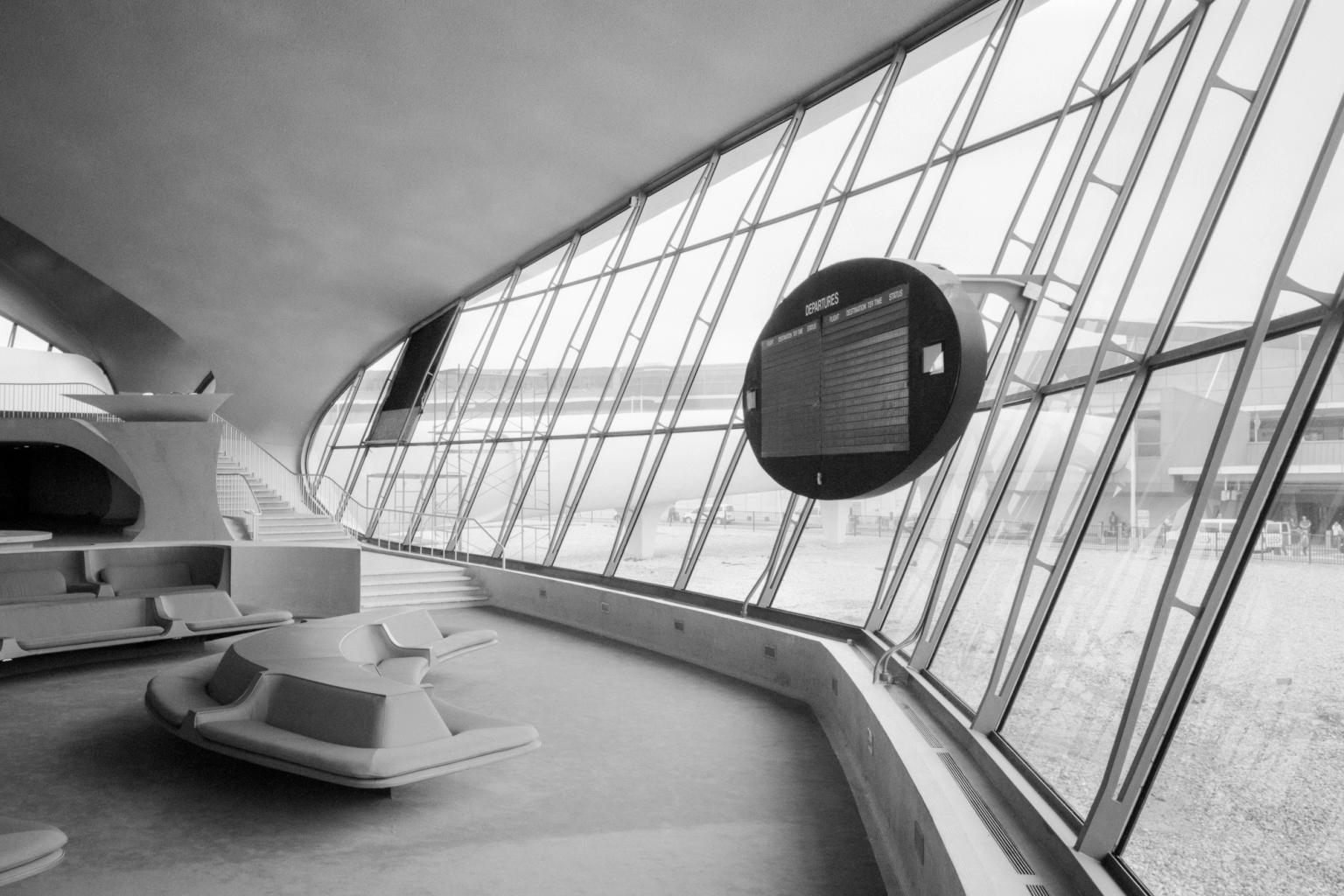
Saarinen envisioned the terminal as a choreographed journey rather than a static container for transportation. The two-storey headhouse is enclosed by large green-tinted glass walls, originally cut and assembled on site, allowing travellers to observe the choreography of aircraft movement across the runway landscape. From the central hall, circulation unfolds through ascending spatial sequences leading toward departure and arrival zones. Enclosed passenger tubes radiate from the main structure, representing some of the earliest uses of protected jetways, shielding passengers from weather while reinforcing the experience of flight as a continuous, narrative movement from city to sky.

Adaptive Reuse and the Memory of Flight
After operating as an airline terminal for nearly forty years, the building was closed in 2002 and later protected by its inclusion on the National Register of Historic Places in 2005. A comprehensive restoration led by Beyer Blinder Belle Architects & Planners reactivated the historic headhouse as part of the TWA Hotel, which opened in 2019. The adaptive reuse introduced two new hotel wings behind the landmark structure, containing 512 rooms overlooking the runways. The interiors evoke 1960s travel culture through walnut and brass detailing, vintage airline graphics, and curated retro elements such as exhibition displays, historical sketches by Saarinen, and leisure spaces including a rooftop infinity pool and observation deck.

Eero Saarinen and the Human Meaning of Architecture
Educated within a family of architects and later working in the United States, Eero Saarinen developed a design philosophy centered on architecture’s capacity to dignify human existence. His projects, including the Gateway Arch and the Dulles International Airport Main Terminal, explored the emotional potential of structure, scale, and form. The TWA Flight Center remains one of his most celebrated works - a building where architecture, technology, and the mythology of flight merge into a single spatial narrative about human ambition and movement.