
109 Architects
USJ Campus de L'Innovation et du Sport
- Architect109 Architects
- Architect in ChargeNada Assaf
- Partner in ChargeMichel Georr & Ibrahim Berberi
- TeamRani Boustani, Etienne Nassar, Emile Khayat, Naja Chidiac & Richard Kassab
Philippe Lê This project is a good example of modernity integrating the local climate and cultural context. With it thick walls the building is far from the usual glass and steel generic construction that can be seen everywhere.

USJ Campus de l’Innovation et du Sport
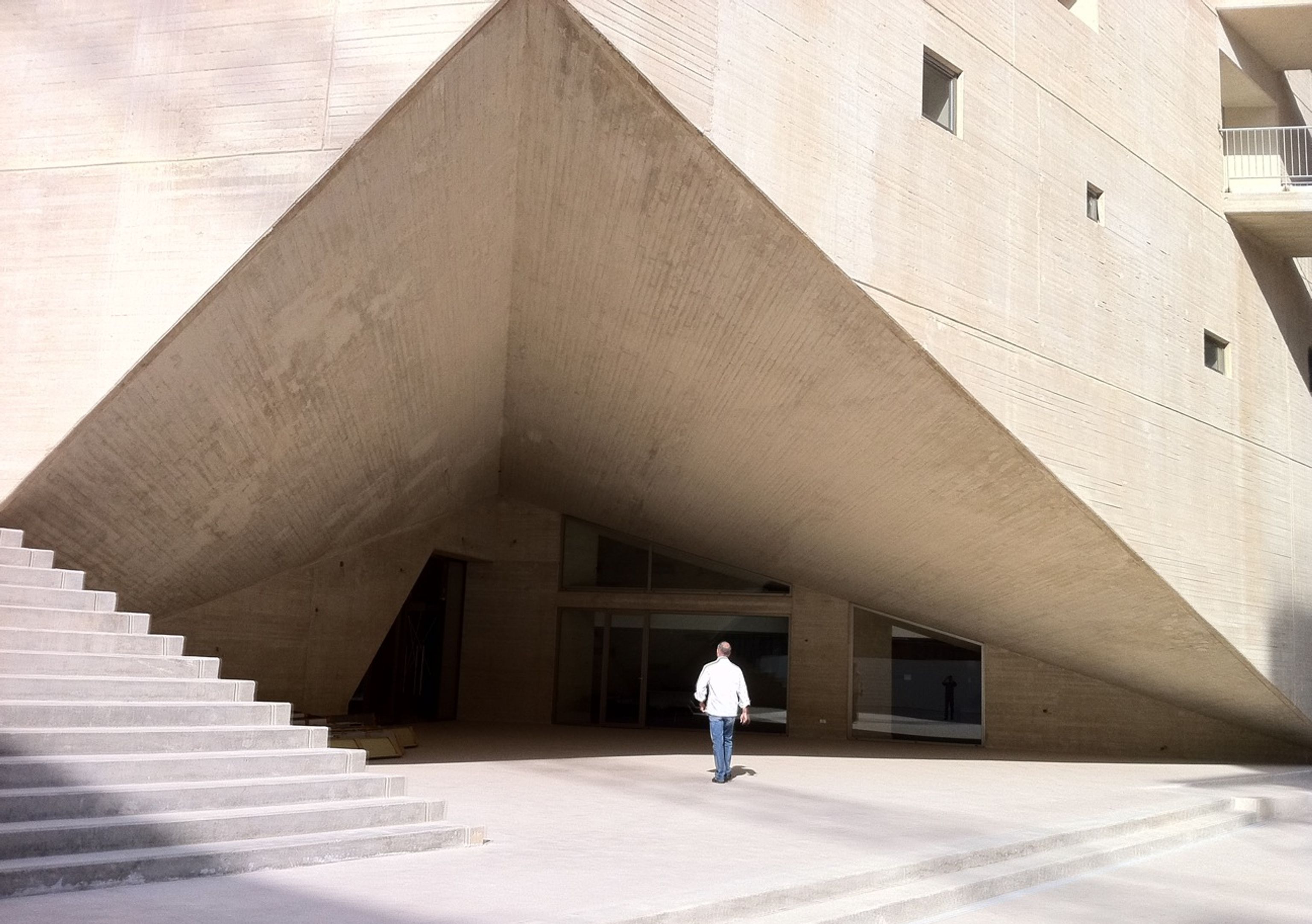
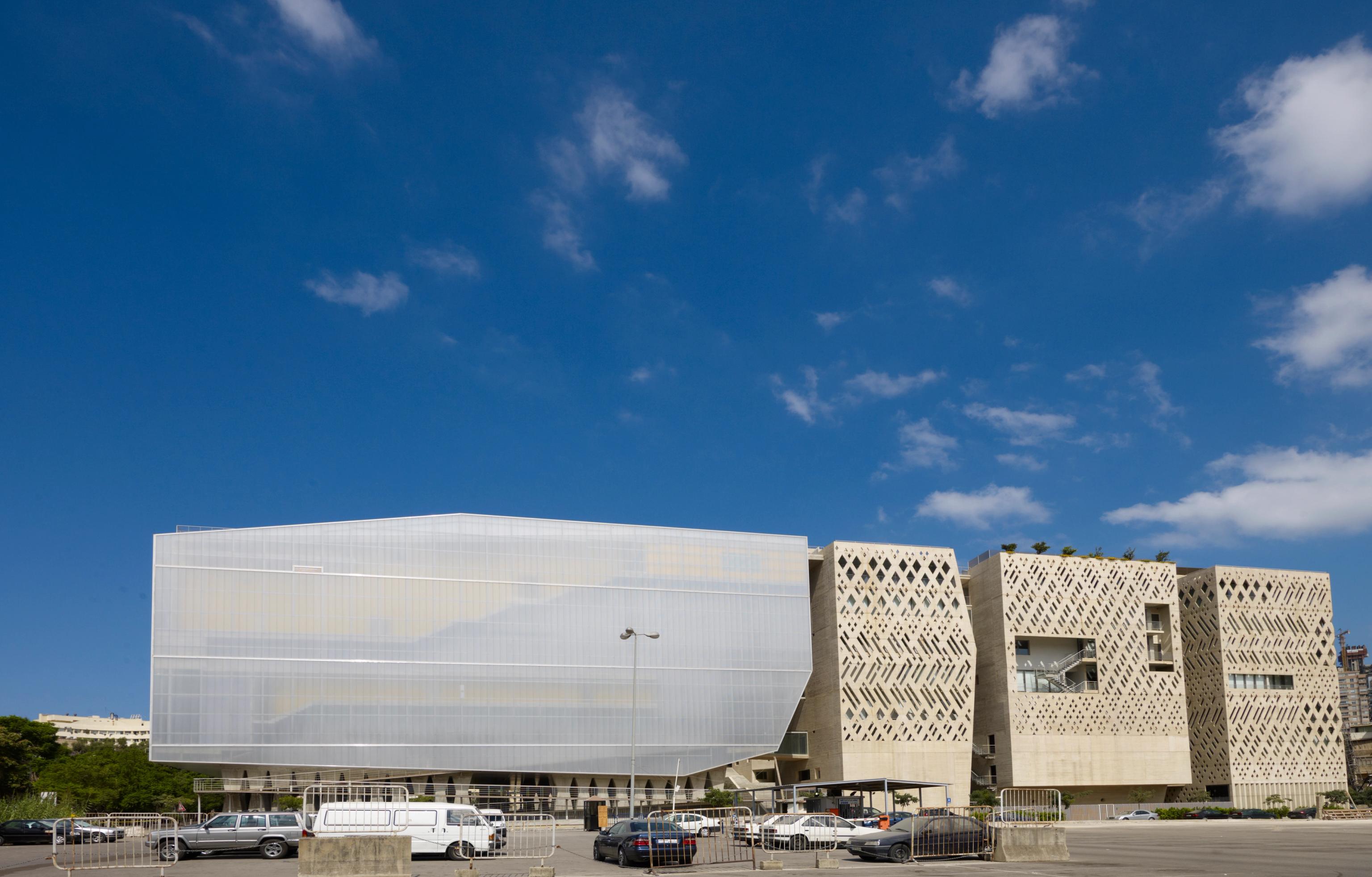
The USJ Campus de l’Innovation et du Sport in Beirut, Lebanon, is the work of Lebanese practice 109 Architectes, conceived as a bold statement of urban reintegration and architectural experimentation. Completed in 2011 after six years of construction, the major Université Saint-Joseph (USJ) campus was designed not as a conventional university, but as a vertical urban block that interweaves physically, culturally, and historically with the surrounding city.
Situated on Damascus Street near the former demarcation line of the Lebanese Civil War, the architects faced a fragmented urban environment where the traditional city fabric had largely disappeared. On a modest 6,000 m² site, they compressed nearly 60,000 m² of built space into a complex structure that is simultaneously monolithic and porous, monumental and accessible, establishing a new model for civic architecture in post-war Beirut.
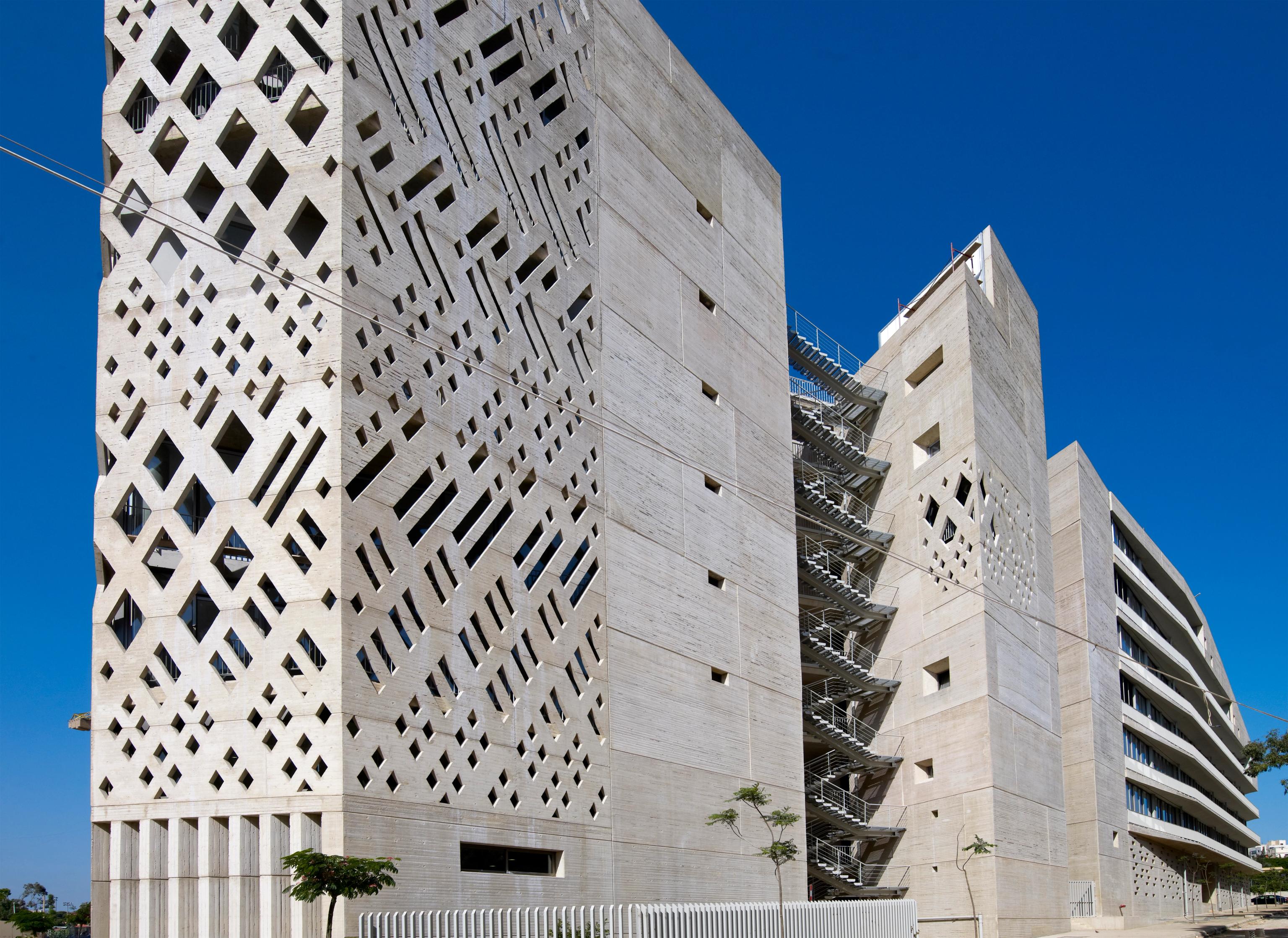

Carved Volumes and Social Flow
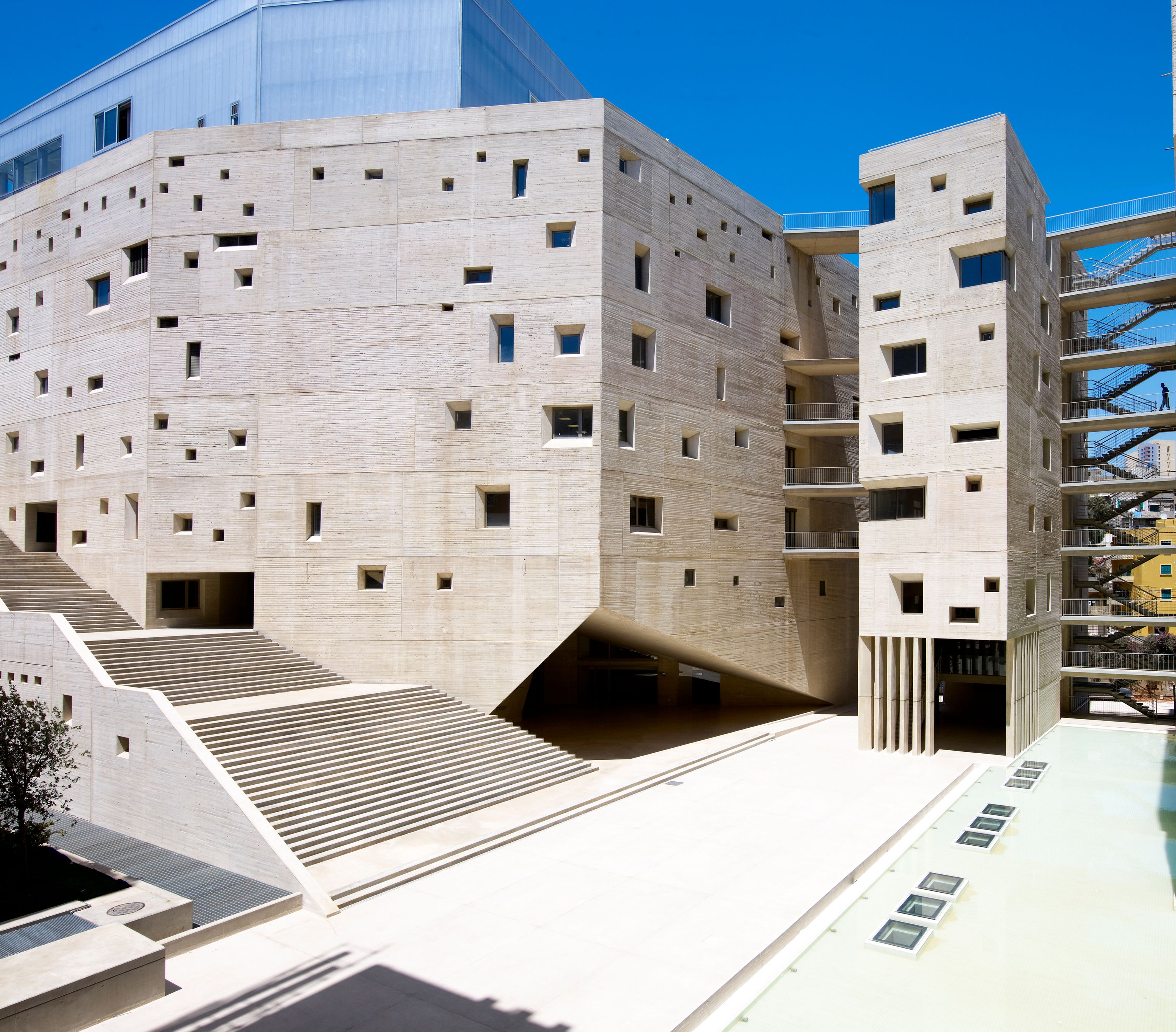
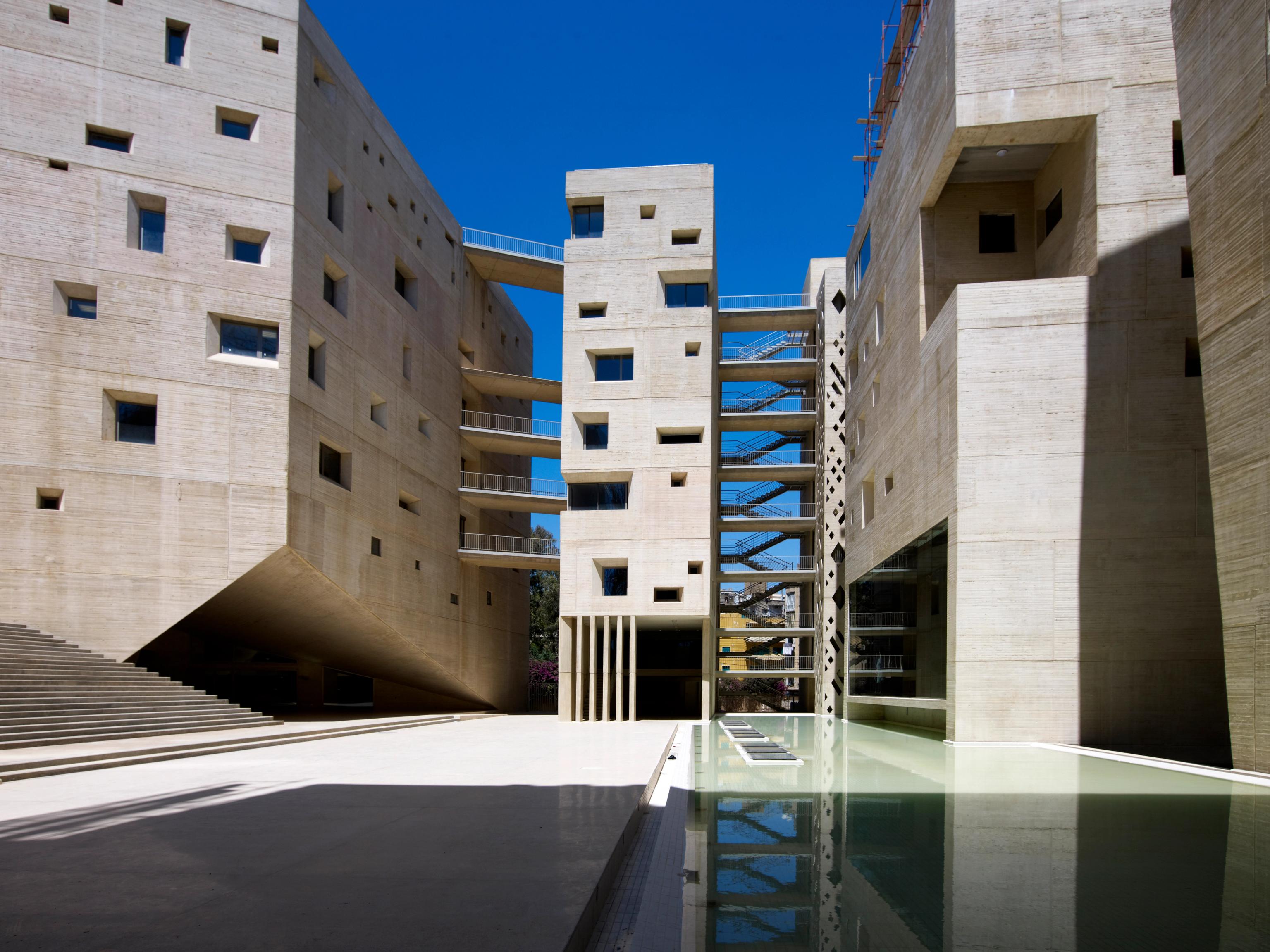
109 Architectes organized the campus as an urban block carved by strategic voids, creating six autonomous volumes and multiple visual connections across the city. These hollow spaces allow natural sightlines, draw in light, and generate a continuous public space that flows from the street level through a massive central staircase to a landscaped rooftop terrace. The architects treated empty space as a core material, turning circulation into social interaction and making students’ daily movement a form of inhabiting the building. By transforming traditional corridors into vertical gathering spaces, the campus becomes more than an academic environment - it is a public urban system, reinvigorating Beirut with shared spaces that were largely erased by war.
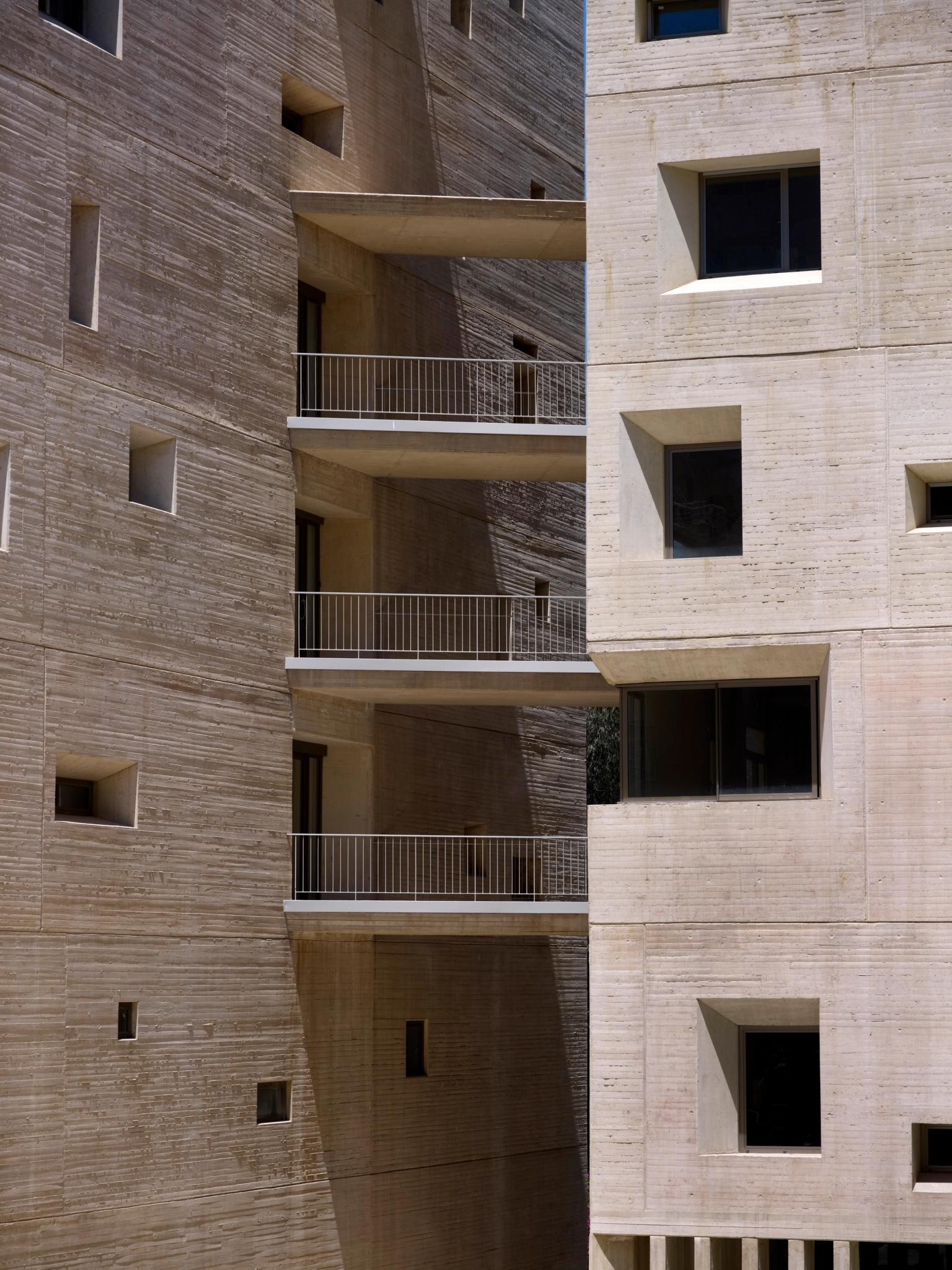

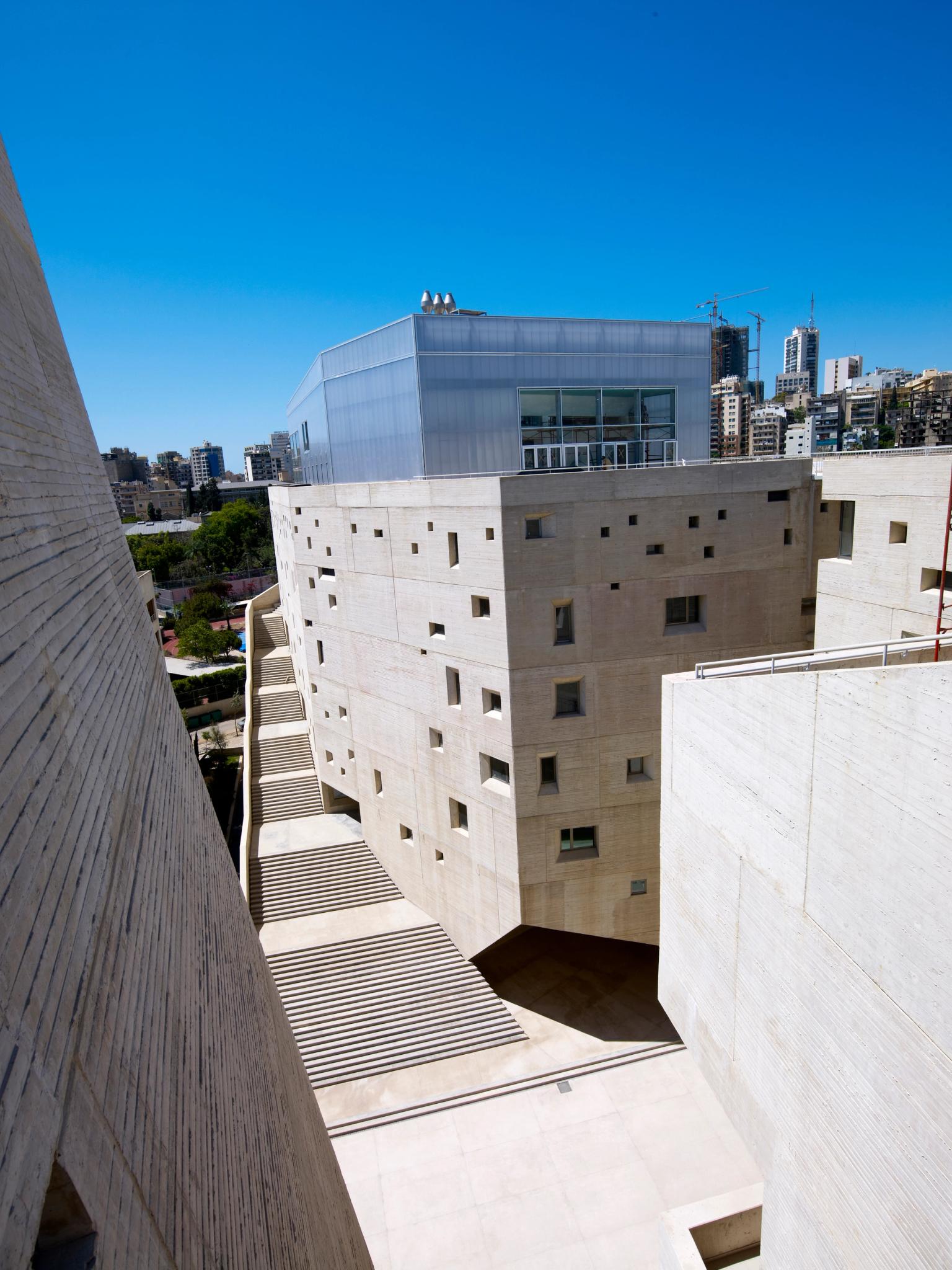

Light, Memory, and Programmatic Complexity
Light plays a pivotal role in the architectural identity of the campus, drawing on oriental traditions where illumination shapes perception and experience. The façades employ Moucharabieh-inspired perforations and a polycarbonate volume to create contrasting conditions of filtered light and luminescence. A system of random openings subtly references the Lebanese Civil War, providing a poetic snapshot of destruction and resilience. The deliberate tension between monolithic mass and fragmented openness mirrors Lebanon’s cultural condition, while the interplay of light and void elevates the campus from mere functionality to symbolic, experiential architecture, where the city, memory, and social life converge.
The campus accommodates a rich mix of functions: lecture halls, auditoriums, laboratories, research units, sports facilities, swimming pool, library, administration offices, chapel, cafeterias, and student areas. The vertical organization layers these programs in overlapping, interconnected volumes, creating a compact but porous structure. Equipped with solar panels and full accessibility, the campus operates as a contemporary civic infrastructure where education, sport, research, and daily life merge. 109 Architectes envisioned the campus as a living fragment of the city, where architecture is both functional and socially resonant, establishing a new paradigm for post-war urban and educational design.
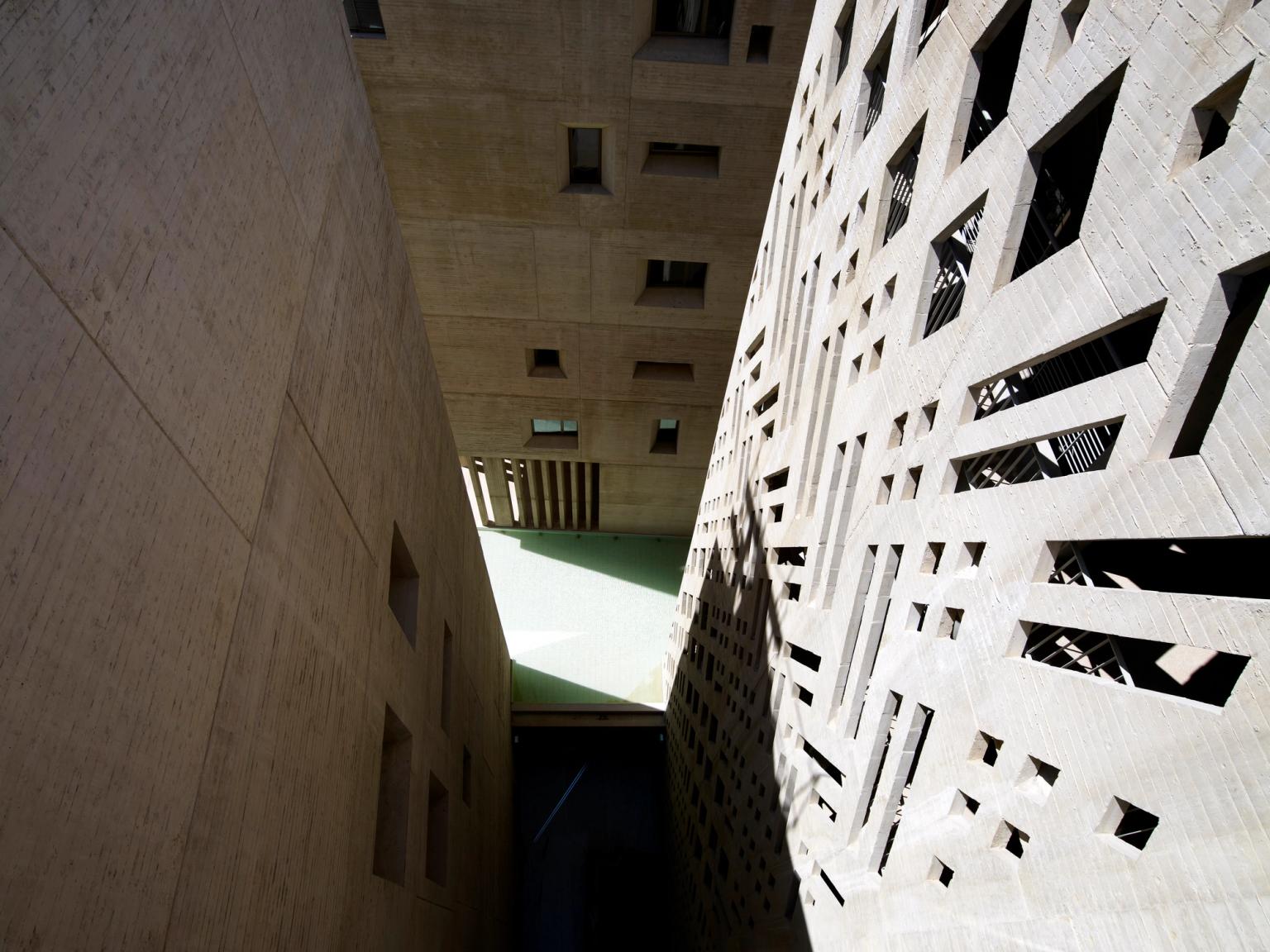

109 Architectes
109 Architectes is a Beirut-based international design studio founded in 2002 by Michel Georr and Youssef Mallat, joined soon after by founding partner Ibrahim Berberi. The firm’s name, pronounced like sang neuf in French, reflects its founding ethos: “new blood,” a constant infusion of fresh ideas and energy. With a diverse, collaborative team and a network of trusted consultants, 109 Architectes works across residential, office, educational, and tourism projects, blending context, concept, and innovation.
Their approach emphasizes sustainable practices, high standards from concept to execution, and designs that are simultaneously visionary and practical. Projects like the USJ Campus de l’Innovation et du Sport in Beirut exemplify their philosophy: architecture that is socially engaged, contextually aware, and architecturally bold.