
William Guillon
The work of
- DesignerWilliam Guillon
JACOB BRINTH His dark and moody artworks are bold and radical, yet somehow it feels balanced and elegant.
His futuristic gothic narrative blends very well with the high-artisanal french craft of bronze and porcelain.
It seems like he time travelled back to the romantic period of 1800s Victor Hugo, and also to the future of year 2122 Alien movies, and came back to us today.


BEAUTY IN THE SHADOWS
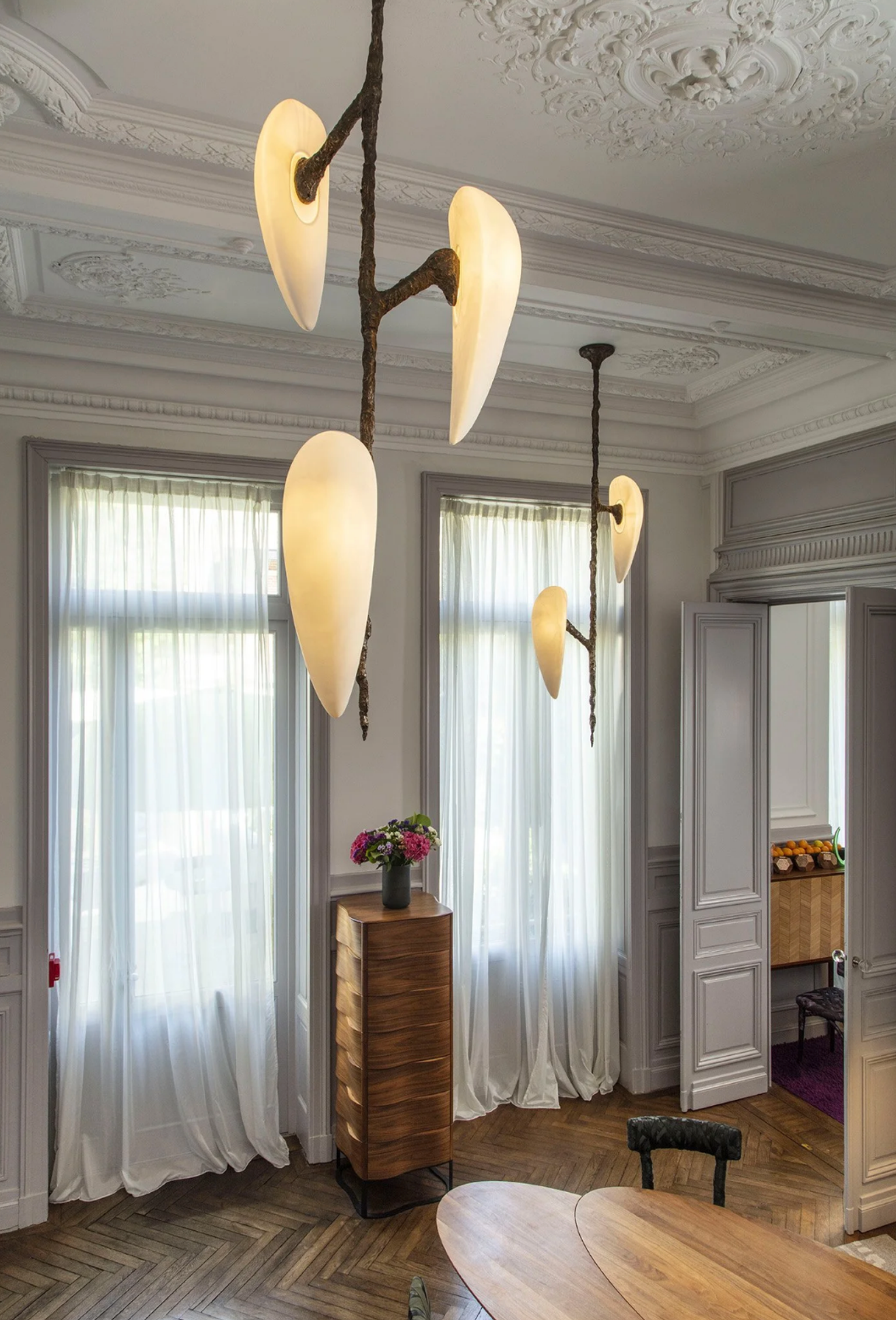
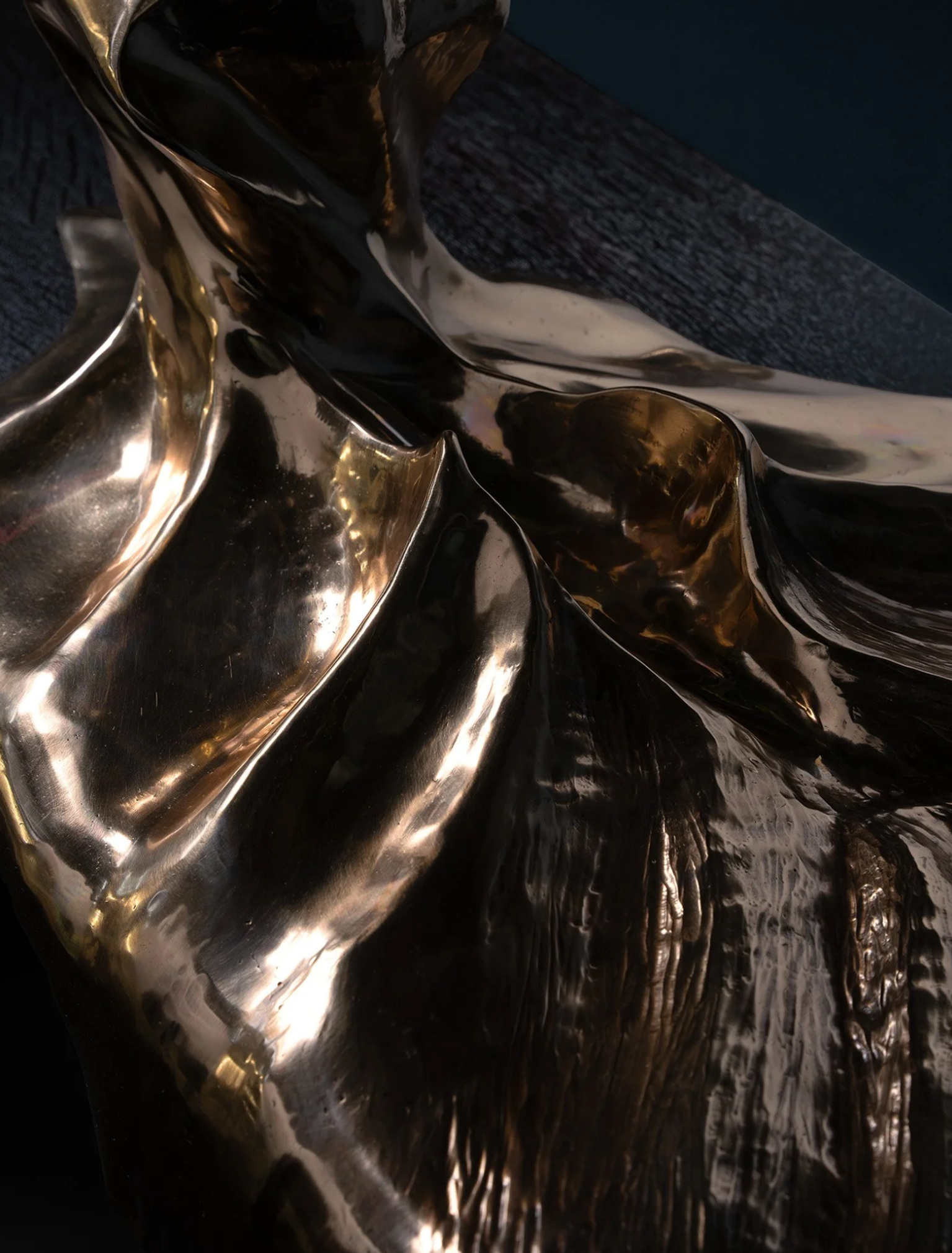
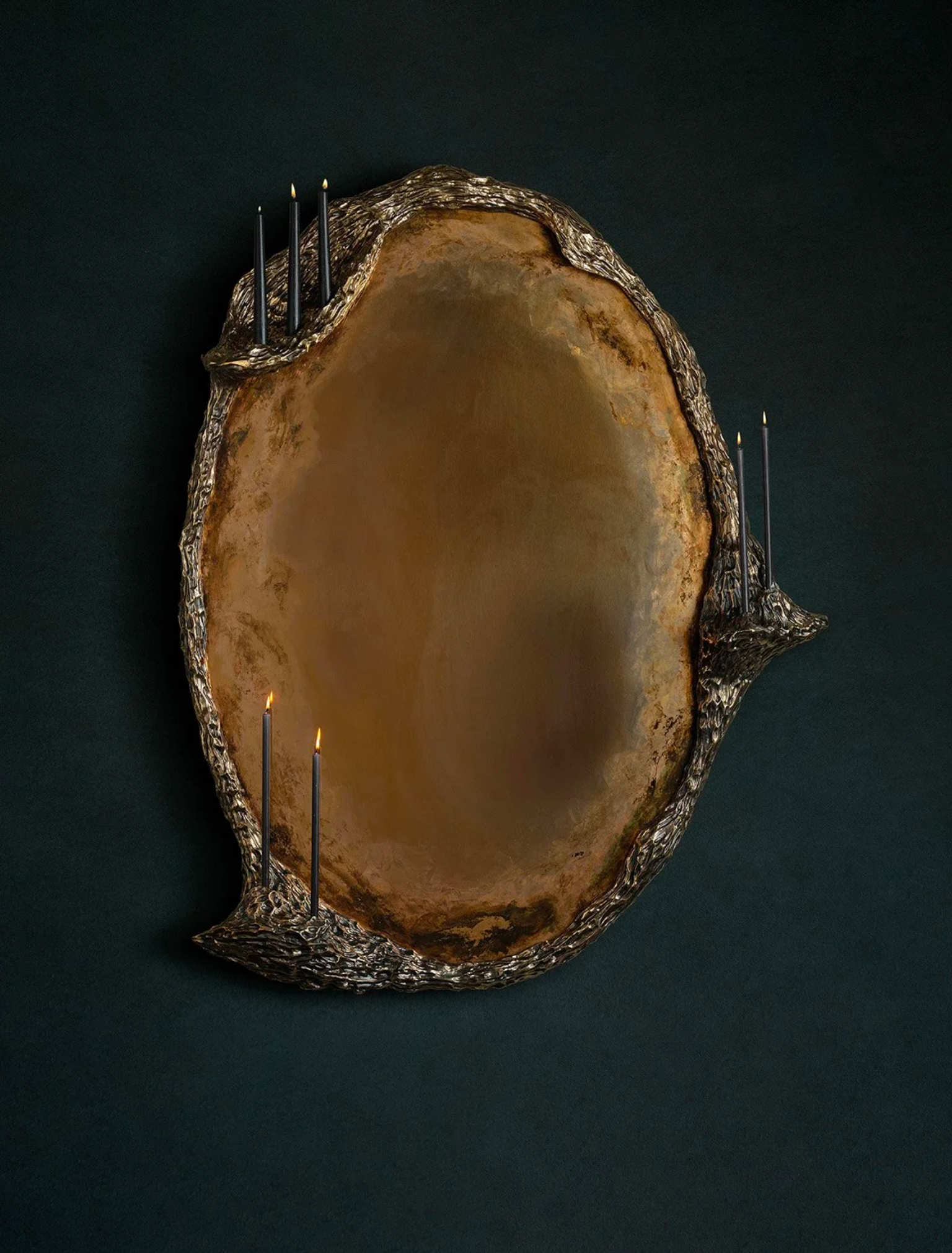
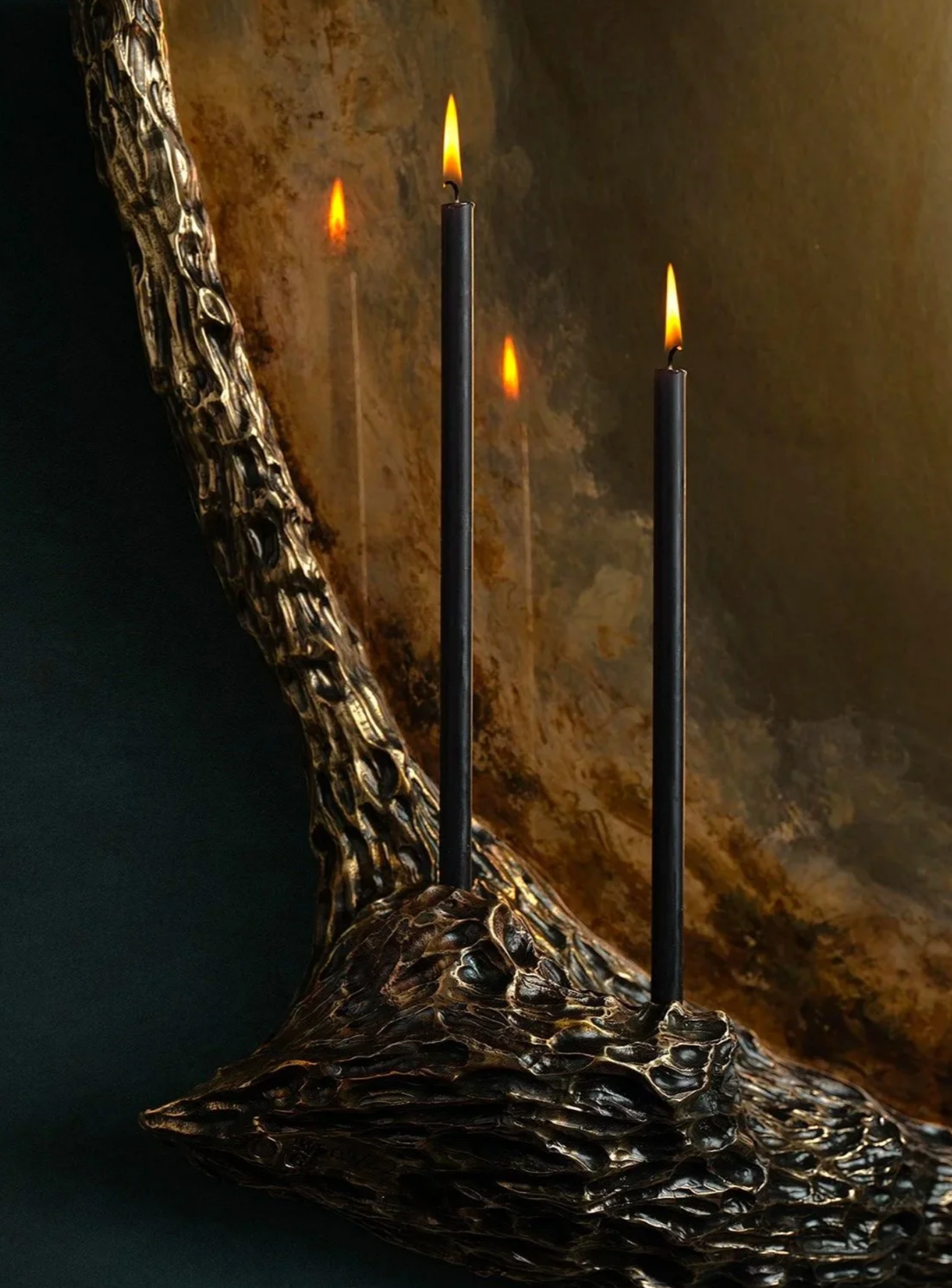
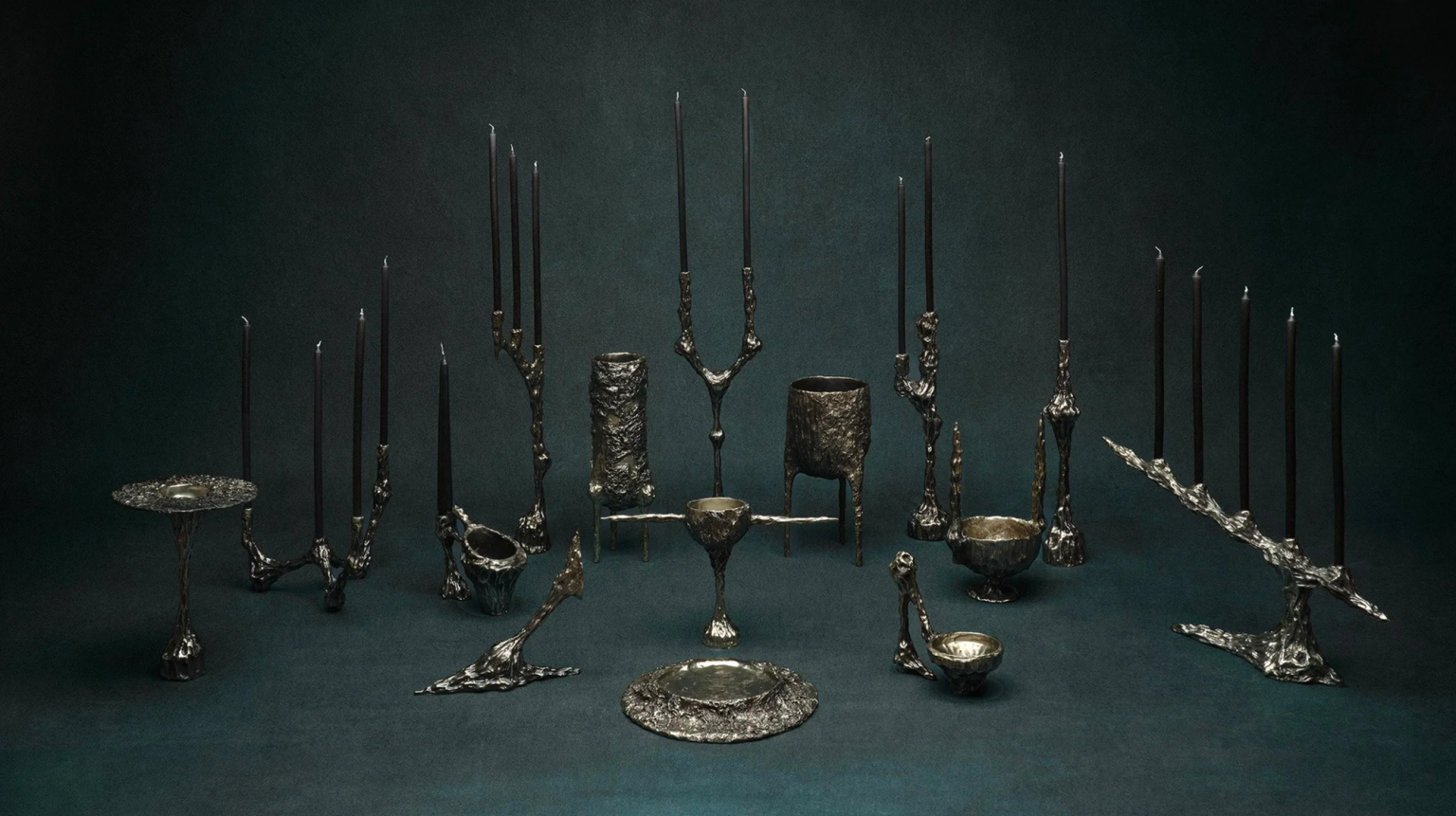
There is something quietly theatrical about the work of Bordeaux based designer and art director William Guillon. Working primarily in cast bronze, Guillon creates lighting, furniture, mirrors and objects that exist somewhere between functional design and sculpture. His work is drawn to the imperfect, the damaged and the transient, finding beauty in surfaces that appear to have been marked by time. The result is a body of work that feels simultaneously ancient and radically contemporary, with an almost cinematic sense of darkness and atmosphere.
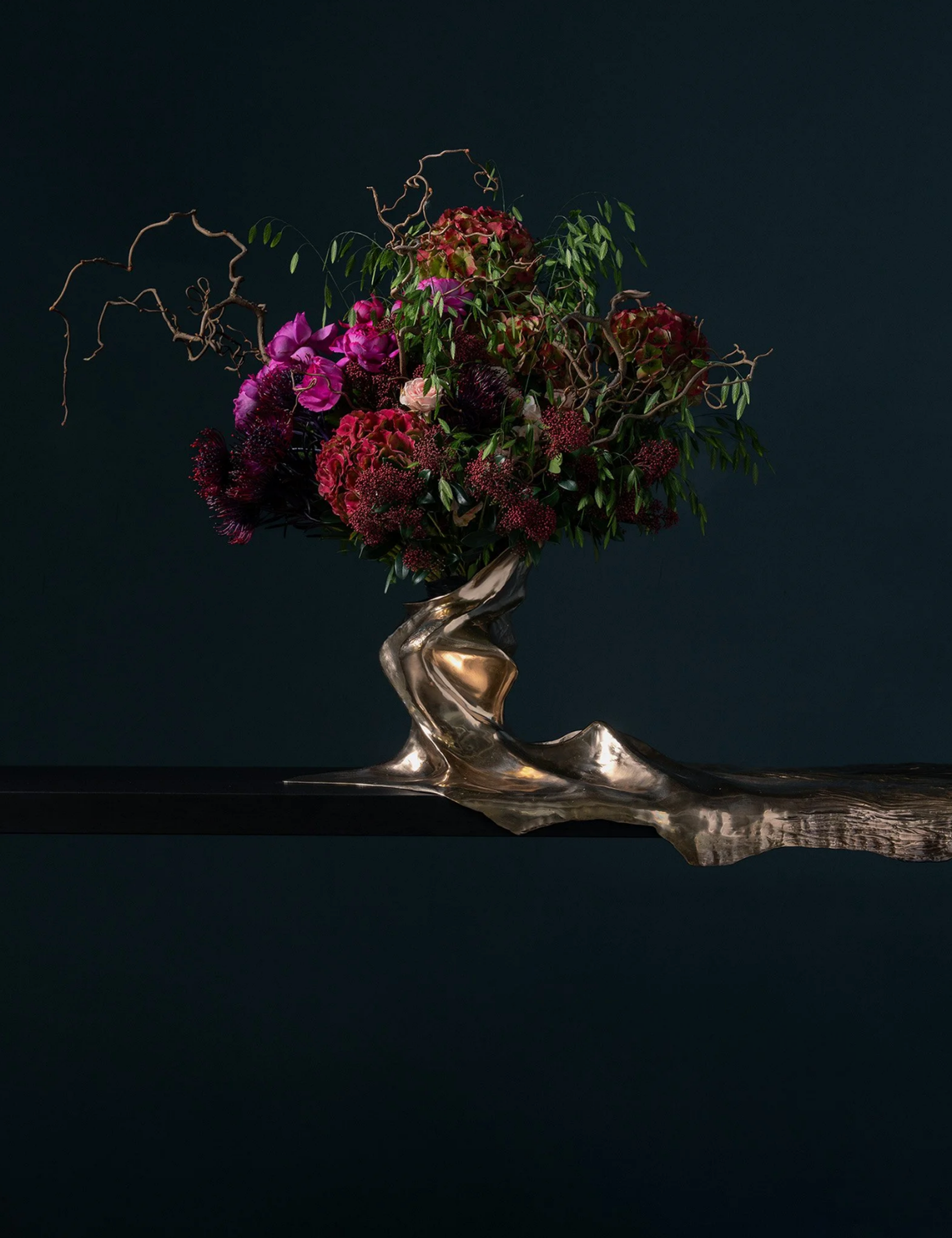

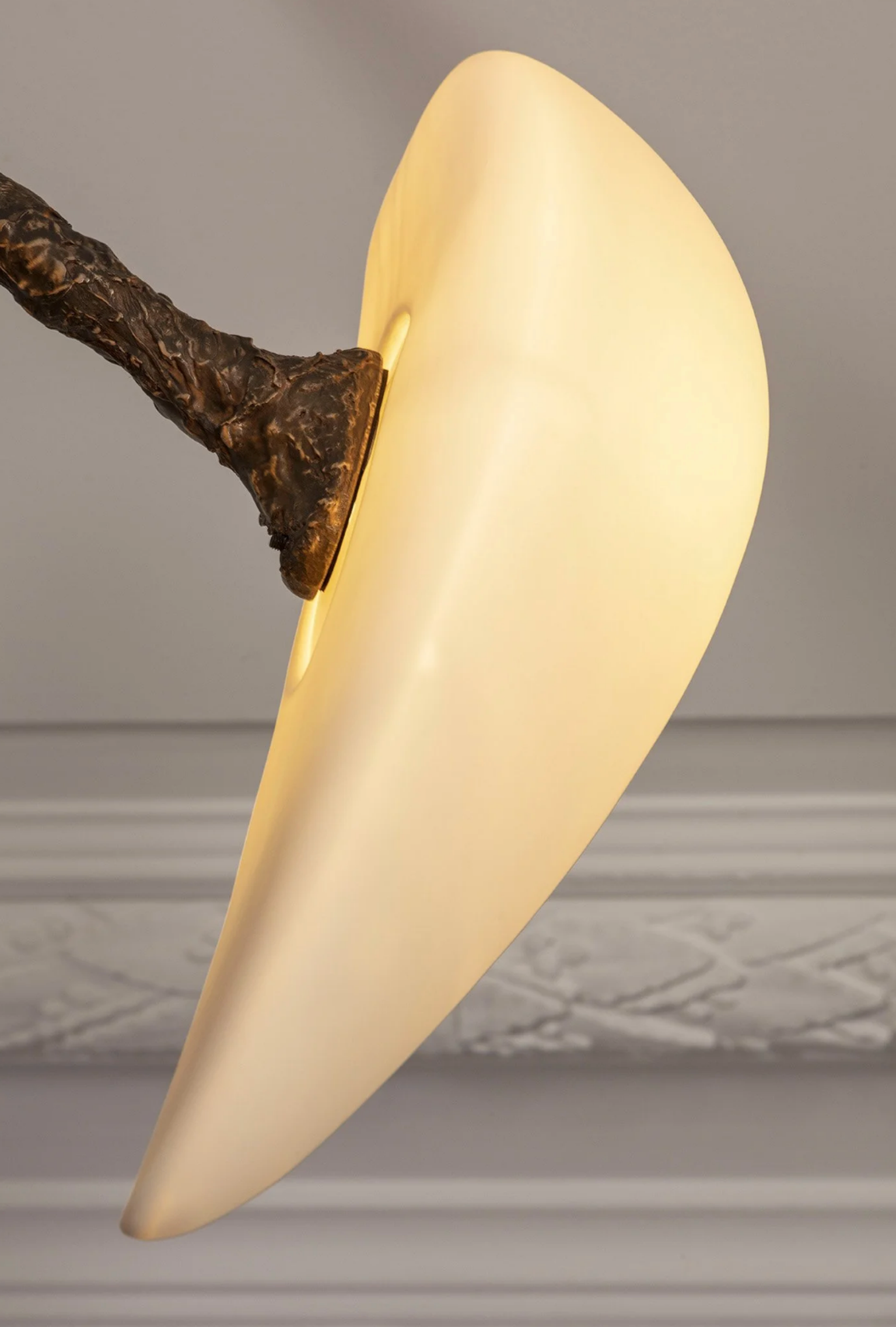
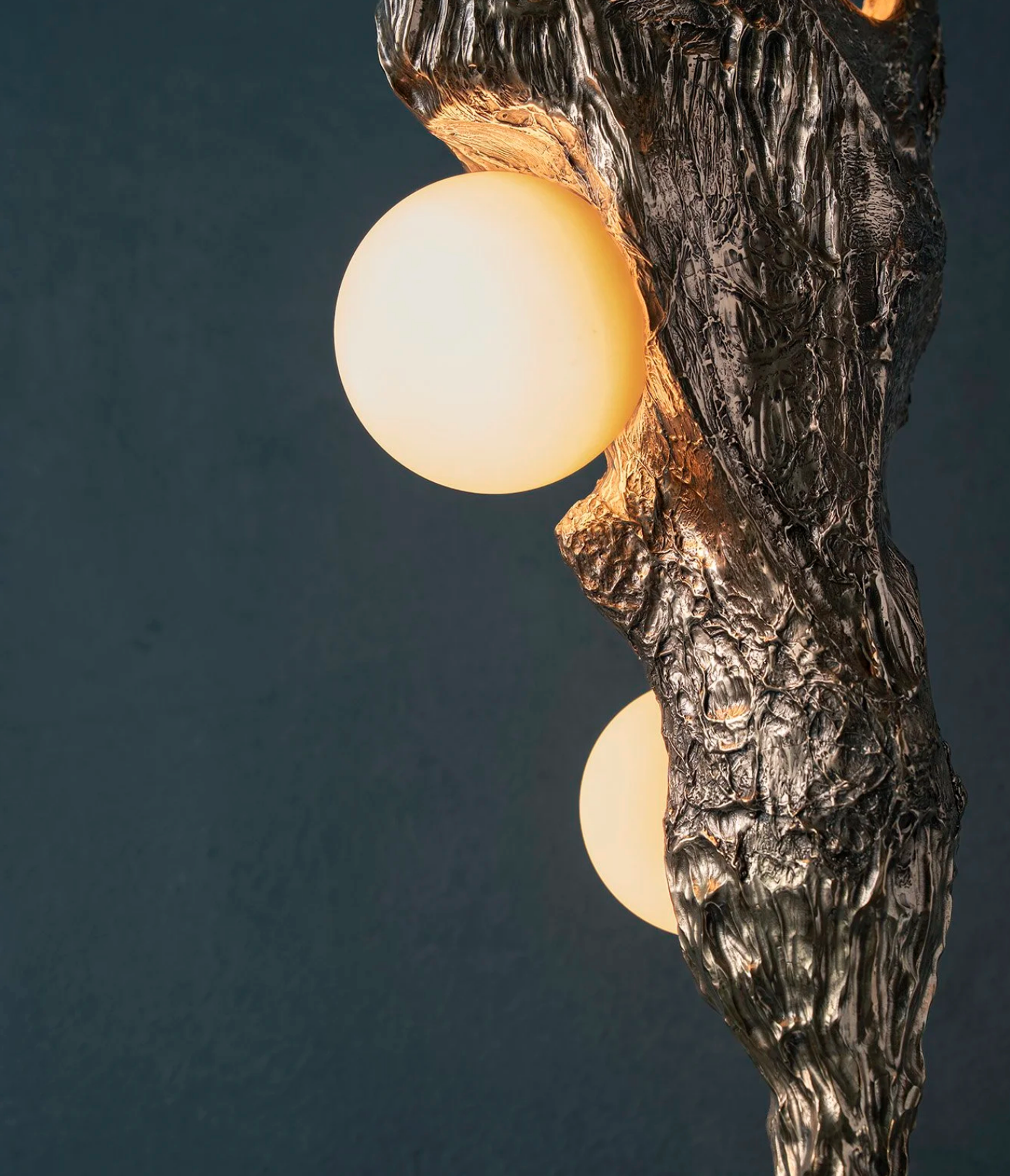
Guillon describes his practice as functional art, but the distinction between object and sculpture is deliberately blurred. Each piece is handmade in his Bordeaux studio, often produced as a unique work or limited edition. Bronze is his material of choice, allowing him to create irregular, tactile surfaces that catch and absorb light rather than simply reflect it. There is a sense of weight and permanence to the objects, yet many of them carry an emotional fragility.





THE YNDO CONNECTION
A defining chapter in Guillon’s development has been his long relationship with Yndo Hôtel in Bordeaux. The collaboration began early in his career with Agnès Guiot, the hotel’s owner and creative force, who recognised something distinctive in his work and gave him the opportunity to develop pieces specifically for the hotel. Guillon has described her as a crucial figure in his trajectory, someone who gave him both visibility and confidence at a formative moment.
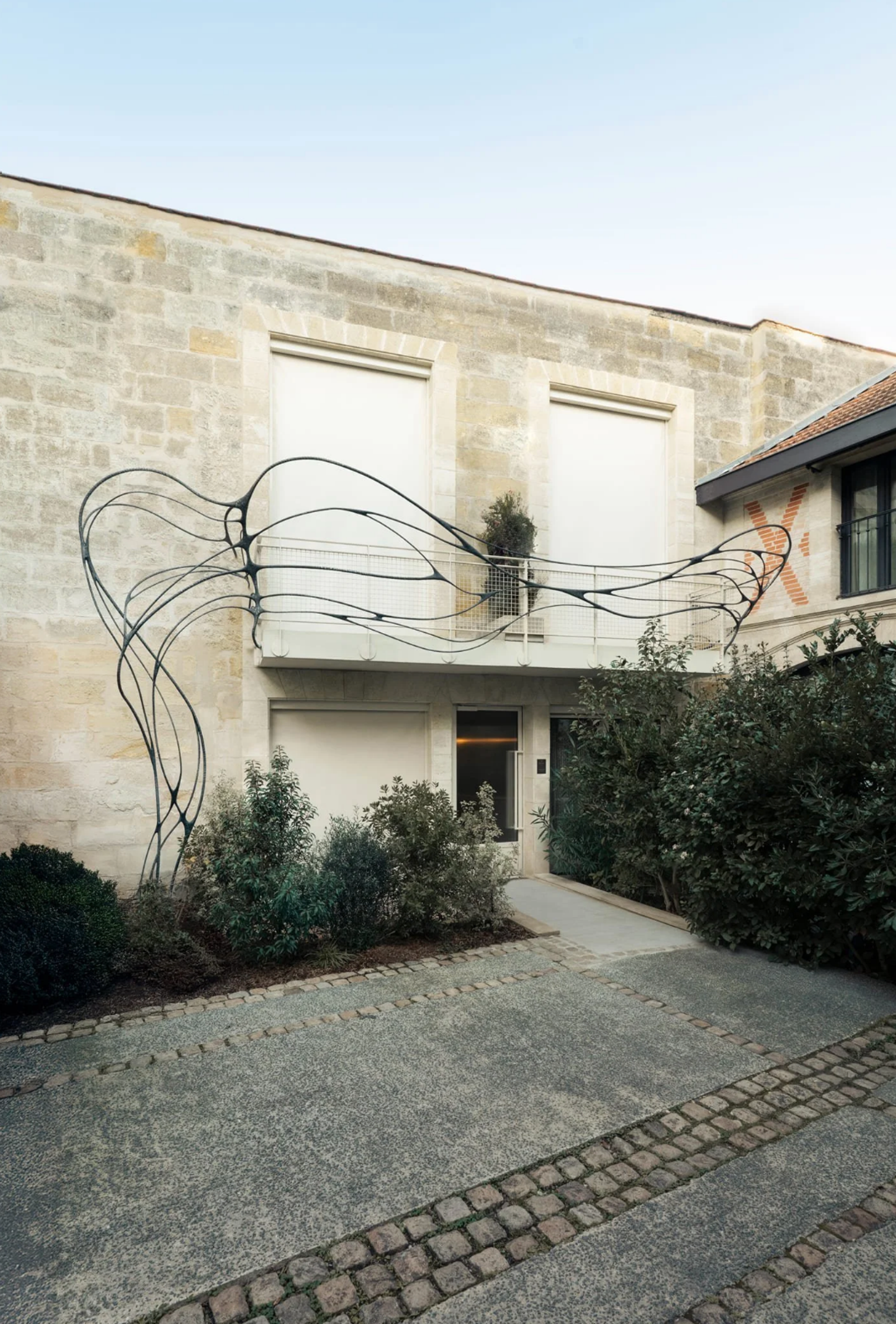
Yndo is an unusually fitting environment for his work. Conceived as a living gallery rather than a conventional luxury hotel, the nineteenth century Bordeaux townhouse is filled with individual pieces of art and design, with each room given its own character. Guillon’s work sits naturally within this world of unexpected materials, strong personalities and theatrical details.
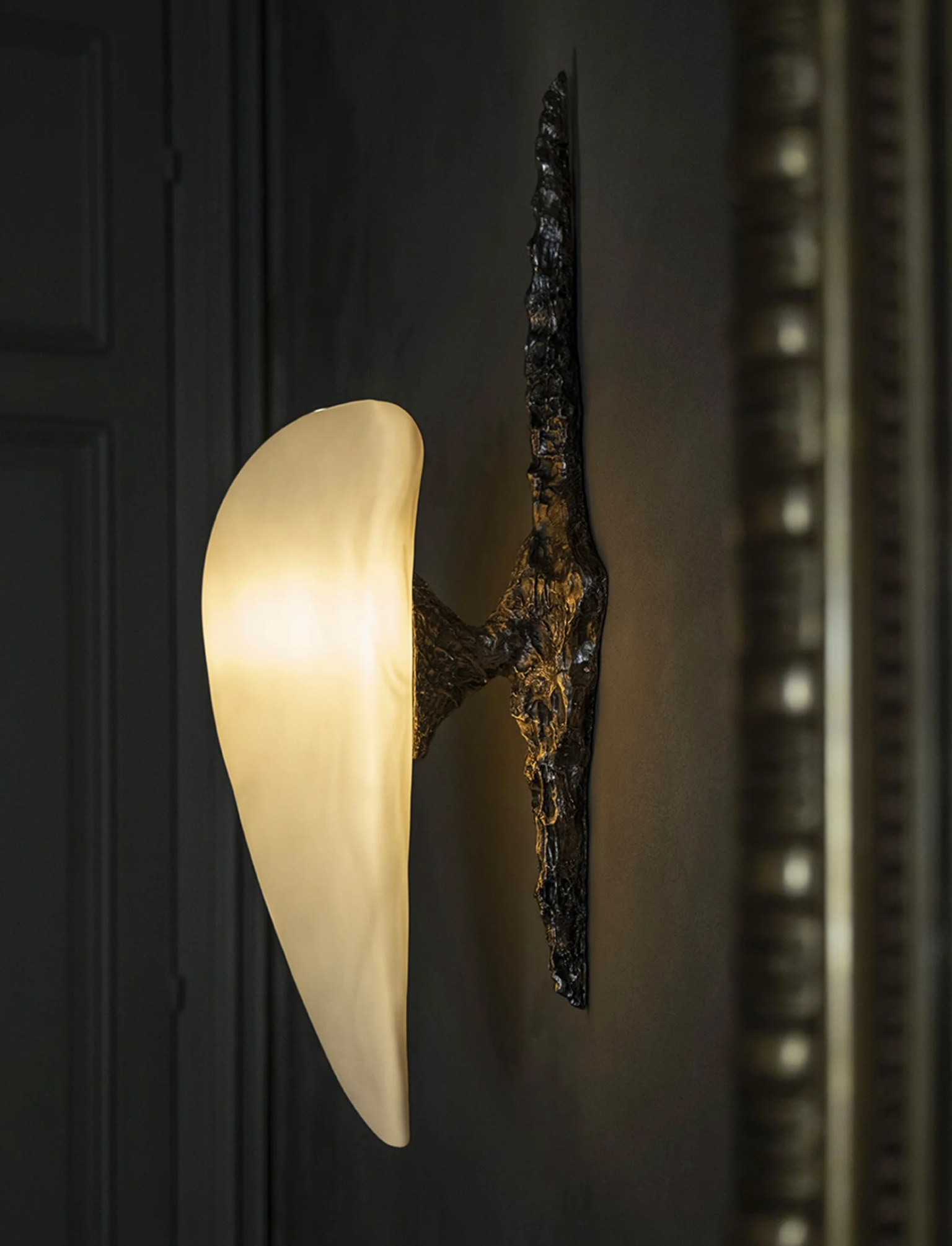
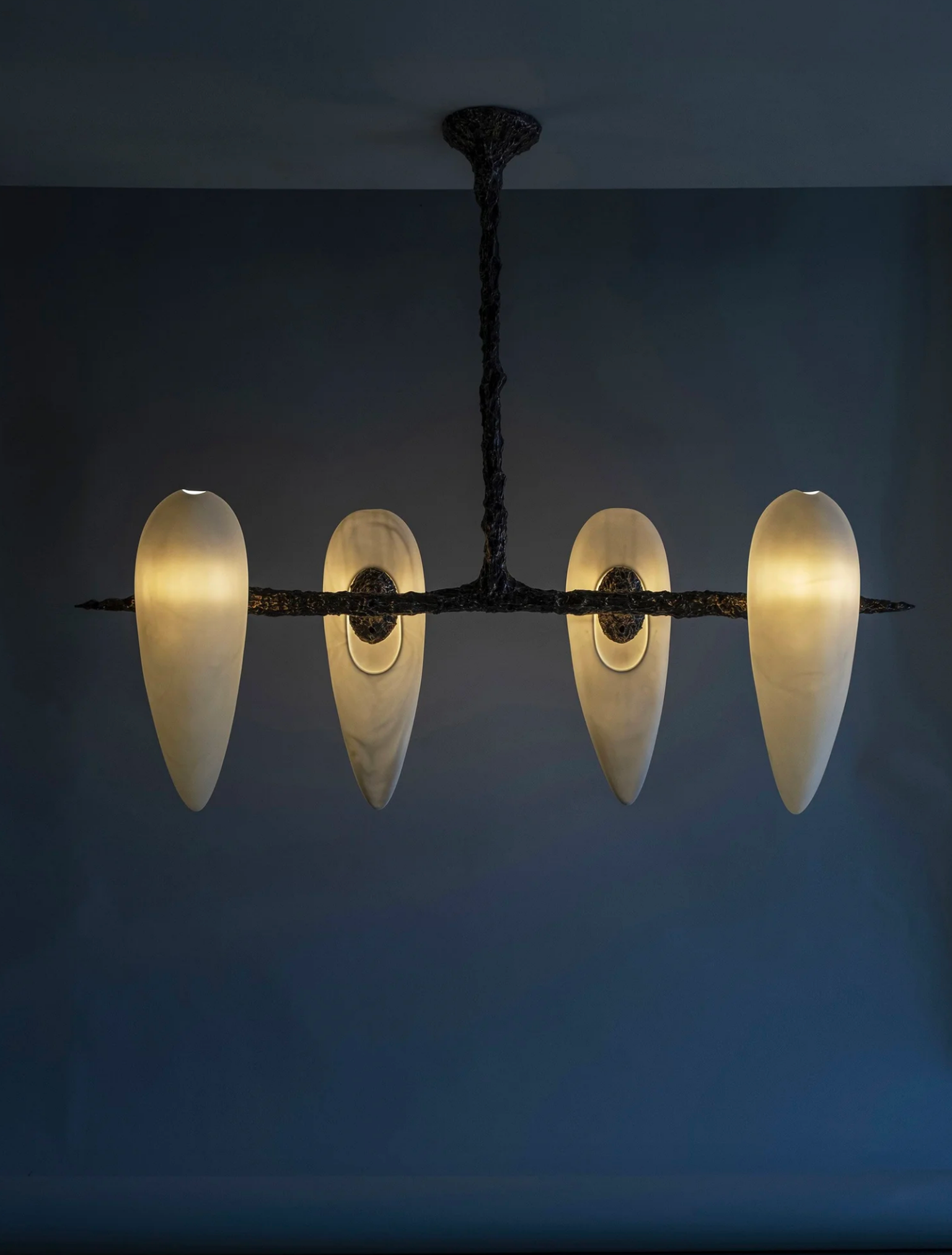
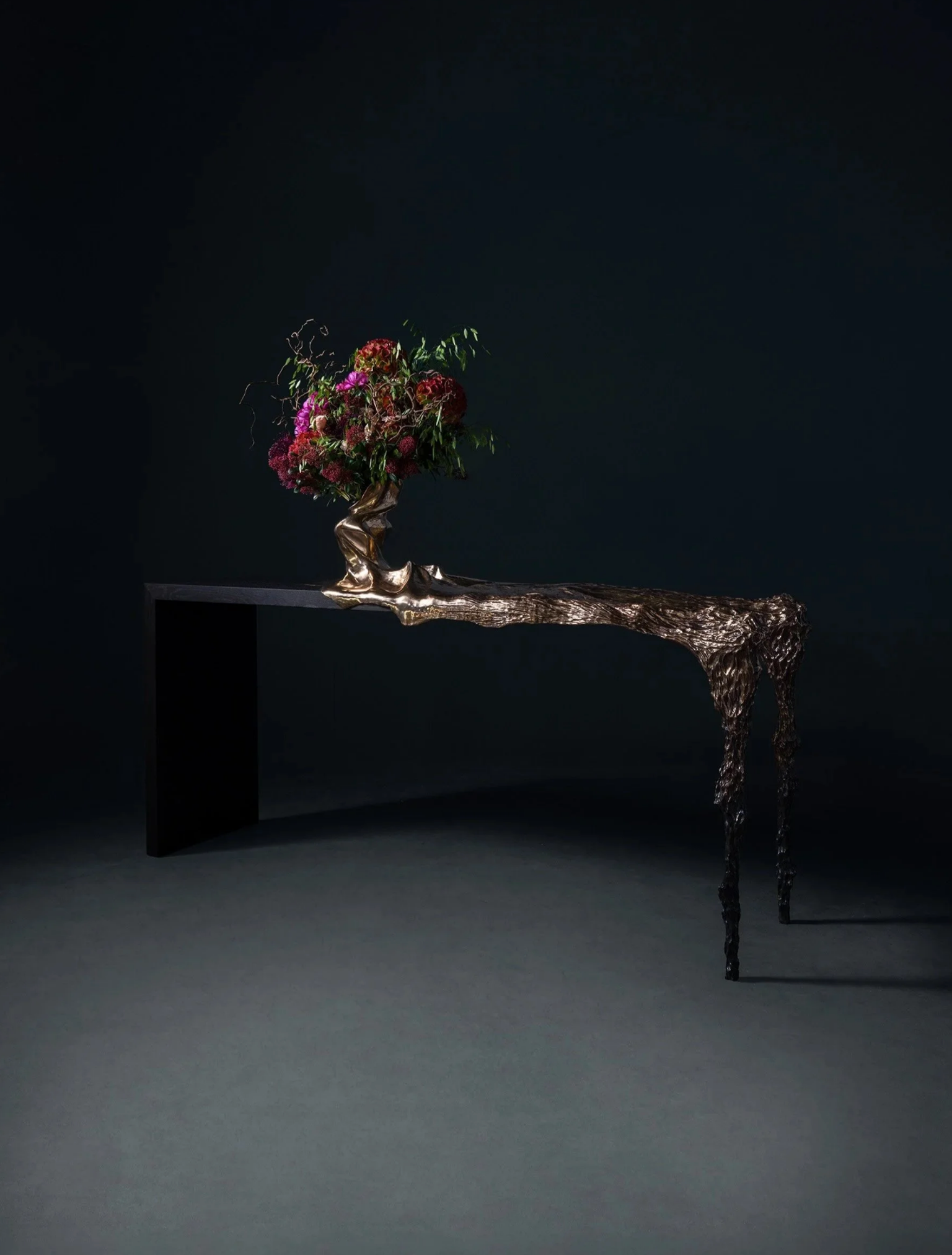
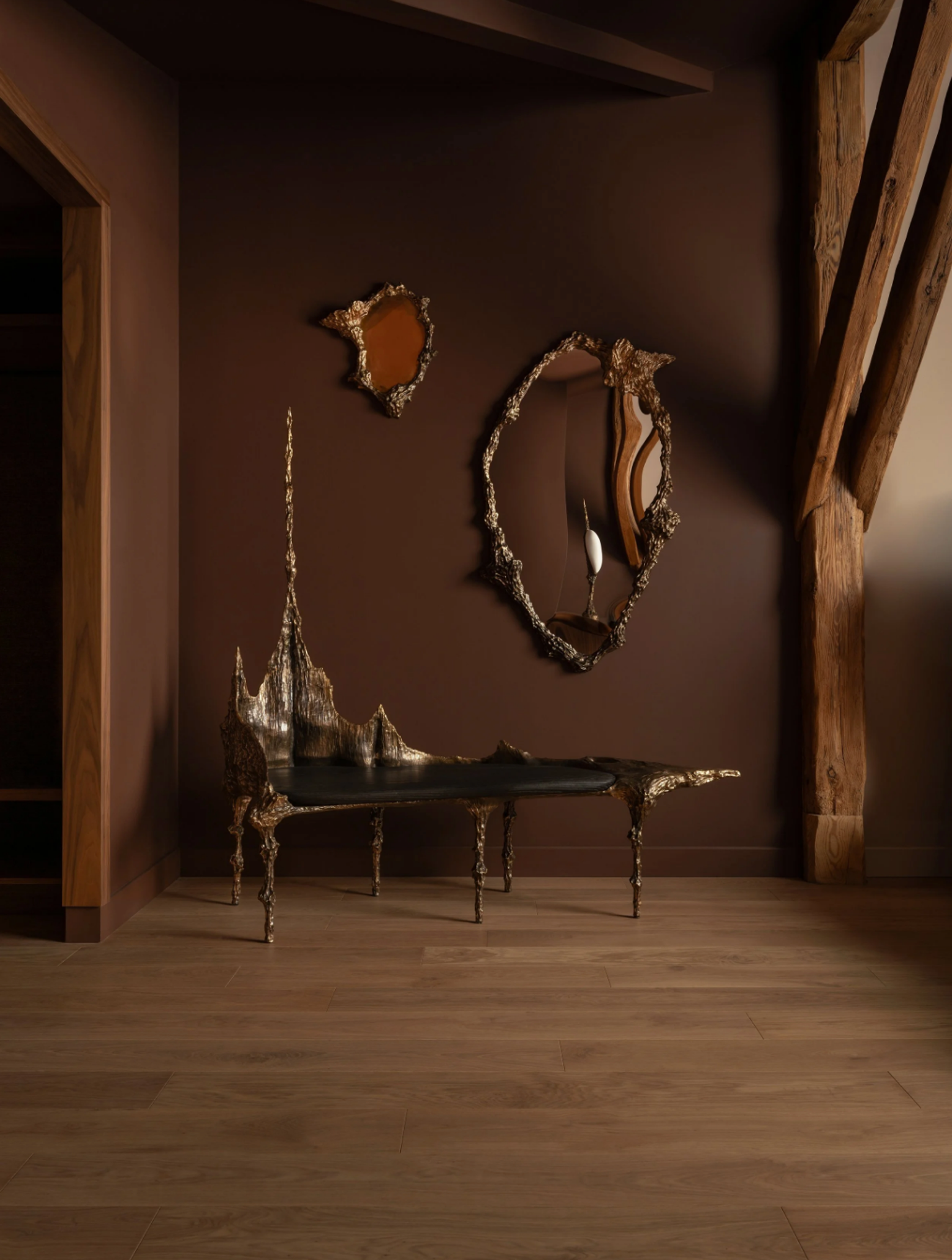
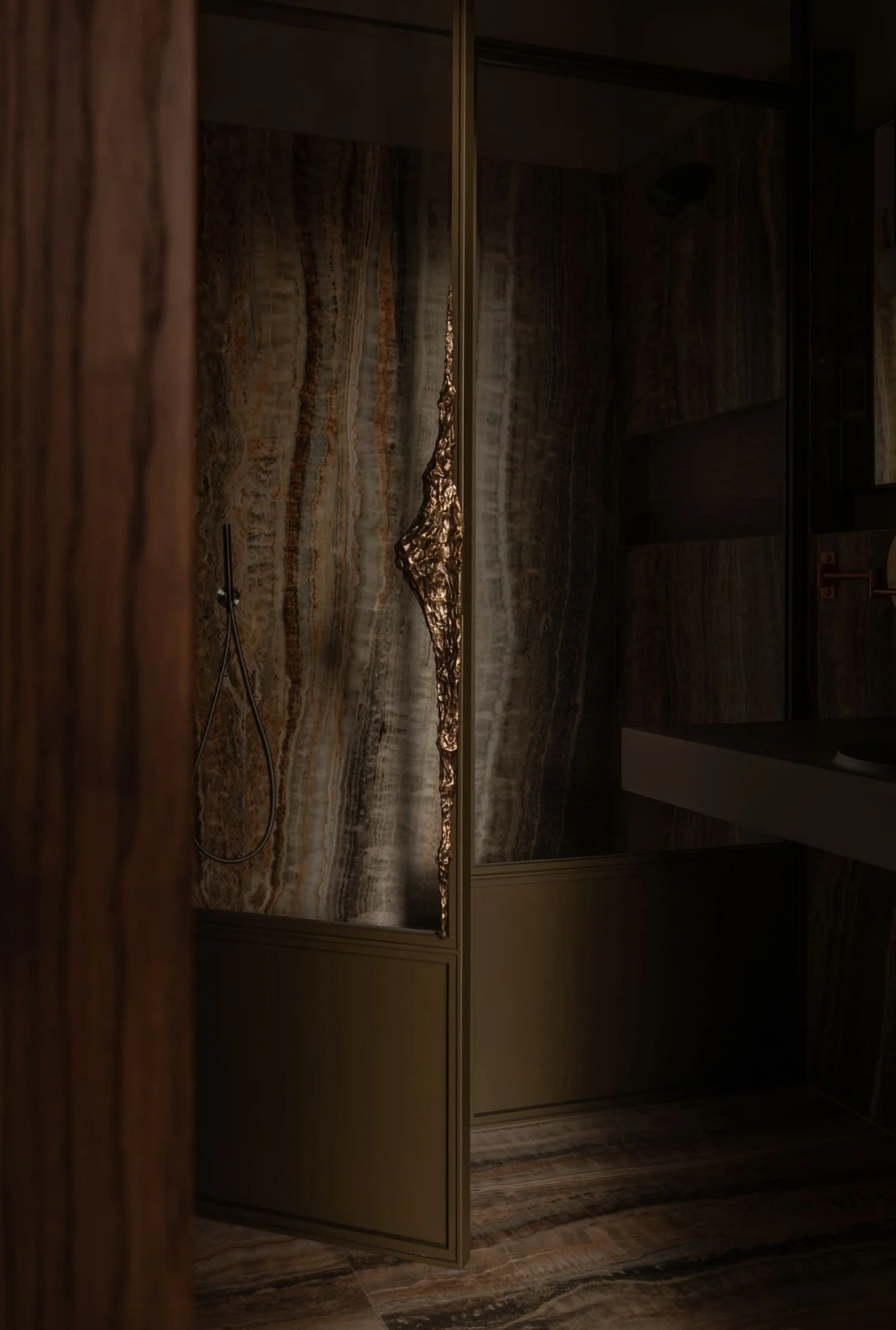
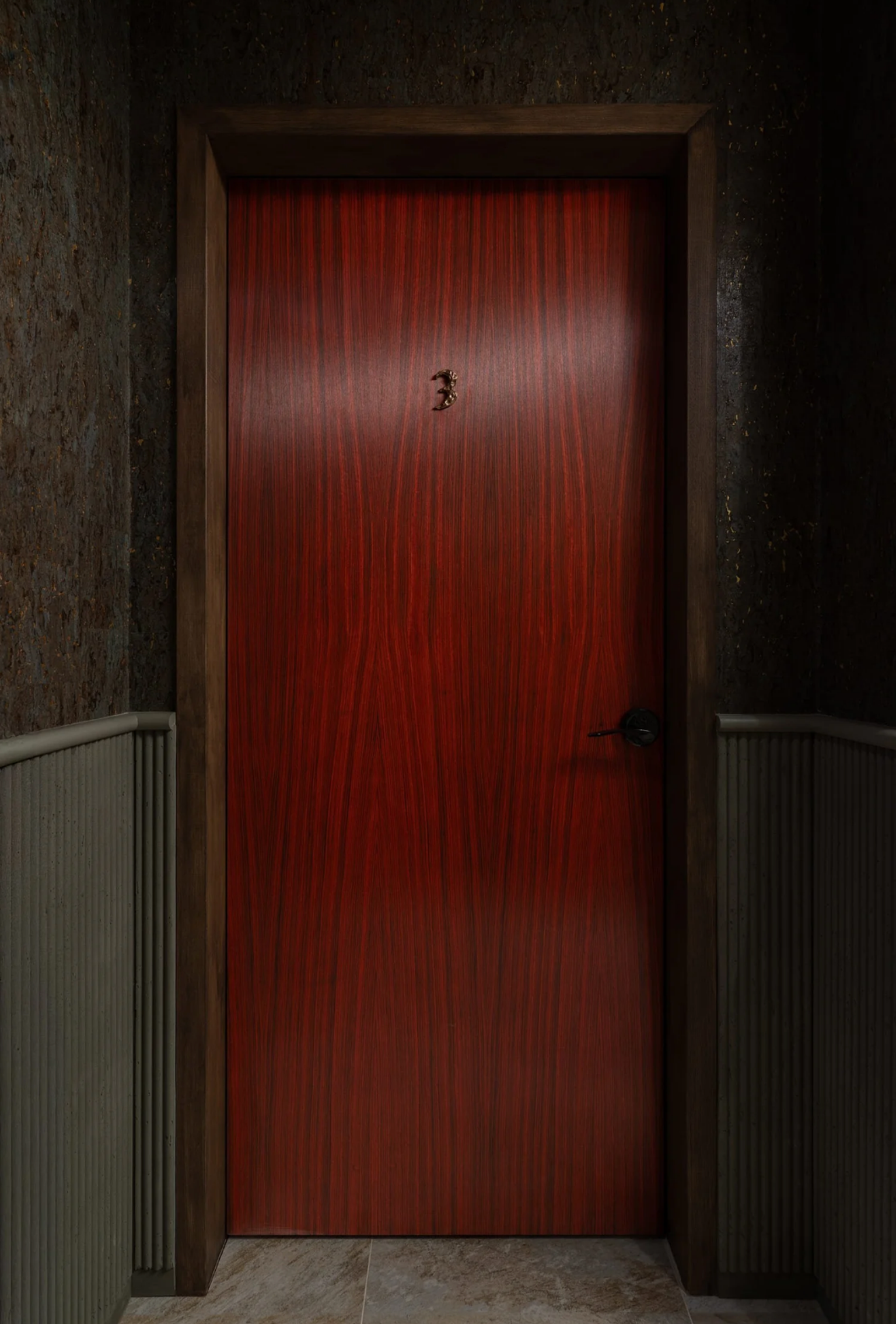
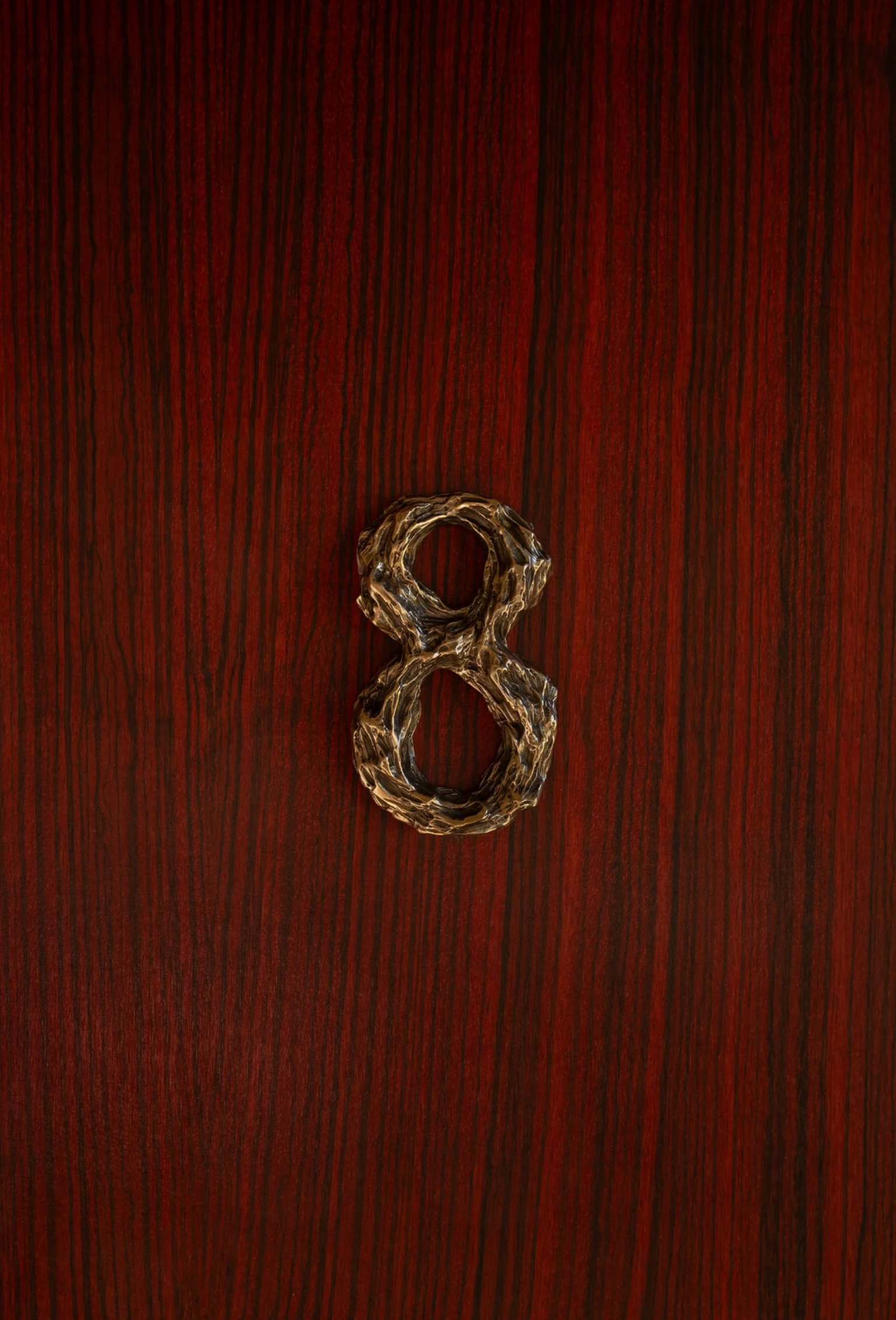
For the hotel’s expansion, he created an extensive collection that includes dramatic chandeliers, sculptural wall lights, hand sculpted door numbers, mirrors, handles and the monumental bronze bench known as Enjoy the Silence. Originally conceived as a discreet luggage rack for one of the new suites, the commission evolved into something much more sculptural. Cast in bronze and paired with brushed wood, the bench has the fractured presence of an architectural ruin, appearing both heavy and strangely fragile.







A LANGUAGE OF DECAY
This tension between beauty and decay runs through much of Guillon’s wider practice. His objects often seem like fragments from an imagined mythology, relics that have survived some undefined event. Titles such as Ashes to Ashes, Beautiful People, She’s Lost Control and Enjoy the Silence reinforce this sense of narrative, giving the pieces an emotional life beyond their physical function.
What makes Guillon particularly interesting is that his fascination with darkness never becomes purely decorative. The patina, roughness and irregularity of his bronze surfaces suggest erosion and time, while the sculptural forms retain an undeniable elegance. Light becomes part of the material language, revealing textures gradually and allowing shadows to become almost as important as the objects themselves.
At Yndo, this approach becomes especially powerful. Rather than simply furnishing a hotel, Guillon contributes to an environment where objects become characters. His pieces inhabit the rooms with a sense of permanence, bringing together craftsmanship, sculpture and storytelling. It is perhaps this ability to make functional objects feel like fragments of a larger, darker world that gives William Guillon’s work its particular presence.