
Isa Genzken
World Receiver
- ArtistIsa Genzken
- PhotographerMalle Madsen
- CuratorMarianne Torp, Magnus Thorø Clausen & Sif Lindblad
MARIA FOERSLEV Isa Genzkens World Receiver at *Den Frie Udstillingsbygning feels less like an exhibition and more like an intercepted frequency. Objects, voices, and signals tangled in a kind of elegant static. I appreciate how it collapses distance and intention, pulling distant geographies and histories into a single room that feels uncanny, personal, and uncanny again. It’s curating as translation, where meaning is always in motion and never quite at rest.

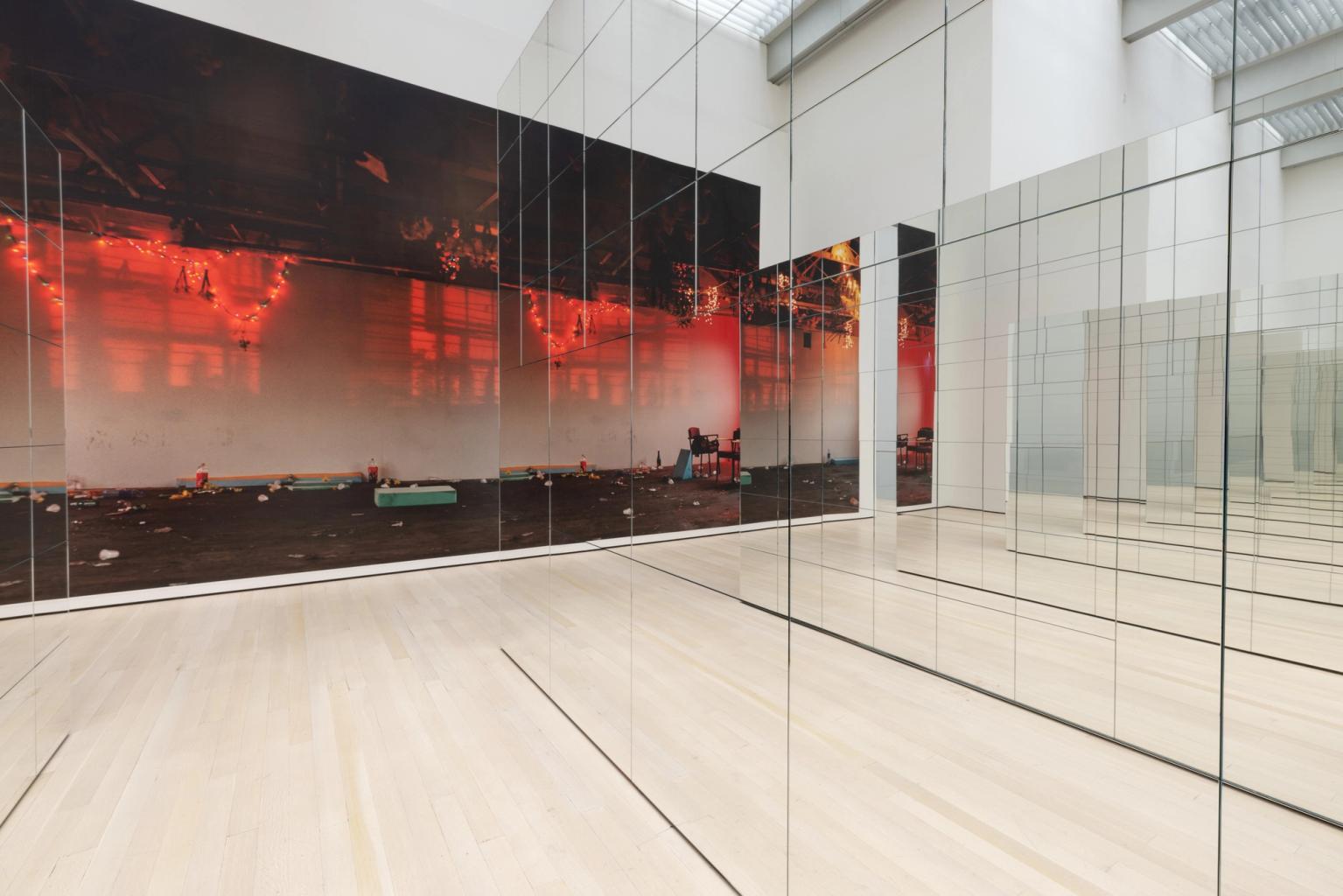

Isa Genzken: Receiving the World
At the entrance to Den Frie in Copenhagen, a towering sculpture by Isa Genzken has been quietly transmitting signals for nearly a year. Rising sixteen metres into the air, Vollmond stands like a mysterious lunar antenna, absorbing the energies of the surrounding city. It forms an apt prelude to World Receiver, the German artist’s first institutional solo exhibition in Scandinavia, on view from 6 February to 5 April 2026.
Born in 1948, Genzken is widely regarded as one of the most influential artists of her generation. Over the past decades she has exhibited at major institutions across Europe and the United States and represented Germany at the Venice Biennale in 2007. Her work moves freely between sculpture, installation, painting and assemblage, forming a practice that consistently reflects on the architectural, social and economic structures shaping contemporary life.






Sculpture as antenna
The exhibition’s title refers to a recurring motif in Genzken’s work, the World Receiver. These small concrete sculptures fitted with antennas resemble radios whose purpose is ambiguous or perhaps imaginary. Rather than transmitting a clear signal, they suggest an openness to the world, a heightened attentiveness to images, noise and meaning.
For Genzken, sculpture is not a closed object but a medium that exists in continuous dialogue with its surroundings. Her works behave like seismographs, registering the vibrations of cultural and political change and translating them into form.

Punk meets posh
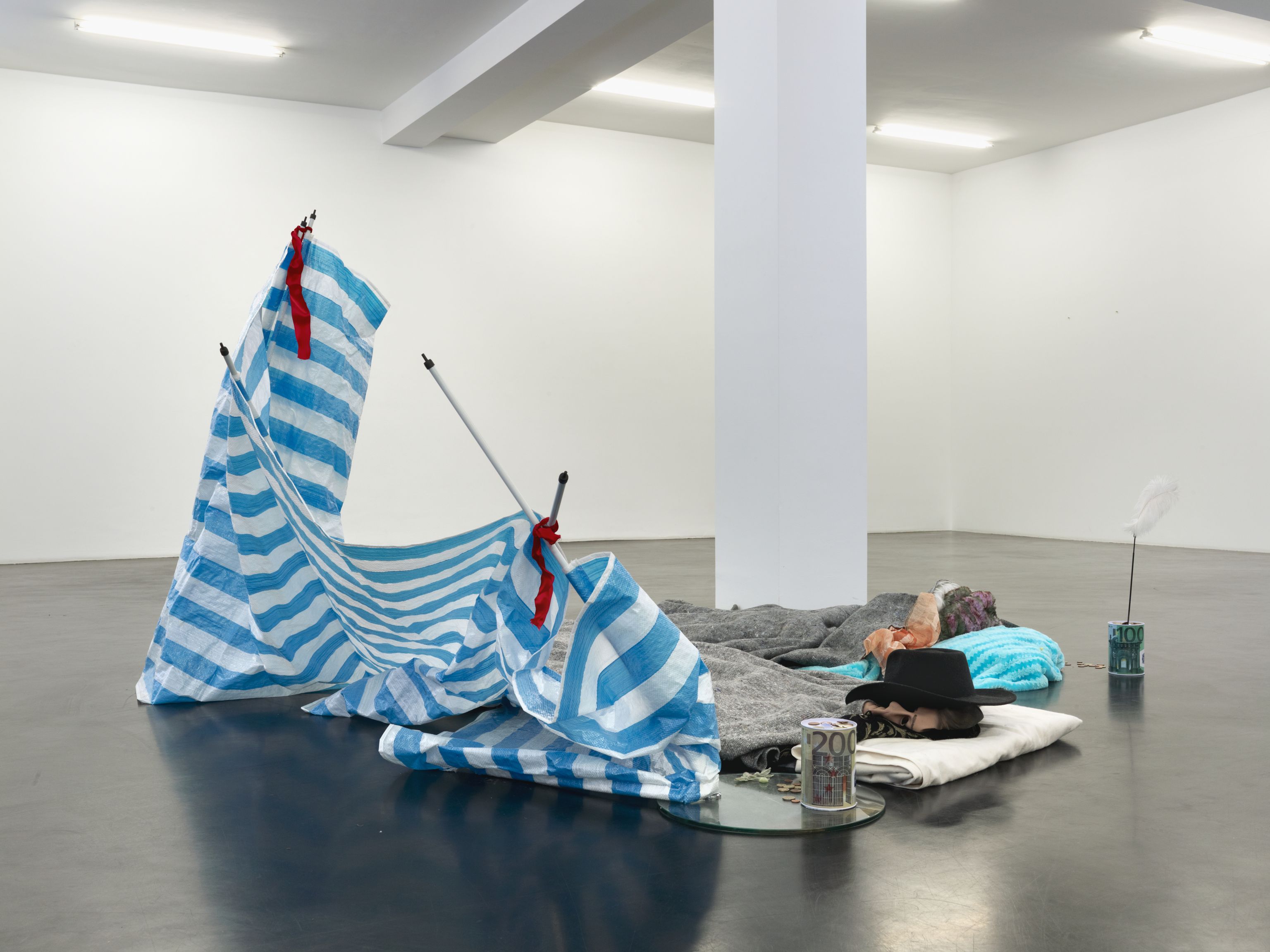
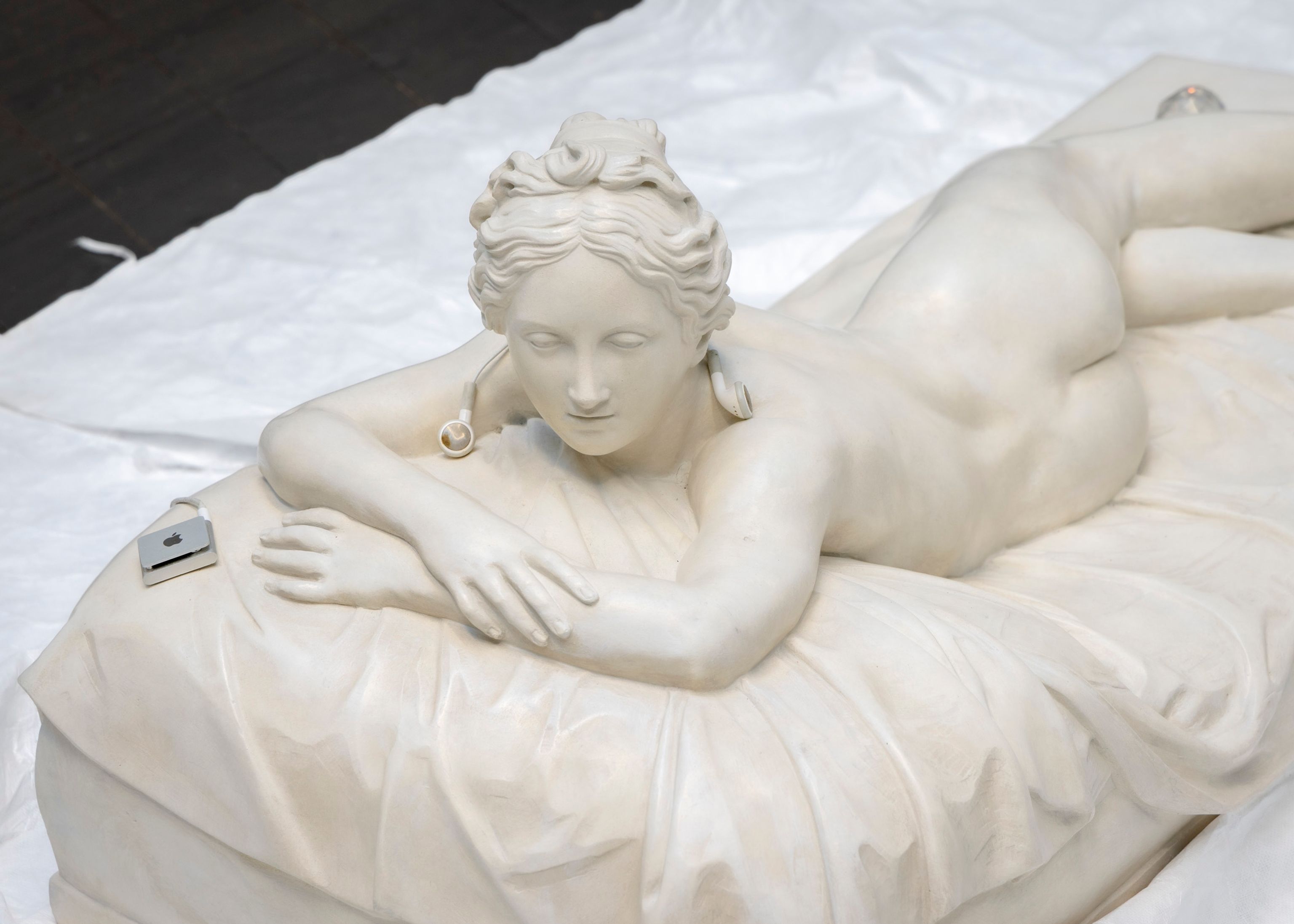
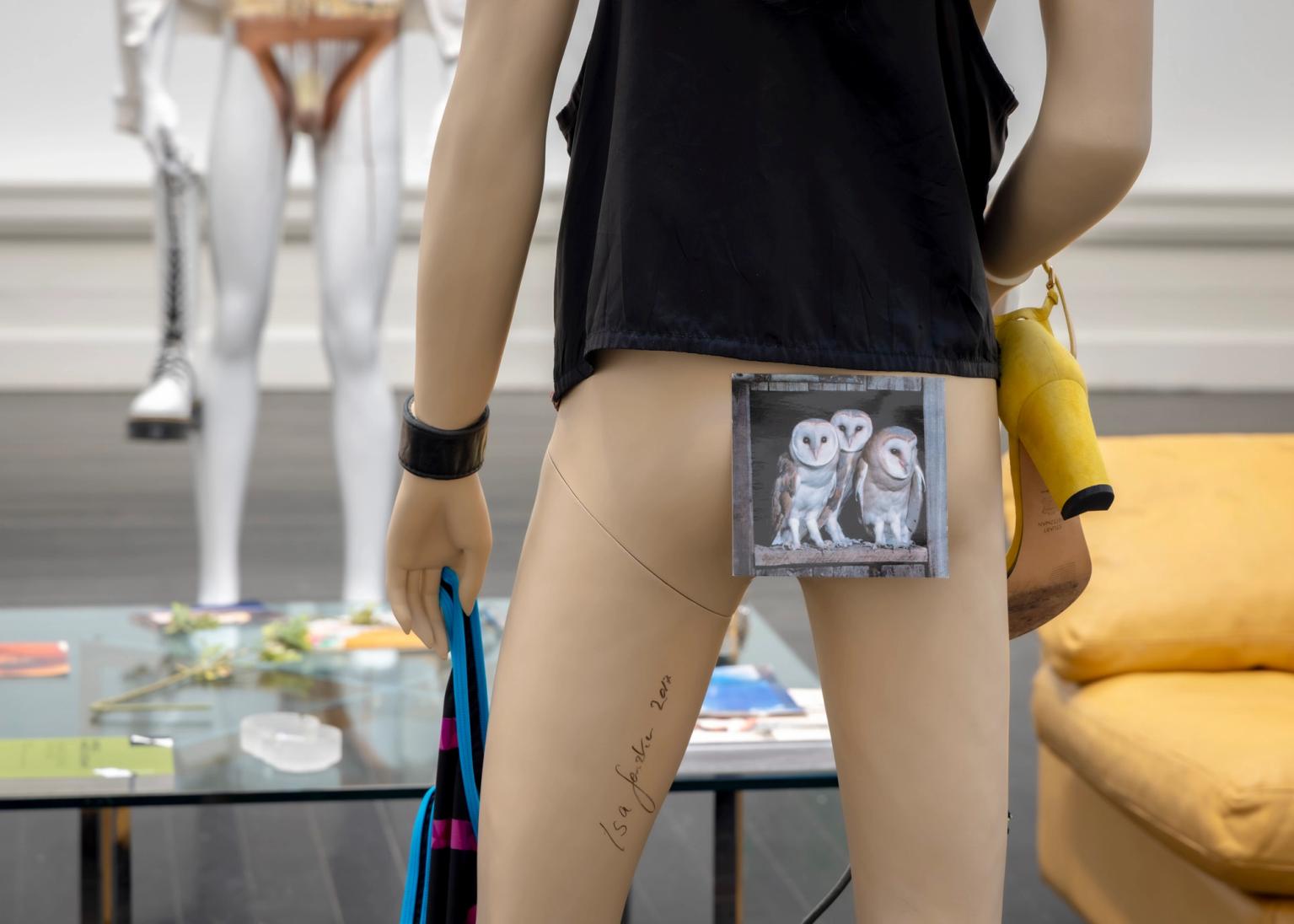
Assemblage plays a central role in the exhibition. Genzken brings together unlikely materials including plastic toys, wigs, luxury items, photographs and fragments of text in works that appear improvisational yet remain strikingly precise. Their bold colours and eclectic surfaces draw equally on the spirit of punk and the visual language of consumer culture.
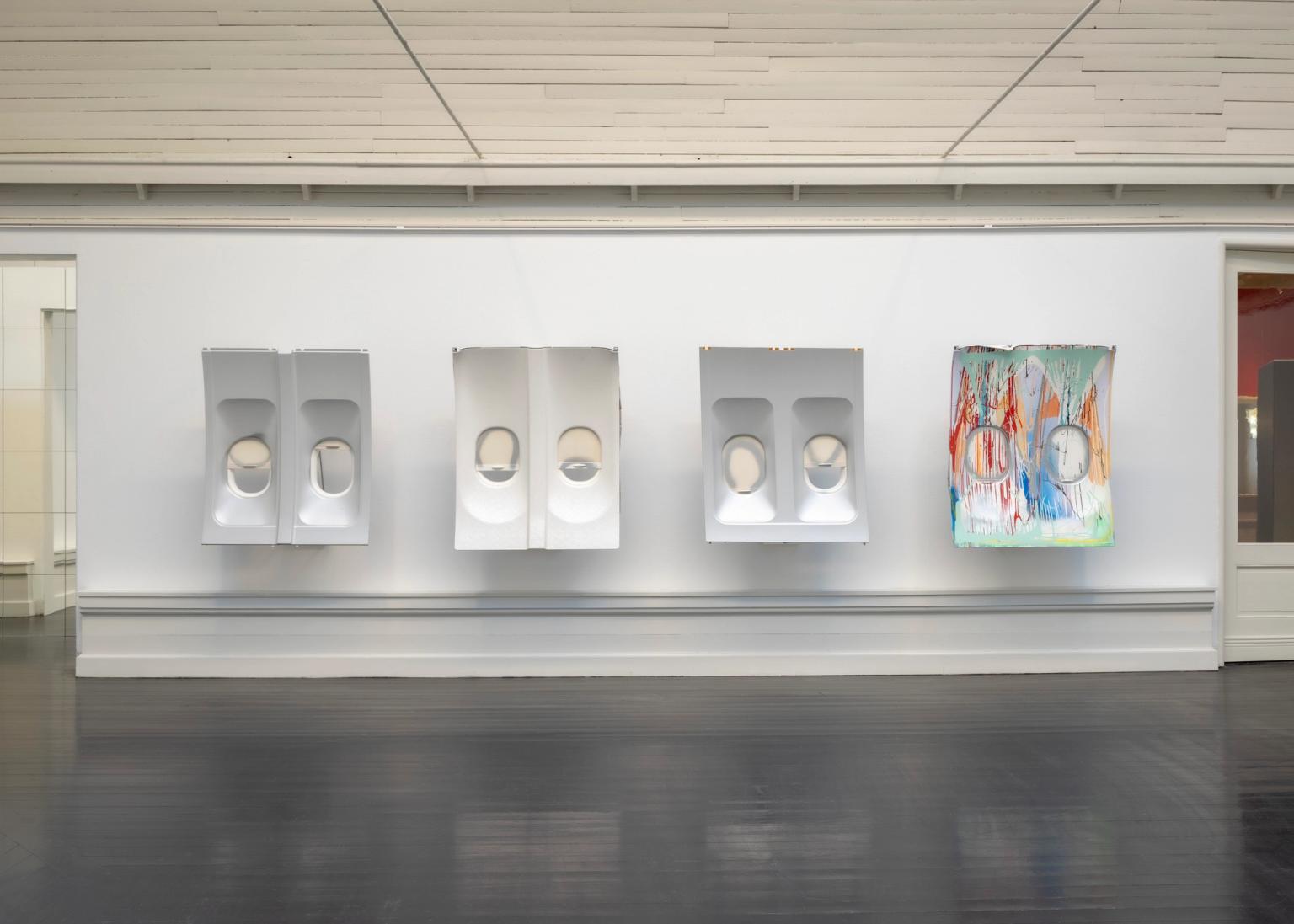
Among the highlights is the installation Science Fiction (To Be Content Here and Now) from 2001, created in collaboration with photographer Wolfgang Tillmans. The sculpture Da Vinci from 2003, composed of airplane windows, was produced in the aftermath of the attacks of 11 September 2001 and reflects on the fragile relationship between technology, travel and catastrophe.
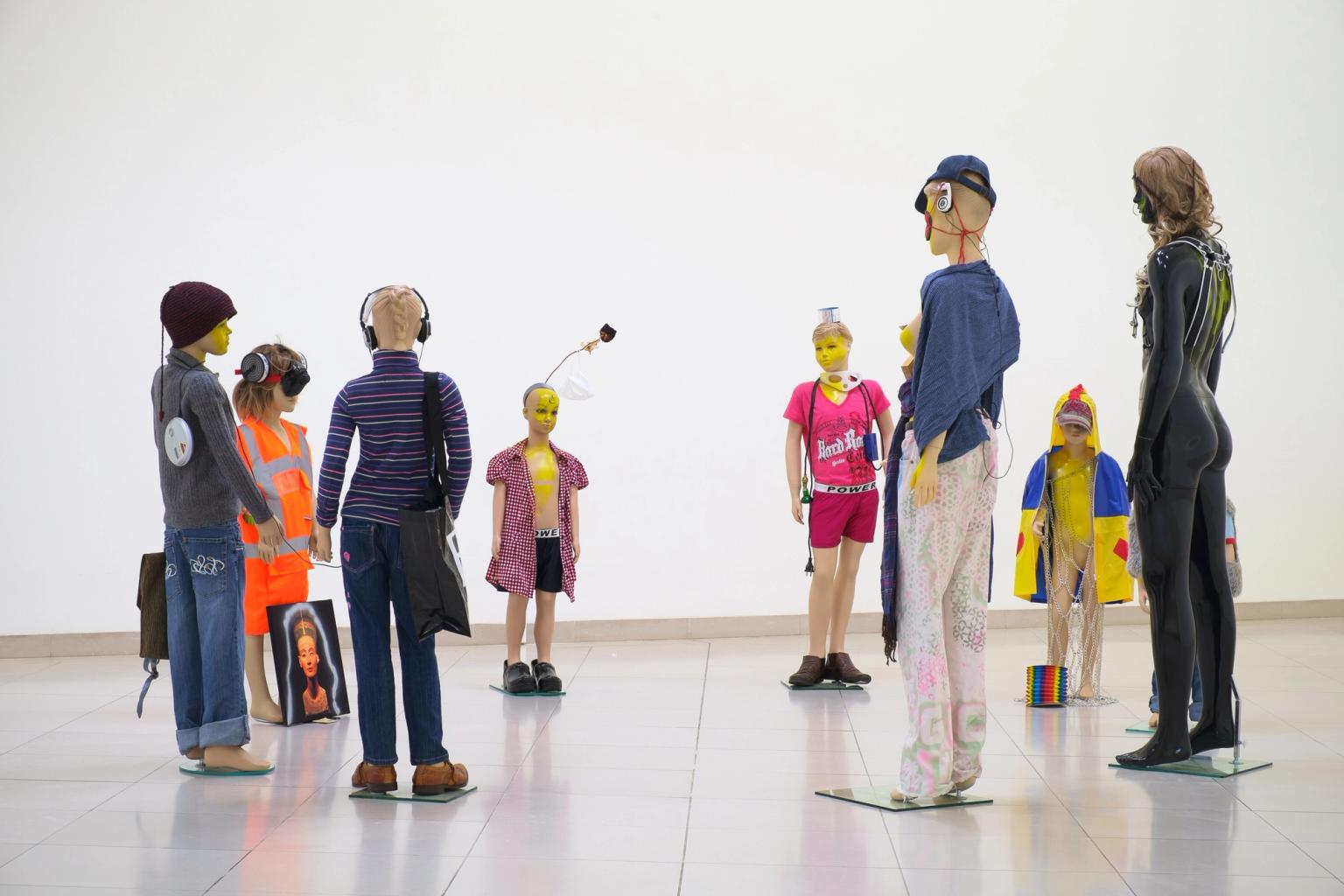
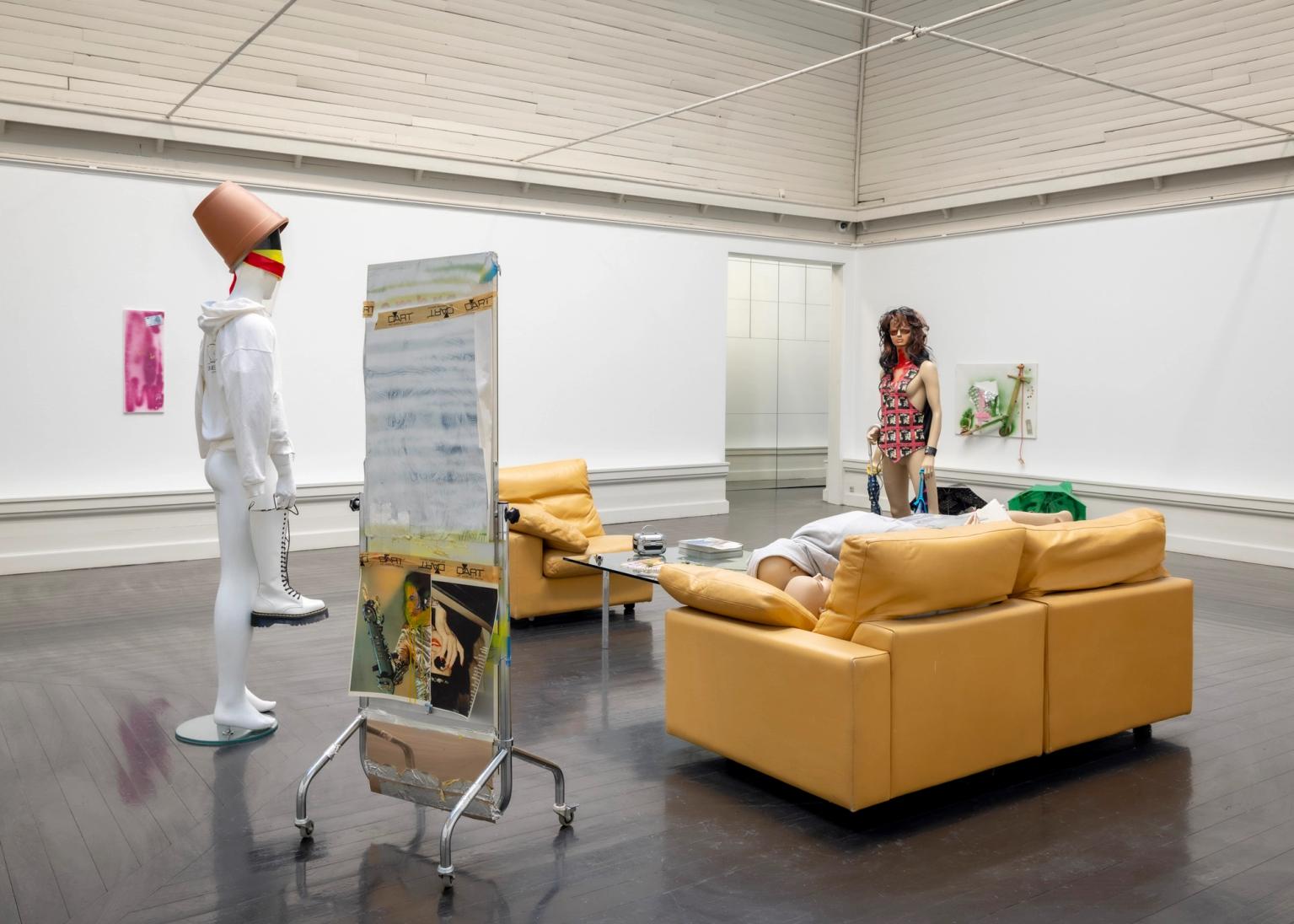
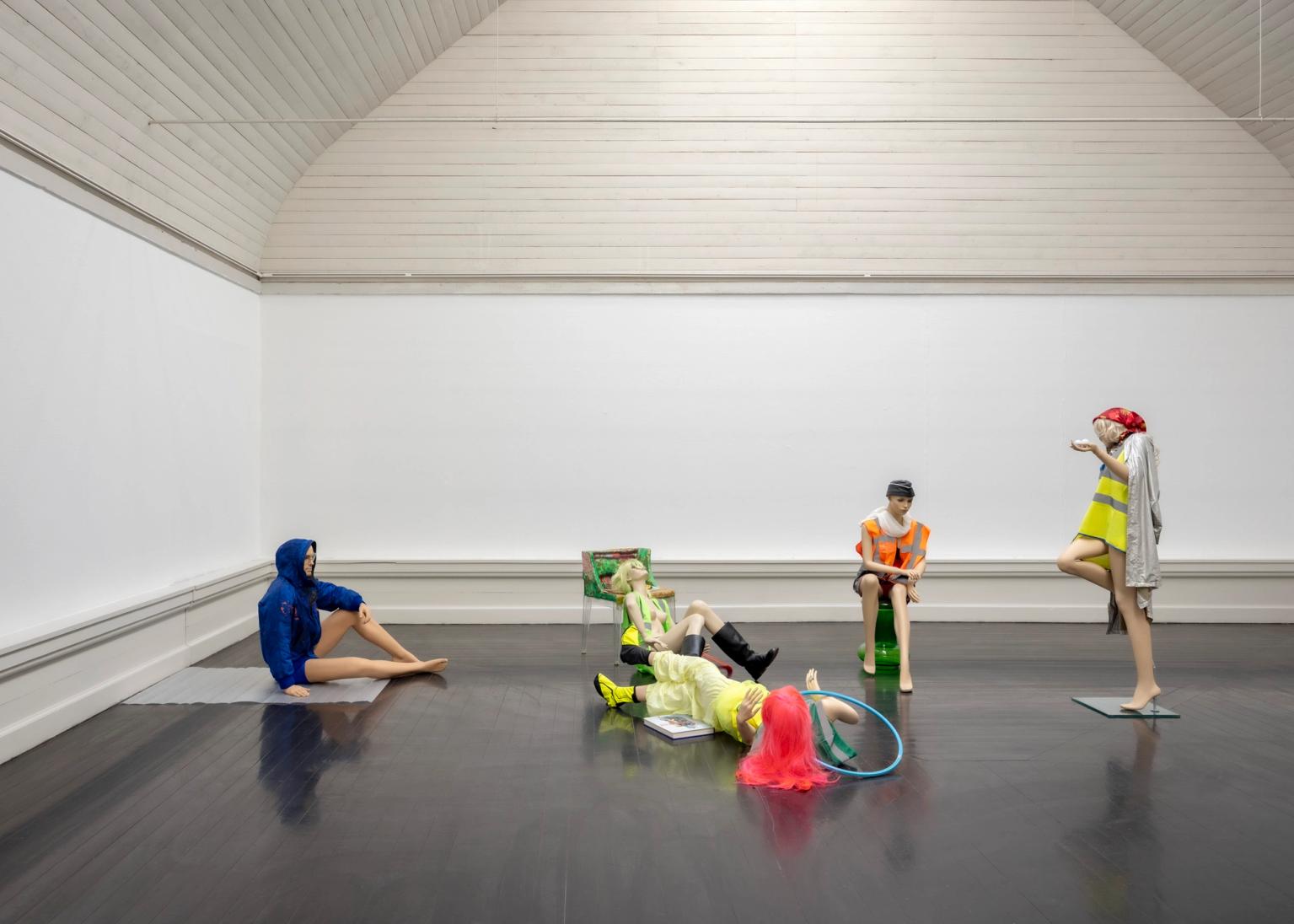
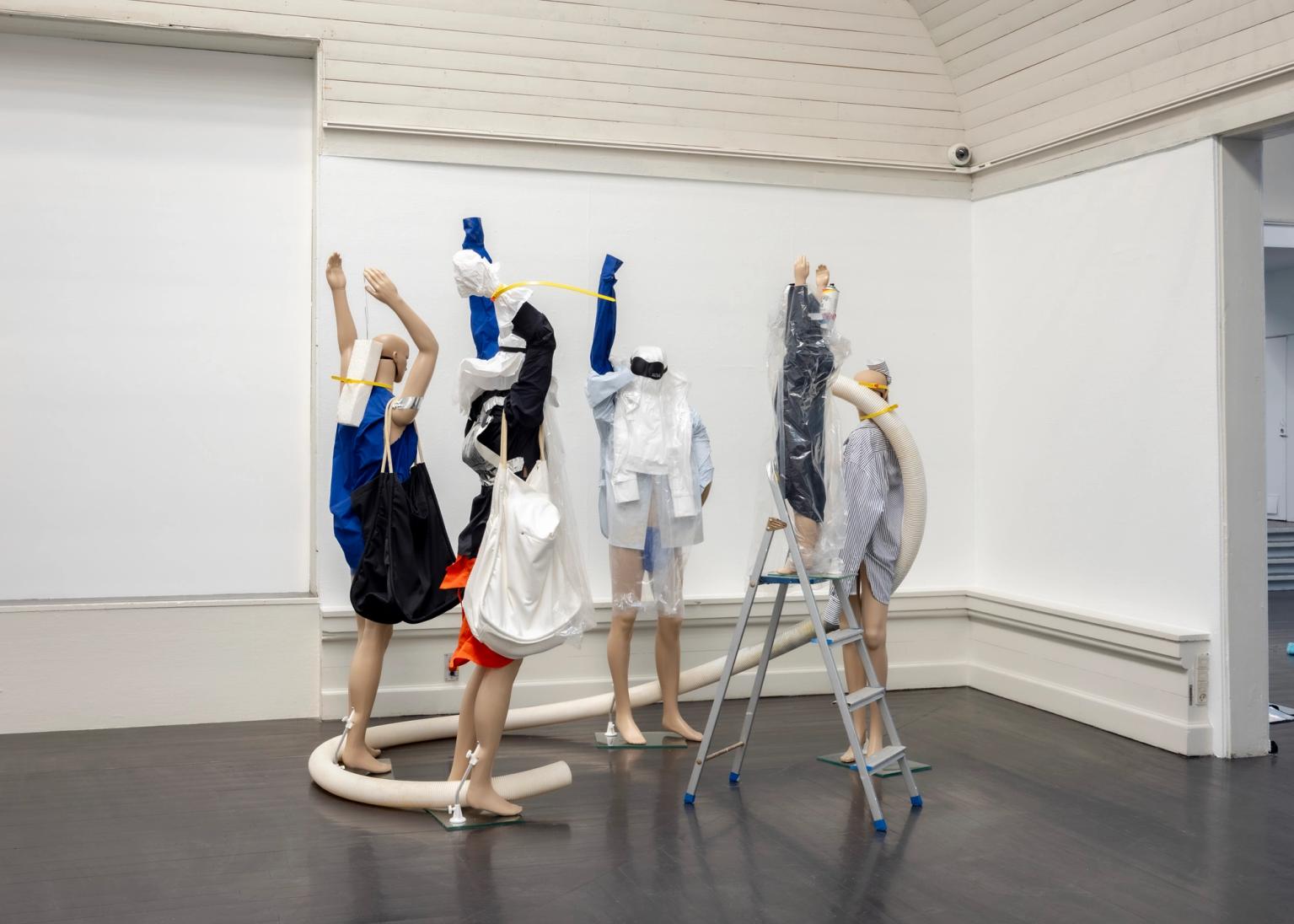
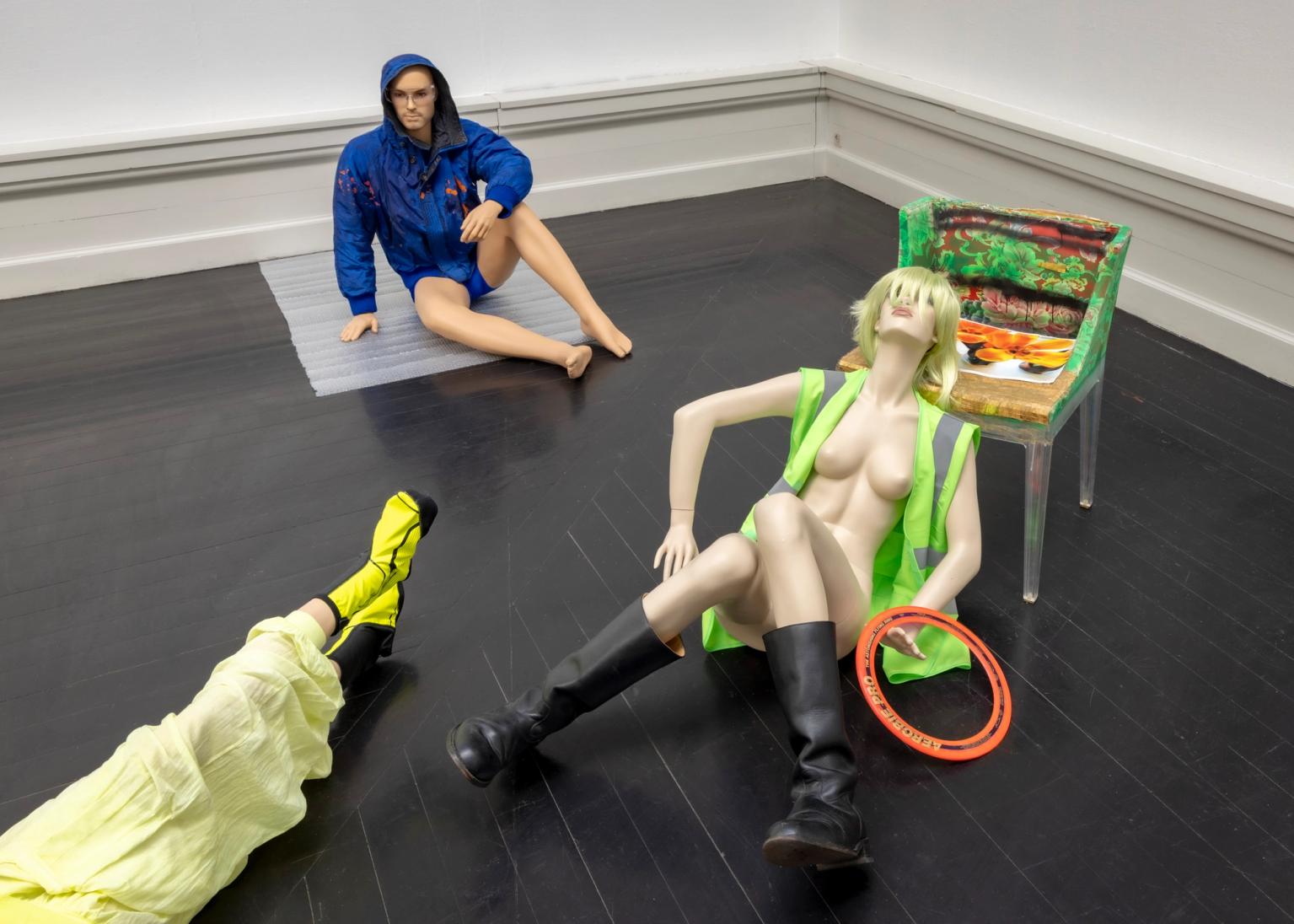
The exhibition also includes Genzken’s mannequin installations from the 2010s, such as Schauspieler III, 3 from 2015, in which shop mannequins appear as actors within a cinematic scenario that shifts their identity from idealised consumers toward fictional and speculative characters.
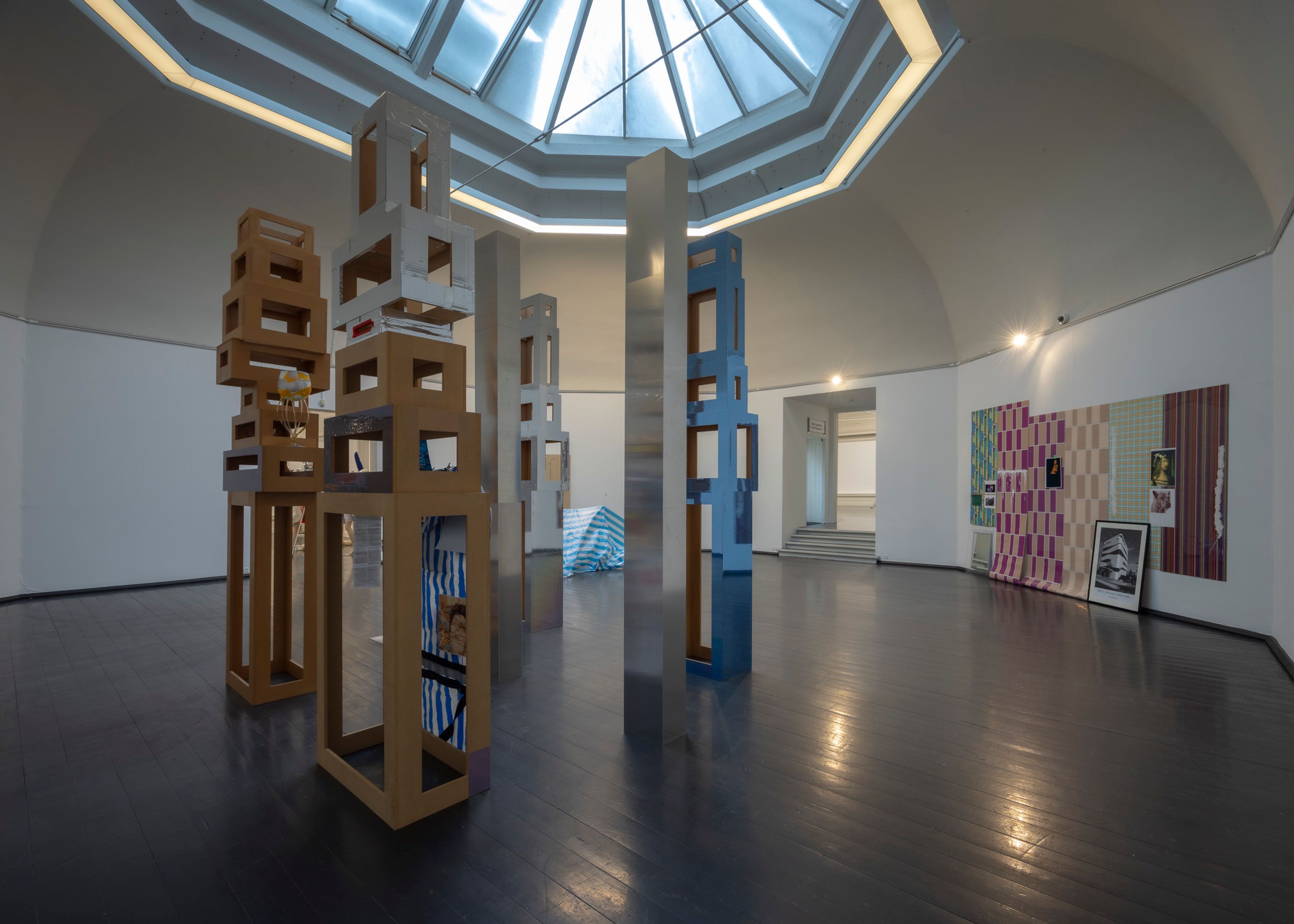
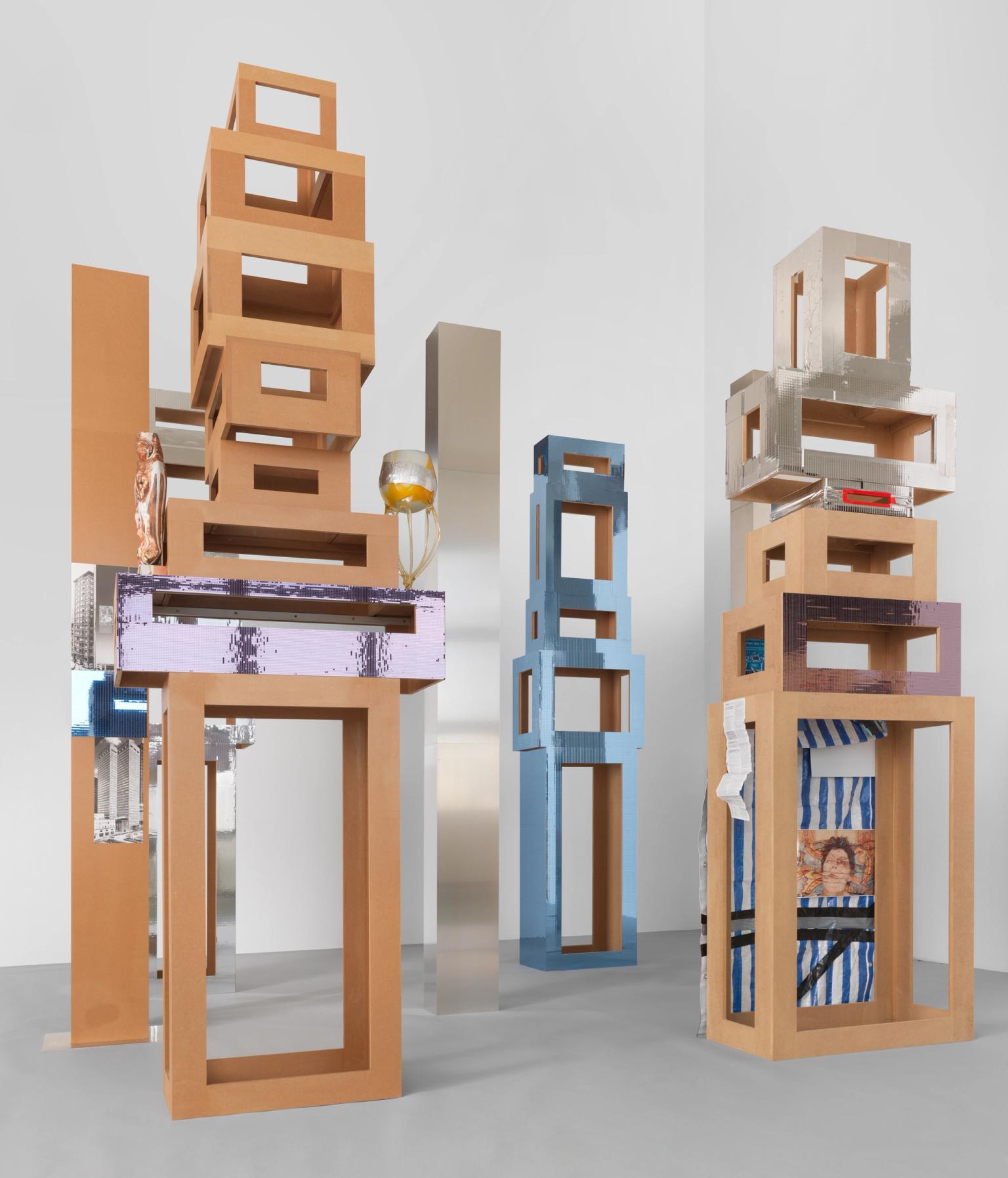
Another work, Untitled (4 Türme, 3 Stelen) from 2015, brings together seven tower like structures that evoke both the skyscrapers of the modern metropolis and the stacked commodities of warehouses or supermarkets. In the painting series Geldbilder from 2014 to 2016, Genzken turns to the relationship between painting and economics, examining money as both material and symbol.

Energy in disaster
Art historian Hal Foster has described the strange vitality at the centre of Genzken’s work as an energy in disaster. Beneath the glittering surfaces and playful gestures lie darker forces such as consumer culture, war and inequality that destabilise the utopian promises of modernity. Yet her works never settle into pessimism. Instead they remain open, curious and attentive to the possibility of transformation.
In World Receiver this openness becomes the exhibition’s guiding principle. Each sculpture functions like an antenna scanning the present moment and translating its signals into form. The result is an exhibition that is as much about listening as it is about looking, suggesting that art can still capture the strange frequencies of the world we inhabit.